Waste Not, Want Not: Using Stranded Energy for Mining + HPC
Speakers/Moderators

Jesse
Jesse

Hodl Tarantula
Hodl Tarantula

Mathieu Agee
Mathieu Agee
With extensive leadership experience in both traditional energy markets and cutting-edge digital technologies, Mathieu has held senior roles at Amazon Web Services (AWS), ExxonMobil, multiple global integrated oil and gas companies, and professional services consulting firms. He has driven large-scale digital transformation initiatives across AI, hydrocarbon supply chains, trading and risk management, manufacturing, refining, marketing, retail, enterprise IT, and cloud computing. Notably, he developed and produced ExxonMobil's Outlook for Energy, delivering long-term energy demand and supply insights to guide multi-billion-dollar investments and inform C-level executives, Boards, senior management, and public audiences through advocacy presentations to policy groups, NGOs, universities, governments, and corporations.
At O21 Solutions, Mathieu leverages his unique expertise in energy markets and the emerging Bitcoin economy to provide unmatched insights for companies navigating the "Money Transition." The firm empowers public and private energy companies, executive teams, Boards, public affairs, and investor relations with customized Bitcoin-powered corporate strategies—including treasury optimization, balance sheet accumulation, mining integration, payments, and operational enhancements—through tailored research, analysis, education, actionable frameworks, industry best practices, and expert coaching to reduce cycle time from strategy to execution.
Mathieu is a recognized thought leader on the intersection of Bitcoin, corporate strategy, energy optimization, and sound money principles, frequently sharing insights through podcasts, conferences, and industry discussions.

Joe Dillon
Joe Dillon
Session
Overview
This panel examined how Bitcoin mining and high-performance computing can turn stranded, wasted, or curtailed energy into productive compute. Jesse of BlocksBridge moderated a discussion with Hodl Tarantula of Sovereign Hybrid Compute, Mathieu Agee of O21 Solutions, and Joe Dillon of Adakon Energy.
The speakers discussed flared gas, curtailed renewables, underused grid capacity, and remote oil and gas infrastructure as examples of energy that can be monetized at the source. Bitcoin mining was described as a uniquely mobile, interruptible, and globally connected load, while AI and HPC were framed as potentially complementary but more dependent on customers, bandwidth, and predictable infrastructure.
Key themes included grid stability, behind-the-meter power, rural economic development, emissions mitigation, and the operational differences between mobile off-grid deployments and larger co-located generation sites. The conversation also covered how better connectivity, including satellite internet, reduces barriers to deploying compute in remote energy locations.
The session emphasized that combining energy production with flexible compute can change the economics of both industries, while creating new opportunities for power producers, miners, local workers, and infrastructure developers.
Great to be here. Thank you, everybody in the audience. We are almost at the end of this three-day marathon, so thanks for sticking with us.
My name is Jesse. I work at BlocksBridge Consulting. We help Bitcoin miners, including public miners, with public relations and communications. We have three great panelists here to my left, so we are going to start with a round of introductions. Tell us a little bit more about who you are, what your work is, and a fun fact about yourself.
My name is H.T., or Hodl Tarantula. I have been mining Bitcoin since 2017. I got in a fight with Duke Energy about grid power and costs, told them to fuck off, went off grid, and have not been stopped since. I started building decentralized, distributed power generation infrastructure and told them that if they ever want me to stop, they are going to have to put a bullet in my brain. We are the last line of defense when it comes to Bitcoin mining. If they ever want it to stop, they are going to have to go to the ends of the earth to make it happen. We are the ones that are going to keep you all going. That is who we are.
Thank you.
Everybody, my name is Mathieu Agee. I am the founder of O21 Solutions, based in Houston, Texas. We help corporations, specifically oil and gas businesses, adopt and integrate Bitcoin into their operations. Fun fact is I enjoy off-grid camping for weeks at a time in my camper trailer with my family and kids.
My name is Joe Dillon. I am the leader of Adakon Energy. We are a power and energy infrastructure development firm with a focus on large flexible loads. I have been in the energy industry for about 30 years on three continents. When I discovered Bitcoin for the second time, around 2018 or 2019, it was clear to me that it was the best geographically agnostic, large flexible load on the planet. It is like finding the missing capacitor for a circuit board. We have built power plants, developed energy campuses, and really work on integrating mining at the base layer of electrical infrastructure. To H.T.'s point, it is a different approach, but it gets real hard to rip out once you get it put in.
Thank you for that. I just wanted to start, before we get into this conversation, by defining what we mean by stranded energy. We understand that Bitcoin mining specifically has brought stranded energy back into the conversation and found better ways of monetizing energy that was not available before. But how do you think about stranded energy, if you had to give a definition?
When I think of stranded energy, I look to oil and gas because of the abundance of waste there, including abandoned wells, flares, and other things related to that industry. But there is also biomass, overbuilt hydro, and renewables that could do supplemental work. There are a lot of different forms of wasted energy. As Joe said, Bitcoin is the most mobile, responsive industrial load ever created, and being able to plug it into an instant marketplace gives us the ability to create a digital pipeline. With that, we have economic activity anywhere in the world, instantaneously, which is something we have never seen before.
I think of wasted energy very simply as energy that is already being produced. There is capex and work being put out to make or create energy, but there is no transmission, or it is underutilized. It is energy that exists, is available, is paid for, and is underutilized.
A popular example is out in West Texas in the Permian. There is a lot of oil production, but a lot of other stuff comes out of the ground with the oil. Natural gas is one of those things, along with natural gas liquids, but there is no takeaway capacity for the natural gas. There is no pipeline capacity, so it is produced but has to be flared.
H.T. mentioned overbuilt renewables. The UK last year curtailed something like 10 terawatt hours of electricity, and that problem grows as variable renewable penetration grows in the grid. That is another example. That is wasted energy to me.
Our view on this is that when we look at a system like a grid, historically you have producers, but really only one buyer. If that producer can generate more electrons, but the market price will not clear at a price that is profitable for them, they are just stuck.
By adding a large flexible load with a global customer, the Bitcoin network, and to some extent maybe in the future AI compute networks, you now have the most liquid global market you can plug directly into. Now instead of having one captive customer, you have multiple customers, and the economics transform both the lifespan and efficiency of those generation assets. Their capacity use goes up, their O&M costs go down, and their profitability increases.
There is economic incentive across the board, even when it comes to ecological benefits. Places like oil and gas wells that may have had infrastructure that was failing before become economically viable to maintain long term, which prevents fugitive emissions and things like petroleum products leaking into the environment and causing more damage than they otherwise would.
For some gee-whiz numbers, how big is the flare gas problem in the world? As human society, we flare between 15 and 30 billion cubic feet per day of natural gas. That is more than the continent of Africa uses in a year. It is a big global problem, but it is a distributed problem, and it has its own challenges to monetize. Those molecules are valuable. They could be used for productive work, but they are not being used today. Every molecule that we can use is energy that we do not have to supply for future demand growth.
You are talking specifically about flaring the gas, meaning the gas is actually burned. But it is also very common, especially in other countries, and I believe also here in the U.S., for people to just release it into the environment. People often criticize Bitcoin for its environmental impact, but Bitcoin is increasingly absorbing that. Is that right, Hodl?
That is 100% correct. The ESG metrics that Bitcoin brings to the table are so vast that the guys who drool over carbon credits should be wetting their pants to get in line for this stuff and deploy it. It is like criticizing the mop when the milk is on the floor.
Joe, you briefly touched on AI and HPC. At this point, Bitcoin mining utilizing flared gas as a use case is beginning to mature. But AI and HPC are very new. Can you talk about the relationship between Bitcoin mining and AI/HPC in the context of stranded energy, how one differs from the other, and whether the flexible nature of one versus the other has an impact?
I am currently building a hybrid compute system through my company, Sovereign Hybrid Compute, which deploys Bitcoin mining along with HPC and low-power compute in a hybrid model. Bitcoin mining is instantaneous baseload into a global market, whereas AI, low-power compute, and other forms of compute require a client base. A company that wants to deploy HPC into the field needs to have a large client funnel, a well-established base, a national syndicated reputation, and an ability to drive customer flow to the product they are trying to deliver to the market through the creation of this energy source.
Conversely, if you do not have demand for that, you will fail. Bitcoin itself will continue to support the baseload and structure of that infrastructure indefinitely, as long as that market exists. As far as I can tell, the Bitcoin global network and market are not going anywhere anytime soon.
As we see today, AI and HPC going out into the oil field and pushing boundaries could be a bubble, or more. We do not know. It is very new. But what we do know for sure is that Bitcoin, as it stands, is decentralized and distributed. As we create energy in a more decentralized and distributed fashion, and as Bitcoin is able to supply us with that instantaneous global market, it is and always will be the best opportunity and option for me to deploy in a stranded energy situation, unless I already have a mega-market global entity driving my HPC market.
I agree. On the system-wide grid side, when we are talking about stranded energy and these two different loads, they both use electrons as the input and have compute as the output. But the way they perform on electric grids is very different.
Bitcoin mining is highly controllable and interruptible. You can send it signals and say, I want to mine 10, I want to mine nine, I want to mine six and a half, I want to mine 10, and it will just go. That means your power shape looks however you want it to look. You have positive control over it. That is important.
On the AI side, the load is driven by the jobs it is getting. You do not know what your load is going to be second to second. At a lot of these AI facilities, there has been a lot of battery work done in the last year or two because of voltage disruption, where you can desynchronize yourself from the grid without a battery there because the load shape is very unpredictable.
What that means is there are applications where only mining makes sense, and there are applications where you can combine those two loads in order to present a shaped load to the grid or to a power plant. I think there are synergies, but there are also going to be situations where certain profiles of generation are only going to be good for one or the other.
There is no cookie cutter when it comes to stranded energy.
I fully agree. The other point I will make is that energy and Bitcoin are both global, and the problem of wasted energy is global. In the United States, where the investment is for AI is not necessarily where the energy is and where the energy is being produced.
One of the things that will happen is remote mining operations chasing wasted energy will push more globally as hyperscalers and mega-cap corporations go in and monetize areas like the Permian that have a lot of resources. They are essentially developing new cities with power, water, sanitation, housing, and all this other stuff. Developing a city is different than chasing very remote wasted or stranded energy. I think that is going to be a use case globally that we will see in Argentina, the Middle East, or Africa.
With distribution infrastructure.
Matt, given your background, you work with oil and gas companies and are a Bitcoiner yourself. Can you explain how some of these companies think about Bitcoin, Bitcoin mining, stranded gas, and stranded energy in general? My understanding is that they have not been paying as much attention to all of this, but perhaps things are changing. What is going on in those rooms?
My background is working with large corporations. The audience I am talking to and targeting may be different, and there is a diverse community of operators in oil and gas. It is a very vast, differentiated community. But I am talking to people in meeting rooms at corporate HQ: middle managers and executives.
While I would love to talk about fiat debt slavery and the Fed and all that stuff, it is not necessarily relevant to their day job. They are like, sir, this is a Wendy's. What they care about is that Bitcoin can solve a problem they have and are responsible for. They have a mandate and incentives from their employment. They are losing money on wasted gas, or they need to mitigate emissions in their portfolio, and Bitcoin is a tool. It is an appliance where you put in electricity and create money. It is an appliance for energy efficiency and emissions mitigation.
As long as you can speak to that, they are interested. Would you like to turn your negatively priced natural gas, negative $2 or negative $5 per MCF, into $10 per MCF, or if you are lucky, $35 per MCF? They are interested in that because it solves a problem and it makes them money.
We have talked about monetization and the economic side of things. We talked about the environmental side. There is also another aspect that is interesting, which is local communities and how stranded energy can have a positive impact on local communities, revitalizing them and further building out infrastructure. What is your experience? You have boots on the ground.
In building decentralized, distributed Bitcoin mining operations and power generation, we are bringing this into the last mile, better known as rural communities. We are bringing new economic activity, taxable revenue for municipalities, help for schools, and local activity. It also creates jobs that give people the ability for personal growth and improvement.
In a free and open source world like Bitcoin operates in, if you want to come out into the field and learn Bitcoin, all you have to do is self-educate. If you want to participate in the energy industry, there are trades you can get into. You can become involved from a boots-on-the-ground line level and work your way up with infinite possibilities if you continue to look at yourself every day and ask how you need to improve so you can create more efficiencies in the field and take your team further.
If you are willing to start at that level and understand what is happening there, everything else in your community around you is going to improve as well. Where we see these operations deployed, we see incentives for education, more economic activity for municipalities and taxation, cleaned-up energy infrastructure, and education going to locals about the economic activity around them.
When people hear about a data center out in the middle of nowhere and find out it is actually a Bitcoin mining operation, there is a little bit of talk in town. Then some people might go down the rabbit hole and decide they want to protect themselves when it comes to their sovereignty, wealth, and freedom through space and time. It does a lot more than just take energy. At a local level, it is huge.
Typically, where every power plant is located in America, it is the largest employer in the county. The project we recently completed up in North Dakota is the largest employer in the state. When you start thinking about the negative externalities if that plant is marginal on its economics, but critical both to keep the grid resilient, reliable, and safe, and also for the entire town, it changes the whole story. Instead of losing 400 jobs, maybe you add 50, which is a 10% employment increase.
In Sweetwater, I put out two roustabout crews within the last 12 months.
Exactly. I am an energy maximalist. I think the more megawatts that are produced globally, the better the human condition, and that has been true through history. We have been decarbonizing it through history, so that is just what we are going to do. We are going to build some more megawatts.
Can confirm.
Joe, can you talk a little bit more about the relationship with the grid specifically? You talked about it already a little bit. Hodl is taking a very different approach, which is intentionally isolated. But being plugged into the grid obviously has great benefits. We talked about flexibility, but talk a little bit about that.
One of the biggest problems, and I am sure a lot of people are seeing it in the news every day, is that the grid is tight, or we do not have enough lines, or we cannot get power to where we need to get it. There is a pretty complicated market structure in the U.S. and a couple other countries where, yes, electrons are being bought and sold over the lines, but things like capacity on the lines are also being bought and sold, and the right or ability to turn generation on or off is being bought and sold.
All of those have market prices. We think most miners participate somewhat inefficiently in that market, but a lot of them do. You hear a lot of talk about demand response programs. But if you pull the mining all the way up to the generation node and combine them, you can now participate in the markets for the generators as well as the markets for the consumers.
Our view is that by 2030 or 2032, up to about half the revenue from mining is going to come from grid stability operations to help keep the lights on. We are running a couple studies right now with some of our curtailment data to define exactly how much we save the average ratepayer by having mining co-located at a generation facility.
Back to that relationship between isolated energy and being attached to the grid. Hodl, you have this specific approach. We often refer to Bitcoin as fuck-you money. You can almost think about fuck-you energy.
If you are going to have fuck-you money, you need fuck-you power. I am the guy who is going to give it to you.
You are going for the sovereignty route when it comes to power, energy, money, and data, as well as the data center infrastructure itself. Can you tell us a little more about that vertical integration of sovereignty, so to speak?
It is essentially operating behind the meter. You purchase the rights to your gas, own your power generation, and deploy your own infrastructure, top down, everything from the molecules in the ground to the ASICs you are configuring the pools on. Vertically integrating like that and being able to handle your own power generation gives you the ability to operate and control your costs long term. When somebody wants you to curtail or turn off for any reason, you can tell them to take a long walk off a short fucking pier, because we do not turn off here.
What can you tell us about the differences at the buildout level? When building out a site specifically with the intention of capturing stranded energy versus being in a more traditional site and attached to the grid, what is different?
For stranded energy, when you deploy, you want to be nimble. When it comes to oil and gas, a lot of people do not understand that gas wells decline. There is an initial production period for about 12 to 36 months, depending on the Permian, Bakken, shallow, deep, horizontal, the well structure, and everything else. Geology reports dictate all these things after the hole is bored into the ground. But it only goes one direction, and that is down.
If you want to be successful with mining Bitcoin off grid, decentralizing your power, and expanding, you have to build your operations so they can scale down and be redeployed elsewhere to other locations around you where there continues to be more stranded energy. Because of the nature of the gas well itself, it is not going to continue to give you enough energy to support that operation indefinitely.
A large grid-connected operation is going to need a pipeline, consistent generation, and constant uptime. Off-grid mining can maintain uptime as long as it is able to be redeployed in an employable manner. Long term, you have to understand how the geology, gas, and physics of the oil and gas well work. If you are educated on that situation, you can deploy and be successful with it. If you are not, you will try to deploy a grid-sized fucking plant on a gas well that is going to beat your brakes off.
What H.T. is doing is harvesting molecules. That looks like farming, where you have to move out, move around, and change your position. What I am speaking of on the grid side is effectively harvesting dark fiber, dark capacity in the existing grid to help monetize after the molecules have been collected.
Typically, especially at a grid generation colocation, your sizing is going to be one to two zeros more than what H.T.'s are, because all that molecule power has already been concentrated into the electron factory.
Pros and cons, though. I would say my systems are a lot more resilient.
I would agree, but the counter to that is adding Bitcoin to generation makes the grid itself more resilient. It is almost more like a public good than a sovereignty play there.
Sovereignty is just as good for the public, sir.
I do not disagree.
I wanted to add that flared gas is interesting. It is a big problem, as we talked about, but the energy system is so vast and complex, and that is just one use case within upstream oil and gas. Even within upstream production where you extract and produce energy, there are Alberta oil sands and offshore rigs. In the midstream, you have compressor stations around the world moving gas. There is generation at compressor stations and manufacturing facilities that refine gasoline, diesel, jet fuel, or make petrochemicals. There is cogeneration on site that is not being utilized. LNG facilities: there are nine export terminals being built on the Gulf Coast right now dealing with natural gas and LNG.
There is a lot of untapped opportunity in the oil and gas value chain to deploy small modular Bitcoin systems that can extract and monetize energy that is otherwise wasted.
Agreed.
Very quickly before we wrap up with the final question, has the emergence of systems such as Starlink, more modern systems of internet connection, been a positive influence on the stranded energy trend? I assume yes.
Absolutely. Even before Starlink, in 2017, before it was available all over, I was deploying on cellular modems and building my own mesh networks. When you are building a digital pipeline, if you want to ask me if adding a satellite dish is going to help, what do you think the answer is?
That is not the case with AI/HPC, though, where you require a lot of bandwidth.
That is the other thing. You have to take into consideration the bandwidth requirements for your data center. If you are going to do HPC or low-power compute, you may need to be close to a fiber connection or have an enterprise-grade satellite system set up so you can move 100 gigabytes per second or more and support the actual infrastructure you are looking to deploy and provide to others.
At an absolute level, more data pipes are good. All of our facilities typically utilize a Starlink connection as well as one or more landline connections. It has been accretive to pretty much all data deployments across the configuration stack. The energy is in difficult places, and the ability to communicate remotely, easily, with a low barrier to entry, removes another barrier that prevents people from monetizing these assets.
Well said.
I wanted to give you guys a chance with a final question: your thoughts on the future over the next few years. What does that look like in regards to stranded energy, Bitcoin mining, and AI/HPC sites? This is your opportunity to make a prediction about what is going to happen.
If I were to say anything in regard to predictions, I would tell the young men and women out there in rural communities to start educating themselves on network engineering, three-phase power distribution, HVAC, and building construction, because the future is coming. What we are doing with decentralized, distributed power and Bitcoin as a responsive load means you are going to have an opportunity to participate. Either you are going to step up to the plate and do it, or you are going to get left behind. The choice is yours.
I will not leave you with a prediction. I will leave you with the hope that we have resilient money. We have freedom money now, and we need resilient energy. We need more energy to support economic growth and living standards. Bitcoin is the tool that will enable a resilient global energy system long term.
Resilient money and resilient energy was much more elegant than what we said before.
I would say there is not actually such a thing as stranded energy anymore after guys like us came into the game. Stranded energy just does not exist anymore. I am sorry. It is not a thing anymore. I am declaring that now.
This commodity supercycle star is going to be the electron. We have the tools to take advantage of that as a country and as a globe. We are really short on the talent and the time.
I need hands in the field.
On that note, I would like to thank the panelists for this very interesting conversation. Thank you, everybody, for coming here. Please give it up.
Similar
Sessions
Waste Not, Want Not: Using Stranded Energy for Mining + HPC
Jesse
Jesse
Hodl Tarantula
Hodl Tarantula
Mathieu Agee
Mathieu Agee
With extensive leadership experience in both traditional energy markets and cutting-edge digital technologies, Mathieu has held senior roles at Amazon Web Services (AWS), ExxonMobil, multiple global integrated oil and gas companies, and professional services consulting firms. He has driven large-scale digital transformation initiatives across AI, hydrocarbon supply chains, trading and risk management, manufacturing, refining, marketing, retail, enterprise IT, and cloud computing. Notably, he developed and produced ExxonMobil's Outlook for Energy, delivering long-term energy demand and supply insights to guide multi-billion-dollar investments and inform C-level executives, Boards, senior management, and public audiences through advocacy presentations to policy groups, NGOs, universities, governments, and corporations.
At O21 Solutions, Mathieu leverages his unique expertise in energy markets and the emerging Bitcoin economy to provide unmatched insights for companies navigating the "Money Transition." The firm empowers public and private energy companies, executive teams, Boards, public affairs, and investor relations with customized Bitcoin-powered corporate strategies—including treasury optimization, balance sheet accumulation, mining integration, payments, and operational enhancements—through tailored research, analysis, education, actionable frameworks, industry best practices, and expert coaching to reduce cycle time from strategy to execution.
Mathieu is a recognized thought leader on the intersection of Bitcoin, corporate strategy, energy optimization, and sound money principles, frequently sharing insights through podcasts, conferences, and industry discussions.
Joe Dillon
Joe Dillon
Waste Not, Want Not: Using Stranded Energy for Mining + HPC
Speakers/Moderators
Jesse
Jesse
Hodl Tarantula
Hodl Tarantula
Mathieu Agee
Mathieu Agee
With extensive leadership experience in both traditional energy markets and cutting-edge digital technologies, Mathieu has held senior roles at Amazon Web Services (AWS), ExxonMobil, multiple global integrated oil and gas companies, and professional services consulting firms. He has driven large-scale digital transformation initiatives across AI, hydrocarbon supply chains, trading and risk management, manufacturing, refining, marketing, retail, enterprise IT, and cloud computing. Notably, he developed and produced ExxonMobil's Outlook for Energy, delivering long-term energy demand and supply insights to guide multi-billion-dollar investments and inform C-level executives, Boards, senior management, and public audiences through advocacy presentations to policy groups, NGOs, universities, governments, and corporations.
At O21 Solutions, Mathieu leverages his unique expertise in energy markets and the emerging Bitcoin economy to provide unmatched insights for companies navigating the "Money Transition." The firm empowers public and private energy companies, executive teams, Boards, public affairs, and investor relations with customized Bitcoin-powered corporate strategies—including treasury optimization, balance sheet accumulation, mining integration, payments, and operational enhancements—through tailored research, analysis, education, actionable frameworks, industry best practices, and expert coaching to reduce cycle time from strategy to execution.
Mathieu is a recognized thought leader on the intersection of Bitcoin, corporate strategy, energy optimization, and sound money principles, frequently sharing insights through podcasts, conferences, and industry discussions.
Joe Dillon
Joe Dillon
Other
Speakers
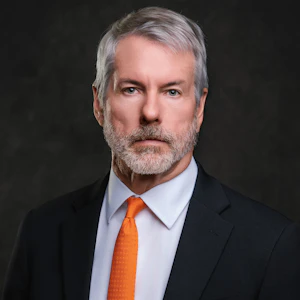
Michael Saylor
Michael Saylor
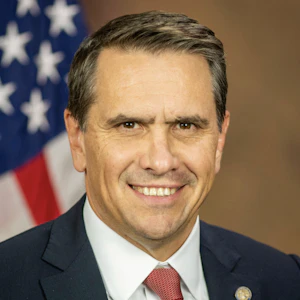
Todd Blanche
Todd Blanche
Biography of Deputy Attorney General Todd Blanche
The Honorable Todd Blanche is the 40th Deputy Attorney General of the United States, overseeing the work of the 115,000 dedicated employees who fulfill the Department of Justice’s mission at Main Justice, the FBI, DEA, U.S. Marshals, ATF, and 93 U.S. Attorney’s Offices.
Todd began his career at the Department where he served for over fifteen years in a variety of capacities, including as a contractor, a paralegal in the Criminal Division, and at the United States Attorney’s office for the Southern District of New York where he eventually became an AUSA and later a supervisor.
After leaving the Department, Todd worked as a criminal defense attorney that included representing President Donald Trump in three of the criminal cases brought against him in 2023 and 2024.
Following President Trump’s historic return to the White House, the President appointed Todd to work alongside Attorney General Pam Bondi to make America safe again. At the DOJ, Todd is working tirelessly to implement President Trump’s priorities that include confronting illegal protecting American businesses from fraud.
Todd has been married to his wonderful wife Kristine for nearly thirty years, is a father and grandfather.

Paul Atkins
Paul Atkins
Prior to returning to the SEC, Chairman Atkins was most recently chief executive of Patomak Global Partners, a company he founded in 2009. Chairman Atkins helped lead efforts to develop best practices for the digital asset sector. He served as an independent director and non-executive chairman of the board of BATS Global Markets, Inc. from 2012 to 2015.
Chairman Atkins was appointed by President George W. Bush to serve as a Commissioner of the SEC from 2002 to 2008. During his tenure, he advocated for transparency, consistency, and the use of cost-benefit analysis at the agency. Chairman Atkins also represented the SEC at meetings of the President’s Working Group on Financial Markets and the U.S.-EU Transatlantic Economic Council. From 2009 to 2010, he was appointed a member of the Congressional Oversight Panel for the Troubled Asset Relief Program.
Before serving as an SEC Commissioner, Chairman Atkins was a consultant on securities and investment management industry matters, especially regarding issues of strategy, regulatory compliance, risk management, new product development, and organizational control.
From 1990 to 1994, Chairman Atkins served on the staff of two chairmen of the SEC, Richard C. Breeden and Arthur Levitt, ultimately as chief of staff and counselor, respectively. He received the SEC’s 1992 Law and Policy Award for work regarding corporate governance matters.
Chairman Atkins began his career as a lawyer in New York, focusing on a wide range of corporate transactions for U.S. and foreign clients, including public and private securities offerings and mergers and acquisitions. He was resident for 2½ years in his firm's Paris office and admitted as conseil juridique in France.
A member of the New York and Florida bars, Chairman Atkins received his J.D. from Vanderbilt University School of Law in 1983 and was Senior Student Writing Editor of the Vanderbilt Law Review. He received his A.B., Phi Beta Kappa, from Wofford College in 1980.
Originally from Lillington, North Carolina, Chairman Atkins grew up in Tampa, Florida. He and his wife Sarah have three sons.

Mike Selig
Mike Selig
Chairman Selig brings to the role deep public and private sector experience working with a wide range of stakeholders across agriculture, energy, financial, and digital asset industries, which rely upon and operate in CFTC-regulated markets.
Prior to his leadership at the CFTC, Chairman Selig most recently served as chief counsel of the Securities and Exchange Commission’s Crypto Task Force and senior advisor to SEC Chairman Paul S. Atkins. In this role, Chairman Selig helped to develop a clear regulatory framework for digital asset securities markets, harmonize the SEC and CFTC regulatory regimes, modernize the agency’s rules to reflect new and emerging technologies, and put an end to regulation by enforcement. He also participated in the President’s Working Group on Digital Asset Markets and contributed to its report on “Strengthening American Leadership in Digital Financial Technology.”
Prior to government service, Chairman Selig was a partner at an international law firm, focusing on derivatives and securities regulatory matters. During his years in private practice, he represented a broad range of clients subject to regulation by the CFTC, including commercial end users, futures commission merchants, commodity trading advisors, swap dealers, designated contract markets, derivatives clearing organizations, and digital asset firms. Chairman Selig advised clients on compliance with the Commodity Exchange Act and the CFTC’s rules and regulations thereunder, including in connection with registration applications and obligations, enforcement matters, and complex transactions.
Chairman Selig earned his law degree from The George Washington University Law School and was articles editor of The George Washington Law Review. He received his undergraduate degree from Florida State University.

David Bailey
David Bailey

Eric Trump
Eric Trump
Mr. Trump also serves as Executive Vice President of The Trump Organization, where he oversees the global management and operations of the Trump family’s extensive real estate portfolio. This includes Trump Hotels, Trump Golf, commercial and residential real estate, Trump Estates, and Trump Winery. Known for his hands-on leadership and strong market instincts, he has played a key role in expanding the company’s presence across major U.S. and international markets.
A globally recognized business leader and public figure, Mr. Trump is a prominent advocate for Bitcoin and decentralized finance. He is a co-founder of World Liberty Financial, a decentralized finance (DeFi) platform, and serves on the Board of Advisors of Metaplanet, Japan’s largest corporate holder of Bitcoin.
Beyond his business activities, Mr. Trump has helped raise more than $50 million for St. Jude Children’s Research Hospital in the fight against pediatric cancer, a philanthropic mission he began at age 21.
Mr. Trump earned a degree in Finance and Management from Georgetown University. He currently resides in Florida with his wife, Lara, and their two children. He is also the author of Under Siege, his memoir published in October 2025.

Jack Mallers
Jack Mallers

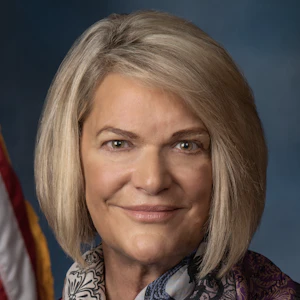
Cynthia Lummis
Cynthia Lummis
As the first-ever Chair of the Senate Banking Subcommittee on Digital Assets, Senator Lummis is the architect of the legislative framework shaping America's digital asset future. She introduced the landmark Lummis-Gillibrand Responsible Financial Innovation Act, the first comprehensive bipartisan crypto regulatory framework in Senate history. She co-authored the GENIUS Act — the first federal stablecoin law ever enacted — and introduced the BITCOIN Act, which would establish a U.S. strategic Bitcoin reserve of up to one million BTC. She is leading the Clarity Act, which will bring long-overdue regulatory certainty to the digital asset industry. She has also championed digital asset tax reform, including a de minimis exemption for small transactions and equal tax treatment for miners and stakers.
Known as Congress' "Crypto Queen," Senator Lummis represents Wyoming — a state she has helped build into one of the most digital asset-friendly regulatory environments in the nation. Before serving in the Senate, she served 14 years in the Wyoming Legislature, eight years as Wyoming State Treasurer, and eight years in the U.S. House. She is a three-time graduate of the University of Wyoming.
Her work represents a crucial bridge between traditional financial systems and the emerging digital economy, ensuring America leads the world in financial innovation while protecting the individual freedoms that define it.
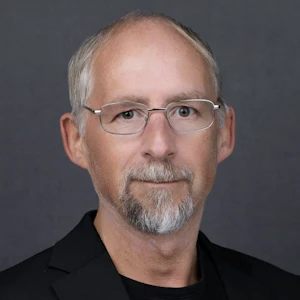
Adam Back
Adam Back

Amy Oldenburg
Amy Oldenburg

David Marcus
David Marcus

Matt Schultz
Matt Schultz
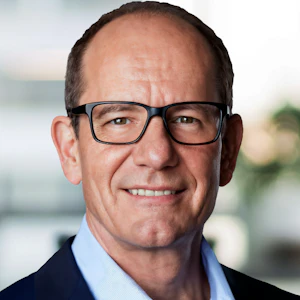
Fred Thiel
Fred Thiel
Throughout his career, Mr. Thiel has consistently driven rapid growth and created substantial shareholder value. Prior to MARA, Mr. Thiel served as the CEO of two other public companies, Local Corporation (NASDAQ: LOCM) and Lantronix, Inc (NASDAQ: LTRX). He has successfully raised billions in equity and debt through private and public offerings, led companies through IPOs, executed high-value exits to strategic and financial acquirers, and implemented effective M&A and roll-up strategies.
Mr. Thiel attended the Stockholm School of Economics and executive classes at Harvard Business School, and is fluent in English, Spanish, Swedish, and French. Mr. Thiel is the Chairman of the Board for Oden Technology, Inc. and is active in Young Presidents’ Organization where he has led initiatives in both the FinTech and Technology Networks.
A recognized voice in the industry, Fred frequently shares his insights on energy and technology with major media outlets like Bloomberg TV, CNBC, and FOX Business, contributing to vital discussions about the future of these sectors.
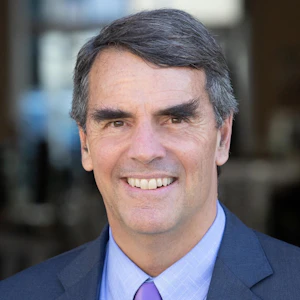
Tim Draper
Tim Draper
He is a supporter and global thought leader for entrepreneurs everywhere, and is a leading spokesperson for Bitcoin and decentralization, having won the Bitcoin US Marshall’s auction in 2014, invested in over 50 crypto companies, and led investments in Coinbase, Ledger, Tezos, and Bancor, among others.

Afroman
Afroman