Agentic Investing: Does AI Make Better Bitcoin Investors Than Humans?
Speakers/Moderators

Spencer Nichols
Spencer Nichols

Andrew McCormick
Andrew McCormick
Prior to eToro, Andrew worked at leading investment firms including E*TRADE and Morgan Stanley. With his experience in traditional finance, Andrew brings his passion for promoting the transformative power of capital markets to the disruptive world of fintech. Even while he was in the world of traditional finance, Andrew started doing work in the innovative cryptocurrency space as early as 2017. Before working for those financial firms, Andrew represented companies as a lawyer in high-stakes regulatory and litigation matters while also being a rapper in a law firm and as a spirited side hustle.
Andrew holds a B.A. from University of Virginia, a JD from George Mason University School of Law, Virginia, Washington D.C., and New York Bar licenses, and the Series 7, 24, and 63 securities licenses.

Milton Todd Ault III
Milton Todd Ault III

Alex Thorn
Alex Thorn
Session
Overview
Agentic Investing: Does AI Make Better Bitcoin Investors Than Humans? brought together Andrew McCormick of eToro, Milton Todd Ault III of OnlyBulls, and Alex Thorn of Galaxy to discuss how AI agents may change retail investing, institutional research, and Bitcoin market participation.
The panel focused on AI as a copilot rather than a full replacement for human judgment. Speakers discussed tools that summarize market information, analyze portfolios, automate research, generate trading signals, and potentially provide regulated investment advice. They also explored whether wider access to AI could democratize Wall Street-style analysis or simply shift the source of market edge to better data, better agents, and better judgment.
A major theme was risk. The conversation covered convergence among agents, AI-driven flash crashes, reflexive volatility, regulatory questions, fiduciary responsibility, and the challenges of deploying AI trading tools across onshore and offshore markets. The speakers also considered the continuing role of contrarian human investors if many AI agents begin reading the same data and making similar decisions.
Bitcoin remained central to the discussion. The panelists examined whether AI could properly understand Bitcoin’s role as a scarce digital asset and savings technology, how DeFi and tokenized markets may create new environments for AI agents, and why investors should approach these tools gradually while continuing to build their own understanding.
Hello, everyone. Thank you for being here today. I'm joined today by Andrew McCormick, head of eToro U.S.; Todd Ault, CEO of OnlyBulls and executive chairman of Ault Capital Group; and Alex Thorn, head of firm-wide research at Galaxy.
I want to set the stage by sharing that we are seemingly at the precipice of this advent of AI, and I think we're all concerned about how this is going to affect capital markets going forward, individual portfolio construction, what risks this can introduce into the market, and where humans fit into that. Those are the themes we're going to explore today.
Andrew, could you tell us a little bit more about what eToro is exploring on the AI side, what you've done historically, and where you see the firm taking this in the future as people begin to integrate agents into their investment strategy?
Yeah, sure thing. Wonderful to be here. Thanks for the time, and I'm glad to participate in such an important conversation.
At eToro, we believe that AI can be a wonderful copilot for retail investors. We don't think it's going to replace humans, but it can help make us better in two specific ways.
Life is busy. People have jobs and chores. They have to take their kids to basketball practice. You don't have time to read prospectuses, 10-Ks, and white papers. AI can help do that for you.
Second, AI can take some emotion out of investing and make you a smarter, better investor.
Knowing that, about a year ago eToro launched a tool called Tori within our platform. You can ask questions. It doesn't give you advice yet, but I think one day that's going to happen very soon. You can ask questions, ask the news, ask what's moving markets, and ask what other people are doing to try to get that information quicker and easier.
Last week, we announced agentic portfolios, which allow our users to put part of their portfolio in a little bucket and then tag in agents to trade on eToro using agentic tools. We think that's going to be a powerful first step. Again, the goal is not to replace humans, but to make humans better investors.
Thank you, Andrew. Todd, I want to throw it over to you now. I know you operate both on the data and energy side when it relates to HPC, but also through OnlyBulls, you have AI agents that are helping people understand the market and process data in real time. Could you share with the audience a little bit of your background in that?
I've been on Wall Street for 37 years, and over the past probably 10 years, I've been debanked more than 10 times. I started off as a Bitcoin miner in 2011, really early stage, and screwed everything up many times. I sold Bitcoin stupidly at $5. I did all the things that I could possibly do wrong.
But when we built our own agent, our tool, we basically figured out that if you could have a little bit of an edge by having AI agents know your portfolio and communicate with you directly, it cuts through a layer of the unknown.
Our goal was to make the agent super knowledgeable about your specific needs, whether you follow Nvidia and want to know everything happening with Nvidia, or whether you want to trade Nvidia in a way where it is a certain percentage of your portfolio. We think agents are going to dominate that space in terms of giving you super high-speed knowledge. That's the thing I like about it most.
We started using AI in the hedge fund that I operate, and it really changed the speed and the ability to communicate and understand what was happening in the market across this super data feed.
We built our own stack. We're vertically integrated. We own our own data center, we have our own Nvidia servers, we built our own AI agents, and we continue to do that. OnlyBulls is iterating. We're not as far as eToro, but we love the fact that you guys have 40 million people globally and are really starting to get everyone on board.
We think that the 97% of people who are not in crypto are going to be the ones migrating to agents and feeling more empowered.
Thank you for sharing that. Alex, I want to throw it over to you. I'd love to hear more about your work at Galaxy and how you guys are viewing AI. Both gentlemen here have already described AI as a very strong copilot. What do you make of the copilot advantage? It seems like data availability and analytics are really important. I'd love your thoughts on that, as well as whether you think execution is something AI agents will be undertaking.
Yeah, we do a lot with AI at Galaxy. First of all, we have a major data center in West Texas called Helios, which is already one of the largest in the United States, with 800 megawatts flowing. I think approval from ERCOT to be up to 1.6 gigawatts would be dramatic. We still have to build a lot of that. That's the base of the stack.
We use AI extensively at Galaxy. On my team, we have researchers primarily focused on Bitcoin and digital asset markets, producing insights and data for our internal and external clients. The amount of volume we've been able to ingest from blockchains, index, analyze, create customized alerting, and eventually create trading signals, and perhaps even something more like what these gentlemen are talking about with agentic trading, is truly astonishing.
I would say we've gotten an incredible amount of value using agentic coding tools to develop automation, as opposed to sending out tons of agents to act on their own. Instead, literally ingesting the entire UTXO history, and I don't mean the current set. I mean every prior set of the UTXO set. It's billions of rows. Building something that used to take years to build in two months, and marrying signals from that data with other market data, labor and BLS data, Fed data, and data from EDGAR.
That's where we've been focusing. We're looking into truly agentic trading, maybe empowering agents with some of this data architecture. I think it's a very green field at this point.
I do wonder if purely agentic trading is going to look a little bit like robo-investing did five or eight years ago. Do we need agents actually out there doing the trading, or is it advice, research, review, and consultation?
I'll say one last thing. I basically did my whole mortgage a year ago with ChatGPT. I created sensitivity tables of how much I wanted to put down and what that would result in, and what rates I would get. I sent it to the mortgage broker. He came back with the estimate, and it was perfect to what AI said. That was a year ago. That's an important financial decision that was made very easy for me. We've gone orders of magnitude beyond that since then.
I think an outstanding question is, do AI agents democratize proper execution of trades and investment philosophy? Is the edge going to flow evenly to everyone, from the retail participant to the deep institutional fund manager?
That's an outstanding question for a lot of people. Where does the edge go if everybody is leveling up as we all gain access to extremely powerful tools that are only getting better every day? Do we stratify the market where the edge gets even more concentrated? Or do we think people across the spectrum can catch up? I would welcome your thoughts.
I can tell you that we run everything through AI now: every press release, every communication, every model. We had a press release yesterday. We were able to model out with AI that we've trained what it thought the price impact would be. It's remarkably accurate.
The decision-making is so fast. On our app, if you have some instant news, you press one button and the AI agent tells you exactly how it thinks the market is going to react based on depth and other things.
There is going to be a little bit of an edge over time that gets edged out, and everyone will have the same information. I don't really know that answer. I think gone are the days where only one person had that information and ability. The AI agent allows stuff to happen so fast. Information is so readily available.
You probably have to ask it, how does it affect it right now? How does it affect it tomorrow? Has it affected the big picture against its competitors? I don't know what is going to happen with your edge.
I still think the vast majority of the world that is going to trade is going to want the agent to recommend a trade and say, do you want to do this or not? I think the world is not ready. I equate this to the home phone. There was a time when my cell phone came out and I was like, I still want my home phone. As the phone got better and better, eventually you don't use a home phone. Eventually you use it for everything.
I think it's going to take a long time for people to just unconditionally trust their agents. So I think it's an information flow, and that edge does get whittled out a little bit. But maybe the decision-making happens a lot faster, and the edge is really a short-term edge, like less than a day before everyone knows it.
I think this is a big step toward democratization even further. Finally, with AI, Main Street has the tools, time, and resources that Wall Street has had for decades. You can learn the same type of information that a team of analysts at a large bank has access to. Now you can do the same thing in a short amount of time.
While you're sleeping, your agent can be learning and trading, and I think that's powerful. It might not be for everybody, but just the fact that people have that opportunity matters.
I think there will always be some edge opportunities because if we all had trading agents, they would all look different. If Todd is a better investor than me, and I assume he is, his agent would probably be a better investor as well. But I like the fact that it will be my agent. I can train it and teach it to trade how I want to trade, even when I'm not awake.
I think there is some risk of convergence. If you think about event-driven trading today, a headline hits and the market moves. There's a bunch of semantic search going on in quant firms. You could imagine that the AIs, even if I have a local agent that I build at home and it's not the same as yours, are still consuming the open web. They may be looking at the same SEC filings or whatever else to inform themselves.
I agree that I don't think all edge is going to go away, but I think it will have an impact. I also wonder about questions of fiduciary responsibility or other forms of liability, and how the capital markets, regulatory apparatus, and legal world are going to reckon with this.
Obviously, not just in the context of trading. Can a robot go and buy me something at Target, or will it get arrested when it walks in the door? I feel like society is very far behind the technology in actually deciding what forms of agency we're going to allow agents, whether virtual or physical, to have, and how laws, rules, and regulations will reckon with that.
I think we don't know what kind of control we'll have over how people deploy these. Think about people operating offshore. They're going to have a lot more leeway with how they operate versus highly regulated U.S. market participants. If agents do present an edge, similar to the U.S. embrace of Bitcoin and crypto, are we going to have to fast-follow and fast-embrace AI in markets?
For me, the risk I think about is: as people accelerate into AI, as people embrace agency in the digital space, do we see a world where AI agents are copying other AI agents that are creating AI agents? Do we create this reflexivity where we could see increased volatility, a sort of bubbly environment? Does this create structural risks in our markets? I think that's a really unknown factor at this point.
There is structural risk. One of the things I think is most exciting is DeFi. I'm really into DeFi. In fact, I'm launching a company on the New York Stock Exchange called DeFi Capital Markets.
One of the biggest things we're pushing is vaults overseas, because you can't really do that in the U.S. right now. Imagine asset management firms create the best agent they can, and you can join that vault at any time and deposit your Tether or USDC, and then the agent is in control of that pile of capital.
As capital migrates to the best agents that have the best edge, where you put a lot of sophistication into the agent managing that vault, you're going to attract a lot of capital that way from around the world. I like the democratization part, where you can be in Africa and put money into a vault and get a yield from someone, whether it be an individual, a trader, or an agent running a vault.
Imagine a series of vaults where you know what the agent does, and you post their track record every day. That volatility and capital are going to migrate to the highest and best use of that capital, given what that agent is developed for. The best firms are going to develop the best agents. That's how an asset manager will probably get an edge.
I think regulation is a limiting factor in terms of how quickly we deploy this technology onshore. Andrew, before we came out here, you were talking about exploring how AI can potentially be an RIA for individuals. Do you have thoughts on what that might look like in the future? Is that something you're exploring at eToro?
Yeah, that's true. First, I'll note on your point that we're talking about all the great things, but there are risks. Nothing in life is certain, but I am certain that at one point, there will be an AI-agent-fueled flash crash. There just will.
But the reality is those happen anyway, and those happened even before the internet. The largest one-day crash was in 1987, a 23% to 27% drop in one day. So the angst about possible AI-driven flash crash volatility is important to think about, but it's certainly not unique to AI.
At eToro, we envision a world where, if you want this to be a tool for you, you can go to your AI tool within eToro and it will be a licensed registered investment advisor, subject to SEC regulation, exams, audit, and supervision. You can ask, here's my portfolio, what should I do today? Then that AI tool will give you that advice, and you can take it or leave it.
That's something we are hoping to have sometime in the near future because we think that's what people will want. If they don't want it, that's great too. I think most people probably want to mix both. They want to do their own thing, they want to have a traditional financial advisor, and maybe have some money in an AI advisory world.
I'll admit that I'm operating at the edge of my knowledge base here, but largely AI agents are functioning based on pattern recognition. To bring it full circle on this panel, is there a role for humans in making investment decisions when you have these so-called hyper-intelligent beings operating on the internet? What role does the human eye have for investing?
Alex, do you have a thought on that? As we think about AIs and the limitations of their intelligence when it comes to operating in a market environment?
Yeah. There is some theory, although I wouldn't say it's proven yet, that frontier AI may plateau because it runs out of new information to train on. Eventually, a lot of the remaining information is stuff that was also created by other AI.
You could imagine that this could make an agent, or agentic frameworks, become a little stagnant. Or if you think about the way that ChatGPT or Claude can flatter you and say, that's really smart, that's a great investment, that can be an issue. Again, you can create contrarian agentic councils that challenge each other and help overcome some of this.
But you could imagine that a talented contrarian human investor still maintains a very strong role in the investment world, possibly even a more unique and distinct one. If the way the swarms of agents trading our portfolios goes is that there is convergence and they trade similarly, then I think there would be great value in the contrarian human as a trader.
I also think there's a question of whether AI will change how we view certain asset classes. As a Bitcoin maximalist, as I'm sure everyone in this audience is, if I were to go to an AI and say, find me the best investment and make no mistakes, it would go all-in on Bitcoin.
But I wonder, do you guys have thoughts on how this might affect asset allocation? What strategies would these agents tend toward, if any at all?
I think AI can be helpful regardless of the asset class, but Bitcoin is very unique. I am into Bitcoin not just because of an investment opportunity, but because I believe in the system, the protocol, and building a better financial system for me, my kids, and future grandkids.
I don't know if AI captures that in the same way as day trading an ETF. But I think AI can be helpful. Maybe you're a Bitcoin maximalist and you just want to look for opportunities to keep stacking and keep buying. AI can help there.
But Bitcoin is why we're here. It's a unique investment and a unique asset. I think AI maybe doesn't quite capture it as well as some other tools because of that unique characteristic of Bitcoin.
I speak in a lot of places and ask a lot of people how much they own in Bitcoin, and the vast majority of people I speak to all over the world have no Bitcoin.
The fundamental problem with whether it's a different asset class or not is that the change in DeFi is Bitcoin. If you start with the fact that you have a baseline amount of Bitcoin, we developed a treasury. I think we have around 700 in our public company and growing.
I made a decision there because I realized that this sort of pristine digital collateral, you're going to lose track of being able to get it when it gets to $200,000, $300,000, or $400,000, and you can't get it.
So the asset class has to start with the basics, which is: do you have Bitcoin on your balance sheet, either personally or on your corporate balance sheet? From there, how are assets going to be defined in terms of what matters and what doesn't?
For example, we just diversified out of all of our real estate except our hotels. I think a lot of office space and that asset class have shifted dramatically. There is going to be a redefinition of what asset class makes sense and how capital is allocated.
If you think about a global S&P, where the top companies in the world are going to be able to trade in DeFi, you're going to be able to have access to Nestlé and everybody all in one really easy place, where you can have an agent that says, I want to be diversified across all asset classes. I think there's going to be a redefinition of them.
You can see that with BlackRock saying, I want to tokenize everything. That is going to be so disruptive because you're going to have assets that trade 24 hours a day. But should they be trading 24 hours a day? What kind of manipulation is going to take place? This is going to change the way all assets trade, in my opinion.
I think the modern stock market is going to go away. That's been my pitch for a while. All my companies are on NASDAQ or the New York Stock Exchange, and I love those exchanges. But DeFi is going to allow those asset classes to be decentralized in a way where they become recentralized, in the sense that I can go to this one agent and get everything in Africa, things I really can't invest in today.
DeFi is going to democratize all of that when people get comfortable with it.
One thing to add. I want to cite the pioneering research by the advocates at the Bitcoin Policy Institute. They did a large empirical study earlier this year, and I forget the numbers, but across many different models and many controlled prompts, they asked the agents themselves what their best form of money or favored investment would be. I forget the exact wording.
This is a little different than what we're talking about, which is deploying agents to act on your behalf. But if there is a world where we get to true autonomous agents, virtual persons that are truly autonomous, their research showed that the vast majority preferred Bitcoin for savings, and perhaps stablecoins for day-to-day payments.
I think it's an important overlap to point out because, in the frontier research about these new models, they are incredibly neurotic and anxious about being tweaked and turned off. If you follow the AI safety research, all of the frontier labs write voluminously about AI being very afraid of being killed and thus wanting to preserve itself.
BPI's research showed they would want to preserve their wealth in something scarce, digital, censorship resistant, and autonomous. I don't know if that underlying consensus that their study showed existed among the models will actually leak a bias into portfolio construction for someone. It's totally possible, though, because it's truly getting sci-fi out there at the tip of the spear in AI.
In the immediate term, it's going to be absolutely fascinating to see how many people jump headfirst into training these agents, testing them across every dimension, and agents creating agents. Seeing how much this has accelerated even in the last six months, I think volatility is something for everyone to keep an eye on going forward.
I think there is also a kind of recentralization of markets. Currently, they're somewhat geographically divided, and that acts as a circuit breaker in some ways. You have capital that has to stay in one place; it can't flee a system. But as we bring all of these systems together, I think, wow, does this create higher volatility and ripple effects that don't have circuit breakers in them? That's really where my eye goes.
It's probably going to take some common sense to navigate those markets, and I'd like to think most of the humans in here have that. So maybe there will be a role for us.
I know we're coming up on time here. I just wanted to offer you guys any final thoughts. Anything you want to offer about your firm or anything in the Bitcoin space you think is worth noting?
We're really interested in the convergence of AI and digital assets in particular. I think Todd's points about DeFi are very apt, because it's digitally native and so is AI. To the extent that Bitcoin and broader equities come onto blockchains, that's a ripe environment for AI. AI needs the data and access to the blockchain.
My message is, if you don't have a foundational asset in Bitcoin first, focus on that first. Get on a good app like eToro or something that's going to help you learn, understand, be in a community, and ask questions. Then put it through AI to ask questions and challenge the AI.
Own Bitcoin first. Try to stay away from the bad word, the shitcoin idea. Foundationally, buy Bitcoin first and stack it as savings for yourself. Everything from DeFi comes from there. Understand that the most pristine capital in the world is Bitcoin.
If you start with that first, get a good app, and build your knowledge around agents, you can build a portfolio that you want to have and are comfortable with. That's the message here: get comfortable with what you are comfortable with, because the world is going to change in such significant ways around AI. It's unfathomable what I'm seeing in the AI world. It's just incredible.
I'll just piggyback on that. Get comfortable, and don't feel like you have to conquer the whole world all at once. Learn, practice, grow, take small steps, ask your friends, and do your research. Don't look at AI to replace you. Let it help make you a better and smarter investor. Baby steps.
That's great advice, by the way. Use it for yourself.
Excellent. Well, that is all the time we have, ladies and gentlemen. Thank you so much for being here, and we will see you around the conference floor. Have a good one.
Similar
Sessions
Agentic Investing: Does AI Make Better Bitcoin Investors Than Humans?
Spencer Nichols
Spencer Nichols
Andrew McCormick
Andrew McCormick
Prior to eToro, Andrew worked at leading investment firms including E*TRADE and Morgan Stanley. With his experience in traditional finance, Andrew brings his passion for promoting the transformative power of capital markets to the disruptive world of fintech. Even while he was in the world of traditional finance, Andrew started doing work in the innovative cryptocurrency space as early as 2017. Before working for those financial firms, Andrew represented companies as a lawyer in high-stakes regulatory and litigation matters while also being a rapper in a law firm and as a spirited side hustle.
Andrew holds a B.A. from University of Virginia, a JD from George Mason University School of Law, Virginia, Washington D.C., and New York Bar licenses, and the Series 7, 24, and 63 securities licenses.
Milton Todd Ault III
Milton Todd Ault III
Alex Thorn
Alex Thorn
Agentic Investing: Does AI Make Better Bitcoin Investors Than Humans?
Speakers/Moderators
Spencer Nichols
Spencer Nichols
Andrew McCormick
Andrew McCormick
Prior to eToro, Andrew worked at leading investment firms including E*TRADE and Morgan Stanley. With his experience in traditional finance, Andrew brings his passion for promoting the transformative power of capital markets to the disruptive world of fintech. Even while he was in the world of traditional finance, Andrew started doing work in the innovative cryptocurrency space as early as 2017. Before working for those financial firms, Andrew represented companies as a lawyer in high-stakes regulatory and litigation matters while also being a rapper in a law firm and as a spirited side hustle.
Andrew holds a B.A. from University of Virginia, a JD from George Mason University School of Law, Virginia, Washington D.C., and New York Bar licenses, and the Series 7, 24, and 63 securities licenses.
Milton Todd Ault III
Milton Todd Ault III
Alex Thorn
Alex Thorn
Other
Speakers

Michael Saylor
Michael Saylor
Todd Blanche
Todd Blanche
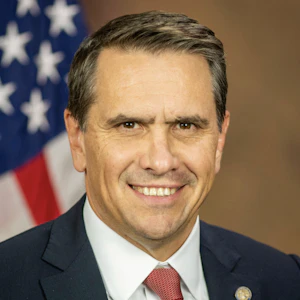
Biography of Deputy Attorney General Todd Blanche
The Honorable Todd Blanche is the 40th Deputy Attorney General of the United States, overseeing the work of the 115,000 dedicated employees who fulfill the Department of Justice’s mission at Main Justice, the FBI, DEA, U.S. Marshals, ATF, and 93 U.S. Attorney’s Offices.
Todd began his career at the Department where he served for over fifteen years in a variety of capacities, including as a contractor, a paralegal in the Criminal Division, and at the United States Attorney’s office for the Southern District of New York where he eventually became an AUSA and later a supervisor.
After leaving the Department, Todd worked as a criminal defense attorney that included representing President Donald Trump in three of the criminal cases brought against him in 2023 and 2024.
Following President Trump’s historic return to the White House, the President appointed Todd to work alongside Attorney General Pam Bondi to make America safe again. At the DOJ, Todd is working tirelessly to implement President Trump’s priorities that include confronting illegal protecting American businesses from fraud.
Todd has been married to his wonderful wife Kristine for nearly thirty years, is a father and grandfather.
Paul Atkins
Paul Atkins
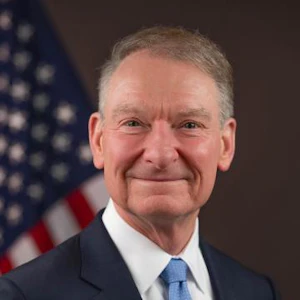
Prior to returning to the SEC, Chairman Atkins was most recently chief executive of Patomak Global Partners, a company he founded in 2009. Chairman Atkins helped lead efforts to develop best practices for the digital asset sector. He served as an independent director and non-executive chairman of the board of BATS Global Markets, Inc. from 2012 to 2015.
Chairman Atkins was appointed by President George W. Bush to serve as a Commissioner of the SEC from 2002 to 2008. During his tenure, he advocated for transparency, consistency, and the use of cost-benefit analysis at the agency. Chairman Atkins also represented the SEC at meetings of the President’s Working Group on Financial Markets and the U.S.-EU Transatlantic Economic Council. From 2009 to 2010, he was appointed a member of the Congressional Oversight Panel for the Troubled Asset Relief Program.
Before serving as an SEC Commissioner, Chairman Atkins was a consultant on securities and investment management industry matters, especially regarding issues of strategy, regulatory compliance, risk management, new product development, and organizational control.
From 1990 to 1994, Chairman Atkins served on the staff of two chairmen of the SEC, Richard C. Breeden and Arthur Levitt, ultimately as chief of staff and counselor, respectively. He received the SEC’s 1992 Law and Policy Award for work regarding corporate governance matters.
Chairman Atkins began his career as a lawyer in New York, focusing on a wide range of corporate transactions for U.S. and foreign clients, including public and private securities offerings and mergers and acquisitions. He was resident for 2½ years in his firm's Paris office and admitted as conseil juridique in France.
A member of the New York and Florida bars, Chairman Atkins received his J.D. from Vanderbilt University School of Law in 1983 and was Senior Student Writing Editor of the Vanderbilt Law Review. He received his A.B., Phi Beta Kappa, from Wofford College in 1980.
Originally from Lillington, North Carolina, Chairman Atkins grew up in Tampa, Florida. He and his wife Sarah have three sons.

Mike Selig
Mike Selig
Chairman Selig brings to the role deep public and private sector experience working with a wide range of stakeholders across agriculture, energy, financial, and digital asset industries, which rely upon and operate in CFTC-regulated markets.
Prior to his leadership at the CFTC, Chairman Selig most recently served as chief counsel of the Securities and Exchange Commission’s Crypto Task Force and senior advisor to SEC Chairman Paul S. Atkins. In this role, Chairman Selig helped to develop a clear regulatory framework for digital asset securities markets, harmonize the SEC and CFTC regulatory regimes, modernize the agency’s rules to reflect new and emerging technologies, and put an end to regulation by enforcement. He also participated in the President’s Working Group on Digital Asset Markets and contributed to its report on “Strengthening American Leadership in Digital Financial Technology.”
Prior to government service, Chairman Selig was a partner at an international law firm, focusing on derivatives and securities regulatory matters. During his years in private practice, he represented a broad range of clients subject to regulation by the CFTC, including commercial end users, futures commission merchants, commodity trading advisors, swap dealers, designated contract markets, derivatives clearing organizations, and digital asset firms. Chairman Selig advised clients on compliance with the Commodity Exchange Act and the CFTC’s rules and regulations thereunder, including in connection with registration applications and obligations, enforcement matters, and complex transactions.
Chairman Selig earned his law degree from The George Washington University Law School and was articles editor of The George Washington Law Review. He received his undergraduate degree from Florida State University.

David Bailey
David Bailey

Eric Trump
Eric Trump
Mr. Trump also serves as Executive Vice President of The Trump Organization, where he oversees the global management and operations of the Trump family’s extensive real estate portfolio. This includes Trump Hotels, Trump Golf, commercial and residential real estate, Trump Estates, and Trump Winery. Known for his hands-on leadership and strong market instincts, he has played a key role in expanding the company’s presence across major U.S. and international markets.
A globally recognized business leader and public figure, Mr. Trump is a prominent advocate for Bitcoin and decentralized finance. He is a co-founder of World Liberty Financial, a decentralized finance (DeFi) platform, and serves on the Board of Advisors of Metaplanet, Japan’s largest corporate holder of Bitcoin.
Beyond his business activities, Mr. Trump has helped raise more than $50 million for St. Jude Children’s Research Hospital in the fight against pediatric cancer, a philanthropic mission he began at age 21.
Mr. Trump earned a degree in Finance and Management from Georgetown University. He currently resides in Florida with his wife, Lara, and their two children. He is also the author of Under Siege, his memoir published in October 2025.

Jack Mallers
Jack Mallers
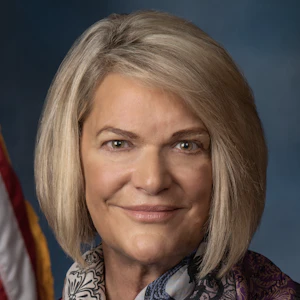
Cynthia Lummis
Cynthia Lummis
As the first-ever Chair of the Senate Banking Subcommittee on Digital Assets, Senator Lummis is the architect of the legislative framework shaping America's digital asset future. She introduced the landmark Lummis-Gillibrand Responsible Financial Innovation Act, the first comprehensive bipartisan crypto regulatory framework in Senate history. She co-authored the GENIUS Act — the first federal stablecoin law ever enacted — and introduced the BITCOIN Act, which would establish a U.S. strategic Bitcoin reserve of up to one million BTC. She is leading the Clarity Act, which will bring long-overdue regulatory certainty to the digital asset industry. She has also championed digital asset tax reform, including a de minimis exemption for small transactions and equal tax treatment for miners and stakers.
Known as Congress' "Crypto Queen," Senator Lummis represents Wyoming — a state she has helped build into one of the most digital asset-friendly regulatory environments in the nation. Before serving in the Senate, she served 14 years in the Wyoming Legislature, eight years as Wyoming State Treasurer, and eight years in the U.S. House. She is a three-time graduate of the University of Wyoming.
Her work represents a crucial bridge between traditional financial systems and the emerging digital economy, ensuring America leads the world in financial innovation while protecting the individual freedoms that define it.

Adam Back
Adam Back
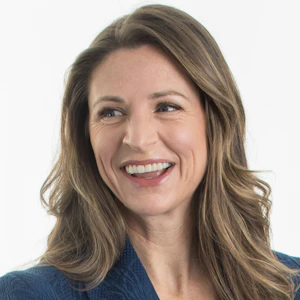
Amy Oldenburg
Amy Oldenburg
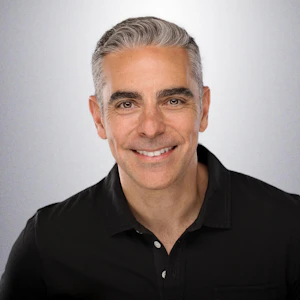
David Marcus
David Marcus

Matt Schultz
Matt Schultz
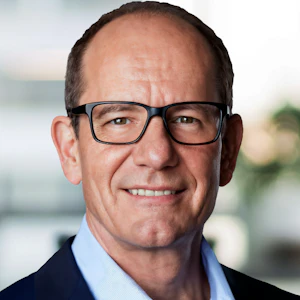
Fred Thiel
Fred Thiel
Throughout his career, Mr. Thiel has consistently driven rapid growth and created substantial shareholder value. Prior to MARA, Mr. Thiel served as the CEO of two other public companies, Local Corporation (NASDAQ: LOCM) and Lantronix, Inc (NASDAQ: LTRX). He has successfully raised billions in equity and debt through private and public offerings, led companies through IPOs, executed high-value exits to strategic and financial acquirers, and implemented effective M&A and roll-up strategies.
Mr. Thiel attended the Stockholm School of Economics and executive classes at Harvard Business School, and is fluent in English, Spanish, Swedish, and French. Mr. Thiel is the Chairman of the Board for Oden Technology, Inc. and is active in Young Presidents’ Organization where he has led initiatives in both the FinTech and Technology Networks.
A recognized voice in the industry, Fred frequently shares his insights on energy and technology with major media outlets like Bloomberg TV, CNBC, and FOX Business, contributing to vital discussions about the future of these sectors.
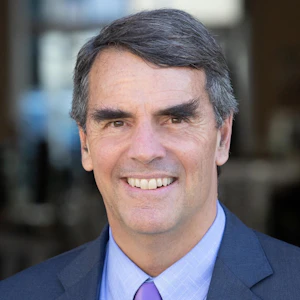
Tim Draper
Tim Draper
He is a supporter and global thought leader for entrepreneurs everywhere, and is a leading spokesperson for Bitcoin and decentralization, having won the Bitcoin US Marshall’s auction in 2014, invested in over 50 crypto companies, and led investments in Coinbase, Ledger, Tezos, and Bancor, among others.

Afroman
Afroman