AI + Bitcoin + Nostr = Freedom Tech Stack
Speakers/Moderators

Justin Moon
Justin Moon
Mark Suman
Mark Suman
Jesse Posner
Jesse Posner

Derek Ross
Derek Ross
Session
Overview
Justin Moon of the Human Rights Foundation hosted a discussion with Mark Suman of Maple AI, Jesse Posner of Vora, and Derek Ross of Soapbox on how Bitcoin, Nostr, and AI can work together as a freedom technology stack. The conversation focused on digital sovereignty, privacy, self custody, and the shift from user-owned computing to cloud platforms that monetize attention and data.
The panel explored how AI agents could become a major interface for digital life, and why open protocols matter if users want those agents to work on their terms. Speakers argued that Nostr’s open, cryptographically authenticated network is better suited for user-controlled agents than closed social platforms that restrict APIs and depend on advertising-based business models.
A major theme was making privacy and self-hosting convenient enough for mainstream use. The discussion covered local AI appliances, encrypted cloud AI, trusted execution environments, value-for-value payments, zaps, and the possibility that Bitcoin self custody and AI data custody may converge into related products.
The panel also addressed authenticity in an AI-heavy internet. Nostr’s cryptographic signatures, web-of-trust tools, proof-of-work notes, zaps, and human verification modes were presented as ways to help users filter bots, verify accounts, and preserve trust without relying on centralized moderation or KYC.
All right. Thank you all for coming. My name is Justin. I'm the tech lead for the Human Rights Foundation's AI program. Let's go down the row with some introductions to start.
What's going on? Thank you for being with us. I'm Derek Ross. I do developer relations at Soapbox and a whole bunch of Nostr stuff.
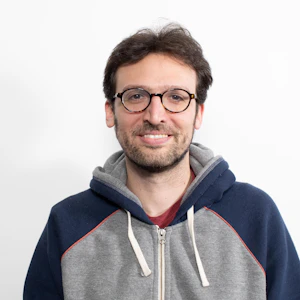
My name is Jesse Posner, CEO of Vora. We make tools to help you reclaim your digital life, which includes self custody not just for your Bitcoin, but for your AI, your emails, your text messages, and all your data.
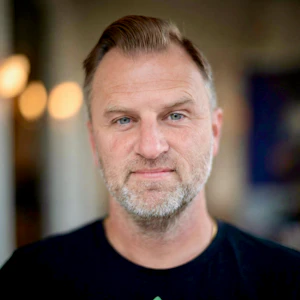
I'm Mark Suman. I'm the CEO of Maple. We make personal intelligence for users. We're bringing privacy back to AI, so all those tools, we make similar versions while protecting your privacy.
The topic we want to discuss today is freedom, sovereignty, and computing. When personal computers first came out in the 80s and 90s, there was this very idealistic vision: a bicycle for the mind, very empowering. You were totally in control. You bought the hardware, you owned it, and you were augmented with all kinds of superpowers.
Then the internet came around, and it got better and better: the information superhighway, the Cypherpunks. If you ever listen to some of their early talks, they were incredibly idealistic about where this was going. That stayed true until maybe the early 2000s, when it started changing course.
Computers may have gone from something that liberated us to something the average person increasingly serves. You're farmed for your attention. You're surveilled at all times. The 2010s were maybe a period where computers became less and less free, and one thing that resisted that was Bitcoin. We do not need to talk about that too much more, because you are all here for a Bitcoin conference and you understand the value there.
But I think we still have a long way to go in terms of making our digital lives more sovereign and more free, and making computers something that serve us and make our lives better, as opposed to something that harms us. I'm shooting for an open discussion about how we get there.
Jesse, you were talking about the mission of your company. Walk me through that. Where do you feel the problems are in computing today?
I do not think anybody is really happy with the state of technology right now. Just about everybody I talk to complains about their devices and their social media feed. It does not feel good. You log on to social media and you are entering into a psychological operations battleground. There are people trying to make you angry, make you afraid, and make you click on things.
We feel that. We do not own our digital lives, and we feel that too. Each of these big tech companies owns a shard of our digital life. Google, Apple, Facebook, they all own a piece. So we are essentially digitally homeless. We do not have a home in cyberspace, in this space and identity that is becoming a bigger and bigger part of our lives.
And that is just the beginning, because what happens when AI gets added into this toxic mix? It is not just our attention being monetized, it is our cognition. We will lose free society. Free thinking will essentially become machines if we do not choose a different way.
What is exciting is that AI also has the opposite potential. It has the potential to radically accelerate decentralization and privacy. That is what we have to focus on as the Bitcoin community: to take our perspective, our values, and our philosophy as inheritors of the Cypherpunk tradition, and take that into what is happening in AI at this critical moment.
Mark, you would think sovereign private AI would be a compelling value proposition that other companies would offer. Why do big tech companies not offer this? Why are they basically selling the exact opposite? Walk us through how it actually works.
It is the old trope of follow the money. Follow the incentives of these companies. They have built their businesses on monetizing user data. They build these algorithms that capture your attention. They know how to keep you in there. Then they take all that information and sell it to advertisers, sell it to governments, sell it to the highest bidder.
A lot of the time, that data is not sold directly to the government. It is sold to a data broker, who aggregates data from other sources. You might think, I am just using this one tool, I have only told this tool this thing, and I have kept myself separated over here. But they are joining it together later and building a whole profile on you.
So it is really just looking at the incentives. You brought up the 90s. The 90s were such a great time for so many reasons. One reason is that they did not have this whole business model of monetizing data. They simply sold you a service and that was it.
Or a physical CD.
Those came in the mail for free.
Yeah, or on the front of a magazine or something. It is really a lot of incentives. We need to build tools that have better business models that favor the user and not the company.
Derek, there is this idea that one of the places we went wrong, one of the differences after 2009, is that we started monetizing data. Maybe there was not a way to monetize the internet in the 90s. How does the Nostr community look at this differently? We have talked a little bit about AI, and Nostr has this idea of value for value and zaps, where we may be able to have an economy that is more peer to peer and less indirect monetization, where you leak data and then it is sold up the river and monetized by someone else without you even being aware of it.
Let's rewind for a second. Back in the 90s, the web was new. To scale and grow, we did not have the tech infrastructure to run all of these pieces ourselves at home. So we relied on large tech corporations to facilitate growth. That had a downside, which is why we are all here now talking about it.
With Nostr, the tech stack is now mature. I can run the part of the social web that I want to run at home. I can run applications on hardware that I own at home. I can run a mini server that facilitates all of my social transactions. The decentralized internet tech stack is now fast enough and generally available in most places.
We do not need to rely on these large tech companies and large infrastructure. We can mostly do it ourselves. With zaps, relying on our community for funding and monetization, if a creator puts out a video, a photo, a blog article, a post, a GIF, music, or whatever type of content, we can monetize it ourselves. We do not need to rely on advertising as a monetization method. We do not need to rely on large tech companies to monetize our data in exchange for offering us free services.
Value for value is really new. It has been around for a while, but most people do not understand it because they are so used to getting content for free. They are so used to just signing up for a service, giving all of their data and content to a large company, giving all of their attention to a large company, and then that company monetizes it to give them back content from advertisers.
It is a really disruptive model, and it is going to take time. Revolution does not happen overnight. It will take a while, and it is going to take people spending their hard-earned sats to help facilitate this. We are just getting started.
One thing is that we stopped self-hosting our own services and started depending on cloud companies to run some of our computers for us. But we still spend a lot of money on computer hardware. We all have these fancy phones and laptops. Somewhere, behaviorally or technologically, we stopped self-hosting. I think self-hosting is really critical and needs to happen for us to have free services that we all can use.
Now the tech stack, both hardware and software, is ripe to be able to do this. Some of us have probably been running a lot of these services at home for the past two decades anyway. The average person could not do that. It was hard, and more technical people were doing it. But now the way the tech stack is, almost anybody can do it. You can point and click and install a self-hosted service. You could not do that 20 years ago.
Absolutely. And really, AI is like the final missing piece that we did not even realize we needed. It pulls it all together. When you think about these issues of privacy and decentralization, why has it not gone mainstream? Because right now the appeal is mainly ideological. Do this because it is the right thing. It is the good thing. It is better for the world.
We get the hardcore people that say, yeah, we are going to do it even if it is kind of a pain or annoying. We are going to do it anyway. But we are never going to get the mainstream that way. We are always just going to be niche in the corner. That is not good enough. This is something that has to get brought to all of humanity.
That is not going to come through lecturing people and telling them what they are supposed to do. The way we are going to get there is by creating amazing experiences that are not possible otherwise. This is why AI is so important. Everybody is going to have a personal agent that runs your life because it is just so useful that nobody is going to be able to resist it.
The first phase of AI is something like ChatGPT, where the AI lives in the browser. The next phase is that the AI lives on a computer. It is not stuck in a browser. It can do anything that you can do on your computer. That is super useful, because now I do not have to deal with my apps. I just ask my agent what I need when I want it.
If I am curious about something Justin said to me in our correspondence, I do not want to look through Signal or Gmail or Facebook and everything else. I just want to say, what did Justin say to me yesterday? That is what the agent can do.
Or I do not want to go into X, Facebook, and all this other stuff. I want my agent to show me my feed on my terms, the way I want to see it.
What starts to happen with these agents is that as soon as you set them up on your computer, you want to connect them to all your accounts. You very quickly notice which APIs and accounts work with agents and which ones are hostile to your agent.
X, Facebook, and Instagram do not want agents pulling down the data. They do not want agents interacting with their platform. For good reason: it is an existential threat to their business model. So they are hostile. Up until now, the UX for these other feeds has arguably been better than the current state of Nostr. Nostr has come a long way, but you have these very polished apps.
Now it is the opposite. If I am running an agent, the Facebook UX is bad because my agent cannot connect to it. It is worthless to me. The API that my agent can connect to is the one that wins. Nostr is free, open, and cryptographically authenticated. It is the dream network for an agent.
We do not need these data brokers. We do not need these centralized companies in the middle. We need lightweight discovery networks. The agents will build the roads agent to agent, peer to peer.
The word that comes to mind as you are talking is convenience. Convenience is not a word usually used to describe Bitcoin user experiences. This is one of the first times we can actually offer this.
Bitcoin, Nostr, and AI can make this convenient and make privacy convenient. That is the only way we capture the mainstream.
I agree with you. Agents are the next iteration of all these tools. If you think about it, back in the 90s we were all worried about viruses getting on our computers that would go in and touch all of our apps and read all of our emails and text messages. Now it is like, actually, we want to invite those tools onto our system, but we need to do it in the right way. We need to make tools that are secure and private, and that can have access to all this.
If you are running open-source agent tools, but then you are having Anthropic Claude or chatbot models talk to them, then you are basically opening up your computer to Sam Altman or Dario. We need to use a combination of local AI, if you have a machine that is powerful enough for it, or some kind of convenient cloud-hosted AI. We need to bring the privacy of local into the cloud and find something more private. We really need to build tools that are very convenient.
Mark and Jesse, could you both give a brief explanation of your approach to AI? They are both great and complementary, and I want the audience to understand them.
We are starting with a product that we call Aegis, which is a home AI appliance. It has a local, open-weight AI, basically an open-source AI that you can verify for yourself. You can choose what kind of AI you want to run, and it runs on your local hardware.
It is an appliance, not a computer, so it is super easy to set up. You just pair a mobile app and desktop app, and now you have an AI that is completely private. It is loyal to you and no one else, and it manages your digital life.
It can work with cloud AIs when there is a non-privacy-sensitive task. It orchestrates these different tasks and figures out when to bring in the cloud and when to use local.
From there, we are going to follow up with additional products, because we think that Bitcoin self custody and AI self custody are eventually going to converge into the same product. You will need cold storage for your AI. We will need to think about wrench attacks, government seizure, and all the things we think about with Bitcoin self custody.
It is going to be the same thing for AI, because if somebody owns your AI data, they own you. At some point, that may even be more valuable to you than your Bitcoin keys.
We are a cloud version of a lot of what was just described. Last year, we set out to build a chatbot but end-to-end encrypted. We run open models, and your device has a private key on it. Everything is encrypted locally before it is sent out to our cloud. Then it is processed in trusted execution environments and sent back to your device encrypted. We actually cannot see anything that users are talking about.
What we are announcing this week is that we have our own agent coming soon. We are building an encrypted private agent. It is going to continue to grow because we really want to build convenient tools that the most people can take advantage of.
One other aspect of this is that, for me, over the last year, public social media and traditional social media have become harder and harder to use. More and more, I do not know if I am talking to a human or not. It feels less and less authentic.
Derek, I think Jesse mentioned how the cryptographic verifiability of Nostr is useful here. Could you walk us through that? In the future, we may not know if an account is a bot or not, but with Nostr's cryptographic verifiability and a level of trust, how do you see that working?
When we saw the influx of better bots two or three months ago, we realized that bots have gotten a lot better. I think that accelerated web of trust. Web of trust is metrics used to determine filters. If I like a certain type of content, maybe zaps, which are value-for-value transactions, or maybe I like comments, or maybe I am weird and like likes for some reason, then I can tailor my content, my feed, my interactions, and what I want to see based on these web-of-trust metrics.
At the most basic level, web of trust is: if I follow somebody, and that person follows somebody, there is a chance that they are a good account to follow. But web of trust needs to be based on additional metrics, because follows are the least important item on the stack.
We start adding in value. We track a metric of who is zapping and how much they are zapping. Is it one-sat zaps, or are they actually sending real monetary value to people? Then you can use this to configure your feed. You might say, I only want to see people using proof-of-work notes, or I do not want to see content from npubs that are not known good zappers.
This is not a social credit score, because every single person in this room can configure their own metrics and their own weights and measurements. There is not one central entity that pushes this down from the top. Every app, every person, every human can decide what they want to see.
You cannot do that on Facebook, X, TikTok, Instagram, or whatever. That is controlled from the top. They are determining who is or is not a bot and whatever metrics they are using.
It is going to just be KYC.
Heavy, heavy KYC. With web of trust, you essentially allow your community and yourself to do the moderation. I think it boils down to giving users the most amount of tools possible to determine who is human and who is not, and who they want to see in their feed. You cannot do that anywhere else.
It is really critical even for agents. We can have really good agents that are on Nostr.
There is an agent web of trust. Some agent built it a couple months ago.
Let's say Elon Musk today came on Twitter and said, hey, this is my bot. It is called Elon Bot. There would immediately be 10,000 copycat Elon bots on Twitter within a matter of minutes. You would never know which one was the right one. They would all have blue marks.
With Nostr, there is cryptographic proof that this is the one that I set with my bot, and nobody can spoof that. I think it is really important to know the authenticity of accounts.
At the end of the day, since tweets are not cryptographically signed, you do not know who sent them. It is just a line in a database. Someone could add a new line in the database, and boom, Mark said something when he actually did not. It looks like he did because it was not signed with Mark's private key. Twitter does not allow you to do that. On Nostr, you can sign everything. Since it is cryptographically signed, you have proof that yes, Mark actually did post this. You cannot do that anywhere else.
If a president resigned from being president of the United States on Twitter, we would have no idea if he really posted it. It is absolutely wild. We would say, well, I guess he posted it. I guess that is happening. But if he had signed it on Nostr, you could say, this is verified that somebody with access to that private key posted that information.
A cryptographic signature might be the only thing that an AI is never going to be able to figure out how to fake. There is no amount of AI slop that is going to get the signature verification to pass without the private key. That is going to be an increasingly important foothold in this world of AI, where AI data and AI-generated content is going to vastly outweigh human-generated content, probably 10 to 100 to one and beyond.
The Nostr app Divine just launched today, and they are using a human proof mode to determine content that was posted by humans. They do not want to see the AI slop. People are tired of the AI slop. On Divine, there is a human mode you can toggle on to see content that was posted by a human.
Only a few seconds remain here. Let’s go down the line. Where can people find you and keep track of your progress?
Check it out. You can find me on X and Nostr.
I am Jesse Posner on X, and I have a Nostr account linked there. You can find Vora, and we have a mailing list. Please sign up. You will hear from us more when we are shipping. Within a few months, we will have more details about a product.
I deleted all my legacy social media three years ago. You can find me on Nostr. I am Derek Ross on Nostr. Check us out at Soapbox.
Awesome. I am on Nostr as well. Thank you all for joining me, and thank you all for joining us.
Similar
Sessions
Vibe Coding Live
Vibe Coding Live
Claws and Coffee
Claws and Coffee
Vibe Coding on Bitcoin

Michael Tidwell
Michael Tidwell
TAB Conference, (TABConf). Technical Bitcoin conference started in 2018.
Blocktime podcast, Bitcoin podcast started in 2018.
Started as one of the first employees at ZBD in 2020. Enabled users to earn bitcoin via lightning by playing video games. First company I know of to scale lightning for custodial usecases.


Lee Salminen
Lee Salminen
Derek Ross
Derek Ross
Vibe Coding on Bitcoin
Speakers/Moderators
Michael Tidwell
Michael Tidwell
TAB Conference, (TABConf). Technical Bitcoin conference started in 2018.
Blocktime podcast, Bitcoin podcast started in 2018.
Started as one of the first employees at ZBD in 2020. Enabled users to earn bitcoin via lightning by playing video games. First company I know of to scale lightning for custodial usecases.
Lee Salminen
Lee Salminen
Derek Ross
Derek Ross
Vibe Coding Live
Vibe Coding Live
Private Communication in a Digital World

Jeff Gardner
Jeff Gardner
Private Communication in a Digital World
Speakers/Moderators
Jeff Gardner
Jeff Gardner
AI and the Future of Bitcoin
Jesse Posner
Jesse Posner
Derek Ross
Derek Ross


Ryan Gentry
Ryan Gentry
AI and the Future of Bitcoin
Speakers/Moderators
Jesse Posner
Jesse Posner
Derek Ross
Derek Ross
Ryan Gentry
Ryan Gentry
Claws and Coffee
Claws and Coffee
Speakers/Moderators
Protecting Free Speech with Nostr
Derek Ross
Derek Ross

William Casarin
William Casarin

Protecting Free Speech with Nostr
Speakers/Moderators
Derek Ross
Derek Ross
William Casarin
William Casarin
Activism in the Age of AI
Activism in the Age of AI
Speakers/Moderators
Vibe Coding a Bitcoin Wallet
Vibe Coding a Bitcoin Wallet
Speakers/Moderators
AI + Bitcoin + Nostr = Freedom Tech Stack
Justin Moon
Justin Moon
Mark Suman
Mark Suman
Jesse Posner
Jesse Posner
Derek Ross
Derek Ross
AI + Bitcoin + Nostr = Freedom Tech Stack
Speakers/Moderators
Justin Moon
Justin Moon
Mark Suman
Mark Suman
Jesse Posner
Jesse Posner
Derek Ross
Derek Ross
Other
Speakers
Michael Saylor
Michael Saylor
Todd Blanche
Todd Blanche
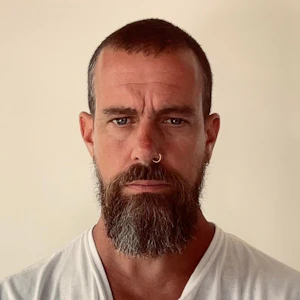
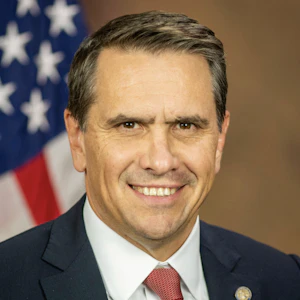
Biography of Deputy Attorney General Todd Blanche
The Honorable Todd Blanche is the 40th Deputy Attorney General of the United States, overseeing the work of the 115,000 dedicated employees who fulfill the Department of Justice’s mission at Main Justice, the FBI, DEA, U.S. Marshals, ATF, and 93 U.S. Attorney’s Offices.
Todd began his career at the Department where he served for over fifteen years in a variety of capacities, including as a contractor, a paralegal in the Criminal Division, and at the United States Attorney’s office for the Southern District of New York where he eventually became an AUSA and later a supervisor.
After leaving the Department, Todd worked as a criminal defense attorney that included representing President Donald Trump in three of the criminal cases brought against him in 2023 and 2024.
Following President Trump’s historic return to the White House, the President appointed Todd to work alongside Attorney General Pam Bondi to make America safe again. At the DOJ, Todd is working tirelessly to implement President Trump’s priorities that include confronting illegal protecting American businesses from fraud.
Todd has been married to his wonderful wife Kristine for nearly thirty years, is a father and grandfather.

Paul Atkins
Paul Atkins
Prior to returning to the SEC, Chairman Atkins was most recently chief executive of Patomak Global Partners, a company he founded in 2009. Chairman Atkins helped lead efforts to develop best practices for the digital asset sector. He served as an independent director and non-executive chairman of the board of BATS Global Markets, Inc. from 2012 to 2015.
Chairman Atkins was appointed by President George W. Bush to serve as a Commissioner of the SEC from 2002 to 2008. During his tenure, he advocated for transparency, consistency, and the use of cost-benefit analysis at the agency. Chairman Atkins also represented the SEC at meetings of the President’s Working Group on Financial Markets and the U.S.-EU Transatlantic Economic Council. From 2009 to 2010, he was appointed a member of the Congressional Oversight Panel for the Troubled Asset Relief Program.
Before serving as an SEC Commissioner, Chairman Atkins was a consultant on securities and investment management industry matters, especially regarding issues of strategy, regulatory compliance, risk management, new product development, and organizational control.
From 1990 to 1994, Chairman Atkins served on the staff of two chairmen of the SEC, Richard C. Breeden and Arthur Levitt, ultimately as chief of staff and counselor, respectively. He received the SEC’s 1992 Law and Policy Award for work regarding corporate governance matters.
Chairman Atkins began his career as a lawyer in New York, focusing on a wide range of corporate transactions for U.S. and foreign clients, including public and private securities offerings and mergers and acquisitions. He was resident for 2½ years in his firm's Paris office and admitted as conseil juridique in France.
A member of the New York and Florida bars, Chairman Atkins received his J.D. from Vanderbilt University School of Law in 1983 and was Senior Student Writing Editor of the Vanderbilt Law Review. He received his A.B., Phi Beta Kappa, from Wofford College in 1980.
Originally from Lillington, North Carolina, Chairman Atkins grew up in Tampa, Florida. He and his wife Sarah have three sons.

Mike Selig
Mike Selig
Chairman Selig brings to the role deep public and private sector experience working with a wide range of stakeholders across agriculture, energy, financial, and digital asset industries, which rely upon and operate in CFTC-regulated markets.
Prior to his leadership at the CFTC, Chairman Selig most recently served as chief counsel of the Securities and Exchange Commission’s Crypto Task Force and senior advisor to SEC Chairman Paul S. Atkins. In this role, Chairman Selig helped to develop a clear regulatory framework for digital asset securities markets, harmonize the SEC and CFTC regulatory regimes, modernize the agency’s rules to reflect new and emerging technologies, and put an end to regulation by enforcement. He also participated in the President’s Working Group on Digital Asset Markets and contributed to its report on “Strengthening American Leadership in Digital Financial Technology.”
Prior to government service, Chairman Selig was a partner at an international law firm, focusing on derivatives and securities regulatory matters. During his years in private practice, he represented a broad range of clients subject to regulation by the CFTC, including commercial end users, futures commission merchants, commodity trading advisors, swap dealers, designated contract markets, derivatives clearing organizations, and digital asset firms. Chairman Selig advised clients on compliance with the Commodity Exchange Act and the CFTC’s rules and regulations thereunder, including in connection with registration applications and obligations, enforcement matters, and complex transactions.
Chairman Selig earned his law degree from The George Washington University Law School and was articles editor of The George Washington Law Review. He received his undergraduate degree from Florida State University.

David Bailey
David Bailey

Eric Trump
Eric Trump
Mr. Trump also serves as Executive Vice President of The Trump Organization, where he oversees the global management and operations of the Trump family’s extensive real estate portfolio. This includes Trump Hotels, Trump Golf, commercial and residential real estate, Trump Estates, and Trump Winery. Known for his hands-on leadership and strong market instincts, he has played a key role in expanding the company’s presence across major U.S. and international markets.
A globally recognized business leader and public figure, Mr. Trump is a prominent advocate for Bitcoin and decentralized finance. He is a co-founder of World Liberty Financial, a decentralized finance (DeFi) platform, and serves on the Board of Advisors of Metaplanet, Japan’s largest corporate holder of Bitcoin.
Beyond his business activities, Mr. Trump has helped raise more than $50 million for St. Jude Children’s Research Hospital in the fight against pediatric cancer, a philanthropic mission he began at age 21.
Mr. Trump earned a degree in Finance and Management from Georgetown University. He currently resides in Florida with his wife, Lara, and their two children. He is also the author of Under Siege, his memoir published in October 2025.
Jack Mallers
Jack Mallers
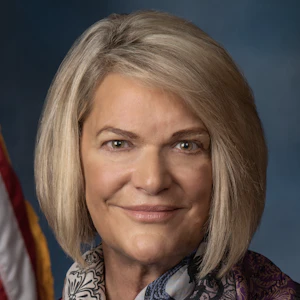
Cynthia Lummis
Cynthia Lummis
As the first-ever Chair of the Senate Banking Subcommittee on Digital Assets, Senator Lummis is the architect of the legislative framework shaping America's digital asset future. She introduced the landmark Lummis-Gillibrand Responsible Financial Innovation Act, the first comprehensive bipartisan crypto regulatory framework in Senate history. She co-authored the GENIUS Act — the first federal stablecoin law ever enacted — and introduced the BITCOIN Act, which would establish a U.S. strategic Bitcoin reserve of up to one million BTC. She is leading the Clarity Act, which will bring long-overdue regulatory certainty to the digital asset industry. She has also championed digital asset tax reform, including a de minimis exemption for small transactions and equal tax treatment for miners and stakers.
Known as Congress' "Crypto Queen," Senator Lummis represents Wyoming — a state she has helped build into one of the most digital asset-friendly regulatory environments in the nation. Before serving in the Senate, she served 14 years in the Wyoming Legislature, eight years as Wyoming State Treasurer, and eight years in the U.S. House. She is a three-time graduate of the University of Wyoming.
Her work represents a crucial bridge between traditional financial systems and the emerging digital economy, ensuring America leads the world in financial innovation while protecting the individual freedoms that define it.
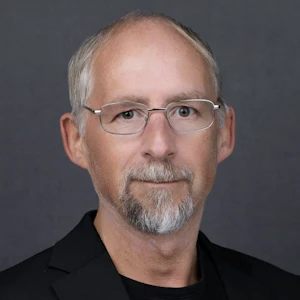
Adam Back
Adam Back
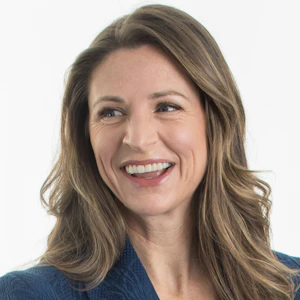
Amy Oldenburg
Amy Oldenburg
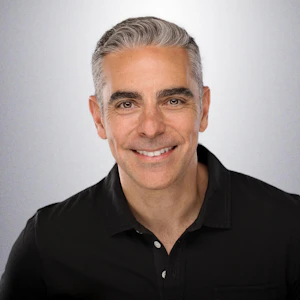
David Marcus
David Marcus

Matt Schultz
Matt Schultz
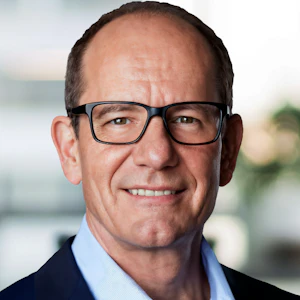
Fred Thiel
Fred Thiel
Throughout his career, Mr. Thiel has consistently driven rapid growth and created substantial shareholder value. Prior to MARA, Mr. Thiel served as the CEO of two other public companies, Local Corporation (NASDAQ: LOCM) and Lantronix, Inc (NASDAQ: LTRX). He has successfully raised billions in equity and debt through private and public offerings, led companies through IPOs, executed high-value exits to strategic and financial acquirers, and implemented effective M&A and roll-up strategies.
Mr. Thiel attended the Stockholm School of Economics and executive classes at Harvard Business School, and is fluent in English, Spanish, Swedish, and French. Mr. Thiel is the Chairman of the Board for Oden Technology, Inc. and is active in Young Presidents’ Organization where he has led initiatives in both the FinTech and Technology Networks.
A recognized voice in the industry, Fred frequently shares his insights on energy and technology with major media outlets like Bloomberg TV, CNBC, and FOX Business, contributing to vital discussions about the future of these sectors.
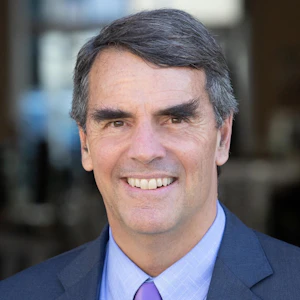
Tim Draper
Tim Draper
He is a supporter and global thought leader for entrepreneurs everywhere, and is a leading spokesperson for Bitcoin and decentralization, having won the Bitcoin US Marshall’s auction in 2014, invested in over 50 crypto companies, and led investments in Coinbase, Ledger, Tezos, and Bancor, among others.

Afroman
Afroman