America's Bitcoin & China's Gold
Speakers/Moderators

Josh Hendrickson
Josh Hendrickson


Roger Huang
Roger Huang
Session
Overview
America’s Bitcoin & China’s Gold examined how Bitcoin, gold, and U.S. dollar dominance fit into a changing geopolitical order. Moderated by Josh Hendrickson, the panel featured Roberto Rios, Roger Huang, and Trace Mayer discussing how nations and individuals are responding to sanctions risk, capital controls, and the perceived decline of dollar hegemony.
A major focus was China’s gold strategy, including central bank accumulation, retail demand, the Shanghai Gold Exchange, and the financialization of gold through Chinese banks. The speakers compared state-level reserve policy with the behavior of Chinese citizens, who may use gold and Bitcoin differently than the government intends.
The conversation also explored whether Bitcoin and gold are competitors or different stages of a broader move toward neutral reserve assets. Panelists discussed U.S. policy, stablecoins, sanctions, free speech, capital markets, and how Bitcoin may become a strategic interest for states while remaining an independent monetary network for users.
All right, welcome to our panel. I am Josh Hendrickson. I am a professor and chair of the Department of Economics at the University of Mississippi and a senior fellow at the Bitcoin Policy Institute.
We are here to talk about Bitcoin, gold, and geopolitical strategy. I’ll start at the end. We have Roberto Rios, known as the Peruvian Bull. He is an economist and researcher at Lima Research. We’ve got Roger Huang. He is the author of Would Mao Hold Bitcoin, which addresses how Bitcoin fits within China and the various political aspects of that. And then we have longtime Bitcoiner Trace Mayer, who is the CEO at Urim Capital.
What we would like to do here is dig into the geopolitical aspects of these assets. Roger, can you talk to us a little bit about what the Chinese strategy is with respect to gold first, and then we’ll come back to Bitcoin?
Yeah, I think it’s been really interesting because, up to a certain period in the early 2000s, China had not been very public about how much gold it was holding. It has chosen to disclose at very selective times.
The reasoning behind it has traditionally been, at least from the words of the People’s Bank of China and others, that the central bank does not want increased prices for retail consumers in China right now.
What appears to be happening now, and this is more my opinion or my take on it, is that the Chinese government has been accelerating buying, not only in terms of publicly disclosed holdings, now up to approximately 2,300 tons, but also in off-channel ways. A common one is gold coming in from London, for example, and physical gold being shipped there that does not show up in the hands of retail Chinese customers.
So what I think we see is that early on, China was still very much bought into the U.S. dollar milkshake, the idea of accumulating capital and recirculating it into the United States. Lately, I think it has always been clear to the Chinese state that that was something that was a little risky. They have taken losses, even in the early 2000s, on U.S. dollar reserves. But now I think you are seeing action starting to be deployed.
Specifically, Ukraine and the threat, and now active imposition, of secondary sanctions on the Chinese banking system have, I think, accelerated this trend. We see this in terms of accumulation by the state. We also see this in terms of the off-channel. So both overt and covert.
I would also add that China has been working toward this system of financializing gold for the last 25 years. From 1950 until 2003, gold ownership was officially banned, just like it was in the U.S. after Executive Order 6102. But starting in 2003, they legalized ownership of physical bullion, physical bars, gold jewelry. Then they launched the Shanghai Gold Exchange, which is the world’s largest physically settled gold, silver, and other commodities exchange.
That decision started to open up the floodgates of Chinese retail money into precious metals. From 2003 to around 2015, total domestic retail demand for gold went from 10 tons a year to 397 tons a year, which is more than what most central banks hold on their entire balance sheet, with the exception of the top 15.
As that process has played out, you’ve seen more and more Chinese banks taking action to incorporate gold into the financial system. Not only, obviously, the PBOC purchasing physical gold outright, but these gold accumulation plans have been rolled out to retail investors.
For example, in April 2010, ICBC, the Industrial and Commercial Bank of China, rolled out a gold accumulation plan where Chinese investors could buy gold in their domestic bank account and hold it in custody at the bank. In 2015, that same bank and about 15 others rolled out a similar program, but with collateralized lending. People could go buy gold at a bank, deposit it, and then borrow against it at whatever the funds rate in China was at the time.
So it allowed the Chinese financial system to get more and more integrated in gold, and it allowed retail investors to financialize gold in a way that we have not seen in the West. Chinese retail demand has obviously skyrocketed because, given the issues with the Chinese property sector and the Chinese equity sector, there are not many good avenues for investment for Chinese investors. Gold and precious metals seem like a very safe bet, so that is the play they are taking right now.
One of the big themes that we hear about all the time lately is that maybe we’re moving from a unipolar system into a multipolar system. Trace, I was wondering if you want to weigh in on this. If we are moving toward a multipolar system, what does this tell us about what is going on with gold? And as we start to think about how the U.S. government’s attitude toward Bitcoin is changing, how does that fit into these kinds of things as well?
Yeah, we can definitely see that, as we move further into the information age, the return on investment from violence is changing the calculation, especially with nation-states. The United States is retrenching on some of this military aspect, or at least under President Trump, he is being much more targeted in how he actually uses that force. You look at Venezuela, you look at Iran, and he is targeting the actual physical assets.
Where is the productive capacity in the world? It is where you have free speech. It is where you have rule of law.
When you move from this post-World War II system, and it was a fourth turning, and we are going through one right now where all the things get rewritten, I think it is going to be very interesting to see what happens. It looks like the U.S. is trying to position itself so that it has U.S. Treasuries, gold, and Bitcoin, and then the rest of the world can fight over number four.
We see how that works in search results. If you capture the top three search results, you are going to have 75% of the traffic. If the dollar will be expanded through stablecoins and things like that, and then you have gold and Bitcoin also playing offensive and defensive linemen against any competing currency that is coming up, how are any geopolitical competitors going to be able to access capital markets?
Especially if it goes to much more of this America First, or more nationalistic versus globalist policy, then you do not really care what happens in these other places. They can have their oil shut off through the Strait of Hormuz. Who cares? They can have famines. It is not our problem.
America is such an engine and generator of wealth partly because of its monetary dominance, but also its rule-of-law dominance. If it maintains that, especially relative to its competitors, who wants to buy Chinese yuan? Or Chinese yuan debt? Or Russian debt, or Iranian debt? That is the world I think we are moving into.
I think the U.S. is relaxing a little bit of its monetary control. Even Marco Rubio has stated that we are going to have a vast majority of currencies in the near future, and that sanctions are going to be much harder to implement. This decentralization that is happening, it looks like the U.S. is positioning itself to take advantage of it. It might even be driving some of it through policy.
Roberto, I want to go to you on this because even the framing of our panel is kind of that Bitcoin and gold are competing with each other and that we are taking sides. Do you think that is true? Are they in competition with one another, or are we just unclear on where this is headed because of the changing nature of geopolitics, like Trace just mentioned?
I think they are actually two different stages of the same endgame. When you think about a central bank manager, somebody who is managing institutional money for a large institution that is buying billions of dollars of Treasuries or gold, they are typically older, educated in an Ivy League or elite institution, and mostly worried about not losing money. They are not worried about upside or trying to get capital gains or trying to invest in an expanding monetary network. They are worried about security of their currency and the stability of their domestic banking system.
When you look at the moves in these central banks, China, for example, peaked at around $1.3 trillion of U.S. Treasury holdings in 2013. Ever since then, they have been selling or laying off about $60 billion a year. Now they have about $670 billion, which is half of what they had 10 or 12 years ago.
They are doing this slow dollarization, de-Treasuryization. They are getting off the U.S. dollar and into gold, but they are not ready yet for the jump into Bitcoin because Bitcoin is, for them, too volatile, too new, too novel. They do not understand the risks. They do not understand the payment mechanism.
But it is a move in the right direction. They are taking investment power and capital power out of the U.S. dollar hegemonic system, out of the U.S. Treasury, and putting it into an alternative asset that does not trade on the whims of the central bank. The Fed can buy a bunch of bonds one day. The Treasury can sell a bunch of bonds. They are doing it into a new hard asset that is scarce and impossible to replicate.
I think it is emblematic of the shift of the mindset of central bankers, and especially Chinese policymakers, toward an alternative financial system that does not rely on the U.S. dollar and U.S. Treasuries.
What you said is exactly right. The Chinese yuan is not really an option here. You cannot really support an export-based currency with capital controls due to the Triffin dilemma. They cannot really have a large capital account without opening up trade and opening up investment flows in and out of the country. Since China does not want to do that and wants to keep money in China, they are going to have to thread this needle of: how do we get off the dollar standard but not totally nuke our own domestic financial system while doing it?
I think gold is the intermediate answer, but obviously Bitcoin is a much longer-term plan.
Roger, another thing I would like to get your perspective on is that, so often when we are talking about China, we are talking about the Chinese government. But what about the Chinese people? What are their attitudes toward these two assets, and do they differ from the government?
Yeah, I think this is where gold and Bitcoin are really interesting. What I have noticed, and this is a little bit more anecdotal, is that the same people who are selling physical gold to Chinese customers also run cryptocurrency plays and other things.
Right now, for those who do not know, the trade of cryptocurrency, or its treatment as currency, is in a legal gray area, banned in certain respects. You have a retail, prescribed physical mechanism where Chinese citizens can buy gold, but it is very KYC, very controlled. There are only certain gold formats. There is only certain pricing.
Chinese people will not just use the Shanghai Gold Exchange. They will also find ways to get physical gold in any number of ways. This goes to the great game that people do not really talk about too much in macro: the great game of money leaving and coming back to China, which of course Bitcoin has a role in, and physical gold has a role in.
I always think of the ingenuity of Chinese people when it comes to challenges and confronting things that the government places before them. Are there capital controls? Yes, but they are set by people. There is $50,000 U.S. dollars per year per person. Well, China has a lot of people. So why don’t we move more money through more people? Are there restrictions on leaving with gold? Not necessarily if it is jewelry. That has tightened up, but that is one way to get around it.
Is there a way to really block over-the-counter trade in Bitcoin when you are in some third-tier city in China and the person is sending to a Bitcoin address? Is there a way to stop that? The Chinese party-state has conceded no. This kind of activity will happen regardless of the amount of regulation that happens.
I have long argued that China’s bans have actually made Bitcoin stronger, and I think Bitcoin and gold together are part of this narrative.
For Chinese people, I think it is important to know that gold is not something that is very traditionally associated with wealth in China. It is more jade, copper, bronze, and things like that. But as of late, I think gold has also been a cultural import into China from the West.
What people do not realize is that when you look at Chinese social media, when you look at places where commerce is happening, a lot of these brands that are finding their way into China, Lululemon and all the big brands in the West, gold is like that too. Historically, gold has had some association as treasure, but it was not necessarily directly associated as a store of value in the way that you would think, or even in jewelry.
Now, since this has become something where prices are rising in the West, this is beginning to percolate into the Chinese people, who are very different in their demand than the Chinese state. In fact, the two can counter one another at certain points. The Chinese state, of course, wants to strengthen its position and its control, while gold and Bitcoin in certain forms will modify that control.
That would be my point about how the Chinese people and the Chinese government are pretty different in their mentality.
I’ll end with a little bit of an anecdote. I noticed, as I was looking at gold on Chinese social media, on RedNote, that a lot of Chinese women now are really going crazy about it. It is not bags anymore. It is gold. Like, do not give me bags, give me gold.
I cannot tell you how much of the global economy is run based on the tastes of Chinese women. I just cannot tell you how much that is. Am I bearish? I do not know. But that is a little bit of behind-the-scenes reporting and some anecdotes behind some of the numbers we are talking about.
Trace, I want to get your perspective on this. The United States government’s attitude toward Bitcoin has changed dramatically. But what I am wondering is: has the United States government’s attitude changed, or is this a Trump administration phenomenon?
When I look at this, this is Trump’s second term. The frontrunners for the Republican nomination look like they are going to come from the administration. If they were to win, I think we would expect similar policies. But if the presidency changes to the Democratic Party, does the U.S. strategy also change along with it as it pertains to Bitcoin? Or do you think that we go down a different path?
That is an excellent question. There is always a lot of implied volatility when it comes to our political system, especially during a fourth turning like we are in right now, where the winners are writing the new ethos that is probably going to govern for another 80 years.
We are at such an important inflection point: the emergence of superintelligence, potential huge advances in energy and space. Regardless of what political party it is, I think the U.S. military-industrial complex wants to dominate all three of those. The primary way they dominate all of those is they handicap their competitors.
You choke off all the energy going into China, for example. You put up gigantic weapons in space, like these rods of God made out of tungsten, which cannot be stopped and can obliterate anything you want. It is the ultimate high ground.
When it filters down from that large strategic implementation of military force to what the people then do, what is the goal there? What we have seen over the last five years is that, in order to subjugate a domestic population, you need to interfere with their ability to move, shoot, and communicate.
We are already starting to see travel restrictions from the energy crisis from Hormuz with various governments. On communication, we already saw large amounts of censorship previously. The current administration seems to be better in that regard than the past one.
But I think, unlike the Chinese population, the U.S. population has much more of a spine when it comes to free speech. Even the Russians are this way. They kind of celebrate the rabble-rouser, they celebrate the contrarian. That is where we have gotten a lot of our advances in science and technology, whereas it is just a different culture in China. You poke your head up, it gets cut off in China. In the West, we kind of celebrate it.
I think it is harder to erode that freedom of speech in the United States, even if a different political party came into power. Then we have Starlink moving internet traffic globally now out of reach of a lot of these totalitarian states.
Move, shoot, and communicate. On shoot, we have a very strong Second Amendment, and I do not think that is going to be eroded too much with whichever political party gets put in. If anything, the Trump administration and the Biden administration have only strengthened the resolve behind the Second Amendment for both parties.
There does seem to be this kind of independent firebrand reactionism that comes out of America that we are not seeing in the other countries during this fourth turning change.
In the last few minutes that we have left, maybe we can start at the end and work our way back. A lot of what we are trying to address here is: what is the geopolitical game being played, and how do we understand what each of the players are doing? I thought maybe we could wrap up by each of you giving your perspective on how you think this is going to play out. Not necessarily how you want it to play out, but how you think it is going to play out.
That is a very good question. It is something I have been thinking about for a long time, especially as a macro writer.
Currently, and for the last 80 years, the U.S. has been sitting on top of the dollar system as the sole hegemonic superpower in the world. Dollars are used for 80% of global interregional trade, over 50% of SWIFT transactions, and 59% of global foreign exchange reserves. So it is essentially the currency to use if you are going to transact on an international stage.
That grants the U.S. an inordinate amount of power. The U.S. Treasury, through OFAC, can sanction, blacklist, and basically bar anybody in the world from trading or using dollars, which, especially if you are an export-based economy, can completely screw you over. That is what we are seeing right now in Iran.
What China and others are trying to do, Russia, Iran, and other antagonists to the U.S.-based global rules order, is to slowly exit from the system without tipping their hand too much and without spilling the water bottle over the seat, so to speak.
The problem is that if they start dumping U.S. Treasuries or they try to de-dollarize too fast, it can actually cause a squeeze in dollar markets, as we know from Brent Johnson’s dollar milkshake theory, which can cause more global volatility and crush their domestic currency.
The way they are going about it is by slowly getting rid of U.S. Treasuries, especially long bonds, things that are down 40% or 50% in the last few years as the Fed started its hiking cycle, and just divesting away from that system and pushing into a new system, such as gold or even Bitcoin potentially.
That process is going to take years to play out. But just to give you some time frames to think about, as I said earlier, in 2013 China had $1.3 trillion of U.S. Treasuries. Now they have around $690 billion. They are laying off about $60 billion of Treasuries a year. They are buying 200 to 300 tons of gold in off-the-books buys, plus another 60 tons in official buys as part of their central bank gold accumulation strategy.
By that framework, China is going to have more gold than U.S. Treasuries in just five years. On a global metric, global central banks all have more gold as of August 2025 than they have U.S. Treasuries. The global system is moving in the same direction. Everyone is trying to move off the U.S. dollar standard, move off the U.S. Treasury as a dollar-based reserve asset, and move into a neutral reserve asset like gold. It is going to take a decade, but China is going to be there within five or six years.
I would first like to tee off from where I started before. The Chinese people and the Chinese government are very different, I think, in many regards. The Chinese people are looking for a stable store of value.
I am always incredulous that a generation ago, my parents would have been killed for being capitalist leaders, and now we are talking about the country that could potentially accumulate the most gold in human history. I have always been struck by this paradox of change. In the 20th century, China went through two revolutions and turned off 5,000 years of dynastic history. It is incredible to see all these different transitions.
Now that we are at this stage, I want to say two things. One is that I believe the United States has never faced a more unique adversary or system player. In the 1980s, of course, it was Japan. But fundamentally, Japan was never a real geopolitical threat. The military was muted. Obviously, MacArthur and the Americans wrote the Japanese Constitution after World War II. There was no way that Japan would actually be able to turn economic clout into military clout as a result. Nevertheless, the Reagan administration acted against Japan over tariffs, semiconductors, and everything else.
China now is in a very unique position, where it is very real that the industrial and economic capacity being built can be transferred to military power. China is the world’s largest shipbuilder, and there is the capacity for kinetic conflict.
I just want to end off by saying none of the stuff I said is really my perspective. I see myself as a Bitcoiner stuck among all of this. Among these different cultures, whether Western or Chinese, I agree or disagree with different ones. I think, as Bitcoiners, we have to remember almost the Kurdish saying: we have no friends but the mountains. We are not an ally, we are an interest.
As they say, the United States has no allies, it only has interests. Bitcoin is only an interest for the state. I think we have to keenly regard our position in that, and we have to be aware and independent as Bitcoiners, no matter what games are being laid around us. That is my perspective.
I think we are in the 250th anniversary of the United States of America. When any institution makes it to 200 years and enters into that next stage, it has a whole new level of legitimacy to it.
When the United States started, people were in poverty. Now we are an incredibly wealthy, militarily powerful country. So much of that is because of the map that America was gifted with: the Mississippi River, the tributaries, all that stuff.
We are seeing the map begin to change. The magnetic pole, for example, has already moved 200 to 300 miles from Canada to Siberia. What implications does that have if it continues to do things? How could the map change?
So many of our assumptions are based on the way things currently are or have been. If anything, we are entering a decade of change. We have change coming from artificial intelligence and robotics. We have space. We have energy. We have the magnetic pole. We have other technology. We have a massive decade of change, and we have to be adaptable to it. That is what Badgers are.
When I started writing about Bitcoin 15 years ago, I never would have expected that we would be talking about the geopolitical strategy of Bitcoin, but it is amazing that we are here. If everybody in the crowd could give our panelists a round of applause, they did a great job. Thank you very much.
Similar
Sessions
The Future of Money: Bitcoin vs. CBDCs
Roger Huang
Roger Huang

The Future of Money: Bitcoin vs. CBDCs
Speakers/Moderators
Roger Huang
Roger Huang
America's Bitcoin & China's Gold
Josh Hendrickson
Josh Hendrickson
Roger Huang
Roger Huang
America's Bitcoin & China's Gold
Speakers/Moderators
Josh Hendrickson
Josh Hendrickson
Roger Huang
Roger Huang
The Philosophy of Bitcoin / Would Mao Hold Bitcoin?

Roger Huang
Roger Huang
The Philosophy of Bitcoin / Would Mao Hold Bitcoin?
Speakers/Moderators
Roger Huang
Roger Huang
Other
Speakers
Michael Saylor
Michael Saylor
Todd Blanche
Todd Blanche
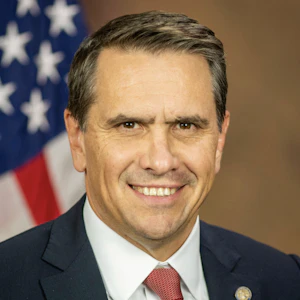
Biography of Deputy Attorney General Todd Blanche
The Honorable Todd Blanche is the 40th Deputy Attorney General of the United States, overseeing the work of the 115,000 dedicated employees who fulfill the Department of Justice’s mission at Main Justice, the FBI, DEA, U.S. Marshals, ATF, and 93 U.S. Attorney’s Offices.
Todd began his career at the Department where he served for over fifteen years in a variety of capacities, including as a contractor, a paralegal in the Criminal Division, and at the United States Attorney’s office for the Southern District of New York where he eventually became an AUSA and later a supervisor.
After leaving the Department, Todd worked as a criminal defense attorney that included representing President Donald Trump in three of the criminal cases brought against him in 2023 and 2024.
Following President Trump’s historic return to the White House, the President appointed Todd to work alongside Attorney General Pam Bondi to make America safe again. At the DOJ, Todd is working tirelessly to implement President Trump’s priorities that include confronting illegal protecting American businesses from fraud.
Todd has been married to his wonderful wife Kristine for nearly thirty years, is a father and grandfather.
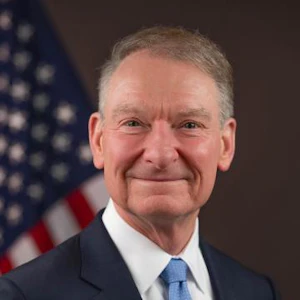
Paul Atkins
Paul Atkins
Prior to returning to the SEC, Chairman Atkins was most recently chief executive of Patomak Global Partners, a company he founded in 2009. Chairman Atkins helped lead efforts to develop best practices for the digital asset sector. He served as an independent director and non-executive chairman of the board of BATS Global Markets, Inc. from 2012 to 2015.
Chairman Atkins was appointed by President George W. Bush to serve as a Commissioner of the SEC from 2002 to 2008. During his tenure, he advocated for transparency, consistency, and the use of cost-benefit analysis at the agency. Chairman Atkins also represented the SEC at meetings of the President’s Working Group on Financial Markets and the U.S.-EU Transatlantic Economic Council. From 2009 to 2010, he was appointed a member of the Congressional Oversight Panel for the Troubled Asset Relief Program.
Before serving as an SEC Commissioner, Chairman Atkins was a consultant on securities and investment management industry matters, especially regarding issues of strategy, regulatory compliance, risk management, new product development, and organizational control.
From 1990 to 1994, Chairman Atkins served on the staff of two chairmen of the SEC, Richard C. Breeden and Arthur Levitt, ultimately as chief of staff and counselor, respectively. He received the SEC’s 1992 Law and Policy Award for work regarding corporate governance matters.
Chairman Atkins began his career as a lawyer in New York, focusing on a wide range of corporate transactions for U.S. and foreign clients, including public and private securities offerings and mergers and acquisitions. He was resident for 2½ years in his firm's Paris office and admitted as conseil juridique in France.
A member of the New York and Florida bars, Chairman Atkins received his J.D. from Vanderbilt University School of Law in 1983 and was Senior Student Writing Editor of the Vanderbilt Law Review. He received his A.B., Phi Beta Kappa, from Wofford College in 1980.
Originally from Lillington, North Carolina, Chairman Atkins grew up in Tampa, Florida. He and his wife Sarah have three sons.

Mike Selig
Mike Selig
Chairman Selig brings to the role deep public and private sector experience working with a wide range of stakeholders across agriculture, energy, financial, and digital asset industries, which rely upon and operate in CFTC-regulated markets.
Prior to his leadership at the CFTC, Chairman Selig most recently served as chief counsel of the Securities and Exchange Commission’s Crypto Task Force and senior advisor to SEC Chairman Paul S. Atkins. In this role, Chairman Selig helped to develop a clear regulatory framework for digital asset securities markets, harmonize the SEC and CFTC regulatory regimes, modernize the agency’s rules to reflect new and emerging technologies, and put an end to regulation by enforcement. He also participated in the President’s Working Group on Digital Asset Markets and contributed to its report on “Strengthening American Leadership in Digital Financial Technology.”
Prior to government service, Chairman Selig was a partner at an international law firm, focusing on derivatives and securities regulatory matters. During his years in private practice, he represented a broad range of clients subject to regulation by the CFTC, including commercial end users, futures commission merchants, commodity trading advisors, swap dealers, designated contract markets, derivatives clearing organizations, and digital asset firms. Chairman Selig advised clients on compliance with the Commodity Exchange Act and the CFTC’s rules and regulations thereunder, including in connection with registration applications and obligations, enforcement matters, and complex transactions.
Chairman Selig earned his law degree from The George Washington University Law School and was articles editor of The George Washington Law Review. He received his undergraduate degree from Florida State University.

David Bailey
David Bailey

Eric Trump
Eric Trump
Mr. Trump also serves as Executive Vice President of The Trump Organization, where he oversees the global management and operations of the Trump family’s extensive real estate portfolio. This includes Trump Hotels, Trump Golf, commercial and residential real estate, Trump Estates, and Trump Winery. Known for his hands-on leadership and strong market instincts, he has played a key role in expanding the company’s presence across major U.S. and international markets.
A globally recognized business leader and public figure, Mr. Trump is a prominent advocate for Bitcoin and decentralized finance. He is a co-founder of World Liberty Financial, a decentralized finance (DeFi) platform, and serves on the Board of Advisors of Metaplanet, Japan’s largest corporate holder of Bitcoin.
Beyond his business activities, Mr. Trump has helped raise more than $50 million for St. Jude Children’s Research Hospital in the fight against pediatric cancer, a philanthropic mission he began at age 21.
Mr. Trump earned a degree in Finance and Management from Georgetown University. He currently resides in Florida with his wife, Lara, and their two children. He is also the author of Under Siege, his memoir published in October 2025.

Jack Mallers
Jack Mallers

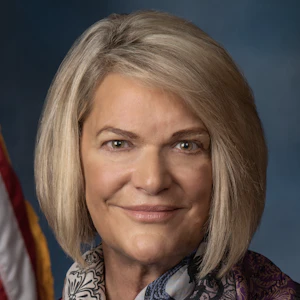
Cynthia Lummis
Cynthia Lummis
As the first-ever Chair of the Senate Banking Subcommittee on Digital Assets, Senator Lummis is the architect of the legislative framework shaping America's digital asset future. She introduced the landmark Lummis-Gillibrand Responsible Financial Innovation Act, the first comprehensive bipartisan crypto regulatory framework in Senate history. She co-authored the GENIUS Act — the first federal stablecoin law ever enacted — and introduced the BITCOIN Act, which would establish a U.S. strategic Bitcoin reserve of up to one million BTC. She is leading the Clarity Act, which will bring long-overdue regulatory certainty to the digital asset industry. She has also championed digital asset tax reform, including a de minimis exemption for small transactions and equal tax treatment for miners and stakers.
Known as Congress' "Crypto Queen," Senator Lummis represents Wyoming — a state she has helped build into one of the most digital asset-friendly regulatory environments in the nation. Before serving in the Senate, she served 14 years in the Wyoming Legislature, eight years as Wyoming State Treasurer, and eight years in the U.S. House. She is a three-time graduate of the University of Wyoming.
Her work represents a crucial bridge between traditional financial systems and the emerging digital economy, ensuring America leads the world in financial innovation while protecting the individual freedoms that define it.

Adam Back
Adam Back

Amy Oldenburg
Amy Oldenburg
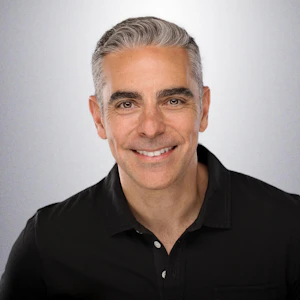
David Marcus
David Marcus

Matt Schultz
Matt Schultz
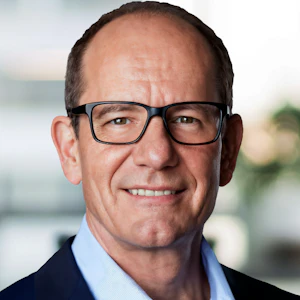
Fred Thiel
Fred Thiel
Throughout his career, Mr. Thiel has consistently driven rapid growth and created substantial shareholder value. Prior to MARA, Mr. Thiel served as the CEO of two other public companies, Local Corporation (NASDAQ: LOCM) and Lantronix, Inc (NASDAQ: LTRX). He has successfully raised billions in equity and debt through private and public offerings, led companies through IPOs, executed high-value exits to strategic and financial acquirers, and implemented effective M&A and roll-up strategies.
Mr. Thiel attended the Stockholm School of Economics and executive classes at Harvard Business School, and is fluent in English, Spanish, Swedish, and French. Mr. Thiel is the Chairman of the Board for Oden Technology, Inc. and is active in Young Presidents’ Organization where he has led initiatives in both the FinTech and Technology Networks.
A recognized voice in the industry, Fred frequently shares his insights on energy and technology with major media outlets like Bloomberg TV, CNBC, and FOX Business, contributing to vital discussions about the future of these sectors.
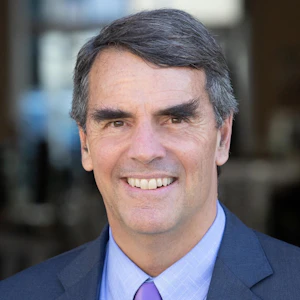
Tim Draper
Tim Draper
He is a supporter and global thought leader for entrepreneurs everywhere, and is a leading spokesperson for Bitcoin and decentralization, having won the Bitcoin US Marshall’s auction in 2014, invested in over 50 crypto companies, and led investments in Coinbase, Ledger, Tezos, and Bancor, among others.

Afroman
Afroman