Are We Getting More Clarity?
Speakers/Moderators

Miles Jennings
Miles Jennings
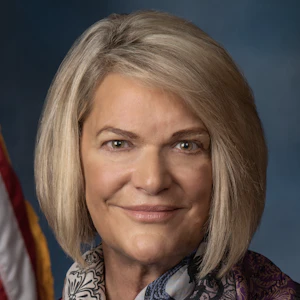
Cynthia Lummis
Cynthia Lummis
As the first-ever Chair of the Senate Banking Subcommittee on Digital Assets, Senator Lummis is the architect of the legislative framework shaping America's digital asset future. She introduced the landmark Lummis-Gillibrand Responsible Financial Innovation Act, the first comprehensive bipartisan crypto regulatory framework in Senate history. She co-authored the GENIUS Act — the first federal stablecoin law ever enacted — and introduced the BITCOIN Act, which would establish a U.S. strategic Bitcoin reserve of up to one million BTC. She is leading the Clarity Act, which will bring long-overdue regulatory certainty to the digital asset industry. She has also championed digital asset tax reform, including a de minimis exemption for small transactions and equal tax treatment for miners and stakers.
Known as Congress' "Crypto Queen," Senator Lummis represents Wyoming — a state she has helped build into one of the most digital asset-friendly regulatory environments in the nation. Before serving in the Senate, she served 14 years in the Wyoming Legislature, eight years as Wyoming State Treasurer, and eight years in the U.S. House. She is a three-time graduate of the University of Wyoming.
Her work represents a crucial bridge between traditional financial systems and the emerging digital economy, ensuring America leads the world in financial innovation while protecting the individual freedoms that define it.

Bernie Moreno
Bernie Moreno
Bernie believes that Ohioans deserve better than what they’ve gotten from Washington, and he will fight to better their lives in the United States Senate.

Patrick Witt
Patrick Witt
From January until May 2025, Mr. Witt performed the duties of the Deputy Under Secretary of War for Research and Engineering, overseeing the defense science and technology enterprise, including DARPA, to drive technological innovation and digital transformation across the DoW.
During President Trump's first administration, Mr. Witt served as Deputy Chief of Staff of the U.S. Office of Personnel Management, where he helped lead workforce management for millions of federal employees, retirees, and their dependents. After leaving government service, he served as Managing Director for a lower-middle-market private equity firm. Earlier in his career, Mr. Witt worked for McKinsey & Company, where he advised aviation, aerospace, and defense clients across four continents on a wide range of issues.
A graduate of Yale University and Harvard Law School, Mr. Witt received numerous academic accolades, including the Francis Gordon Brown Prize, a distinction shared by former President George H.W. Bush, and was also a finalist for the Campbell Trophy, Rhodes, and Mitchell Scholarships. In addition to his academic achievements, he excelled as a student-athlete, shattering numerous school records. At the conclusion of his collegiate career, Mr. Witt was invited to participate in the NFL Combine and later signed as a free agent with the New Orleans Saints.
Mr. Witt is a proud uncle to Joan, Kirby, Grace, and Charlie. He is a native of Atlanta, Georgia, a member of the State Bar, and a JAG in the Georgia Army National Guard. He is fluent in French.

Sam Kazemian
Sam Kazemian
He has since founded multiple companies and raised over $40 million in venture capital, building infrastructure aligned with the core principles of decentralization, transparency, and censorship resistance. At Frax Finance, he leads the development of a growing suite of decentralized financial products, spanning stable assets, liquidity systems, and on-chain monetary infrastructure.
Kazemian is a regular speaker at global conferences, where he discusses trends across the crypto ecosystem, from DeFi and stablecoins to the next generation of on-chain financial markets.
Session
Overview
This policy panel focused on whether the United States is moving toward clearer rules for Bitcoin and digital assets. Cynthia Lummis, Bernie Moreno, Patrick Witt, and Sam Kazemian discussed the Clarity Act, market structure legislation, and the need to define when digital assets are treated as commodities or securities.
The conversation emphasized regulatory clarity as a prerequisite for U.S. innovation, entrepreneurship, consumer adoption, custody, stablecoins, tokenization, and financial institutions building around Bitcoin. Panelists also tied digital asset policy to global competitiveness, arguing that unclear rules have pushed activity offshore and weakened U.S. leadership.
The panel also covered the GENIUS Act, stablecoin growth, DeFi, tokenized real-world assets, and the role of industry advocacy in shaping legislation. The discussion closed with remarks on the Strategic Bitcoin Reserve executive order and the need to codify Bitcoin-related policy through legislation.
All right. We have a stacked policy panel here at a pivotal moment for both Bitcoin and crypto in the United States. Thank you, Senators Lummis and Moreno, Patrick, and Sam for joining us. Let's dive right in.
Senator Lummis, you've long been one of the biggest champions for both Bitcoin and crypto market structure in the United States. What do you think is important about market structure for the Bitcoin community? And why is now the moment for the Clarity Act to get passed?
Yeah, absolutely, now is the time. We dealt with a hostile administration under the last administration, and we know that if a similarly hostile administration is elected again, it's game over for sensible regulation and smart legislation. So now is the time. We have a House, a Senate, and certainly a White House working together to try to get sensible market structure legislation. So now is definitely the time.
It's so simple in its basic format: what is a security, what is a commodity, and how can industry business people know where to go so they do not get hit with an enforcement action that costs them millions in legal fees and has no resolution? So it is clear rules of the road for an industry that we want to innovate in this country.
Yeah. And I think in terms of Bitcoin specifically, Bitcoin has been around a long time, and I think there has always been a question around whether or not it is part of the crypto industry. I think you very much view it as being part of the broader industry, and that is why market structure is so important for it as well, right?
And Bitcoin is clearly a commodity, so it will fall most certainly under the Commodity Futures Trading Commission. It is important to establish that in law and in the regulatory framework.
Great. Senator Moreno, you've been an entrepreneur. You speak to a lot of entrepreneurs in the crypto industry. From that perspective, what do you think is the biggest pain point that they face currently in the United States?
Look, it is not just the crypto industry. We are now in a moment in time in which we have an anti-innovation culture in Washington, D.C. We are about to celebrate the 250th anniversary of this country on July 4th. This is a country of pioneers, explorers, and risk takers. Unfortunately, a lot of my Democrat colleagues have become scared of innovation, actively opposed to innovation, and that is a disaster for the United States of America.
So this is not just a movement to say, hey, let's move the crypto industry forward. AI is tied into it too, prediction markets, and quite frankly, whatever comes next. So we have to make sure we make it clear that we will always be a nation of innovators. We will always be a nation of risk takers and pioneers. To me, that is what is at stake and why it is so important that we get this legislation right and we get it across the finish line.
And how do you translate that into a sense of urgency in Congress? Obviously, the legislative body moves at its own pace. But how do you get your colleagues to really see that this is important to get done now? This cannot wait five years, 10 years.
Well, look, we have been at this for a while. From my vantage point, I got sworn in last January, and from my perspective, this is moving at a pace that is mind-bendingly slow. I think this should have gotten done last summer. Quite frankly, I talked at a conference in April of last year and said, let's get this done by Memorial Day. So I think it is way too slow.
One of the things that is fascinating about politics is you have grotesquely unqualified people involved in decision making.
Fair enough. All right. We'll be back there.
Patrick, the White House has also been a huge champion for the crypto industry. It has made both stablecoins and market structure significant legislative priorities. From your perspective, why is the Clarity Act needed, and why is this the moment to pass it?
Well, I think President Trump has been very clear that not just on crypto, but AI and all these other innovative technologies, we want to dominate. We want America to continue to be the beacon for entrepreneurship and innovation. This industry got wrongly targeted and politicized, and it drove all the innovation offshore. You see the largest centralized exchanges, the largest stablecoin issuers, the largest DeFi protocols all exist outside the United States. That is a failure of U.S. leadership.
One of the biggest benefits that the United States has, obviously our military is right up there, our judicial system, but our leadership in financial markets and being a standard bearer and standard setter. Crypto is the future of the financial infrastructure, and if we are not setting the rules, then we are going to be a rule follower, and somebody else is going to be setting that playbook for us.
So the president is very clear. We want to be number one. We do not want to cede any ground, certainly not to an adversary like China. I think failure to regulate appropriately, not overregulate, but a kind of Goldilocks zone of appropriate clarity for the industry so that this industry can flourish and innovators can come back home, is absolutely what is needed. We are going to see this industry take off like a rocket ship if we can get it done.
That's great. So in that context, the administration views the industry as a geopolitical priority in terms of our global competitiveness.
It is hugely important. I think, as we have seen with GENIUS, the stablecoin market has really taken off since that got passed, and people understand what a stablecoin is, what backs it, and the rulemakings that are taking place. This is absolutely about global competitiveness and American leadership, and that is why we have to get it done.
Yeah, and that's a good segue to you, Sam. These conversations directly impact you. You are operating at the frontier of stablecoins and tokenization. How have you seen the stablecoin industry respond and grow as a result of the passing of GENIUS?
Yeah, so I think clarity is a two-way street, right? It is not just for innovators, but it is for customers and downstream service providers as well. With Frax, we issue stablecoins and have DeFi, and our customers need clarity just as much as we do to build the actual products. You can build products, but if you do not have customers because they do not know if they are able to use them, if it is legal, or what they can do with them, it is equally detrimental.
So clarity is a two-way street. We actually were pretty proactive during the GENIUS Act. Last year I was up here with Emmer and Senator Hagerty, and now that the GENIUS Act has passed, it has really shown itself with customers that have been very interested in using our stablecoin and issuing stablecoins. We do branded stablecoin issuance as well.
There is no one more to thank than Senator Lummis and Hagerty for the GENIUS Act. So hopefully this year there will be even more progress, and next year we will be able to come back and see even more of what has been done in 2026.
Yeah. I think one of the things that we talk a lot about at a16z is that stablecoins only represent about 10% of the market. Everything that market structure is going to cover is the other 90%. So if we see the growth in everything that has exploded as a result of GENIUS passing, market structure should be incredibly impactful. We are really excited about that.
Okay, why don't I pose this to the group? Senator Lummis answered earlier what market structure means to the Bitcoin community. Senator Moreno, Sam, Patrick, do you have any thoughts about why market structure matters specifically for Bitcoin?
I think that Bitcoin is obviously a commodity, right? But all of the products that can actually be built on top of Bitcoin need regulatory clarity and market structure. We were just talking with Chair Atkins earlier, and Michael Saylor was saying that they need to think about how to tokenize STRC, which is an actual offering that they have on the traditional markets, but they need clarity to figure out how to actually bring this on-chain.
So every single thing built on top of Bitcoin, and how it interacts with stablecoins, needs this bill to tell it what they can and cannot do.
Yeah. I think there are a couple of different provisions in the market structure bill that will actually pave the way for financial institutions and banks to start using these assets. It will increase the number that can provide custody, that can provide all sorts of financial services. So when you think about just growing the ecosystem generally, market structure will definitely do that. As a result, I think that is pretty good for Bitcoin.
Whether it is insuring Bitcoin, custody of Bitcoin, commingling Bitcoin with other digital assets, including stablecoins, and any innovation that involves Bitcoin and other assets, including traditional banking products, it requires the market structure that recognizes the integration of all those assets.
Yeah, and also integration with traditional assets: real estate, funds, and lots of other things that can be merged with Bitcoin so we have this greater return differential.
The reality is the reason there is so much animosity toward this market structure bill is really twofold. Number one, it legitimizes the entirety of this industry, which people have attempted to delegitimize for 15 years. Secondly, not that I have a tinfoil hat on, but if I did, I would say that there are a lot of my colleagues who are doing China's bidding for them. The reality is this AI competition that we are in, which is binary, it is us or China. Crypto is an incredibly important part of winning that race.
If you are China, you exploit our weaknesses in disinformation campaigns around what this industry is all about. I think we should be on the side of America. I think we should be on team America. I also think that we should be on team innovation, and we should legitimize an industry so it can blossom and grow. We will have no idea what innovators will create. We want to be pleasantly surprised in three or four or five years by the things that happen as a result of us incentivizing innovators to grow here in America.
I would just say that the importance for Bitcoin with this bill is obvious. The beauty and the simplicity of Bitcoin is that it can be self-sovereign money that you can self custody, you can transfer peer to peer, uncensorable, and you do not need the intermediary. But for the vast majority of people who are going to engage with Bitcoin, they are going to do so through a service provider.
So establishing the rules for all of the institutions that are going to provide exchange-traded products, that are going to provide wallets and different things like that, and the software developers who are going to build on top of the different chains, Bitcoin included, is critically important. Those people need to understand what their obligations are, and it is going to allow Bitcoin to further integrate into the financial system.
Yeah, that makes a lot of sense. Maybe another question for the group. What is your view of how industry's role has been in shaping market structure? And how do you balance the various perspectives of a lot of different stakeholders that have all come together? Obviously, there are a lot of interests in what is going on in crypto. How do you tackle that problem?
Well, the short story is with a lot of time and a lot of patience, and I am running out of both. The first thing we encountered was traditional banking opposing the Clarity Act because they did not like the GENIUS Act. So we are having to relitigate the GENIUS Act while we move forward on clarity.
We are also dealing with concerns that digital assets will be used to finance criminal activities. That is a cross we have to bear simply because people do not understand that it is easier to solve crimes in digital assets than it is in fiat currency. These continue to be some of the issues that vex us.
Ethics is another issue that we have encountered. That one we are bringing to a close. There have been several others in DeFi and tokenization. The more that people start to be influenced, the more they want to weigh in on that. Sometimes the influencers themselves are not of pure heart, and so it has been a huge challenge.
I want to say, Miles, thank you for your work trying to help us get this product across the line. I cannot say enough good about the two gentlemen next to me and their involvement in this. Bernie came with a background in digital assets that is invaluable to it. Patrick Witt, on behalf of the Trump administration and the White House, has been an absolute godsend.
The administration has really put its shoulder to this. They have been tremendously helpful. Patrick has negotiated issues between the White House and primarily the Democrats, which are very challenging, and he has done it with such professionalism that you should all thank Patrick Witt and the Trump White House for their work on this.
Sam, turning to you, you said 2026 is the year of unification for protocols and tokenization. Once clarity passes, what is the next frontier? What becomes possible that currently is not?
Yeah. I think the most important thing to think about is finances that are connected. As Senator Lummis said, right now some people are trying to relitigate parts of GENIUS, like yield in the Clarity Act, and they know that depending on how that goes, how stablecoins interact with different parts of the new financial ecosystem in the blockchain will be affected.
So I think the most important thing to consider is that when clarity passes, the entire ecosystem can be connected to stablecoins, to DeFi, to tokenization, to real estate, RWAs, and all of these things. The important thing is passing this capstone act and being able to connect the legitimization of stablecoins to the rest of the infrastructure.
All right. A good question for the rest of you is, what can people do to help? How can they help get this over the finish line? We are so close. We have been close for a while. How are we going to get it done?
You need to use your voice. Make sure that you are talking to my colleagues. Do not let them get away with, if you are allowed to say it, bullshit arguments on stage that are totally false flags. Quite frankly, make certain that you advocate.
Look, if it was not for the financial advocacy of political campaigns, I do not know that we would have gotten this far, and that is the way this system works. So use your voice. Connect with voters. We have a hell of a community. Look out here. We have this entire convention center filled with people who are dying to innovate here in the United States of America.
I remember my first Bitcoin conference back, I think it was 2012. It was a couple hundred people in a very small conference room in New York. We have a big community. Use your voice, use your pocketbooks, support pro-innovation candidates, candidates that cannot be swayed by false flag arguments that are being used to tank this bill. Ultimately, what they want is that they do not want innovation in their field, and that is death to our system.
We are the world capital of innovation. We are going to keep it that way here in America, and the crypto industry will be the ones that make that happen.
All right. Well said. Patrick, why don't we end with you. What else is happening on the horizon beyond clarity?
Well, obviously, here at the Bitcoin Conference in Las Vegas, there is an intense focus on Bitcoin as an asset overall. The president signed the Strategic Bitcoin Reserve executive order last year, and we have gone to work figuring out exactly the machinations necessary and legal interpretations that we need to get that right, solidify that, and protect the digital assets, but specifically Bitcoin, that we have on the government balance sheet.
So in the next few weeks, we will be making a big announcement. I think we have a bit of a breakthrough there. Obviously, that needs to be followed up with legislation. Senator Lummis's Bitcoin Act, and over in the House there is legislation that has been put together, so we need to codify it. But in the meantime, we do believe we are going to be able to take a big step forward from the executive branch side in the next few weeks.
That is huge news. So on that, we will leave it. Thank you very much for joining us.
Thank you.
Similar
Sessions
Keynote: Senator Cynthia Lummis
Cynthia Lummis
Cynthia Lummis
As the first-ever Chair of the Senate Banking Subcommittee on Digital Assets, Senator Lummis is the architect of the legislative framework shaping America's digital asset future. She introduced the landmark Lummis-Gillibrand Responsible Financial Innovation Act, the first comprehensive bipartisan crypto regulatory framework in Senate history. She co-authored the GENIUS Act — the first federal stablecoin law ever enacted — and introduced the BITCOIN Act, which would establish a U.S. strategic Bitcoin reserve of up to one million BTC. She is leading the Clarity Act, which will bring long-overdue regulatory certainty to the digital asset industry. She has also championed digital asset tax reform, including a de minimis exemption for small transactions and equal tax treatment for miners and stakers.
Known as Congress' "Crypto Queen," Senator Lummis represents Wyoming — a state she has helped build into one of the most digital asset-friendly regulatory environments in the nation. Before serving in the Senate, she served 14 years in the Wyoming Legislature, eight years as Wyoming State Treasurer, and eight years in the U.S. House. She is a three-time graduate of the University of Wyoming.
Her work represents a crucial bridge between traditional financial systems and the emerging digital economy, ensuring America leads the world in financial innovation while protecting the individual freedoms that define it.
Keynote: Senator Cynthia Lummis
Speakers/Moderators
Cynthia Lummis
Cynthia Lummis
As the first-ever Chair of the Senate Banking Subcommittee on Digital Assets, Senator Lummis is the architect of the legislative framework shaping America's digital asset future. She introduced the landmark Lummis-Gillibrand Responsible Financial Innovation Act, the first comprehensive bipartisan crypto regulatory framework in Senate history. She co-authored the GENIUS Act — the first federal stablecoin law ever enacted — and introduced the BITCOIN Act, which would establish a U.S. strategic Bitcoin reserve of up to one million BTC. She is leading the Clarity Act, which will bring long-overdue regulatory certainty to the digital asset industry. She has also championed digital asset tax reform, including a de minimis exemption for small transactions and equal tax treatment for miners and stakers.
Known as Congress' "Crypto Queen," Senator Lummis represents Wyoming — a state she has helped build into one of the most digital asset-friendly regulatory environments in the nation. Before serving in the Senate, she served 14 years in the Wyoming Legislature, eight years as Wyoming State Treasurer, and eight years in the U.S. House. She is a three-time graduate of the University of Wyoming.
Her work represents a crucial bridge between traditional financial systems and the emerging digital economy, ensuring America leads the world in financial innovation while protecting the individual freedoms that define it.
Are We Getting More Clarity?
Miles Jennings
Miles Jennings
Cynthia Lummis
Cynthia Lummis
As the first-ever Chair of the Senate Banking Subcommittee on Digital Assets, Senator Lummis is the architect of the legislative framework shaping America's digital asset future. She introduced the landmark Lummis-Gillibrand Responsible Financial Innovation Act, the first comprehensive bipartisan crypto regulatory framework in Senate history. She co-authored the GENIUS Act — the first federal stablecoin law ever enacted — and introduced the BITCOIN Act, which would establish a U.S. strategic Bitcoin reserve of up to one million BTC. She is leading the Clarity Act, which will bring long-overdue regulatory certainty to the digital asset industry. She has also championed digital asset tax reform, including a de minimis exemption for small transactions and equal tax treatment for miners and stakers.
Known as Congress' "Crypto Queen," Senator Lummis represents Wyoming — a state she has helped build into one of the most digital asset-friendly regulatory environments in the nation. Before serving in the Senate, she served 14 years in the Wyoming Legislature, eight years as Wyoming State Treasurer, and eight years in the U.S. House. She is a three-time graduate of the University of Wyoming.
Her work represents a crucial bridge between traditional financial systems and the emerging digital economy, ensuring America leads the world in financial innovation while protecting the individual freedoms that define it.
Bernie Moreno
Bernie Moreno
Bernie believes that Ohioans deserve better than what they’ve gotten from Washington, and he will fight to better their lives in the United States Senate.
Patrick Witt
Patrick Witt
From January until May 2025, Mr. Witt performed the duties of the Deputy Under Secretary of War for Research and Engineering, overseeing the defense science and technology enterprise, including DARPA, to drive technological innovation and digital transformation across the DoW.
During President Trump's first administration, Mr. Witt served as Deputy Chief of Staff of the U.S. Office of Personnel Management, where he helped lead workforce management for millions of federal employees, retirees, and their dependents. After leaving government service, he served as Managing Director for a lower-middle-market private equity firm. Earlier in his career, Mr. Witt worked for McKinsey & Company, where he advised aviation, aerospace, and defense clients across four continents on a wide range of issues.
A graduate of Yale University and Harvard Law School, Mr. Witt received numerous academic accolades, including the Francis Gordon Brown Prize, a distinction shared by former President George H.W. Bush, and was also a finalist for the Campbell Trophy, Rhodes, and Mitchell Scholarships. In addition to his academic achievements, he excelled as a student-athlete, shattering numerous school records. At the conclusion of his collegiate career, Mr. Witt was invited to participate in the NFL Combine and later signed as a free agent with the New Orleans Saints.
Mr. Witt is a proud uncle to Joan, Kirby, Grace, and Charlie. He is a native of Atlanta, Georgia, a member of the State Bar, and a JAG in the Georgia Army National Guard. He is fluent in French.
Sam Kazemian
Sam Kazemian
He has since founded multiple companies and raised over $40 million in venture capital, building infrastructure aligned with the core principles of decentralization, transparency, and censorship resistance. At Frax Finance, he leads the development of a growing suite of decentralized financial products, spanning stable assets, liquidity systems, and on-chain monetary infrastructure.
Kazemian is a regular speaker at global conferences, where he discusses trends across the crypto ecosystem, from DeFi and stablecoins to the next generation of on-chain financial markets.
Are We Getting More Clarity?
Speakers/Moderators
Miles Jennings
Miles Jennings
Cynthia Lummis
Cynthia Lummis
As the first-ever Chair of the Senate Banking Subcommittee on Digital Assets, Senator Lummis is the architect of the legislative framework shaping America's digital asset future. She introduced the landmark Lummis-Gillibrand Responsible Financial Innovation Act, the first comprehensive bipartisan crypto regulatory framework in Senate history. She co-authored the GENIUS Act — the first federal stablecoin law ever enacted — and introduced the BITCOIN Act, which would establish a U.S. strategic Bitcoin reserve of up to one million BTC. She is leading the Clarity Act, which will bring long-overdue regulatory certainty to the digital asset industry. She has also championed digital asset tax reform, including a de minimis exemption for small transactions and equal tax treatment for miners and stakers.
Known as Congress' "Crypto Queen," Senator Lummis represents Wyoming — a state she has helped build into one of the most digital asset-friendly regulatory environments in the nation. Before serving in the Senate, she served 14 years in the Wyoming Legislature, eight years as Wyoming State Treasurer, and eight years in the U.S. House. She is a three-time graduate of the University of Wyoming.
Her work represents a crucial bridge between traditional financial systems and the emerging digital economy, ensuring America leads the world in financial innovation while protecting the individual freedoms that define it.
Bernie Moreno
Bernie Moreno
Bernie believes that Ohioans deserve better than what they’ve gotten from Washington, and he will fight to better their lives in the United States Senate.
Patrick Witt
Patrick Witt
From January until May 2025, Mr. Witt performed the duties of the Deputy Under Secretary of War for Research and Engineering, overseeing the defense science and technology enterprise, including DARPA, to drive technological innovation and digital transformation across the DoW.
During President Trump's first administration, Mr. Witt served as Deputy Chief of Staff of the U.S. Office of Personnel Management, where he helped lead workforce management for millions of federal employees, retirees, and their dependents. After leaving government service, he served as Managing Director for a lower-middle-market private equity firm. Earlier in his career, Mr. Witt worked for McKinsey & Company, where he advised aviation, aerospace, and defense clients across four continents on a wide range of issues.
A graduate of Yale University and Harvard Law School, Mr. Witt received numerous academic accolades, including the Francis Gordon Brown Prize, a distinction shared by former President George H.W. Bush, and was also a finalist for the Campbell Trophy, Rhodes, and Mitchell Scholarships. In addition to his academic achievements, he excelled as a student-athlete, shattering numerous school records. At the conclusion of his collegiate career, Mr. Witt was invited to participate in the NFL Combine and later signed as a free agent with the New Orleans Saints.
Mr. Witt is a proud uncle to Joan, Kirby, Grace, and Charlie. He is a native of Atlanta, Georgia, a member of the State Bar, and a JAG in the Georgia Army National Guard. He is fluent in French.
Sam Kazemian
Sam Kazemian
He has since founded multiple companies and raised over $40 million in venture capital, building infrastructure aligned with the core principles of decentralization, transparency, and censorship resistance. At Frax Finance, he leads the development of a growing suite of decentralized financial products, spanning stable assets, liquidity systems, and on-chain monetary infrastructure.
Kazemian is a regular speaker at global conferences, where he discusses trends across the crypto ecosystem, from DeFi and stablecoins to the next generation of on-chain financial markets.
Other
Speakers

Michael Saylor
Michael Saylor
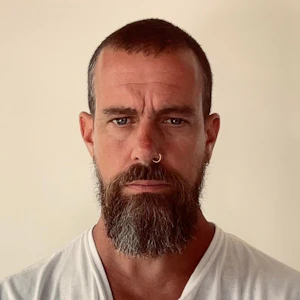
Todd Blanche
Todd Blanche
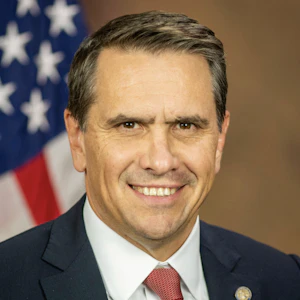
Biography of Deputy Attorney General Todd Blanche
The Honorable Todd Blanche is the 40th Deputy Attorney General of the United States, overseeing the work of the 115,000 dedicated employees who fulfill the Department of Justice’s mission at Main Justice, the FBI, DEA, U.S. Marshals, ATF, and 93 U.S. Attorney’s Offices.
Todd began his career at the Department where he served for over fifteen years in a variety of capacities, including as a contractor, a paralegal in the Criminal Division, and at the United States Attorney’s office for the Southern District of New York where he eventually became an AUSA and later a supervisor.
After leaving the Department, Todd worked as a criminal defense attorney that included representing President Donald Trump in three of the criminal cases brought against him in 2023 and 2024.
Following President Trump’s historic return to the White House, the President appointed Todd to work alongside Attorney General Pam Bondi to make America safe again. At the DOJ, Todd is working tirelessly to implement President Trump’s priorities that include confronting illegal protecting American businesses from fraud.
Todd has been married to his wonderful wife Kristine for nearly thirty years, is a father and grandfather.
Paul Atkins
Paul Atkins
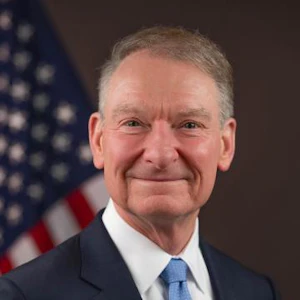
Prior to returning to the SEC, Chairman Atkins was most recently chief executive of Patomak Global Partners, a company he founded in 2009. Chairman Atkins helped lead efforts to develop best practices for the digital asset sector. He served as an independent director and non-executive chairman of the board of BATS Global Markets, Inc. from 2012 to 2015.
Chairman Atkins was appointed by President George W. Bush to serve as a Commissioner of the SEC from 2002 to 2008. During his tenure, he advocated for transparency, consistency, and the use of cost-benefit analysis at the agency. Chairman Atkins also represented the SEC at meetings of the President’s Working Group on Financial Markets and the U.S.-EU Transatlantic Economic Council. From 2009 to 2010, he was appointed a member of the Congressional Oversight Panel for the Troubled Asset Relief Program.
Before serving as an SEC Commissioner, Chairman Atkins was a consultant on securities and investment management industry matters, especially regarding issues of strategy, regulatory compliance, risk management, new product development, and organizational control.
From 1990 to 1994, Chairman Atkins served on the staff of two chairmen of the SEC, Richard C. Breeden and Arthur Levitt, ultimately as chief of staff and counselor, respectively. He received the SEC’s 1992 Law and Policy Award for work regarding corporate governance matters.
Chairman Atkins began his career as a lawyer in New York, focusing on a wide range of corporate transactions for U.S. and foreign clients, including public and private securities offerings and mergers and acquisitions. He was resident for 2½ years in his firm's Paris office and admitted as conseil juridique in France.
A member of the New York and Florida bars, Chairman Atkins received his J.D. from Vanderbilt University School of Law in 1983 and was Senior Student Writing Editor of the Vanderbilt Law Review. He received his A.B., Phi Beta Kappa, from Wofford College in 1980.
Originally from Lillington, North Carolina, Chairman Atkins grew up in Tampa, Florida. He and his wife Sarah have three sons.

Mike Selig
Mike Selig
Chairman Selig brings to the role deep public and private sector experience working with a wide range of stakeholders across agriculture, energy, financial, and digital asset industries, which rely upon and operate in CFTC-regulated markets.
Prior to his leadership at the CFTC, Chairman Selig most recently served as chief counsel of the Securities and Exchange Commission’s Crypto Task Force and senior advisor to SEC Chairman Paul S. Atkins. In this role, Chairman Selig helped to develop a clear regulatory framework for digital asset securities markets, harmonize the SEC and CFTC regulatory regimes, modernize the agency’s rules to reflect new and emerging technologies, and put an end to regulation by enforcement. He also participated in the President’s Working Group on Digital Asset Markets and contributed to its report on “Strengthening American Leadership in Digital Financial Technology.”
Prior to government service, Chairman Selig was a partner at an international law firm, focusing on derivatives and securities regulatory matters. During his years in private practice, he represented a broad range of clients subject to regulation by the CFTC, including commercial end users, futures commission merchants, commodity trading advisors, swap dealers, designated contract markets, derivatives clearing organizations, and digital asset firms. Chairman Selig advised clients on compliance with the Commodity Exchange Act and the CFTC’s rules and regulations thereunder, including in connection with registration applications and obligations, enforcement matters, and complex transactions.
Chairman Selig earned his law degree from The George Washington University Law School and was articles editor of The George Washington Law Review. He received his undergraduate degree from Florida State University.

David Bailey
David Bailey

Eric Trump
Eric Trump
Mr. Trump also serves as Executive Vice President of The Trump Organization, where he oversees the global management and operations of the Trump family’s extensive real estate portfolio. This includes Trump Hotels, Trump Golf, commercial and residential real estate, Trump Estates, and Trump Winery. Known for his hands-on leadership and strong market instincts, he has played a key role in expanding the company’s presence across major U.S. and international markets.
A globally recognized business leader and public figure, Mr. Trump is a prominent advocate for Bitcoin and decentralized finance. He is a co-founder of World Liberty Financial, a decentralized finance (DeFi) platform, and serves on the Board of Advisors of Metaplanet, Japan’s largest corporate holder of Bitcoin.
Beyond his business activities, Mr. Trump has helped raise more than $50 million for St. Jude Children’s Research Hospital in the fight against pediatric cancer, a philanthropic mission he began at age 21.
Mr. Trump earned a degree in Finance and Management from Georgetown University. He currently resides in Florida with his wife, Lara, and their two children. He is also the author of Under Siege, his memoir published in October 2025.

Jack Mallers
Jack Mallers

Cynthia Lummis
Cynthia Lummis
As the first-ever Chair of the Senate Banking Subcommittee on Digital Assets, Senator Lummis is the architect of the legislative framework shaping America's digital asset future. She introduced the landmark Lummis-Gillibrand Responsible Financial Innovation Act, the first comprehensive bipartisan crypto regulatory framework in Senate history. She co-authored the GENIUS Act — the first federal stablecoin law ever enacted — and introduced the BITCOIN Act, which would establish a U.S. strategic Bitcoin reserve of up to one million BTC. She is leading the Clarity Act, which will bring long-overdue regulatory certainty to the digital asset industry. She has also championed digital asset tax reform, including a de minimis exemption for small transactions and equal tax treatment for miners and stakers.
Known as Congress' "Crypto Queen," Senator Lummis represents Wyoming — a state she has helped build into one of the most digital asset-friendly regulatory environments in the nation. Before serving in the Senate, she served 14 years in the Wyoming Legislature, eight years as Wyoming State Treasurer, and eight years in the U.S. House. She is a three-time graduate of the University of Wyoming.
Her work represents a crucial bridge between traditional financial systems and the emerging digital economy, ensuring America leads the world in financial innovation while protecting the individual freedoms that define it.

Adam Back
Adam Back

Amy Oldenburg
Amy Oldenburg
David Marcus
David Marcus

Matt Schultz
Matt Schultz
Fred Thiel
Fred Thiel
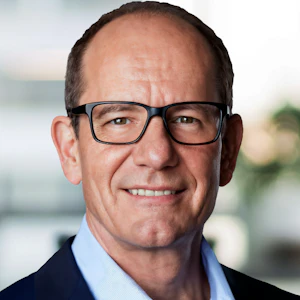
Throughout his career, Mr. Thiel has consistently driven rapid growth and created substantial shareholder value. Prior to MARA, Mr. Thiel served as the CEO of two other public companies, Local Corporation (NASDAQ: LOCM) and Lantronix, Inc (NASDAQ: LTRX). He has successfully raised billions in equity and debt through private and public offerings, led companies through IPOs, executed high-value exits to strategic and financial acquirers, and implemented effective M&A and roll-up strategies.
Mr. Thiel attended the Stockholm School of Economics and executive classes at Harvard Business School, and is fluent in English, Spanish, Swedish, and French. Mr. Thiel is the Chairman of the Board for Oden Technology, Inc. and is active in Young Presidents’ Organization where he has led initiatives in both the FinTech and Technology Networks.
A recognized voice in the industry, Fred frequently shares his insights on energy and technology with major media outlets like Bloomberg TV, CNBC, and FOX Business, contributing to vital discussions about the future of these sectors.
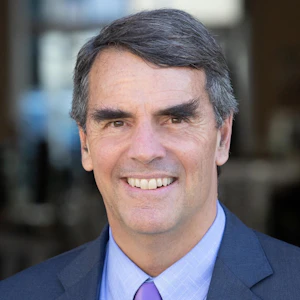
Tim Draper
Tim Draper
He is a supporter and global thought leader for entrepreneurs everywhere, and is a leading spokesperson for Bitcoin and decentralization, having won the Bitcoin US Marshall’s auction in 2014, invested in over 50 crypto companies, and led investments in Coinbase, Ledger, Tezos, and Bancor, among others.
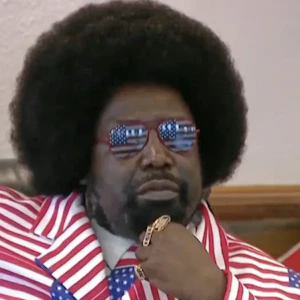
Afroman
Afroman