Argo Garbling Scheme, BitVM Bridges & Shielded CSV
Speakers/Moderators

Ying Tong Lai
Ying Tong Lai

Liam Eagen
Liam Eagen
Session
Overview
Ying Tong Lai, Liam Eagen, and Robin Linus discussed privacy and scalability research for Bitcoin, focusing on Shielded CSV, BitVM bridges, and the broader goal of making Bitcoin usable as cypherpunk money. The speakers argued that Bitcoin’s long-term value depends not only on its role as a store of value, but also on permissionless, self-custodial payments that can scale to many users.
A central theme was Shielded CSV, a client-side validation protocol intended to provide strong transaction privacy while reducing on-chain verification costs. The speakers compared it to coinjoins, Lightning, and Zcash-style privacy, emphasizing anonymity sets, hidden transaction graphs, note commitments, recursive proofs, and the use of Bitcoin L1 for double-spend prevention rather than full transaction validation.
The conversation also covered bridging Bitcoin into such a system. BitVM bridges were presented as a near-term, trust-reduced option, while trustless bridges would likely require a consensus change such as a SNARK verifier enabled through proposals like OP_CAT, Great Script Restoration, or Simplicity.
Beyond the technical discussion, the session argued for a cultural shift back toward Bitcoin as peer-to-peer electronic cash. The speakers framed privacy, fungibility, scalability, and self custody as essential to preserving Bitcoin’s censorship resistance and avoiding overreliance on custodians or institutional intermediaries.
Everyone, hi.
We identify as cypherpunks who like the original vision of cypherpunk money. We are going to talk about that today because we think that is the most important thing about Bitcoin.
We are ideal group, and we are building for privacy and scalability on Bitcoin. My name is Tong. I'm Liam. I'm Robin. Today we are going to talk about the central vision of Bitcoin as money, why we need privacy and scalability for it, and why we need a culture shift back to the original cypherpunk money that we were promised.
As we all know, Satoshi's original vision was that we all buy MicroStrategy stock. Obviously, that is not the case. It is about cypherpunk money, and I think we should refocus the entire Bitcoin culture back on cypherpunk money. There has been a big transition away from that over the last several years. People who have been in this space for a long time can probably feel it. We think we have a way to bring it back and achieve what Bitcoin was meant to be.
Before I joined ideal group, I worked on other clients. Compared to Bitcoin, other coins do not have the distribution or influence needed to make this a reality. Our best shot at cypherpunk money is Bitcoin. The problem is that Bitcoin today does not work for payments. It does not have the privacy and scalability that we need to actually bring it to billions of people. This is what motivates ideal group to build secure bridges and private, trustless payment protocols.
Bitcoin has a really unique opportunity as such a large and influential asset, with such a strong ethos and so many people who believe in what it can be. In my opinion, it may be our only chance to achieve the freedom money that we all want.
We have developed a protocol called Shielded CSV, which is a second-layer protocol on top of Bitcoin. It has a lot of interesting properties. First, it gives you privacy comparable to cash. It obfuscates both transaction amounts and the transaction graph. It is not just private; it is also much more scalable than regular Bitcoin transactions. That is a match made in heaven, because now people are incentivized to use private transactions instead of regular transactions because they are cheaper and more scalable.
It can increase the throughput of the base layer to about 100 transactions per second, roughly a 20x improvement. The interesting thing is that Shielded CSV transactions are very cheap to verify for full nodes. Actually, you can just ignore them if you are not participating in the protocol. A block full of Shielded CSV transactions would be easier to verify than a block full of regular Bitcoin transactions. That gives nice scalability properties. It is a way to make Bitcoin both private and more scalable in the end.
I used to work on Zcash as a cryptographic engineer for two years. Shielded CSV offers the same privacy guarantees as Zcash, namely that your anonymity set is the whole of every note commitment that has ever existed in the payment system. Privacy is crucial for Bitcoin to become a viable payment system that is truly censorship resistant. We must have it so that validators and miners cannot distinguish between one person's transactions and another's.
Without privacy, Bitcoin is not fungible. Bitcoin can be discriminated against, identified, and sequestered from the rest of the supply. That fundamentally undermines its value as money. You can have de facto forks, essentially, where you have pools of Bitcoin that are not usable by other people.
It is fundamental to Bitcoin being able to be a store of value, because in the long run, if we continue this path of giving more and more of our money to institutions, who then custody it at Coinbase or whoever, that centralizes the supply. It also centralizes the on- and off-ramps. It centralizes the interface for people to interact with that system. That takes away all the fundamental properties of Bitcoin.
The fewer people are using self custody, the less we can be certain about the total supply. You do not know if MicroStrategy actually has all the Bitcoin that they are promising to everyone. They can promise bitcoins multiple times to people, effectively increasing the supply by creating promises out of thin air. I am not saying they are doing it. I am saying this fundamental property of Bitcoin, of being actually scarce, is only guaranteed if we use it self-custodially. That is why it is so important that Bitcoin is accessible and usable for billions of people to use directly, to guarantee the fundamental properties to everyone.
Bitcoin's value derives from its ethos and its utility as a permissionless payment system, and these things are tightly coupled. A lot of people are focused on the price, and for many people it seems like Bitcoin is becoming something like an institutional meme coin. It is just an instrument that you buy, and you do not really care about anything. I think that is a really dangerous path. The network can become centralized by institutions holding all of the Bitcoin and holding it on behalf of other people. The whole thing is much more fragile than people realize. We have to pursue the original vision of Bitcoin in order to make it work at all.
This being the Open Source Stage, we are going to go into some high-level detail on the actual solution that we are building. As mentioned, this is Shielded CSV, and CSV here stands for client-side validation. Besides the properties Robin mentioned, such as high throughput and cheap verification, crucially Shielded CSV can be instantiated today on Bitcoin without a soft fork. In this sense, it is a meta-protocol that uses Bitcoin L1 consensus for double-spend prevention and canonical state. Besides that, Shielded CSV moves all of the client state and client state validation off-chain. For this reason, it is extremely high throughput and extremely efficient in its use of block space.
For someone new to Bitcoin, or someone new to privacy solutions in Bitcoin, how do you think Shielded CSV compares to other existing privacy solutions or popular alternatives for private Bitcoin?
There are ways you can use Bitcoin more privately, like coinjoins or maybe Lightning, but none of the existing techniques for making Bitcoin private today are able to deliver the so-called perfect privacy where you cannot identify any information at all about the transaction by looking at what is published on chain. Most existing techniques have complicated trade-offs. Maybe they require liveness assumptions or complicated liquidity management.
The nice thing about Shielded CSV is that it is just a pure transaction protocol. It does not have these additional issues. Also, the anonymity set, as already mentioned, is basically everyone who is using the protocol. For coinjoins, it is just the people who participated in your particular coinjoin, which might be a hundred people or something. There are ways to de-anonymize in particular cases. If an attacker participates in the coinjoin, they can learn more.
In Shielded CSV, the anonymity set is basically every transaction that ever happened. That gives you much stronger privacy properties. I would say it is best-in-class privacy, comparable to Zcash or other protocols that give you the highest possible level of privacy. In contrast to these other protocols, however, it does not introduce a higher burden on nodes. It is actually cheaper to verify, and it does not require publishing proofs, so it requires much less communication overall. I have been working on these kinds of things for a long time, and I really think it is perhaps the best way even possible to do something like this.
In Zcash, even though we keep transactions shielded, we do have to publish the proofs of their validity on chain. The Zcash consensus incurs this cost of having to maintain these proofs and validate them. In the case of Shielded CSV, this is moved client-side. The history of transaction and account validity is proven using a chain of recursive proofs. These proofs are always constant size and constant time to verify. The point is that these proofs never have to be submitted on chain. So Shielded CSV is the lowest-cost private payment protocol possible.
To give you a high-level intuition for how it works, the key idea is that we should use the blockchain for what the blockchain is good for, which is an immutable ordering of commitments to prevent double spending. We do not need global consensus on every detail of a transaction. We only need global consensus on commitments to prevent double spending.
As a strawman construction, to get an intuition for how it works, I as the sender could send the recipient the entire coin history. Theoretically, of course, it is not efficient if I actually send you the entire coin history. But if I sent you the entire coin history off-chain, you could verify the entire coin history and convince yourself that the history is valid, giving the coin value. The only thing you cannot verify client-side or off-chain is that no double spending occurred. Everything else you can verify client-side off-chain.
That is the key idea behind this protocol. We basically have this interaction between sender and recipient, and the recipient is the only person in the system who is actually incentivized to verify the entire coin history. The only thing we need from the blockchain are these small commitments to prevent double spending, to make the history unique, and to prove to the recipient that you did not split the history and give the same coin to someone else. That makes it efficient. We do not put the transaction on chain. We only put very small commitments on chain to prevent double spending.
Sending you the history sounds very inefficient, and it would be very inefficient. But there is a basically magical technology called SNARKs. It is a cryptographic compression technique that allows you to compress a huge amount of computation into a very succinct proof that is as convincing as the original data. I can create a proof of this entire coin history and send you that proof. That is as convincing as if I had sent you the coin history itself. That makes it very efficient on the client side. I do not have to send you the history. I just send you the proof that the history is correct, and that is cryptographically convincing.
In Bitcoin, maybe you have heard of zero-knowledge proofs. We have been talking about them for a long time, and my background is also in SNARK research. These are feasible to generate now on a phone. We can do this. Part of the reason protocols like this were not pursued in the past is that it was not technically feasible, but it is now. The proofs can be post-quantum, and they are extremely fast to generate.
This is a Bitcoin meta-protocol, and we can deploy it today without a soft fork. But how are we going to solve the problem of bridging from Bitcoin L1 into the Shielded CSV meta-protocol?
That is actually the fundamental crux of the protocol. The protocol is really a token protocol. Maybe you have heard of RGB or Taproot Assets, and it is very similar to that. It is a token protocol on top of Bitcoin. But of course, we do not want to sell you any crazy tokens. We want to have Bitcoin in there. We want to bridge the Bitcoin asset from L1 to a Shielded CSV protocol.
One way to do that is BitVM. BitVM bridges enable that. That is a way we can enable bridges right now without any soft forks. However, it comes with trust assumptions. BitVM relies on a so-called one-of-n trust assumption. You have a trusted setup where, let's say, 10 to 100 people come together, and as long as one of them is honest, nobody can steal money from the bridge. But you still need to trust that at least one of them is honest. That is not a super desirable property. Ideally, we want it to be completely trustless, and that is currently not possible. But with a consensus change, that could become possible. We could get rid of this trust assumption and make it fully trustless.
Robin and I have been working on these kinds of BitVM bridges. Robin is the creator of BitVM, and we at ideal have the state of the art in terms of how good it is possible to do this. Robin is also probably the best Bitcoin script wizard hacker in the world. We have tried really, really hard to figure out how to do this as best as possible without changing Bitcoin. I think it can be done. But in order to realize this vision of permissionless, private, scalable payments, we really need the ability to have a trustless bridge. A bridge that does not have any operators, does not have any signers, and can just run and be verified by consensus.
This is possible. We know how to do this using SNARKs and zero-knowledge proofs. It is just a matter of getting the word out and making people understand that this is the most viable path toward what Bitcoin is supposed to be, and articulating exactly how we want to do that. We have simple soft fork proposals that would allow us to do this.
There are actually a few proposals that would give us what we want. For example, there is Great Script Restoration, which has been discussed for a while, basically reactivating opcodes that used to be in Bitcoin. Satoshi found a bug in one of them and got paranoid, and then he deactivated about half of them. Russell O'Connor from Blockstream is working on Great Script Restoration. That would be one proposal that would allow us to build a SNARK verifier in Bitcoin Script.
Another solution would be Simplicity. Maybe you have heard of that. It is another new scripting language developed by Blockstream, and that would also allow us to implement a SNARK verifier. There are many different ways. Even OP_CAT alone, just the code of CAT, would basically give us a SNARK verifier.
The point I want to make is that we do not need crazy consensus changes. People thought that to have strong privacy on Bitcoin, we need deep, invasive consensus changes, and many lines of code have to change. But that is not the case. Actually, just activating OP_CAT would already give us basically perfect privacy and much better scalability. We are quite close to making that happen. No invasive changes are necessary for that.
But I think the problem with this is one of direction and Bitcoin governance. We need to decide what we want to do, and then do it the right way. We have tried hacking Bitcoin as much as possible, but I think we should be more ambitious in asking for what we really want and telling people why. That is what we are trying to do.
It is actually a cultural problem. Bitcoin being able to serve billions of people as money is not really a technical problem. For the technical problems, we do have solutions. It is more a cultural problem of deciding that we want that, and that we dream of that. Then we go back to the original cypherpunk ideas that actually made this community big originally. Back around 2014 or 2015, people were about making Bitcoin money. It was not about Michael Saylor on the main stage. Those ideas did not exist back then. It was about Bitcoin being usable as money and making the world a better place by having better money that is a healthy foundation for society instead of fiat money.
We need to refocus on that. We need to stop LARPing. We need to refocus on making Bitcoin money. It is a cultural problem. It is really about us starting to think again about making Bitcoin more useful. Then it becomes quite easy to do the consensus changes necessary to solve the technical problems that we need to solve to get there.
It is a cultural problem, and to go even further, it is an existential problem. Privacy is not just a nice-to-have. Without privacy, Bitcoin cannot be used as freedom money. Bitcoin loses fungibility. Oppressive jurisdictions will always be able to distinguish the activities of people they are trying to censor and people they are trying to exclude from the financial system. It is only when Bitcoin miners are unable to discriminate between transactions that Bitcoin truly becomes usable as free money.
There is also a class of solutions that many people think Bitcoin can be used in custodial ways. In fact, many privacy techniques end up degenerating into custodial solutions where you let somebody else manage your money and you can have nice properties on top of that. But I do not think that is sustainable. There are huge practical issues with this. It is potentially illegal, and it undermines the distributed ownership of Bitcoin, which is where we derive our value from. When centralized parties control all of the funds, it is easier to shut down the system. Those parties have more say in what happens. We need permissionless, decentralized ownership of Bitcoin that is usable in a private and scalable way. Without that, I do not think it will succeed long term.
A lot of people are saying this. Jack Dorsey, for example, keeps reiterating that the most likely way Bitcoin is going to fail is that we do not use it. We have to use Bitcoin for it to be able to succeed. I think Satoshi said that as well. He said something like, in a couple of decades there will be either lots of transactions or none.
We should refocus on making Bitcoin as usable as possible to as many people as possible and start dreaming that dream again. Daring to dream that dream is actually extremely powerful. It is quite unlikely that we will succeed, sure. I am not unrealistic. I know the probability that Bitcoin is going to become the dominant payment system in the world is quite low. But if you think about it, maybe you have seen that legendary talk by Andreas Antonopoulos where he talked to a room of three people or something. Now we have things like this with tens of thousands of people. We came a long way, and it was so unlikely that this would succeed. We have already seen such a thing happen, so it is not impossible that it will happen again.
The key thing is that we start believing in it again, because that is what it was originally about. It was about peer-to-peer electronic cash being used by everyone in the world. That is possible. There is a way to do that, and we should believe in that. We should talk about that. We should focus on that, and we should have a culture that embraces this idea.
We cannot take our success in Bitcoin as an inevitability. It is not guaranteed. We have to be very clear about what Bitcoin's value derives from. It is not supposed to be a speculative asset held custodially by a few central parties. That is not going to succeed. There will not be Bitcoin in it. I think we still have a chance, but we have to recognize this and do it.
The growing influence of Bitcoin and the growing participation of institutional players can work to our advantage here, precisely because we are able to bootstrap this privacy protocol as a meta-protocol today without soft forks. We are able to achieve the huge anonymity set and best-in-class privacy on such an influential asset that so many important people care about and own. We are able to bridge Bitcoin into the system in a trust-reduced way, again without a soft fork. The fact that we can do all of this without a consensus change in L1, and make use of Bitcoin's adoption and influence to bootstrap a truly private and free money payment system, makes me optimistic.
What should we do now? We need to take action to make this happen. The simplest thing for everybody to do is to acknowledge the problem and recognize that this is a problem, and that we have a solution. We have to pursue this vision that we are outlining and tell people about it. Often in Bitcoin conversations, it is just taken for granted that it is digital gold and it does not matter if we can use it for payments. I do not think that is true. If you believe in this, tell people.
Championing privacy and scalability as principles that we cannot compromise on, supporting projects that work on this, and supporting advocates who are promoting this message are all part of the culture shift back to the Bitcoin we were promised. For people who are more technically inclined, reach out and get in touch with us. We are working on this. We are trying to make it happen. We are still small, but I think we can do it. All the technical pieces, we know how to do. We welcome contributions or just general interest from the community.
If you are a secret whale and want to fund us on this, we are as cypherpunk as it gets. We love this stuff. We are not LARPers. We are very serious about it. The other thing is that we need to get rid of this condemnation. We need to embrace soft forks. We need to think about consensus changes, and we need to realign ourselves with that vision of making Bitcoin money. For that, we need to improve Bitcoin also at the consensus level. We need to demand that from our culture. Activate a SNARK verifier on L1. We need that.
That's it. Thank you.
Similar
Sessions
Using Bitcoin as Money, Privately


Using Bitcoin as Money, Privately
Speakers/Moderators
Argo Garbling Scheme, BitVM Bridges & Shielded CSV
Ying Tong Lai
Ying Tong Lai
Liam Eagen
Liam Eagen
Argo Garbling Scheme, BitVM Bridges & Shielded CSV
Speakers/Moderators
Ying Tong Lai
Ying Tong Lai
Liam Eagen
Liam Eagen
Other
Speakers
Michael Saylor
Michael Saylor
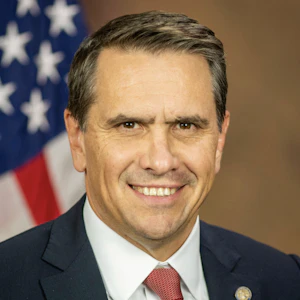
Todd Blanche
Todd Blanche
Biography of Deputy Attorney General Todd Blanche
The Honorable Todd Blanche is the 40th Deputy Attorney General of the United States, overseeing the work of the 115,000 dedicated employees who fulfill the Department of Justice’s mission at Main Justice, the FBI, DEA, U.S. Marshals, ATF, and 93 U.S. Attorney’s Offices.
Todd began his career at the Department where he served for over fifteen years in a variety of capacities, including as a contractor, a paralegal in the Criminal Division, and at the United States Attorney’s office for the Southern District of New York where he eventually became an AUSA and later a supervisor.
After leaving the Department, Todd worked as a criminal defense attorney that included representing President Donald Trump in three of the criminal cases brought against him in 2023 and 2024.
Following President Trump’s historic return to the White House, the President appointed Todd to work alongside Attorney General Pam Bondi to make America safe again. At the DOJ, Todd is working tirelessly to implement President Trump’s priorities that include confronting illegal protecting American businesses from fraud.
Todd has been married to his wonderful wife Kristine for nearly thirty years, is a father and grandfather.

Paul Atkins
Paul Atkins
Prior to returning to the SEC, Chairman Atkins was most recently chief executive of Patomak Global Partners, a company he founded in 2009. Chairman Atkins helped lead efforts to develop best practices for the digital asset sector. He served as an independent director and non-executive chairman of the board of BATS Global Markets, Inc. from 2012 to 2015.
Chairman Atkins was appointed by President George W. Bush to serve as a Commissioner of the SEC from 2002 to 2008. During his tenure, he advocated for transparency, consistency, and the use of cost-benefit analysis at the agency. Chairman Atkins also represented the SEC at meetings of the President’s Working Group on Financial Markets and the U.S.-EU Transatlantic Economic Council. From 2009 to 2010, he was appointed a member of the Congressional Oversight Panel for the Troubled Asset Relief Program.
Before serving as an SEC Commissioner, Chairman Atkins was a consultant on securities and investment management industry matters, especially regarding issues of strategy, regulatory compliance, risk management, new product development, and organizational control.
From 1990 to 1994, Chairman Atkins served on the staff of two chairmen of the SEC, Richard C. Breeden and Arthur Levitt, ultimately as chief of staff and counselor, respectively. He received the SEC’s 1992 Law and Policy Award for work regarding corporate governance matters.
Chairman Atkins began his career as a lawyer in New York, focusing on a wide range of corporate transactions for U.S. and foreign clients, including public and private securities offerings and mergers and acquisitions. He was resident for 2½ years in his firm's Paris office and admitted as conseil juridique in France.
A member of the New York and Florida bars, Chairman Atkins received his J.D. from Vanderbilt University School of Law in 1983 and was Senior Student Writing Editor of the Vanderbilt Law Review. He received his A.B., Phi Beta Kappa, from Wofford College in 1980.
Originally from Lillington, North Carolina, Chairman Atkins grew up in Tampa, Florida. He and his wife Sarah have three sons.

Mike Selig
Mike Selig
Chairman Selig brings to the role deep public and private sector experience working with a wide range of stakeholders across agriculture, energy, financial, and digital asset industries, which rely upon and operate in CFTC-regulated markets.
Prior to his leadership at the CFTC, Chairman Selig most recently served as chief counsel of the Securities and Exchange Commission’s Crypto Task Force and senior advisor to SEC Chairman Paul S. Atkins. In this role, Chairman Selig helped to develop a clear regulatory framework for digital asset securities markets, harmonize the SEC and CFTC regulatory regimes, modernize the agency’s rules to reflect new and emerging technologies, and put an end to regulation by enforcement. He also participated in the President’s Working Group on Digital Asset Markets and contributed to its report on “Strengthening American Leadership in Digital Financial Technology.”
Prior to government service, Chairman Selig was a partner at an international law firm, focusing on derivatives and securities regulatory matters. During his years in private practice, he represented a broad range of clients subject to regulation by the CFTC, including commercial end users, futures commission merchants, commodity trading advisors, swap dealers, designated contract markets, derivatives clearing organizations, and digital asset firms. Chairman Selig advised clients on compliance with the Commodity Exchange Act and the CFTC’s rules and regulations thereunder, including in connection with registration applications and obligations, enforcement matters, and complex transactions.
Chairman Selig earned his law degree from The George Washington University Law School and was articles editor of The George Washington Law Review. He received his undergraduate degree from Florida State University.

David Bailey
David Bailey

Eric Trump
Eric Trump
Mr. Trump also serves as Executive Vice President of The Trump Organization, where he oversees the global management and operations of the Trump family’s extensive real estate portfolio. This includes Trump Hotels, Trump Golf, commercial and residential real estate, Trump Estates, and Trump Winery. Known for his hands-on leadership and strong market instincts, he has played a key role in expanding the company’s presence across major U.S. and international markets.
A globally recognized business leader and public figure, Mr. Trump is a prominent advocate for Bitcoin and decentralized finance. He is a co-founder of World Liberty Financial, a decentralized finance (DeFi) platform, and serves on the Board of Advisors of Metaplanet, Japan’s largest corporate holder of Bitcoin.
Beyond his business activities, Mr. Trump has helped raise more than $50 million for St. Jude Children’s Research Hospital in the fight against pediatric cancer, a philanthropic mission he began at age 21.
Mr. Trump earned a degree in Finance and Management from Georgetown University. He currently resides in Florida with his wife, Lara, and their two children. He is also the author of Under Siege, his memoir published in October 2025.

Jack Mallers
Jack Mallers
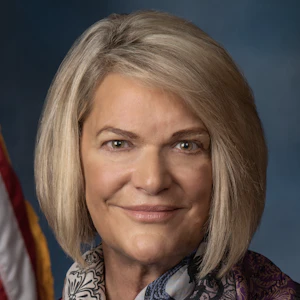
Cynthia Lummis
Cynthia Lummis
As the first-ever Chair of the Senate Banking Subcommittee on Digital Assets, Senator Lummis is the architect of the legislative framework shaping America's digital asset future. She introduced the landmark Lummis-Gillibrand Responsible Financial Innovation Act, the first comprehensive bipartisan crypto regulatory framework in Senate history. She co-authored the GENIUS Act — the first federal stablecoin law ever enacted — and introduced the BITCOIN Act, which would establish a U.S. strategic Bitcoin reserve of up to one million BTC. She is leading the Clarity Act, which will bring long-overdue regulatory certainty to the digital asset industry. She has also championed digital asset tax reform, including a de minimis exemption for small transactions and equal tax treatment for miners and stakers.
Known as Congress' "Crypto Queen," Senator Lummis represents Wyoming — a state she has helped build into one of the most digital asset-friendly regulatory environments in the nation. Before serving in the Senate, she served 14 years in the Wyoming Legislature, eight years as Wyoming State Treasurer, and eight years in the U.S. House. She is a three-time graduate of the University of Wyoming.
Her work represents a crucial bridge between traditional financial systems and the emerging digital economy, ensuring America leads the world in financial innovation while protecting the individual freedoms that define it.

Adam Back
Adam Back
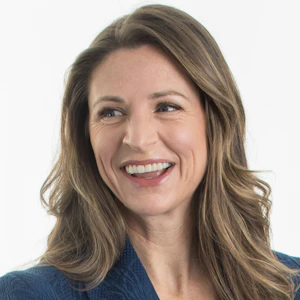
Amy Oldenburg
Amy Oldenburg
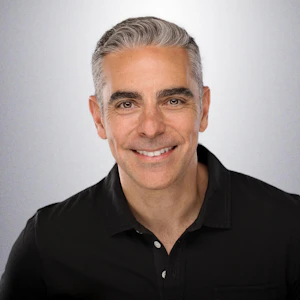
David Marcus
David Marcus

Matt Schultz
Matt Schultz
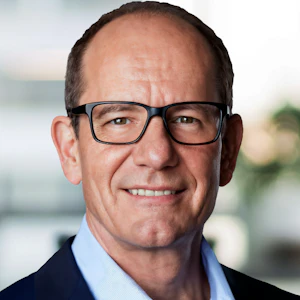
Fred Thiel
Fred Thiel
Throughout his career, Mr. Thiel has consistently driven rapid growth and created substantial shareholder value. Prior to MARA, Mr. Thiel served as the CEO of two other public companies, Local Corporation (NASDAQ: LOCM) and Lantronix, Inc (NASDAQ: LTRX). He has successfully raised billions in equity and debt through private and public offerings, led companies through IPOs, executed high-value exits to strategic and financial acquirers, and implemented effective M&A and roll-up strategies.
Mr. Thiel attended the Stockholm School of Economics and executive classes at Harvard Business School, and is fluent in English, Spanish, Swedish, and French. Mr. Thiel is the Chairman of the Board for Oden Technology, Inc. and is active in Young Presidents’ Organization where he has led initiatives in both the FinTech and Technology Networks.
A recognized voice in the industry, Fred frequently shares his insights on energy and technology with major media outlets like Bloomberg TV, CNBC, and FOX Business, contributing to vital discussions about the future of these sectors.
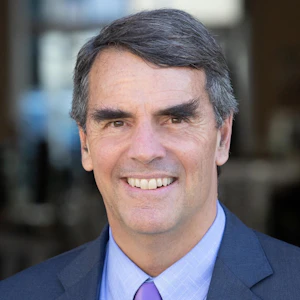
Tim Draper
Tim Draper
He is a supporter and global thought leader for entrepreneurs everywhere, and is a leading spokesperson for Bitcoin and decentralization, having won the Bitcoin US Marshall’s auction in 2014, invested in over 50 crypto companies, and led investments in Coinbase, Ledger, Tezos, and Bancor, among others.

Afroman
Afroman