Battle-Tested Strategies of Holding Bitcoin on the Balance Sheet
Speakers/Moderators

Julia Duzon
Julia Duzon


Leon Johnson
Leon Johnson

Štěpán Uherík
Štěpán Uherík
Session
Overview
Julia Duzon of River moderated a discussion with Di Lewis of BTC Inc., Leon Johnson of Fedi, and Štěpán Uherík of Trezor Company on how operating businesses can hold Bitcoin on the balance sheet without acting like speculative treasury vehicles.
The panel focused on practical treasury management, including how much Bitcoin a company might hold, why companies need a written framework before volatility hits, and why Bitcoin should not be treated as working capital unless the business can withstand major drawdowns. Speakers emphasized starting small, maintaining sufficient cash reserves, understanding tax treatment, and aligning executives and boards around the purpose of the strategy.
Custody, payments, payroll, supplier payments, and debanking risk were major themes. The speakers described multisig custody planning, paying employees and vendors in Bitcoin, using Bitcoin as a 24/7 global payment network, and building circular economies through real business use.
The conversation closed with a cautious but constructive view of corporate Bitcoin adoption. The panelists did not expect every company to hold Bitcoin, but they argued that more CFOs, treasurers, and boards will need to evaluate it as Bitcoin becomes a larger part of the global financial landscape.
Hi everyone, I'm Julia Duzon. I am the CEO of River. River is a U.S.-based Bitcoin-only exchange. We also offer Bitcoin banking to individuals and businesses. Today's panel is really going to answer a simple question, which is: should a normal operating business hold Bitcoin on its balance sheet? Not speculate, not trade it, but hold it as a long-term strategic asset.
The folks you're going to hear from today are not Bitcoin treasury companies like Strategy. Instead, we are operating businesses and operators who also maintain Bitcoin and use it strategically in our businesses. Before we jump into intros, I just want to get a sense of who is in the room. Can I see a show of hands if you run or work at a business? All right, most folks. Do you run or work at a business that holds Bitcoin on its balance sheet today? Oh, wow. Easy crowd. Great. Do you work at a business that's maybe considering it? All right, so we have a few folks on the fence. Last one, any skeptics in the room? Anyone who thinks it's just, frankly, too risky for a business to have Bitcoin? All right. We have a pretty easy and friendly crowd. You better convince our final few. With that, I'm going to hand it over to the panelists. Can you all give quick intros? What does the company do, how do you make money, and what's your role?
I can start. Hello, everyone. I'm from Trezor Company. Basically, what we did in 2014 is we invented the first Bitcoin and crypto hardware wallet in the world. Since then, we've been operating, and our mission is steady. Our business is pretty simple. We sell hardware wallets and we offer some complementary software services. Personally, I have been working as CFO of Trezor for close to ten years, so in Bitcoin, it's quite a lot of time. We've been through a lot of ups and downs, and that's what we will talk about.
Good morning, everyone. My name is Leon. I work for Fedi. Fedi combines a Bitcoin wallet, chat, community spaces, and a highly flexible privacy app. Fedi has been around for a few years. We started in 2022. I work as head of operations, and I cover a lot of the back office functions, including treasury management. In terms of how we make money, we charge a transaction fee on the transactions that occur within the app.
Good morning, everybody. My name is Di Lewis. I am the CFO at BTC Inc., parent company of Bitcoin Conference, Bitcoin Magazine, Bitcoin for Corporations, and I probably have the easiest answer for how we make money: everyone sitting here right now. We sell conference tickets and sponsorships, we sell advertising on our media platforms, and corporate subscriptions through Bitcoin for Corporations.
Awesome. In one line, how do you use Bitcoin in your business?
Very simply said, we earn Bitcoin, we hold Bitcoin, and we pay with Bitcoin. So it's a full circle.
We use Bitcoin in our treasury. We use Bitcoin in our operations, paying suppliers and also paying employees.
Similar to what Štěpán mentioned, we're fully integrated with Bitcoin. You can walk the floor and probably see some signage that you can buy a coffee in Bitcoin. You can go to our merch store and pay in Bitcoin. Every single product that we offer at BTC Inc. has a payment option in Bitcoin. On the other side of the counter, we offer the option to pay every vendor and our contractors, the great people who work with us and support this event, in Bitcoin. So we have a full circular economy.
Great. Let's talk a little bit about holding Bitcoin. Štěpán, I'm going to start with you because Trezor has been at this a long time. You guys were holding Bitcoin before Bitcoin treasury strategy was even a thing. How did you start doing that, and how has the thinking around your strategy evolved over the years?
Let me start with the early days. In 2014, we introduced the first hardware wallet. It was called Trezor Model One. The price was very fair: one Bitcoin per device. We had a special edition called the Trezor One Metallic Edition, and the price was three bitcoins, but it was $100 back then. That was the moment we really started to earn bitcoins, and that was the moment we started to have our own Bitcoin treasury.
Then it was ups and downs. To be specific, in 2017, maybe there are people in the audience who remember 2017. It was a $21,000 all-time high, with the big Bitcoin hype. Then it was a brutal crash. I remember it as if it was yesterday. Bitcoin was down 84% at some point. For Trezor, sales and revenues were down 90%. It was brutal.
Thank God our founders understood the cycles. They set the strategy: relax, it's okay. Let's build great stuff in the bear market and scale in the bull market. I think this was the very basic part of our strategy. Expect that there are cycles and work, work, work.
We learned one thing the hard way. Let me say it loud: we do not consider Bitcoin treasury to be a financial reserve, to be very honest. It's not working capital. It doesn't work like that. When Bitcoin is down, your reserve is down as well, and the revenues are down as well. For us, Bitcoin is more like venture capital, and it worked very well. For example, during bull runs we used the Bitcoin reserve to invest into the company.
I think we are one of the few companies in the segment that has been operating for more than ten years without a single dollar from investors or venture capitalists. We are a fully privately owned company. We were able to finance our growth through our own finances, and we never asked any investor or venture capitalist, which means 100% freedom. I think this is the way the Bitcoin treasury can help build your company.
Leon, not everyone in here is the sole decision maker for whether or not their business should have Bitcoin. What was that journey like at Fedi? How did you get your board, your investors, and other executives all aligned? Give us the details. Was there any drama? How did you decide how much to put into Bitcoin?
Really good questions. First of all, Fedi is a VC-backed company. When the company first started, all of the founders were Bitcoiners, so philosophical buy-in was there from the beginning. Our investors are also Bitcoiners, so again, philosophical buy-in was there from day one. That was actually very, very easy.
What I would say is that philosophical buy-in is very different from operational readiness. Getting people to buy Bitcoin is straightforward, but then what do you do afterward? How do you manage that? How do you get the discipline needed to weather potentially 80% drops, but also discipline when it potentially doubles? It's important to bear in mind that they are very different.
In terms of how much and how we decided, what we did at the very beginning was think through that we needed a policy. We didn't want to be making this up as we went along. I would definitely say that is one of the worst things you can do. We're all humans. We have emotions. In the bull market, we feel great. In the bear market, we feel horrible.
At the very beginning, we put together a framework. In this, we modeled various scenarios and discussed them around a roundtable. What happens, what will we do if the price drops by 60%? What will we do if it doubles? How much cash do we need to have? We laid out all of these different rules, and we did it at the very beginning, not in the midst of a drop in the price.
Having that discipline is absolutely key, and making sure that you actually have this framework. One other thing I would say is that having it is a confidence builder for your board, because they need to see that you are actually thinking about these things and not just making it up as you go along.
I think that's really important. We probably should all have frameworks for our personal investing. As you all know, the highs of Bitcoin feel so high, but the lows can also feel really low. Make sure you don't bring emotion to those decisions. BTC Inc. actually uses Bitcoin. For the folks who want to start using it in day-to-day operations, earning their revenue, paying vendors, what does that look like?
There are a lot of tools out there. There's no one size fits all in terms of accepting Bitcoin. What does that mean? There are a plethora of tools. There's no pressure to dive headfirst. There are great partners. You can start with River, which does a great job onboarding small and medium-sized businesses. You don't have to go at it alone.
It's not every size fits all for everybody. One thing I want to mention with Leon, in terms of the framework side, is that I completely agree. There's that saying that everyone has a plan until they get punched in the face. If you operate as a Bitcoin business, have a plan to get punched in the face. This is what we've learned. You are going to get punched in the face. That's where the volatility is. Know what you're going to do when that happens, and that takes all the emotion out of it.
I tell my team when they're asking what's going on and whether we are selling: you don't want your CFO to be a trader. We have a framework. We have a policy. We know what's going to happen in any scenario, and we stick to that policy.
A lot of folks here already own Bitcoin, but I think a common question you have is how much? I'm curious for you all to make it really practical. Say folks run a $5 million to $10 million a year business in revenue. How much should they be allocating toward buying and holding Bitcoin?
To start with our own strategy, at Trezor we allocate 30% to 50% into Bitcoin from the whole of our financial resources. Why is it 30% to 50%? It can be different in the bear market. Usually after the drop, it can be 30%. What is great is that we earn bitcoins. We sell our hardware wallets for bitcoins, so we can do DCA as a company. It works on the personal level, but it works on the company level as well. In bull runs, it can be more than 50%, which is sometimes a good signal that now it's time to sell something, or maybe not.
For an average company, there is no simple answer. It starts with one thing: is the company financially ready and able to build a Bitcoin reserve? If you are a startup with a runway for 12 months, I don't think it makes any sense to start a Bitcoin treasury. But let's say, as in your question, it's a profitable company with $5 million to $10 million. It depends on your specific use case, and it also depends on the taxes.
For example, in Europe there are some countries in which, if you hold Bitcoin as a person for more than one year, it's tax-free, but it's only for physical persons. Sometimes it makes sense for the owners of the company to pay dividends and hold the Bitcoin on a personal level.
It all starts with the use case. Then do your taxes. It's very important. For example, if you want to pay your employees in Bitcoin, it only makes sense to allocate 2%, 3%, 5% to Bitcoin. You can calculate it, start, and see how it's going. The first step is to really start. You don't have to overthink it. You just need to survive the first cycle and test your features and use cases for the company. Maybe 1% is a good start for you.
Any other thoughts?
Similar to the answer about how to get started accepting Bitcoin, it's very dependent on the business. Your cash reserves, how healthy your margins are. Definitely start conservative. Be patient. There's no rush. No one is going to be MicroStrategy overnight. That's how you build the conviction. That's how you get the buy-in from your board members, executive team, and so on. Start small.
Also understand that most people are very reluctant to spend their Bitcoin. You may turn on all the levers and say you accept Bitcoin, and then it's crickets, nobody showing up to do that. What I would also say is don't wait for the world to come to you. One thing we do at BTC Inc. is, yes, we accept Bitcoin out on the floor, but it's not going to be the majority. You can see most people are still using credit cards.
So what we do is convert 10% of all revenue earned through credit card processors to Bitcoin. We accumulate steadily on our own terms as we need to. There are a lot of different configurations that can be right for your business. Be patient. It's okay to start small, and definitely make sure you have a stable business first. Bitcoin is not a miracle fix. If your business has issues, you can't just orange-label Bitcoin on it and make all your troubles go away.
I completely agree. River actually holds 50% of our treasury in Bitcoin. I was telling a friend in private equity about that, and he almost died thinking that was an incredibly aggressive strategy. As we were talking more, what I then shared is that for us, that's actually quite conservative because of the strength of the balance sheet. The total balance sheet is $70 million, with $35 million held in cash, which is three years of our fixed expenses if our revenue went to zero.
I would say always start there. As an operating business, you need your treasury to be able to pay your expenses for an extended period of time. Your delta after that is what you can start making investments in and start to allocate to Bitcoin.
Custody is also an important topic when it comes to holding Bitcoin as a business. Leon, did you have any early learnings, and what would your advice be for folks around how to hold Bitcoin for their business?
Absolutely. When we think about custody, we really want to be thinking about low-probability, high-severity scenarios. This is a really good way of managing risk. Let me give you one story of something that happened to us once. We hold our Bitcoin in a multisig wallet, and we have signers of that wallet geographically dispersed around the world, which is good practice.
There was a scenario once where one of the signers was giving birth, and at the same time another signer was in the Middle East during the recent conflicts, where missiles were being fired, and was also unavailable. So we had two out of the three signers offline. What do you do when, in that scenario, you need to move capital quickly or urgently?
Thankfully, both of these signers were able to come back online relatively quickly. But these types of scenarios are really good ways of illustrating that you have to think about not just the everyday scenarios, and not always assume that people will be available. This isn't like managing a bank account. This is very, very different, and some of the challenges are unique to Bitcoin. When it comes to custody, definitely think about some of these low-probability but high-severity scenarios.
We've talked a lot about the risks. I'm curious, what are some of the benefits to having Bitcoin in your business that are not just about number go up?
To give you some particular examples, it really worked well for Trezor in multiple ways. First of all, we pay our employees in Bitcoin, or there is an offer to them. They can say, for example, that they want to be paid 10%, 50%, or even 100% in Bitcoin. It works very well because it is not only brand building and an HR thing, but it is also a check that these employees, because they work for a Bitcoin company, are the right people to have in the company. To be honest, we have a few people who are paid 100% in Bitcoin.
Of course, you can pay with Bitcoin in the shop. You can buy Trezor for bitcoins. That's another example: you want to sell your products in Bitcoin.
The third one is Trezor Academy. We support multiple activities around the globe, and this one is particularly focused on Africa. We really want to help people in Africa adopt and orange-pill Bitcoin, and be able to really start using Bitcoin on a daily basis. It's not easy to send money to Africa without any complications. Trezor Academy is a great example. It has been working for several years, and it's great. You can fund it with bitcoins and it works perfectly. It can also be brand building and doing some good stuff for the world.
Any other benefits you all have seen?
I'll echo that last comment, which is really around suppliers. At Fedi, we are a Bitcoin company, and we want to see a world where people use Bitcoin. We want to see circular economies. If that's the world we're building for, it only makes sense that we actually use Bitcoin to pay our suppliers. We do that a lot.
What's really interesting is that we have a number of suppliers who accepted Bitcoin for the first time ever. They had heard of Bitcoin, and this is in Africa also. They had heard of Bitcoin and thought, okay, we'll give it a try. Maybe I'll accept 50% of payment in Bitcoin. Now they accept 100% of their payment in Bitcoin. So we have, to some extent, orange-pilled our customers, and it helps us achieve the world that we want to see by actually paying customers in Bitcoin.
I would say the biggest benefit for a business to use Bitcoin outside of number go up is the payment network itself. It's 24/7, 365. You can't do that with the bank. I'm currently personally renovating our home, and maybe I've been using Bitcoin too often, but banks are a pain. People forget that with banks, you are a customer downstream of all the rules they have to apply, including what the wire is for and what the purpose is.
BTC Inc. has been debanked before, and fortunately we could still send all our payments out because we had Bitcoin already. All the plumbing was already there. I know that seems like an edge case for people, but one of the things that's great about a 24/7, 365 payment network is that I can send a payment for business to any vendor across the world. They don't need a bank account. I can send it as quickly as an email, and it doesn't have to go through intermediary banks with interchange fees and maybe three to five business days, maybe eight business days.
I can click a link and see the status of this payment. I can see when it confirms. There's nothing like that. For us, especially running a global conference business, I can't tell you how many times we've been in a scenario where the problem solving ends with the question, can they just accept Bitcoin? Then that solves the immediate thing because something held up a shipment or whatever. Don't underestimate Bitcoin as a payment network. That level of transparency, censorship resistance, and the fact that nothing can stop that payment from going through is the biggest unlock for us.
The bank failing sounds like an edge case, but we forget quickly. This happened in 2023, when SVB failed. That was impacting not just Bitcoin companies but a huge part of the tech and startup ecosystem. Suddenly, overnight, when they went into FDIC receivership, companies were not going to be able to make payroll. We were also at SVB, and our backstop that Alex and I were talking about was that we're just going to send all of our employees Bitcoin if we can't get the payroll out.
I'm curious, what companies would you say absolutely should be adding Bitcoin to their balance sheet? And on the flip side, who shouldn't?
I think there's no limitation for the companies that should or shouldn't own Bitcoin or put it in the Bitcoin treasury or on the balance sheet. Again, it's mostly about your use case and why you do that. Always start with the why. Why do you want to do that? If it's because it's trendy, or because someone in your CFO club mentioned it, it's not a good idea.
Still, you can investigate it. You can set up some kind of strategy. You can test it with your CEO or on the board, and then you can decide. I think it really makes sense for companies that have a very big balance sheet full of fiat currencies, because these days inflation has become a real problem, at least in Europe. It really makes sense to look around, and there are not too many options for what you can do as a company. Bitcoin might be the answer for these companies. It's not about what kind of business you do or what kind of service you offer. It's mostly about the use case.
I would definitely echo that. It depends on how big your cash reserves are. That's definitely one key consideration. Another is local taxation laws. You need to understand how it works in your country. Every country is different, and there are some places that are more favorable to holding Bitcoin on the balance sheet than others. I would say those are two key considerations.
It has to solve a real business need. You can't just be the nerdy Bitcoin person who wants to shoehorn Bitcoin into the business. Just like any major business decision, there has to be alignment on what this is actually solving for our business and why we need to do that. There needs to be buy-in for that to actually happen.
I don't know, Di, have you heard about inflation? I feel like that impacts every business.
This is true. I'm not disagreeing, but I'm saying that needs to come to the surface, and the board and decision makers ought to be bought in. If it's just a novelty or a marketing gimmick, it won't be long lasting.
I will give you all one business that I think absolutely has to have Bitcoin. I know this is a friendly audience. If you run a Bitcoin company in the space, you have to have some sort of allocation to Bitcoin. It can be very small. I think of it like, if I ran a burger joint but I was vegan, it just philosophically does not make any sense. From a moral and cultural standpoint, if you run a Bitcoin company, start that allocation to Bitcoin.
In the next five to ten years, to close this out, what do you think happens with adoption among businesses for Bitcoin?
I'm always very conservative when it comes to the adoption of Bitcoin, not only in the space but also within institutions. But I think what might change in five to ten years is that every serious company will at least have a strategy, and there will at least be a discussion at the board level about whether we want to do that or not. I think this is what is going to happen. It will be a very serious discussion, and as a company you must make the decision. It can be no, it can be yes, but you must have the discussion.
I would say that probably in the next ten years, not every company will hold Bitcoin on their balance sheet, but I think it will become a lot more commonplace. In the same way many companies now hold foreign currencies on their balance sheet, they will also consider holding Bitcoin. Adoption still has a little way to go, but I think we're going to get there. I don't think every company will be holding it on their balance sheet.
Five years is relatively soon. I think it'll still be pretty niche. It's kind of a slow ball rolling downhill. By ten years, Bitcoin will have been around for over 25 years. It will feel less scary if you have a thesis around Bitcoin. I think we have a friendly audience that, in ten years, the price will be higher than it is today. Let's all hope so.
Then CFOs and treasurers will raise the question: why aren't we doing it? Maybe they have a compelling reason why not to, but as the price increases and as Bitcoin as a percentage of total global wealth increases, those questions are going to organically surface because it's just going to be more front and center over time. I would say in ten years, that question becomes a little more ubiquitous. Five years is maybe still too soon for that to happen on a wide scale.
We're all low time preference up here, but we're also in a room of early adopters. Kudos to all of you. I would just say the one ask, since many of you have already gotten your businesses to own Bitcoin, is go out and help evangelize it and tell your friends. We can all be innovators together, drive adoption together, and it's actually not that hard to do. Adding Bitcoin to your balance sheet is not a bold decision. If anything, I think it's a very intentional one as an operator. Thank you.
Similar
Sessions
Battle-Tested Strategies of Holding Bitcoin on the Balance Sheet
Julia Duzon
Julia Duzon
Leon Johnson
Leon Johnson
Štěpán Uherík
Štěpán Uherík
Battle-Tested Strategies of Holding Bitcoin on the Balance Sheet
Speakers/Moderators
Julia Duzon
Julia Duzon
Leon Johnson
Leon Johnson
Štěpán Uherík
Štěpán Uherík
Other
Speakers

Michael Saylor
Michael Saylor
Todd Blanche
Todd Blanche
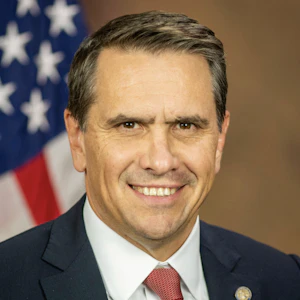
Biography of Deputy Attorney General Todd Blanche
The Honorable Todd Blanche is the 40th Deputy Attorney General of the United States, overseeing the work of the 115,000 dedicated employees who fulfill the Department of Justice’s mission at Main Justice, the FBI, DEA, U.S. Marshals, ATF, and 93 U.S. Attorney’s Offices.
Todd began his career at the Department where he served for over fifteen years in a variety of capacities, including as a contractor, a paralegal in the Criminal Division, and at the United States Attorney’s office for the Southern District of New York where he eventually became an AUSA and later a supervisor.
After leaving the Department, Todd worked as a criminal defense attorney that included representing President Donald Trump in three of the criminal cases brought against him in 2023 and 2024.
Following President Trump’s historic return to the White House, the President appointed Todd to work alongside Attorney General Pam Bondi to make America safe again. At the DOJ, Todd is working tirelessly to implement President Trump’s priorities that include confronting illegal protecting American businesses from fraud.
Todd has been married to his wonderful wife Kristine for nearly thirty years, is a father and grandfather.

Paul Atkins
Paul Atkins
Prior to returning to the SEC, Chairman Atkins was most recently chief executive of Patomak Global Partners, a company he founded in 2009. Chairman Atkins helped lead efforts to develop best practices for the digital asset sector. He served as an independent director and non-executive chairman of the board of BATS Global Markets, Inc. from 2012 to 2015.
Chairman Atkins was appointed by President George W. Bush to serve as a Commissioner of the SEC from 2002 to 2008. During his tenure, he advocated for transparency, consistency, and the use of cost-benefit analysis at the agency. Chairman Atkins also represented the SEC at meetings of the President’s Working Group on Financial Markets and the U.S.-EU Transatlantic Economic Council. From 2009 to 2010, he was appointed a member of the Congressional Oversight Panel for the Troubled Asset Relief Program.
Before serving as an SEC Commissioner, Chairman Atkins was a consultant on securities and investment management industry matters, especially regarding issues of strategy, regulatory compliance, risk management, new product development, and organizational control.
From 1990 to 1994, Chairman Atkins served on the staff of two chairmen of the SEC, Richard C. Breeden and Arthur Levitt, ultimately as chief of staff and counselor, respectively. He received the SEC’s 1992 Law and Policy Award for work regarding corporate governance matters.
Chairman Atkins began his career as a lawyer in New York, focusing on a wide range of corporate transactions for U.S. and foreign clients, including public and private securities offerings and mergers and acquisitions. He was resident for 2½ years in his firm's Paris office and admitted as conseil juridique in France.
A member of the New York and Florida bars, Chairman Atkins received his J.D. from Vanderbilt University School of Law in 1983 and was Senior Student Writing Editor of the Vanderbilt Law Review. He received his A.B., Phi Beta Kappa, from Wofford College in 1980.
Originally from Lillington, North Carolina, Chairman Atkins grew up in Tampa, Florida. He and his wife Sarah have three sons.

Mike Selig
Mike Selig
Chairman Selig brings to the role deep public and private sector experience working with a wide range of stakeholders across agriculture, energy, financial, and digital asset industries, which rely upon and operate in CFTC-regulated markets.
Prior to his leadership at the CFTC, Chairman Selig most recently served as chief counsel of the Securities and Exchange Commission’s Crypto Task Force and senior advisor to SEC Chairman Paul S. Atkins. In this role, Chairman Selig helped to develop a clear regulatory framework for digital asset securities markets, harmonize the SEC and CFTC regulatory regimes, modernize the agency’s rules to reflect new and emerging technologies, and put an end to regulation by enforcement. He also participated in the President’s Working Group on Digital Asset Markets and contributed to its report on “Strengthening American Leadership in Digital Financial Technology.”
Prior to government service, Chairman Selig was a partner at an international law firm, focusing on derivatives and securities regulatory matters. During his years in private practice, he represented a broad range of clients subject to regulation by the CFTC, including commercial end users, futures commission merchants, commodity trading advisors, swap dealers, designated contract markets, derivatives clearing organizations, and digital asset firms. Chairman Selig advised clients on compliance with the Commodity Exchange Act and the CFTC’s rules and regulations thereunder, including in connection with registration applications and obligations, enforcement matters, and complex transactions.
Chairman Selig earned his law degree from The George Washington University Law School and was articles editor of The George Washington Law Review. He received his undergraduate degree from Florida State University.

David Bailey
David Bailey

Eric Trump
Eric Trump
Mr. Trump also serves as Executive Vice President of The Trump Organization, where he oversees the global management and operations of the Trump family’s extensive real estate portfolio. This includes Trump Hotels, Trump Golf, commercial and residential real estate, Trump Estates, and Trump Winery. Known for his hands-on leadership and strong market instincts, he has played a key role in expanding the company’s presence across major U.S. and international markets.
A globally recognized business leader and public figure, Mr. Trump is a prominent advocate for Bitcoin and decentralized finance. He is a co-founder of World Liberty Financial, a decentralized finance (DeFi) platform, and serves on the Board of Advisors of Metaplanet, Japan’s largest corporate holder of Bitcoin.
Beyond his business activities, Mr. Trump has helped raise more than $50 million for St. Jude Children’s Research Hospital in the fight against pediatric cancer, a philanthropic mission he began at age 21.
Mr. Trump earned a degree in Finance and Management from Georgetown University. He currently resides in Florida with his wife, Lara, and their two children. He is also the author of Under Siege, his memoir published in October 2025.

Jack Mallers
Jack Mallers

Cynthia Lummis
Cynthia Lummis
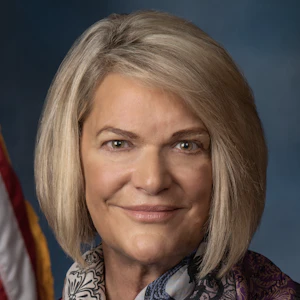
As the first-ever Chair of the Senate Banking Subcommittee on Digital Assets, Senator Lummis is the architect of the legislative framework shaping America's digital asset future. She introduced the landmark Lummis-Gillibrand Responsible Financial Innovation Act, the first comprehensive bipartisan crypto regulatory framework in Senate history. She co-authored the GENIUS Act — the first federal stablecoin law ever enacted — and introduced the BITCOIN Act, which would establish a U.S. strategic Bitcoin reserve of up to one million BTC. She is leading the Clarity Act, which will bring long-overdue regulatory certainty to the digital asset industry. She has also championed digital asset tax reform, including a de minimis exemption for small transactions and equal tax treatment for miners and stakers.
Known as Congress' "Crypto Queen," Senator Lummis represents Wyoming — a state she has helped build into one of the most digital asset-friendly regulatory environments in the nation. Before serving in the Senate, she served 14 years in the Wyoming Legislature, eight years as Wyoming State Treasurer, and eight years in the U.S. House. She is a three-time graduate of the University of Wyoming.
Her work represents a crucial bridge between traditional financial systems and the emerging digital economy, ensuring America leads the world in financial innovation while protecting the individual freedoms that define it.

Adam Back
Adam Back

Amy Oldenburg
Amy Oldenburg

David Marcus
David Marcus

Matt Schultz
Matt Schultz

Fred Thiel
Fred Thiel
Throughout his career, Mr. Thiel has consistently driven rapid growth and created substantial shareholder value. Prior to MARA, Mr. Thiel served as the CEO of two other public companies, Local Corporation (NASDAQ: LOCM) and Lantronix, Inc (NASDAQ: LTRX). He has successfully raised billions in equity and debt through private and public offerings, led companies through IPOs, executed high-value exits to strategic and financial acquirers, and implemented effective M&A and roll-up strategies.
Mr. Thiel attended the Stockholm School of Economics and executive classes at Harvard Business School, and is fluent in English, Spanish, Swedish, and French. Mr. Thiel is the Chairman of the Board for Oden Technology, Inc. and is active in Young Presidents’ Organization where he has led initiatives in both the FinTech and Technology Networks.
A recognized voice in the industry, Fred frequently shares his insights on energy and technology with major media outlets like Bloomberg TV, CNBC, and FOX Business, contributing to vital discussions about the future of these sectors.
Tim Draper
Tim Draper
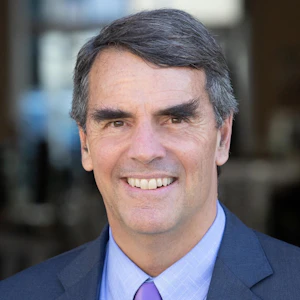
He is a supporter and global thought leader for entrepreneurs everywhere, and is a leading spokesperson for Bitcoin and decentralization, having won the Bitcoin US Marshall’s auction in 2014, invested in over 50 crypto companies, and led investments in Coinbase, Ledger, Tezos, and Bancor, among others.

Afroman
Afroman