Orange Pill U: Hazing Your Classmates with Bitcoin
Speakers/Moderators
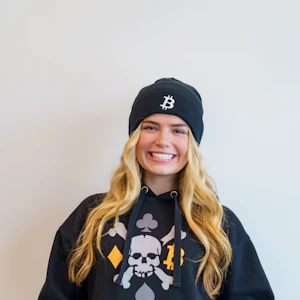
Madison Hanson
Madison Hanson
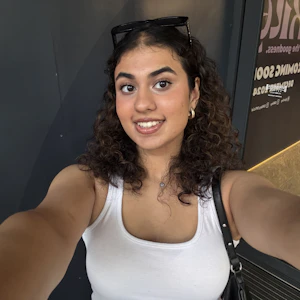
Nicki Sharma
Nicki Sharma
I believe that for our generation to thrive, we must stop saving in a melting fiat currency that siphons away our time-value and start anchoring our futures in the world’s hardest money. By protecting our savings from inflation, we gain the freedom to stop chasing a paycheck and start building careers we actually love. I’m not just building a career; I’m building a sovereign life.
I started the Orange Peel Podcast to document this transition; peeling back the layers of a broken system to provide my generation with the signal they need to opt into a future where their wealth is truly their own.

Halston Valencia
Halston Valencia
Session
Overview
Moderated by Madison Hanson, this Orange Pill U panel brought together Gen Z Bitcoin voices Nikki Sharma, Braeden Ruddock, and Halston Valencia to discuss how young people are finding Bitcoin, talking about it with peers, and navigating skepticism on campus and online.
The conversation focused on financial education, dollar-cost averaging, the feeling that Bitcoin is “too late,” and why many younger people first need to understand money, inflation, and saving before Bitcoin makes sense. The panelists emphasized meeting people where they are rather than using dismissive Bitcoin slogans.
They also discussed Bitcoin in universities, the role of podcasts and short-form content, and the overlap between Bitcoin and AI for a generation trying to build skills, earn income, and protect long-term purchasing power. The session framed Bitcoin as both a financial tool and an educational entry point for Gen Z.
Good morning, everyone. How are we feeling?
My name is Madison Hanson. I'm going to be the host for today's panel. I just wanted to start out by saying last year this was my very first Bitcoin conference ever, and I was just a volunteer. Now, a year later, I'm up here on stage, so I wanted to start with a moment of gratitude. Thank you to the Bitcoin community for being so open and so welcoming to me, but also to all of the Gen Zers up here.
I'm especially excited because we have an incredible group of Gen Z voices. We have Nikki, host of The Orange Peel Podcast; Braeden, who focuses on partnerships, affiliates, and growth within the Bitcoin Conference; and Halston, who works in capital markets at Bitcoin Well, really at the intersection of traditional finance and Bitcoin.
To kick things off, I'd love to start with each of you sharing how you first found Bitcoin at such a young age.
I didn't get into Bitcoin until about August 2025. That's when I started my podcast. I started it after my parents, who were bigger Bitcoiners, were consistently hounding me at every single dinner table conversation, being like, “Nikki, you need to start caring about Bitcoin. Nikki, you need to pay attention to what Bitcoin actually is.” They made me learn from it.
So I decided to finally give them a chance, look at some videos, watch some podcasts, and read some books. The Bitcoin Standard, I'm sure you guys know, is a great book. It's the book that orange pilled me. From there, I've just been full force into Bitcoin, so that's pretty cool.
For me, it was about 2022, right after COVID. I was getting into college, and I had a lot of money in institutions but no Bitcoin. I had a buddy from school who said, “Hey, you should look into Bitcoin.” I was like, what is Bitcoin? What is this?
Then I looked into it and realized what it can do, not just for Gen Z but for people who are older and younger than us. That was my journey. Ever since then, I’ve worked for BTC Inc., and I’m very blessed. I get so many opportunities to meet people who were early adopters and people who got into Bitcoin in 2025.
I started buying Bitcoin a little bit later. I was in my third year of college, and I was really struggling and really feeling the brokenness of the financial system. I was working three jobs, and a professor recommended the book Broken Money. That was the first time I felt like my feelings were validated, and I wasn't going crazy. I realized something was incredibly broken.
So I read the book and then started watching all the videos. I went down the Saylor rabbit hole. It just kind of orange pilled me that way. Then I started working in the industry about nine months ago now. It's an incredible dream.
That's really awesome. Thank you for sharing. Halston, Bitcoin was born as a rejection of traditional finance, but now you're in finance. How do you think about that ideological tension in your work?
I think there's definitely some tension there. Bitcoin was created in direct response to the 2008 financial crisis, specifically the bank bailouts. You look at the Genesis block and a news headline is literally embedded into it. Satoshi was not subtle at all as to why he created Bitcoin.
What I hold on to in my work is really the distinction between the tool and the institution. Just because institutions are adopting Bitcoin doesn't mean that Bitcoin is becoming TradFi. It just means that the asset is working exactly as it was designed to, which is to provide a neutral, incorruptible alternative to the corrupt alternative.
I don't think that Wall Street buying Bitcoin is an issue or risk. I think the real risk exists in education, in the mass majority thinking that they hold Bitcoin just because they have a Bitcoin ETF.
That definitely makes sense. I think some Bitcoin maxis can be a little pushy with Bitcoin, and that can make TradFi people uninterested. But really, if we work together, I think that's what's going to help mass adoption.
Braeden, what was the moment you actually believed in Bitcoin, not just as a career move, but as money?
That's a wonderful question. I feel like when I believed in Bitcoin was getting back to my story with my buddies kind of orange pilling me. When I finally believed in Bitcoin was when I looked at the money that I had in institutions and realized, with adoption and how much money I'm making back, that I'm making way more than I was with an institution.
Also as a career aspect, I work on the growth market within Bitcoin and the conference. I realized as a career move that we are all early adopters in some type of way. I think that's what people don't realize. When you have people who are whales, someone that's an early adopter, we're all early adopters if we own Bitcoin at this point, I feel like. That's when I believed in it. I feel like right now, Bitcoin is still kind of half price, and that's why I love to keep buying more.
That's great. I've heard the quote “buy one, get one free.” That's what Bitcoin is at right now.
Now I want to hear from all of you on this one. How do you respond to your peers when they say they are too late to get into Bitcoin?
I think we all know this, but it's never too late to get into Bitcoin. Look at us right now. We're 20-something years old. That is still so incredibly early. It's the same thing I tell any one of my friends who's like, it's at $75,000 right now, I completely missed the boat. Why don't I go look at XRP or Solana instead, because that's the next best thing? That's a whole other conversation.
But it's never too early to start getting into hard money and securing your financial future, especially if you're 20 years old. That's probably the best time you can start thinking about your future.
For me, when someone says, “I'm too late,” I think that's an education moment. When you look at what Bitcoin can do and what it's been doing for people, I talk to family members all the time. Any time I go back to Ohio, where I'm from, for Thanksgiving and Christmas, they always ask me, “Why are you buying Bitcoin? Why do you work for a Bitcoin company?”
I'm like, it's because I know what it can do. Then I have uncles and older relatives who are like, “So am I good to buy right now?” And I'm like, yes. Like you mentioned, it's half price. I love half-price stuff. I feel like any Bitcoiner loves half-price stuff.
With people who say they are too late or that they're going to wait, buy now. Buy now and you'll be glad, I'll say.
I think it's a similar sentiment. I would say, late relative to what? Your 4% savings in Chase? Just look at the five-year chart. Zoom out a little bit. Look at what Bitcoin has done in the past, an average of 30%. Tell me another asset that's doing that.
My favorite chart to show people is the price of homes in Bitcoin. It just astronomically goes down, and your life gets so much cheaper every year. People are always going to hate and say that they're late, but they're going to be sitting on the sidelines when Bitcoin is at a million.
Yeah, definitely. Someone told me last night, imagine when Bitcoin's at $10 million and you could have bought it for $70,000. Just that thought alone, I don't understand how you can't see through it.
Nikki, you're building The Orange Peel Podcast as a Gen Z translation layer. What's one piece of your content that's changed someone's mind, and why do you think it landed?
This is a good question. I think maybe in October last year, I made a video just breaking down the concept of DCA. One of the biggest barriers that comes with being young and convincing your friends to start caring about Bitcoin is, again, the price point. Bitcoin at $75,000 is not accessible to someone who's in college, who's really just trying to make a living and scrape by with what they can.
So that video broke down the concept of DCA and explained that even $10 a day really can make a difference. It comes down to maybe replacing a daily Starbucks, which isn't that big of an ask. Coffee is something that can be made at home. And $10 a day compounds and keeps going. Imagine where you could be in 10, 20, or 25 years.
That's something that really did land with my friends. I think that anyone who might be listening to this and is trying to talk to Gen Z and get them to go Bitcoin, it's really about painting it as something accessible and something that can, in fact, be for you no matter where you are financially.
Absolutely. To add to that, a reason people don't really understand is that a lot of people don't understand finance. They don't understand money. At our age, unless you went to school to study finance or took the time to read the books and understand the Federal Reserve, you just don't know. You don't know what DCA means. You don't really even know where the U.S. dollar came from.
So we can't push those people out. We just need to bring them in and educate them, and that's how we can teach them about Bitcoin.
I want to hear from all of you on this one. How do you all orange pill your generation? What has worked and what hasn't?
I think what has worked is helping people see the financial landscape we're in. So many people complain about the price of gas going up, groceries going up, rent going up, et cetera. But they stop there. They don't really do any more digging. They don't do any research as to why we're seeing this.
I think validating those feelings through books like Broken Money, or even just showing them charts, is helpful because people really struggle to see a solution if they don't understand the problem in the first place.
What's worked is avoiding saying things like, “Have fun staying poor” or “not going to make it.” I hate those sayings in the Bitcoin community. They need to stop. It's about meeting people where they're at. Whether that's short-form content, hopping onto trends, or helping people understand with analogies, I've seen that be super successful.
I definitely agree with you on that. Back on the Bitcoin maxi thing, trust me, I'm all in on Bitcoin, but if you are saying those things, it's not going to bring people into Bitcoin. If you say “have fun staying poor,” they're just going to continue to stay poor because they don't think there's a way out for them and they think they missed it.
I kind of made a mistake when I first started educating people about Bitcoin. I was more aggressive to an extent. I would use certain keywords that would make people stay away.
I realized when educating people, especially Gen Z, that I tell no one to buy Bitcoin. I want them to be educated on what it is. I like them to look at fiat currency compared to what Bitcoin can do. When you look at podcasts, X Spaces, and actually get educated on what Bitcoin is, that's when you finally realize what it can do, not only for the short term, but also long term. You mentioned it could maybe hit a million one day. I hope and believe that.
I think, piggybacking off what's already been said, for me the biggest barrier has been the fact that my friends just do not care about saving or investing at all. They get the paycheck, go spend it all on the things they want to do, and then get the next paycheck.
That in itself has been such a huge problem because how do you convince someone they need to start saving for their future? How do you convince someone that investing is actually important? From there, you go to Bitcoin. I found that you really do have to start with fundamentals with most Gen Z.
Again, I'm a 20-year-old girl. My friends are 20-year-old girls. We've got major shopping addictions. It comes down to the fundamentals. You have to start talking about why it's important to actually have good money. From there, paint Bitcoin as the one and only hard money, the one and only thing that's going to protect your time and your energy.
Absolutely. I saw on your page, you said, “Build with AI and protect with Bitcoin.” I think that is a fantastic slogan. With AI, with Bitcoin, with this energy era that we're entering, I think it's really important to merge those together. I like what you're doing with that.
I wanted to move more to the university landscape. This year, I was able to take a six-week blockchain course at my university, Florida Gulf Coast University. It was really amazing. I was probably the only person who actually cared about the class, and everybody else was just taking it for a free elective.
I wanted to ask you all if you've ever been able to take a Bitcoin-related class, and how long you think it'll be before Bitcoin is taught at universities worldwide.
I have not been able to take a Bitcoin class. I go to the University of Melbourne out in Australia, and I think there is still a lot of bias against Bitcoin and a lot of stigma around it. I think it's going to take a few years. I hope to see it in the next 10 years, but I really don't have much hope for my university, unfortunately.
It's not going to be fast. It starts slow and then suddenly. We need a few universities to bring it in before we really see it in places like that.
For me, I go to a small university in Nashville, Tennessee. One thing I'm blessed about is that a couple of my coworkers actually go to the university or graduated from there. But class-wise, we have no classes that talk about blockchain or Bitcoin at all.
When the Bitcoin Conference was in Nashville, before I worked for them, they hosted a couple of panels and events within the business university. I was very blessed to go to a couple of them, and that's actually another reason why I'm working here. I got those connections within the Bitcoin Conference by talking to them.
I think in the next five years, I'm hoping big universities like Ohio State and Miami get some type of class. With Gen Z, I feel like a lot of us are not good at saving. Like you mentioned, shopping habits. I have so many buddies who get a paycheck and don't save any. I kind of have this mindset where I like to look long term.
Going back to universities, I hope that in the next five years every university will have some type of blockchain class or some type of curricular activity where you can learn more about blockchain and Bitcoin.
I did not get to take any Bitcoin classes, but I'll play devil's advocate here. I actually don't think we're going to see a lot of Bitcoin courses in the near future. We've already seen one Bitcoin class that was super popular and got shut down. In my mind, that makes perfect sense because these universities were built to create obedient little employees to go work in whatever industry for the next 30 or 40 years.
Bitcoin really inspires people to think more critically about money and about the entire system. I don't think that aligns with their objective. Maybe I'm just a little more pessimistic, but I don't think we're going to see too many more Bitcoin classes. Maybe we'll see more blockchain and broader crypto, but Bitcoin-specific and Austrian economics, I just don't think that aligns with the narrative.
I agree with you, Halston. I'm optimistic, of course. I want to see it, but I don't know if FGCU is going to teach Bitcoin until I start the Hanson School of Bitcoin. I think it's going to be people like us, founders who go in there and start it back at our alma maters.
I know everybody here on the stage has had the opportunity to connect with industry leaders and talk to so many different people, whether through interviews, podcasts, or working with the conference. What's the best piece of advice that you've ever received from one of those conversations, and how do you think that could be applied to getting Gen Z more into Bitcoin?
I can start this one off. I don't know if Mark Moss is in here, but Mark Moss is someone I really admire. He told me this last year when we were in New York. He was like, your generation is so soft. You guys just need to toughen up a little bit. Yes, it's hard, but you have two options. You can either sit in that and just complain and live a high-time-preference lifestyle, or you can buy Bitcoin, learn skills, use AI to make money, and really benefit off this next wave of AI.
I think there's unlimited upside here. My biggest piece of advice would be what he told me: don't be pessimistic. You only have two options. Maybe older generations did have it easier with real estate and all of that, and boomers got houses for berries and chickens, but for us, we're the first generation to have AI and Bitcoin together. I love your bio, Nikki. That's so great.
I think mine also relates to what Halston was saying with AI and Bitcoin. Earlier this year, I recorded an episode with British HODL, and he had the same thing to say to me. His entire promise is get to one Bitcoin. My first question to him was, “Hey, I'm 20 years old. How do I get to a Bitcoin? Realistically, with how much money I'm able to set aside every week, is it something that I can see for myself in the near future?”
All he had to say to me was that it's never been easier than now to create and to monetize your education and your passions. With AI as a builder, and with Bitcoin to protect what time and energy you're putting into making money, it's never been easier. To me, that was super inspiring because I'm really passionate about what I'm doing, but can I be doing more? I think that's something everyone needs to be thinking about.
I'm going to hop on the train with AI. I feel like the best piece of advice I've gotten is from being in the industry and talking to people on a daily basis who were early adopters or just adopted Bitcoin. Being at a company that talks about Bitcoin and is all about Bitcoin has been huge. I was using AI when I first started college freshman year, and now I'm about to graduate. Adopting AI and looking at strategies within AI and Bitcoin can give you so much advice.
We have just a few minutes left. I wanted to get an ending takeaway from each of you. What is something you want to make sure Gen Z understands? One thing that you feel will make them understand Bitcoin and feel more comfortable about learning about it. Hopefully we have some Gen Z people back home watching this video next week. What's something you want to leave them with that will inspire them to research for themselves?
If I could say something to anybody who doesn't know Bitcoin or hasn't looked into Bitcoin, it is to take three minutes out of your day. Not even three minutes. It could be two minutes. Look up what Bitcoin can do and what it can do in the future. Look at charts like she was talking about earlier. Take those three minutes and get educated. I'm not telling people to buy Bitcoin. I'm telling them to get educated, because when you get educated on what Bitcoin could do, I feel like you're definitely going to buy it.
Similar to Braeden, I'd recommend people, I'm not even going to tell you to go study Bitcoin. Study money. Study monetary history and monetary mechanics, and then Bitcoin will make a lot more sense.
While you're doing those two things, study AI too. Build with AI, protect with Bitcoin, as I will always say. You need to understand the power of deflation and why Bitcoin is going to be so important as we move into this economy that's going to be run by AI. That would be my biggest takeaway to anyone watching this.
Absolutely. Money: figure out what money really is. Learn that system before you learn Bitcoin. AI, because they will go together. If you're going to watch this back at home and you're Gen Z, I really hope you take the time. There are lots of resources out there for you to learn about it. Just remember, you are still so early. You're never too late to Bitcoin.
As we close off, can everyone tell the crowd where they can find you on social media and where else they can find you online?
I'm on X, Instagram, and TikTok at Orange Peel Pod, and then I have a YouTube channel also called Orange Peel Pod. You can find me there, and I hope to see some of you guys.
You can find me on X and Instagram.
You can find me on socials or on X through the Bitcoin Conference.
You can find me at HansonHash on X or the HansonHash Podcast on all platforms.
I think that's the end of our panel. Thank you so much to everybody who took the time to listen to us. We're just a bunch of Gen Zers who want to take control of the future with Bitcoin. Thank you.
Similar
Sessions
Orange Pill U: Hazing Your Classmates with Bitcoin
Madison Hanson
Madison Hanson
Nicki Sharma
Nicki Sharma
I believe that for our generation to thrive, we must stop saving in a melting fiat currency that siphons away our time-value and start anchoring our futures in the world’s hardest money. By protecting our savings from inflation, we gain the freedom to stop chasing a paycheck and start building careers we actually love. I’m not just building a career; I’m building a sovereign life.
I started the Orange Peel Podcast to document this transition; peeling back the layers of a broken system to provide my generation with the signal they need to opt into a future where their wealth is truly their own.
Halston Valencia
Halston Valencia
Orange Pill U: Hazing Your Classmates with Bitcoin
Speakers/Moderators
Madison Hanson
Madison Hanson
Nicki Sharma
Nicki Sharma
I believe that for our generation to thrive, we must stop saving in a melting fiat currency that siphons away our time-value and start anchoring our futures in the world’s hardest money. By protecting our savings from inflation, we gain the freedom to stop chasing a paycheck and start building careers we actually love. I’m not just building a career; I’m building a sovereign life.
I started the Orange Peel Podcast to document this transition; peeling back the layers of a broken system to provide my generation with the signal they need to opt into a future where their wealth is truly their own.
Halston Valencia
Halston Valencia
Other
Speakers
Michael Saylor
Michael Saylor
Todd Blanche
Todd Blanche
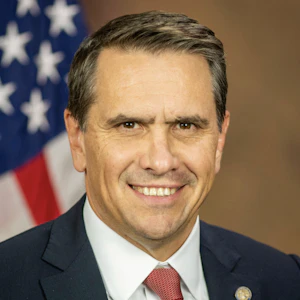
Biography of Deputy Attorney General Todd Blanche
The Honorable Todd Blanche is the 40th Deputy Attorney General of the United States, overseeing the work of the 115,000 dedicated employees who fulfill the Department of Justice’s mission at Main Justice, the FBI, DEA, U.S. Marshals, ATF, and 93 U.S. Attorney’s Offices.
Todd began his career at the Department where he served for over fifteen years in a variety of capacities, including as a contractor, a paralegal in the Criminal Division, and at the United States Attorney’s office for the Southern District of New York where he eventually became an AUSA and later a supervisor.
After leaving the Department, Todd worked as a criminal defense attorney that included representing President Donald Trump in three of the criminal cases brought against him in 2023 and 2024.
Following President Trump’s historic return to the White House, the President appointed Todd to work alongside Attorney General Pam Bondi to make America safe again. At the DOJ, Todd is working tirelessly to implement President Trump’s priorities that include confronting illegal protecting American businesses from fraud.
Todd has been married to his wonderful wife Kristine for nearly thirty years, is a father and grandfather.
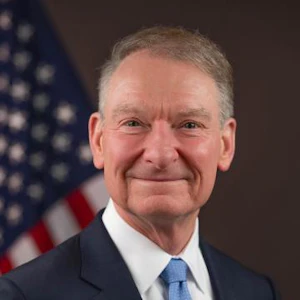
Paul Atkins
Paul Atkins
Prior to returning to the SEC, Chairman Atkins was most recently chief executive of Patomak Global Partners, a company he founded in 2009. Chairman Atkins helped lead efforts to develop best practices for the digital asset sector. He served as an independent director and non-executive chairman of the board of BATS Global Markets, Inc. from 2012 to 2015.
Chairman Atkins was appointed by President George W. Bush to serve as a Commissioner of the SEC from 2002 to 2008. During his tenure, he advocated for transparency, consistency, and the use of cost-benefit analysis at the agency. Chairman Atkins also represented the SEC at meetings of the President’s Working Group on Financial Markets and the U.S.-EU Transatlantic Economic Council. From 2009 to 2010, he was appointed a member of the Congressional Oversight Panel for the Troubled Asset Relief Program.
Before serving as an SEC Commissioner, Chairman Atkins was a consultant on securities and investment management industry matters, especially regarding issues of strategy, regulatory compliance, risk management, new product development, and organizational control.
From 1990 to 1994, Chairman Atkins served on the staff of two chairmen of the SEC, Richard C. Breeden and Arthur Levitt, ultimately as chief of staff and counselor, respectively. He received the SEC’s 1992 Law and Policy Award for work regarding corporate governance matters.
Chairman Atkins began his career as a lawyer in New York, focusing on a wide range of corporate transactions for U.S. and foreign clients, including public and private securities offerings and mergers and acquisitions. He was resident for 2½ years in his firm's Paris office and admitted as conseil juridique in France.
A member of the New York and Florida bars, Chairman Atkins received his J.D. from Vanderbilt University School of Law in 1983 and was Senior Student Writing Editor of the Vanderbilt Law Review. He received his A.B., Phi Beta Kappa, from Wofford College in 1980.
Originally from Lillington, North Carolina, Chairman Atkins grew up in Tampa, Florida. He and his wife Sarah have three sons.

Mike Selig
Mike Selig
Chairman Selig brings to the role deep public and private sector experience working with a wide range of stakeholders across agriculture, energy, financial, and digital asset industries, which rely upon and operate in CFTC-regulated markets.
Prior to his leadership at the CFTC, Chairman Selig most recently served as chief counsel of the Securities and Exchange Commission’s Crypto Task Force and senior advisor to SEC Chairman Paul S. Atkins. In this role, Chairman Selig helped to develop a clear regulatory framework for digital asset securities markets, harmonize the SEC and CFTC regulatory regimes, modernize the agency’s rules to reflect new and emerging technologies, and put an end to regulation by enforcement. He also participated in the President’s Working Group on Digital Asset Markets and contributed to its report on “Strengthening American Leadership in Digital Financial Technology.”
Prior to government service, Chairman Selig was a partner at an international law firm, focusing on derivatives and securities regulatory matters. During his years in private practice, he represented a broad range of clients subject to regulation by the CFTC, including commercial end users, futures commission merchants, commodity trading advisors, swap dealers, designated contract markets, derivatives clearing organizations, and digital asset firms. Chairman Selig advised clients on compliance with the Commodity Exchange Act and the CFTC’s rules and regulations thereunder, including in connection with registration applications and obligations, enforcement matters, and complex transactions.
Chairman Selig earned his law degree from The George Washington University Law School and was articles editor of The George Washington Law Review. He received his undergraduate degree from Florida State University.

David Bailey
David Bailey

Eric Trump
Eric Trump
Mr. Trump also serves as Executive Vice President of The Trump Organization, where he oversees the global management and operations of the Trump family’s extensive real estate portfolio. This includes Trump Hotels, Trump Golf, commercial and residential real estate, Trump Estates, and Trump Winery. Known for his hands-on leadership and strong market instincts, he has played a key role in expanding the company’s presence across major U.S. and international markets.
A globally recognized business leader and public figure, Mr. Trump is a prominent advocate for Bitcoin and decentralized finance. He is a co-founder of World Liberty Financial, a decentralized finance (DeFi) platform, and serves on the Board of Advisors of Metaplanet, Japan’s largest corporate holder of Bitcoin.
Beyond his business activities, Mr. Trump has helped raise more than $50 million for St. Jude Children’s Research Hospital in the fight against pediatric cancer, a philanthropic mission he began at age 21.
Mr. Trump earned a degree in Finance and Management from Georgetown University. He currently resides in Florida with his wife, Lara, and their two children. He is also the author of Under Siege, his memoir published in October 2025.

Jack Mallers
Jack Mallers
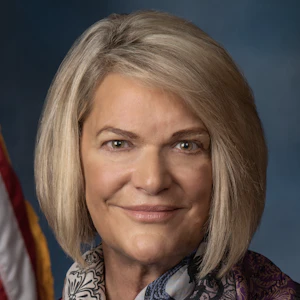
Cynthia Lummis
Cynthia Lummis
As the first-ever Chair of the Senate Banking Subcommittee on Digital Assets, Senator Lummis is the architect of the legislative framework shaping America's digital asset future. She introduced the landmark Lummis-Gillibrand Responsible Financial Innovation Act, the first comprehensive bipartisan crypto regulatory framework in Senate history. She co-authored the GENIUS Act — the first federal stablecoin law ever enacted — and introduced the BITCOIN Act, which would establish a U.S. strategic Bitcoin reserve of up to one million BTC. She is leading the Clarity Act, which will bring long-overdue regulatory certainty to the digital asset industry. She has also championed digital asset tax reform, including a de minimis exemption for small transactions and equal tax treatment for miners and stakers.
Known as Congress' "Crypto Queen," Senator Lummis represents Wyoming — a state she has helped build into one of the most digital asset-friendly regulatory environments in the nation. Before serving in the Senate, she served 14 years in the Wyoming Legislature, eight years as Wyoming State Treasurer, and eight years in the U.S. House. She is a three-time graduate of the University of Wyoming.
Her work represents a crucial bridge between traditional financial systems and the emerging digital economy, ensuring America leads the world in financial innovation while protecting the individual freedoms that define it.

Adam Back
Adam Back
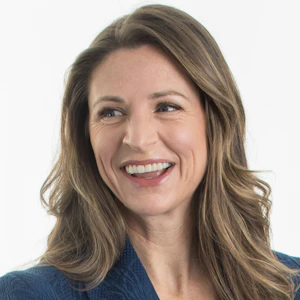
Amy Oldenburg
Amy Oldenburg
David Marcus
David Marcus

Matt Schultz
Matt Schultz
Fred Thiel
Fred Thiel
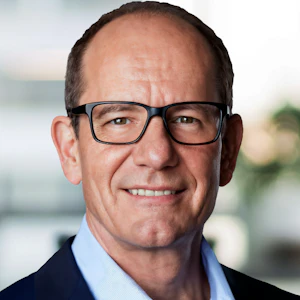
Throughout his career, Mr. Thiel has consistently driven rapid growth and created substantial shareholder value. Prior to MARA, Mr. Thiel served as the CEO of two other public companies, Local Corporation (NASDAQ: LOCM) and Lantronix, Inc (NASDAQ: LTRX). He has successfully raised billions in equity and debt through private and public offerings, led companies through IPOs, executed high-value exits to strategic and financial acquirers, and implemented effective M&A and roll-up strategies.
Mr. Thiel attended the Stockholm School of Economics and executive classes at Harvard Business School, and is fluent in English, Spanish, Swedish, and French. Mr. Thiel is the Chairman of the Board for Oden Technology, Inc. and is active in Young Presidents’ Organization where he has led initiatives in both the FinTech and Technology Networks.
A recognized voice in the industry, Fred frequently shares his insights on energy and technology with major media outlets like Bloomberg TV, CNBC, and FOX Business, contributing to vital discussions about the future of these sectors.
Tim Draper
Tim Draper
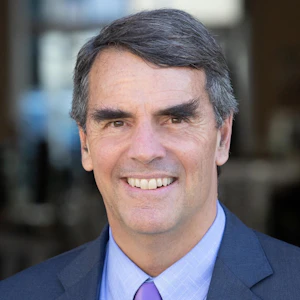
He is a supporter and global thought leader for entrepreneurs everywhere, and is a leading spokesperson for Bitcoin and decentralization, having won the Bitcoin US Marshall’s auction in 2014, invested in over 50 crypto companies, and led investments in Coinbase, Ledger, Tezos, and Bancor, among others.
Afroman
Afroman