Bitcoin-Native Capital Markets
Speakers/Moderators

Janusz
Janusz


Ethan Marcus
Ethan Marcus

Session
Overview
Bitcoin-Native Capital Markets brought together Ekrem Bal of Citrea, Ethan Marcus of Flashnet, and David Seroy of Alpen Labs for a discussion on how trading, lending, borrowing, stablecoin swaps, and fixed income products could be built on top of Bitcoin infrastructure.
The conversation focused on institutional and retail demand for Bitcoin-backed borrowing, BTC-to-stablecoin liquidity, privacy, and on-chain financial primitives. The speakers compared Bitcoin-native approaches with existing wrapped Bitcoin markets on platforms like Coinbase, Base, and Morpho, especially around neutrality, trust assumptions, liquidity, and user experience.
A key theme was whether trust-minimized Bitcoin L2s, ZK rollups, state chains, and Lightning-based interoperability can compete with centralized incumbents that already have large pools of liquidity. The panel also explored fragmentation, EVM security, smart contract risk, key management, and what it may take for Bitcoin-native financial markets to gain meaningful adoption over the next few years.
The title of this panel is Bitcoin Native Capital Markets. We are here with a couple of people building on Bitcoin scaling infrastructure, L2s, and related technologies. I want to frame this not just around individual application use cases, but also around where the large demand for capital is and why institutions might be interested in these technologies. I will let everyone introduce themselves first. Please introduce yourselves, what you are working on, your thesis for why it is important in the grand scheme of things, and why Bitcoiners should care about it.
My name is David Seroy. I am with Alpen Labs. Our team pioneered and authored a lot of the original work on how to build ZK rollups on top of Bitcoin. I think it goes without saying that people want financial activity with their Bitcoin. We are finally at the point where it is no longer cope or deception. These things can actually outcompete TradFi solutions. They are more efficient, the margins are better, and I think it is time that Bitcoin can have those in a non-custodial, trust-minimized manner.
I am Ethan. I am building a company called Flashnet. We build Bitcoin-native markets. Our core focus today is BTC to stablecoin swaps. We also have a product called Orchestra, which orchestrates that cross-chain for deposits, withdrawals, cross-chain swaps, or Spark-native swaps, which is a network we helped build.
Hi everyone, I am Ekrem. I am one of the co-founders and chief scientist of Chainway Labs, and we are building Citrea, which is the first ZK rollup on Bitcoin. It is important for Bitcoin because now you can have your BTC in a programmable environment with a lot fewer trust assumptions compared to other solutions.
I do not really want to talk a lot about the technical infrastructure or the semantics behind everything. Really quick, does everyone know what a rollup is, and do we know what a state chain is? Kind of. Okay, so we have enough context.
The thing I want to focus on first is: what are the main applications and the main demand that you are seeing from users and institutions? When you are talking to different people in the ecosystem, what are the solutions they are actually looking for? There is this vague term of wanting to earn yield on Bitcoin, or wanting some type of swap application. What are you seeing from an institutional perspective, where is the demand, and what type of applications do they want?
For us personally, we are going to have two products: Bitcoin-backed borrowing and fixed income backed by Bitcoin. Concretely, you can do a 12-month-duration Bitcoin-backed loan at a 6% fixed interest rate. That product, especially if you can put it into an institutional and potentially compliant style, is across the board the single best product that exists in that segment.
On the fixed income side, everybody is very hyped on Strategy-style products, where you give dollars to Michael Saylor, he buys Bitcoin on his balance sheet, and then he pays you a fixed income yield. You can rebuild those products natively, fully backed by verifiable Bitcoin-backed loans. I would argue that these are a more compelling product, more profitable, and lower risk. Those two products alone are where we are seeing the most demand and where we expect to compete.
Our main focus is spot BTC. We spent a long time finding the right path for demand here, and we now have a lot of great partners doing different things. We support wallets doing BTC to stablecoin swaps, and we support on-ramps for BTC through our stack. Really, wherever there is a BTC to stablecoin or stablecoin to BTC hop, that is where we are the most valuable for customers. Cross-chain swaps, BTC to stablecoins, do upward of half a billion dollars of volume a month, and that is the segment of the market we fit into today.
I think there is interest from institutions in Bitcoin swaps, lending, borrowing, and privacy as well. We want to have everything in one place, where you can swap your BTC and institutions can come and use the swap markets. Today we announced Morpho markets, so you can now borrow stablecoins against your BTC. There is also a new app coming called Crest, which is a privacy app where institutions can have privacy with their BTC as well.
You should check out Crest. It is pretty cool.
You mentioned Morpho, and I might say something wrong and hand-wave this for a second. One of the largest Bitcoin-focused apps is using Coinbase’s version of Bitcoin and using that in Morpho on Base. If you are not familiar with Base, it is an Ethereum L2. It is Coinbase’s Ethereum L2, not really integrated with Bitcoin in any way. But the largest token by volume and USD supply is Coinbase’s Bitcoin, and everyone is using Morpho with it.
We had this huge wave of interest in Bitcoin L2s, new scaling protocols, and different execution environments. Sometimes people think you are competing with each other. It looks more like you are competing with Coinbase. Why would an institution or even a regular user opt for using something like Alpen or Citrea versus just using Coinbase? What is the key differentiator, and why, after this huge interest in Bitcoin, are we not seeing the market move in the way we thought it would two years ago?
We are very close with the Morpho team. When we talk with them, they say: look, this product we built with Coinbase is a Bitcoin-backed borrowing product where you take your Bitcoin, put it into Coinbase cbBTC, and it borrows in Morpho DeFi on the back end. That has been very successful, even by Coinbase standards.
But when they go talk to other major institutions, the Anchorages, Robinhoods, Cash Apps, and so on, everybody wants that application for their customers. But they say, I do not necessarily want to use Coinbase. Not because they do not trust Coinbase. Coinbase is extremely trustworthy. But it is competitive. It is not neutral.
If you are a custodian like Anchorage and you say to customers, we are going to enable you to borrow against your Bitcoin, but we are going to send your Bitcoin to our biggest competitor, Coinbase, that is antithetical. They do not want to compete like that. They do not want to send their customers’ assets there. Having something more trust-minimized is beneficial, but really it is the neutrality of the asset where these people want to go, and where Coinbase and other wrappers are strictly disadvantaged.
A lot of Bitcoiners also do not want to move their BTC to Base or Coinbase BTC. With these rollups, all the execution is written to Bitcoin and secured by Bitcoin, and I think that adds value to it. I mostly agree with what David said as well.
I will take the contrarian take here, which is that I do not think it really matters. At the end of the day, these are markets. Retail, at least, and maybe not institutions, will go where they get the best rates and the best experience. For a retail user, they do not really care whether it is cbBTC, WBTC, or XYZ BTC. They want to get interest on their Bitcoin, or maybe they want to take out a loan on their Bitcoin.
Today, Morpho, Base, and a bunch of other DeFi protocols have created great two-sided marketplaces. The incentive for retail users is to go where the best rates are and where the market is most efficient. Sadly, that is not the case with Bitcoin markets yet, at least for lending. Maybe we will get there in a couple of years with the right incentives, but it is an uphill battle. We are fighting against a multibillion-dollar market with product-market fit and users that have already deposited their Bitcoin. I think it is going to be tough. I think it makes sense and is valuable for the ecosystem, but I do not think it makes sense for retail yet.
Coming from my background, I used to own a private money fund, which I sold, so I am familiar with these markets. Over time, there is a correlation between the risk profile of a financial application and the pricing of it. I think there is a world where there is a structural floor on how risk-free something like cbBTC can be perceived. There is a further floor that can be reduced by having on-chain ZK rollups, neutral and trust-minimized applications. Maybe you add things like insurance on top of that. There is a credible path to get there.
That additional floor that we can drop will manifest itself in superior economic terms that Bitcoin-native applications can accrue, which Coinbase cannot. In some ways, I probably agree that a few years is the proper timeframe. Right now, yes, we are at a disadvantage. But structurally, I do believe that we will outcompete these big monsters.
I partially agree. I think the risk profile may be overstated, especially for institutions. If I am BlackRock or a big investment fund, I am more than happy to trust that Coinbase is going to honor my BTC deposit into cbBTC. If that means I get access to a huge pool of liquidity that is already willing to give me a yield on it, I am happy to go for it. If I owned a fund, I would happily put money into cbBTC.
What will end up happening with Morpho v2 is that Morpho has these things called vaults. You can deposit dollars into them, and then they can allocate to different duration loans: variable interest rate, one month, three months, and so on. The receipt that the lender receives essentially represents a collateralized loan obligation, a Bitcoin collateralized loan obligation. That is an asset that may be comparable to something like Strategy, maybe earning 10%.
People will take that and they will loop it, because they are degenerate. They will post that as collateral, borrow dollars against it at a lower rate, maybe 4%, and loop that. Borrowing at a lower variable interest rate and looping it back into fixed interest rate maturities starts to compress interest rates down. The limit of how much you can run that loop, and how far you can compress down the interest rates, is a derivative of how risky the underlying Bitcoin-backed loans are.
These small incremental gains in the risk between collateral like a rollup and Coinbase will start to magnify. The leverage will expose these incremental differences. In my opinion, you will start to see lower interest rates on ZK rollup and trust-minimized Bitcoin-backed loans via Morpho than what they can do on Coinbase. I think most people do not yet understand this securitization loop, where you take the collateral and loop it, because it has previously never existed in DeFi until Morpho introduces it.
I will push back one last time, though, and then we can move on. Risk is kind of a derivative of how well someone understands something. I do not think we are at the point where people understand ZK well enough to trust it more than they trust a public institution like Coinbase. I love ZK, and I am a big supporter, but I do not think we are at that point yet. I do not think we will be there for a couple of years. I am bullish on this long term, but today we are still far from the puck.
When you say public institutions, yes, people trust Coinbase. But the value of these trust-minimized systems is that you can have one-of-n signers, like big institutions, where if you trust at least one of them, then you know the BTC is secure. Instead of trusting one entity for cbBTC, you can trust that at least one of the signers is honest.
Again, I think the majority of major pools of capital probably do not care. The vast majority of retail, probably 99.999% plus, does not care. I think a lot of institutional capital probably does not care either and is happy to trust Coinbase. I think this is the right direction, but from my view it is more of an ethical or vision argument than a practical one.
I mostly agree that this is the situation right now. But in the long term, I truly believe that decentralization works.
I want to ask a specific question because we have talked a little more about how the rollups are thinking about go-to-market and applications. Flashnet is directly integrated with Spark, which is one of the new emerging state chain protocols and Bitcoin L2s. In the documentation, it specifically said that you were not another full-fledged blockchain, not a rollup, and not a quasi-sidechain. When you were designing and thinking about this from first principles, why did you decide to go in the direction of a state chain protocol and build your infrastructure on top of that?
Flash existed before Spark existed, with the sole mission of creating Bitcoin markets. Bitcoin trades trillions and trillions of dollars a year, but it is entirely through siloed oligopolies in the United States and other countries. If you are in the U.S., you trade on Coinbase, Gemini, or Kraken. If you are in Europe, you trade on one of the many exchanges in Europe. If you are elsewhere, you may trade on Binance.
In my past life, I did a lot in DeFi. What I admire about Solana and Ethereum is the ability to create one global pool of liquidity. From that perspective, you start to understand that a random person in Asia can be my counterparty, a random person in Europe can be my counterparty, and that creates a very efficient market. We see that on Solana today. You can trade SOL-USDC on Solana cheaper than you can on Binance, or sometimes at par, which is incredible.
We set out with a mission to create the same kind of infrastructure for Bitcoin. We took a very holistic approach. First, we naively built a lot on Lightning. I am a big Lightning maxi, but it is not the place for a product like this. Then Kevin from Spark had the genius idea for Spark, so we helped build the first version and iterated on it to build the vision for Flashnet. It was very much a first-principles approach: if this is the problem we want to solve, what are the best tools to do so, and how can we do it as quickly as possible to serve our customers in the best way possible?
You mentioned something interesting there: the Ethereum example of one giant pool of liquidity and applications being composable with one another. What we have seen from other ecosystems that tried to scale via L2s or add more functionality via L2s is real fragmentation of liquidity and user experience, with users having to move between places and chains to access different applications.
A lot of people say Lightning is the lingua franca for these different Bitcoin L2s and execution environments, and that there will not be this fear of liquidity fragmentation and application fragmentation. How do you think about that? Is it winner-take-all? Will there be one platform that services all of these capital market participants? Do you think it is counterproductive to build ten different L2s trying to solve the same thing with different approaches? Does that fragment liquidity and worsen the user experience? Competition should solve this, but in Ethereum it has actually been detrimental to their scaling roadmap, which is one reason Solana overtook them from a capital markets perspective.
I do not think it is winner-take-all. I think it is winner-take-majority.
The beauty of Spark is that it is completely compatible with native L1 wallets. Spark can speak L1 and Spark can speak Lightning as well. When you have funds in a Spark wallet and you are using Flashnet, you do not really have to know what is happening under the hood. A lot of the wallets that use Flashnet today use it as a way to go from BTC on mainnet or BTC on Lightning to stablecoins on another network, and they do not even know what is happening underneath.
Then we have other protocols and products that use us purely for trading, arbitrage, and providing liquidity. There are different products for different people. Our main focus is spot BTC markets. Alpen and Citrea are very focused on lending and yield, and that is not our market. That is not our focus, and that is not who our customers are today. We are solely focused on building one giant pool of liquidity. Alpen and Citrea will be forced to support Lightning at one point or another, and they will be able to tap into that pool of liquidity. Lightning is very much the glue.
You mentioned the idea of Lightning as the lingua franca, the web that connects all these different L2s. I could maybe buy that idea, but first I need to be sold that there are multiple L2s worth actually tapping into, and I do not know that there are. There is Base and Ethereum, where a lot of the current Bitcoin supply is right now. But if you have something like native USDC, it is a centralized ledger. You can burn USDC on Ethereum and instantly mint it on something like Alpen. Why would you need Lightning? You have a centralized database. You can mint a trillion dollars instantaneously. I need to be sold on why I would open a Lightning channel when there is a fully centralized bridge that can do it instantaneously.
I do not think it is winner-take-all either. Having Lightning as an interoperability layer is great. At the end of the day, jumping from one layer to another layer with Lightning is really easy right now. We can withdraw your money from Citrea via Lightning using atomic swaps in about four seconds, so you can easily jump from Citrea to something like Flashnet and then do swaps there. I think it is good that we are all trying these different technologies, and then the market will decide.
I agree that Lightning is the glue, but it may be an unnecessary glue. It definitely is the glue between all these Bitcoin layers. The feature and the bug of Bitcoiners is that everyone is always arguing about everything constantly, and there are a billion different directions everyone is going in. Liquidity will naturally fragment. Ethereum could have very much used something like Lightning between its vast web of L2s. That would have saved a lot of money from DPRK hacks. We will see if it is useful, where the money is, and where retail goes.
I was not going to ask this, but you mentioned it. There is this idea of bringing infrastructure from other ecosystems and applying it on top of Bitcoin in a more native and trust-minimized way. The EVM is the biggest example. Citrea and Alpen are both building with EVM-compatible execution environments. Within the last couple of weeks, there have been exploits and other incidents in those ecosystems. When you are speaking to market participants, how much are they analyzing the core infrastructure? Do they trust depositing money into EVM contracts? Do they want a different type of execution layer? When you were thinking about this before building your systems and going to market, how were you thinking about which infrastructure to use for institutions? I am especially interested in the EVM side and whether people are hesitant because of recent events.
My hot take is that, despite the reputation, the blue-chip EVM applications and protocols have actually been extremely robust and really secure. Where they have faltered is in supporting the long tail of coin applications that have taken trade-offs and cut corners.
In the current example, North Korea essentially hacked this token. It was like restaked ETH multiplied by a meme coin. Then they used a bridge that was basically a signer of one. It was not a multisig; it was a one-of-one multisig. The one-of-one was querying RPCs. They queried maybe half a dozen different RPCs. North Korea basically DDoSed five of them, poisoned the one remaining one, and allowed themselves to mint and bridge $300 million with very basic risk controls.
Pretty much all of this is mitigated, in my opinion. That is why, if you look at the extremely robust protocols, they have actually been very secure on Ethereum. It is the random long tail of stuff that gets exploited and poisons the well for everyone. For us at Alpen, we are taking a hyper-focused approach. There are probably only half a dozen applications that we care about, and nothing else is being supported.
One of my favorite quotes from the more expressive smart contract space is that there are only four contracts even worth writing, so we should focus on those.
What is interesting is that the majority of the recent hacks are not even smart contract exploits. They are key exploits, like some signer connecting to the wrong Wi-Fi, the wrong website, or whatever it may be.
Yes, exactly. They spent probably a couple hundred thousand dollars auditing these smart contracts, and then a key got leaked. In terms of key exploits, one of the largest ever was the Ronin Axie Infinity hack. As long as you can build something that is a little more distributed than a few people, you are probably doing all right at this point.
People are always going to be the bottleneck. You can audit your smart contract however you want, but if people are responsible at the end, that matters. On the EVM, there is the concept of upgradeable smart contracts and the fact that a key could theoretically pull the contract from under you and put another one there. It is always people. People are the bottleneck for security.
We are running up on time. The last question I want to pose is that, as mentioned earlier, there was a ton of hype. What does the ecosystem around these financial applications have to do differently over the next two to three years to take market share from incumbents and more centralized players? From a strategy perspective, if you are thinking about hyper-focusing on one area of go-to-market, how can you differentiate from the big institutions and pull liquidity into your own systems? What is something you had an idea about two years ago that you have changed your mind on and want to approach differently now?
I have kind of given my pitch. A lot of these financial institutions are seeing the light in the power of Bitcoin and on-chain finance. They are starting to make their decisions right now about whether they go with cbBTC, WBTC, or some of these more novel solutions. Within the next year, we are probably going to see a lot of fintechs signing deals and staking their flag in the ground, saying this is their preferred solution.
I have made my pitch, and Ethan has countered somewhat. That is probably a pretty accurate assessment of the current debate inside these companies and the decisions they are going to make. For me personally, if I put my best pitch out there, build the best product in this trust-minimized Bitcoin rollup, present the case, and nobody cares, that would be a little heartbreaking. But it would be okay. We gave it a shot, and the people just do not care. That is how I am approaching it.
We are big believers in the idea of global neobanks. I think the next big fintechs will probably be built on-chain. There are two major aspects to that: Bitcoin and stablecoins. Bitcoin is this store of wealth and wealth-generating asset, and stablecoins are an everyday spending asset. Where we fit is providing one global liquidity layer for that.
More and more institutions want to be global from day one. We will see a lot of U.S.-only fintechs or euro-only fintechs rapidly go global with self custody. Self custody has become as easy as custody at this point. In the next two or three years, we are going to see an explosion of liquidity going toward on-chain solutions, whether that is powered specifically by Bitcoin rollups, Spark, or Bitcoin in some other way. I do not know, but I know Bitcoin will play a very big piece of this.
Having all these DeFi primitives in one ecosystem is also appealing. It makes more sense because you can add things on top of each other to create more complex DeFi usages out of it.
Any closing thoughts? Anything I did not ask that you wanted to be asked?
We are on mainnet. Use it and give us feedback.
Thank you all so much. Appreciate it.
Similar
Sessions
Bitcoin-Native Capital Markets
Janusz
Janusz
Ethan Marcus
Ethan Marcus
Bitcoin-Native Capital Markets
Speakers/Moderators
Janusz
Janusz
Ethan Marcus
Ethan Marcus
Spark & Ark: The Next Generation of Layer Two
Roy Sheinfeld
Roy Sheinfeld



Ethan Marcus
Ethan Marcus
Spark & Ark: The Next Generation of Layer Two
Speakers/Moderators
Roy Sheinfeld
Roy Sheinfeld
Ethan Marcus
Ethan Marcus
Other
Speakers

Michael Saylor
Michael Saylor
Todd Blanche
Todd Blanche
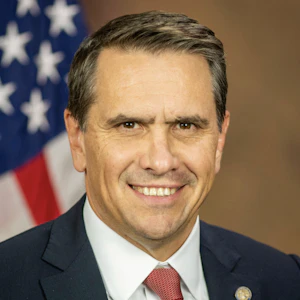
Biography of Deputy Attorney General Todd Blanche
The Honorable Todd Blanche is the 40th Deputy Attorney General of the United States, overseeing the work of the 115,000 dedicated employees who fulfill the Department of Justice’s mission at Main Justice, the FBI, DEA, U.S. Marshals, ATF, and 93 U.S. Attorney’s Offices.
Todd began his career at the Department where he served for over fifteen years in a variety of capacities, including as a contractor, a paralegal in the Criminal Division, and at the United States Attorney’s office for the Southern District of New York where he eventually became an AUSA and later a supervisor.
After leaving the Department, Todd worked as a criminal defense attorney that included representing President Donald Trump in three of the criminal cases brought against him in 2023 and 2024.
Following President Trump’s historic return to the White House, the President appointed Todd to work alongside Attorney General Pam Bondi to make America safe again. At the DOJ, Todd is working tirelessly to implement President Trump’s priorities that include confronting illegal protecting American businesses from fraud.
Todd has been married to his wonderful wife Kristine for nearly thirty years, is a father and grandfather.

Paul Atkins
Paul Atkins
Prior to returning to the SEC, Chairman Atkins was most recently chief executive of Patomak Global Partners, a company he founded in 2009. Chairman Atkins helped lead efforts to develop best practices for the digital asset sector. He served as an independent director and non-executive chairman of the board of BATS Global Markets, Inc. from 2012 to 2015.
Chairman Atkins was appointed by President George W. Bush to serve as a Commissioner of the SEC from 2002 to 2008. During his tenure, he advocated for transparency, consistency, and the use of cost-benefit analysis at the agency. Chairman Atkins also represented the SEC at meetings of the President’s Working Group on Financial Markets and the U.S.-EU Transatlantic Economic Council. From 2009 to 2010, he was appointed a member of the Congressional Oversight Panel for the Troubled Asset Relief Program.
Before serving as an SEC Commissioner, Chairman Atkins was a consultant on securities and investment management industry matters, especially regarding issues of strategy, regulatory compliance, risk management, new product development, and organizational control.
From 1990 to 1994, Chairman Atkins served on the staff of two chairmen of the SEC, Richard C. Breeden and Arthur Levitt, ultimately as chief of staff and counselor, respectively. He received the SEC’s 1992 Law and Policy Award for work regarding corporate governance matters.
Chairman Atkins began his career as a lawyer in New York, focusing on a wide range of corporate transactions for U.S. and foreign clients, including public and private securities offerings and mergers and acquisitions. He was resident for 2½ years in his firm's Paris office and admitted as conseil juridique in France.
A member of the New York and Florida bars, Chairman Atkins received his J.D. from Vanderbilt University School of Law in 1983 and was Senior Student Writing Editor of the Vanderbilt Law Review. He received his A.B., Phi Beta Kappa, from Wofford College in 1980.
Originally from Lillington, North Carolina, Chairman Atkins grew up in Tampa, Florida. He and his wife Sarah have three sons.

Mike Selig
Mike Selig
Chairman Selig brings to the role deep public and private sector experience working with a wide range of stakeholders across agriculture, energy, financial, and digital asset industries, which rely upon and operate in CFTC-regulated markets.
Prior to his leadership at the CFTC, Chairman Selig most recently served as chief counsel of the Securities and Exchange Commission’s Crypto Task Force and senior advisor to SEC Chairman Paul S. Atkins. In this role, Chairman Selig helped to develop a clear regulatory framework for digital asset securities markets, harmonize the SEC and CFTC regulatory regimes, modernize the agency’s rules to reflect new and emerging technologies, and put an end to regulation by enforcement. He also participated in the President’s Working Group on Digital Asset Markets and contributed to its report on “Strengthening American Leadership in Digital Financial Technology.”
Prior to government service, Chairman Selig was a partner at an international law firm, focusing on derivatives and securities regulatory matters. During his years in private practice, he represented a broad range of clients subject to regulation by the CFTC, including commercial end users, futures commission merchants, commodity trading advisors, swap dealers, designated contract markets, derivatives clearing organizations, and digital asset firms. Chairman Selig advised clients on compliance with the Commodity Exchange Act and the CFTC’s rules and regulations thereunder, including in connection with registration applications and obligations, enforcement matters, and complex transactions.
Chairman Selig earned his law degree from The George Washington University Law School and was articles editor of The George Washington Law Review. He received his undergraduate degree from Florida State University.

David Bailey
David Bailey

Eric Trump
Eric Trump
Mr. Trump also serves as Executive Vice President of The Trump Organization, where he oversees the global management and operations of the Trump family’s extensive real estate portfolio. This includes Trump Hotels, Trump Golf, commercial and residential real estate, Trump Estates, and Trump Winery. Known for his hands-on leadership and strong market instincts, he has played a key role in expanding the company’s presence across major U.S. and international markets.
A globally recognized business leader and public figure, Mr. Trump is a prominent advocate for Bitcoin and decentralized finance. He is a co-founder of World Liberty Financial, a decentralized finance (DeFi) platform, and serves on the Board of Advisors of Metaplanet, Japan’s largest corporate holder of Bitcoin.
Beyond his business activities, Mr. Trump has helped raise more than $50 million for St. Jude Children’s Research Hospital in the fight against pediatric cancer, a philanthropic mission he began at age 21.
Mr. Trump earned a degree in Finance and Management from Georgetown University. He currently resides in Florida with his wife, Lara, and their two children. He is also the author of Under Siege, his memoir published in October 2025.

Jack Mallers
Jack Mallers
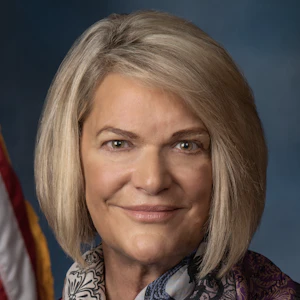
Cynthia Lummis
Cynthia Lummis
As the first-ever Chair of the Senate Banking Subcommittee on Digital Assets, Senator Lummis is the architect of the legislative framework shaping America's digital asset future. She introduced the landmark Lummis-Gillibrand Responsible Financial Innovation Act, the first comprehensive bipartisan crypto regulatory framework in Senate history. She co-authored the GENIUS Act — the first federal stablecoin law ever enacted — and introduced the BITCOIN Act, which would establish a U.S. strategic Bitcoin reserve of up to one million BTC. She is leading the Clarity Act, which will bring long-overdue regulatory certainty to the digital asset industry. She has also championed digital asset tax reform, including a de minimis exemption for small transactions and equal tax treatment for miners and stakers.
Known as Congress' "Crypto Queen," Senator Lummis represents Wyoming — a state she has helped build into one of the most digital asset-friendly regulatory environments in the nation. Before serving in the Senate, she served 14 years in the Wyoming Legislature, eight years as Wyoming State Treasurer, and eight years in the U.S. House. She is a three-time graduate of the University of Wyoming.
Her work represents a crucial bridge between traditional financial systems and the emerging digital economy, ensuring America leads the world in financial innovation while protecting the individual freedoms that define it.

Adam Back
Adam Back

Amy Oldenburg
Amy Oldenburg
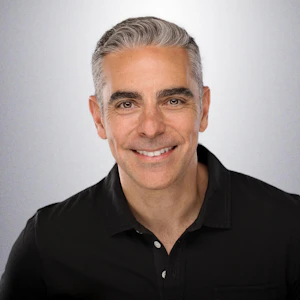
David Marcus
David Marcus

Matt Schultz
Matt Schultz
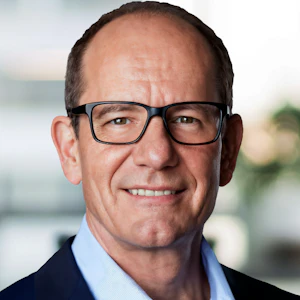
Fred Thiel
Fred Thiel
Throughout his career, Mr. Thiel has consistently driven rapid growth and created substantial shareholder value. Prior to MARA, Mr. Thiel served as the CEO of two other public companies, Local Corporation (NASDAQ: LOCM) and Lantronix, Inc (NASDAQ: LTRX). He has successfully raised billions in equity and debt through private and public offerings, led companies through IPOs, executed high-value exits to strategic and financial acquirers, and implemented effective M&A and roll-up strategies.
Mr. Thiel attended the Stockholm School of Economics and executive classes at Harvard Business School, and is fluent in English, Spanish, Swedish, and French. Mr. Thiel is the Chairman of the Board for Oden Technology, Inc. and is active in Young Presidents’ Organization where he has led initiatives in both the FinTech and Technology Networks.
A recognized voice in the industry, Fred frequently shares his insights on energy and technology with major media outlets like Bloomberg TV, CNBC, and FOX Business, contributing to vital discussions about the future of these sectors.
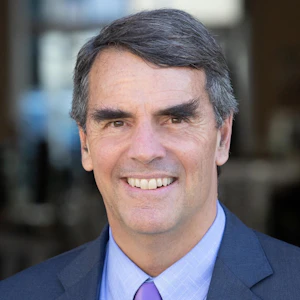
Tim Draper
Tim Draper
He is a supporter and global thought leader for entrepreneurs everywhere, and is a leading spokesperson for Bitcoin and decentralization, having won the Bitcoin US Marshall’s auction in 2014, invested in over 50 crypto companies, and led investments in Coinbase, Ledger, Tezos, and Bancor, among others.

Afroman
Afroman