Bitcoin on the Frontlines of Human Rights
Speakers/Moderators

Alex Gladstein
Alex Gladstein

Evan Mawarire
Evan Mawarire
Despite facing multiple imprisonments, torture, assassination attempts and treason charges, which forced him into exile in the United States, Mawarire's courage and leadership have made him a symbol of hope and resilience.
Globally recognized, Evan has spoken at Yale, Harvard, the Oxford Union, the Atlantic Council, Exponential Global Conference and international forums like the Oslo Freedom Forum and the Geneva Summit for Human Rights & Democracy. He was named among Foreign Policy Magazine’s 100 Global Thinkers and awarded ‘African of the Year’ by South Africa’s Daily Maverick in 2016. Additionally, he was nominated for Sweden’s Per Anger Prize in 2018 for his advocacy work.
Evan Mawarire has been a visiting fellow of Stanford, Yale, Johns Hopkins, and the University of Pennsylvania, as well as the National Endowment for Democracy (NED). He serves on the advisory board of Yale University’s International Leadership Center, the board of Integrity Initiatives International and is a Senior Fellow at Renew Democracy Initiative. He is the author of Crazy Epic Courage – How a ‘Nobody’ Challenged Brutal Dictators and Moved a Nation, a memoir that shares his work and experiences.

Srda Popovic
Srda Popovic
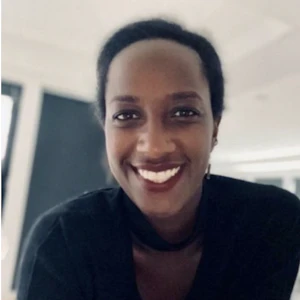
Anaïse Kanimba
Anaïse Kanimba
Session
Overview
Bitcoin on the Frontlines of Human Rights brought together Alex Gladstein with Evan Mawarire, Srđa Popovic, and Anaïse Kanimba for a discussion on how Bitcoin is used outside the United States, especially in places affected by dictatorship, currency collapse, surveillance, and financial exclusion.
The speakers connected monetary instability to human rights, sharing firsthand experiences from Zimbabwe, Serbia, Rwanda, and the Democratic Republic of the Congo. They described hyperinflation, frozen bank access, political repression, and the challenges faced by activists, political prisoners, and civil society groups when governments control money and financial rails.
The conversation highlighted Bitcoin as a tool for financial freedom, privacy, cross-border support, and resilience. Topics included the Africa Bitcoin Institute, Bitcoin adoption across Africa, CANVAS using Bitcoin to support movements, anonymous fundraising for activists, and the role of open source developers building tools that can help people under authoritarian conditions.
Good afternoon, everyone. It's a real pleasure to be here. I want to thank the organizers for helping put human rights on the main stage.
Two quick comments before we get into it. First, I think the general kind of content you see here is a particularly American interpretation of Bitcoin. It's an American take on Bitcoin. It's what Americans care about, and this is an American Bitcoin conference, so I think that's quite appropriate. Americans care about investment and integrating Bitcoin into the financial system, and obviously Michael does a great job continuing to push that forward.
But around the world, Bitcoin serves other purposes. What we're starting to see is that the focus in America is on Bitcoin as a store of value, as an investment, as something that's going to be integrated into markets. In other continents, in other places, it's actually being used more as money and as currency.
Americans constitute about 4% of the world's population, and this is our take on Bitcoin, but this is not the global take on Bitcoin. I would encourage you to look around the global Bitcoin ecosystem, and you're going to see some truly amazing stuff happening that we Americans would never think of ourselves because we have a very privileged financial system. We have a stable currency. We have stable payments. Most people don't.
A lot of the innovations you're going to see in the world of Bitcoin today are happening in Southeast Asia, southern Africa, and Latin America.
The second comment is that all of the conversation about integrating Bitcoin into the financial system and creating new derivatives and credit in Bitcoin, all of this is still part of the Bitcoin brand. What's really fun and interesting about Bitcoin is that as long as it's Bitcoin, it's good for Bitcoin. What a lot of people here are doing has nothing to do with revolutionary activism or taking down a dictator or whatever, but that's okay, because at the end of the day they're working for us too. They're pushing Bitcoin forward and making it a more powerful tool for human rights, inevitably, which is such an interesting part of Bitcoin's journey.
With that, I'm going to start to introduce my good friends here, who I met in my career as a human rights activist. Later, we figured out that we had some Bitcoin stuff in common.
I'll start with Evan. The audience saw a little bit about your background, but can you tell us, big picture, about you and your story?
In 2008, Zimbabwe went through this incredible hyperinflation period. Some of you may know about it, but inflation was running at about 586,000,000%. We lost everything.
In 2016, I was pastoring a small church in Harare, and I began to speak up against the financial and economic ruin of ordinary people. All we were doing was saying to people: find your voice and figure out a way to stand up so that in some way you could perhaps protect yourself from being robbed by the dictatorship over and over again.
It was a powerful journey, because over four years we were able to mobilize at least 12 million people to stand up.
Twelve million people?
Yeah. In fact, our largest protest was what we called Shut Down Zimbabwe. All we did was ask people to stay at home on one particular day. We shut the entire country down. Don't go to work. Don't take your kids to school. Don't open your business. Don't go to the bank. Don't go to the supermarket. Stay at home as a way of saying enough is enough.
We ended up with this $100 trillion note, which was the largest note in Zimbabwe at that time, and that was enough to buy two loaves of bread. The movement grew. I ended up in prison a bunch of times, but it was worth it, because there is nothing more powerful than seeing a people empowered to defend themselves or stand up for themselves.
Give it up for Evan. Amazing. Again, proof that peaceful revolution can happen and that people can change the destiny of their country.
For another example of that, my friend Srđa, take us back to what you were doing in the early 1990s and what you and your fellow students were able to do.
You've seen part of it in the video, but basically what happened in Serbia was that a whole generation rose against the dictator Slobodan Milošević, a guy starting war, genocide, and, by the way, destroying the currency of the country.
We were able, like a small startup, to grow from 11 people to about 20,000 people, mobilize young people to vote, unite the opposition, and get rid of Milošević. That is where the more interesting part of my life started, in a weird way, because immediately, because of the movie Bringing Down a Dictator, a lot of people from different places, Zimbabwe included, were coming to us and saying, “You've done it so well, we want to do it at home.”
That was the moment where I ended up doing something I never thought I would be doing in my life: training activists around the world. And here I am, 25 years later, still hanging out with these people.
You went into politics first, and that didn't work out for you.
Okay, you need to remind me of that.
I spent three years in parliament trying to change the beast from the inside, but it was not really thrilling. What happened later was this idea that you work with people like Evan and Anaïse, and you figure out that all of these conflicts are different, but what connects them is that people need skills. There are skills that are essential to deal with dictatorship: building strategy, working under oppression, and taking creative tactics.
This is how I ended up talking with you and other people from HRF, because one of these skills is access to money. The first thing an authoritarian government will do is go after your account. They will list your organization as a foreign agent. They will do anything in their power to prevent troublemakers from getting money. This is where the skill of moving digital money like Bitcoin is essential.
So we have two people who helped peacefully take down a dictator without even a shot fired. It's amazing. Give it up for Srđa. Awesome to have you here.
Anaïse, we met during the campaign to free your father. Do you want to tell us a little bit about your story and what's brought you here so far?
Absolutely. As you all saw in the little short intro, my father is Paul. His life story was told in the movie Hotel Rwanda. When the movie came out, it gave him a big platform to really talk about the challenges our country was going through in the early 2000s, right after the genocide. Since then, our president, Paul Kagame, has been winning by 99.15%. We've changed the constitution many times, and we've started wars in the Congo.
When my father was speaking about this, it made him the biggest critic of Rwanda, and he was kidnapped in 2020.
During our campaign, we knocked on every single door possible until we arrived at the doors of the Freedom Forum and spoke to the public there. We learned that we had Pegasus on my sister's phone and on my cousin's phone. That was through a group called Citizen Lab. Because of that, we realized that the government that also had our father was surveilling every single move that we had. They were making communications, any payment that we were making, any people that we were talking to.
So we realized, how can we help ourselves? That is when many people in the freedom community really opened the doors to us and showed us different ways we could advocate for our father and secure his release, which happened three years ago. He's now a free man.
Since then, I've really dedicated my time to support those who supported us, but also to educate folks about freedom technologies, including technologies like Bitcoin. For many political prisoners, when they're freed, they're completely put out. Sometimes they even lose their nationality. We work with many political prisoners, as well as other communities. For me, it was really important to find a way to support political prisoners even after their release, and I started learning more through Bitcoin.
One thing that's often left out of the human rights conversation is the impact governments have on currency and the relationship between individual rights and the technology by which people earn a living and earn their labor. These are the currencies that our friends here have lived experience living under as they collapsed in different ways.
Evan mentioned the $100 trillion note from Zimbabwe. At one point, Evan, you mentioned to me that you used to wear a necklace in Zimbabwe to remind you of what the Zimbabwean dollar used to be. Do you want to tell us a little bit about that?
A couple of friends of mine and I took the old Zimbabwe dollar, which was a coin. It was from about 1980. At the time, in 1981, the Zimbabwe dollar was actually worth 2 USD.
Worth 2 USD.
2 USD. Yeah. Over the years, that dollar became so eroded that when we got to 2008, not only had it been scrapped, but what it had been replaced with was worth absolutely nothing.
I'll tell you a story about this $100 trillion. It declined in value to the point where it was one trillionth of what it used to be.
Exactly. You've got to put that into context. We laugh about it and call it funny money, but it's tragic because of what people lost. Because Zimbabwe was, and still is, a dictatorship, it means there is no recourse to justice when you lose everything you have.
My parents had retired. They were 70 years old in 2008 and had about 80,000 USD in the bank as their retirement. There came a point where inflation was so high and moving so fast that over a seven-day period, the government banned any withdrawals from the bank. My parents went from one Sunday having 80,000 USD in the bank to the next Sunday having $0.25 left in their bank.
$80,000 to $0.25.
$0.25. They lost everything. And that's just the story of losing everything. Rebuilding it is a completely different story.
And it's also the story of just one family. It happened to millions.
And no one was held accountable.
Nobody.
No one has ever gone to prison for hyperinflation.
That's what I ended up in maximum security prison for, for saying to the government: what did you do with our money? You have got to restore what you took from our people.
For me, the realization there was that as we fight for freedom, more than anything else, when I met people in prison and on the streets, the biggest thing I realized was that people were fighting for dignity. This is why I then got involved with understanding how Bitcoin works and how it can be adapted for people who live in the poorest parts of the world or the most oppressed parts of the world.
We're not just fighting for money so that we can be wealthy. We're fighting for a sense of self-worth. We're fighting for a sense of dignity, a way just to respect ourselves that says, at least I have something to my name. I think Bitcoin can solve that.
Bitcoin's original use case was money beyond the state's control. That's what its primary use case is today and will remain. That's what we're here for. There's a lot of other stuff going on, and as I mentioned, it does all connect back to this one central use case.
If Bitcoin was controlled by states and corporations, it would not be very valuable. It would not have gone from zero to $77,000. It would not be the best-performing asset in the history of money, investment, and currency. But because of its traits, it does these things. Those traits are what we so enjoy and get excited about. In a world that can often be quite depressing, this is the reason for optimism.
Srđa, you lived through something similar, another hyperinflation episode. Do you want to give us a story from that time?
Just to say, we were first, and then Zimbabwe was more effective. What you are seeing on the screen, which has these weird pink-greenish colors, is a 500 billion dinar bill. It was worth, at the time, two kilos of apples.
The reason why it has these strange colors is because they were printing money so much that they ran out of all the normal colors. You could only print money in these strange colors. But what really happens is that you see your parents losing everything over the course of a few years. You see your family going from normal middle class into smuggling petrol and things to survive.
And guess what? That's a recipe for dictatorship, because if people are too busy surviving, they don't have time to think about social change. That brings us to the broader philosophical thinking you just outlined. The government decides how much my work is worth. The government decides how much the pension is worth. We need to take this power back to the people.
This is so important because this is in part how you stop these oppressive tools. What we are looking at here in the Bitcoin space, especially coming from somebody who is teaching people in oppressive societies to use this as a tool, is pieces of future infrastructure: Bitcoin, AI. Imagine if you can equip people fighting for freedom with these tools. That means we are producing something here that will be used by people elsewhere. Never stop doing this.
This is not ancient history, unfortunately. In the last few years, people who live in Nigeria, 220 million people, have seen their currency lose more than 75% of its value against the dollar. You have something similar happening in Egypt, the largest country in the Middle East. You have double-digit inflation in countries that affect billions of people.
This kind of story is more similar to the average human experience than the American story, that's for sure. This is what we talk about when we talk about financial privilege.
From your part of the world, Anaïse, we saw this note from Zaire. A similar story: when General Mobutu took power in the early 1970s, one Zaire was worth about a dollar, and by the time he was chased out, one Zaire was worth about one billionth of that. Yet another tragic proof and evidence of what governments do over time to money.
Oh, yes. On top of that, you add wars. Wars that are supposed to keep people impoverished, keep people in survival mode, so you cannot fight for yourself.
Specifically, in Zaire, now called the Democratic Republic of the Congo, when Mobutu was pushed out in 1997 and the new DRC franc was introduced, it has never been able to regain its power again because the country has been in conflict for the last 30 years. This conflict, sadly, has been really triggered by my country, Rwanda, which has been under dictatorship for the last 30 years as well.
The consequence of this today is that in eastern Congo, which many people may have heard of because of the Washington Accords being signed recently, the city of Goma doesn't have any ATMs working. Since January 2025, for over one year, people have not been able to get cash out. It is a city where it is a cash economy. People now are using Rwandan francs from another country, or using the dollar, to be able to sustain themselves in that specific part of the country.
That is really an outcome of long autocracy and wars, and for what? To suppress the people so people are not able to have agency and resilience to fight back against this type of oppression.
And it's not like when there's hyperinflation, your boss gives you a raise to compensate. That's not what happens. People just get literally impoverished, which is what you're seeing happen in countries like Egypt today. The average person can buy less bread than they could five years ago. It's just the reality.
It's not a situation in the fiat currency world where a rising tide lifts all boats. That's not what's been happening. Some currencies do okay, but the vast majority of them go to zero. That's what we've seen, and that's why Bitcoin presents such an interesting escape, such an interesting plan B.
So let's get into that. You are three of the most prominent human rights defenders in the world, and you've all started to integrate Bitcoin in different ways. Maybe we'll start with Anaïse and work our way back down.
Absolutely. In the last year, we launched the Africa Bitcoin Institute, which is a research think tank dedicated to understanding the adoption of Bitcoin on the continent better. A lot of innovation is happening on the continent because it's coming from need. More than half of our countries are under autocracy. Inflation is a major problem. Trade is a major problem from one country to the other. Remittance is also very expensive.
Many people are using Bitcoin as a solution to all these problems. The innovation that we see is incredible, and the Africa Bitcoin Institute wants to tell the story and show the world what is happening. It also wants to help our policymakers understand that Bitcoin can support the economic development and growth of their countries.
At the end of the day, we do want freer countries, democratic countries, but our democratic countries also have to be economically sovereign and strong. The Africa Bitcoin Institute is supporting and shaping that path for our continent.
The spread of stablecoins is kind of like putting a little Band-Aid on a festering wound. It really just perpetuates the existing system. Bitcoin is the real escape, the real alternative, the real way to get freedom and sovereignty.
The innovations happening in Africa in Bitcoin are incredible. People have learned how to use Bitcoin without the internet with Machankura. Gridless has pioneered decentralized Bitcoin mining with renewable energy. Africa has so much untapped stranded renewable energy. I've seen it. I've visited these sites.
You have Tando in Kenya, where people can now live in Bitcoin and pay for anything in the country because everybody accepts mobile money, and there's an app that does a seamless little swap of your Bitcoin into mobile money. You can pay for anything with Bitcoin and live on it. That's becoming the reality there. Those are not necessarily innovations that people know about here.
Having a policy institute that can help the leaders there understand the benefits and the fruits that Bitcoin is bringing to its people will be huge.
Srđa, what about you? When it comes to CANVAS, your work supporting movements around the world obviously entails helping advise on how to move money. Often we have foreign agent laws that prevent groups from getting foreign money. These groups get strangled and end up not being able to do anything. The rise of a new way to send money is pretty interesting, right?
My organization, CANVAS, which trains movements, is really now becoming Bitcoin-friendly in many different ways. We try to raise money in Bitcoin. We try to send money in Bitcoin. We teach people how to raise money anonymously.
One of the goals of dictators is to scare potential donors. If you can do it anonymously and safely, then of course it is a completely different world. We are even trying to raise Bitcoin to develop an AI that will help activists, so we are using it in our advanced work.
One thing we very often think at CANVAS is that the way this spreads, the way this will be adopted, the way we are seeing this adopted, is that people in need are more likely to try new things. That's the reason why activists will be very quick, I think, in adopting Bitcoin.
At CANVAS, we often live by the quote from Ben Franklin that there are three types of people in every society: those who are unmovable, those who are movable, and those who move. If you help those who move, then you become the movers, and then you help them move society. With this type of skill, you're doing exactly that.
We can reach anywhere. There's a really amazing human rights defender here in my book from Afghanistan, and she uses Bitcoin to fund underground education for women in her country. You can't use the US dollar for that. You can't use the US dollar for the use cases we're describing.
When you hear journalists talk about Bitcoin being useless, this is just so uninformed and wrong. They really need to get out in the world, talk to people, and learn about the human rights revolution that is represented by Bitcoin.
Evan, you wanted to say something to the developers here who are often very alone, working remotely. They don't necessarily get to see the impact of their work. It can be a lonely, solitary life. What would you say to the people making open source software, who often do it at great personal risk? There are people here in the United States, even the Samourai folks who are in prison for making code. Free Samourai. What would you say to the software developers out there?
Let me put on my pastor hat for a second, if you allow me. I want to do two things.
Number one, I want to celebrate the developers who have put themselves to work to make these platforms and technologies. The reason I want to celebrate you is that you are making things that people who live in the most oppressed societies can use to save their lives and safeguard their futures.
Here's the thing about it: these people will never get a chance to say thank you to you. I'm here on behalf of people who have used technologies made by developers here to say thank you. Thank you for your time. Thank you for your hard work. Thank you for your investment. You may not see the return of that investment in your bank account, but I'm telling you that return is there in a family that's able to live another week, another month, another year because of what you produced.
The second thing is to encourage you not to give up. Please, for the sake of an old lady somewhere in Tanzania, a young man in Zimbabwe, continue to develop these things. Continue to work on these platforms, because while you may not see the results today, there will come a time when somebody will find what you have made and it will save their lives. So thank you, and keep going.
Thank you, Evan. Thank you all for joining us today. I'll leave you with a couple of thoughts.
This movement comes together often at the Oslo Freedom Forum, happening in Norway in a few weeks. That might be something you want to check out. We're probably going to work with Bitcoin Magazine again to livestream the freedom tech portion of that. That's always a lot of fun.
The other cool thing we're doing here, aside from having the opportunity to talk to you right now, is that the Human Rights Foundation has put together a Freedom Tech stage. You've got to check it out. It's awesome. It's by one of the entrances over here in the little village.
We're about to go over there and join Matt Odell, Marty Bent, and Danny Knowles to talk about what's happening in the freedom tech space. Please check out the stage.
Thanks for your time, and thanks for your commitment to the connection between Bitcoin and human rights. We appreciate you. Thank you so much.
Similar
Sessions
Financial Freedom as a Human Right
Alex Gladstein
Alex Gladstein
Srda Popovic
Srda Popovic
Anaïse Kanimba
Anaïse Kanimba
Evan Mawarire
Evan Mawarire
Despite facing multiple imprisonments, torture, assassination attempts and treason charges, which forced him into exile in the United States, Mawarire's courage and leadership have made him a symbol of hope and resilience.
Globally recognized, Evan has spoken at Yale, Harvard, the Oxford Union, the Atlantic Council, Exponential Global Conference and international forums like the Oslo Freedom Forum and the Geneva Summit for Human Rights & Democracy. He was named among Foreign Policy Magazine’s 100 Global Thinkers and awarded ‘African of the Year’ by South Africa’s Daily Maverick in 2016. Additionally, he was nominated for Sweden’s Per Anger Prize in 2018 for his advocacy work.
Evan Mawarire has been a visiting fellow of Stanford, Yale, Johns Hopkins, and the University of Pennsylvania, as well as the National Endowment for Democracy (NED). He serves on the advisory board of Yale University’s International Leadership Center, the board of Integrity Initiatives International and is a Senior Fellow at Renew Democracy Initiative. He is the author of Crazy Epic Courage – How a ‘Nobody’ Challenged Brutal Dictators and Moved a Nation, a memoir that shares his work and experiences.
Financial Freedom as a Human Right
Speakers/Moderators
Alex Gladstein
Alex Gladstein
Srda Popovic
Srda Popovic
Anaïse Kanimba
Anaïse Kanimba
Evan Mawarire
Evan Mawarire
Despite facing multiple imprisonments, torture, assassination attempts and treason charges, which forced him into exile in the United States, Mawarire's courage and leadership have made him a symbol of hope and resilience.
Globally recognized, Evan has spoken at Yale, Harvard, the Oxford Union, the Atlantic Council, Exponential Global Conference and international forums like the Oslo Freedom Forum and the Geneva Summit for Human Rights & Democracy. He was named among Foreign Policy Magazine’s 100 Global Thinkers and awarded ‘African of the Year’ by South Africa’s Daily Maverick in 2016. Additionally, he was nominated for Sweden’s Per Anger Prize in 2018 for his advocacy work.
Evan Mawarire has been a visiting fellow of Stanford, Yale, Johns Hopkins, and the University of Pennsylvania, as well as the National Endowment for Democracy (NED). He serves on the advisory board of Yale University’s International Leadership Center, the board of Integrity Initiatives International and is a Senior Fellow at Renew Democracy Initiative. He is the author of Crazy Epic Courage – How a ‘Nobody’ Challenged Brutal Dictators and Moved a Nation, a memoir that shares his work and experiences.
Check Your Financial Privilege and Hidden Repression / The Bitcoin Tao
Alex Gladstein
Alex Gladstein

Check Your Financial Privilege and Hidden Repression / The Bitcoin Tao
Speakers/Moderators
Alex Gladstein
Alex Gladstein
Bitcoin on the Frontlines of Human Rights
Alex Gladstein
Alex Gladstein
Evan Mawarire
Evan Mawarire
Despite facing multiple imprisonments, torture, assassination attempts and treason charges, which forced him into exile in the United States, Mawarire's courage and leadership have made him a symbol of hope and resilience.
Globally recognized, Evan has spoken at Yale, Harvard, the Oxford Union, the Atlantic Council, Exponential Global Conference and international forums like the Oslo Freedom Forum and the Geneva Summit for Human Rights & Democracy. He was named among Foreign Policy Magazine’s 100 Global Thinkers and awarded ‘African of the Year’ by South Africa’s Daily Maverick in 2016. Additionally, he was nominated for Sweden’s Per Anger Prize in 2018 for his advocacy work.
Evan Mawarire has been a visiting fellow of Stanford, Yale, Johns Hopkins, and the University of Pennsylvania, as well as the National Endowment for Democracy (NED). He serves on the advisory board of Yale University’s International Leadership Center, the board of Integrity Initiatives International and is a Senior Fellow at Renew Democracy Initiative. He is the author of Crazy Epic Courage – How a ‘Nobody’ Challenged Brutal Dictators and Moved a Nation, a memoir that shares his work and experiences.
Srda Popovic
Srda Popovic
Anaïse Kanimba
Anaïse Kanimba
Bitcoin on the Frontlines of Human Rights
Speakers/Moderators
Alex Gladstein
Alex Gladstein
Evan Mawarire
Evan Mawarire
Despite facing multiple imprisonments, torture, assassination attempts and treason charges, which forced him into exile in the United States, Mawarire's courage and leadership have made him a symbol of hope and resilience.
Globally recognized, Evan has spoken at Yale, Harvard, the Oxford Union, the Atlantic Council, Exponential Global Conference and international forums like the Oslo Freedom Forum and the Geneva Summit for Human Rights & Democracy. He was named among Foreign Policy Magazine’s 100 Global Thinkers and awarded ‘African of the Year’ by South Africa’s Daily Maverick in 2016. Additionally, he was nominated for Sweden’s Per Anger Prize in 2018 for his advocacy work.
Evan Mawarire has been a visiting fellow of Stanford, Yale, Johns Hopkins, and the University of Pennsylvania, as well as the National Endowment for Democracy (NED). He serves on the advisory board of Yale University’s International Leadership Center, the board of Integrity Initiatives International and is a Senior Fellow at Renew Democracy Initiative. He is the author of Crazy Epic Courage – How a ‘Nobody’ Challenged Brutal Dictators and Moved a Nation, a memoir that shares his work and experiences.
Srda Popovic
Srda Popovic
Anaïse Kanimba
Anaïse Kanimba
Matt Odell and Friends



Alex Gladstein
Alex Gladstein
Matt Odell and Friends
Speakers/Moderators
Alex Gladstein
Alex Gladstein
Other
Speakers
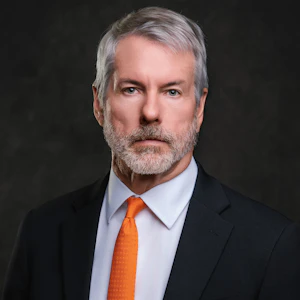
Michael Saylor
Michael Saylor
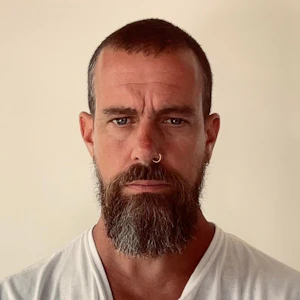
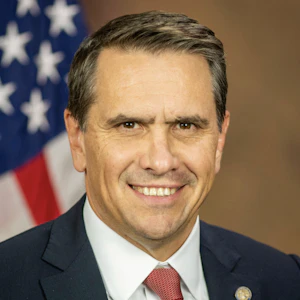
Todd Blanche
Todd Blanche
Biography of Deputy Attorney General Todd Blanche
The Honorable Todd Blanche is the 40th Deputy Attorney General of the United States, overseeing the work of the 115,000 dedicated employees who fulfill the Department of Justice’s mission at Main Justice, the FBI, DEA, U.S. Marshals, ATF, and 93 U.S. Attorney’s Offices.
Todd began his career at the Department where he served for over fifteen years in a variety of capacities, including as a contractor, a paralegal in the Criminal Division, and at the United States Attorney’s office for the Southern District of New York where he eventually became an AUSA and later a supervisor.
After leaving the Department, Todd worked as a criminal defense attorney that included representing President Donald Trump in three of the criminal cases brought against him in 2023 and 2024.
Following President Trump’s historic return to the White House, the President appointed Todd to work alongside Attorney General Pam Bondi to make America safe again. At the DOJ, Todd is working tirelessly to implement President Trump’s priorities that include confronting illegal protecting American businesses from fraud.
Todd has been married to his wonderful wife Kristine for nearly thirty years, is a father and grandfather.
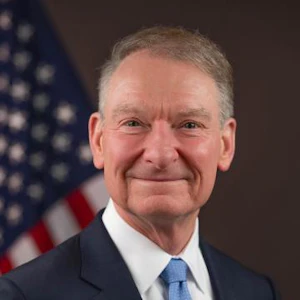
Paul Atkins
Paul Atkins
Prior to returning to the SEC, Chairman Atkins was most recently chief executive of Patomak Global Partners, a company he founded in 2009. Chairman Atkins helped lead efforts to develop best practices for the digital asset sector. He served as an independent director and non-executive chairman of the board of BATS Global Markets, Inc. from 2012 to 2015.
Chairman Atkins was appointed by President George W. Bush to serve as a Commissioner of the SEC from 2002 to 2008. During his tenure, he advocated for transparency, consistency, and the use of cost-benefit analysis at the agency. Chairman Atkins also represented the SEC at meetings of the President’s Working Group on Financial Markets and the U.S.-EU Transatlantic Economic Council. From 2009 to 2010, he was appointed a member of the Congressional Oversight Panel for the Troubled Asset Relief Program.
Before serving as an SEC Commissioner, Chairman Atkins was a consultant on securities and investment management industry matters, especially regarding issues of strategy, regulatory compliance, risk management, new product development, and organizational control.
From 1990 to 1994, Chairman Atkins served on the staff of two chairmen of the SEC, Richard C. Breeden and Arthur Levitt, ultimately as chief of staff and counselor, respectively. He received the SEC’s 1992 Law and Policy Award for work regarding corporate governance matters.
Chairman Atkins began his career as a lawyer in New York, focusing on a wide range of corporate transactions for U.S. and foreign clients, including public and private securities offerings and mergers and acquisitions. He was resident for 2½ years in his firm's Paris office and admitted as conseil juridique in France.
A member of the New York and Florida bars, Chairman Atkins received his J.D. from Vanderbilt University School of Law in 1983 and was Senior Student Writing Editor of the Vanderbilt Law Review. He received his A.B., Phi Beta Kappa, from Wofford College in 1980.
Originally from Lillington, North Carolina, Chairman Atkins grew up in Tampa, Florida. He and his wife Sarah have three sons.

Mike Selig
Mike Selig
Chairman Selig brings to the role deep public and private sector experience working with a wide range of stakeholders across agriculture, energy, financial, and digital asset industries, which rely upon and operate in CFTC-regulated markets.
Prior to his leadership at the CFTC, Chairman Selig most recently served as chief counsel of the Securities and Exchange Commission’s Crypto Task Force and senior advisor to SEC Chairman Paul S. Atkins. In this role, Chairman Selig helped to develop a clear regulatory framework for digital asset securities markets, harmonize the SEC and CFTC regulatory regimes, modernize the agency’s rules to reflect new and emerging technologies, and put an end to regulation by enforcement. He also participated in the President’s Working Group on Digital Asset Markets and contributed to its report on “Strengthening American Leadership in Digital Financial Technology.”
Prior to government service, Chairman Selig was a partner at an international law firm, focusing on derivatives and securities regulatory matters. During his years in private practice, he represented a broad range of clients subject to regulation by the CFTC, including commercial end users, futures commission merchants, commodity trading advisors, swap dealers, designated contract markets, derivatives clearing organizations, and digital asset firms. Chairman Selig advised clients on compliance with the Commodity Exchange Act and the CFTC’s rules and regulations thereunder, including in connection with registration applications and obligations, enforcement matters, and complex transactions.
Chairman Selig earned his law degree from The George Washington University Law School and was articles editor of The George Washington Law Review. He received his undergraduate degree from Florida State University.

David Bailey
David Bailey

Eric Trump
Eric Trump
Mr. Trump also serves as Executive Vice President of The Trump Organization, where he oversees the global management and operations of the Trump family’s extensive real estate portfolio. This includes Trump Hotels, Trump Golf, commercial and residential real estate, Trump Estates, and Trump Winery. Known for his hands-on leadership and strong market instincts, he has played a key role in expanding the company’s presence across major U.S. and international markets.
A globally recognized business leader and public figure, Mr. Trump is a prominent advocate for Bitcoin and decentralized finance. He is a co-founder of World Liberty Financial, a decentralized finance (DeFi) platform, and serves on the Board of Advisors of Metaplanet, Japan’s largest corporate holder of Bitcoin.
Beyond his business activities, Mr. Trump has helped raise more than $50 million for St. Jude Children’s Research Hospital in the fight against pediatric cancer, a philanthropic mission he began at age 21.
Mr. Trump earned a degree in Finance and Management from Georgetown University. He currently resides in Florida with his wife, Lara, and their two children. He is also the author of Under Siege, his memoir published in October 2025.

Jack Mallers
Jack Mallers
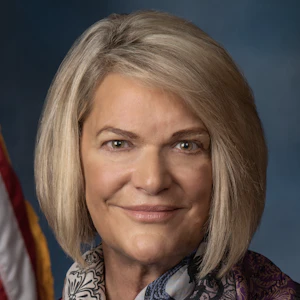
Cynthia Lummis
Cynthia Lummis
As the first-ever Chair of the Senate Banking Subcommittee on Digital Assets, Senator Lummis is the architect of the legislative framework shaping America's digital asset future. She introduced the landmark Lummis-Gillibrand Responsible Financial Innovation Act, the first comprehensive bipartisan crypto regulatory framework in Senate history. She co-authored the GENIUS Act — the first federal stablecoin law ever enacted — and introduced the BITCOIN Act, which would establish a U.S. strategic Bitcoin reserve of up to one million BTC. She is leading the Clarity Act, which will bring long-overdue regulatory certainty to the digital asset industry. She has also championed digital asset tax reform, including a de minimis exemption for small transactions and equal tax treatment for miners and stakers.
Known as Congress' "Crypto Queen," Senator Lummis represents Wyoming — a state she has helped build into one of the most digital asset-friendly regulatory environments in the nation. Before serving in the Senate, she served 14 years in the Wyoming Legislature, eight years as Wyoming State Treasurer, and eight years in the U.S. House. She is a three-time graduate of the University of Wyoming.
Her work represents a crucial bridge between traditional financial systems and the emerging digital economy, ensuring America leads the world in financial innovation while protecting the individual freedoms that define it.

Adam Back
Adam Back

Amy Oldenburg
Amy Oldenburg
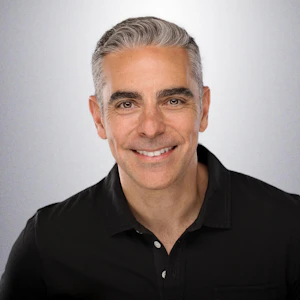
David Marcus
David Marcus

Matt Schultz
Matt Schultz
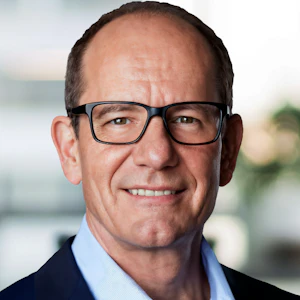
Fred Thiel
Fred Thiel
Throughout his career, Mr. Thiel has consistently driven rapid growth and created substantial shareholder value. Prior to MARA, Mr. Thiel served as the CEO of two other public companies, Local Corporation (NASDAQ: LOCM) and Lantronix, Inc (NASDAQ: LTRX). He has successfully raised billions in equity and debt through private and public offerings, led companies through IPOs, executed high-value exits to strategic and financial acquirers, and implemented effective M&A and roll-up strategies.
Mr. Thiel attended the Stockholm School of Economics and executive classes at Harvard Business School, and is fluent in English, Spanish, Swedish, and French. Mr. Thiel is the Chairman of the Board for Oden Technology, Inc. and is active in Young Presidents’ Organization where he has led initiatives in both the FinTech and Technology Networks.
A recognized voice in the industry, Fred frequently shares his insights on energy and technology with major media outlets like Bloomberg TV, CNBC, and FOX Business, contributing to vital discussions about the future of these sectors.
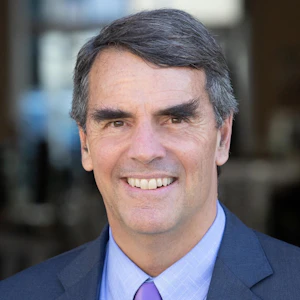
Tim Draper
Tim Draper
He is a supporter and global thought leader for entrepreneurs everywhere, and is a leading spokesperson for Bitcoin and decentralization, having won the Bitcoin US Marshall’s auction in 2014, invested in over 50 crypto companies, and led investments in Coinbase, Ledger, Tezos, and Bancor, among others.

Afroman
Afroman