Strategies for Bitcoin Personal Finance
Speakers/Moderators

Brian Harrington
Brian Harrington
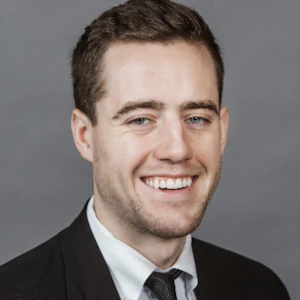

Aaron Arnold
Aaron Arnold
Altcoin Daily is the largest crypto YouTube channel in the US (& top 3 in the world) with a trusted 6 year reputation in the space.
Aaron is also a core on-camera contributor for TheStreet's Bitcoin/crypto arm as well as producer & on-camera judge for Killer Whales (a Shark Tank like crypto show) which premiered this year on Apple TV, Amazon, & other streaming services world wide.
Aaron bought his first Bitcoin in 2016 (a very small amount) and after learning more and more about it went 'full time' in bitcoin, crypto, & YouTube in 2018.
"Bitcoin is future. It's important to me to make sure you know: what Bitcoin is, why Bitcoin is revolutionary, how Bitcoin is different from other crypto assets, and overall give you an edge in this nascent industry exploding with growth!"
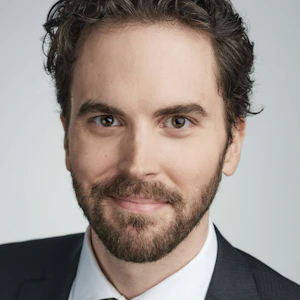
Austin Arnold
Austin Arnold
Session
Overview
Brian Harrington leads a practical conversation on Bitcoin personal finance with Sam from My Financial Friend and Aaron Arnold and Austin Arnold from Altcoin Daily. The discussion focuses on how Bitcoin fits into real-life financial decisions, from spending and saving to income growth, investing, debt, and asset allocation.
The speakers emphasize that personal finance is not only about stacking sats. They discuss living below your means, increasing income, investing in yourself, managing lifestyle spending, and deciding when it may be reasonable to sell Bitcoin for meaningful goals. They also compare Bitcoin with stocks, real estate, cash, and broader crypto allocations.
A recurring theme is that Bitcoin culture can benefit from more open and practical conversations about money. The panel argues that mainstream personal finance should better understand Bitcoin as distinct from crypto, while Bitcoiners should also think clearly about diversification, credit, income, and long-term financial resilience.
All right, good morning. My name is Brian. I talk about Bitcoin personal finance on YouTube, and I appreciate the conference for putting that topic on the main stage. I appreciate Sam from My Financial Friend and Aaron and Austin from Altcoin Daily for helping amplify the discussion.
Here's the hook. OG Bitcoiners were great at talking about Bitcoin. They were honestly really, really bad at talking about personal finance. I believe that has put a ceiling on Bitcoin's influence into mainstream personal finance discourse.
We're going to have some fun today with questions these guys may never have been asked before on camera, to make Bitcoin real in a day-to-day sense. So here we go. We're just going to go down the line with efficient timing, as you guys are experts at doing.
What's the last purchase under $100 and over $1,000 that has had an impact on your life?
I'd say the one under $100: I bought a John Deere kid leaf blower for the Bitcoin baby, my son, and he loves it. He just walks around and pushes dirt around. It was $20, and he gets more joy out of it than anything I've ever bought.
The last thing over $1,000: we bought a custom sauna. It took three months to get. It has glass from floor to ceiling. It's for like eight people, and it faces our woods. We live somewhere cold, so it's really nice to be able to look out at the woods, have something warm, chat with people in it, and hang out.
So we're coming over.
Yeah, come over anytime. Those are two fantastic buys.
Just a quick intro about myself, if you don't know me. Aaron Arnold, half of the team at Altcoin Daily. Personal finance, Brian, you say this all the time, it's personal to you. My personal finance journey came from having a regular W-2 job, doing different things for side income, and then starting a mowing business and getting multiple streams of income through that. I had to navigate how to build wealth or save wealth in that regard.
To answer your question, Brian, something I purchased under $100 that I love: I bought my brother a burger in Vegas the other day. Almost not even under $100. But I would say, for under $100, just a meal with friends or a meal with colleagues. It's really easy and enjoyable to drop $100 on Bitcoin or in the stock market, and you can see your returns quantifiably. But do not count out building relationships, because you can get far with that, too.
Then for over $1,000, the Whale Pass. Nah, they gave that to me for free. No, over $1,000, to be honest, obviously there are things in your life that you buy for over $1,000: a car, a home, maybe a gift. But I don't like to drop $1,000 on things that maybe a lot of people do, like luxury goods or whatever. I truly like dropping $1,000 on... it used to be Bitcoin, but I feel like I have a good allocation.
This is not Sunday school. This is not what I want. You're not allowed to say Bitcoin.
Okay. I truly like dropping $1,000 on the stock market.
Okay, we're going to get into that.
Brian, thank you. Austin, Altcoin Daily. When I choose to allocate $100 or over $1,000, under $100, my personal finance strategy is this: I either want to accumulate hard assets for generational wealth, locking in my bloodline, or enjoyment and experiences.
So my best purchase recently under $100 was a hummingbird feeder for my backyard, and I love looking at the hummingbirds.
I love that. The reason why it's important to start with purchasing, and I don't want the Sunday school answers, guys, is because the next thing is: how do you balance the goals of growing your net worth, getting the hard assets that go up, getting the stock market assets that go up, with, as you alluded to, making more money? Or if you have a different financial goal, what are you optimizing for right now? How do you balance the multiple angles you can optimize personal finance on?
I'm trying to optimize for income because I think net worth will follow. As long as you save enough, your net worth should go up over time. But it's really hard to optimize net worth every day. Sometimes the market just goes down and there's nothing you can really do.
So I'm always focused on income. My spending has changed so much over the years. I used to work at a retail bank coming out of college with a lot of student debt, six figures of debt. I was making $36,000 a year, living at home with my parents, trying to pay it off. I was working all kinds of odd jobs. That spending is very different from what I do today.
Over time, though, I'm just trying to live below my means, save a significant portion, and put some away into assets that grow. That's really the focus at the end of the day: diversifying between Bitcoin, real estate, and stocks, so I can weather any market.
This is actually the perfect time to do this panel, Brian, because it seems easy to make money and accrue wealth in a bull market. In a bear market, things are a little tighter.
For me, my building wealth and general personal finance strategy is, number one, you do need to increase your income in whatever way. You don't need to have high income to build wealth. I think you should be putting away 10% or 15%, not necessarily in savings, but in investments, as much as you can, because that's your biggest tool to grow wealth.
Then, when you have income, and hopefully it gets higher, buy assets, don't buy liabilities. These are tried and true principles. It's very easy to say, and people generally understand it, but not a lot of people necessarily take it to heart and do it.
People understand that if I put money in the stock market every year, it's going to compound. Even if I'm just making $80,000 a year, eventually I'll be a millionaire. But people don't do it because it's hard to take away 10% or 15% of your income and not buy something that could serve you today.
So my strategy is to invest, max out the Roth IRA, live below your means, and do whatever you can to increase your income.
For me personally, the best advice a Bitcoiner or even traditional finance person ever gave me is: live below your means, invest the rest.
By show of hands, live below your means, invest the rest. How many in the audience have heard this before? A lot of people. If I want those kinds of quips, I'll go to crypto Twitter, Bitcoin Twitter.
For me, the easiest two ways to live below your means or invest the rest are: save more money or earn more. You can hold it in your pocket, put it there, spend less, or you can earn more.
I personally believe, for me, it's easier for an entrepreneur to earn more. If you're working a nine-to-five, it's easier to save. So there are two different buckets. But entrepreneurs, you sleep less, you focus on what works more, you look at the data. That's my personal belief, but it depends on which bucket you're in.
I'm going to go off script for a second. A lot of YouTube personal finance people talk about earning more also. You need to earn more. Why does that feel, am I the only one who feels that's in tension with the popular belief? I feel like there are a lot of people out there who believe Bitcoin is the best thing they've ever had, and they are playing really tense and tight, like, Bitcoin go up, Bitcoin go up is easier than me making more.
We talk about the scarcity of Bitcoin. There's also this scarcity mindset that Bitcoin going up is the largest opportunity you have in your life. There are probably people sitting out here who have the ability to be an entrepreneur, and there is a very real chance that that opportunity has a higher percentage chance of happening than Bitcoin going up. What's your reaction to that?
If you have a lower savings rate, if you're saving 5% or 10% or nothing, it's going to be much more important for you to make more income. If you're saving 10% and you increase your income by 10%, and you put it all into savings, you double what you're saving, right? That is much more important than watching three hours of Bitcoin content a day or trying to get validation for what you've already invested in.
But it's much more uncomfortable, especially if you're in a W-2 job, to feel like you're not exhausted when you get home and you want to go spend two hours trying to sell your idea to people or grow something from scratch. A lot of people just feel exhausted by daily life, so they don't want to do that, which I totally get. It's much easier to watch YouTube than it is to do whatever you want to do.
Just a quick reaction on the W-2 job thing. Again, that gets parsed a lot as W-2 job versus entrepreneurship. It's not talked about enough that there are things you can do to increase your W-2 income also. You can network and get higher W-2 jobs, and it's not talked about enough.
The setup was Bitcoin versus investing in yourself?
Yeah, that's good framing.
I would say, like you're saying, obviously Bitcoin has historically been a great investment, besides the last six months or whatever. Bitcoin doesn't have dividends, as we know. But investing in yourself can yield dividends. It's not exactly like company dividends, but to further yourself, I think you need multiple sources of income or to increase your income in general. An investment in yourself of $1,000 could actually be more fruitful than a $1,000 investment into Bitcoin. Is that crazy to say here?
That's what I'm looking for. Edgy comments.
Bitcoin doesn't have dividends. Talk to Michael Saylor, buddy. He's changing that.
I would say, personally, people say the eighth wonder of the world is compound interest. You start early, you gain much more. That's going to be worth so much more than the amount of money you could put in, just the compounding from what you started with early.
I think the ninth wonder of the world is compound experience. Whether you're investing in a business or investing in your job, if you want to be a dentist, start early. Go intern at that dentist's office. Even if you don't like it, you'll find that out early, and you'll get the thing you want. Along with investing early and getting compound interest in your portfolio, compound experience is worth just as much as compound interest.
Brian, I don't mean to cut you off here, but obviously you're leading the conversation. I heard you say something a little bit controversial yesterday at dinner, saying that it's okay to sell your Bitcoin, and you have to buy it twice. What was the thought process behind that?
Yeah, you have to buy it twice. You have to let it change your life. One thing I believe is that there are a lot of people whose Bitcoin net worth has outpaced their mindset. They're so afraid of what to do with their Bitcoin that they're not upgrading their minds.
So you believe it's okay to sell your Bitcoin?
It's definitely okay to sell your Bitcoin. It's okay to sell your Bitcoin and accomplish lifestyle goals or invest in yourself or anything. I'm going to get into that allocation. I have an allocation question for you guys.
I'm glad you brought up dividends. I want to say that as part of the hook, too. Part of why I believe this is a really important topic for this time specifically is because personal finance YouTube has a lot of influence, and millions of people watch mainstream personal finance YouTube all the time. It feels like Bitcoin and crypto content kind of takes a second seat to that.
But the popularity of these preferred dividend stocks is changing that. I can see the traffic under my own channels, where people are coming from Bitcoin-only channels, they're coming from crypto-generalist channels, and they're slowly starting to come from dividend snowball channels. So I believe there's an opportunity right now for Bitcoin and crypto people to overlap with mainstream personal finance people more than ever. That's part of why I want to have the discussion today.
What is a money model or mindset that you had when you were younger that you've changed?
I used to think it was really dumb when people would spend a significant amount of money on something they didn't need. But that was because I had debt that was three times my income. I just thought, I can't spend on anything.
I knew people at the bank I worked at who would have a house in the city and then, 20 minutes away, they had a lake house. I thought that was so dumb. Just have one, right? Just live at one. You don't need it.
But that's really changed over time. If you have money, and as long as whatever you're going to buy doesn't affect your lifestyle, as long as you still have enough, go spend the money, especially if you're older. These were 65-year-olds. They can do whatever they want. It's not my place to judge.
I've definitely bought some stuff that I did not need, where I would have a higher net worth if I hadn't, but I got enjoyment out of it. I can optimize every single penny, but then my life might kind of suck. I wouldn't be here speaking on stage right now. So I think that's definitely changed over time.
I grew up like many people around our age, thinking that saving in a bank account would be pretty good. That's essentially all you need to get ahead. If you can save a few thousand, or $100,000, you have a chunk of money and you can rely on that.
Obviously, we know, as Bitcoiners, that your money is not growing in a bank account. It's actually losing value more and more. Maybe in the world we came from, it didn't lose as much and it was a solid idea. But today, 100%, you need to be investing and watching your money grow.
When I was a kid, next to my brother, I used to think that the government and the money system had the individual's best intentions at heart, that it was a good system. Now I believe the money system is corrupt. The more I learn about inflation, the more I understand, wow, I need to do everything in my power to have as few dollars as I can, because the people who save in dollars, as Michael Saylor says, we call them poor. Find hard assets before this entire thing blows up.
In personal finance, when I'm watching traditional finance personal finance content creators, that's the one thing I don't think they've really nailed. They're saving in dollars, and they're trying to have more dollars at the end of the year, which is a strategy. But then if you look at the inflation rate, and not the one that the U.S. government gives you, but the cost of goods and how life is getting more expensive, there has to be a better solution out there. Hard assets are the key.
Okay, let's get to the allocation question. Stocks, real estate, Bitcoin, crypto, cash, and if there are any other buckets you guys have. How do you think about each of those buckets? Give a quick ranking of your opinion on each one, and how you think about balancing how much goes in each.
I think real estate is much harder short term to make money than people think, and much easier long term to make money. People often run cash flows incorrectly short term because they don't take into account CapEx, vacancy, mowing the lawn, doing snow.
I have rentals, and oftentimes they don't make anything in the first year or two. But I know long term there is 3x leverage on appreciation, so they'll do well. There are some cash flow and tax benefits to it.
I think stocks are fantastic because, much like Bitcoin, people act irrationally short term, and a lot of the money that causes the market to go up and down is short-term oriented because it's from hedge funds. Their goals are not necessarily the same as my goals. They're answering to shareholders, they're answering to investors, and they have to think very short term a lot of the time.
So I can buy Amazon when it falls down 30% because they're worried about CapEx short term, and I think it's great that they can invest $200 billion a year into something that's going to get a good return.
I am heavily invested in the stock market. Part of that is that my income is very tied to Bitcoin as well. Within crypto, I'm 92% Bitcoin and 8% Ethereum and Solana, just because I have a good cost basis. Real estate is around the same allocation as Bitcoin, and I have more in the stock market. I'm about 10% cash right now, but I unloaded a lot of it into the stock market recently, about a month ago, when we had that big dip.
For so long, I got into Bitcoin in the 2017 run-up and then full time in 2018. For so long, I was probably like a lot of people in the audience. I need to get as much Bitcoin as possible. I wasn't really going that hard in the stock market, didn't have any real estate, just wanted to get as much Bitcoin as possible.
Now I still want to get Bitcoin, but I think you need to diversify. I'm bullish on stocks. I know Brian, our host, is not that bullish on stocks. I'm bullish on real estate. I'm bullish on all of it.
I just interviewed real estate mogul Grant Cardone on our channel a little bit ago. He's just a real estate guy, and he's getting into Bitcoin. A lot of people ask him, why not only do Bitcoin? He's like, why would I only do Bitcoin? I need both. I love both.
I'm a big believer in stocks, too. Just buy a passive index ETF, low expense ratio, and accrue value with the market. I think you need all of it.
I believe if you want to maintain your wealth, you should be diversified. If you want to gain wealth, you should have concentrated bets, understanding you also have much more risk. So for me personally, it's not a surprise. I think Bitcoin has the most asymmetrical upside. You're not necessarily going to get rich quick with that, but I believe it'll outperform the S&P. It'll be here 10 or 20 years from now, and it'll have a better return.
Having said that, I believe in the S&P, betting on the best 500 companies in America. Long America. I think that's great and will continue to get better. I don't believe in picking individual stocks, just because I'm not willing to do the work. Obviously, NVIDIA is doing very well.
If I had to rank them, one last thing I'll say is, obviously, cash is king. I think we learn that every bear market. You want to have a little more cash than you need just to stay sane. For me, that's 10% to 20% always, to invest in the dips.
I personally would put the stock market last. Cash is in its own separate bucket. Real estate second. Bitcoin, with the most asymmetrical upside, first.
I would put the stock market and Bitcoin as one and two, and we could argue which one's better, obviously Bitcoin. Then real estate would be third, just as far as barrier to entry. If you're trying to accrue wealth, just focus on Bitcoin and the stock market.
We've bought a decent number of rentals over the last couple of years, and it's amazing how much work they are. Even when you have a management company and an accountant, they still take up mindshare, and you get about the same return as the stock market, maybe slightly better, depending on how leveraged you are. Yet the money is locked up more.
Okay, this is for part two on YouTube afterwards. This is exactly that.
A comment about Grant Cardone, then two questions, so wrap up. We don't have time to talk about it, but I appreciated that Grant at Pomp's conference talked about how much Bitcoin he owns, and I appreciate that he called out that a negative part of Bitcoin culture is this blanket idea that you shouldn't talk about how much Bitcoin you have.
It's fine to add caveats about that, but other wealthy Americans, when you are around more wealthy Americans in one-on-one situations, they are more open and honest with each other than Bitcoin and crypto people are, in my opinion, in my experience. Quick reaction.
I thought you were about to ask us how much Bitcoin we have.
No, I'm not going to do that because this is not the right context for that. I'm fine with caveats, but the blanket stance in Bitcoin culture, I do disagree with.
I would just say that Bitcoin personal finance has been really nonexistent, perhaps besides the last few years. The Bitcoin culture for personal finance over Bitcoin's history was akin to a libertarian mindset or a gold bug mindset: do not share personal details, be very vague about it. So it's really nonexistent, and I think there has been a ceiling in that. That appeals to a certain amount of people, but you really can't figure out how to get ahead.
Brian, how much money is in your bank account?
Okay, next question.
No, my point is that I see Bitcoin as the bank account, as the endgame.
Right. There is a way to politely discuss finances with other people in a way that levels up your brain. It will make you more wealthy.
I think everyone needs a group of people, even if they're protective about how much Bitcoin they have, that are in a similar situation and that they trust, where they can talk about it. You have to be able to talk about allocation and how you're buying, what you're buying as opposed to Bitcoin versus other assets.
There are three or four people I know who know how much Bitcoin I have, and I know how much they have. We talk about that versus real estate. I'm much more likely to tell someone how many rentals I have, or what I have in the stock market, or what I make even.
I want to dive in on that on YouTube, about why it's okay for rentals and the stock market and different for Bitcoin. I don't have the answer to that, but I want to dive into it.
Okay, two more, and you guys see the timer. We talked about the asset side, but I want to talk about the credit and debt side now. What is your opinion about credit cards, lines of credit, margin loans, home equity lines of credit? What are you doing in that area really quickly?
I think personal debt is unhealthy. Credit card debt, high-interest debt, very unhealthy. I think the American system forces you, if you want to get ahead, to use debt to your advantage, like a mortgage. I'm a fan of using debt in safe, specific instances.
I generally agree. These are easy, simple concepts, but I guess they're simple concepts, not easy. I take the old Dave Ramsey school of thought generally when it comes to credit. I use a credit card, but tons of people take out debt to buy luxury goods or liabilities. I bought my swimming pool. I financed a $300,000 swimming pool fully. But then there are other things you can do with improving your assets, like buying a home or different things that would be better.
I think it's really situationally dependent. Right now, we have rentals, but we only have a mortgage on one rental, and we have a decent number of units. The others are paid off. It's not the most efficient way to do it by any means, but at the end of the day, I think I can get more aggressive with my other investments and have less cash than I would otherwise.
Our income goes up and down so much. At the end of the day, it's a quality-of-life thing. Would it be better if I got another 3% somewhere else? Yes. But will it make a material difference?
You guys sound underleveraged to me, so I'm going to have to leverage-pill you guys.
Last question. What is a thing that you wish mainstream personal finance YouTube understood better about Bitcoin?
I wish they understood that it's separate from crypto. We're in a very new, nascent industry. Huge volatility, huge upside. I think there is a space and there is innovation happening in the rest of crypto, but Bitcoin is fundamentally different. It's used by me personally for something different: money, a savings account. I wish that was clear, or that mainstream finance took the time to separate it.
I actually probably, like you guys, love normal personal finance YouTube channels, the Dave Ramseys, the Caleb Hammers. I think they do a lot of things right. However, many of them do not see that the world is changing.
Actually, since 2025, I have seen a lot of those tried and true personal finance YouTubers say Bitcoin is a good investment, and they kind of said it near the top of 2025. So far, that hasn't played out that well for their audience, maybe, but obviously it's a long-term game.
I actually think things are changing. People are waking up and adapting, and it's probably because Wall Street and TradFi are coming to crypto.
We're not all just degens. A lot of us have real estate or stocks or cash. Not everyone is 100% in whatever altcoin you think they're interested in. I wish mainstream understood that, that you're not an idiot for owning 5% Bitcoin.
Also, I think that will change over time because the incentive will be there when people can sell Bitcoin ETFs, and a lot of financial advisors still can't do that. Incentives will change, and then people will be more bullish.
I genuinely appreciate you guys being open and transparent with us today. Genuinely, thank you for being part of this discussion. Go ahead and tag these guys for a part two on YouTube, and let's make it happen.
Similar
Sessions
Strategies for Bitcoin Personal Finance
Brian Harrington
Brian Harrington
Aaron Arnold
Aaron Arnold
Altcoin Daily is the largest crypto YouTube channel in the US (& top 3 in the world) with a trusted 6 year reputation in the space.
Aaron is also a core on-camera contributor for TheStreet's Bitcoin/crypto arm as well as producer & on-camera judge for Killer Whales (a Shark Tank like crypto show) which premiered this year on Apple TV, Amazon, & other streaming services world wide.
Aaron bought his first Bitcoin in 2016 (a very small amount) and after learning more and more about it went 'full time' in bitcoin, crypto, & YouTube in 2018.
"Bitcoin is future. It's important to me to make sure you know: what Bitcoin is, why Bitcoin is revolutionary, how Bitcoin is different from other crypto assets, and overall give you an edge in this nascent industry exploding with growth!"
Austin Arnold
Austin Arnold
Strategies for Bitcoin Personal Finance
Speakers/Moderators
Brian Harrington
Brian Harrington
Aaron Arnold
Aaron Arnold
Altcoin Daily is the largest crypto YouTube channel in the US (& top 3 in the world) with a trusted 6 year reputation in the space.
Aaron is also a core on-camera contributor for TheStreet's Bitcoin/crypto arm as well as producer & on-camera judge for Killer Whales (a Shark Tank like crypto show) which premiered this year on Apple TV, Amazon, & other streaming services world wide.
Aaron bought his first Bitcoin in 2016 (a very small amount) and after learning more and more about it went 'full time' in bitcoin, crypto, & YouTube in 2018.
"Bitcoin is future. It's important to me to make sure you know: what Bitcoin is, why Bitcoin is revolutionary, how Bitcoin is different from other crypto assets, and overall give you an edge in this nascent industry exploding with growth!"
Austin Arnold
Austin Arnold
Other
Speakers
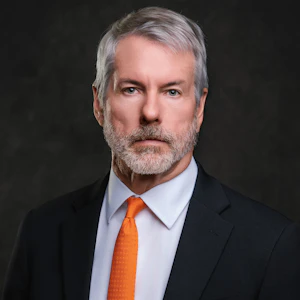
Michael Saylor
Michael Saylor
Todd Blanche
Todd Blanche
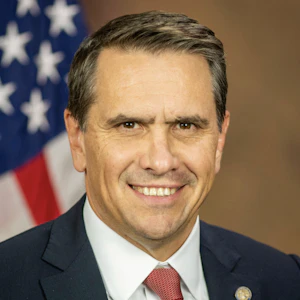
Biography of Deputy Attorney General Todd Blanche
The Honorable Todd Blanche is the 40th Deputy Attorney General of the United States, overseeing the work of the 115,000 dedicated employees who fulfill the Department of Justice’s mission at Main Justice, the FBI, DEA, U.S. Marshals, ATF, and 93 U.S. Attorney’s Offices.
Todd began his career at the Department where he served for over fifteen years in a variety of capacities, including as a contractor, a paralegal in the Criminal Division, and at the United States Attorney’s office for the Southern District of New York where he eventually became an AUSA and later a supervisor.
After leaving the Department, Todd worked as a criminal defense attorney that included representing President Donald Trump in three of the criminal cases brought against him in 2023 and 2024.
Following President Trump’s historic return to the White House, the President appointed Todd to work alongside Attorney General Pam Bondi to make America safe again. At the DOJ, Todd is working tirelessly to implement President Trump’s priorities that include confronting illegal protecting American businesses from fraud.
Todd has been married to his wonderful wife Kristine for nearly thirty years, is a father and grandfather.

Paul Atkins
Paul Atkins
Prior to returning to the SEC, Chairman Atkins was most recently chief executive of Patomak Global Partners, a company he founded in 2009. Chairman Atkins helped lead efforts to develop best practices for the digital asset sector. He served as an independent director and non-executive chairman of the board of BATS Global Markets, Inc. from 2012 to 2015.
Chairman Atkins was appointed by President George W. Bush to serve as a Commissioner of the SEC from 2002 to 2008. During his tenure, he advocated for transparency, consistency, and the use of cost-benefit analysis at the agency. Chairman Atkins also represented the SEC at meetings of the President’s Working Group on Financial Markets and the U.S.-EU Transatlantic Economic Council. From 2009 to 2010, he was appointed a member of the Congressional Oversight Panel for the Troubled Asset Relief Program.
Before serving as an SEC Commissioner, Chairman Atkins was a consultant on securities and investment management industry matters, especially regarding issues of strategy, regulatory compliance, risk management, new product development, and organizational control.
From 1990 to 1994, Chairman Atkins served on the staff of two chairmen of the SEC, Richard C. Breeden and Arthur Levitt, ultimately as chief of staff and counselor, respectively. He received the SEC’s 1992 Law and Policy Award for work regarding corporate governance matters.
Chairman Atkins began his career as a lawyer in New York, focusing on a wide range of corporate transactions for U.S. and foreign clients, including public and private securities offerings and mergers and acquisitions. He was resident for 2½ years in his firm's Paris office and admitted as conseil juridique in France.
A member of the New York and Florida bars, Chairman Atkins received his J.D. from Vanderbilt University School of Law in 1983 and was Senior Student Writing Editor of the Vanderbilt Law Review. He received his A.B., Phi Beta Kappa, from Wofford College in 1980.
Originally from Lillington, North Carolina, Chairman Atkins grew up in Tampa, Florida. He and his wife Sarah have three sons.

Mike Selig
Mike Selig
Chairman Selig brings to the role deep public and private sector experience working with a wide range of stakeholders across agriculture, energy, financial, and digital asset industries, which rely upon and operate in CFTC-regulated markets.
Prior to his leadership at the CFTC, Chairman Selig most recently served as chief counsel of the Securities and Exchange Commission’s Crypto Task Force and senior advisor to SEC Chairman Paul S. Atkins. In this role, Chairman Selig helped to develop a clear regulatory framework for digital asset securities markets, harmonize the SEC and CFTC regulatory regimes, modernize the agency’s rules to reflect new and emerging technologies, and put an end to regulation by enforcement. He also participated in the President’s Working Group on Digital Asset Markets and contributed to its report on “Strengthening American Leadership in Digital Financial Technology.”
Prior to government service, Chairman Selig was a partner at an international law firm, focusing on derivatives and securities regulatory matters. During his years in private practice, he represented a broad range of clients subject to regulation by the CFTC, including commercial end users, futures commission merchants, commodity trading advisors, swap dealers, designated contract markets, derivatives clearing organizations, and digital asset firms. Chairman Selig advised clients on compliance with the Commodity Exchange Act and the CFTC’s rules and regulations thereunder, including in connection with registration applications and obligations, enforcement matters, and complex transactions.
Chairman Selig earned his law degree from The George Washington University Law School and was articles editor of The George Washington Law Review. He received his undergraduate degree from Florida State University.
David Bailey
David Bailey

Eric Trump
Eric Trump
Mr. Trump also serves as Executive Vice President of The Trump Organization, where he oversees the global management and operations of the Trump family’s extensive real estate portfolio. This includes Trump Hotels, Trump Golf, commercial and residential real estate, Trump Estates, and Trump Winery. Known for his hands-on leadership and strong market instincts, he has played a key role in expanding the company’s presence across major U.S. and international markets.
A globally recognized business leader and public figure, Mr. Trump is a prominent advocate for Bitcoin and decentralized finance. He is a co-founder of World Liberty Financial, a decentralized finance (DeFi) platform, and serves on the Board of Advisors of Metaplanet, Japan’s largest corporate holder of Bitcoin.
Beyond his business activities, Mr. Trump has helped raise more than $50 million for St. Jude Children’s Research Hospital in the fight against pediatric cancer, a philanthropic mission he began at age 21.
Mr. Trump earned a degree in Finance and Management from Georgetown University. He currently resides in Florida with his wife, Lara, and their two children. He is also the author of Under Siege, his memoir published in October 2025.

Jack Mallers
Jack Mallers
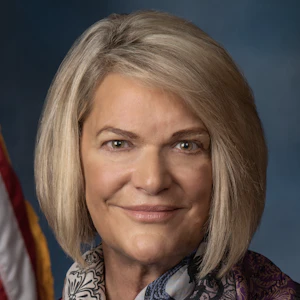
Cynthia Lummis
Cynthia Lummis
As the first-ever Chair of the Senate Banking Subcommittee on Digital Assets, Senator Lummis is the architect of the legislative framework shaping America's digital asset future. She introduced the landmark Lummis-Gillibrand Responsible Financial Innovation Act, the first comprehensive bipartisan crypto regulatory framework in Senate history. She co-authored the GENIUS Act — the first federal stablecoin law ever enacted — and introduced the BITCOIN Act, which would establish a U.S. strategic Bitcoin reserve of up to one million BTC. She is leading the Clarity Act, which will bring long-overdue regulatory certainty to the digital asset industry. She has also championed digital asset tax reform, including a de minimis exemption for small transactions and equal tax treatment for miners and stakers.
Known as Congress' "Crypto Queen," Senator Lummis represents Wyoming — a state she has helped build into one of the most digital asset-friendly regulatory environments in the nation. Before serving in the Senate, she served 14 years in the Wyoming Legislature, eight years as Wyoming State Treasurer, and eight years in the U.S. House. She is a three-time graduate of the University of Wyoming.
Her work represents a crucial bridge between traditional financial systems and the emerging digital economy, ensuring America leads the world in financial innovation while protecting the individual freedoms that define it.
Adam Back
Adam Back
Amy Oldenburg
Amy Oldenburg
David Marcus
David Marcus

Matt Schultz
Matt Schultz
Fred Thiel
Fred Thiel
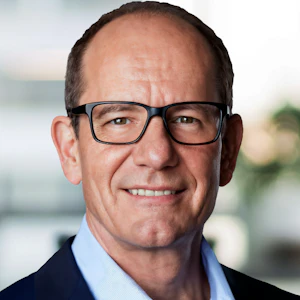
Throughout his career, Mr. Thiel has consistently driven rapid growth and created substantial shareholder value. Prior to MARA, Mr. Thiel served as the CEO of two other public companies, Local Corporation (NASDAQ: LOCM) and Lantronix, Inc (NASDAQ: LTRX). He has successfully raised billions in equity and debt through private and public offerings, led companies through IPOs, executed high-value exits to strategic and financial acquirers, and implemented effective M&A and roll-up strategies.
Mr. Thiel attended the Stockholm School of Economics and executive classes at Harvard Business School, and is fluent in English, Spanish, Swedish, and French. Mr. Thiel is the Chairman of the Board for Oden Technology, Inc. and is active in Young Presidents’ Organization where he has led initiatives in both the FinTech and Technology Networks.
A recognized voice in the industry, Fred frequently shares his insights on energy and technology with major media outlets like Bloomberg TV, CNBC, and FOX Business, contributing to vital discussions about the future of these sectors.
Tim Draper
Tim Draper
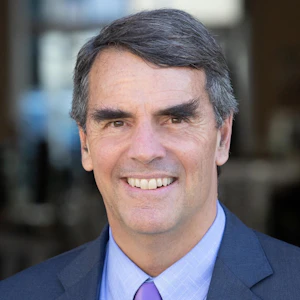
He is a supporter and global thought leader for entrepreneurs everywhere, and is a leading spokesperson for Bitcoin and decentralization, having won the Bitcoin US Marshall’s auction in 2014, invested in over 50 crypto companies, and led investments in Coinbase, Ledger, Tezos, and Bancor, among others.

Afroman
Afroman