Bitcoin's Return to Its Roots: Why Home Mining is Making a Comeback
Speakers/Moderators

Tatum Turn Up
Tatum Turn Up

Aviral Shukla
Aviral Shukla

Leo Wang
Leo Wang
He brings over a decade of senior leadership experience across fundraising, investment, and capital markets at high-growth companies. Leo began his career in law and is a graduate of Columbia Law School. He is admitted to the New York State Bar.

Session
Overview
This panel explored the return of Bitcoin home mining, from early CPU, GPU, FPGA, and ASIC history to the newer generation of small miners, lottery miners, and home-friendly heating devices. Speakers Tatum Turn Up, Leo Wang of Canaan, Skot of 256 Foundation and Bitaxe, and Aviral Shukla of Altair Technology discussed why individuals are getting back into mining at home and how lower-cost hardware has reduced the barrier to entry.
A major theme was the role of home mining in network resilience and decentralization. The conversation covered practical challenges such as noise, heat, power use, and household integration, along with opportunities to reuse miner heat through space heaters, water heating, home automation, and other form factors.
The panel also debated open source and proprietary mining hardware. Skot argued that open source hardware and software can accelerate innovation and expand access, while Aviral emphasized the practical limits of open source ASIC development and the need to distinguish open software, open hardware, and documented APIs for proprietary devices. The discussion ended with advice for newcomers: start small, experiment with available miners, learn through hands-on use, and understand how mining connects directly to Bitcoin.
Good morning, Las Vegas. How are you feeling today? It is the last day of the conference. I am super excited to be talking about home mining today with some killers in the space. Let's go ahead and start by introducing ourselves. I'm Tatum. I'm with Compass Mining, the self-proclaimed Bitcoin mining guy, and I love talking about home mining. So they got me to talk about home mining. Also add what home mining means to you after you say who you are.
Thanks. My name is Leo Wang. I'm the vice president of Canaan. I joined Canaan in October 2021. I was also the first employee in the North American region representing the company. Canaan started as a home mining company. We raised money back then with the founding team to tape out the first generation of ASIC chips. Even before that, our founder was the inventor of FPGA mining. He open sourced all his solutions to the community and started as a home mining promoter. We actually did several generations of home mining machines back in 2014, but the iteration of ASIC chips was just crazy. You had to deal with all these changing parameters and competition from newcomers. So we stopped that product line until more recently, 2024, exactly ten years later, to push out the first generation of modern home miners.
Good morning. Thanks. My name is Skot. I'm a Bitcoiner, an electrical engineer, and a freedom tech advocate. A while back I was the instigator of the Bitaxe project. Now I work with the 256 Foundation to promote open source Bitcoin mining. Home mining to me is, without a doubt, the most resilient, most badass form of Bitcoin mining, of securing the Bitcoin network. Home miners cannot be shut down. They will not turn off. They will not unplug. They are here doing it absolutely no matter what. It may be an insignificant share of the network hash rate for now, but it is an incredibly resilient bunch that just absolutely cannot be stopped ever.
Thanks, Skot. I'm Aviral, founder of Altair Tech, Bitcoin class of 2013. I've been mining Bitcoin since 2015. At Altair Tech, we really have one focus: to make it easy for people to mine Bitcoin and to democratize Bitcoin mining. We see this as the easiest way to get Bitcoin in people's hands. If everybody at home can mine Bitcoin quietly, wirelessly, with high hash rates and good efficiencies, maybe even profitably, they can acquire Bitcoin without going through exchanges or the KYC process. So we are super excited about minting tens of millions of new Bitcoiners by giving them their first Bitcoin miner.
Thanks, guys. Unfortunately, they only gave us a 30-minute window. We asked for six hours to talk about everything home mining. There is a lot to cover. One thing I wanted to harp on is that the title of this is Bitcoin's Return to Its Roots. What we've seen is home mining making a resurgence. When I first got into Bitcoin, everyone wanted to get an S9, and you could get an S9 for $150. CryptoCloaks was printing shrouds and people were putting them in as space heaters. That has changed the landscape, and a lot more home mining is focused on lottery miners. You also have other home miners being made that are intended to be space heaters or something like that. How has the landscape changed? What changed for it to go from everyone needing a relatively big miner to having a bunch of lottery miners?
Home mining has changed because of the advent of actual home miners, which the S9 is not. That is a very industrial machine. I had a stark realization of that. I moved into a new office a number of years ago, and electricity was included in the rent. I was like, oh my gosh, I'm going to be a mining god. I got myself a bunch of S9s, rewired the power so I had 220 over in the corner of the office, plugged them all in, let them rip, and within an hour I was like, this is not going to work. I also have to exist in this office.
I want to be mining. I want to be a part of this. I want to be doing this. I'm interested in it technically, and I'm interested in it for the support of the Bitcoin network. But there just was not a realistic way for me to do it. I'm a technical guy. I'm definitely into hacking and figuring out how to put it in the basement, but I hypothesized at the time that there is a non-zero number of people that want to be doing this if there is only a realistic, reasonable, practical way for them to do it that is not going to get them a divorce.
It's always the wife test that has to pass before you ship something. Aviral, you said you had a contrarian view on lottery mining. Can you explain that a little bit?
Sure. First of all, thank you to Skot and Osmo and the 256 Foundation. There has been an order-of-magnitude drop in the cost required to buy your first miner. A lot of it is the work you've done, especially the ESP32 controller, which is a lot cheaper than a full computer that you used to need to run, let's say, a Compac F or a USB miner. You guys have realistically brought in maybe 100,000 to 200,000 new home miners in the last two years. So thank you for that.
But along with this resurgence of lottery mining, we've seen people buy more and more. I would call it gambling addiction. Instead of buying one miner to learn how to mine at scale, they buy two, ten, fifty. They have a room full. I think they need to go back to the basics and understand what they are trying to do. If you want to decentralize the network and compete with the big guys, they are buying hash rate at $10 a terahash or less for new generation ASICs. You can't outrun them at $5,000 a terahash. Buy your Bitaxe, buy your Nano 3, buy your small lottery miner, learn how to tinker with it, but don't scale with it.
For scaling, you need to go bigger. We have so many options now. Canaan has a whole range of home miners that are over 1,000 watts. They're great space heaters. Go buy one of those. You can modify an Antminer. I would love to see more home integration with some of these miners, things like Home Assistant, even integration with proprietary systems like Ring or Nest that a lot of us already use. If you want to outrun the big guys, you've got to do it at their cost. You can't pay an order of magnitude higher and expect to gain market share on them. That's not going to happen.
Shout out to Dylan and Tyler out in the audience, who love home automation. They are wizards with home automation.
Leo, you said there was a whole decade between the first home miners you were shipping and the more recent ones. What shifted to bring back that product and demand for it?
Where do I start? In Bitcoin's early days, back in 2010 and 2011, it was 100% mined by home users, people using CPUs and GPUs. GPUs were mainstream in Bitcoin mining for a very long time. Back then, it was all lottery. Randomness is actually one of the key factors that made Bitcoin attractive to people. Then mining pools appeared, and people started to see an opportunity to put more money into a sizable business. But hardware lagged until our founder, whose name is Zhang Nangeng, dropped out from his PhD program and started posting his open source code on the BitcoinTalk forum. People used that open source software to build their FPGA chips and machines.
He shipped two generations of FPGA chips, Icarus and Lancelot. Then Butterfly Labs came out saying they had a different way of mining, called ASIC. Many different groups started developing ASICs, and our founding team was the first team to successfully send out machines on a chip. It was called Avalon, just Avalon, because they didn't know they were going to have a second generation.
On the second generation, they pushed out two versions, the industrial version and the home version. The home version was called Avalon Nano, in reference to the iPod Nano back then, because it had different colors. Our design was a flash disk with different colors that people could use on a laptop to mine. The third generation Avalon also came with Nano 2, and they also tried to do an early stage heating machine back then. But that product never went to market because Bitmain formed and started to attack us on cost and hash rate. Bitmain was well capitalized from the start, different from us. We were more like a geeky company, funding ourselves from prepayments from our customers. Bitmain was well funded in the beginning, so we were working very hard to counter that competition. It was only recently that we were able to save some strength for home mining products.
I was debating whether or not I wanted to bring this part up, but let's get into the open source and proprietary nature of it. Obviously, I'm all for open source. We have Skot here, who is like king open source. But with mining, we've seen a lot of proprietary buildouts. You can't buy these individual parts and build a miner. You have to buy a miner and break it down in order to rebuild it however you want to. Where do you all see open source mining going in relation to home mining? What is going to happen with the production of actual components that will be needed for these home miners?
It is absolutely going to take over and change the industry for the better, with 100% certainty. The Bitaxe has taken the home mining scene by storm, and I think that is in no small part because it is an open source project. It is completely permissionless. Anyone can get involved. When I started it, it seemed like an insurmountable task. I couldn't have done it by myself. But by the nature of being an open source project, actual professionals in their fields, extremely talented and dedicated people, just showed up and said, I want to work on this.
That is what has made Bitaxe into what it is today in an incredibly short amount of time. I think we are still at the beginning of the exponential growth in progress and development in Bitcoin mining that we can have from open source, when anyone can get involved, anyone can fork it and start adding improvements, and then people can build on that. In a short amount of time, we are going to look back at where we are today and it will look so distant and antiquated compared to where we are going to be. It is insane what open source can do. We've seen this happen in other industries before. Microsoft used to make proprietary web server products, and basically no one runs that anymore. You can take these tools and start a new company with a groundbreaking new technology in your garage or dorm room. No one can stop you. I think all of the proprietary miners are going to see this, and they are either going to jump on board or basically be forced to by the progress of their competitors.
Leo, as this open source movement continues to snowball, what do you foresee happening with big players like Bitmain, MicroBT, and Canaan? How do you see them embracing it or fighting against it?
I can't speak for our competitors. But I think open source is largely embedded in the roots of Canaan as a company. As I explained, we started as a founding group of open source mining ourselves. There are practical reasons why, in the last decade, most of the manufacturers were not as proactive as Skot and the 256 Foundation as we should be. The reason is more technical than ideological. Most ASIC chips in the past 10 or 12 generations were jointly developed by the designer and our foundry partners who fabricated these chips for us. It is very hard to separate their effort and our effort and open source everything.
On the other side, I do believe open sourcing is important when people are no longer primarily pursuing more and more hash rate, efficiency, or profitability, but rather using Bitcoin mining as a technology to tap into energy play in modern society. We are increasingly seeing cases in the U.S. and Europe using Bitcoin mining as a way to capture stranded energy and recycle heat. I think that is the key to Bitcoin mining as a prolonged business for the community, not just for one single manufacturer. It is a meaningful way for people to take control of their home and energy as strategic thinkers.
Going forward, AI is going to replace a lot of jobs. People will be working with AI agents and robotic agents at home. In the past, recycling heat wasn't the thing only because we did not have continuous energy-eating compute requirements. But now, if you have AI, local storage, and local servers running your AI agents, that will make it easy for people to start harvesting stranded energy and home energy. Skot is right that we are at a very early stage, and I am proud of our company as one of the early starters for open sourcing home mining. I do think that is very important.
We're talking about Bitcoin returning to its roots and the roots of mining. There is an early forum post by Satoshi where he talks about heat reuse. He talks about how these miners could heat your office as well as mine Bitcoin, obviously with CPU mining at the time. We've known about this for the entire time Bitcoin has been around, that there is potential for heat reuse, for capturing this product.
But none of the major manufacturers have leaned into this. I would say 99.9% of the miners manufactured out there are not targeted toward heat reuse, stranded energy, or intermittent power. It is going to take the open source community and builders to build these products and go after this, which very clearly is the future of Bitcoin mining. This is how we decentralize. This is how we get hash rate into homes in meaningful quantities: attach it to a water heater, attach it to a space heater. The amount of energy used for electrical heat is absolutely insane. If even a small portion of that could be captured for Bitcoin mining, it would fundamentally change where the hash rate comes from for securing the Bitcoin network. It really is the roots of Bitcoin mining, but it just has never been implemented. It is so strange.
I think heat reuse is extremely important. But let me be extremely clear about what is open source and what is sort of open I/O. You can have a closed source device but have its API documentation published, and you can still integrate it with home automation and control its heat output. There are three separate things here: open source software, open source hardware, and proprietary devices that give you API access with proper documentation so you can integrate them into your systems. It is not that everything has to be open source to interact with it. Your iPhone is closed, and so are many systems, but they allow you to interact with them.
I also want to delineate between open source software and hardware. A lot of people think I hate open source. I don't. I dislike open source hardware. I think open source software has proven itself. It has been around for decades and is extremely successful. Open hardware, to me, has not proven itself yet. There is actually no large-scale open source hardware that you can go buy today. Not a phone, not a car, not a fridge. It just does not really exist out in the real world. So when we say open source is inevitable, to me it is more like open source hardware has so far proven to be impossible, not inevitable.
Everybody has a right to choose what they decide. As a hardware developer, you can open your work and seek foundation funding to keep working on your project. That's a fair choice, and I respect that. But I can't go along with a FOSS or GTFO idea. You have a right to believe that. I don't believe in that. I think it has created a rift in the builders community where people pick sides, and instead of building together, they come at each other with pitchforks. We need to let the market decide. If open hardware proves to be successful, great. From what I know, Satoshi mined with proprietary hardware and had no problem with it. Every single block found over the last 12 or 13 years in Bitcoin has been found with proprietary chips. Bitcoin is open source, but that's just the source code. Hardware is a completely different story. We have to keep the two separate and understand there is a difference.
As Bitcoiners, we are very used to rejecting the status quo, especially in the name of freedom, which is what open source provides. Obviously you can do whatever you want, but given the choice, I'm going to go for freedom, which is what open source provides. Sure, it hasn't been done in hardware, but I don't care. Let's go. We're going to do this.
Your motto is FOSS or GTFO, dismantling the proprietary empire and demanding open source. I don't think even you are living up to your motto, because I would challenge you for your upcoming hackathon or telehash: demand open source. Say, I don't want hash rate from Bitmain ASICs, just guys with Bitaxe, and let's do a telehash with that. We'll see how that goes.
I would like to add a little color to that debate. People are arguing about industrial use of Bitcoin mining as a way to gain profit, as opposed to Bitcoin mining itself as a technology. I think Bitcoin mining in the early days was not for profit, because people were doing it just because it was cool, not because they thought Bitcoin tokens would appreciate over time. Now people are doing it more for money and for Bitcoin as the token, but not for Bitcoin mining itself.
It is important to find a second route or a third different use case for people. When there is a use case, there will be hardware fitting into that use case. Heat recycling is one of the most important use cases nowadays. In order to use miners as a toilet cover or as a bathtub, the old form factors won't work. That's why open source is important, because manufacturers like us can empower the community to design all sorts of form factors and enable heat recycling. Maybe pet care, I don't know. Things like that could really diversify Bitcoin mining and uncover different use cases.
I hate to do this, but we are going to have to start wrapping. They put a little more time on. There we go. I do want to expand on this a little more since we have time. On the hardware side of things, what is it going to take to achieve open source hardware and leave the proprietary grip?
The ideal in Bitcoin mining would be to have a fully open source ASIC and have all the components be open source. That's fantastic. We should work toward that. Obviously there are a lot of problems. These chips are made in cooperation with foundries like TSMC. Parts of those chips are property of TSMC. You can't just say, this is my design, I'm going to open source it. Obviously that's the ideal. But I think that is being a purist about the entire stack being open source. It isn't even necessary. We don't need the entire stack to be open source. We are incrementally adding freedom to the project by making more and more components open source. The Bitaxe project and the hardware projects from the 256 Foundation are open source. You can go there, the source is there, you can take it and build on it. We are working toward the ideal of having the whole stack open source, but that doesn't mean we can't have incremental stages as we go along.
I think open source hardware should really be called open hardware, not open source hardware. As far as I know, none of your products have third-party open source certification. You say they are open source, but if I look at the license, it is an open hardware license, not an open source hardware license. That's important.
The source code is right there. I don't know what else to say. There is the source for this project, the reproducible source.
It's not, because there are proprietary components like the ASIC.
That doesn't matter. That is not a prerequisite for it being open source.
It's open hardware, not open source. Your license is open hardware, not open source. They are two separate things.
Open hardware is not just an open API. This is actually the source. You can take it like you would take software and give it to a compiler to build a binary. You can take this source and give it to a manufacturer to build the hardware. That is the source for how it is built.
Well, if you can source the ASIC chip, which is hard to get, the ESP32, which is proprietary, and a host of other components.
That does not matter. Those are things you can go and buy. Open source software can run on closed source hardware. You can compile closed source binaries into Linux. Linux is still open source. It does not change anything.
Without splitting hairs, I'll go back to the point: is it really even possible to build an open source ASIC? New generation ASIC chips require something like $50 billion to build, including the fab and the development. Entire nation-states have tried this for decades and failed at it. Famously, China with SMIC. How long have they tried, and they are still behind Taiwan and the U.S.? To expect that somebody is going to invest $50 billion, engineer it, give it away, and open source it, I think that's actually freedom-minimizing. You took all that work and said, basically, light it on fire, because they didn't get paid for that work. If you are sold on open source as freedom-maximizing, to the developer you actually took all that work and gave it away, so they can't get paid for it.
You can get paid for open source, especially in hardware. Hardware is actually a brilliant thing to open source because there is always a cost to hardware. You can always sell it. It's not copy-paste like software.
But the design is open. China is going to copy it, and there goes your market.
But we have this exponential level of growth. We are not stopping here. Yes, China has copied the Bitaxe left and right, but we are not stopping here. It is going to be impossible to catch up when you're just copying.
We can debate, and ultimately the market in the long term is going to decide what works and what doesn't. From what I see, there are zero large open source hardware manufacturers. To me, the market has already proven that this hasn't worked. Maybe it will work in the future, but we'll find out. This is a debate where we have to agree to disagree and let the market decide how things spin out.
Bitcoin is not the world reserve currency either. But does that mean we're stopping? Nope.
I really hate to cut this off, but I told you all we needed a six-hour window. We do need to wrap for time. There are so many rabbit holes in home mining itself. To close it out, I want to go down the line and give everyone a piece of advice on how to get into home mining, whether it's doing research on a specific topic or buying a home miner. What does it take for a pleb to get into home mining?
The philosophy of Canaan as a provider of home mining hardware is to enable people to use hassle-free ways to get into home mining and recycle heat without interrupting your home design. Hardware has to look good, in our opinion, and it has to be easily controllable. You have full control of your security and your power with a click on a cell phone, with an API. Some people will just leave it and forget about it. From a commercial perspective, what we are doing is giving people easily accessible, reasonably priced, and nicely looking products to use. From a social welfare perspective, Skot and the Foundation have built a really great grant for people to get more involved, especially developers working on open source home mining solutions.
Now more than ever, there are amazing home mining products. The barrier to entry is lower than it has ever been. This is a fantastic time to grab something. You could grab a little NerdMiner. You could grab a Bitaxe. You can just do this. They are surprisingly hard to break. Don't worry about it. Just jump in. It is a fantastic rabbit hole to be in. Start playing around. Try a pool. Try solo mining. Try lottery mining. Try changing the settings. Overclock it. See what happens when it gets too hot. There is so much you can learn. People are creating tons of resources, videos, tutorials, and social groups you can join. Come hang out with us. Just jump in and give it a try. I think you're going to enjoy it, and at the very least you're going to learn a ton. It is a fantastic way to get involved in Bitcoin. If you like gear and you like tweaking hardware and plugging things in, it is a cool hands-on way to get involved with Bitcoin.
Get off zero. I learned that from Skot. I think everybody should own a Bitcoin miner at home. Now it's really easy to buy. You can get one for under 50 bucks in most cases. Then tinker with it if you like to tinker like me. These are great devices. They're super open now. A lot of the firmware that has been built lets people play around with the frequency, the hash rate, the voltage, and all that stuff. Understand that the Bitcoin network does not differentiate between open source and closed source hashes. They all secure the network. No matter which one you choose, it is going to secure the network, it is going to generate your Bitcoin, and you are going to learn a lot in the process. Take your first steps and buy your first Bitcoin miner if you don't have one.
Thank you so much for being up here with me. This has been a blast. To everyone watching, find these guys and talk to them. If you find anyone who is willing to talk about home mining, they are going to talk to you about home mining forever. There are plenty of resources here today. We'll wrap it up there. Thanks for coming.
Similar
Sessions
Open-Sourcing the Bitcoin Mining Ecosystem

Tyler Stevens
Tyler Stevens


Open-Sourcing the Bitcoin Mining Ecosystem
Speakers/Moderators
Tyler Stevens
Tyler Stevens
Open vs. Closed-Source Mining Tools

Alex Dischinger
Alex Dischinger
Aviral Shukla
Aviral Shukla

Marshall Long
Marshall Long

WantClue
WantClue

Open vs. Closed-Source Mining Tools
Speakers/Moderators
Alex Dischinger
Alex Dischinger
Aviral Shukla
Aviral Shukla
Marshall Long
Marshall Long
WantClue
WantClue
Bitcoin's Return to Its Roots: Why Home Mining is Making a Comeback
Tatum Turn Up
Tatum Turn Up
Aviral Shukla
Aviral Shukla
Leo Wang
Leo Wang
He brings over a decade of senior leadership experience across fundraising, investment, and capital markets at high-growth companies. Leo began his career in law and is a graduate of Columbia Law School. He is admitted to the New York State Bar.
Bitcoin's Return to Its Roots: Why Home Mining is Making a Comeback
Speakers/Moderators
Tatum Turn Up
Tatum Turn Up
Aviral Shukla
Aviral Shukla
Leo Wang
Leo Wang
He brings over a decade of senior leadership experience across fundraising, investment, and capital markets at high-growth companies. Leo began his career in law and is a graduate of Columbia Law School. He is admitted to the New York State Bar.
Decentralizing Bitcoin: The Solo Mining Movement
Tyler Stevens
Tyler Stevens
WantClue
WantClue
Decentralizing Bitcoin: The Solo Mining Movement
Speakers/Moderators
Tyler Stevens
Tyler Stevens
WantClue
WantClue
Other
Speakers

Michael Saylor
Michael Saylor
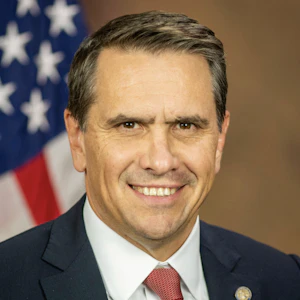
Todd Blanche
Todd Blanche
Biography of Deputy Attorney General Todd Blanche
The Honorable Todd Blanche is the 40th Deputy Attorney General of the United States, overseeing the work of the 115,000 dedicated employees who fulfill the Department of Justice’s mission at Main Justice, the FBI, DEA, U.S. Marshals, ATF, and 93 U.S. Attorney’s Offices.
Todd began his career at the Department where he served for over fifteen years in a variety of capacities, including as a contractor, a paralegal in the Criminal Division, and at the United States Attorney’s office for the Southern District of New York where he eventually became an AUSA and later a supervisor.
After leaving the Department, Todd worked as a criminal defense attorney that included representing President Donald Trump in three of the criminal cases brought against him in 2023 and 2024.
Following President Trump’s historic return to the White House, the President appointed Todd to work alongside Attorney General Pam Bondi to make America safe again. At the DOJ, Todd is working tirelessly to implement President Trump’s priorities that include confronting illegal protecting American businesses from fraud.
Todd has been married to his wonderful wife Kristine for nearly thirty years, is a father and grandfather.

Paul Atkins
Paul Atkins
Prior to returning to the SEC, Chairman Atkins was most recently chief executive of Patomak Global Partners, a company he founded in 2009. Chairman Atkins helped lead efforts to develop best practices for the digital asset sector. He served as an independent director and non-executive chairman of the board of BATS Global Markets, Inc. from 2012 to 2015.
Chairman Atkins was appointed by President George W. Bush to serve as a Commissioner of the SEC from 2002 to 2008. During his tenure, he advocated for transparency, consistency, and the use of cost-benefit analysis at the agency. Chairman Atkins also represented the SEC at meetings of the President’s Working Group on Financial Markets and the U.S.-EU Transatlantic Economic Council. From 2009 to 2010, he was appointed a member of the Congressional Oversight Panel for the Troubled Asset Relief Program.
Before serving as an SEC Commissioner, Chairman Atkins was a consultant on securities and investment management industry matters, especially regarding issues of strategy, regulatory compliance, risk management, new product development, and organizational control.
From 1990 to 1994, Chairman Atkins served on the staff of two chairmen of the SEC, Richard C. Breeden and Arthur Levitt, ultimately as chief of staff and counselor, respectively. He received the SEC’s 1992 Law and Policy Award for work regarding corporate governance matters.
Chairman Atkins began his career as a lawyer in New York, focusing on a wide range of corporate transactions for U.S. and foreign clients, including public and private securities offerings and mergers and acquisitions. He was resident for 2½ years in his firm's Paris office and admitted as conseil juridique in France.
A member of the New York and Florida bars, Chairman Atkins received his J.D. from Vanderbilt University School of Law in 1983 and was Senior Student Writing Editor of the Vanderbilt Law Review. He received his A.B., Phi Beta Kappa, from Wofford College in 1980.
Originally from Lillington, North Carolina, Chairman Atkins grew up in Tampa, Florida. He and his wife Sarah have three sons.

Mike Selig
Mike Selig
Chairman Selig brings to the role deep public and private sector experience working with a wide range of stakeholders across agriculture, energy, financial, and digital asset industries, which rely upon and operate in CFTC-regulated markets.
Prior to his leadership at the CFTC, Chairman Selig most recently served as chief counsel of the Securities and Exchange Commission’s Crypto Task Force and senior advisor to SEC Chairman Paul S. Atkins. In this role, Chairman Selig helped to develop a clear regulatory framework for digital asset securities markets, harmonize the SEC and CFTC regulatory regimes, modernize the agency’s rules to reflect new and emerging technologies, and put an end to regulation by enforcement. He also participated in the President’s Working Group on Digital Asset Markets and contributed to its report on “Strengthening American Leadership in Digital Financial Technology.”
Prior to government service, Chairman Selig was a partner at an international law firm, focusing on derivatives and securities regulatory matters. During his years in private practice, he represented a broad range of clients subject to regulation by the CFTC, including commercial end users, futures commission merchants, commodity trading advisors, swap dealers, designated contract markets, derivatives clearing organizations, and digital asset firms. Chairman Selig advised clients on compliance with the Commodity Exchange Act and the CFTC’s rules and regulations thereunder, including in connection with registration applications and obligations, enforcement matters, and complex transactions.
Chairman Selig earned his law degree from The George Washington University Law School and was articles editor of The George Washington Law Review. He received his undergraduate degree from Florida State University.

David Bailey
David Bailey

Eric Trump
Eric Trump
Mr. Trump also serves as Executive Vice President of The Trump Organization, where he oversees the global management and operations of the Trump family’s extensive real estate portfolio. This includes Trump Hotels, Trump Golf, commercial and residential real estate, Trump Estates, and Trump Winery. Known for his hands-on leadership and strong market instincts, he has played a key role in expanding the company’s presence across major U.S. and international markets.
A globally recognized business leader and public figure, Mr. Trump is a prominent advocate for Bitcoin and decentralized finance. He is a co-founder of World Liberty Financial, a decentralized finance (DeFi) platform, and serves on the Board of Advisors of Metaplanet, Japan’s largest corporate holder of Bitcoin.
Beyond his business activities, Mr. Trump has helped raise more than $50 million for St. Jude Children’s Research Hospital in the fight against pediatric cancer, a philanthropic mission he began at age 21.
Mr. Trump earned a degree in Finance and Management from Georgetown University. He currently resides in Florida with his wife, Lara, and their two children. He is also the author of Under Siege, his memoir published in October 2025.
Jack Mallers
Jack Mallers

Cynthia Lummis
Cynthia Lummis
As the first-ever Chair of the Senate Banking Subcommittee on Digital Assets, Senator Lummis is the architect of the legislative framework shaping America's digital asset future. She introduced the landmark Lummis-Gillibrand Responsible Financial Innovation Act, the first comprehensive bipartisan crypto regulatory framework in Senate history. She co-authored the GENIUS Act — the first federal stablecoin law ever enacted — and introduced the BITCOIN Act, which would establish a U.S. strategic Bitcoin reserve of up to one million BTC. She is leading the Clarity Act, which will bring long-overdue regulatory certainty to the digital asset industry. She has also championed digital asset tax reform, including a de minimis exemption for small transactions and equal tax treatment for miners and stakers.
Known as Congress' "Crypto Queen," Senator Lummis represents Wyoming — a state she has helped build into one of the most digital asset-friendly regulatory environments in the nation. Before serving in the Senate, she served 14 years in the Wyoming Legislature, eight years as Wyoming State Treasurer, and eight years in the U.S. House. She is a three-time graduate of the University of Wyoming.
Her work represents a crucial bridge between traditional financial systems and the emerging digital economy, ensuring America leads the world in financial innovation while protecting the individual freedoms that define it.

Adam Back
Adam Back

Amy Oldenburg
Amy Oldenburg
David Marcus
David Marcus

Matt Schultz
Matt Schultz
Fred Thiel
Fred Thiel
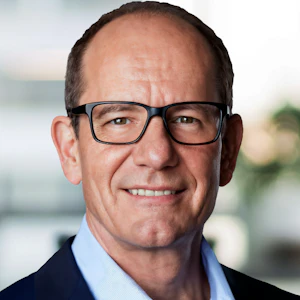
Throughout his career, Mr. Thiel has consistently driven rapid growth and created substantial shareholder value. Prior to MARA, Mr. Thiel served as the CEO of two other public companies, Local Corporation (NASDAQ: LOCM) and Lantronix, Inc (NASDAQ: LTRX). He has successfully raised billions in equity and debt through private and public offerings, led companies through IPOs, executed high-value exits to strategic and financial acquirers, and implemented effective M&A and roll-up strategies.
Mr. Thiel attended the Stockholm School of Economics and executive classes at Harvard Business School, and is fluent in English, Spanish, Swedish, and French. Mr. Thiel is the Chairman of the Board for Oden Technology, Inc. and is active in Young Presidents’ Organization where he has led initiatives in both the FinTech and Technology Networks.
A recognized voice in the industry, Fred frequently shares his insights on energy and technology with major media outlets like Bloomberg TV, CNBC, and FOX Business, contributing to vital discussions about the future of these sectors.
Tim Draper
Tim Draper
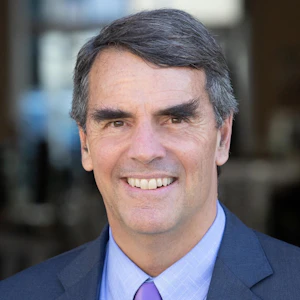
He is a supporter and global thought leader for entrepreneurs everywhere, and is a leading spokesperson for Bitcoin and decentralization, having won the Bitcoin US Marshall’s auction in 2014, invested in over 50 crypto companies, and led investments in Coinbase, Ledger, Tezos, and Bancor, among others.

Afroman
Afroman