Bitcoin, The Space Economy & Orbital Infrastructure
Speakers/Moderators

Dhruv Bansal
Dhruv Bansal

Aaron Burnett
Aaron Burnett
Session
Overview
Dhruv Bansal of Unchained and Aaron Burnett of Mach33 Financial Group discuss how falling launch costs, reusable rockets, orbital power generation, cooling, bandwidth, and latency are shaping the future of space-based infrastructure.
The conversation focuses on orbital data centers and why early commercial applications are likely to prioritize high-margin workloads such as AI inference and Earth observation processing. Burnett explains that power in space may be abundant through solar collection, while cooling remains an engineering challenge rather than a fundamental physics barrier.
The Bitcoin angle centers on whether Bitcoin mining in space is viable. The panel suggests that near-term economics favor AI workloads over Bitcoin mining because launch costs and hardware replacement remain significant constraints, though lower launch costs and a higher Bitcoin price could change the equation over time.
A recurring theme is latency as the enduring limitation for space economies. While launch, compute, and cooling may improve, the speed of light creates unavoidable delays for applications operating farther from Earth.
All right. Thank you for coming, everybody, especially those joining us from orbit. My name is Dhruv. I'm the co-founder and CSO at Unchained. I have a minor reputation in the Bitcoin space for talking about Bitcoin in space. I think those who have read my work will be happy to know that we will be staying far away from some of the crazier speculations that I've written about. We'll be a little bit closer to Earth in this session.
I'm actually very excited because, though I speculate about space, Aaron is actually an expert in the space industry. This is just going to be an opportunity for me to ask him a lot of questions that I'm curious about, and that I hope many others in the audience will also be curious about. Aaron, introduction.
Yeah, thanks for having me, Dhruv. I'm really excited to be here. I'm not sure I can think of myself as an expert, as much as space can have experts, but I'm really excited and happy to talk a little bit more about that.
Okay, great. Well, let's get into it. I think the number one thing that I've always been curious about, and that a lot of people are probably aware of, is that space is far away. Or rather, it's close, but you have to be very fast to be in space. Launch costs are a huge aspect of the space industry and the space economy overall. Can you give us a really quick historical overview of how launch costs have changed over the last 50 years that we've been doing space stuff, and how you maybe anticipate that changing in the future?
Yeah. Launch cost is really the story of space for probably the last decade or so. In the era of the shuttle, it was roughly $50,000 per kilogram, which doesn't mean anything for people without context. Today that's about 50 times less. It's about $1,000 per kilogram. That's all driven by SpaceX, almost exclusively by SpaceX. There are some others that would probably be mad that I didn't give them a shout-out, but it's mainly driven by SpaceX, and I think people would appreciate that.
What is happening over the next little bit, let's call it three to five years, is a drop from $1,000 down to about $100 per kilogram. So another order-of-magnitude reduction. It's opening up all sorts of opportunities for commercial markets that just didn't exist. It's probably one of the core reasons why SpaceX is looking at this IPO, because things are really starting to take shape on the commercial side for them.
Interesting. Just to repeat that, it's incredible compression in cost. We're going from maybe where we were decades ago to today, a 50-times reduction, and in your view there is another 10-times reduction waiting for us. The history of that, I feel like just as a layperson, is reusable rockets, more computing power for space launch, and so forth. What are your predictions for what causes that next 10-times compression?
The next real drop coming is really driven primarily by reusability, but not just reusability. It's massive reusability. Right now they're launching rockets where half of it gets reused, and they've reused them about 30 times. In the future they have a very large rocket that's already been tested 12 times and is on the verge of being able to be reused dozens or more times. It's much larger, so when you have a larger payload, you have more to take up. Your denominator is larger, so your cost goes down. And then on the other side, it is being reused over and over and over again.
As laypeople, we get accustomed to things being reusable. But in space, until recently, it's the equivalent of buying a car with a single tank of gas, driving it to a location, and then throwing it away. That's what's been done. So they're introducing more and more reusability.
Right, sort of moving from space as this big rocket, never-reuse thing to more like commercial air travel, where things are being used constantly all the time. That's awesome to hear.
Let's talk about power next. That's the next thing that I think a lot of people think about as a big constraint on orbital economies. How do we generate power in space, and how do we cool the equipment that uses that power?
I'm going to take your question and tweak it a little bit, because it was just announced today that Meta signed an agreement with a company to beam power from space down to their data centers. Basically what's going on in space is you have these very large solar panels, just like you would see a solar panel on Earth. They're a little bit optimized, but the difference is that when they're up in space, they have somewhere between five and eight times the ability to convert sunlight. There's no atmosphere. We think of the atmosphere as perfectly permeable, but sunlight actually attenuates a little bit through the atmosphere. So you get a lot more power for the same thing up in space.
In this example, Overview Energy is the company. They're taking these huge solar panels, turning that into infrared light, which you can't see, and sending it down at night to the solar panels on the ground. They'll start converting just as if they would during the day. You can't see it; they're just kind of being baked a little bit in infrared light.
Other companies, like what SpaceX is doing, want to take tons and tons of solar panels and then put chips on orbit. So they're just keeping the energy up there. Fundamentally, the Earth only gets so much of the sun's energy. It's a small dot in a very large solar system. The sun is throwing out energy. Think of it as a giant fusion reactor in the sky, and solar panels out there are like little collectors. That's why there is so much opportunity.
There is kind of a trade-off. It's expensive to get them up there, but once they're up there, they are able to produce power more consistently and at higher wattage and so forth. What about the cooling side of that picture?
The cooling side is basically not that big of an issue, depending on what you're doing. We're going through this big change in the space ecosystem where people are talking about orbital data centers and putting things in space that need a lot more power than they currently do. But energy can be neither created nor destroyed. If it comes in, it needs to go out somewhere. It can come in as solar capture, turn to electrons, run a chip, and that produces heat. That heat needs to go somewhere.
There are ways to do that. In space, primarily it is radiative cooling versus convection. We think of AC in here as moving air around. With radiative cooling, it just sits out there in a vacuum and slowly radiates out. It's maybe a little bit slower. You need surface area. The more surface area you have, the more you can do.
Sometimes in the discourse, when people talk about data centers in space or Bitcoin mining in space, which is a topic I want to turn to, people acknowledge that, yes, there is power in space available for us to draw upon. But their skepticism is anchored in the idea that getting rid of the waste heat from all that power, however you use it, is going to be a challenge. Your view is that it's not that much of a challenge, that we have sufficiently good radiative technologies that they can counterbalance whatever workload we're using up there?
It's a challenge. It's an engineering challenge. This isn't a physics problem. I think a lot of people look at something that might be relatively difficult to solve in engineering and hand wave and say it's impossible. They're confusing impractical for impossible.
In reality, on Earth, something like 40% of all the power that makes it to a data center is used to cool the chips before it ever goes to the chips. We're already wasting a lot of that power. Once you start from an economic side and realize that, you realize that once we create these nice radiators, they have to be double-sided. There is some innovation there, but we're not talking about new materials or anything like that. We're talking about putting many engineers in a room and solving the problem. Effectively, you end up being able to put more power into the chip instead of wasting it on internal cooling.
Okay, you heard it here first, folks. Radiators can into space.
We've talked a lot about the really physical aspects of the problem of orbital computing and infrastructure. Let's talk a little bit more about the computing aspects. Things like computing equipment, CPUs, GPUs, data storage, and in particular bandwidth. These are the other things that we need if we're going to build serious computing applications in the sky. Can you walk us through the constraints that we're under right now, for example in bandwidth, and how little bandwidth is actually available in orbit and in deep space, and how that might change over the coming years?
When you're thinking about constraints in space, it's physics first. There are plenty of things to think about. One is, like we said, radiation of heat. You have to get heat out, so you need surface area. Another one might be radiation from the sun. We get sunburned; that's UV light. Effectively, it's the same kind of thing. If you bake a chip with those things, it can create bit flips and create problems. So you do have to take radiation into account. Again, it's one of these solvable problems.
There are several other things, but one of the core things is that I think people underestimate just how much space there is in space. It's quite big and massive. The further you get away, the human mind has a hard time really fathoming how many miles that is. At some point you do start to run into a speed-of-light thing, where light can only go so fast.
We're used to millisecond delays on Earth. That data is moving all over the place, and it's going through fiber, and all this stuff has gone many, many miles. But even if it's a straight line, if you need to go really far, it takes a while. There is a true component of latency that you need to take into account. Normally that means on pretty large scales. To put that into context, from here to the moon it's measured in seconds of delay. Going from here to Mars is measured in minutes. Eight to 20 minutes is the rough estimation of how long one photon would take going from Earth to Mars, and then another back the same way. These things start to play a significant role.
That idea of latency is actually very interesting to me, and I want to return to that. A random question, maybe to try to quantify the idea of how data is already moving out in orbit and in space. I'm putting you on the spot, so maybe you don't know the answer to this, but it's an interesting question. Obviously, data is being transferred from Earth to space and in the opposite direction. Which direction has more data transfer today, would you estimate?
Right now there is a lot. The best metric for this is Starlink, because there are 10,000 of them in space right now, out of about 13,000 total satellites. Starlink's capacity right now across the whole network is approaching a very large amount of throughput. Any time you're thinking about it, downlink is more important than uplink, at least from a speed perspective, often times. So there is probably a lot coming down that way.
From a limitation perspective, when you go outside just the consumer satellite internet space and look at the industry, there is a downlink problem because you're taking a lot of pictures. Earth observation satellites take a ton of them. We've all seen Google Earth and Google Maps and the nice pictures. If you do a lot of that over time, it's pretty hefty files. So what you're seeing is that it's kind of a bottleneck to get all that raw data down, because you do have to hit downlinks somewhere. With a Starlink satellite, you have a dish and it comes down. These bigger satellites that are taking big pictures are doing the same thing. There is a bottleneck if you're doing a lot of data downlink.
Let's turn to the application dimension of this. We've talked a little bit about launch costs, bandwidth, power, and computing elements. When people talk about putting data centers in space, what applications are they envisioning running in those data centers?
Primarily, the current applications are still pitches and still being developed, so we have to take things with a grain of salt. But the applications for AI data centers in space are primarily AI inference. The reason for that is what feels like effectively infinite demand. I use AI, and our team uses AI and tokens every single day. We feel it inherently. You've probably felt it as well. It feels like there really is no limit to that.
The inference side is where people much smarter than me, Jensen Huang and others, are expecting it to be the biggest portion of the demand. I think it's really driven by that, and the cost and the margin are what people are really going after.
We're not going to be running SaaS applications for the finance team in orbit. We're going to be running AI training and inference workloads.
That's the orbital data center drive currently. But today there are people actively doing Earth observation processing. That's what I mentioned with the downlink. You take all these pictures, shoot it over to a relatively small computer, run some machine learning or even LLM-type stuff on it, and then shoot back a response. The response is much smaller than the raw data. Then they can downlink a specific response or a cue: hey, there was something, we should go look at that one picture, not the hundreds of pictures you took before it.
I'm hearing that more co-located compute in space helps solve the downlink bandwidth problem, because we can send smaller amounts of data back that are more post-processed. That's very interesting.
That's probably phase one.
Of course, your claim that AI inference and workloads are another major driver is probably also driven by expectations of revenue and demand. I want to turn this, obviously, because we're at a Bitcoin conference, not necessarily an AI or space conference, though sometimes it's hard to tell. I want to turn to the question of Bitcoin mining in space. It's a specific kind of computing application. Is it reasonable that we would see Bitcoin mining in space be successful today? If so, on what scale? What would be the challenges? If not, how do you see that changing over time?
If you really constrain me in a box and say within the next couple of years, then it's very hard to see that, to be fair. Orbital data centers are pretty young, and a lot of the tests are going up over the next two years. They're still testing all that. Given what I was mentioning earlier about bandwidth constraints and all the opportunities that exist in space, what you're really looking at are things that can have the highest possible margin at first, because it's still costly to get up.
As those costs come down into the five- to 10-year window, maybe that becomes a lot different. But right now, if you base it on a gigawatt of computing power, you ask yourself what would make you the most money right now. Is that AI, or is it Bitcoin mining?
That's interesting. I have some numbers here from ChatGPT and other forms of research. Part of what we've been feeling in the Bitcoin world for the last couple of years is the displacement in certain Bitcoin mining facilities and other places of Bitcoin mining workloads in favor of AI workloads. AI, even for Bitcoin miners on Earth in some places, is a more profitable workload to operate. We're seeing mining facilities and companies turn to accepting that workload because it is more profitable.
I'm not enough of an expert to predict how, over the coming years, the demand for Bitcoin and the demand for AI training intersect and overlap. But it is interesting that we're already seeing that effect on Earth. I think what you're saying is that we're going to see that in space as well. Before we get to Bitcoin mining in space, we're going to be pursuing the more profitable avenues of things like AI inference and training.
ChatGPT estimates that if you keep all the numbers the same and you ask, at today's Bitcoin price, given launch costs and ASIC costs and the requirement to replace ASICs over time and so forth, Bitcoin needs to be 100 times more valuable in order to make Bitcoin mining the dominant application that we might want to run in space. Conversely, you can ask, since the dominant cost here is still launch, what would launch costs have to fall to, all other things being the same at $75,000 Bitcoin, in order for Bitcoin mining to be profitable in space? The answer is on the order of tens of dollars a kilogram. So again, about a two-order-of-magnitude gap right now, at least from what seems to be out there.
That might sound discouraging, but I'm actually rather encouraged by some of what I've heard you say today. You're already predicting something like a 10-times compression in launch costs over the coming time frame. I don't want to pin you down on it. We've already heard today innumerable times people telling us how Bitcoin has maybe not infinite, but very high demand, and that of course drives Bitcoin price and adoption here on Earth.
This intersection of an increasing Bitcoin price, decreasing launch costs, and truthfully, as Bitcoin mining as an industry itself matures, the requirement to constantly replace ASICs over time with the next hardware generation becomes a little bit lessened. I think that's actually very encouraging. My own hope, estimate, or prediction, as a non-expert on the space side, is that optimistically maybe 10 to 15 years for these numbers to converge, and maybe less optimistically longer than that.
I want to turn in the last minute we have to probably the most speculative part of the conversation. Something that I found very interesting when we chatted is this notion that you've described a couple times, even today, around latency being the one thing you can't defeat. As we just discussed, launch costs will get cheaper, compute will get better, and radiative cooling will get better. But we can't transmit data faster than the speed of light, and we're always going to be bound by latency no matter how sophisticated our technology becomes.
You described it as sort of an onion shell of different applications that will surround the Earth, with low-latency things near the middle and high-latency things far away. I think that's a very interesting parallel to some of my own writing around Bitcoin mining in faraway locations like Mars and other places ultimately being limited by latency. It's kind of the same idea, but in a vertical Bitcoin domain.
As my closing thought in this conversation, I feel like that idea that applications in space are ultimately always segregated by latency deserves a name, and I propose the Burnett Rule. I'll take it. So we coined it here. All right. Thank you all.
Thank you.
Similar
Sessions
Bitcoin, The Space Economy & Orbital Infrastructure
Dhruv Bansal
Dhruv Bansal
Aaron Burnett
Aaron Burnett
Bitcoin, The Space Economy & Orbital Infrastructure
Speakers/Moderators
Dhruv Bansal
Dhruv Bansal
Aaron Burnett
Aaron Burnett
Modular by Design: Building Everything on Bitcoin

Charlie Spears
Charlie Spears
David Marcus
David Marcus

Matt Luongo
Matt Luongo
Modular by Design: Building Everything on Bitcoin
Speakers/Moderators
Charlie Spears
Charlie Spears
David Marcus
David Marcus
Matt Luongo
Matt Luongo
Other
Speakers

Michael Saylor
Michael Saylor

Todd Blanche
Todd Blanche
Biography of Deputy Attorney General Todd Blanche
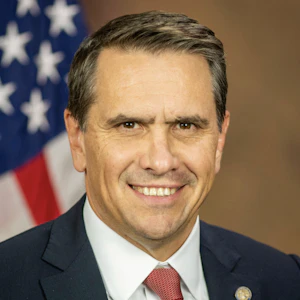
The Honorable Todd Blanche is the 40th Deputy Attorney General of the United States, overseeing the work of the 115,000 dedicated employees who fulfill the Department of Justice’s mission at Main Justice, the FBI, DEA, U.S. Marshals, ATF, and 93 U.S. Attorney’s Offices.
Todd began his career at the Department where he served for over fifteen years in a variety of capacities, including as a contractor, a paralegal in the Criminal Division, and at the United States Attorney’s office for the Southern District of New York where he eventually became an AUSA and later a supervisor.
After leaving the Department, Todd worked as a criminal defense attorney that included representing President Donald Trump in three of the criminal cases brought against him in 2023 and 2024.
Following President Trump’s historic return to the White House, the President appointed Todd to work alongside Attorney General Pam Bondi to make America safe again. At the DOJ, Todd is working tirelessly to implement President Trump’s priorities that include confronting illegal protecting American businesses from fraud.
Todd has been married to his wonderful wife Kristine for nearly thirty years, is a father and grandfather.

Paul Atkins
Paul Atkins
Prior to returning to the SEC, Chairman Atkins was most recently chief executive of Patomak Global Partners, a company he founded in 2009. Chairman Atkins helped lead efforts to develop best practices for the digital asset sector. He served as an independent director and non-executive chairman of the board of BATS Global Markets, Inc. from 2012 to 2015.
Chairman Atkins was appointed by President George W. Bush to serve as a Commissioner of the SEC from 2002 to 2008. During his tenure, he advocated for transparency, consistency, and the use of cost-benefit analysis at the agency. Chairman Atkins also represented the SEC at meetings of the President’s Working Group on Financial Markets and the U.S.-EU Transatlantic Economic Council. From 2009 to 2010, he was appointed a member of the Congressional Oversight Panel for the Troubled Asset Relief Program.
Before serving as an SEC Commissioner, Chairman Atkins was a consultant on securities and investment management industry matters, especially regarding issues of strategy, regulatory compliance, risk management, new product development, and organizational control.
From 1990 to 1994, Chairman Atkins served on the staff of two chairmen of the SEC, Richard C. Breeden and Arthur Levitt, ultimately as chief of staff and counselor, respectively. He received the SEC’s 1992 Law and Policy Award for work regarding corporate governance matters.
Chairman Atkins began his career as a lawyer in New York, focusing on a wide range of corporate transactions for U.S. and foreign clients, including public and private securities offerings and mergers and acquisitions. He was resident for 2½ years in his firm's Paris office and admitted as conseil juridique in France.
A member of the New York and Florida bars, Chairman Atkins received his J.D. from Vanderbilt University School of Law in 1983 and was Senior Student Writing Editor of the Vanderbilt Law Review. He received his A.B., Phi Beta Kappa, from Wofford College in 1980.
Originally from Lillington, North Carolina, Chairman Atkins grew up in Tampa, Florida. He and his wife Sarah have three sons.

Mike Selig
Mike Selig
Chairman Selig brings to the role deep public and private sector experience working with a wide range of stakeholders across agriculture, energy, financial, and digital asset industries, which rely upon and operate in CFTC-regulated markets.
Prior to his leadership at the CFTC, Chairman Selig most recently served as chief counsel of the Securities and Exchange Commission’s Crypto Task Force and senior advisor to SEC Chairman Paul S. Atkins. In this role, Chairman Selig helped to develop a clear regulatory framework for digital asset securities markets, harmonize the SEC and CFTC regulatory regimes, modernize the agency’s rules to reflect new and emerging technologies, and put an end to regulation by enforcement. He also participated in the President’s Working Group on Digital Asset Markets and contributed to its report on “Strengthening American Leadership in Digital Financial Technology.”
Prior to government service, Chairman Selig was a partner at an international law firm, focusing on derivatives and securities regulatory matters. During his years in private practice, he represented a broad range of clients subject to regulation by the CFTC, including commercial end users, futures commission merchants, commodity trading advisors, swap dealers, designated contract markets, derivatives clearing organizations, and digital asset firms. Chairman Selig advised clients on compliance with the Commodity Exchange Act and the CFTC’s rules and regulations thereunder, including in connection with registration applications and obligations, enforcement matters, and complex transactions.
Chairman Selig earned his law degree from The George Washington University Law School and was articles editor of The George Washington Law Review. He received his undergraduate degree from Florida State University.

David Bailey
David Bailey

Eric Trump
Eric Trump
Mr. Trump also serves as Executive Vice President of The Trump Organization, where he oversees the global management and operations of the Trump family’s extensive real estate portfolio. This includes Trump Hotels, Trump Golf, commercial and residential real estate, Trump Estates, and Trump Winery. Known for his hands-on leadership and strong market instincts, he has played a key role in expanding the company’s presence across major U.S. and international markets.
A globally recognized business leader and public figure, Mr. Trump is a prominent advocate for Bitcoin and decentralized finance. He is a co-founder of World Liberty Financial, a decentralized finance (DeFi) platform, and serves on the Board of Advisors of Metaplanet, Japan’s largest corporate holder of Bitcoin.
Beyond his business activities, Mr. Trump has helped raise more than $50 million for St. Jude Children’s Research Hospital in the fight against pediatric cancer, a philanthropic mission he began at age 21.
Mr. Trump earned a degree in Finance and Management from Georgetown University. He currently resides in Florida with his wife, Lara, and their two children. He is also the author of Under Siege, his memoir published in October 2025.

Jack Mallers
Jack Mallers

Cynthia Lummis
Cynthia Lummis
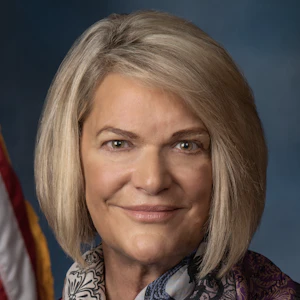
As the first-ever Chair of the Senate Banking Subcommittee on Digital Assets, Senator Lummis is the architect of the legislative framework shaping America's digital asset future. She introduced the landmark Lummis-Gillibrand Responsible Financial Innovation Act, the first comprehensive bipartisan crypto regulatory framework in Senate history. She co-authored the GENIUS Act — the first federal stablecoin law ever enacted — and introduced the BITCOIN Act, which would establish a U.S. strategic Bitcoin reserve of up to one million BTC. She is leading the Clarity Act, which will bring long-overdue regulatory certainty to the digital asset industry. She has also championed digital asset tax reform, including a de minimis exemption for small transactions and equal tax treatment for miners and stakers.
Known as Congress' "Crypto Queen," Senator Lummis represents Wyoming — a state she has helped build into one of the most digital asset-friendly regulatory environments in the nation. Before serving in the Senate, she served 14 years in the Wyoming Legislature, eight years as Wyoming State Treasurer, and eight years in the U.S. House. She is a three-time graduate of the University of Wyoming.
Her work represents a crucial bridge between traditional financial systems and the emerging digital economy, ensuring America leads the world in financial innovation while protecting the individual freedoms that define it.

Adam Back
Adam Back

Amy Oldenburg
Amy Oldenburg
David Marcus
David Marcus

Matt Schultz
Matt Schultz
Fred Thiel
Fred Thiel
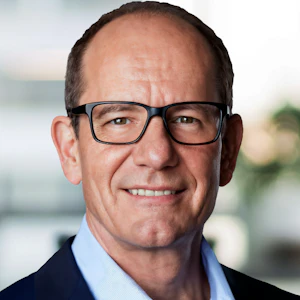
Throughout his career, Mr. Thiel has consistently driven rapid growth and created substantial shareholder value. Prior to MARA, Mr. Thiel served as the CEO of two other public companies, Local Corporation (NASDAQ: LOCM) and Lantronix, Inc (NASDAQ: LTRX). He has successfully raised billions in equity and debt through private and public offerings, led companies through IPOs, executed high-value exits to strategic and financial acquirers, and implemented effective M&A and roll-up strategies.
Mr. Thiel attended the Stockholm School of Economics and executive classes at Harvard Business School, and is fluent in English, Spanish, Swedish, and French. Mr. Thiel is the Chairman of the Board for Oden Technology, Inc. and is active in Young Presidents’ Organization where he has led initiatives in both the FinTech and Technology Networks.
A recognized voice in the industry, Fred frequently shares his insights on energy and technology with major media outlets like Bloomberg TV, CNBC, and FOX Business, contributing to vital discussions about the future of these sectors.
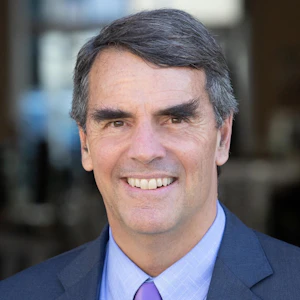
Tim Draper
Tim Draper
He is a supporter and global thought leader for entrepreneurs everywhere, and is a leading spokesperson for Bitcoin and decentralization, having won the Bitcoin US Marshall’s auction in 2014, invested in over 50 crypto companies, and led investments in Coinbase, Ledger, Tezos, and Bancor, among others.

Afroman
Afroman