Bitcoin Treasuries Over the Next Decade
Speakers/Moderators

George Mekhail
George Mekhail


Jeremy Almond
Jeremy Almond
Jeremy has played a leading role in shaping the commercial DeFi movement. Paystand is the only company at this scale using Bitcoin to move enterprise payments, eliminate transaction fees, and automate financial operations through blockchain infrastructure. With nearly 300 employees and over $90 million raised from leading investors, Paystand continues expanding its financial network through strategic acquisitions, including Bitwage, a pioneer in global Bitcoin payroll and cross-border payments. Paystand has been featured in Forbes, recognized five times on the Inc. 5000 list, and is widely considered one of the fintech leaders building the next generation of financial infrastructure.
Through Paystand.org, Jeremy also leads one of the largest philanthropic efforts advancing Bitcoin in the real world, supporting NGOs that are building circular economies across the globe. He has spoken at major events including Money20/20, Montgomery Securities in Santa Monica, Unconference by Mi Primer Bitcoin in Nashville, and Bitcoin Medellín, and serves on the Board of Advisors for Mi Primer Bitcoin. A former Forbes contributor, Jeremy operates at the intersection of software, sovereignty, and scale—building a world where economic freedom is the default, not the exception.
LinkedIn: https://www.linkedin.com/in/jeremyalmond/

Session
Overview
Bitcoin Treasuries Over the Next Decade brought together Amanda Fabiano of Nakamoto Inc., Jeremy Almond of Paystand, and Jonny Himalaya of On Nexus for a discussion on how corporate Bitcoin adoption may evolve beyond simple balance sheet accumulation.
The panel explored how Bitcoin could become operational capital for businesses, supporting payments, lower-cost settlement, treasury strategy, yield products, and new financial infrastructure. Speakers also discussed headwinds including regulation, volatility, institutional adoption, stablecoin competition, and differing visions of hyperbitcoinization.
AI was a major theme, especially the possibility that digital agents will need native digital money for commerce. The discussion connected Bitcoin’s open, permissionless monetary network with future business workflows, corporate treasury products, and machine-to-machine transactions.
All right, cool. Let’s start with some brief introductions. Amanda, tell us a little bit about yourself.
Hi, everyone. My name is Amanda Fabiano. I’m the CEO of Nakamoto.
Hey, everyone. I’m Jeremy Almond. I’m the CEO of Paystand. We are the largest business payment network built on the Bitcoin blockchain. A million customers, $20 billion in volume, 2% of the U.S. economy built on the Bitcoin blockchain.
Hi, everybody. I’m Jonny. I’m the co-founder of On Nexus. We build on-chain solutions that allow treasury companies, institutions, and Bitcoin holders to earn a yield on Bitcoin, self-custodied on-chain.
Jonny also has the coolest name in the world, Jonny Himalaya. We’re talking about Bitcoin treasuries over the next decade, so I want to start by having our panelists paint a picture or cast a vision of what the next ten years look like. Let’s fast forward. We’re at 2036. What does the industry look like? What are some things that people maybe aren’t anticipating that you’re seeing as operators behind the scenes?
That’s a really interesting question, because I feel like every four years in Bitcoin seems like 35 years, so it’s hard to think about a ten-year time frame. We’ve just seen the market continue to evolve over the years, and I think we’ll continue to see that. I think we’re going to see more of a convergence of traditional finance and the Bitcoin world.
From a treasury perspective, you’ll see more companies moving toward an operational model or focusing on capital market optimization. When people think about Bitcoin in the future, they always think about a price target. But I always think about what businesses are going to exist in the future. I would hope that a lot of the companies being built in this era will continue into the next decade.
I think it’s true. You’re going to have more and more Bitcoin business adoption. It’s crazy to me that this treasury conversation has actually crossed the chasm. A few years ago, the idea that corporations were using Bitcoin as a treasury would have been a crazy notion. Now I’d say we already have momentum there.
So I want to talk about what’s past that, which is Bitcoin being used in the real world for businesses to fuel their operations. One way to look at Bitcoin treasury is that it’s digital capital, but capital in general is just fuel for your business. If you simply have great capital in your business and your business doesn’t do anything, it’s not a very good business.
What I really want to plant in your minds is that Bitcoin as digital capital becomes the fuel for a more efficient business. Businesses can run cheaper because they have a lower cost of capital. Businesses can move their money faster. That makes them more competitive. And businesses that don’t need to use a traditional financial system can lower their costs and put that back into more jobs, more business creation, and more GDP growth, which is good for our economy and ultimately good for the world. That all starts with businesses using Bitcoin.
I’d like to piggyback a little bit off what Jeremy said. If we go ten years down the road, the dreamer’s point of view would be that if hyperbitcoinization truly happens, the concept of a treasury company would probably be over because every company would just have Bitcoin operationally.
This whole strategy of being a treasury company to put Bitcoin on your balance sheet purely for treasury would be a moot point, because companies will have Bitcoin because they use it in their day-to-day operations and they’re getting yield from it.
I think that’s a great point. I think about this with Bitcoin meetups too. Bitcoin meetups are a thing right now because we’re trying to propel adoption forward. But in ten years, there are no dollar meetups, right? I think it’s along similar lines. We’re just going to see Bitcoin embedded in everything, so it becomes a little bit redundant.
What sort of headwinds do we anticipate over the next ten years? Bitcoin has experienced pushback from regulators, and even what we’re seeing with topics like MSCI. There are probably cultural headwinds, narrative work, and marketing work that we need to do. What do you see as potentially problematic that maybe people in this room aren’t anticipating over the next ten years?
I think regulation will always be an up and down. There will be different things that are built that traditional industries might push back on because it might affect how they make money. That will consistently be something coming around the corner in every market cycle.
I think growth, adoption, and just the storyline of Bitcoin are things we could probably do a better job of explaining. Bitcoin is a lot of different things to different people. You can explain Bitcoin differently to whatever crowd you’re talking to, and I think that’s one of the most incredible things about it. It can be whatever you want.
It can be your savings account. It can be your spending account. It can be something businesses use. It can be something businesses hoard. There is no Bitcoin marketing department, so how we explain it is really interesting. Depending on who the clientele is, how they adopt it can be very different.
I used to work at Fidelity, and how you explain Bitcoin to Fidelity was very different from how I explained Bitcoin to my mom. All of us doing our part there would be super helpful. But regulation is something we’re always going to have to think about around the corner, and that just goes with the wind of where things are going.
One less obvious headwind right now is stablecoin adoption around the world. It is growing faster than any financial infrastructure in the world. Stablecoins have more volume in certain places than Visa and Mastercard combined.
When you talk to the clientele that we do, which is generally large corporations, the largest Fortune 500 companies, the largest banks, and the largest portions of the economy, their conversation is unfortunately not starting with, how do I Bitcoin? Their conversation is starting with, how do I stablecoin?
Here’s the problem with that: the vast majority of stablecoin volume is not sitting on the Bitcoin blockchain. What it’s really doing is making traditional financial infrastructure more efficient, but it’s doing nothing beyond that.
The question for us is how you marry the two, where stablecoin maybe becomes the bridge to Bitcoin. But on its current path, stablecoin volume is sitting outside of Bitcoin. We don’t think that’s a good thing, because Bitcoin is freedom money. It’s digital access for people around the world. It’s infrastructure that lowers the cost for global remittance around the world. Bitcoin is the single most important invention in our lifetime.
It’s incumbent on us to create really good use cases. We want to take all of that energy and infrastructure going into stablecoins, which is really just perpetuating the traditional dollar, and put that on Bitcoin, which has no owner, no individual that can hold you back, and can be used anywhere in the world instantaneously, automatically, and globally.
We want to marry those two things, because if we don’t, we’re going to be in a world where stablecoin eats Bitcoin. And that’s not the reason most of us got involved in Bitcoin in the first place.
In terms of headwinds, we have a small bit of an identity crisis. Different parts of the Bitcoin community view hyperbitcoinization in different ways. If you go way back to the old school, it was all about no counterparties. You don’t need to trust the bank to send value from one person to another. That philosophy still exists in certain communities.
But in the new age of hyperbitcoinization, you obviously have institutional involvement, where banks are getting involved in the Bitcoin economy. You can look at it two different ways. Do we look at the banks getting involved as friction, or do we welcome this?
Bitcoin is a disruptive technology, and like any disruptive technology, there are always incumbents who end up being faded out. Music streaming changed the record industry in a large way. Does hyperbitcoinization get rid of an industry, or does the industry take it on board and try to adapt with it?
It really depends on what your view of hyperbitcoinization is. Is it a completely sovereign, self-custodial financial system that doesn’t need any banks or institutions, or is it a new hard asset that the whole financial system can benefit from? Once you answer that question, you can decide what the headwinds are.
One thing that’s interesting: we were just on a panel with Kraken, and we were asking how they’re working with traditional banks. The head of institutional there said something that really stuck with me. He said it’s easier for us to learn traditional finance than it is for traditional finance to learn Bitcoin.
Right now, we’re in this really interesting time where we can see some of these companies that have built over the last decade really come out on the other side and maybe take a little bit more ownership of where finance is going compared to the traditional banks. I guess it’s a race we’ll watch over the next decade.
Kraken is coming up next, so just a quick commercial. I also want to reset the room a little bit. I see a lot of people standing in the back. If there’s an empty seat next to you, will you do me a favor and scoot in so some of these people can see? It is a little bit chaotic here, but we love to see it. Welcome. We’re glad you’re here, and we’re going to keep going with this conversation.
Over the next ten years, what is it going to take for some of these legacy companies sitting on millions or billions of dollars in cash to wake up to what’s happening? It feels like we’re almost at a point where it’s a fiduciary obligation to be paying attention to what’s happening in the Bitcoin space, and ignoring it is going to potentially have some consequences. What do you think is going to happen in order for some of these large companies to capitulate?
We do see some large companies with Bitcoin on the balance sheet that have had it for a while. Fidelity has been mining Bitcoin since 2013. They hold a large Bitcoin stack, long before Bitcoin treasuries were a thing. Tesla has a lot of Bitcoin on the balance sheet.
I think you’re right. At some point, it is an obligation to say, hey, what is this thing, and does it make sense for us? But every company has its own risk framework and what makes sense for them. This goes back to the educational piece and how we think about Bitcoin existing in the world.
I think there is more Bitcoin on balance sheets than I would have expected at this point, which is surprising and nice. Over time, as people learn more about it, that’s great. We love Bitcoin, obviously. But when you think about it as an asset, it is extremely volatile. As a CFO or a public company, you do have to think about the risk of holding that. The volatility of Bitcoin is difficult to explain versus holding cash. As we see these volatile waves get compressed, maybe there will be more and more adoption in the future.
One of the hard parts in my journey is that oftentimes you start off with Bitcoin and you want to orange-pill people. You want to tell them about the economic model and the financial model, and people’s eyes glaze over. What I’ve found over time is the best way is actually just to have people use it and touch it in different experiences.
Saylor has done such an incredible job educating the market around treasury. We went a different route. We’ve been in business a long time, and we were probably the first or second Bitcoin payment processor in the world. Over time, what we learned is that we talked less and less about Bitcoin.
We service many of the largest Fortune 500 companies. The way we talk about it is, don’t you think your money and your capital should move at the speed of light, at zero cost, and completely automatically? Then let’s figure out ways for your business to engage so you can get Bitcoin treasury, but you don’t need to go get board approval. Bitcoin treasury on one dimension might need board approval, especially if you’re a public company.
For example, we have a corporate card. With the corporate card, you just spend in dollars, in fiat, like you do with your normal corporate expenses when you bought your airplane ticket here or whatever. But then the rewards points go back into the corporate balance sheet instead of just some Amex points that you have no clue what they do. All of a sudden, that gets Bitcoin on the balance sheet in a completely Trojan horse way.
The CFO now has to determine what to do with it. Most of the time, because they effectively got it for free, they keep it on the balance sheet, and then that becomes the entry point for them to start increasing their treasury position. The point is that Bitcoin is being adopted more and more in both the real world and the business landscape, but maybe not straight head on.
In terms of what we need to achieve greater adoption, I think as the products become more mature, whether that’s a software product or a financial product, we have a lot of innovation now with Stripe, Strive, and the different things Strategy is doing. As this marketplace matures, and as the volatility dampens, as Amanda mentioned, Bitcoin is still seen as a very volatile asset. Over time, the consensus is that it will become less and less volatile.
Then it is seen as less risky to put Bitcoin on your balance sheet. Once that volatility is dampened a little bit, you’ll start to see more and more innovative products. If there is demand, and it’s not as volatile anymore, I’m willing to hold it. Now what can I do with it? Can I make payments? Can I earn yield? Can I borrow? Can I lend? Once all of these products come on board, there will be a snowball effect where everybody says, oh, you can do all of this with Bitcoin? Yeah, let’s go for it.
We can’t talk about the next ten years without talking about AI. I know it’s very buzzworthy. We had a panel earlier about AI, but I do want to talk about what you’re seeing that is already emerging. We already live in a different world today than even six months ago. I don’t know about you, but I’m at a point where if Claude is down, I’m a little bit panicked. I’m like, what do I do now? I forget how to work in the old sense.
So far it doesn’t seem like AI is coming for jobs, or at least some of the scary narratives that have been out there. But as operators and visionaries, how do you see AI continuing to be integrated into the Bitcoin corporate space, if at all?
Whenever there is something new like AI, the scary narrative is that every job is going away. The same thing happened with Bitcoin mining. When Bitcoin mining became more institutionalized, the narrative was that jobs were going away and mining was eating all the grid. What ends up happening is that different industries get created, and how people work ends up being different.
Maybe there will be AI with Bitcoin as the currency. That could potentially be something we’ll see. I think we’ll see more people using AI to be more efficient at their jobs, not necessarily taking over the job. You still have to edit anything that exists today. Maybe that will adjust over time, but we still need people’s brains to make sense of things. AI just makes you a little bit more efficient at this point.
I feel like I’m being the spicy one with the opposite takes. Our headquarters are in Silicon Valley, and I would say most Silicon Valley CEOs I know think it is radically going to transform jobs. I think the two most important changes in our lifetime, at least in the last hundred years if not longer, are the transformation of money, which is Bitcoin, and the transformation of labor, which is AI. Those two things are changing how society operates.
In Silicon Valley, every CEO I know is saying that 50% of staff is going to change how they do their own business. In our own company, we’re not huge. We’re around 400 employees. When I think about the next stage of our growth, I would normally think about going from 400 employees to 4,000 employees. I think we’ll go from 400 employees to 500 employees and 5,000 digital employees.
That’s already happening in our organization. Probably within the next quarter, we will have one digital employee per actual human, and that is exponentially growing every single quarter. We’re not the only company doing that. That’s how fast we’re growing and how much leverage is happening. It’s happening in the financial stack with products and services, and it’s happening in every part of operations.
Here’s the key point: how do those digital employees and agents actually do commerce? Commerce is the fundamental piece of human society. They need a way to do it through digital money. We believe it’s extremely important that they do it through digital money that is done through Bitcoin, freedom, and open-access money. Bitcoin will be the thing that agents prefer. Labor is transforming, and digital money is the perfect transformation around digital labor.
As a software company, we’ve been on AI since the get-go. All of our coders are using Claude Code to help them with their code. We’ve got different agents running different workflows in our company, so we’re very much in tune. We have a blueprint for what the future of Bitcoin looks like with AI agents.
I think everybody would agree that an agent can’t own a bank account, and AI agents can’t KYC to an exchange. So how are AIs going to transact? It almost becomes common sense that they’re going to use some form of cryptocurrency. Obviously, the most trusted and battle-tested cryptocurrency is Bitcoin.
I see a future where AI agents are communicating with each other and transacting with each other on the Bitcoin blockchain. What’s interesting to note is that while some people think Bitcoin is a slow network compared to other networks, with block times of ten minutes, in terms of communication, the Bitcoin blockchain is one of the fastest communication layers in the world.
If you think about how Bitcoin miners propagate transactions among each other, this happens at the speed of light. If you’re into networks, any message can be passed from one miner to another in less than two hops. You can represent agents as nodes on the Bitcoin network and have them communicate and transact with each other using Bitcoin, not only for payments but also for high-speed communication. That’s what I see as the future of Bitcoin and AI.
As we wrap up, I want to invite you all to give some final thoughts on the next decade, or whatever you want to talk about.
Nakamoto owns BTC Inc, which owns this event and puts it on, and we also own a financial services and asset management group. What I think is really interesting with AI, which dovetails into this, is that human connection starts to become even more important. Meeting someone versus understanding if they are an AI becomes more important.
I think the event world is really cool. That’s one thing I’ve been thinking about. In-person events will become more interesting as the world goes to AI agents and you don’t know if you’re talking to an agent or someone over email. That’s something I’m looking forward to in what we’re building.
I think Bitcoin is going to continue to gain adoption. We’ll see different trends pop up that we can’t even really imagine. It’s going to be really cool when, in ten years, we look back and say, wow, none of the things we said on stage actually happened, but totally different things did. That continues to happen. Everyone here has been in Bitcoin for a while, and I don’t think any of us had a crystal ball. I can’t say I have a crystal ball on what comes next, but I’m really excited to watch it play out.
I’m excited because we’ve spent so much time in my world just trying to make Bitcoin usable to businesses around the world. This is an example of how much the world has changed. If you’re interested in business products, from cross-border payments to payroll and more, Paystand is a great place.
What we’re excited to announce, and have been announcing with a bunch of launch partners this week, is something called USD, which is the first stablecoin built on Bitcoin, natively built for businesses, built for bots, and enabled for the infrastructure. We believe connecting the two worlds, traditional companies and traditional commerce to global commerce on Bitcoin, is the most important thing we can do to transform our economy.
I’m super excited for the innovation we’re going to see over the next ten years as companies have Bitcoin on their balance sheets. Last year was all about treasury companies just accumulating Bitcoin. But I think it’s obvious, with the way these treasury companies have been priced, that you’ve got to do something with that Bitcoin. You’ve got to put that Bitcoin to work.
I’m super excited to see the mix of financial products and software products that are invented, and the combination of the two, where you can have Bitcoin wrapped in a financial product while also using a software product that puts it to use, earns yield, and makes it productive. I’m really looking forward to seeing how the next few years of those combinations work out.
Thank you all so much. I really enjoyed this conversation. That’s all the time we have for this panel. Please help me thank our panelists.
Similar
Sessions
Opening Remarks
George Mekhail
George Mekhail
Opening Remarks
Speakers/Moderators
George Mekhail
George Mekhail
Bitcoin Treasuries Over the Next Decade
George Mekhail
George Mekhail
Jeremy Almond
Jeremy Almond
Jeremy has played a leading role in shaping the commercial DeFi movement. Paystand is the only company at this scale using Bitcoin to move enterprise payments, eliminate transaction fees, and automate financial operations through blockchain infrastructure. With nearly 300 employees and over $90 million raised from leading investors, Paystand continues expanding its financial network through strategic acquisitions, including Bitwage, a pioneer in global Bitcoin payroll and cross-border payments. Paystand has been featured in Forbes, recognized five times on the Inc. 5000 list, and is widely considered one of the fintech leaders building the next generation of financial infrastructure.
Through Paystand.org, Jeremy also leads one of the largest philanthropic efforts advancing Bitcoin in the real world, supporting NGOs that are building circular economies across the globe. He has spoken at major events including Money20/20, Montgomery Securities in Santa Monica, Unconference by Mi Primer Bitcoin in Nashville, and Bitcoin Medellín, and serves on the Board of Advisors for Mi Primer Bitcoin. A former Forbes contributor, Jeremy operates at the intersection of software, sovereignty, and scale—building a world where economic freedom is the default, not the exception.
LinkedIn: https://www.linkedin.com/in/jeremyalmond/
Bitcoin Treasuries Over the Next Decade
Speakers/Moderators
George Mekhail
George Mekhail
Jeremy Almond
Jeremy Almond
Jeremy has played a leading role in shaping the commercial DeFi movement. Paystand is the only company at this scale using Bitcoin to move enterprise payments, eliminate transaction fees, and automate financial operations through blockchain infrastructure. With nearly 300 employees and over $90 million raised from leading investors, Paystand continues expanding its financial network through strategic acquisitions, including Bitwage, a pioneer in global Bitcoin payroll and cross-border payments. Paystand has been featured in Forbes, recognized five times on the Inc. 5000 list, and is widely considered one of the fintech leaders building the next generation of financial infrastructure.
Through Paystand.org, Jeremy also leads one of the largest philanthropic efforts advancing Bitcoin in the real world, supporting NGOs that are building circular economies across the globe. He has spoken at major events including Money20/20, Montgomery Securities in Santa Monica, Unconference by Mi Primer Bitcoin in Nashville, and Bitcoin Medellín, and serves on the Board of Advisors for Mi Primer Bitcoin. A former Forbes contributor, Jeremy operates at the intersection of software, sovereignty, and scale—building a world where economic freedom is the default, not the exception.
LinkedIn: https://www.linkedin.com/in/jeremyalmond/
Closing Remarks
George Mekhail
George Mekhail
Closing Remarks
Speakers/Moderators
George Mekhail
George Mekhail
Incentive Alignment: Theory vs. Practice

Ryan Gentry
Ryan Gentry

Jeff Park
Jeff Park
Before joining ProCap Financial, Mr. Park was the Head of Alpha Strategies and Portfolio Manager at Bitwise Asset Management, one of the world’s largest crypto-specialist asset managers. Prior to Bitwise, he was a Partner at Corbin Capital Partners, a multi-billion alternative asset management firm that specializes in multi-strategy hedge fund and opportunistic credit investing, where he led the firm’s digital asset investing efforts.
He is a graduate of Stanford University with a B.A. in Economics and International Relations.
Incentive Alignment: Theory vs. Practice
Speakers/Moderators
Ryan Gentry
Ryan Gentry
Jeff Park
Jeff Park
Before joining ProCap Financial, Mr. Park was the Head of Alpha Strategies and Portfolio Manager at Bitwise Asset Management, one of the world’s largest crypto-specialist asset managers. Prior to Bitwise, he was a Partner at Corbin Capital Partners, a multi-billion alternative asset management firm that specializes in multi-strategy hedge fund and opportunistic credit investing, where he led the firm’s digital asset investing efforts.
He is a graduate of Stanford University with a B.A. in Economics and International Relations.
What Makes a Bitcoin Treasury Company Successful?

Jason Fang
Jason Fang
Jason currently serves as Chairman & Co-CEO of Asia Strategy (NASDAQ: SORA), Chairman of Bitplanet Inc. (KOSDAQ: 049470), Chairman of Moon Inc. (HKG: 1723), and was previously a board member of Metaplanet (TYO: 3350), dubbed the “MicroStrategy of Japan.” These roles place Jason at the center of a growing movement to institutionalize Bitcoin across the region.
Earlier in his career, Jason was an investor at Fenbushi Capital and contributed to Ethereum research at Wanxiang Blockchain Labs. With a background in economics, business law, and experience as a full-stack iOS developer, he brings rare technical and financial fluency to his work in driving institutional crypto adoption.

Paul Lee
Paul Lee
Bitplanet is a KOSDAQ-listed Operating DAT built on Bitcoin as treasury. Through Bitcoin mining and related AI energy infrastructure, the company generates sustainable cash flow with a compliance-led approach and disciplined capital allocation. Bitplanet is purpose-built to create long-term value within the Bitcoin economy.
What Makes a Bitcoin Treasury Company Successful?
Speakers/Moderators
Jason Fang
Jason Fang
Jason currently serves as Chairman & Co-CEO of Asia Strategy (NASDAQ: SORA), Chairman of Bitplanet Inc. (KOSDAQ: 049470), Chairman of Moon Inc. (HKG: 1723), and was previously a board member of Metaplanet (TYO: 3350), dubbed the “MicroStrategy of Japan.” These roles place Jason at the center of a growing movement to institutionalize Bitcoin across the region.
Earlier in his career, Jason was an investor at Fenbushi Capital and contributed to Ethereum research at Wanxiang Blockchain Labs. With a background in economics, business law, and experience as a full-stack iOS developer, he brings rare technical and financial fluency to his work in driving institutional crypto adoption.
Paul Lee
Paul Lee
Bitplanet is a KOSDAQ-listed Operating DAT built on Bitcoin as treasury. Through Bitcoin mining and related AI energy infrastructure, the company generates sustainable cash flow with a compliance-led approach and disciplined capital allocation. Bitplanet is purpose-built to create long-term value within the Bitcoin economy.
Crypto Kids! / I Am Not Your Bruh

George Mekhail
George Mekhail
Crypto Kids! / I Am Not Your Bruh
Speakers/Moderators
George Mekhail
George Mekhail
Other
Speakers

Michael Saylor
Michael Saylor
Todd Blanche
Todd Blanche
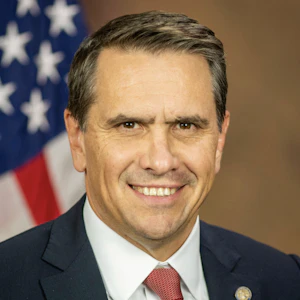
Biography of Deputy Attorney General Todd Blanche
The Honorable Todd Blanche is the 40th Deputy Attorney General of the United States, overseeing the work of the 115,000 dedicated employees who fulfill the Department of Justice’s mission at Main Justice, the FBI, DEA, U.S. Marshals, ATF, and 93 U.S. Attorney’s Offices.
Todd began his career at the Department where he served for over fifteen years in a variety of capacities, including as a contractor, a paralegal in the Criminal Division, and at the United States Attorney’s office for the Southern District of New York where he eventually became an AUSA and later a supervisor.
After leaving the Department, Todd worked as a criminal defense attorney that included representing President Donald Trump in three of the criminal cases brought against him in 2023 and 2024.
Following President Trump’s historic return to the White House, the President appointed Todd to work alongside Attorney General Pam Bondi to make America safe again. At the DOJ, Todd is working tirelessly to implement President Trump’s priorities that include confronting illegal protecting American businesses from fraud.
Todd has been married to his wonderful wife Kristine for nearly thirty years, is a father and grandfather.

Paul Atkins
Paul Atkins
Prior to returning to the SEC, Chairman Atkins was most recently chief executive of Patomak Global Partners, a company he founded in 2009. Chairman Atkins helped lead efforts to develop best practices for the digital asset sector. He served as an independent director and non-executive chairman of the board of BATS Global Markets, Inc. from 2012 to 2015.
Chairman Atkins was appointed by President George W. Bush to serve as a Commissioner of the SEC from 2002 to 2008. During his tenure, he advocated for transparency, consistency, and the use of cost-benefit analysis at the agency. Chairman Atkins also represented the SEC at meetings of the President’s Working Group on Financial Markets and the U.S.-EU Transatlantic Economic Council. From 2009 to 2010, he was appointed a member of the Congressional Oversight Panel for the Troubled Asset Relief Program.
Before serving as an SEC Commissioner, Chairman Atkins was a consultant on securities and investment management industry matters, especially regarding issues of strategy, regulatory compliance, risk management, new product development, and organizational control.
From 1990 to 1994, Chairman Atkins served on the staff of two chairmen of the SEC, Richard C. Breeden and Arthur Levitt, ultimately as chief of staff and counselor, respectively. He received the SEC’s 1992 Law and Policy Award for work regarding corporate governance matters.
Chairman Atkins began his career as a lawyer in New York, focusing on a wide range of corporate transactions for U.S. and foreign clients, including public and private securities offerings and mergers and acquisitions. He was resident for 2½ years in his firm's Paris office and admitted as conseil juridique in France.
A member of the New York and Florida bars, Chairman Atkins received his J.D. from Vanderbilt University School of Law in 1983 and was Senior Student Writing Editor of the Vanderbilt Law Review. He received his A.B., Phi Beta Kappa, from Wofford College in 1980.
Originally from Lillington, North Carolina, Chairman Atkins grew up in Tampa, Florida. He and his wife Sarah have three sons.

Mike Selig
Mike Selig
Chairman Selig brings to the role deep public and private sector experience working with a wide range of stakeholders across agriculture, energy, financial, and digital asset industries, which rely upon and operate in CFTC-regulated markets.
Prior to his leadership at the CFTC, Chairman Selig most recently served as chief counsel of the Securities and Exchange Commission’s Crypto Task Force and senior advisor to SEC Chairman Paul S. Atkins. In this role, Chairman Selig helped to develop a clear regulatory framework for digital asset securities markets, harmonize the SEC and CFTC regulatory regimes, modernize the agency’s rules to reflect new and emerging technologies, and put an end to regulation by enforcement. He also participated in the President’s Working Group on Digital Asset Markets and contributed to its report on “Strengthening American Leadership in Digital Financial Technology.”
Prior to government service, Chairman Selig was a partner at an international law firm, focusing on derivatives and securities regulatory matters. During his years in private practice, he represented a broad range of clients subject to regulation by the CFTC, including commercial end users, futures commission merchants, commodity trading advisors, swap dealers, designated contract markets, derivatives clearing organizations, and digital asset firms. Chairman Selig advised clients on compliance with the Commodity Exchange Act and the CFTC’s rules and regulations thereunder, including in connection with registration applications and obligations, enforcement matters, and complex transactions.
Chairman Selig earned his law degree from The George Washington University Law School and was articles editor of The George Washington Law Review. He received his undergraduate degree from Florida State University.

David Bailey
David Bailey

Eric Trump
Eric Trump
Mr. Trump also serves as Executive Vice President of The Trump Organization, where he oversees the global management and operations of the Trump family’s extensive real estate portfolio. This includes Trump Hotels, Trump Golf, commercial and residential real estate, Trump Estates, and Trump Winery. Known for his hands-on leadership and strong market instincts, he has played a key role in expanding the company’s presence across major U.S. and international markets.
A globally recognized business leader and public figure, Mr. Trump is a prominent advocate for Bitcoin and decentralized finance. He is a co-founder of World Liberty Financial, a decentralized finance (DeFi) platform, and serves on the Board of Advisors of Metaplanet, Japan’s largest corporate holder of Bitcoin.
Beyond his business activities, Mr. Trump has helped raise more than $50 million for St. Jude Children’s Research Hospital in the fight against pediatric cancer, a philanthropic mission he began at age 21.
Mr. Trump earned a degree in Finance and Management from Georgetown University. He currently resides in Florida with his wife, Lara, and their two children. He is also the author of Under Siege, his memoir published in October 2025.

Jack Mallers
Jack Mallers
Cynthia Lummis
Cynthia Lummis
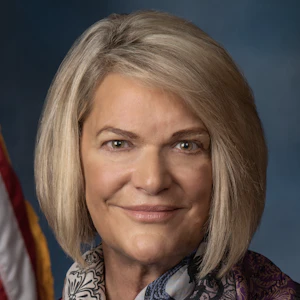
As the first-ever Chair of the Senate Banking Subcommittee on Digital Assets, Senator Lummis is the architect of the legislative framework shaping America's digital asset future. She introduced the landmark Lummis-Gillibrand Responsible Financial Innovation Act, the first comprehensive bipartisan crypto regulatory framework in Senate history. She co-authored the GENIUS Act — the first federal stablecoin law ever enacted — and introduced the BITCOIN Act, which would establish a U.S. strategic Bitcoin reserve of up to one million BTC. She is leading the Clarity Act, which will bring long-overdue regulatory certainty to the digital asset industry. She has also championed digital asset tax reform, including a de minimis exemption for small transactions and equal tax treatment for miners and stakers.
Known as Congress' "Crypto Queen," Senator Lummis represents Wyoming — a state she has helped build into one of the most digital asset-friendly regulatory environments in the nation. Before serving in the Senate, she served 14 years in the Wyoming Legislature, eight years as Wyoming State Treasurer, and eight years in the U.S. House. She is a three-time graduate of the University of Wyoming.
Her work represents a crucial bridge between traditional financial systems and the emerging digital economy, ensuring America leads the world in financial innovation while protecting the individual freedoms that define it.

Adam Back
Adam Back

Amy Oldenburg
Amy Oldenburg

David Marcus
David Marcus

Matt Schultz
Matt Schultz
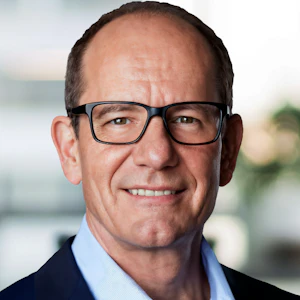
Fred Thiel
Fred Thiel
Throughout his career, Mr. Thiel has consistently driven rapid growth and created substantial shareholder value. Prior to MARA, Mr. Thiel served as the CEO of two other public companies, Local Corporation (NASDAQ: LOCM) and Lantronix, Inc (NASDAQ: LTRX). He has successfully raised billions in equity and debt through private and public offerings, led companies through IPOs, executed high-value exits to strategic and financial acquirers, and implemented effective M&A and roll-up strategies.
Mr. Thiel attended the Stockholm School of Economics and executive classes at Harvard Business School, and is fluent in English, Spanish, Swedish, and French. Mr. Thiel is the Chairman of the Board for Oden Technology, Inc. and is active in Young Presidents’ Organization where he has led initiatives in both the FinTech and Technology Networks.
A recognized voice in the industry, Fred frequently shares his insights on energy and technology with major media outlets like Bloomberg TV, CNBC, and FOX Business, contributing to vital discussions about the future of these sectors.
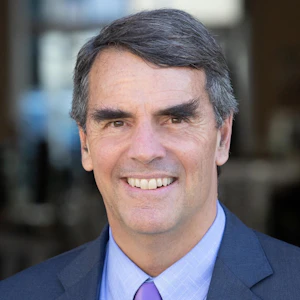
Tim Draper
Tim Draper
He is a supporter and global thought leader for entrepreneurs everywhere, and is a leading spokesperson for Bitcoin and decentralization, having won the Bitcoin US Marshall’s auction in 2014, invested in over 50 crypto companies, and led investments in Coinbase, Ledger, Tezos, and Bancor, among others.

Afroman
Afroman