Breaking Out of the Fiat Music Industry
Speakers/Moderators

OpenMike
OpenMike
Tunestr is an open-source live stream application that connects artists and fans over the Nostr protocol and enables direct bitcoin lightning payments during the performance. Tunestr also promotes in-person events around the world, with the focus of educating the music community about Nostr & bitcoin.
Tunestr is where independent music meets independent money.
www.tunestr.io
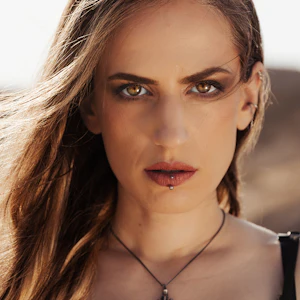
Noa Gruman
Noa Gruman
Session
Overview
Noa Gruman of Scardust discusses how Bitcoin and Nostr can give musicians new ways to build independence outside the pressures of the traditional music industry. Drawing on her experience as a touring metal vocalist, choir director, and independent creative working from Israel, she frames “fiat music” as a short-term survival mindset shaped by inflation, rising costs, and financial pressure.
The conversation focuses on practical paths for artists, including earning Bitcoin through zaps, streaming performances or practice sessions on Nostr, accepting Bitcoin for merchandise, and building direct relationships with fans. Gruman emphasizes that artists do not need to abandon existing labels or distribution arrangements to experiment with these tools.
A key theme is the shift from relying only on platforms and intermediaries toward audience-supported creative work. The discussion also calls on listeners and developers to support musicians directly, build better creator tools for Nostr, and help make Bitcoin-native music experiences easier to use.
Welcome, everyone. Thanks for coming to the panel. The discussion here is Breaking Out of the Fiat Music Industry. We are here with Noa Gruman. Is this a deepfake, or is this Noa Gruman for real?
Let's do one attack.
Okay, quick high five.
Did it feel real?
We've got it. We had a little bit of an online controversy about this musical celebrity going through Nostr and running through Maxi Madness, but in all seriousness, it's been an amazing week here meeting you, seeing some of these pop-up performances and appearances that you've been making. Absolutely incredible.
I want to start here. We're both from the traditional music space, from the venue side and from the performer side. This is not a music conference. Who are you, and what brings you here? Why is this an attractive place for people like us to hang out?
What a big question to start with. I'll start by introducing myself. My name is Noa Gruman. I am the singer of the progressive metal band Scardust. I also direct a metal choir called Hellscore, and I am also the lead singer and orchestra conductor for the Legendary Orchestra by Sabaton. I'm here to share my story as someone who has an independent business in the music industry in the second most expensive country in the world, where I come from, which is Israel. Let's talk about what this has to do with Bitcoin at all, and what fiat music is to me.
From my perspective, it's really never been harder out there for independent music. Right now the industry is going through a lot of change, a lot of disruption, and a lot of consolidation. But before we get into all that, I want to hear just about your story. How did you come up as a musician? Tell me a bit about your background.
I was born into a musical house. Both my parents are big music enthusiasts. It's not their main profession, but it's something they've always loved. So I was raised with music all around me. I've always sung and played musical instruments. When I was five, I told my mom that I was going to be a musician. She said, yeah, music is awesome, you should definitely do it, but it's not a real profession, right?
Over the years I tried many different things. I found myself practicing as a fashion designer, but I was always drawn back into music. In my early 20s, I realized that fashion design could just be me designing my stage outfits, because I had to be a musician. This is where I basically became a music maxi, as I call it today.
You mentioned you grew up in Israel, and your childhood was shaped by a lot of your experience there. Say a little bit more about that, and how that affected your music, your career, and your philosophy.
I think both the financial struggle, which is real, and also the political climate, and being canceled or boycotted from all different directions just for being born, which is insane, especially as a musician, made me a better musician. It forced me to work a hundred times harder.
So I found myself ditching everything I was doing before and just focusing on music. Back in my early 20s, I was waiting tables. I found myself as a young adult with a big hole in my bank account, not even able to pay rent at the end of the month, but I felt like this is something I had to do. I had to commit to this because I believed it would be worth it. I really believed in what I had to give to this world through music, and I knew it. It was never a doubt.
I was never scared to take what people call a leap of faith or a gamble. I don't see it this way. I see it as understanding that these are the cards I have in my hands, and it will be a good game no matter what.
So I left everything else and only focused on music. Moving forward a couple of years, with this big hole in my bank account, I managed to get on my two feet, as they say, and establish myself as a leading voice teacher in Israel, especially in the metal and extreme vocals world.
I was doing pretty well at that point, but I felt like something was not working financially. Not because I wasn't earning enough money, but because I teach maybe one hour for each student, and I was essentially getting paid less than what I was paid the year before because the money was worth less. So it was like, how does this make sense at all? That was the point where it clicked for me. Something in this system is not working. Something is broken.
It sounds like you had a perfect primer. The circumstances were in place for you to really be looking for a solution, looking for an answer to relieve some of that tension. You described it as a cycle of financial struggle, of constantly just getting to the next day. How did you find Bitcoin, and what's your story of incorporating that?
Like you said, I see so many incredible musicians just stuck in this cycle. For me, realizing that this system is broken and something is not working, I knew about Bitcoin. I'm talking about maybe ten years ago. I knew about Bitcoin from early on, but I didn't want to do anything I knew I didn't know enough about, and I didn't have the right people around me to explain it to me. So at that point, I was not there yet.
But I did start my choir, Hellscore, because I understood that I don't want to get paid per hour. Time is the most valuable asset. I don't want to get paid for my time. I would rather get paid for my skills and experience. So I decided to start a project rather than work by the hour. That is how Hellscore was born. A few years later, I met the right people, and that is when it clicked: okay, this gives an answer.
Was there anything in particular that hit you, that clicked, where you said, okay, I'm ready now?
Yes. Like I said, I knew about Bitcoin, but it was not until it was proven to me that you can't print more that I understood. That was the moment. Okay, that's it then.
We protect it.
Yes. It gives confidence.
Well said. That's a great transition, with the title of the panel being fiat music. That term might not make a whole lot of sense to some people outside of these rooms. Some people here probably understand it, but generally speaking, if you talk to folks in public and ask them about their thoughts on the music industry, they're going to have opinions. They're going to go on a Live Nation rant, or a Ticketmaster rant, or cancel Spotify. Everybody has their own version of the problem.
But the term fiat music, the way we're describing it, seems like it's getting at something deeper. These are symptoms of fiat music, and then we're playing whack-a-mole with these problems. How would you describe fiat music and life within it as an artist?
I'm not even going to talk about the whole industry, because I feel like we're a little bit focused on the wrong thing with all the criticism. Personally, as an artist, I am signed to a record label. We do have a deal with a distribution company, and thank God for them. They deserve their cut because they distribute my music all over the world. I can't do it myself. I need them. So I feel like this is a healthy collaboration, and I have nothing to say against it.
There is a lot of criticism out there, but I would rather focus on what I can do as a musician, as an individual. This is more a matter of mindset rather than just protesting against a big company.
I'll give you an example, because we were talking about being stuck in this survival cycle. For musicians, it's a very competitive world out there, and it's not easy to get good paying gigs, especially if you're young. People have to pay rent at the end of the month. How do they do that? They can't just leave everything. They can, and they should, but it's hard for people to make this switch.
What they end up doing, and this is one of the best musicians I know, is this: he got an incredible tour abroad, not one gig but a whole bunch of gigs. His first instinct was, okay, now I have to get a second job as a waiter so I can pay for my flight ticket.
To me, it's like he would rather spend his weekend waiting tables than practicing his instrument. The way I see it, if he practices his instrument, he will be better on stage. He will get better gig opportunities in the future. He will get paid more money in the future, and then he will be able to pay for this flight ticket and more. This is just looking maybe one year ahead. Now let's try to look five years ahead or ten years ahead.
So I guess fiat music to me is this narrow-minded vision of just seeing, how do I survive this month or pay for this flight ticket, and not really thinking, where can I be in five years? In ten years?
That's spot on. I am in the venue space. I worry about the ability of artists like that to go out on the road. If you've got a venue, a 500-cap room, the numbers just aren't going to add up with these costs going the way they are. It's heartbreaking.
But let's get back to you. With this backdrop of the current state of music and costs going crazy, how has Bitcoin specifically affected your career and driven your decisions?
First and foremost, it's the philosophy and the mindset. It gives you confidence. Because I know that my Bitcoin will never lose its value, it gives you confidence.
But there are also practical things you can do. Starting out, whenever I got an unexpected bonus, I put it into Bitcoin. You can buy Bitcoin with $100 if you want to.
You don't have to buy a whole Bitcoin.
Mind-blowing concept, right? You can start out super small. What's the worst thing that could happen?
Then there is Nostr, for example. Starting out on Nostr, I just did livestreams, and I called them live voice practice, or live voice practice for my upcoming tour, something like that. Then I just go through my repertoire. Or if I don't have an upcoming tour, I practice my vocals randomly or sing random songs.
The act of turning on the camera and the microphone by itself gives me a boost of motivation every single time. It doesn't matter if one person watches, or 50 people are there commenting. The fact that I'm there is already a huge boost. Then, as a bonus, you get zaps, which is just awesome by itself.
My band and I are on all the social media platforms. Whenever we post anything on Instagram, we just copy and paste it into Nostr. So Nostr has all our content, and then we can get zaps for it, which is incredible because it gives the audience the ability to support artists.
It is incredible. That story brings up an interesting issue that we've talked about in this community a lot. The technology is there. This is a superior solution to the platforms that are being used right now. We could go on and on about the big problems that are solved.
But right now we have this chicken-or-the-egg problem, so to speak. Do the huge artists come in and drag their fans with them? Or do the people who are here have to support the artists who are here? How do we get those favorable results so that we can get the flywheel going and really show off all the things that take place, without getting up on a soapbox and evangelizing about all of the tech features?
We really need to do things that make this look cool and use it for purposes that attract more people. What do you think musicians should expect? If there's a musician sitting out here watching, and maybe they're getting interested or open to the idea of putting some stuff out there on Nostr, what should they expect when they come on board?
As a signed band, we do have this problem because we have a deal with the distribution company. We can't really put our music on Nostr yet. Yet. Revolution takes time, and I do believe that down the line we should be able to find a solution to that.
But until this happens, just yesterday we streamed a live music event here, which was amazing, by the way, and thank you for it. People could directly support the artist on stage. Any artist can do that. Any artist can go on Nostr and stream their concerts. So do that.
Then, like I said, copy and paste whatever content you put on Instagram and Facebook and all that. Put it on Nostr. What do you have to lose? You get zaps for it. It gives the audience the opportunity to support you directly, so you don't necessarily have to put your album on Fountain. There are other ways to do that. Then there are the practice sessions, which are just a fun, casual thing where everyone wins, I think. There is no downside to it.
I love the way you described it over coffee earlier, where you said it's low risk, high reward. What are you going to lose? There's nobody even collecting your identity. You have no barrier to entry. Spin up a key pair and a client.
The other really powerful thing that you've been shining a light on is that this is a way to get Bitcoin by earning. You don't have to link your bank account. You don't have to give your credentials to Plaid and wonder about this custodian. Random people will see your content and give you Bitcoin, and you have it in your custody and nobody else does.
That is a very profound concept that also really changes your relationship with the space. You can study Bitcoin, and I think most people who are here, once you have it in your possession, go deeper and study it. Then you start to learn about all of the different things it's capable of. It's not just crypto scam number-go-up investment scheme.
One thing I wanted to add about that: a lot of musicians I know say, okay, well, no one is on Nostr, or all the Nostr people are just techie, nerdy guys. Nobody cares about music. First of all, it's not true. There are more and more artists coming into the space. But also, revolution takes time. If you want to be a part of something truly special and real, and a part of the future, you should check it out. You should give it a chance.
Here we are sitting in a room at the Bitcoin conference, so presumably most of you get it. Most of you understand what we're talking about. But we're also talking to the people online, our peers from the music industry, who might get this link shared to them later. What are some action items for people in the room, from our peers and from you as a touring artist? How can they support you?
I'm also a content consumer myself. Whenever there is an artist I'd like to support, outside of Nostr there is Patreon. I support artists I'd like to see grow on Patreon because I know that if I support them, it will help them keep going and keep producing more content that I love to consume.
So support your artists. Just support them, because it will help them make more content that you love to consume. It's as simple as that. Zap. Just zap.
And for all the developers out there, I don't know if there is any equivalent to Patreon yet on Nostr, but that would be something truly incredible to have on Nostr.
Amen. I'm excited to see all of the activity in the music space, so I'm confident someone is going to be working on that now.
That was one of the things I felt very hopeful about and saw a lot of promise in at some of the events here around the conference. We had screens set up where people were zapping the people on stage live. At the concert last night, people were zapping live, and it seems like new names are popping up this week that we hadn't seen before, in significant numbers.
My call to action is always: if you want to see something change, vote with your wallet and vote with your feet. A lot of us talk about this stuff and want to see these changes, but make sure we check our actions and participate.
Yes, 100%. I forgot to mention earlier, but we have incorporated Bitcoin at our merch shop as well. It's not just on Nostr. If you go on the Scardust website, you will be able to support us by buying merch. The Lightning says no right now because our node just died, but we will fix it in a few days, and then you'll be able to do that.
We've just got a couple minutes left here, but I have to ask you: Bitcoin is misunderstood, and Nostr is small and niche. Both represent solutions and principles that we all think are important and want to support and participate in. How do you navigate this with a normal person in the music industry, and how do you talk about it?
I don't actively orange pill or purple pill anyone unless they ask me to, because I don't hide it. It's out there. When I write lyrics, it's in the lyrics. I don't shout Bitcoin in my songs, but I talk about individualism and all that. Last year, we released a music video telling the story about Satoshi.
Whenever we livestream, we put it on both YouTube and Nostr, but we encourage people to go on Nostr. On YouTube we have 2,000 views, and on Nostr we have maybe 20, but we tell the people on YouTube, if you want to directly support us, go on Nostr. You'll be able to support us there. It's gentle, but it's there. Whoever wants to learn more is always welcome to come and talk to us.
That's great. In closing, if there were next-generation musicians sitting out here, what would be the first thing you would say to them about this space?
First of all, I would say: you have something amazing in your hands. Commit to it. That would be my number one advice.
The music maximalist.
Music maximalist.
I love it. Bitcoin is a tool. Be a music maximalist. Lastly, where can people find you? What's cooking for Scardust?
I'm all over the platforms, like Instagram, Facebook, Meta, and YouTube, but also all over Nostr. You can find me there. My band is also all over Nostr and the normal social media platforms. You can check out our website, Scardust, which has links to all of that and where you can also watch all our videos.
Excellent. Well, thanks for being up here with me. This was a lot of fun.
Thank you so much. Likewise.
Similar
Sessions
Breaking Out of the Fiat Music Industry
OpenMike
OpenMike
Tunestr is an open-source live stream application that connects artists and fans over the Nostr protocol and enables direct bitcoin lightning payments during the performance. Tunestr also promotes in-person events around the world, with the focus of educating the music community about Nostr & bitcoin.
Tunestr is where independent music meets independent money.
www.tunestr.io
Noa Gruman
Noa Gruman
Breaking Out of the Fiat Music Industry
Speakers/Moderators
OpenMike
OpenMike
Tunestr is an open-source live stream application that connects artists and fans over the Nostr protocol and enables direct bitcoin lightning payments during the performance. Tunestr also promotes in-person events around the world, with the focus of educating the music community about Nostr & bitcoin.
Tunestr is where independent music meets independent money.
www.tunestr.io
Noa Gruman
Noa Gruman
Other
Speakers
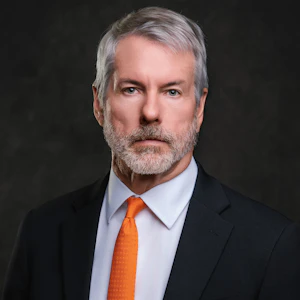
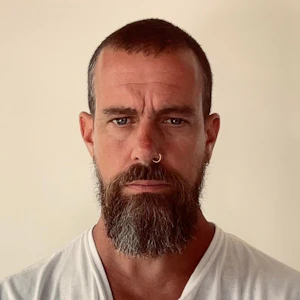
Michael Saylor
Michael Saylor
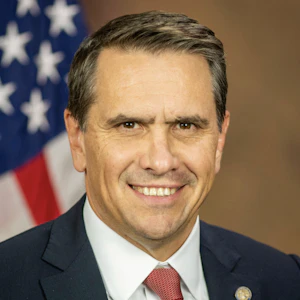
Todd Blanche
Todd Blanche
Biography of Deputy Attorney General Todd Blanche
The Honorable Todd Blanche is the 40th Deputy Attorney General of the United States, overseeing the work of the 115,000 dedicated employees who fulfill the Department of Justice’s mission at Main Justice, the FBI, DEA, U.S. Marshals, ATF, and 93 U.S. Attorney’s Offices.
Todd began his career at the Department where he served for over fifteen years in a variety of capacities, including as a contractor, a paralegal in the Criminal Division, and at the United States Attorney’s office for the Southern District of New York where he eventually became an AUSA and later a supervisor.
After leaving the Department, Todd worked as a criminal defense attorney that included representing President Donald Trump in three of the criminal cases brought against him in 2023 and 2024.
Following President Trump’s historic return to the White House, the President appointed Todd to work alongside Attorney General Pam Bondi to make America safe again. At the DOJ, Todd is working tirelessly to implement President Trump’s priorities that include confronting illegal protecting American businesses from fraud.
Todd has been married to his wonderful wife Kristine for nearly thirty years, is a father and grandfather.
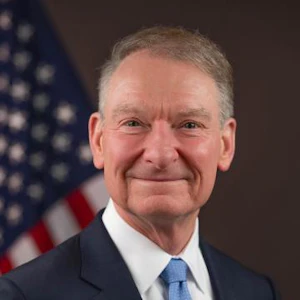
Paul Atkins
Paul Atkins
Prior to returning to the SEC, Chairman Atkins was most recently chief executive of Patomak Global Partners, a company he founded in 2009. Chairman Atkins helped lead efforts to develop best practices for the digital asset sector. He served as an independent director and non-executive chairman of the board of BATS Global Markets, Inc. from 2012 to 2015.
Chairman Atkins was appointed by President George W. Bush to serve as a Commissioner of the SEC from 2002 to 2008. During his tenure, he advocated for transparency, consistency, and the use of cost-benefit analysis at the agency. Chairman Atkins also represented the SEC at meetings of the President’s Working Group on Financial Markets and the U.S.-EU Transatlantic Economic Council. From 2009 to 2010, he was appointed a member of the Congressional Oversight Panel for the Troubled Asset Relief Program.
Before serving as an SEC Commissioner, Chairman Atkins was a consultant on securities and investment management industry matters, especially regarding issues of strategy, regulatory compliance, risk management, new product development, and organizational control.
From 1990 to 1994, Chairman Atkins served on the staff of two chairmen of the SEC, Richard C. Breeden and Arthur Levitt, ultimately as chief of staff and counselor, respectively. He received the SEC’s 1992 Law and Policy Award for work regarding corporate governance matters.
Chairman Atkins began his career as a lawyer in New York, focusing on a wide range of corporate transactions for U.S. and foreign clients, including public and private securities offerings and mergers and acquisitions. He was resident for 2½ years in his firm's Paris office and admitted as conseil juridique in France.
A member of the New York and Florida bars, Chairman Atkins received his J.D. from Vanderbilt University School of Law in 1983 and was Senior Student Writing Editor of the Vanderbilt Law Review. He received his A.B., Phi Beta Kappa, from Wofford College in 1980.
Originally from Lillington, North Carolina, Chairman Atkins grew up in Tampa, Florida. He and his wife Sarah have three sons.

Mike Selig
Mike Selig
Chairman Selig brings to the role deep public and private sector experience working with a wide range of stakeholders across agriculture, energy, financial, and digital asset industries, which rely upon and operate in CFTC-regulated markets.
Prior to his leadership at the CFTC, Chairman Selig most recently served as chief counsel of the Securities and Exchange Commission’s Crypto Task Force and senior advisor to SEC Chairman Paul S. Atkins. In this role, Chairman Selig helped to develop a clear regulatory framework for digital asset securities markets, harmonize the SEC and CFTC regulatory regimes, modernize the agency’s rules to reflect new and emerging technologies, and put an end to regulation by enforcement. He also participated in the President’s Working Group on Digital Asset Markets and contributed to its report on “Strengthening American Leadership in Digital Financial Technology.”
Prior to government service, Chairman Selig was a partner at an international law firm, focusing on derivatives and securities regulatory matters. During his years in private practice, he represented a broad range of clients subject to regulation by the CFTC, including commercial end users, futures commission merchants, commodity trading advisors, swap dealers, designated contract markets, derivatives clearing organizations, and digital asset firms. Chairman Selig advised clients on compliance with the Commodity Exchange Act and the CFTC’s rules and regulations thereunder, including in connection with registration applications and obligations, enforcement matters, and complex transactions.
Chairman Selig earned his law degree from The George Washington University Law School and was articles editor of The George Washington Law Review. He received his undergraduate degree from Florida State University.
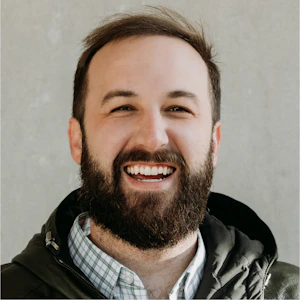
David Bailey
David Bailey

Eric Trump
Eric Trump
Mr. Trump also serves as Executive Vice President of The Trump Organization, where he oversees the global management and operations of the Trump family’s extensive real estate portfolio. This includes Trump Hotels, Trump Golf, commercial and residential real estate, Trump Estates, and Trump Winery. Known for his hands-on leadership and strong market instincts, he has played a key role in expanding the company’s presence across major U.S. and international markets.
A globally recognized business leader and public figure, Mr. Trump is a prominent advocate for Bitcoin and decentralized finance. He is a co-founder of World Liberty Financial, a decentralized finance (DeFi) platform, and serves on the Board of Advisors of Metaplanet, Japan’s largest corporate holder of Bitcoin.
Beyond his business activities, Mr. Trump has helped raise more than $50 million for St. Jude Children’s Research Hospital in the fight against pediatric cancer, a philanthropic mission he began at age 21.
Mr. Trump earned a degree in Finance and Management from Georgetown University. He currently resides in Florida with his wife, Lara, and their two children. He is also the author of Under Siege, his memoir published in October 2025.
Jack Mallers
Jack Mallers
Cynthia Lummis
Cynthia Lummis
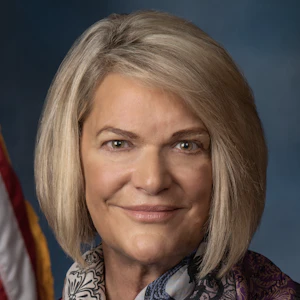
As the first-ever Chair of the Senate Banking Subcommittee on Digital Assets, Senator Lummis is the architect of the legislative framework shaping America's digital asset future. She introduced the landmark Lummis-Gillibrand Responsible Financial Innovation Act, the first comprehensive bipartisan crypto regulatory framework in Senate history. She co-authored the GENIUS Act — the first federal stablecoin law ever enacted — and introduced the BITCOIN Act, which would establish a U.S. strategic Bitcoin reserve of up to one million BTC. She is leading the Clarity Act, which will bring long-overdue regulatory certainty to the digital asset industry. She has also championed digital asset tax reform, including a de minimis exemption for small transactions and equal tax treatment for miners and stakers.
Known as Congress' "Crypto Queen," Senator Lummis represents Wyoming — a state she has helped build into one of the most digital asset-friendly regulatory environments in the nation. Before serving in the Senate, she served 14 years in the Wyoming Legislature, eight years as Wyoming State Treasurer, and eight years in the U.S. House. She is a three-time graduate of the University of Wyoming.
Her work represents a crucial bridge between traditional financial systems and the emerging digital economy, ensuring America leads the world in financial innovation while protecting the individual freedoms that define it.
Adam Back
Adam Back
Amy Oldenburg
Amy Oldenburg
David Marcus
David Marcus

Matt Schultz
Matt Schultz
Fred Thiel
Fred Thiel
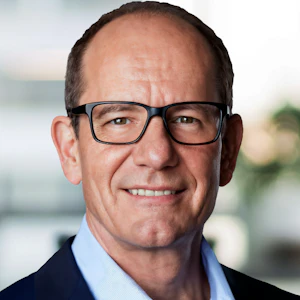
Throughout his career, Mr. Thiel has consistently driven rapid growth and created substantial shareholder value. Prior to MARA, Mr. Thiel served as the CEO of two other public companies, Local Corporation (NASDAQ: LOCM) and Lantronix, Inc (NASDAQ: LTRX). He has successfully raised billions in equity and debt through private and public offerings, led companies through IPOs, executed high-value exits to strategic and financial acquirers, and implemented effective M&A and roll-up strategies.
Mr. Thiel attended the Stockholm School of Economics and executive classes at Harvard Business School, and is fluent in English, Spanish, Swedish, and French. Mr. Thiel is the Chairman of the Board for Oden Technology, Inc. and is active in Young Presidents’ Organization where he has led initiatives in both the FinTech and Technology Networks.
A recognized voice in the industry, Fred frequently shares his insights on energy and technology with major media outlets like Bloomberg TV, CNBC, and FOX Business, contributing to vital discussions about the future of these sectors.
Tim Draper
Tim Draper
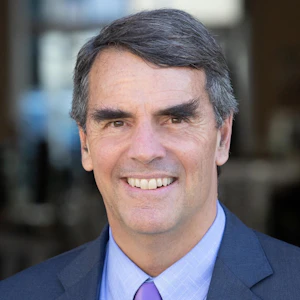
He is a supporter and global thought leader for entrepreneurs everywhere, and is a leading spokesperson for Bitcoin and decentralization, having won the Bitcoin US Marshall’s auction in 2014, invested in over 50 crypto companies, and led investments in Coinbase, Ledger, Tezos, and Bancor, among others.
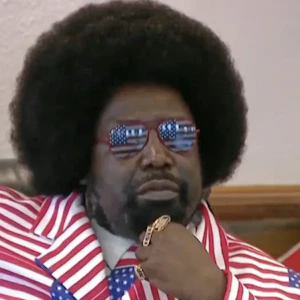
Afroman
Afroman