Building a Personal Treasury with a Perpetual Bitcoin Machine
Speakers/Moderators
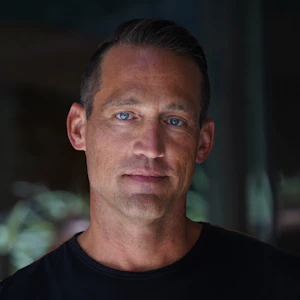
Mark Moss
Mark Moss
Session
Overview
Mark Moss discusses how Bitcoin holders can think beyond simply accumulating bitcoin and selling it in retirement. He argues that treating Bitcoin like a traditional retirement asset keeps people inside a fiat liquidation mindset, rather than using Bitcoin as the foundation for a long-term personal treasury.
The talk centers on the Cantillon effect, fiat debasement, credit creation, asset ownership, and the macro cycle of debt and inflation. Moss presents Bitcoin as pristine collateral that can potentially be used within the existing financial system to acquire productive or tax-advantaged assets, including Bitcoin mining equipment, while building a compounding reserve.
A key theme is inheritance and financial sovereignty. Rather than passing down only an asset, Moss encourages building a durable system that can continue accumulating bitcoin across generations, while warning that credit requires discipline and should not be used recklessly.
All right, welcome. Thanks for welcoming me here at Bitcoin Vegas 2026. I think this is now the seventh or eighth Bitcoin conference I have been at, and I love being here with all the Bitcoiners, because you guys are the smart ones.
You believe in Bitcoin, the most pristine asset and collateral we have ever seen. You made the right move. You bought it. You own it. That is the good part.
The bad news is almost everybody in this room is still going to lose the game. Not because you did not buy the right asset, but because you are using that asset in the old fiat system, and you are playing by an old set of rules that no longer work.
The personal treasury is the answer to this. It is a way that we can take Bitcoin and build it into a system that can build wealth for the rest of our lives and for future generations. It is so we can pass down not just an asset, but a system. Today, I am going to break that down for you.
This is a question I get asked almost all the time. Probably every day I get this coming across social media: how much Bitcoin do I need to retire? I believe there was a panel here on stage yesterday, and that was the entire topic of that conversation. How much Bitcoin do I need? Do I need 10 Bitcoin? Will one Bitcoin be enough? 6.15 Bitcoin? What is the amount of Bitcoin I need?
The problem with that question is it assumes that you are going to have to sell your Bitcoin in order to live. What will the valuation of that Bitcoin be by the time I am ready to retire? Will it be enough to fund my lifestyle? I cross my fingers and hope I die before I run out of money.
The problem is that you just swapped the asset. Instead of the mutual fund, you got Bitcoin, but you kept the same broken strategy. That is a fiat mindset dressed in Bitcoin orange. You got the right asset, but it is the wrong system.
The reason why this has become the default plan is because of this chart. Since 1971, and you guys all know about 1971, workers have become extremely more productive. Every single year, more and more productive, just like they are right now with AI. But the problem is that as the value being created goes up, wages have flatlined.
A lot of people look at that and think it is hard to get ahead because of that. It is a mechanism, but it is a deliberately engineered mechanism, and it has been designed to run that way for over 50 years.
I want to talk about the paradox here. Today, with fiat debasement, it has never been harder to achieve the American dream. It has never been harder to live. It has never been harder to buy the home, have the wife stay at home, and live on one income. You earn an income, you pay a huge amount of taxes, you have to live on whatever is left, and then hopefully you are stacking sats. You are staying humble, stacking sats 5% or 10% a year.
On the other side, if we understand how to use the mechanism, it has never been easier to build wealth. Both are true at the same time, and I am going to show that to you in this talk.
The system is not broken. Yes, fix the money, fix the world. We are here to fix the world. But right now we have a system, and it is not broken. It is actually working exactly as designed. It is just not working in your best interest.
It is not an accident. It was not incompetence. It was engineered. We can go back to pre-1913, before the Federal Reserve, when we were on a gold-based, equity-based system. Fast forward to the creation of the Federal Reserve, the 1944 Bretton Woods Agreement, and 1971. After the whole world was put onto the U.S. dollar gold standard, the whole world was rug pulled. Nixon rug pulled the world, took us off the gold standard, and since 1971 we have been on a fiat-based, debt-based monetary system.
The problem is that most people are still playing the game for the old system, not realizing we are in a new one.
This is something you hear all the time. There are panels up here talking about the Cantillon effect. If you have read The Bitcoin Standard, Broken Money, Natalie Brunell's book, you have heard about this Cantillon effect. It explains that whoever is closest to the money supply gets the benefit. We are all a victim to this, and if we can just get onto a Bitcoin standard, we can fix this.
How it works is, level one, whoever is closest to the money, the commercial banks, create money through lending. Level two, those with collateral are closer to the money supply. They borrow first, they take that new money, and they start buying assets. Level three, asset prices start going up as credit expands. Real estate goes up, stocks go up, and of course Bitcoin is more volatile, so it goes up even more. Level four, after that happens, consumer prices start going up. Level five, where most of us are, is at the bottom. Our wages go up last, after everything is already more expensive. Prices are more expensive. Asset prices are more expensive. That is the Cantillon effect.
Five different levels, but almost everyone lives on the bottom rung. Not because they have to, but because nobody showed them the ladder. We are going to fix this. We are going to build a system for this today.
We have to understand that at the top, the big banks create the money. The commercial banks create the money. Then people close to the money supply use that money to buy assets. But almost everyone here has a bank account at the same banks, and almost everyone has access to lending and credit the same way. It is what you use it for. The same bank, the same credit, the same access, but different outcomes. The variable is what you use the credit for.
The system is not broken. This is not a failure. The system is working exactly as designed. Again, 1971, where the arrow is, you can see that since 1971 the top 1% of earners have seen their wealth go up and up at a parabolic rate, while everybody else, the bottom 90%, have seen their wages stay flat.
They are not smarter than you. They are not luckier than you. They just understand how to play the game differently.
So let us take the Cantillon effect and flip it upside down. Let us lay out the Cantillon playbook. The Cantillon playbook is using two things. The Cantillon effect, which I have already explained: new credit creation and money creation buys assets and pushes those assets higher. But that sits inside this macro loop.
You have heard Lyn Alden say that nothing stops this train, which means governments cannot stop and will not stop. They have to continue printing more money. As deficits continue to get bigger and bigger, as they have more and more debt, they have to push the cost of that debt lower and lower, so rates go down. They need the debt to be cheap. It is one of the reasons why the Trump administration is so bent on getting rates down, not to save the economy, but to make it cheaper for the government to manage the debt.
When they borrow more money and push rates down, inflation goes up, and it does two things. Number one, it destroys the real value of the existing debt. All the people who took the debt see it get destroyed through inflation. At the same time, it pushes asset prices higher.
In this macro loop, the government can borrow more, run bigger deficits, and need cheaper debt. They push more inflation, asset prices go higher, debts get destroyed, and it repeats over and over. That is a cycle that never ends.
This is not political. Every single president, both parties, the debt continues to expand. For us, we need to decide which side of this loop we want to be on. Do we want to be on the left side, where we are just working for wages, paying taxes, and saving our 5% or 10% stacking sats? Or do we want to be an owner? Do we want to own assets? Do we want to own pristine collateral?
Again, Bitcoin has already made the right call. You already bought the right asset. You are ahead of 99% of the world. But if you are on the wrong side of the system, it is still going to break down in a fiat liquidation plan.
So we are going to build this system. We are going to use both the Cantillon effect, being close to the money supply and using cheap credit to buy assets, and the macro loop, where those two things combine. Assets are inflated by the Cantillon effect. Debt is destroyed by the macro loop. You do not do anything. We use the loop's energy to build your own personal treasury. It is what I call the judo move.
Before I break out this playbook, I have to say something. I say this as a Bitcoiner. I say this as somebody who has been making Bitcoin content and trying to orange-pill people for over a decade. I say this as somebody who read Ron Paul's book End the Fed. We are here to end the Fed. We want to get rid of this fiat monetary system. We want to go to a sound money system. We believe that can fix the world and change the world. I am here for it. I am trying to bring it in as fast as I can.
I am a partner with the Bitcoin Opportunity Fund. We are literally deploying money into companies trying to build the world that we want. So while I am working as fast and hard as I can to build that world, we also have to realize that we live in the current world that we are in.
The quote by Naval says that the only real sign of intelligence is if you get what you want out of life. Certainly, we want to build this, and I want to build that world for my kids and my grandkids and your kids and grandkids. But I also have to live in this world as it is.
You and I know the money system is broken. We know the Fed is the problem. We understand the Cantillon effect. But then we go home and we stack our sats 5% a year because we do not want to give the system any energy. But you can believe the system is wrong and use the tools while it still exists at the same time.
I call this the judo move. Instead of pulling out of the system and abstaining, we want to take the energy from the system and use it against itself. Some people call it a speculative attack.
This strategy has been used to build wealth for millennia. The problem is that it has only been available to the billionaires because they had enough money and assets to make it work. But Bitcoin is the cheat code. Bitcoin sitting inside of this system allows all of us to now have the same playbook: the hardest asset in human history.
The Cantillon effect flows new money into assets first, and of course Bitcoin is the hardest asset. The macro loop pushes permanent inflation, and Bitcoin is the perfect inflation hedge. The tax code rewards long-term holders and owners, and of course Bitcoin rewards patience. So Bitcoin is not fighting the system. Bitcoin fits perfectly inside the system for us.
Let us think about this to build our own personal treasury. Think about a central bank. A central bank acquires hard assets, issues credit against the reserves, and never liquidates or sells the reserves. A sovereign wealth fund is the same thing. So we want to think about that. How do we buy Bitcoin, the best asset in history, issue credit against our reserves, and never liquidate that?
My grandfather understood this, and I am sure you have family members who did as well. My grandfather understood that he was supposed to buy as many assets as he could. He bought land, houses, and office buildings. But then when he died, my father and my aunts and uncles sold it all. They did not understand the system. They did what the fiat world told them to do: sell the assets, get the money, spend the money. That is the fiat virus.
Stack Bitcoin for 40 years, retire, start selling my Bitcoin, hope I do not run out, die with zero. We want to change this.
The old track is: earn income, the government takes 20%, 30%, 40%, live on what is left, stack 5% or 10% in sats if you are lucky, if you skip your morning coffee every day, then retire and start selling.
What we want to do is run the Cantillon playbook. We want to earn money, reclaim some of the money that we would send to taxes, and invest that by acquiring more assets. We want to use those assets as collateral to issue credit like a central bank, and then that funds our lifestyle and liquidity to buy more assets.
The perpetual Bitcoin machine has a name and a mechanism. Five steps. Number one, just like a bank, just like the Cantillon effect, whoever is closest to the money supply has an account at the bank and access to credit. We can use credit to acquire tax-depreciation assets, using the tax code and the system's own tools. We can buy real estate. We can buy all types of equipment. But we can buy Bitcoin mining equipment.
If I buy Bitcoin mining equipment, then the IRS allows me to use that depreciation to write off my taxes. Now, without having to make any more money, instead of giving a huge chunk of money to the IRS, I get to keep that money and buy more Bitcoin with it.
Step number two is reclaim. Reclaim by investing into assets that generate depreciation and deductions. The government is literally paying me to buy Bitcoin mining equipment. Then I use the money I saved to acquire more capital.
New money flows into Bitcoin every single year, plus my Bitcoin miners are producing more Bitcoin every year. My asset base, my collateral base, is growing, and it is a loop. Now I have all this new Bitcoin that I can issue credit against to buy more Bitcoin miners, to reclaim my tax money that would have gone to the government, to buy more Bitcoin.
Every year, the new Bitcoin mined and produced gives me the ability to create more credit, to write off more taxes, to buy more Bitcoin. It compounds and it compounds, and we can pass this system forward. It is a self-sustaining system. The credit funds the assets, the assets generate reclaimed taxes, and the reclaimed taxes buy more Bitcoin. This is the system that we can pass down.
I do want to say something really quickly, especially to my hardcore Bitcoin friends who think that in this new world on a Bitcoin standard, credit goes away. I do not necessarily agree with that. But I do agree that credit is very dangerous. It is like fire.
I am not standing here telling you to go issue a bunch of credit recklessly and buy Bitcoin. That is not what I am here to talk about. What I am talking about is engineering a system. Engineering a system requires discipline. The people running the perpetual Bitcoin machine do not YOLO into it. They study the system, and they build the machine.
Imagine owning a system where your Bitcoin reserve grows faster and faster without working harder, because the machine you built is compounding. The Cantillon effect flows into your assets. The macro loop destroys the debt and inflates your reserves. The tax code allows you to build this Bitcoin machine, reclaiming that money and putting it back into more Bitcoin. That is what sovereignty looks like.
Now you know why it has never been harder if I play by the old rules to build wealth. But if I use the system as it is designed today, not the one that we hope comes eventually, but the one we have today, it has never been easier to make money.
I am going to close with this. In the white paper, we talk about the timechain. Life is a timechain. We are Bitcoiners. We are here. We believe in proof of work. My life should represent the proof that I was here and the work that I put in.
I am not going to die with zero. I am not going to leave the world worse off than I found it. My life will be represented by the block that I have, and the next generation will add on the next block. They are not going to start from zero. They are going to start from a higher place, and every single generation in my bloodline will start from a higher level.
That is what Bitcoiners do. We think long term. Do not save for your future just to sell it and have your kids start with zero. Build the machine, run the playbook, fund your future. Be the central bank for your family. And yes, leave them Bitcoin, but even more importantly, leave them the system.
All right, thanks so much.
Similar
Sessions
The Convergence of AI and Bitcoin

Allen Helm
Allen Helm
Mark Moss
Mark Moss

Kurtis Perdelwitz
Kurtis Perdelwitz

The Convergence of AI and Bitcoin
Speakers/Moderators
Allen Helm
Allen Helm
Mark Moss
Mark Moss
Kurtis Perdelwitz
Kurtis Perdelwitz
Building a Personal Treasury with a Perpetual Bitcoin Machine
Mark Moss
Mark Moss
Building a Personal Treasury with a Perpetual Bitcoin Machine
Speakers/Moderators
Mark Moss
Mark Moss
What Does Bitcoin Look Like in an Agentic World?

Marty Bent
Marty Bent
Mark Moss
Mark Moss

Erik Cason
Erik Cason

What Does Bitcoin Look Like in an Agentic World?
Speakers/Moderators
Marty Bent
Marty Bent
Mark Moss
Mark Moss
Erik Cason
Erik Cason
Other
Speakers
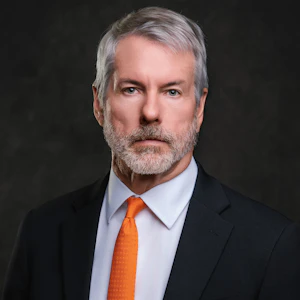
Michael Saylor
Michael Saylor
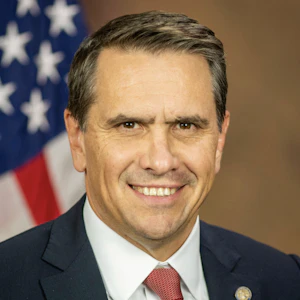
Todd Blanche
Todd Blanche
Biography of Deputy Attorney General Todd Blanche
The Honorable Todd Blanche is the 40th Deputy Attorney General of the United States, overseeing the work of the 115,000 dedicated employees who fulfill the Department of Justice’s mission at Main Justice, the FBI, DEA, U.S. Marshals, ATF, and 93 U.S. Attorney’s Offices.
Todd began his career at the Department where he served for over fifteen years in a variety of capacities, including as a contractor, a paralegal in the Criminal Division, and at the United States Attorney’s office for the Southern District of New York where he eventually became an AUSA and later a supervisor.
After leaving the Department, Todd worked as a criminal defense attorney that included representing President Donald Trump in three of the criminal cases brought against him in 2023 and 2024.
Following President Trump’s historic return to the White House, the President appointed Todd to work alongside Attorney General Pam Bondi to make America safe again. At the DOJ, Todd is working tirelessly to implement President Trump’s priorities that include confronting illegal protecting American businesses from fraud.
Todd has been married to his wonderful wife Kristine for nearly thirty years, is a father and grandfather.

Paul Atkins
Paul Atkins
Prior to returning to the SEC, Chairman Atkins was most recently chief executive of Patomak Global Partners, a company he founded in 2009. Chairman Atkins helped lead efforts to develop best practices for the digital asset sector. He served as an independent director and non-executive chairman of the board of BATS Global Markets, Inc. from 2012 to 2015.
Chairman Atkins was appointed by President George W. Bush to serve as a Commissioner of the SEC from 2002 to 2008. During his tenure, he advocated for transparency, consistency, and the use of cost-benefit analysis at the agency. Chairman Atkins also represented the SEC at meetings of the President’s Working Group on Financial Markets and the U.S.-EU Transatlantic Economic Council. From 2009 to 2010, he was appointed a member of the Congressional Oversight Panel for the Troubled Asset Relief Program.
Before serving as an SEC Commissioner, Chairman Atkins was a consultant on securities and investment management industry matters, especially regarding issues of strategy, regulatory compliance, risk management, new product development, and organizational control.
From 1990 to 1994, Chairman Atkins served on the staff of two chairmen of the SEC, Richard C. Breeden and Arthur Levitt, ultimately as chief of staff and counselor, respectively. He received the SEC’s 1992 Law and Policy Award for work regarding corporate governance matters.
Chairman Atkins began his career as a lawyer in New York, focusing on a wide range of corporate transactions for U.S. and foreign clients, including public and private securities offerings and mergers and acquisitions. He was resident for 2½ years in his firm's Paris office and admitted as conseil juridique in France.
A member of the New York and Florida bars, Chairman Atkins received his J.D. from Vanderbilt University School of Law in 1983 and was Senior Student Writing Editor of the Vanderbilt Law Review. He received his A.B., Phi Beta Kappa, from Wofford College in 1980.
Originally from Lillington, North Carolina, Chairman Atkins grew up in Tampa, Florida. He and his wife Sarah have three sons.

Mike Selig
Mike Selig
Chairman Selig brings to the role deep public and private sector experience working with a wide range of stakeholders across agriculture, energy, financial, and digital asset industries, which rely upon and operate in CFTC-regulated markets.
Prior to his leadership at the CFTC, Chairman Selig most recently served as chief counsel of the Securities and Exchange Commission’s Crypto Task Force and senior advisor to SEC Chairman Paul S. Atkins. In this role, Chairman Selig helped to develop a clear regulatory framework for digital asset securities markets, harmonize the SEC and CFTC regulatory regimes, modernize the agency’s rules to reflect new and emerging technologies, and put an end to regulation by enforcement. He also participated in the President’s Working Group on Digital Asset Markets and contributed to its report on “Strengthening American Leadership in Digital Financial Technology.”
Prior to government service, Chairman Selig was a partner at an international law firm, focusing on derivatives and securities regulatory matters. During his years in private practice, he represented a broad range of clients subject to regulation by the CFTC, including commercial end users, futures commission merchants, commodity trading advisors, swap dealers, designated contract markets, derivatives clearing organizations, and digital asset firms. Chairman Selig advised clients on compliance with the Commodity Exchange Act and the CFTC’s rules and regulations thereunder, including in connection with registration applications and obligations, enforcement matters, and complex transactions.
Chairman Selig earned his law degree from The George Washington University Law School and was articles editor of The George Washington Law Review. He received his undergraduate degree from Florida State University.

David Bailey
David Bailey

Eric Trump
Eric Trump
Mr. Trump also serves as Executive Vice President of The Trump Organization, where he oversees the global management and operations of the Trump family’s extensive real estate portfolio. This includes Trump Hotels, Trump Golf, commercial and residential real estate, Trump Estates, and Trump Winery. Known for his hands-on leadership and strong market instincts, he has played a key role in expanding the company’s presence across major U.S. and international markets.
A globally recognized business leader and public figure, Mr. Trump is a prominent advocate for Bitcoin and decentralized finance. He is a co-founder of World Liberty Financial, a decentralized finance (DeFi) platform, and serves on the Board of Advisors of Metaplanet, Japan’s largest corporate holder of Bitcoin.
Beyond his business activities, Mr. Trump has helped raise more than $50 million for St. Jude Children’s Research Hospital in the fight against pediatric cancer, a philanthropic mission he began at age 21.
Mr. Trump earned a degree in Finance and Management from Georgetown University. He currently resides in Florida with his wife, Lara, and their two children. He is also the author of Under Siege, his memoir published in October 2025.

Jack Mallers
Jack Mallers
Cynthia Lummis
Cynthia Lummis
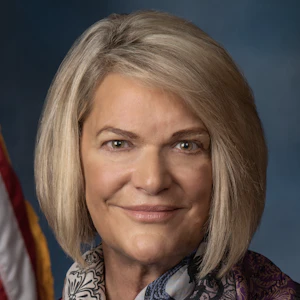
As the first-ever Chair of the Senate Banking Subcommittee on Digital Assets, Senator Lummis is the architect of the legislative framework shaping America's digital asset future. She introduced the landmark Lummis-Gillibrand Responsible Financial Innovation Act, the first comprehensive bipartisan crypto regulatory framework in Senate history. She co-authored the GENIUS Act — the first federal stablecoin law ever enacted — and introduced the BITCOIN Act, which would establish a U.S. strategic Bitcoin reserve of up to one million BTC. She is leading the Clarity Act, which will bring long-overdue regulatory certainty to the digital asset industry. She has also championed digital asset tax reform, including a de minimis exemption for small transactions and equal tax treatment for miners and stakers.
Known as Congress' "Crypto Queen," Senator Lummis represents Wyoming — a state she has helped build into one of the most digital asset-friendly regulatory environments in the nation. Before serving in the Senate, she served 14 years in the Wyoming Legislature, eight years as Wyoming State Treasurer, and eight years in the U.S. House. She is a three-time graduate of the University of Wyoming.
Her work represents a crucial bridge between traditional financial systems and the emerging digital economy, ensuring America leads the world in financial innovation while protecting the individual freedoms that define it.
Adam Back
Adam Back
Amy Oldenburg
Amy Oldenburg
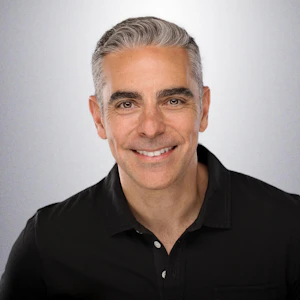
David Marcus
David Marcus

Matt Schultz
Matt Schultz
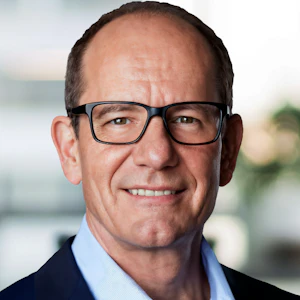
Fred Thiel
Fred Thiel
Throughout his career, Mr. Thiel has consistently driven rapid growth and created substantial shareholder value. Prior to MARA, Mr. Thiel served as the CEO of two other public companies, Local Corporation (NASDAQ: LOCM) and Lantronix, Inc (NASDAQ: LTRX). He has successfully raised billions in equity and debt through private and public offerings, led companies through IPOs, executed high-value exits to strategic and financial acquirers, and implemented effective M&A and roll-up strategies.
Mr. Thiel attended the Stockholm School of Economics and executive classes at Harvard Business School, and is fluent in English, Spanish, Swedish, and French. Mr. Thiel is the Chairman of the Board for Oden Technology, Inc. and is active in Young Presidents’ Organization where he has led initiatives in both the FinTech and Technology Networks.
A recognized voice in the industry, Fred frequently shares his insights on energy and technology with major media outlets like Bloomberg TV, CNBC, and FOX Business, contributing to vital discussions about the future of these sectors.
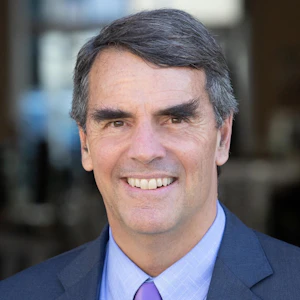
Tim Draper
Tim Draper
He is a supporter and global thought leader for entrepreneurs everywhere, and is a leading spokesperson for Bitcoin and decentralization, having won the Bitcoin US Marshall’s auction in 2014, invested in over 50 crypto companies, and led investments in Coinbase, Ledger, Tezos, and Bancor, among others.

Afroman
Afroman