Building Bitcoin Wealth Through Trusts, Insurance & Inheritance
Speakers/Moderators

Wyatt O'Rourke
Wyatt O'Rourke
My style is to blend financial savvy with a passion for Bitcoin and conservative values. I seek to offer my clients with a fresh, informed perspective on wealth management & investment product design. I am interested in the intersection of behavior, incentives, and markets. My values stem from my Christian faith. My hobbies, marriage, and involvement in communities keep me inspired.

Jeff Vandrew Jr.
Jeff Vandrew Jr.
Mr. Vandrew earned his Juris Doctor in Law from Rutgers Law School and and Bachelor of Arts from Rutgers University. He is a Floridian.

Zac Townsend
Zac Townsend
Jake Claver
Jake Claver
Session
Overview
This panel focused on Bitcoin estate planning, inheritance, trusts, custody, life insurance, and tax-aware wealth transfer for individuals and families with significant Bitcoin holdings. Wyatt O'Rourke hosted a discussion with Jeff Vandrew Jr. of Gannett Trust Company and Unchained, Zac Townsend of Meanwhile, and Jake Claver of Digital Ascension Group.
The speakers emphasized that passing on Bitcoin requires both key access and legal title. They discussed wills, trusts, institutional trustees, multisig custody, trust protectors, spendthrift provisions, and long-term family governance designed to preserve Bitcoin across generations.
A major theme was adapting established financial and estate planning tools to Bitcoin rather than reinventing them. The conversation covered Bitcoin-denominated whole life insurance, irrevocable life insurance trusts, tax considerations, borrowing against policy value, and the trade-offs between self custody, qualified custodians, and professional fiduciary structures.
The panel also addressed Bitcoin yield and wealth generation with caution, noting that higher yield can introduce unnecessary risk when Bitcoin’s long-term appreciation is central to the plan. The discussion framed Bitcoin financial services as a toolkit for stewardship, inheritance, and long-term asset protection.
Day three of the Bitcoin conference. How are we feeling? I love it. Enterprise Stage always brings the energy. Thank you guys for being with us here today. We're going to get into some awesome stuff. My name is Wyatt O'Rourke. I'm the founder of Basilic Financial, a Bitcoin-focused wealth management firm, and PAX Partners, a private credit fund investing in Bitcoin-collateralized loans. These gentlemen will introduce themselves.
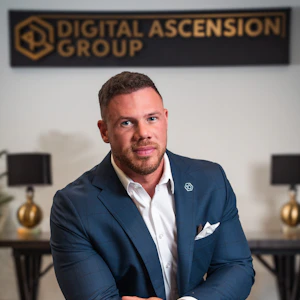
Good Monday morning. Hopefully you guys are having a good conference. My name is Jake Claver. I am the chairman of Digital Ascension Group. We are a multifamily office. We specialize in digital assets, so all the things that you'd expect from that: wealth management, estate planning, taxes, all the fun stuff that everybody loves to talk about.
I'm Zac Townsend. I'm the CEO of Meanwhile. Meanwhile is a life insurance company entirely in Bitcoin. I'll tell you more about that later. But if you love Bitcoin and you hate taxes, you want a life insurance policy.
I'm Jeff Vandrew. I am CFO and chief legal officer at Unchained. Unchained is a diversified Bitcoin financial services company. We offer multisignature custody, lending, and trading. Our newest business line is Gannett Trust Company, our wholly owned subsidiary, where I also serve as CEO.
Amazing. Thank you, gentlemen. High-powered group up here. We're going to get into a lot of quantitative nuts and bolts about how we can make our Bitcoin work for us and how we can take care of our Bitcoin. But I want to do a little level setting up front so we really understand the moment and what we're getting into here.
One of the things I talk to my clients a lot about is really understanding the moment and understanding your responsibilities as a Bitcoiner, specifically when it comes to inheritance. There are a lot of unique attributes of Bitcoin, and we really want to make sure, when we're dealing with a finite, scarce asset, that we're good stewards of our wealth. We've become very accustomed to outsourcing responsibility. When we're talking about passing on Bitcoin and making sure it gets to its intended destination, we have to be very intentional about how we do that.
With that said, Jeff, I want to start with you. Maybe we could do some level setting. We'll work backwards on the inheritance side of things, making sure our stack is secured and gets to where it needs to go. Why don't you walk us through some basics, some blocking and tackling on trust structures? What kind of trust structures do you see work very well for Bitcoiners?
Yeah. That's a bit of a loaded question for me. As Unchained employees will tell you, when I get asked what a trust is, usually I start by going back to the Norman conquest of England, William the Conqueror and all that. I'll spare you guys that here today, despite the captive audience, where I'm sure you'd all be enthralled.
The most important thing to understand, even taking a step back from trusts, about Bitcoin and inheritance generally, is that a lot of Bitcoiners have a misconception that all that needs to happen is their loved one, the person they want to take their Bitcoin upon their death, has to find their private keys. That's not true. That is important, but it's just table stakes.
If your loved ones can find your private keys when you're gone, but you don't have the appropriate legal structure on the back end, which is usually a will and also some combination of trusts, what will happen is that loved one who finds those keys may have possession of that Bitcoin, but they don't have legal title to it. That can be a problem, because their possession may not be rightful, and you may have other loved ones who could sue them and start fighting over who that Bitcoin really belongs to.
That's the most important thing I like to start with: making sure Bitcoiners realize there are really two pieces to this. There's the physical side with keys, and then there's the legal side, making sure everything is documented properly.
Most people are probably familiar with what a will is, but buried within Wyatt's question was the idea of what a trust is. The short definition is that a trust is a division of legal and equitable title between two different parties. What that means is you're designating a trustee as the legal title holder. That's the person or entity that manages those assets and faces the world. That's who third parties deal with with respect to the assets held in trust.
Then there are the beneficiaries, who are the equitable title holders. They're the ones the assets are mandated to benefit. The trustee has to manage those assets not for its own benefit, but for the benefit of those beneficiaries. It must always consider the beneficiaries ahead of itself.
People create trusts to create that division between legal and equitable title for a few reasons. Number one, it could be because you just want independent third-party management of those assets. Number two, there could be tax benefits to doing that. It can actually reduce the amount of taxes that your loved ones pay as those assets pass down through generations. Number three, it can also provide asset protection benefits.
That can take a lot of different forms. When I was a practicing estate planning attorney a very long time ago, one of the most common concerns I would see from parents was, “I've got this piece-of-crap son-in-law, and I want my daughter to get my Bitcoin or other assets, but I want to make sure that no matter what happens, her son-in-law isn't going to be able to benefit from those assets. If he divorces her someday or she kicks him to the curb, he's not going to be able to get a piece of it.” Trusts are an effective mechanism for that type of asset protection, as well as protection from other types of creditors.
They're a really flexible mechanism that we use. At Gannett Trust Company, we can act as what's called an institutional trustee, which means instead of having to name a friend or family member as trustee, who may not be well suited to do that because they're not professionals, Gannett Trust Company can act as trustee over not just your Bitcoin, which is a unique selling point of ours because very few trustees are able to handle actual real physical Bitcoin, but also over all of your traditional financial assets as well.
Amazing, Jeff. That was a phenomenal overview. I think that's really good insight on why we need to plan and be intentional with our planning. We can't predict the future. There are a lot of different things that come up that we need to take into account.
Jake, you have a high net worth clientele. You're helping them with these very same questions. Jeff already kind of scolded us on why we shouldn't create a treasure map and bury it in the backyard. How do you walk your clients through estate planning?
We work with a variety of people across the spectrum. We have multifamily offices that are already very familiar with trusts and estate planning, and then we also work with a lot of high net worth individuals or people who have a significant allocation to digital assets, whatever that means to them.
Really, it's a value proposition. If you believe this is going to go up over the long term, you probably want to be a good steward. Like you mentioned, most of the demographic we deal with is somewhere between 45 and 70 years old. They have a spouse, they have children, and they want to make sure that this stuff is perpetuated.
When we have those conversations, a lot of unique circumstances come up. You might have a child who has disabilities and you want to maintain their SSI, so you need those considerations in the trust. Your children might be older, and maybe they aren't as good a fiduciary as you, or they don't understand this technology, so you might put a spendthrift provision in the trust.
There are a lot of different things you can put in your trust to make sure certain circumstances are navigated well. You want to work with a good estate planner or trust attorney to make sure that's structured the way you want it done.
Most of our clients are looking over the next 100 years. How do we make sure this lasts the next five generations as these assets appreciate? That's a really different framework. Many people come to the conversation thinking about their kids or their grandkids, and we help them structure a family charter or constitution that allows them to step back and look at their great-grandkids and great-great-grandkids and how they're going to be looking at this asset class and navigating those things.
I think it's really important to take that holistic picture, because if you're short-sighted and you put in things that work today, those things may be inflexible later on. You want to be dynamic enough that as technology shifts and regulation shifts, you're able to deal with those circumstances, but at the same time rigid enough to make sure that your principles, core beliefs, and the values that you want to pass on to your children are disseminated and upheld over that time frame.
That's beautiful. Zac, you guys have done something very unique in the industry. You've developed this whole life insurance policy fully denominated in Bitcoin. Walk the audience through what it's like having an investment product with exposure to Bitcoin, but also some of the traditional finance mechanisms of a whole life policy, and specifically how that ties in with inheritance and making sure Bitcoin gets to your heirs.
The headline is that life insurance, like trusts, is a go-to tool for wealthy people to get assets out of your estate or make sure they're transferred well to beneficiaries. Beneficiaries is also the word you use in life insurance. But let me explain some of the terms, because people are going to be like, “What the hell does that mean?”
First off, Meanwhile, as a life insurance company, is entirely denominated in Bitcoin. You pay us in Bitcoin. We pay all claims in Bitcoin. We're regulated in Bermuda, not the Bahamas where FTX was. Bermuda is the insurance capital of the world, a very well-respected regulator. Our financial statements, our audits, our actuarial math, everything is in Bitcoin.
The reason that's important, other than just ideologically for us that one Bitcoin is truly one Bitcoin, is that the price of Bitcoin doesn't matter and doesn't affect our ability to meet our promises. We've been running the company as the price of Bitcoin was 60, it was 15, it was 130. It doesn't matter because the way our whole life policy works is that you pay us a certain number of Bitcoin over ten years, and then we make a fixed, guaranteed promise to you.
That might look like you pay one Bitcoin a year for ten years, and then when you die, we pay your beneficiaries, depending on how healthy you are, 13, 14, 15, something like that. That's whole life because it lasts your whole life. You're guaranteed a payout. It's like an investment product.
There are some benefits with that. The first benefit is actually that you don't have to remember where your keys are, because we are under a legal obligation to make sure that your beneficiaries get your Bitcoin.
The second thing is it goes to your kids tax free, or your kids' trust. Frequently these things are put together. There are things called irrevocable life insurance trusts. Your trust can be an owner. These things get combined, but fundamentally there are ways to get your Bitcoin to your kids tax free.
The third thing is that whole life has a policy value. It has an account value in it, and you can borrow, or the trust can borrow, against the whole life policy, also entirely tax free. What you're doing is putting Bitcoin in, and let's say you need some Bitcoin in the future. You want to buy a big house or whatever. You've put the Bitcoin in now, but later Bitcoin is at 700,000 or 7 million, or whatever you think it's going to be. You can borrow it out, and that's new Bitcoin to you. That is a way to avoid the capital appreciation, the capital gains tax, between now and then.
Again, these are very well-known tools. This is a go-to tool, just like a trust is, these large life insurance policies. We just do it entirely in Bitcoin.
It's awesome. I talk about this all the time. Obviously I'm biased, but I think Bitcoin financial services is the most exciting sub-industry of Bitcoin to be in right now. I actually use Meanwhile as the example of that, because you have this traditional finance playbook that you just need to apply to Bitcoin. You don't actually need to recreate the wheel here.
One of the things I really want you guys to take home from this talk is being intentional. Jeff, I want you to give us some more insight on this, because something I hear a lot is, “I don't need a financial advisor. I have Bitcoin.” “Bitcoin is my financial plan” is wrong. Bitcoin is money. There are services and professionals you can utilize.
Zac did a great job teeing it up a little bit, but if you do take the time to be intentional and work with a professional who knows what they're doing, how can you build or add on these structures on top of each other, like a whole life insurance policy on top of a trust? And how does that really benefit not only you while you're living, but also your heirs when you're gone?
As you mentioned, we do have a wealth advisory practice as part of Gannett where we can help people plan and design these structures to be both tax efficient and to fit their goals and their needs. It could be retirement planning to make sure that you don't run out of money, when you can actually quit working, that sort of thing.
To the more immediate question regarding how life insurance can have an interplay with trusts, Zac touched on this a little bit. One of the more powerful estate planning mechanisms is what's called an irrevocable life insurance trust. Those of us who practice in this area refer to it as an ILIT.
The benefit of that is, in the classic life insurance scenario, let's say I own the policy, I'm the insured life, and I name my wife and kids as beneficiaries. When I pass away and those assets pass down to my wife and kids, they'll be free of income taxes. But if I'm over the applicable estate tax threshold, they'll still count toward my estate tax bill.
An irrevocable life insurance trust eliminates that problem. What it does is I'm still the insured life on the policy, but the policy is owned by a trust, and the policy beneficiary is also a trust. My wife and kids then act as the beneficiaries of the trust rather than as the beneficiaries of the policy directly.
The benefit that creates is now, when I die, not only will it not be income taxed, but there will not be estate tax either when the policy benefits pay out upon my death. The other benefit is those policy benefits will pay out into the trust for my wife and kids instead of to my wife and kids directly.
By doing it that way, those assets are not subject to the claims of their creditors. They're asset protected, including from any divorcing spouses or whatever the case may be. Then, when the assets pass down another generation, say that generation passes away and there are still assets remaining in there and those go down yet another generation, they won't be subject to estate tax again. Otherwise, if you had just paid out the death benefit in the standard way, whatever death benefits I didn't spend during life would be subject to estate tax again a second time at my death. It avoids that multi-level taxation.
We also have people using all sorts of structures. We have folks who have three kids, and they make their kids the insured and set up ILITs for their grandkids. There are all sorts of structures you can use depending on your tax goals.
It's particularly important for us because, as Bitcoiners, I'm working with clients and we do the forecasting exercise. It's probably more money in the future than you initially expected when you got into Bitcoin. It's important that you're really starting to think about these things.
There are trade-offs to utilizing some of these structures. Specifically on the custody side, maybe I have a trust or I need a qualified custodian. Something Bitcoiners are obviously hyper-focused on is custody. Jake, why don't you walk us through what some of those trade-offs may be and how you work with clients who maybe give and take a little bit?
The whole point of Bitcoin is to be self-sovereign, at least for most people. You want to be able to move with that money whenever you need it. But that also comes with some inherent risk, many of which have been described by the other panelists.
In circumstances where maybe you're under duress, maybe you've passed on, or you're incapacitated, you need some transfer mechanism or some multisig or governance around how you custody those assets. We do that at Anchorage. They are an institutional custodian that we partner with. We are a signer on the wallet, so is the client, and so is the custodian. It's very similar to what Unchained does, which I think is a great way to go about it. You still have a lot of control over those assets.
Again, depending on what type of structure you might have it in, if it's an irrevocable trust, you're likely going to have a distribution trustee, a trust protector, you're the grantor, and then you'll have the beneficiary, which is either the life insurance trust or direct to your kin.
It's always a give and take. It's never going to be a perfect solution. You're going to have to weigh and balance what's best for you and your circumstances, and how much control or little control you want over the assets. I think most people just want to protect it. They want to make sure it grows. They want to make sure they have access to it when they need it.
All of those things work in traditional finance, and like you talked about, it's just applying that to Bitcoin. Many of these things already exist. We don't need to reinvent the wheel. Just apply those same tools to this asset class.
We have a product that we've launched. It's a fund for Bitcoin. We partner with Two Prime and Fidelity. They are custodian for the Bitcoin that we hold for our clients, and we're able to generate somewhere between 6% and 8% on that Bitcoin, depending on the year in that strategy. That's in-kind returns. Meanwhile can do something similar in their strategies to generate returns to pay out over the long term.
A little less than that.
But that's all you need, right? You want it to be safe and conservative. Depending on your risk tolerance, there are suitability standards for that product. Sometimes it's not a fit for everybody. But we wanted to bring that to market, and we have some more products we're bringing to market as well.
You can blend all of these things. You could be holding your assets in an irrevocable life insurance trust while it's participating in one of these products to compound that Bitcoin and pass more of that Bitcoin down to your heirs.
The other thing I'd mention is today, the estate tax here in the U.S. applies to anything over $30 million if you're a married couple. If you think your Bitcoin is going to be in excess of that at the time of your passing, it's probably a good idea to start looking at a lot of this stuff.
Absolutely. It's a great transition too, because I want to start talking about wealth generation with Bitcoin. One of the most common questions I get is, “How do I earn yield on my Bitcoin? Can I wrap it on this protocol?” I'm like, no, absolutely not. Please never do that.
Zac, I'm in awe of the Meanwhile product. In my opinion, it's genuine Bitcoin-denominated yield. I think you fully denominating the company and your policies in Bitcoin was really an unlock and something first and unique in the marketplace. Walk the audience through how your policies generate yield and how you think of yield generation in general on Bitcoin.
Thank you. First off, I'd say 6% or 7% is beyond our risk tolerance. We target 2% to 3% returns in Bitcoin.
As I mentioned, the way the policy works is you pay in and then we make a guaranteed payout. The difference between those two numbers, as I said, like 10 to 13, depends on your age and your health. In some ways we're making a promise to you of something like 2% returns a year, every year.
The way we do that is we use the unique status of being a life insurance company to enter into long-dated Bitcoin-for-Bitcoin loans. That probably sounds like, why would someone borrow Bitcoin against Bitcoin? The reason folks do that, and we have these long-dated repurchase agreements, is because you're also resetting your basis.
This is our other product. Let's say you have 10 Bitcoin. You post that Bitcoin into an account in Anchorage, and then we lend you new Bitcoin against that. The common use case we have is actually that you want to do this 7% fund. If you're super conservative, a lot of folks think that's taxable, like making an LP commitment to a fund. There's debate about whether wrapping Bitcoin is taxable.
We have a tax letter that makes sure that it's not.
We find that there are folks who want to do something with their Bitcoin, but that would incur a huge tax event. So you post the low-tax-basis Bitcoin you have as collateral, and then we lend Bitcoin to that user to go do the things they do. That's how we get all of our yield. We have more demand for that than we have insurance liabilities.
The reason it works is because we have duration. Everything we do, we're not a trading desk. This is going to take a year. That's how we get the yield. How we make money is often asked. We promise 2% and we try to get 2.5% returns, and the difference between those things is how we make money. That's how all life insurance companies work.
The last thing I'll say about the company is that we have to have a lot of our own Bitcoin. Just like any normal life insurance company, we have a bunch of capital, and then there are tons of rules about what sort of investments we can make and what sort of risks we can take. We have gone through two full audits, actual audits, which can be rare, of our Bitcoin life insurance company. So there are a lot of mechanisms to make sure that we're doing what we're supposed to do. In addition, we ourselves have over 700 Bitcoin as first-loss capital in these entities to make these firm promises.
The last thing I'll say on the custody question is that we often find we don't think you should take all of your Bitcoin and put it in a life insurance policy. That's not our pitch. Our pitch is that this is a tool in the toolkit. We have folks who have Bitcoin at Unchained, Bitcoin at Anchorage, Bitcoin in the ETF. We often find that folks put a certain allocation into an irrevocable trust.
We have tons of people who then buy two policies. They buy one that isn't in a trust so they can borrow against it themselves during their lifetime, and they buy another policy in the trust for their kids. It's all about having that portfolio, that balance.
I started this company because I had this realization. My first child was born in 2018, and I bought a life insurance policy because I knew life insurance is this amazing tool. Let's say I had $1 million in coverage. Then time passed, and I was like, wait, the purchasing power of this million dollars of life insurance has gone down 20%, 30%, 40%. I want to pass on to my kids the greatest, most durable store of value in the world in the form of Bitcoin.
I started Meanwhile to be able to do that for my children. I was the first user of the company, and now it's for everyone who believes that Bitcoin is the future of sound money.
Thank you for doing so. Jeff, I'm curious, in your opinion, you guys have a wealth advisory business as well. How are you talking to clients about building Bitcoin wealth?
For clients of ours who do want yield on their Bitcoin, we do have strategies to accommodate that, of course. There are definitely very good reasons to do so. One of the things that we always point out to our clients, though, is when you're looking at your risk profile in terms of what your yield target is, given how much we think the capital appreciation in Bitcoin is going to be over the coming years, it doesn't make sense to take a lot more risk to grab a few more percent in yield. That's not generally a good trade-off. You want to be very careful about that.
Not all clients, but some clients, when we explain a unitrust to them, realize they don't necessarily need yield. A unitrust, for those who are unfamiliar, is if you have a trust structure that needs an ongoing annual income stream to pay some specific type of expense, what you can actually do is in the trust instrument itself, you can say, for example, 5%, 2%, or 1% of the U.S. dollar fair market value of my Bitcoin holdings at the end of the year is deemed income.
If I have $100,000 in Bitcoin, just using it because it's a nice round number, and it's a 2% unitrust, that means that trust had $2,000 of income in that year that is then distributed out or used to pay for expenses or whatever the case might be. That's attacking the problem from an accounting perspective, which on one level is just shuffling money around. But a lot of people, when they see that, realize maybe they don't need real income. They just need accounting income. It all depends on the individual.
Amazing. Gentlemen, thank you for your work. Let's give them a big round of applause.
Similar
Sessions
Building Bitcoin Wealth Through Trusts, Insurance & Inheritance
Wyatt O'Rourke
Wyatt O'Rourke
My style is to blend financial savvy with a passion for Bitcoin and conservative values. I seek to offer my clients with a fresh, informed perspective on wealth management & investment product design. I am interested in the intersection of behavior, incentives, and markets. My values stem from my Christian faith. My hobbies, marriage, and involvement in communities keep me inspired.
Jeff Vandrew Jr.
Jeff Vandrew Jr.
Mr. Vandrew earned his Juris Doctor in Law from Rutgers Law School and and Bachelor of Arts from Rutgers University. He is a Floridian.
Zac Townsend
Zac Townsend
Jake Claver
Jake Claver
Building Bitcoin Wealth Through Trusts, Insurance & Inheritance
Speakers/Moderators
Wyatt O'Rourke
Wyatt O'Rourke
My style is to blend financial savvy with a passion for Bitcoin and conservative values. I seek to offer my clients with a fresh, informed perspective on wealth management & investment product design. I am interested in the intersection of behavior, incentives, and markets. My values stem from my Christian faith. My hobbies, marriage, and involvement in communities keep me inspired.
Jeff Vandrew Jr.
Jeff Vandrew Jr.
Mr. Vandrew earned his Juris Doctor in Law from Rutgers Law School and and Bachelor of Arts from Rutgers University. He is a Floridian.
Zac Townsend
Zac Townsend
Jake Claver
Jake Claver
Other
Speakers
Michael Saylor
Michael Saylor
Todd Blanche
Todd Blanche
Biography of Deputy Attorney General Todd Blanche
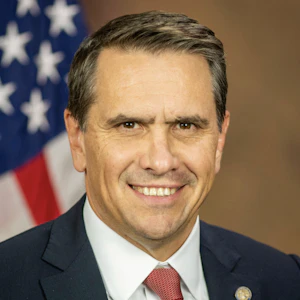
The Honorable Todd Blanche is the 40th Deputy Attorney General of the United States, overseeing the work of the 115,000 dedicated employees who fulfill the Department of Justice’s mission at Main Justice, the FBI, DEA, U.S. Marshals, ATF, and 93 U.S. Attorney’s Offices.
Todd began his career at the Department where he served for over fifteen years in a variety of capacities, including as a contractor, a paralegal in the Criminal Division, and at the United States Attorney’s office for the Southern District of New York where he eventually became an AUSA and later a supervisor.
After leaving the Department, Todd worked as a criminal defense attorney that included representing President Donald Trump in three of the criminal cases brought against him in 2023 and 2024.
Following President Trump’s historic return to the White House, the President appointed Todd to work alongside Attorney General Pam Bondi to make America safe again. At the DOJ, Todd is working tirelessly to implement President Trump’s priorities that include confronting illegal protecting American businesses from fraud.
Todd has been married to his wonderful wife Kristine for nearly thirty years, is a father and grandfather.
Paul Atkins
Paul Atkins
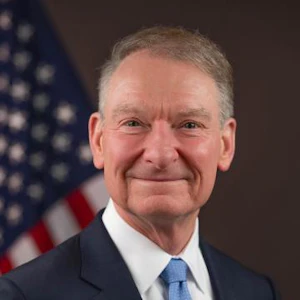
Prior to returning to the SEC, Chairman Atkins was most recently chief executive of Patomak Global Partners, a company he founded in 2009. Chairman Atkins helped lead efforts to develop best practices for the digital asset sector. He served as an independent director and non-executive chairman of the board of BATS Global Markets, Inc. from 2012 to 2015.
Chairman Atkins was appointed by President George W. Bush to serve as a Commissioner of the SEC from 2002 to 2008. During his tenure, he advocated for transparency, consistency, and the use of cost-benefit analysis at the agency. Chairman Atkins also represented the SEC at meetings of the President’s Working Group on Financial Markets and the U.S.-EU Transatlantic Economic Council. From 2009 to 2010, he was appointed a member of the Congressional Oversight Panel for the Troubled Asset Relief Program.
Before serving as an SEC Commissioner, Chairman Atkins was a consultant on securities and investment management industry matters, especially regarding issues of strategy, regulatory compliance, risk management, new product development, and organizational control.
From 1990 to 1994, Chairman Atkins served on the staff of two chairmen of the SEC, Richard C. Breeden and Arthur Levitt, ultimately as chief of staff and counselor, respectively. He received the SEC’s 1992 Law and Policy Award for work regarding corporate governance matters.
Chairman Atkins began his career as a lawyer in New York, focusing on a wide range of corporate transactions for U.S. and foreign clients, including public and private securities offerings and mergers and acquisitions. He was resident for 2½ years in his firm's Paris office and admitted as conseil juridique in France.
A member of the New York and Florida bars, Chairman Atkins received his J.D. from Vanderbilt University School of Law in 1983 and was Senior Student Writing Editor of the Vanderbilt Law Review. He received his A.B., Phi Beta Kappa, from Wofford College in 1980.
Originally from Lillington, North Carolina, Chairman Atkins grew up in Tampa, Florida. He and his wife Sarah have three sons.

Mike Selig
Mike Selig
Chairman Selig brings to the role deep public and private sector experience working with a wide range of stakeholders across agriculture, energy, financial, and digital asset industries, which rely upon and operate in CFTC-regulated markets.
Prior to his leadership at the CFTC, Chairman Selig most recently served as chief counsel of the Securities and Exchange Commission’s Crypto Task Force and senior advisor to SEC Chairman Paul S. Atkins. In this role, Chairman Selig helped to develop a clear regulatory framework for digital asset securities markets, harmonize the SEC and CFTC regulatory regimes, modernize the agency’s rules to reflect new and emerging technologies, and put an end to regulation by enforcement. He also participated in the President’s Working Group on Digital Asset Markets and contributed to its report on “Strengthening American Leadership in Digital Financial Technology.”
Prior to government service, Chairman Selig was a partner at an international law firm, focusing on derivatives and securities regulatory matters. During his years in private practice, he represented a broad range of clients subject to regulation by the CFTC, including commercial end users, futures commission merchants, commodity trading advisors, swap dealers, designated contract markets, derivatives clearing organizations, and digital asset firms. Chairman Selig advised clients on compliance with the Commodity Exchange Act and the CFTC’s rules and regulations thereunder, including in connection with registration applications and obligations, enforcement matters, and complex transactions.
Chairman Selig earned his law degree from The George Washington University Law School and was articles editor of The George Washington Law Review. He received his undergraduate degree from Florida State University.
David Bailey
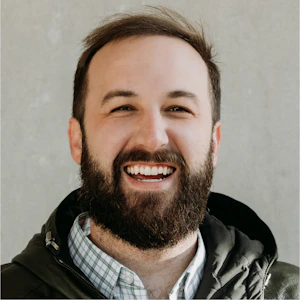
David Bailey

Eric Trump
Eric Trump
Mr. Trump also serves as Executive Vice President of The Trump Organization, where he oversees the global management and operations of the Trump family’s extensive real estate portfolio. This includes Trump Hotels, Trump Golf, commercial and residential real estate, Trump Estates, and Trump Winery. Known for his hands-on leadership and strong market instincts, he has played a key role in expanding the company’s presence across major U.S. and international markets.
A globally recognized business leader and public figure, Mr. Trump is a prominent advocate for Bitcoin and decentralized finance. He is a co-founder of World Liberty Financial, a decentralized finance (DeFi) platform, and serves on the Board of Advisors of Metaplanet, Japan’s largest corporate holder of Bitcoin.
Beyond his business activities, Mr. Trump has helped raise more than $50 million for St. Jude Children’s Research Hospital in the fight against pediatric cancer, a philanthropic mission he began at age 21.
Mr. Trump earned a degree in Finance and Management from Georgetown University. He currently resides in Florida with his wife, Lara, and their two children. He is also the author of Under Siege, his memoir published in October 2025.

Jack Mallers
Jack Mallers
Cynthia Lummis
Cynthia Lummis
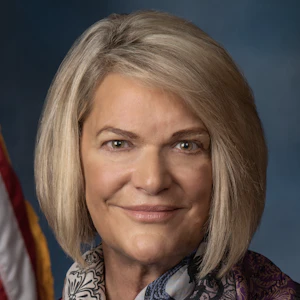
As the first-ever Chair of the Senate Banking Subcommittee on Digital Assets, Senator Lummis is the architect of the legislative framework shaping America's digital asset future. She introduced the landmark Lummis-Gillibrand Responsible Financial Innovation Act, the first comprehensive bipartisan crypto regulatory framework in Senate history. She co-authored the GENIUS Act — the first federal stablecoin law ever enacted — and introduced the BITCOIN Act, which would establish a U.S. strategic Bitcoin reserve of up to one million BTC. She is leading the Clarity Act, which will bring long-overdue regulatory certainty to the digital asset industry. She has also championed digital asset tax reform, including a de minimis exemption for small transactions and equal tax treatment for miners and stakers.
Known as Congress' "Crypto Queen," Senator Lummis represents Wyoming — a state she has helped build into one of the most digital asset-friendly regulatory environments in the nation. Before serving in the Senate, she served 14 years in the Wyoming Legislature, eight years as Wyoming State Treasurer, and eight years in the U.S. House. She is a three-time graduate of the University of Wyoming.
Her work represents a crucial bridge between traditional financial systems and the emerging digital economy, ensuring America leads the world in financial innovation while protecting the individual freedoms that define it.
Adam Back
Adam Back
Amy Oldenburg
Amy Oldenburg
David Marcus
David Marcus

Matt Schultz
Matt Schultz
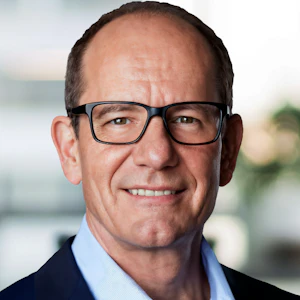
Fred Thiel
Fred Thiel
Throughout his career, Mr. Thiel has consistently driven rapid growth and created substantial shareholder value. Prior to MARA, Mr. Thiel served as the CEO of two other public companies, Local Corporation (NASDAQ: LOCM) and Lantronix, Inc (NASDAQ: LTRX). He has successfully raised billions in equity and debt through private and public offerings, led companies through IPOs, executed high-value exits to strategic and financial acquirers, and implemented effective M&A and roll-up strategies.
Mr. Thiel attended the Stockholm School of Economics and executive classes at Harvard Business School, and is fluent in English, Spanish, Swedish, and French. Mr. Thiel is the Chairman of the Board for Oden Technology, Inc. and is active in Young Presidents’ Organization where he has led initiatives in both the FinTech and Technology Networks.
A recognized voice in the industry, Fred frequently shares his insights on energy and technology with major media outlets like Bloomberg TV, CNBC, and FOX Business, contributing to vital discussions about the future of these sectors.
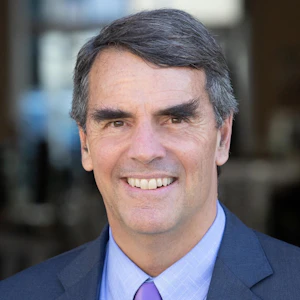
Tim Draper
Tim Draper
He is a supporter and global thought leader for entrepreneurs everywhere, and is a leading spokesperson for Bitcoin and decentralization, having won the Bitcoin US Marshall’s auction in 2014, invested in over 50 crypto companies, and led investments in Coinbase, Ledger, Tezos, and Bancor, among others.

Afroman
Afroman