Building on STRC & SATA
Speakers/Moderators

Allard Peng
Allard Peng
Former Quant research developer at Bitfarms
Bitcoin Asset Research on Twitter / Seeking Alpha

Tyler Evans
Tyler Evans

Jeff Walton
Jeff Walton
Jeff received his BA in Business and Economics from the University of Puget Sound.

Session
Overview
This discussion focused on building financial products on top of Bitcoin-backed digital credit instruments such as STRC and SATA. C.J. from Strategy, Jeff Walton from Strive, and Tyler Evans from UTXO Management explored how digital credit could be structured into senior and junior tranches, creating products that resemble stable-value instruments, yield products, or investment-grade credit wrappers.
A major theme was institutional adoption. The speakers discussed how perpetual preferred securities are still unfamiliar to many traditional allocators, and how structured credit products, ratings methodologies, exchange-listed instruments, and a digital credit yield curve could make the asset class more accessible to institutional capital.
The panel also examined risks, including issuer leverage, liquidity, forced selling, layer-three leverage, temporary de-pegs, and Bitcoin price volatility. The participants emphasized the importance of issuer credit quality, risk modeling, Monte Carlo simulations, options markets, diversification across issuers, and careful portfolio construction for products built on Bitcoin digital credit.
All right, guys. I've been really excited to have this panel. I think we have a group of rockstars here. Let's go down the line and introduce yourselves quickly.
Hi, everyone. I'm C.J. I'm the head of investor relations at Strategy. I've been at Strategy for close to two years now, and I've been obsessed with Bitcoin for close to five.
Nice to meet you all. Jeff Walton, chief risk officer at Strive and CEO of True North. We are a Bitcoin treasury company, and we are the issuer of SATA, which we'll be talking about a little bit more today.
Hey, everyone. Good to be here again. Tyler Evans. I'm the chief investment officer of Nakamoto and also run our investment business at UTXO Management.
To start off, we obviously have two representatives of digital credit issuers here. C.J. and Jeff, from the issuer perspective, what are you seeing as the most interesting models for building on digital credit?
I can start. I think we've seen, in the last three or four months, a lot of different players launch interesting products on top of digital credit, on top of STRC, and on top of SATA.
The one that I find personally the most fascinating is the idea of branching out STRC into different layers, similar to what we do as issuers of digital credit. We take Bitcoin and turn it into common equity. That's junior, more risk, more volatility, more performance. Then you have digital credit, which is senior, less risk, fixed performance, and lower volatility.
You can take digital credit and, in theory, do the same thing. You can launch it out into another senior layer that is backed by more digital credit and is perfectly stable, with zero volatility, passing through most of the yield, maybe 6% or 8%. It almost looks like a stablecoin, except it's not backed by T-bills. It's backed by Bitcoin eventually, and there is issuer risk in the middle.
It is much more attractive because it is offering a 6% or 8% yield. But most importantly, you need the junior equity tranche there as well, so the equity tranche can absorb the volatility that is getting stripped away from the senior tranche. You can call the senior tranche digital money and the junior tranche digital yield. That's what we are trying to advocate for and discuss. I know Jeff also has some interesting ideas there, so I'll pass it to him.
I think this is the biggest idea. I think this is the future of these digital credit instruments, expanding into this further tranche-layer system. I think it is one of the most fascinating opportunities out there, a $50 billion to $100 billion idea for somebody to take and run with. You need very few people to do this. You probably need a team of five people.
One of the things you could do with the senior tranche, as you mentioned, is turn it into an investment-grade senior tranche. One of the challenges we've seen with the market so far is that traditional institutions struggle to buy perpetual preferred equity because it is perpetual in nature. It is difficult for them to wrap their heads around it, and it doesn't fit within mandates. If you put it into a different wrapper, put a term on the end of it, and protect it with an equity tranche, then the probability that you can get it rated and have it in a familiar wrapper looks much more attractive to a traditional institution.
One other thing you can institute here is the equity tranche. I like to call this amplified digital credit, or amplified Bitcoin and amplified digital credit, with investment-grade digital credit sitting senior. You can put in a reinsurance buffer layer. This might be a little complex, but the idea is that you bring in a diversified capital source to provide even more protection for that senior tranche, to give it a higher probability of getting rated by a rating agency. I think this is a really large idea. That's the horizon of opportunity for digital credit.
This idea of tranching is definitely something a lot of people are thinking about. Tyler, from the asset manager side, and with what UTXO introduced yesterday, can you give us some insight into what kind of structures you're looking into? What do you anticipate this industry doing over the next two years?
I have to thank C.J. and Jeff for giving my pitch for me. Yesterday at UTXO Investor Day, we announced a structured credit fund built on this exact concept.
The key insight you shared, Jeff, is that these perpetual preferred securities, as widely loved as they are in this crowd, are still a very niche product on Wall Street. Even though we call them colloquially digital credit, thanks to Mike, they are not true credit instruments, and they can't be rated in the same way that a credit product like a CLO is.
So it is really this financial engineering to transform the digital credit products into true credit products that have risk capital, a first-loss buffer, or overcollateralization, to try to engineer something that an issuer has not been able to do yet today, or maybe can't do from the issuer seat: a zero-volatility, true digital T-bill equivalent.
What we introduced is a first stab at that, which we can evolve and grow over time. Getting it right, packaging it in more instruments, and getting it exchange-listed would all be significant enhancements. There is also the opportunity that comes with that to build out essentially a true yield curve for digital credit, with different duration and different yields.
This asset class is maybe 18 months old in total. We are still very much in the first inning in terms of really pulling true institutional allocator capital into it. We heard that STRC ownership is 80% retail today. Growing that to reflect credit markets, which are overwhelmingly institutional, presents a massive opportunity for this space.
I just want to add here: this idea takes elements from the existing private credit market. If you Google private credit, you'll see all of the news headlines about people exiting private credit. What you're doing is creating a private credit structure. The senior tranche could be a private credit structure, but it's backed by a transparent asset. You can calculate the risk 24/7/365, and it's potentially paying a rate higher than other investment-grade securities.
So just as Michael, in the innovation of amplified Bitcoin and digital credit, took elements of existing structures and applied them to the instruments created here, these are not necessarily novel things. They are just put together in an elegant way.
I want to keep this panel very objective, so we're going to go through some uncomfortable topics. What do you three see as some of the risks developing within this space? How could things blow up if they do, and how are you monitoring it? From C.J. and Jeff's perspective, you are issuers. How are you monitoring the digital credit layer and how layer-three products could potentially create ripple effects? And for Tyler, are there any opportunities within these risks?
I think there are two layers of risk. One would be at the issuer level, let's say at Strategy or at Strive's balance sheet. Has the issuer issued too much digital credit relative to how much Bitcoin they have? We call this either the leverage ratio or the amplification ratio. You want to manage that very carefully. You want to make sure you consistently pay the dividends and make sure the fixed income stream never stops. That's one layer of risk.
The mitigation is making sure your leverage ratio stays healthy, so you don't over-lever and don't get overly amplified. Don't let your equity buffer become too thin.
On the layer-three side, meaning the crypto projects or TradFi projects that are being built on top of digital credit, the important thing from a risk perspective is the buildup of leverage and how much is being held in different pools that have unhealthy leverage tacked on. You could argue that could happen either in the crypto space or the TradFi space.
The theoretical risk would be that everything is playing out well. Six months go by, 12 months go by, 18 months go by. Bitcoin goes to $200,000 or $400,000. Then whenever there is a crash, sentiment drops and people start exiting. Some of these projects that have not been engineered well, where they have credit risk or a run-on-the-bank kind of risk, see people exiting. That leverage on that layer starts unwinding, and they become forced sellers of their assets, which would be STRC.
In that situation, perhaps the price of STRC or the price of SATA dips below par for a slightly longer period of time. It goes from $100 to $99, maybe to $98, and stays there for five days, two days, or maybe longer. It all depends on how the crash is. You don't want to be caught offside there holding it, thinking you could liquidate all of it in one day at $100.
So you need to manage your risk correctly that way. But the important insight is that all of that risk stays at that layer. It doesn't transcend down into the issuer layer. Even if people are selling digital credit in the market, there will be other buyers who buy it because they are getting a lower price and higher effective yield. It doesn't impair the Bitcoin on the balance sheet of the issuer.
We are not a seller of Bitcoin. As long as Bitcoin does its thing, stays volatile, but has long-term price appreciation prospects, we just keep funding the dividends month after month. These short-term fluctuations self-correct and self-heal in the market. Leverage builds up and wanes, builds up and wanes, and the whole ecosystem keeps maturing and becoming bigger. That's at least how I personally think about the risk.
You bring up a really good point about layer-three leverage that could be built up in the ecosystem. The Bitcoin market is actually really insulated from layer three. If any blowups happen in the layer-three ecosystem on any of these other token projects, that wouldn't hit Bitcoin at all. It may hit STRC or SATA, but that's a short-term price impact. It has nothing to do with the underlying balance sheet of the issuer.
The largest risk is the issuer's credit quality. What is credit quality? These aren't typical credit instruments, but if you don't have debt on your balance sheet, it is a credit instrument. You're underwriting credit risk. These are hybrid products, hybrid vehicles.
How do you think about the risk profile? The risk profile is very fascinating because it is very mathematical. You can think in terms of Monte Carlo simulations and mathematical projections of what the future looks like based on some of the past and your future underwriting of the Bitcoin on the balance sheet.
The thing that becomes very interesting, and we're in a bit of a unique scenario compared to MSTR, is that we have $10 million of debt on our balance sheet. We have a 1% leverage ratio. You guys have $8 billion on your balance sheet, and it is something you may have to make a decision on. That makes our view of risk slightly different.
We are really focused on how I can make sure we can pay this dividend into perpetuity. That is our product. It is your iPhone. It is our Samsung Galaxy. We are very focused on underwriting the long-term perspective of Bitcoin. We are looking at every mathematical formula you could probably ever look at. I'm spending over $100 a day on the best AI tools possible to run the mathematical formulas behind the scenes, and we are managing this like an insurance company or a bank would manage future liabilities.
We are forecasting into the future. We are making conservative assumptions. If you look at the 200-week moving average of the price of Bitcoin, it has been up and to the right, compounding at 30% to 32% annually over every horizon you look at. Thinking about a product that's paying 13% annually, powered by an instrument that's going up 30% to 35% compounded annually on a four-year moving average, we feel comfortable underwriting that instrument and that product.
Jeff, I think your insurance background is really shining here. You touched on issuer risk being the biggest one. This is something our teams have also done a lot of work on at UTXO: trying to come up with what is the Moody's or S&P rating methodology that should apply apples to apples to all digital credit issuers. I hope we can share more research around that in the future.
What C.J. mentioned is really the risk that is top of mind for us, especially as we design products that hold or maybe use leverage on digital credit instruments. How can you avoid being a forced seller and unnaturally unwinding these instruments? STRC has really cracked the code on liquidity, I think trading $360 million a day currently, but a lot of the newer or smaller instruments have less liquidity. Especially around an ex-dividend date, there is still some embedded volatility.
You want to avoid a scenario where that becomes cascading sell pressure and liquidity dries up. You have to sell into lower and lower liquidity, and you can see a 10% de-peg over the course of one day, like we've seen in some of these digital credit instruments in the past. That could become very destructive in a portfolio if you don't engineer around those risks. Managing the liquidity, managing the duration, and having healthy issuers at the foundation is the holistic framework we are trying to engineer for.
It really boils down to: what is risk? Is price volatility risk, or what is the purpose of holding the instrument? If the purpose of holding the instrument is taking a long-term perspective, and it is a perpetual, are you holding it for the long term? If so, does that price volatility mean anything to you? Maybe, maybe not.
It comes down to portfolio construction. If you're a trader, yes, you care about that price volatility because maybe you are trading between two instruments or around the ex-dividend date. But if you are a long-term holder and you understand the relative risk profile, it comes down to: what is the risk that I am unable to pay this dividend in the future?
Strategy's website has a section on its credit profile. It is BTC credit and BTC risk, and it shows effectively a credit-default-swap-style calculated risk model where you can make an assumption on the price of Bitcoin and the volatility of Bitcoin, and estimate the probability of not being able to pay the dividend in the future. It is just so incredibly low if you take very modest assumptions on Bitcoin performance and Bitcoin volatility.
When you're comparing the two instruments, the credit spread of the two instruments is actually very close, because you're comparing tail risk of two instruments. They are not hugely different risk profiles. So let's build a credit model for these things.
Risk is another thing to consider. The great news is that the more issuers we have come to market, the more diversification you can build, even though there is the Bitcoin correlation underlying all of it. But if you can package that with some tail risk, some left-tail hedging on Bitcoin, let's say, or on a credit default swap or a common equity, can you improve the risk-adjusted returns of the portfolio overall? I think there is absolutely an opportunity to do that. It comes down to Markowitz modern portfolio theory: risk and return. These products have a very fascinating risk-return profile that could fit into many portfolios.
I'm curious, Jeff, what are the other distributions for Bitcoin spreads into the future that you would like to model out? How would you assess the risk on these credit instruments or the credit spread? We have a great model on our website, strategy.com. You go to the credit tab, as Jeff was mentioning. You input what you think Bitcoin's price performance will be in the future and what volatility will be, and then you can see the implied risk probability for each of the credit instruments, including STRC.
For now, it's a simplistic model in the sense that it's assuming a lognormal distribution of the price into the future. In my head, I'm trying to cook up more enhanced versions of the model where you can maybe enter a natural language prompt into it and say, this is my expectation of what Bitcoin will do in the future, with this probabilistic range. Then you run Monte Carlo simulations on the back end, and it spits out the percentage probability that things went bust or your common equity buffer went to zero. I know you've been posting interesting things on Twitter, so I'm waiting for you to open source all of that so we can steal it.
I can do this by demand.
There's a demand.
There are two components. I see a historical experience component, where you back-test any of these instruments over time and think about the historical experience of the instruments over any horizon. Then I also see a forward-looking Monte Carlo simulation using multiple probabilistic models to give you a distribution of outcomes, so you can start to calculate relative tail risk.
This is a model I've taken from the reinsurance world. We have four different Monte Carlo models depending on historical data points over different time horizons. You can select different horizons and different coverage ratios. What makes it tricky is the different construction of the capital stack and the cash reserve. What is your reserve held in? For us, it's cash and STRC. Is there any debt that is senior? How is that taken care of? How do you formulate that into the models? That's why we haven't open sourced that. But yes, let's have a conversation.
I just have to butt in a little bit here. When we're talking about price volatility risk and running these Monte Carlo simulations, I want to point out that the market actually has a marketplace that prices Monte Carlo and price variance risk. It's called the options market. From the options market, we can back out the market's assessment of that risk measure.
I would be very happy to see that. I've thought about this a ton. The options market on STRC and SATA needs to evolve. People need to request $1 strikes from the options market. Right now there's a $95 strike, a $100 strike, and a $105 strike, so it gives you no data. It's three data points that are just largely irrelevant to the instrument you're trading at $100 within a penny spread.
We need the $99 strike. We need the $101 strike. Ideally, you'd have a $99.50 strike. If the $99 strike hits the market, it will be the most popular options chain in the entire market.
I agree. I just got some work to do after this presentation.
That's all for this panel, folks.
Similar
Sessions
Building on STRC & SATA
Allard Peng
Allard Peng
Former Quant research developer at Bitfarms
Bitcoin Asset Research on Twitter / Seeking Alpha
Tyler Evans
Tyler Evans
Jeff Walton
Jeff Walton
Jeff received his BA in Business and Economics from the University of Puget Sound.
Building on STRC & SATA
Speakers/Moderators
Allard Peng
Allard Peng
Former Quant research developer at Bitfarms
Bitcoin Asset Research on Twitter / Seeking Alpha
Tyler Evans
Tyler Evans
Jeff Walton
Jeff Walton
Jeff received his BA in Business and Economics from the University of Puget Sound.
Other
Speakers
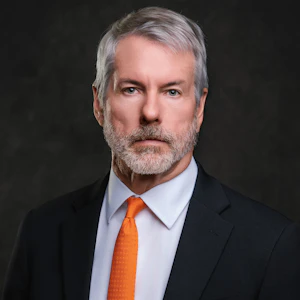
Michael Saylor
Michael Saylor

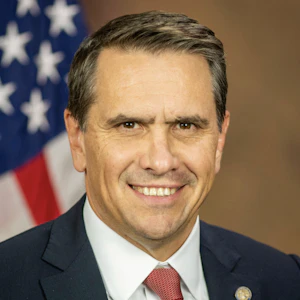
Todd Blanche
Todd Blanche
Biography of Deputy Attorney General Todd Blanche
The Honorable Todd Blanche is the 40th Deputy Attorney General of the United States, overseeing the work of the 115,000 dedicated employees who fulfill the Department of Justice’s mission at Main Justice, the FBI, DEA, U.S. Marshals, ATF, and 93 U.S. Attorney’s Offices.
Todd began his career at the Department where he served for over fifteen years in a variety of capacities, including as a contractor, a paralegal in the Criminal Division, and at the United States Attorney’s office for the Southern District of New York where he eventually became an AUSA and later a supervisor.
After leaving the Department, Todd worked as a criminal defense attorney that included representing President Donald Trump in three of the criminal cases brought against him in 2023 and 2024.
Following President Trump’s historic return to the White House, the President appointed Todd to work alongside Attorney General Pam Bondi to make America safe again. At the DOJ, Todd is working tirelessly to implement President Trump’s priorities that include confronting illegal protecting American businesses from fraud.
Todd has been married to his wonderful wife Kristine for nearly thirty years, is a father and grandfather.

Paul Atkins
Paul Atkins
Prior to returning to the SEC, Chairman Atkins was most recently chief executive of Patomak Global Partners, a company he founded in 2009. Chairman Atkins helped lead efforts to develop best practices for the digital asset sector. He served as an independent director and non-executive chairman of the board of BATS Global Markets, Inc. from 2012 to 2015.
Chairman Atkins was appointed by President George W. Bush to serve as a Commissioner of the SEC from 2002 to 2008. During his tenure, he advocated for transparency, consistency, and the use of cost-benefit analysis at the agency. Chairman Atkins also represented the SEC at meetings of the President’s Working Group on Financial Markets and the U.S.-EU Transatlantic Economic Council. From 2009 to 2010, he was appointed a member of the Congressional Oversight Panel for the Troubled Asset Relief Program.
Before serving as an SEC Commissioner, Chairman Atkins was a consultant on securities and investment management industry matters, especially regarding issues of strategy, regulatory compliance, risk management, new product development, and organizational control.
From 1990 to 1994, Chairman Atkins served on the staff of two chairmen of the SEC, Richard C. Breeden and Arthur Levitt, ultimately as chief of staff and counselor, respectively. He received the SEC’s 1992 Law and Policy Award for work regarding corporate governance matters.
Chairman Atkins began his career as a lawyer in New York, focusing on a wide range of corporate transactions for U.S. and foreign clients, including public and private securities offerings and mergers and acquisitions. He was resident for 2½ years in his firm's Paris office and admitted as conseil juridique in France.
A member of the New York and Florida bars, Chairman Atkins received his J.D. from Vanderbilt University School of Law in 1983 and was Senior Student Writing Editor of the Vanderbilt Law Review. He received his A.B., Phi Beta Kappa, from Wofford College in 1980.
Originally from Lillington, North Carolina, Chairman Atkins grew up in Tampa, Florida. He and his wife Sarah have three sons.

Mike Selig
Mike Selig
Chairman Selig brings to the role deep public and private sector experience working with a wide range of stakeholders across agriculture, energy, financial, and digital asset industries, which rely upon and operate in CFTC-regulated markets.
Prior to his leadership at the CFTC, Chairman Selig most recently served as chief counsel of the Securities and Exchange Commission’s Crypto Task Force and senior advisor to SEC Chairman Paul S. Atkins. In this role, Chairman Selig helped to develop a clear regulatory framework for digital asset securities markets, harmonize the SEC and CFTC regulatory regimes, modernize the agency’s rules to reflect new and emerging technologies, and put an end to regulation by enforcement. He also participated in the President’s Working Group on Digital Asset Markets and contributed to its report on “Strengthening American Leadership in Digital Financial Technology.”
Prior to government service, Chairman Selig was a partner at an international law firm, focusing on derivatives and securities regulatory matters. During his years in private practice, he represented a broad range of clients subject to regulation by the CFTC, including commercial end users, futures commission merchants, commodity trading advisors, swap dealers, designated contract markets, derivatives clearing organizations, and digital asset firms. Chairman Selig advised clients on compliance with the Commodity Exchange Act and the CFTC’s rules and regulations thereunder, including in connection with registration applications and obligations, enforcement matters, and complex transactions.
Chairman Selig earned his law degree from The George Washington University Law School and was articles editor of The George Washington Law Review. He received his undergraduate degree from Florida State University.

David Bailey
David Bailey

Eric Trump
Eric Trump
Mr. Trump also serves as Executive Vice President of The Trump Organization, where he oversees the global management and operations of the Trump family’s extensive real estate portfolio. This includes Trump Hotels, Trump Golf, commercial and residential real estate, Trump Estates, and Trump Winery. Known for his hands-on leadership and strong market instincts, he has played a key role in expanding the company’s presence across major U.S. and international markets.
A globally recognized business leader and public figure, Mr. Trump is a prominent advocate for Bitcoin and decentralized finance. He is a co-founder of World Liberty Financial, a decentralized finance (DeFi) platform, and serves on the Board of Advisors of Metaplanet, Japan’s largest corporate holder of Bitcoin.
Beyond his business activities, Mr. Trump has helped raise more than $50 million for St. Jude Children’s Research Hospital in the fight against pediatric cancer, a philanthropic mission he began at age 21.
Mr. Trump earned a degree in Finance and Management from Georgetown University. He currently resides in Florida with his wife, Lara, and their two children. He is also the author of Under Siege, his memoir published in October 2025.

Jack Mallers
Jack Mallers

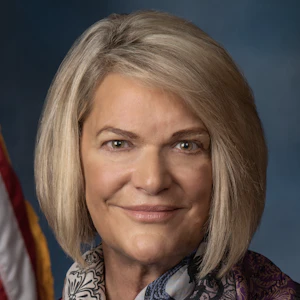
Cynthia Lummis
Cynthia Lummis
As the first-ever Chair of the Senate Banking Subcommittee on Digital Assets, Senator Lummis is the architect of the legislative framework shaping America's digital asset future. She introduced the landmark Lummis-Gillibrand Responsible Financial Innovation Act, the first comprehensive bipartisan crypto regulatory framework in Senate history. She co-authored the GENIUS Act — the first federal stablecoin law ever enacted — and introduced the BITCOIN Act, which would establish a U.S. strategic Bitcoin reserve of up to one million BTC. She is leading the Clarity Act, which will bring long-overdue regulatory certainty to the digital asset industry. She has also championed digital asset tax reform, including a de minimis exemption for small transactions and equal tax treatment for miners and stakers.
Known as Congress' "Crypto Queen," Senator Lummis represents Wyoming — a state she has helped build into one of the most digital asset-friendly regulatory environments in the nation. Before serving in the Senate, she served 14 years in the Wyoming Legislature, eight years as Wyoming State Treasurer, and eight years in the U.S. House. She is a three-time graduate of the University of Wyoming.
Her work represents a crucial bridge between traditional financial systems and the emerging digital economy, ensuring America leads the world in financial innovation while protecting the individual freedoms that define it.

Adam Back
Adam Back

Amy Oldenburg
Amy Oldenburg

David Marcus
David Marcus

Matt Schultz
Matt Schultz

Fred Thiel
Fred Thiel
Throughout his career, Mr. Thiel has consistently driven rapid growth and created substantial shareholder value. Prior to MARA, Mr. Thiel served as the CEO of two other public companies, Local Corporation (NASDAQ: LOCM) and Lantronix, Inc (NASDAQ: LTRX). He has successfully raised billions in equity and debt through private and public offerings, led companies through IPOs, executed high-value exits to strategic and financial acquirers, and implemented effective M&A and roll-up strategies.
Mr. Thiel attended the Stockholm School of Economics and executive classes at Harvard Business School, and is fluent in English, Spanish, Swedish, and French. Mr. Thiel is the Chairman of the Board for Oden Technology, Inc. and is active in Young Presidents’ Organization where he has led initiatives in both the FinTech and Technology Networks.
A recognized voice in the industry, Fred frequently shares his insights on energy and technology with major media outlets like Bloomberg TV, CNBC, and FOX Business, contributing to vital discussions about the future of these sectors.
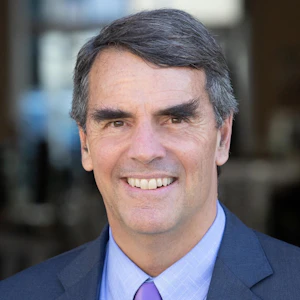
Tim Draper
Tim Draper
He is a supporter and global thought leader for entrepreneurs everywhere, and is a leading spokesperson for Bitcoin and decentralization, having won the Bitcoin US Marshall’s auction in 2014, invested in over 50 crypto companies, and led investments in Coinbase, Ledger, Tezos, and Bancor, among others.

Afroman
Afroman