Can Data Centers Deliver on The AI Promise?
Speakers/Moderators

Curtis Harris
Curtis Harris
Nir Rikovitch
Nir Rikovitch
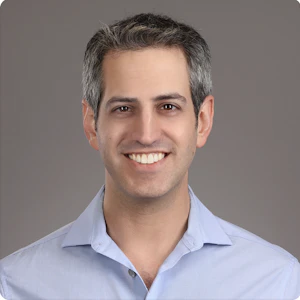
Prior to joining MARA, Mr. Rikovitch served as Director of Product Management at Blue River, a John Deere company. During his tenure, he co-founded the autonomy unit and led product strategy for autonomous construction machinery and advanced driver-assistance systems. His leadership in developing intelligent infrastructure across robotics and industrial automation unlocked more than $500 million in revenue across the enterprise portfolio.
Throughout his career, Mr. Rikovitch has focused on the belief that technological progress hinges on the stewardship of energy. At MARA, he applies this philosophy to the development of digital energy and infrastructure designed to be intelligent, efficient, and built to last.
His proven track record in scaling real-world autonomous technologies and intelligent infrastructure makes him a leading voice on the future of digital energy and the orchestration of reliable, large-scale compute systems.

Francesca Failoni
Francesca Failoni

Aaron Ginn
Aaron Ginn
Ginn’s work sits at the center of the emerging AI economy, where compute, energy, and national strategy converge. He is called the "GPU Whisper". Through his work, he is helping shape the next generation of globally distributed AI infrastructure on open and western-defined frameworks, supporting both private industry and sovereign deployment.
He is also the co-founder of Fabius Labs and the Foundation for American Innovation, where he has worked extensively on technology policy, industrial strategy, and U.S. competitiveness. His writing on artificial intelligence, infrastructure, and global technology competition has appeared in The Wall Street Journal, The Information, Washington Post, and several other outlets.
Xander Wu
Xander Wu
Session
Overview
This panel examined whether data centers can realistically meet the infrastructure demands created by rapid AI growth. Speakers from MARA, ALPS, Hydra Host, and Zillion Network discussed the scale of AI compute demand, the limits of current data center development, and the difference between announced capacity and projects that are actually financeable, contractable, and under construction.
A major theme was the translation of power into usable AI compute. The panel compared AI infrastructure with Bitcoin mining, noting that miners have deep experience converting energy into compute, but AI workloads require more reliable power, stronger connectivity, redundancy, higher-density cooling, and different operational expertise. Not every mining site can be repurposed for AI, though hybrid or partial conversions may work in some cases.
The discussion also covered business-model challenges, including GPU obsolescence, contract duration, lender requirements, and whether customers want long-term commitments or more flexible access to capacity. The speakers emphasized that future data center models may need to blend long-term contracts, on-demand usage, modular builds, and enterprise-controlled infrastructure to meet both hyperscaler and private enterprise needs.
Hey, amazing job, Luz. Thank you very much. Thanks for being here, and I love hearing that there is front-row energy.
We will start with some brief introductions. Thank you very much for joining us. I was raised by a Southern mama, so I can't help it. I'll start with Francesca. Francesca, you were named to Forbes Italia 30 Under 30 and recently received an award as a top entrepreneurial person in Italy. That's amazing. Would you tell us more about your background?
Thank you. Yes, I founded ALPS in 2018. We are a Bitcoin mining company. We have operations around the world. Our biggest one is in Oman, where we have 150 megawatts. Then we have two sites in Iowa, where we have 70 megawatts. Then we have South America between Paraguay, Bolivia, and Ecuador. So we are quite geographically diversified around the world.
We started from Europe, from Italy, where our headquarters are, with hydropower facilities. We are an infrastructure company. We build mining farms, and we build data centers.
That's amazing. Thank you very much. Nir, I don't have any other rhythm, so we'll just go down the line with introductions. I've been a big fan of MARA for many years, and one thing interesting about you is your background as an aerospace engineer, and that you also have paragliding as a hobby. Tell the audience more about who you are and what you do.
Sure. Thank you. Glad to be here. I joined MARA about a year ago. For those who don't know MARA, it is quite a big Bitcoin miner and is emerging as a digital infrastructure company. Personally, my background is in robotics, aerospace, and autonomous vehicles, so kind of the intersection of hardware and software. I realized that the emerging need for intelligence and democratizing it is something that requires energy, and that led me to MARA.
That's amazing. Aaron, I'll give the floor to you next. I also enjoyed learning a lot more about Hydra Host and the impressive work that you do, as well as a little bit about your background. Would you tell the audience more?
I'm CEO and co-founder of Hydra Host. We help data centers essentially make money off of their megawatts. We are a software company that automates the facility to make it possible to access AI customers and resolve all the components needed at the data room level to make it much easier for them to bring their compute capacity to market.
You can think of us as a headless NeoCloud. We are the largest NeoCloud that actually doesn't own hardware. The data center owns the hardware and gets the upside. We are a management company and a software company that helps accelerate the adoption of their infrastructure.
That's fantastic. Thank you. Xander, all the way down to you. I had the real privilege that you and I were able to share a meal together in Los Angeles two and a half years ago, authentic Sichuan hot pot, one of the hottest meals I've ever had. I love spicy food, and I was sitting there holding my breath trying to stay alive.
Xander, I'm a hardcore Bitcoiner, and you are famous in our industry, so it's a real privilege to be on this panel with you. I understand not only have you been building Zillion Network, but you're also launching Tesser. I hope that you'll tell the audience more.
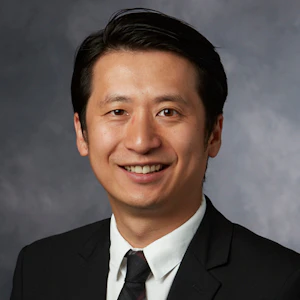
It's really my pleasure being here, meeting good old friends. My company collaborates with Hydra, with Aaron's team, quite a lot. I'm Xander, founder and CEO of Zillion Network. Zillion is an AI compute company. We aggregate and feed GPUs and lead that to AI customers, the AI offtakers.
Before that, I built data centers, traditional tier data centers. I also took the role at Bitmain as the global mining data center development head. We acted as the designer, but also the offtaker and even backstopper to some big projects. Now we are launching a sister company named Tesser, which is to build and design tessellated AI data centers to speed up the adoption of AI.
That's fantastic. I am going to take the first question back to Xander, but then we're not going to go down the line with the same question. I really encouraged this panel to engage with each other. Obviously, you heard from their backgrounds that there is tremendous experience for this exact topic.
Xander, would you do two things? Would you start by painting a big picture of what is going on in the AI data center buildout space? What kind of large capacities are really happening? And then, is it actionable? What's actually out there that can be built and developed?
I think this industry is amazing. AI demand is booming. Based on McKinsey research, by 2030 there will be $7 trillion invested in global data centers, and $5 trillion of that will go into the AI part, the AI data center. There is also more than 150 gigawatts of demand aggregated, and you also see in the news that $300 billion will be spent by hyperscalers in AI this year. So there is huge demand.
But then the problem is, everybody says we have a shortage of chips and power. Actually, in my mind, how to turn the power into actionable AI capacity is the issue. The AI data center buildout conversion rate is not as big as people think. Everybody says gigawatt-level campus, but how many megawatts have actually broken ground?
There is always a delay in the market. You see the NeoClouds and the hyperscalers with projects delayed. From our point of view, whether you get the project designed from day one to be contractable and bankable is the key. I can explain that more later, but that is the big picture. The problem is there: how do you turn an AI project into a design that is contractable and financeable?
Can you expand more about financeability and contractability?
There are a few things. First, if you do an AI data center buildout, you need to know exactly who your customer is and what kind of AI workload they are running. What kind of GPU clusters and models are they running? Today we are doing Blackwell GPUs. Rack density is already 130 kilowatts today, but it will soon ramp up to 230 kilowatts in half a year's time, and it could be an even higher density.
If you cannot design your AI data center to fit that need, that will be a disaster. Also, if you have super long lead-time items, if you have a thousand people working outside, but you have a shortage of labor, by the time your data center is ready, the new generation of GPUs will come. So first, you need to know exactly who your top customer is, and you need to know the timing.
The second thing is that you need to understand who your lender is and what they need. Lenders definitely need a high SLA, a service-level agreement assurance. They also want to see repeatable and credible design that they can easily do due diligence on. They can easily see the track record from others and whether this design has been built and met the timeline before.
The sequence is that you first need to make the correct design, then make your project contractable, and then the lender will see the offtaker and start to finance the project. If you do the sequence wrong, the project will be a nonstarter.
That explains it. Thank you. Aaron, I heard something interesting there that I think you could add context to. Xander led with understanding the type of machines that the customer is running as well as their power draw. I learned a lot about Hydra Host. You have actually solved for that so the data center operator doesn't have to understand all those details. Would you add some context?
On the question that we're supposed to be here for, can data centers deliver, the answer is that there is no other option. AI is pressing forward, and it presupposes the need to convert power into tokens. There are lots of questions around how you actually move from, will this land work, will this power draw work, and so on. But the overall arc, to give people confidence about what is happening, is why Bitcoin is such a great metaphor for AI.
Bitcoin is essentially democratized access to money. AI is democratized access to intelligence. It's not like, oh, I'm moving my web app to GPUs. This is a completely different way of thinking about how energy can be translated into a good. And that good is inelastic. How do you tell someone if they're fully intelligent or not fully intelligent? If you have kids, do you tell them, all right, you're in sixth grade now, enough intelligence for you? It's an inelastic good. There is no real price on it.
We create all these abstractions. Harvard says $80,000 a year is smart, or another school says 60 or 30 or 40. We see a degree. We say being a chess champion. We create all these abstractions because the human itself is actually a really horrendous test subject. We have really bad benchmarking because we're all so uniquely different. We're all skilled at different things.
This is why I'm so bullish on this space. It's not like anyone said no to intelligence. Look at your phone. Go look at the number of gigabytes of data you actually delete. It's usually less than 5% of your total data stream, but it's actually something you delete intentionally.
These are all great things because it allows compute to move down stack to make it work, just like Bitcoin moved money accessibility away from the Federal Reserve to everybody. Now we have the ability with technology to move intelligence away from universities, elites, or whatever benchmark you want to create, to literally a machine.
That raises the profile of so many other countries and, specifically, data centers that previously were not accessible and were not interesting to a hyperscaler or to a tech company. Now they are salient. The profile that miners bring on the data center side is the exact type of cost profile that will win: low cost, no bullshit. I'm the Costco of tokens. That's literally what every single AI company wants.
They don't want hyperscaler tier-four magical things, like look what this box can do. They're like, does that cost 40% more than MARA does? I don't know if that's worth it, man. Because you just give me Jensen, and MARA is going to give me Jensen, so what's the difference in your Jensen? Nothing.
That is really hard for hyperscalers to compete with. Miners are already programmed that way to say, the only way I win is better costs. Ultimately, that is the end state of this entire space. If you can convert power to tokens at the most efficient rate, you will always win, and everything else is just noise.
I'll add to that. I love what you said about energy. If you look at the horizon, the cost of intelligence converges to the cost of electricity. Similar to how telecom companies have enabled us all to reliably consume so much media and content online on our phones, now you're going to expect providers to deliver the same reliability on intelligence. It's like your own chief of staff, your own partner, your own thinking apparatus in a way.
You're exactly right that it's deflationary. That's why it compresses down to the marginal cost of producing energy. Telecom and any other major infrastructure provider are all deflationary. Hyperscalers are not deflationary. Hyperscalers are extremely expensive, and the rents that we've been paying to three providers that monopolized compute for two decades, Jensen just drove a bus through.
The marketing is AI, AI. That's the marketing pitch. But Jensen literally drove a bus through public cloud. Now data centers that previously were just relevant for enterprise colocation and mining have a completely new market they can go into, and there is a very, very lucrative market.
You can thank Jensen. Jensen completely changed the infrastructure topology to where you can be just a power provider, provide it directly, and walk away. It's really amazing.
Thank you. Francesca, I want to pull you into this conversation. When people say that we need more data centers for AI capacity work, what are they missing?
For sure, one thing to consider is that AI runs on a stack, not only on power. That means it is not so easy to convert power into an AI data center. That's what we have been saying from the beginning, because you need reliable power. This is a really important key and completely different from mining.
We as miners are used to building data centers from scratch in bad conditions. For example, we have data centers in the Amazon Forest that are off-grid, and they don't have the reliable environment that an AI data center should have. The first thing to consider is whether the source of energy that is going to be used is the right one to run an AI data center.
We are going on to develop renewable energies, but renewables are not stable. That is the problem. All the things that we as miners are doing in a grid in order to be a kind of stabilizer of the grid don't work with AI. So if we convert our mining farms into AI data centers, there will be a problem in the grid to be handled.
Power is the first thing that is really important. Second is connectivity. Mining data centers can work with Starlink. We have some examples that work with satellite connection. AI data centers need the right fiber connection. This means that not every source of power and not every available site can be switched from mining to AI.
I think there can be a synergy that works. For example, if you have a big facility that is purposed for mining, you can repurpose part of that into AI in order to have only a part of the load that is on 100% of the time, with the right connection and redundancy. For mining, that requirement is for sure less.
Yes, there are sites that can be 100% converted, but not all. While demand continues growing, is the infrastructure ready for that? We don't know. If we read the data, there are plenty of GPUs available to be installed, both by the hyperscalers and others, but the bottleneck is that you need the infrastructure. You need the data center working, and building that is not easy.
We as miners have a lot of know-how on how to convert power into computing power. But the know-how for the AI part is different. We also need to learn that, and it's not easy to switch. Not all sites can be switched easily.
Xander, one of the things I heard Francesca say was about reliable power, cooling, and a few other variables. As we look at whether data centers can deliver on this AI promise, is there a variable that we're missing about delivery timelines? These hyperscalers have an immediate need or a future need. Can we transition? Can you talk to us about delivery timelines?
We check the box of the technical requirements, but then we also need to understand their immediate demand for now and the demand for the long-term run. What we see from the market is that people will take whatever capacity is available online by this year, by the first half of this year. But when we ask, if there is any data center capacity online by 2028 or 2029, what is your idea? I get different answers.
Most people just say, give me whatever you have today. We have no time to think about two or three years later. That's also my question for Francesca and Aaron. Based on your experience, contract terms really matter. I think the answer is yes, but how much do they matter to your decision to turn a facility into an AI data center? And to Aaron, you have a lot of hosting deals. Do you really see seven-year or eight-year long-term GPU leasing, or just three-year to five-year terms?
I'll answer quickly on hosting contract terms, or offtaker demand. The way you have to think about making money or returns is that anything long-term means you push risk to the end customer.
Everyone here flew here, unless you're from Vegas. How many of you bought your tickets last minute versus farther out? If you reframe the problem statement away from risk management, which is a bank question, not an end customer question, none of you cared what the financial situation of Southwest or United or American Airlines is. You paid based upon the convenience of when you wanted to transact. If you bought nearer term, you paid more. If you bought longer term, you paid less.
If the entire market of the airline industry was driven by you paying three years for all of your travel with a deposit of 20%, the airline industry would be very small. Think about homes. When you buy a home, you generally do that every 10 to 15 years. The market scale is directly connected to the size of the transaction and how often that transaction occurs.
If a data center is going to make money, they have to realize that if they're just pushing risk to an end customer, they're not going to make very much money. You're going to have to lower your return profile because you're moving risk to him. If you take on more risk, you can make more money. It's exactly how you look at bookings of this hotel or bookings of an airline, or really any other utilization of any heavy capex product.
Data centers have to accept that the way they're going to drive returns is revenue mix. If your entire profile of your book of business is three-year contracts, you're really not going to make very much money. If your entire business is completely on demand, you may make some money or you may not. That's the bet you make. It's the dice you roll.
Our answer is that it's a mix. Just like this hotel, the Venetian, where we're all staying, has a mix. It has corporate contracts, long-term arrangements, on-demand, and flex capacity. The data center will evolve into that type of strategy. It will just be forced to iterate.
Right now, if you had an H100 cluster that you bought, even at the height of the craziness of 2023, you are making so much money right now. It's unbelievable. But the only way you make that is if you are liquid in that capacity. If you locked it up for a five-year long deal, you're not making any of that upside right now.
If I can add something, the obsolescence of the GPU is growing a lot over time. So it's difficult to find customers that sign for computing power long term, because the technology will change a lot during that term.
These companies are really focused on, okay, I have to deploy, I need GPUs for inference, I need GPUs for training, and that's what I need for a short time because they are growing fast. But they don't have an idea of their needs over time.
That's the issue that infrastructure companies are having. You are investing, for example, 10 times more in infrastructure if you are building an AI data center than a mining data center. But the question is, how long can I have contractual computing power? How can I run my business plan and my model? I don't have any certainty, and that's the big issue right now.
Wonderful. Nir, we're in our closing minutes, and I want to ask a direct question. We heard Francesca talk about AI spending more, but if enterprise clients are ultimately going to want to control their own capacity, could you talk to this audience, who might be more familiar with Bitcoin mining, about the gap between the capacity being built today versus what the hyperscalers or enterprise commercial clients actually need?
Going back to what Aaron was saying, a lot of the data centers are thought of as infrastructure projects. You can think of them essentially like a hotel. You are building the infrastructure and the capability, and then ideally maybe you have commercial contracts for long term on some of the rooms, and then some otherwise.
Then came other models, like Airbnb style, where you might want to have a temporary allocation with a specific unique vibe in a specific area that you want. There is another model, like a furnished apartment. That might be long term, or a suite in a hotel for a long-term stay.
Everybody right now is building hotels. But I think the emerging need to have your own control of the data, whether it's sovereignty or sovereign-grade, whether it's the modularity of it to be able to handle planned obsolescence, means there is going to be an emergence around the modularity of the build. The builds that are compatible with the crazy cycle of hardware changes, but also enable you to be closer to customers and what they need and how they want it, while putting it where they want.
At the end of the day, humans are physical entities, even though all of us are using the hyperscalers through our applications. Enterprises have a need for control. I just heard an anecdote of a Spanish startup that was building its entire capability, its entire stack and product, on Claude. Claude detected that they violated terms, and they shut it off. An entire company shut down because they essentially outsourced their intelligence to a third party and had no control of the model or the inference engine.
That's a challenge. Making sure that enterprises have that control means they might need to have their own data center, or mini data center, or a supermodular one. Essentially, every enterprise needs its own digital manifestation, and that's its access to intelligence.
That's fantastic. I sat in an audience at a Pomp event in New York a year and a half ago and made a note to myself that these Bitcoin mining public companies are actually pivoting to AI data center infrastructure, and this is just proof of it.
I do think we had a good conversation. We're up to our closing seconds. Please thank the panelists, and we appreciate you being here.
Similar
Sessions
Can Data Centers Deliver on The AI Promise?
Curtis Harris
Curtis Harris
Nir Rikovitch
Nir Rikovitch
Prior to joining MARA, Mr. Rikovitch served as Director of Product Management at Blue River, a John Deere company. During his tenure, he co-founded the autonomy unit and led product strategy for autonomous construction machinery and advanced driver-assistance systems. His leadership in developing intelligent infrastructure across robotics and industrial automation unlocked more than $500 million in revenue across the enterprise portfolio.
Throughout his career, Mr. Rikovitch has focused on the belief that technological progress hinges on the stewardship of energy. At MARA, he applies this philosophy to the development of digital energy and infrastructure designed to be intelligent, efficient, and built to last.
His proven track record in scaling real-world autonomous technologies and intelligent infrastructure makes him a leading voice on the future of digital energy and the orchestration of reliable, large-scale compute systems.
Francesca Failoni
Francesca Failoni
Aaron Ginn
Aaron Ginn
Ginn’s work sits at the center of the emerging AI economy, where compute, energy, and national strategy converge. He is called the "GPU Whisper". Through his work, he is helping shape the next generation of globally distributed AI infrastructure on open and western-defined frameworks, supporting both private industry and sovereign deployment.
He is also the co-founder of Fabius Labs and the Foundation for American Innovation, where he has worked extensively on technology policy, industrial strategy, and U.S. competitiveness. His writing on artificial intelligence, infrastructure, and global technology competition has appeared in The Wall Street Journal, The Information, Washington Post, and several other outlets.
Xander Wu
Xander Wu
Can Data Centers Deliver on The AI Promise?
Speakers/Moderators
Curtis Harris
Curtis Harris
Nir Rikovitch
Nir Rikovitch
Prior to joining MARA, Mr. Rikovitch served as Director of Product Management at Blue River, a John Deere company. During his tenure, he co-founded the autonomy unit and led product strategy for autonomous construction machinery and advanced driver-assistance systems. His leadership in developing intelligent infrastructure across robotics and industrial automation unlocked more than $500 million in revenue across the enterprise portfolio.
Throughout his career, Mr. Rikovitch has focused on the belief that technological progress hinges on the stewardship of energy. At MARA, he applies this philosophy to the development of digital energy and infrastructure designed to be intelligent, efficient, and built to last.
His proven track record in scaling real-world autonomous technologies and intelligent infrastructure makes him a leading voice on the future of digital energy and the orchestration of reliable, large-scale compute systems.
Francesca Failoni
Francesca Failoni
Aaron Ginn
Aaron Ginn
Ginn’s work sits at the center of the emerging AI economy, where compute, energy, and national strategy converge. He is called the "GPU Whisper". Through his work, he is helping shape the next generation of globally distributed AI infrastructure on open and western-defined frameworks, supporting both private industry and sovereign deployment.
He is also the co-founder of Fabius Labs and the Foundation for American Innovation, where he has worked extensively on technology policy, industrial strategy, and U.S. competitiveness. His writing on artificial intelligence, infrastructure, and global technology competition has appeared in The Wall Street Journal, The Information, Washington Post, and several other outlets.
Xander Wu
Xander Wu
Mining Stewardship: Creating Value, Jobs, & Opportunities for Local Communities

Susie Violet Ward
Susie Violet Ward

Harvey Blom
Harvey Blom
Harvey Blom is a leading expert at the intersection of renewable energy and Bitcoin infrastructure. With over a decade of strategic leadership in energy, blockchain, and digital innovation, Harvey has become a recognized voice shaping the future of sustainable Bitcoin mining. His work centers on unlocking the synergy between clean power solutions and decentralized finance to create resilient, scalable, and environmentally responsible Bitcoin ecosystems.
As a senior strategist with GRN Energy, Harvey drives initiatives that integrate green energy systems with high-performance Bitcoin mining infrastructure. His deep understanding of power markets, energy optimization, and digital asset economics enables him to architect solutions that reduce environmental impact while maximizing ROI for industrial-scale mining operations.
Harvey is the author of The Bitcoin Mining Book—a comprehensive guide bridging technical, economic, and energy-centric perspectives of Bitcoin mining. His accessible insights have empowered professionals across finance, energy, and technology sectors to navigate the emerging Bitcoin economy with clarity and confidence.
An inventor and builder at heart, Harvey created the Bitcoin ROI Calculator, a widely used tool that demystifies mining economics by enabling operators and investors to model profitability with precision. His analytical tools have become benchmarks for transparency and efficiency in mining project planning.
Harvey is also the co-founder of BitcoinAwards.io, a platform celebrating excellence and innovation across the global Bitcoin community. Through highlighting impact and leadership, the initiative accelerates adoption and recognizes pioneers who are pushing the boundaries of the Bitcoin ecosystem.
Blending strategic vision with practical execution, Harvey Blom continues to lead the charge toward a future where Bitcoin and renewable energy work hand-in-hand to power the next generation of digital and decentralized infrastructure.
Curtis Harris
Curtis Harris

Megan Brooks-Anderson
Megan Brooks-Anderson
Former COO of Riot Platforms (NASDAQ: RIOT) Public company experience in bitcoin mining operations, hardware procurement, site evaluation, IT/Cybersecurity, SoX control design/implementation, and M&A.25+ of experience in operations, risk management, and finance.
B.S. in Finance, Master’s Certificate of Accountancy from the University of Houston, and certification in risk management.

Mohammed Bakhashwain
Mohammed Bakhashwain
Mining Stewardship: Creating Value, Jobs, & Opportunities for Local Communities
Speakers/Moderators
Susie Violet Ward
Susie Violet Ward
Harvey Blom
Harvey Blom
Harvey Blom is a leading expert at the intersection of renewable energy and Bitcoin infrastructure. With over a decade of strategic leadership in energy, blockchain, and digital innovation, Harvey has become a recognized voice shaping the future of sustainable Bitcoin mining. His work centers on unlocking the synergy between clean power solutions and decentralized finance to create resilient, scalable, and environmentally responsible Bitcoin ecosystems.
As a senior strategist with GRN Energy, Harvey drives initiatives that integrate green energy systems with high-performance Bitcoin mining infrastructure. His deep understanding of power markets, energy optimization, and digital asset economics enables him to architect solutions that reduce environmental impact while maximizing ROI for industrial-scale mining operations.
Harvey is the author of The Bitcoin Mining Book—a comprehensive guide bridging technical, economic, and energy-centric perspectives of Bitcoin mining. His accessible insights have empowered professionals across finance, energy, and technology sectors to navigate the emerging Bitcoin economy with clarity and confidence.
An inventor and builder at heart, Harvey created the Bitcoin ROI Calculator, a widely used tool that demystifies mining economics by enabling operators and investors to model profitability with precision. His analytical tools have become benchmarks for transparency and efficiency in mining project planning.
Harvey is also the co-founder of BitcoinAwards.io, a platform celebrating excellence and innovation across the global Bitcoin community. Through highlighting impact and leadership, the initiative accelerates adoption and recognizes pioneers who are pushing the boundaries of the Bitcoin ecosystem.
Blending strategic vision with practical execution, Harvey Blom continues to lead the charge toward a future where Bitcoin and renewable energy work hand-in-hand to power the next generation of digital and decentralized infrastructure.
Curtis Harris
Curtis Harris
Megan Brooks-Anderson
Megan Brooks-Anderson
Former COO of Riot Platforms (NASDAQ: RIOT) Public company experience in bitcoin mining operations, hardware procurement, site evaluation, IT/Cybersecurity, SoX control design/implementation, and M&A.25+ of experience in operations, risk management, and finance.
B.S. in Finance, Master’s Certificate of Accountancy from the University of Houston, and certification in risk management.
Mohammed Bakhashwain
Mohammed Bakhashwain
Other
Speakers
Michael Saylor
Michael Saylor
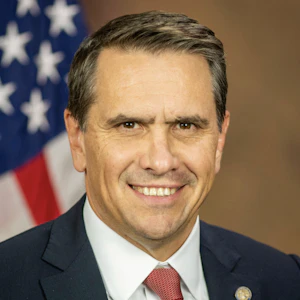
Todd Blanche
Todd Blanche
Biography of Deputy Attorney General Todd Blanche
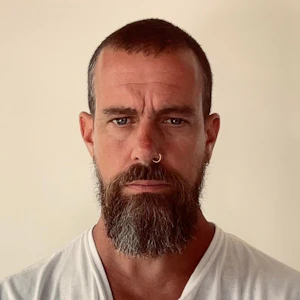
The Honorable Todd Blanche is the 40th Deputy Attorney General of the United States, overseeing the work of the 115,000 dedicated employees who fulfill the Department of Justice’s mission at Main Justice, the FBI, DEA, U.S. Marshals, ATF, and 93 U.S. Attorney’s Offices.
Todd began his career at the Department where he served for over fifteen years in a variety of capacities, including as a contractor, a paralegal in the Criminal Division, and at the United States Attorney’s office for the Southern District of New York where he eventually became an AUSA and later a supervisor.
After leaving the Department, Todd worked as a criminal defense attorney that included representing President Donald Trump in three of the criminal cases brought against him in 2023 and 2024.
Following President Trump’s historic return to the White House, the President appointed Todd to work alongside Attorney General Pam Bondi to make America safe again. At the DOJ, Todd is working tirelessly to implement President Trump’s priorities that include confronting illegal protecting American businesses from fraud.
Todd has been married to his wonderful wife Kristine for nearly thirty years, is a father and grandfather.

Paul Atkins
Paul Atkins
Prior to returning to the SEC, Chairman Atkins was most recently chief executive of Patomak Global Partners, a company he founded in 2009. Chairman Atkins helped lead efforts to develop best practices for the digital asset sector. He served as an independent director and non-executive chairman of the board of BATS Global Markets, Inc. from 2012 to 2015.
Chairman Atkins was appointed by President George W. Bush to serve as a Commissioner of the SEC from 2002 to 2008. During his tenure, he advocated for transparency, consistency, and the use of cost-benefit analysis at the agency. Chairman Atkins also represented the SEC at meetings of the President’s Working Group on Financial Markets and the U.S.-EU Transatlantic Economic Council. From 2009 to 2010, he was appointed a member of the Congressional Oversight Panel for the Troubled Asset Relief Program.
Before serving as an SEC Commissioner, Chairman Atkins was a consultant on securities and investment management industry matters, especially regarding issues of strategy, regulatory compliance, risk management, new product development, and organizational control.
From 1990 to 1994, Chairman Atkins served on the staff of two chairmen of the SEC, Richard C. Breeden and Arthur Levitt, ultimately as chief of staff and counselor, respectively. He received the SEC’s 1992 Law and Policy Award for work regarding corporate governance matters.
Chairman Atkins began his career as a lawyer in New York, focusing on a wide range of corporate transactions for U.S. and foreign clients, including public and private securities offerings and mergers and acquisitions. He was resident for 2½ years in his firm's Paris office and admitted as conseil juridique in France.
A member of the New York and Florida bars, Chairman Atkins received his J.D. from Vanderbilt University School of Law in 1983 and was Senior Student Writing Editor of the Vanderbilt Law Review. He received his A.B., Phi Beta Kappa, from Wofford College in 1980.
Originally from Lillington, North Carolina, Chairman Atkins grew up in Tampa, Florida. He and his wife Sarah have three sons.

Mike Selig
Mike Selig
Chairman Selig brings to the role deep public and private sector experience working with a wide range of stakeholders across agriculture, energy, financial, and digital asset industries, which rely upon and operate in CFTC-regulated markets.
Prior to his leadership at the CFTC, Chairman Selig most recently served as chief counsel of the Securities and Exchange Commission’s Crypto Task Force and senior advisor to SEC Chairman Paul S. Atkins. In this role, Chairman Selig helped to develop a clear regulatory framework for digital asset securities markets, harmonize the SEC and CFTC regulatory regimes, modernize the agency’s rules to reflect new and emerging technologies, and put an end to regulation by enforcement. He also participated in the President’s Working Group on Digital Asset Markets and contributed to its report on “Strengthening American Leadership in Digital Financial Technology.”
Prior to government service, Chairman Selig was a partner at an international law firm, focusing on derivatives and securities regulatory matters. During his years in private practice, he represented a broad range of clients subject to regulation by the CFTC, including commercial end users, futures commission merchants, commodity trading advisors, swap dealers, designated contract markets, derivatives clearing organizations, and digital asset firms. Chairman Selig advised clients on compliance with the Commodity Exchange Act and the CFTC’s rules and regulations thereunder, including in connection with registration applications and obligations, enforcement matters, and complex transactions.
Chairman Selig earned his law degree from The George Washington University Law School and was articles editor of The George Washington Law Review. He received his undergraduate degree from Florida State University.

David Bailey
David Bailey

Eric Trump
Eric Trump
Mr. Trump also serves as Executive Vice President of The Trump Organization, where he oversees the global management and operations of the Trump family’s extensive real estate portfolio. This includes Trump Hotels, Trump Golf, commercial and residential real estate, Trump Estates, and Trump Winery. Known for his hands-on leadership and strong market instincts, he has played a key role in expanding the company’s presence across major U.S. and international markets.
A globally recognized business leader and public figure, Mr. Trump is a prominent advocate for Bitcoin and decentralized finance. He is a co-founder of World Liberty Financial, a decentralized finance (DeFi) platform, and serves on the Board of Advisors of Metaplanet, Japan’s largest corporate holder of Bitcoin.
Beyond his business activities, Mr. Trump has helped raise more than $50 million for St. Jude Children’s Research Hospital in the fight against pediatric cancer, a philanthropic mission he began at age 21.
Mr. Trump earned a degree in Finance and Management from Georgetown University. He currently resides in Florida with his wife, Lara, and their two children. He is also the author of Under Siege, his memoir published in October 2025.
Jack Mallers
Jack Mallers
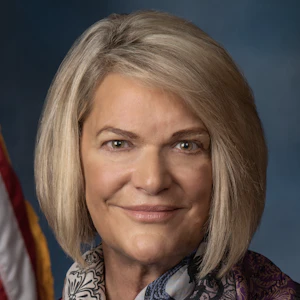
Cynthia Lummis
Cynthia Lummis
As the first-ever Chair of the Senate Banking Subcommittee on Digital Assets, Senator Lummis is the architect of the legislative framework shaping America's digital asset future. She introduced the landmark Lummis-Gillibrand Responsible Financial Innovation Act, the first comprehensive bipartisan crypto regulatory framework in Senate history. She co-authored the GENIUS Act — the first federal stablecoin law ever enacted — and introduced the BITCOIN Act, which would establish a U.S. strategic Bitcoin reserve of up to one million BTC. She is leading the Clarity Act, which will bring long-overdue regulatory certainty to the digital asset industry. She has also championed digital asset tax reform, including a de minimis exemption for small transactions and equal tax treatment for miners and stakers.
Known as Congress' "Crypto Queen," Senator Lummis represents Wyoming — a state she has helped build into one of the most digital asset-friendly regulatory environments in the nation. Before serving in the Senate, she served 14 years in the Wyoming Legislature, eight years as Wyoming State Treasurer, and eight years in the U.S. House. She is a three-time graduate of the University of Wyoming.
Her work represents a crucial bridge between traditional financial systems and the emerging digital economy, ensuring America leads the world in financial innovation while protecting the individual freedoms that define it.

Adam Back
Adam Back

Amy Oldenburg
Amy Oldenburg
David Marcus
David Marcus

Matt Schultz
Matt Schultz
Fred Thiel
Fred Thiel
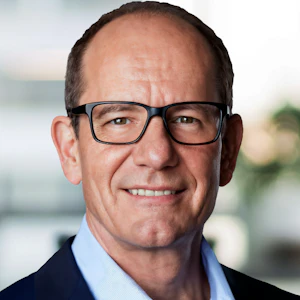
Throughout his career, Mr. Thiel has consistently driven rapid growth and created substantial shareholder value. Prior to MARA, Mr. Thiel served as the CEO of two other public companies, Local Corporation (NASDAQ: LOCM) and Lantronix, Inc (NASDAQ: LTRX). He has successfully raised billions in equity and debt through private and public offerings, led companies through IPOs, executed high-value exits to strategic and financial acquirers, and implemented effective M&A and roll-up strategies.
Mr. Thiel attended the Stockholm School of Economics and executive classes at Harvard Business School, and is fluent in English, Spanish, Swedish, and French. Mr. Thiel is the Chairman of the Board for Oden Technology, Inc. and is active in Young Presidents’ Organization where he has led initiatives in both the FinTech and Technology Networks.
A recognized voice in the industry, Fred frequently shares his insights on energy and technology with major media outlets like Bloomberg TV, CNBC, and FOX Business, contributing to vital discussions about the future of these sectors.
Tim Draper
Tim Draper
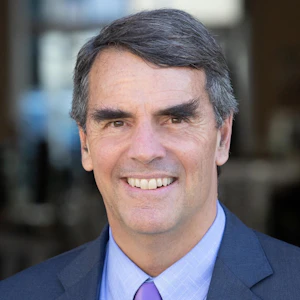
He is a supporter and global thought leader for entrepreneurs everywhere, and is a leading spokesperson for Bitcoin and decentralization, having won the Bitcoin US Marshall’s auction in 2014, invested in over 50 crypto companies, and led investments in Coinbase, Ledger, Tezos, and Bancor, among others.

Afroman
Afroman