Capital Raising Strategies
Speakers/Moderators

Brian Dixon
Brian Dixon


Yves Choueifaty
Yves Choueifaty

Jonathan Ovadia
Jonathan Ovadia
Session
Overview
Brian Dixon of Off the Chain Capital moderated a discussion with Alexandre Laizet of Capital B, Yves Choueifaty of Tobam, and Jonathan Ovadia of OVEX on capital raising strategies around Bitcoin, with a focus on Bitcoin treasury companies, institutional access, and new forms of Bitcoin-backed credit.
The panel explored how Bitcoin exposure is evolving beyond direct holdings and ETFs into public equities, convertible instruments, perpetual credit, and treasury company structures. Speakers discussed the emergence of reserve-style corporations that raise capital to accumulate Bitcoin, comparing them to historical reserve institutions and examining how liability-side innovation can support Bitcoin accumulation.
A major theme was the widening set of institutional on-ramps. The discussion covered African cross-border payments as a practical entry point into Bitcoin and stablecoins, Europe’s use of securitized products to expand retail access, and digital credit products that may attract investors seeking yield with lower volatility than direct Bitcoin exposure.
The panel also compared direct Bitcoin ownership, ETFs, and Bitcoin treasury company equities. Speakers emphasized that the right structure depends on investor needs, from self custody and sovereignty to simpler ETF access or potentially higher-risk, higher-upside exposure through treasury companies trading at premiums or discounts to net asset value.
All right. Good morning, everybody. Hope everyone is doing well. Thank you so much for joining us today. My name is Brian Dixon. I'm the CEO of Off the Chain Capital. I'm grateful to be joined today by Johnny, Yves, and Alexandre. I'd like to first go down the list and have you do a quick introduction of yourselves. Let's start at the end with you.
Hey everyone. I am Alexandre Laizet, director of Bitcoin strategy at Capital B, Europe's first Bitcoin treasury company.
Hi, I'm Yves Choueifaty. I'm the founder and president of Tobam. We launched the first open-ended fund invested in Bitcoin in 2017, and now we are very active in the field of treasury companies.
Hi everyone, I'm Johnny Ovadia. I run one of the largest fiat-to-crypto market makers in Africa. Crypto is becoming the default cross-border payment channel of Africa, and we're glad to be at the front of that.
Again, my name is Brian. I run Off the Chain Capital. We are a deep-discount, Warren Buffett, Benjamin Graham style value investor in the blockchain space. We've always leaned very Bitcoin heavy in what we do. We have a lot of exposure to discounted Bitcoin through bankruptcy proceedings, and big exposure to Bitcoin treasury businesses around the world as well.
The first thing that I want to discuss today, from each of your perspectives, is that the market for investing in Bitcoin and raising in Bitcoin-denominated instruments has changed significantly over the last 12 to 15 months, especially with the Bitcoin treasury companies. From your perspective, what are you actually seeing today in terms of how Bitcoin is raised and deployed effectively? Let's start with you.
One of the biggest changes we're seeing is larger institutions. We are very big in Africa, and we're seeing that African banks, telecommunications, fintechs, the companies that essentially run the African financial plumbing, are starting to be a lot more interested in crypto, Bitcoin, and stablecoins. They're starting to make investments there. Teams who weren't interested in crypto before now have crypto leads and Bitcoin leads, which is super exciting to see.
I would tell you about two earthquakes, one that happened in 1694 and one in 2020. In 1694, a group of businessmen met in London and decided to create a company that would raise capital in order to buy gold. They called this company the Bank of England. In 2020, a guy called Michael Saylor decided to pivot his company, and he is doing absolutely the same job as the Bank of England back then, which is transitioning to raising capital in order to buy the next cornerstone of trust, Bitcoin.
I really believe that what has changed in the Bitcoin market today is the return of reserve institutions. What is very important, I think, is to understand that Bitcoin is a reserve asset. This is something that was really introduced by Hal Finney in December 2010. He told us Bitcoin's fate is to be a reserve asset.
I think corporations are being created across the world with balance sheets that are very different from other corporations on their asset side. They want to have the most boring asset you can imagine. There is nothing more boring than owning a cave full of gold, and there is nothing more boring than owning a ledger full of Bitcoin. So it is the simplest and most boring asset on the asset side. It is on the liability side that they want to be very inventive.
What we've seen recently with the rise of those reserve corporations, and with the invention of this incredible asset, which is a liability for them and which is perpetual, is going to completely transform the way we look at savings and the way we look at money across the world.
I think we are witnessing the digital transformation of capital. The first phase was Bitcoin-backed equity with Strategy in 2020, and digital equity. Then Strategy innovated with convertible notes, and that was the rise of Bitcoin-backed amplified equity. Now we are in the third wave, which is actually the biggest one, of Bitcoin-backed credit in the form of digital credit, with Bitcoin-backed, Bitcoin-denominated, Bitcoin-listed credit instruments that can provide different forms of exposure to investors that are interested in Bitcoin but do not necessarily want the full volatility.
This has completely changed the market structure this year, with Strategy's product buying five times more Bitcoin than what is in the market in natural supply by the miners. That is completely changing the structure of the market, with 10,000 to 30,000 Bitcoin purchased per week in what is a consolidation market.
On top of that, you also have systemic banks adopting Bitcoin at scale. In France, for example, which is not always the fastest moving in banking, you have one systemic bank that now offers access to Bitcoin for retail investors, BCE, and you have that just launched a Bitcoin ETP. That is the largest asset manager in Europe. In the U.S., you have Schwab and, of course, BlackRock, Vanguard, and so on.
That movement of institutionalization, combined with the rise and scale of digital credit, which is one of the fastest-growing products in history, is very significant. IBIT reached $5 billion after two months, and STRC is already there after seven months. Even the iPhone did not do that at the time. This is really fast growing. This is transforming the capital markets. It is repricing how risk is appreciated because digital credit is able to provide double-digit performance with lower than 2% volatility. So it is lower volatility than the S&P 500 already today, and higher or equal returns with most of it. It is really redefining what risk means and what an investment means for both an equity investor and a credit investor.
That is really important. Another way to think about what you noted on the digital credit side is if we look at a product like Stretch, what I believe is potentially occurring right now is that we are seeing five to ten years of future demand for Bitcoin being sucked in today because of that product. You are having these big private credit investors and other investors that really do not care about the exposure to Bitcoin, but they care about the 11.5% yield. So you are sucking in this group of people that otherwise may not have paid attention to the asset class for many years into the future until they were forced into it because they see the yield.
I always like to say that everybody has their own entry point into the digital asset space. I think Stretch is a brand-new entry point for a huge group of institutional investors. Years ago, during 2022 as an example, there were a lot of people trading NFTs. Then when they realized that many NFTs did not have a ton of value, they were trying to sell them off to put their money in Bitcoin. That was a different entry point into Bitcoin. Everybody makes their way back to Bitcoin in one way or another, and I think this digital credit product is a way we are seeing these massive institutional investors pull that forward.
In that same vein, I know each of you has built significant opportunities, whether through public equities via Bitcoin, through funds, or through over-the-counter market making. What have you found to be most effective for deploying meaningful amounts of capital into Bitcoin? What are some strategies that you have executed that you think have helped you do well with that? Why don't we start with Yves, then Alexandre, then come back to Johnny.
I'm going to give you a specific point of view. I think it is something that is very specific by country and by zone. The eurozone is really struggling to enter this new era of currencies. What is really changing the game is the fact that you now have securities that are able to allow you to sell Bitcoin exposure to retail clients. Europe has really struggled with Bitcoin. We are way behind the United States, and the fact that there is now securitization of instruments that are able to provide indirect access to Bitcoin is a way for Europe, unfortunately, to get access to Bitcoin.
Capital B, over in Europe, has raised half of its capital in equity and half of it in digital credit in an unlisted format, with Bitcoin-denominated notes, $178 million issued to date. Capital B is effectively the most amplified Bitcoin treasury company, but with zero fiat leverage to date. That is 40% leverage, but with liabilities that are in Bitcoin and over five years, so no fiat leverage to date.
That opens the opportunity as well for Capital B to enter, potentially in the future, listed perpetual digital credit markets. That is a quite significant avenue for growth and is actually the most in demand in the market. I would say that digital credit capacity and the quality of the issuer are quite significantly increased by its capacity to raise different forms of capital and innovate on the liability side, as Yves mentioned.
Capital B is uniquely positioned to capture both equity markets and launch new innovations, such as the call option instruments that we have launched in partnership with Tobam and with Ute Management. They allow the company to maximize the potential of convexity for the investor and to help the company accumulate Bitcoin with no share issuance at the start, by collecting the premium and by having a mechanism of basis that allows the company to increase Bitcoin per share over time as the warrants and options can get exercised.
Capital B has been innovating with Bitcoin convertible notes last year, has been innovating with call option instruments this year with its strategic investor partners, and of course we are positioned to innovate further in the perpetual digital credit instruments that we see as the biggest opportunity this year, the following one, and over that decade, to give exposure to Bitcoin in a way that is possible to integrate within traditional brokerage accounts for investors that are not able to withstand the volatility of Bitcoin but want double-digit potential performance.
I think the access points to Bitcoin are increasing every day. The NFT point that you made, Brian, is very relevant to what we are seeing. Most of our clients are using crypto and Bitcoin for cross-border payments, not necessarily for Bitcoin itself, but it is a great entry point. People who need to move $10 million from Nigeria to, let's say, Europe to pay an invoice for cars are not necessarily looking to buy Bitcoin, but they need Bitcoin. Bitcoin solves a real problem for them. Bitcoin and stablecoins solve a real problem for them.
A lot of those clients are becoming Bitcoin holders and Bitcoin bulls after seeing the real impact that it has on the economy and the real impact it has on their business. Similarly, you see the same kind of thing with Stretch. It is not necessarily a Bitcoin product in the same way that cross-border payments is not necessarily a Bitcoin product, but it is an access point. It is using Bitcoin and the value Bitcoin brings, one, for cross-border payments, and two, as a stable, secure underlying asset to offer people real utility in their day-to-day lives and day-to-day business, and it opens their eyes to the value behind Bitcoin. Therefore, it creates new participants in the market, which is great. New things like this are coming online every day. Cross-border payments has been there for a while, but now it is becoming more institutional, which is super exciting to see.
Some other things we are seeing in terms of institutional on-ramps to get exposure to Bitcoin: there are three primary ones today. You have direct Bitcoin exposure. You have ETF exposure. And now we have equity exposure and digital credit exposure as well. Some of these Bitcoin treasury companies historically have traded at large premiums. A lot of them today are basically trading at their net asset value or at discounts.
If you were advising an institutional allocator to look at the space between direct Bitcoin exposure, Bitcoin treasury company exposure, or ETF exposure, what would be your thought process for advising which product and why? What structure makes sense? Let's start with you, John.
I think it very much depends on the client and the use case. If it is a more traditional company getting its first Bitcoin exposure, an ETF makes sense. It is simple. There is no leverage, not too much to understand. If you are fundamentally bullish on Bitcoin, you do not need to understand custody, and it gets you that exposure in the simplest, cleanest way.
If you are a little bit more bullish, have a little bit deeper understanding, and you want leverage, that is when things like MicroStrategy equity become more interesting. But you really need to know what you are doing if you start investing in that space. Finally, as you mentioned before, something like Stretch, if you really just want to get your toes wet and you are looking for a clean return, that makes sense. Ultimately, it depends on the client.
On my side, I am absolutely convinced that the best way to participate in and get exposure to the future momentum of Bitcoin is Bitcoin treasury companies. I think there is one way to look at it that, in my mind, is really appealing. It is the mNAV. There is a company called Hermès in France. It is a luxury company. If you look at the NAV, the net asset value of Hermès, it is 20 billion. The market cap of Hermès is 200 billion. What is the difference between those 20 and 200? It is only speculation. People speculate that the future earnings of Hermès make Hermès worth much more than its NAV. It is the same for a treasury company.
I am absolutely sure that we have not yet seen the all-time high of mNAVs. I am absolutely convinced that those companies will trade at several multiples of their NAVs. Again, remember the case of the Bank of England. Remember the case of the Banque de France. For about 50 years, we have been missing reserve institutions. The Federal Reserve is not a reserve anymore. The Banque de France is not a reserve. The ECB is not a reserve. They are institutions that are full of government bonds and things that are worth, in fact, almost nothing.
We have something major happening in capital markets. It is the return of reserve companies, and I think it will make a lot of sense to own either directly their stocks or more sophisticated products that will give you access to the momentum that we will see in Bitcoin in the coming years.
As you mentioned, there are three main ways. The first one is if you want to trust nobody but yourself and be your own bank, that is direct Bitcoin exposure, and nobody can replace that if you want to access individual sovereignty and pure financial freedom. But it comes with the risks and responsibilities of a bank, and for 99% of the population, the choice of preference will likely be more security in the form of an ETF. But that is pure Bitcoin exposure, less the management fees.
If you are looking for financial outperformance, then the Bitcoin treasury companies that are focused on constant, systematic, structured Bitcoin accumulation as the reserve asset, that are extremely conservative on that part, and are innovative on the liability side and the credit side, and have a path to become the largest, most effective digital credit issuer in their country, region, or specific specialty, are structured to outperform Bitcoin over time.
If you zoom out, you see that Bitcoin is on its way toward the market capitalization of gold. That is, in about ten years, a potential of $2 million Bitcoin or more. Gold itself is growing. Bitcoin treasury companies are able to increase their Bitcoin per share at a rate that is quite significant when you compound that every year. Even Strategy, with several hundred thousand Bitcoin and now close to one million Bitcoin, is able to generate levels of BTC yield that, compounded over time, can generate 2x, 3x, or more, as Yves said, in terms of the potential multiples and the monetization of what those reserve companies can become.
There is a point as well when those companies, when they become big enough, become monetized in the market. If Bitcoin goes toward $2 million or $3 million per Bitcoin, Strategy is going to be $1 trillion or more, and you are going to create the magnificent seven or eight. Strategy is likely going to become the most valuable company in the U.S. and the world. Bitcoin treasury companies that are able to effectively replicate that strategy and that playbook, and become the respective leaders in their countries and regions as governments are redirecting a lot of investment and retirement accounts to those local investments, can potentially reach levels that we have not seen before.
I will end on one note. From an institutional landscape, one of the things that I often advise when I am talking to larger institutional investors around the world about getting exposure is that one of the best value opportunities I see in the markets today is when you go into different markets around the world and see Bitcoin treasury companies that are the really solid, sophisticated ones, executing effectively, with good management teams, and they are trading at a discount.
It is very similar to GBTC a couple of years ago, the Grayscale Bitcoin Trust, when that was selling at a 50% discount. We knew ultimately the SEC would eventually approve a Bitcoin ETF and that 50% discount would go back to the net asset value. I think that is what we are going to see in some of the sophisticated Bitcoin treasury companies as well. The ones that are selling at 20%, 30%, 40%, 50%, or 60% discounts to their Bitcoin balance, wrapped in operating businesses as well, have tremendous upside opportunity from an institutional lens also.
I want to thank our panelists. Thank you so much, and thanks everybody for joining us today. I really appreciate it.
Similar
Sessions
Capital Raising Strategies
Brian Dixon
Brian Dixon
Yves Choueifaty
Yves Choueifaty
Jonathan Ovadia
Jonathan Ovadia
Capital Raising Strategies
Speakers/Moderators
Brian Dixon
Brian Dixon
Yves Choueifaty
Yves Choueifaty
Jonathan Ovadia
Jonathan Ovadia
How Bitcoin Companies Are Aligning Globally

George Mekhail
George Mekhail

David Bailey
David Bailey

How Bitcoin Companies Are Aligning Globally
Speakers/Moderators
George Mekhail
George Mekhail
David Bailey
David Bailey
Other
Speakers

Michael Saylor
Michael Saylor
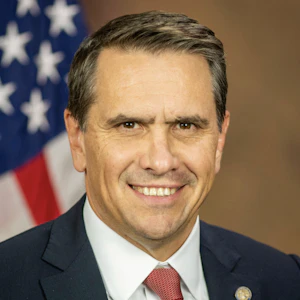
Todd Blanche
Todd Blanche
Biography of Deputy Attorney General Todd Blanche
The Honorable Todd Blanche is the 40th Deputy Attorney General of the United States, overseeing the work of the 115,000 dedicated employees who fulfill the Department of Justice’s mission at Main Justice, the FBI, DEA, U.S. Marshals, ATF, and 93 U.S. Attorney’s Offices.
Todd began his career at the Department where he served for over fifteen years in a variety of capacities, including as a contractor, a paralegal in the Criminal Division, and at the United States Attorney’s office for the Southern District of New York where he eventually became an AUSA and later a supervisor.
After leaving the Department, Todd worked as a criminal defense attorney that included representing President Donald Trump in three of the criminal cases brought against him in 2023 and 2024.
Following President Trump’s historic return to the White House, the President appointed Todd to work alongside Attorney General Pam Bondi to make America safe again. At the DOJ, Todd is working tirelessly to implement President Trump’s priorities that include confronting illegal protecting American businesses from fraud.
Todd has been married to his wonderful wife Kristine for nearly thirty years, is a father and grandfather.

Paul Atkins
Paul Atkins
Prior to returning to the SEC, Chairman Atkins was most recently chief executive of Patomak Global Partners, a company he founded in 2009. Chairman Atkins helped lead efforts to develop best practices for the digital asset sector. He served as an independent director and non-executive chairman of the board of BATS Global Markets, Inc. from 2012 to 2015.
Chairman Atkins was appointed by President George W. Bush to serve as a Commissioner of the SEC from 2002 to 2008. During his tenure, he advocated for transparency, consistency, and the use of cost-benefit analysis at the agency. Chairman Atkins also represented the SEC at meetings of the President’s Working Group on Financial Markets and the U.S.-EU Transatlantic Economic Council. From 2009 to 2010, he was appointed a member of the Congressional Oversight Panel for the Troubled Asset Relief Program.
Before serving as an SEC Commissioner, Chairman Atkins was a consultant on securities and investment management industry matters, especially regarding issues of strategy, regulatory compliance, risk management, new product development, and organizational control.
From 1990 to 1994, Chairman Atkins served on the staff of two chairmen of the SEC, Richard C. Breeden and Arthur Levitt, ultimately as chief of staff and counselor, respectively. He received the SEC’s 1992 Law and Policy Award for work regarding corporate governance matters.
Chairman Atkins began his career as a lawyer in New York, focusing on a wide range of corporate transactions for U.S. and foreign clients, including public and private securities offerings and mergers and acquisitions. He was resident for 2½ years in his firm's Paris office and admitted as conseil juridique in France.
A member of the New York and Florida bars, Chairman Atkins received his J.D. from Vanderbilt University School of Law in 1983 and was Senior Student Writing Editor of the Vanderbilt Law Review. He received his A.B., Phi Beta Kappa, from Wofford College in 1980.
Originally from Lillington, North Carolina, Chairman Atkins grew up in Tampa, Florida. He and his wife Sarah have three sons.

Mike Selig
Mike Selig
Chairman Selig brings to the role deep public and private sector experience working with a wide range of stakeholders across agriculture, energy, financial, and digital asset industries, which rely upon and operate in CFTC-regulated markets.
Prior to his leadership at the CFTC, Chairman Selig most recently served as chief counsel of the Securities and Exchange Commission’s Crypto Task Force and senior advisor to SEC Chairman Paul S. Atkins. In this role, Chairman Selig helped to develop a clear regulatory framework for digital asset securities markets, harmonize the SEC and CFTC regulatory regimes, modernize the agency’s rules to reflect new and emerging technologies, and put an end to regulation by enforcement. He also participated in the President’s Working Group on Digital Asset Markets and contributed to its report on “Strengthening American Leadership in Digital Financial Technology.”
Prior to government service, Chairman Selig was a partner at an international law firm, focusing on derivatives and securities regulatory matters. During his years in private practice, he represented a broad range of clients subject to regulation by the CFTC, including commercial end users, futures commission merchants, commodity trading advisors, swap dealers, designated contract markets, derivatives clearing organizations, and digital asset firms. Chairman Selig advised clients on compliance with the Commodity Exchange Act and the CFTC’s rules and regulations thereunder, including in connection with registration applications and obligations, enforcement matters, and complex transactions.
Chairman Selig earned his law degree from The George Washington University Law School and was articles editor of The George Washington Law Review. He received his undergraduate degree from Florida State University.
David Bailey
David Bailey

Eric Trump
Eric Trump
Mr. Trump also serves as Executive Vice President of The Trump Organization, where he oversees the global management and operations of the Trump family’s extensive real estate portfolio. This includes Trump Hotels, Trump Golf, commercial and residential real estate, Trump Estates, and Trump Winery. Known for his hands-on leadership and strong market instincts, he has played a key role in expanding the company’s presence across major U.S. and international markets.
A globally recognized business leader and public figure, Mr. Trump is a prominent advocate for Bitcoin and decentralized finance. He is a co-founder of World Liberty Financial, a decentralized finance (DeFi) platform, and serves on the Board of Advisors of Metaplanet, Japan’s largest corporate holder of Bitcoin.
Beyond his business activities, Mr. Trump has helped raise more than $50 million for St. Jude Children’s Research Hospital in the fight against pediatric cancer, a philanthropic mission he began at age 21.
Mr. Trump earned a degree in Finance and Management from Georgetown University. He currently resides in Florida with his wife, Lara, and their two children. He is also the author of Under Siege, his memoir published in October 2025.

Jack Mallers
Jack Mallers
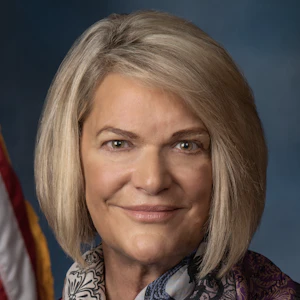
Cynthia Lummis
Cynthia Lummis
As the first-ever Chair of the Senate Banking Subcommittee on Digital Assets, Senator Lummis is the architect of the legislative framework shaping America's digital asset future. She introduced the landmark Lummis-Gillibrand Responsible Financial Innovation Act, the first comprehensive bipartisan crypto regulatory framework in Senate history. She co-authored the GENIUS Act — the first federal stablecoin law ever enacted — and introduced the BITCOIN Act, which would establish a U.S. strategic Bitcoin reserve of up to one million BTC. She is leading the Clarity Act, which will bring long-overdue regulatory certainty to the digital asset industry. She has also championed digital asset tax reform, including a de minimis exemption for small transactions and equal tax treatment for miners and stakers.
Known as Congress' "Crypto Queen," Senator Lummis represents Wyoming — a state she has helped build into one of the most digital asset-friendly regulatory environments in the nation. Before serving in the Senate, she served 14 years in the Wyoming Legislature, eight years as Wyoming State Treasurer, and eight years in the U.S. House. She is a three-time graduate of the University of Wyoming.
Her work represents a crucial bridge between traditional financial systems and the emerging digital economy, ensuring America leads the world in financial innovation while protecting the individual freedoms that define it.

Adam Back
Adam Back

Amy Oldenburg
Amy Oldenburg
David Marcus
David Marcus

Matt Schultz
Matt Schultz
Fred Thiel
Fred Thiel
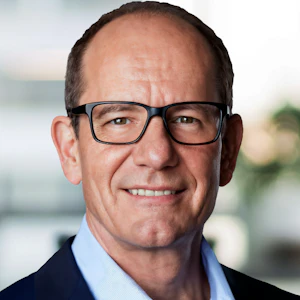
Throughout his career, Mr. Thiel has consistently driven rapid growth and created substantial shareholder value. Prior to MARA, Mr. Thiel served as the CEO of two other public companies, Local Corporation (NASDAQ: LOCM) and Lantronix, Inc (NASDAQ: LTRX). He has successfully raised billions in equity and debt through private and public offerings, led companies through IPOs, executed high-value exits to strategic and financial acquirers, and implemented effective M&A and roll-up strategies.
Mr. Thiel attended the Stockholm School of Economics and executive classes at Harvard Business School, and is fluent in English, Spanish, Swedish, and French. Mr. Thiel is the Chairman of the Board for Oden Technology, Inc. and is active in Young Presidents’ Organization where he has led initiatives in both the FinTech and Technology Networks.
A recognized voice in the industry, Fred frequently shares his insights on energy and technology with major media outlets like Bloomberg TV, CNBC, and FOX Business, contributing to vital discussions about the future of these sectors.
Tim Draper
Tim Draper
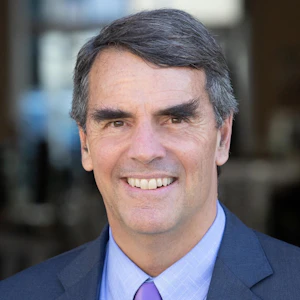
He is a supporter and global thought leader for entrepreneurs everywhere, and is a leading spokesperson for Bitcoin and decentralization, having won the Bitcoin US Marshall’s auction in 2014, invested in over 50 crypto companies, and led investments in Coinbase, Ledger, Tezos, and Bancor, among others.

Afroman
Afroman