Channeling Interest: How Companies Are Monetizing The Lightning Network
Speakers/Moderators

Graham Krizek
Graham Krizek


Jesse Shrader
Jesse Shrader

Shone Anstey
Shone Anstey
Session
Overview
This panel focused on how companies are using the Bitcoin Lightning Network as both payment infrastructure and a source of revenue through routing, liquidity provisioning, and marketplace services. Shone Anstey of LQWD, Jesse Shrader of Amboss Technologies, and Tyler Wood of Block discussed how their businesses approach Lightning from different angles, including liquidity management, data-driven channel allocation, Cash App and Square payments, and routing revenue.
A major theme was that Lightning revenue depends on real payment activity rather than simply locking up more Bitcoin. The speakers distinguished routing revenue from yield, emphasizing that sustainable returns come from network usage, payment volume, liquidity demand, and better connectivity across nodes.
The discussion also covered self custody, treasury use cases, stablecoins on Lightning, Taproot Assets, peer-to-peer trading, AI agents, and the need for easy user experiences that hide liquidity complexity. The panelists agreed that broader merchant adoption and everyday Bitcoin payments are essential for growing the Lightning economy and making liquidity markets more useful.
I'm Shone Anstey, the CEO of LQWD. We are a Bitcoin Lightning Network service provider, really focused on AI and the web. We've got systems in 18 countries all over the world and thousands of channels. We know these guys here, we work with them as part of a great network, and we're excited to be here.
I'm Jesse Shrader, CEO and co-founder of Amboss Technologies. What we do is use data to help people allocate Bitcoin on the Lightning Network, and now stablecoins, including trading natively on Lightning.
Hey everyone. I'm Tyler Wood, and I am a data scientist and product at Block. We work on the Lightning infrastructure that helps Cash App users send Lightning payments and Square businesses receive Lightning payments.
Awesome. Thank you. The focus of this panel is really looking at Lightning, specifically on the liquidity side, and how there are unique opportunities popping up, or how things have evolved ever since the network first got created. What are the opportunities that are presenting themselves?
A great place to start is the business model. Each business here incorporates Lightning in a very unique way. For some, it's at the forefront and core. For others, it's less core but still a very important piece. I'd love to hear from each one of you. How does Lightning fit into your business? How do you use Lightning, liquidity, routing, and all these things to make money?
We are a liquidity service provider, so we are all about routing. We get a little fee every time a transaction goes across one of our hops. We have 18 nodes, 18 hubs around the world, and thousands of channels. We look at that as a longer-term volume game. We see the volume for the Lightning Network climbing quite quickly.
We think the AI age, which is already happening, is important. We just announced an AI-only wallet because AI agents want mathematically pure money, and we see it transacting over there. For us, it's all about maintaining the network and seeing it grow. The Lightning Network is a continuation of the revolution of the internet. This is the open payment rail that we wanted in the 90s. It's finally here, and we can see massive takeoff in a really great way.
For Amboss, we provide data and historical data, as well as the largest liquidity marketplace out there. We connect LPs, or liquidity service providers, with a whole base of customers that need liquidity. That supports businesses that are accepting Lightning payments into self custody.
At Block, we incorporate Lightning into our products. Our main products are Cash App and Square. Our monetization strategy with Lightning tends to be that when a Cash App user wants to send Bitcoin with a payment, they purchase it from us. We're not trying to earn money on routing or anything like that. The Lightning infrastructure is the thing that facilitates those transactions.
Similarly with Square, when we facilitate card payments, for example, we tend to take a 2% to 3% fee and pay some of that to the card networks. With Lightning, we can provide payment services for a lot cheaper and charge a lower fee. Lightning is just the underlying layer there, and we don't need to monetize it at the routing level, although sometimes we do incidentally earn some routing income based on activity happening across our nodes.
Awesome. At Voltage, we're very focused on the payment side. We work with basically all the parties up here to provide the right kind of connectivity to help payments succeed. That's a really important bit about Lightning: payments are not going to work unless you have liquidity in the right place. Being able to focus on that to solve users' problems is incredibly important.
Tyler, last year at the Bitcoin conference, you guys announced a 9% return on the Bitcoin that you put into your channels via routing and charging these fees. Are you able to share anything about where that stands today? Do you track that? How does Cash App think about that? Is it something you guys are looking at consistently, or is that a nice passive thing that you highlighted last year?
We announced that last year, and I think it turned some heads. People were like, can you do that on the Lightning Network? I can help dispel some of the ambiguity around how that works.
The first thing I want to do is reframe the conversation away from yield for us and more toward routing revenue. The reason for that is because this quantity that we're earning from routing isn't scaling with the amount of capital that we put on the node. It actually scales in proportion to the amount of real transaction activity that's happening with Cash App. If you call it a yield, that might suggest that we could put more money into our nodes and earn that same figure, but that's not necessarily the case.
How we actually earn routing income from Cash App activity is that Cash App users are sending a lot of payments. They can send and receive, but on net they send way more than they receive. When we open a Lightning channel, all of the balance starts on our side. On net, Cash App users push it out to the other side of the channel, and we end up with all of this inbound liquidity.
Cash App users are sending payments so consistently outbound that we accumulate inbound liquidity. I think we're probably one of the lowest-cost inbound liquidity generators on the whole network. I tend to call Cash App the inbound liquidity generation engine.
We have all this inbound liquidity piling up. We can use that inbound liquidity to receive payments on Square, which is the highest use of it for us. But right now, Square volumes aren't quite as big as Cash App, so we still have net sending activity. In the meantime, we can monetize that by offering inbound liquidity to other nodes on the network, by opening channels to swap services.
You can open a channel to something like Lightning Loop and set a channel fee on that of 2,000 to 3,000 ppm, which is 0.2% to 0.3%. When a node that needs inbound liquidity uses the Loop service, they can use that channel. We get paid a little bit for that liquidity. If you cycle through it at high velocity, that's how you end up earning routing revenue that looks really nice as a function of how much capital you've put on the node.
The other thing I want to mention is that for us, the P1 goal for running our Lightning infrastructure is to make payments reliable for Cash App users and Square users. If I had to put earning routing revenue as a prioritization, it wouldn't even necessarily be a P2 or a P3. It's something that just incidentally happens, and it's something we almost need to do as part of good node management to keep channel balances balanced. For us, it always comes back to providing reliable service for Cash App users and Square users.
That's great to highlight, the flywheel that has to happen. Lightning is a payments network. Bitcoin is made for payments, and we want to keep payments front and center. But to make payments successful, you have to have liquidity in the right places and all these other things set up.
Thinking not too technically, how do you each use liquidity in the way your product operates, or in the solutions that you're offering for your customers? How do you actually use Bitcoin in Lightning to do what you do?
I'll answer that because we actually use some of your services too, Jesse. They've got a great service there. As a public company, we used our public treasury to buy Bitcoin. We make sure we have enough on the balance sheet, and we deploy it across thousands of channels.
We use AI because we have a lot of data from our network, and we're able to have intelligent rebalancing using AI, which is very great for us. We use the Loop services, and we certainly use Jesse's and Amboss' services and the things he'll get into there.
To Tyler's point previously, we're not so focused on just how much money we can make off the network. We're focused on how reliable and how great we can make it, and the rest is coming naturally to us. We see it growing naturally.
The big push right now is certainly AI and web agents using it as a native payment layer. It is instant, and not just for payments. AI is using it for identification, authentication, and other things like that. They need this incredible network that can settle in milliseconds with a single sat to do what they do. This is a big growth component for the Lightning Network coming up here, and it's going to affect all of our companies in a big way. We use LDK as well from Block, so thanks, guys. That's a big part of it.
For us, liquidity is a denomination of connectivity because this is a peer-to-peer payments network, and now it's a trading network as well. We're using liquidity providers like LQWD and others through our own Rails product to deploy Bitcoin in strategic locations so that you can have very high payment reliability.
We've used machine learning to train it on increasing throughput, so you can have larger and larger payments happen over Lightning. Lightning is no longer just a payments network for micropayments. You can also buy hotel rooms, plane flights, maybe even purchase a house natively over the Lightning Network. That means instant settlement for payments that large. To make those things happen, you need quite a bit of liquidity. This is really our role in creating a liquidity marketplace, so that you can purchase that whenever you need it for your payments operations.
Tyler, anything to add on that? Cash App is unique in that Cash App isn't made for Lightning liquidity or anything, but how do you use it to make Cash App so good at just being Cash App?
Like Jesse, we use data to inform our liquidity allocation. I think his stuff is probably a little more sophisticated than our stuff, which is awesome. But we kind of do it on easy mode, honestly, because Cash App is a custodial wallet. We know where people are sending payments to, so we can know ahead of time where we should put channels.
Also, because Cash App is this net sender, that means we almost always just need to create channels. We don't need to acquire inbound externally, so it's pretty simple for us, and that enables us to provide a really good experience.
Things will get more complicated in the future when Square potentially gets bigger, and maybe it starts to dominate that equation and receive more than Cash App is sending. Then we're going to be a net sink on the network and need to acquire inbound, and that makes it a lot harder. I'm excited for that future. You should all go buy goods and services out in the real world at Square and try to grow that so that I have this new, fun problem to solve.
Something that is very topical and a lot of people are interested in is yield from the other side, not from the business side. Whether it's a consumer or a business that wants to put my Bitcoin to work and earn yield on it, what does that landscape look like today? What is feasible? What is not feasible? How does it look for anyone thinking about yield earning inside of Lightning, how can they participate, and does it make sense?
We've been approached by a number of companies that have Bitcoin on their balance sheet saying, we want to be able to put Bitcoin to work on the Lightning Network in a passive way and earn something like a money market fund type yield on it.
For our company, we've seen yields anywhere between 3% and 6%. We also calculate a weighted APR, which is a higher number, but that's about short-term velocity and how much APR you get on a channel just opening. We have a few ways of calculating the metric, but the only one that really matters is the full-on APR itself.
What we do see in the future, and we've looked at it as a thing called chain liquidity, is a company like a mining company or another treasury company potentially putting their Bitcoin on a node, having chain liquidity. It's still non-custodial, but we can draw off their liquidity as we need to.
Down the line, you may see things where there is an actual bearer bond market. Companies like ours could produce something where you could have a custodian service and a bearer bond token. It would be an actual security, would have to be cleared by regulators, would trade on the market, and then the person could either redeem the Bitcoin off the network when they want it back and still earn yield on it, or trade it on an aftermarket. Now you have a true Wall Street bearer bond that actually earns yield in Bitcoin. That will probably come down the line, with a lot of regulations in the way. But the non-custodial thing is the most exciting for me in the short term.
Last year at this conference, we announced Rails, our liquidity provider product. That allows people to keep self custody and deploy their Bitcoin on Lightning. The interest we've gotten from that product has accrued to a waitlist of 4,500 Bitcoin.
There is essentially unlimited demand for yields on your Bitcoin denominated in Bitcoin, and that's really what this product offers. However, the yield or the fees that are derived from payment activity are completely tied to payment activity. The more Lightning traffic, transactions, trading, and payments that happen natively on Lightning, that drives the fees that can be derived from this.
It allows a passive vehicle for someone to start accruing additional Bitcoin or stablecoins without putting their funds at risk in some strange DeFi protocol where they have to give up custody. They can keep it in self custody and still benefit from the activity of the network.
I love your point, Jesse, about growing the Lightning economy. To me, that's what it all comes back to. If we want these opportunities to exist where you can earn a return on your Bitcoin, we just need more and more real economic activity happening on Lightning, because that's what's going to drive value and allow you to deploy more Bitcoin.
At Block, we have a corporate treasury of about 8,000 Bitcoin. We have 240 Bitcoin capacity on our node. That tells you a little bit about how saturated we think our revenue-earning opportunity is. If we could put 1,000 Bitcoin on the Lightning Network and scale that 9% number, obviously we would do that. But right now it would just dilute that revenue because the pie is not big enough.
For us, we're super focused on growing that pie, growing the Lightning economy, and getting more activity on there. As we actually grow the activity of real transactions for real goods and services happening with Bitcoin on Lightning, some of this monetization stuff will naturally follow. But we have to put value creation first.
Absolutely. None of this yield stuff matters if we don't have the payments to support it. We have to have the activity for any of this to really matter and make sense.
People have always wanted to get some kind of yield or return on their Bitcoin. We saw the BlockFis and all of these things come and go, and it ended up very bad for a lot of people. Similarly, in the DeFi ecosystem, just last week a whole protocol went underwater. There are so many problems out there, and this is definitely a better alternative as we look to the future.
Shifting gears a little bit, how do we think about all the new things happening on Bitcoin, like stablecoins via Taproot Assets, other sidechain protocols, and AI? How does that affect yield and liquidity on Lightning? Does it help? Does it hurt? Is it a new problem to solve?
It certainly adds more things we have to look at. I think a lot of these things will continue to increase overall activity on the network itself, and we're excited to see that. In terms of APRs and the actual traffic being driven, our biggest view is that volume is going to drive it over the longer term.
Stablecoins are going to be active. The way I look at the Lightning Network, and I look at it from my own past history, is that it is an open payment layer of the internet itself. It is the true payments layer that we wanted back in the 90s. I'm dating myself, but it didn't exist.
Now it has the magic of Bitcoin, which is a trust protocol, where the first use case is money. Now we're scaling Bitcoin the same way we scaled the internet, by having multiple layers of technology. It is true peer-to-peer. Its architecture is like the internet, because it is the internet.
This kind of stuff is coming naturally to it because this is a frictionless payment system. We really saw in our own ecosystem where just-in-time channels showed up in the last couple of years. The software went from 30% of payments working back in 2015, when it was very experimental, to now 99.999% or whatever. It works like magic behind the scenes. People are going to use it and won't even know they're using it, and that's where the adoption is going to continue to go up.
For merchant adoption, a lot of people have been afraid of Bitcoin's volatility, and really that ends today because we just launched Rails X, which is the peer-to-peer trading layer available through ThunderHub. This is your own node, your own keys, and you are able to use the Lightning Network as a peer-to-peer DEX. This is the first DEX on Bitcoin.
Now you'll be able to use Taproot Assets and swap between Bitcoin, USDT, and USDC available as wrapped stablecoins natively on Lightning. You can execute trades far more efficiently than you could using any centralized exchange in order to do that. That's all enabled by the atomic payments available on Lightning.
This functionality is now available to anyone who wants to participate, run a node, manage their treasury, and accept payments in stablecoins. That is mapping to the $20 trillion market that we're seeing in stablecoins today, and being able to move that activity onto Bitcoin, where we really see Bitcoin as the fundamental technology for the global economy.
We have a version of stablecoin payments on Cash App and Square right now that's done at the app layer. We launched this in November, where Cash App users can pay a Lightning invoice from their dollar balance. We're doing essentially a just-in-time Bitcoin buy on their behalf and then sending it. We also have the reverse functionality in Square.
That functionality has shown really good adoption and product-market fit. If we can bring that to a more robust protocol-level solution, that's awesome. At Block, we believe one of the ways Bitcoin wins is that Lightning is going to be the lingua franca of value transfer in the future, and it will be the value transfer protocol for the internet.
If we can leverage the fact that this is going to be the best open money network, and if we co-opt other stablecoins and different things and make them interoperable with that network, it builds the network effect of Lightning. It's going to be better for everyone participating. I think it's more of an open tent mentality. All of these things are welcome. If we can get more things settling value using Lightning, using HTLCs, using Lightning routing, that benefits everyone plugged into this network. That's how we win, so I would love to see it.
I couldn't agree more. The payments use case and bringing more activity to Bitcoin from the payment side also helps the HODL narrative. It has to have both for it to be the asset that we all want it to be ultimately. The more we can bring to it, the better.
What are you guys thinking about in terms of hurdles? What do we need to solve inside Lightning, maybe from the liquidity perspective but also more broadly? What should we be looking to when we come to the Bitcoin conference next year? What do we want to be able to solve by then?
The liquidity behind the scenes is just happening behind the scenes, and users don't care about that. They care about a very easy-to-use interface that simply works, and they don't know it.
We get out of our own bubble in North America, and around the world people want Bitcoin because they don't trust their governments, and nor should they. Their currencies are going to zero. Ultimately, the Lightning Network and Bitcoin network are mathematically pure money. It is the trust protocol. It can be used by anybody. Anyone can hop on, anyone can hop off. There are no restrictions.
The more people see that and understand that message, the more people are going to use it. It's our job to make it as easy as possible for that to happen in an open source format, where it can really change how the world runs.
As we've been chatting with people about deploying their Bitcoin on Lightning, one of the barriers we've run into is that many Bitcoin treasury companies need to use a custodian. We built this self custody product, and that means the people we've actually been serving are high-net-worth individuals and smaller businesses that aren't so restricted.
I think what we're seeing coming forward is that custodians will begin to integrate these types of systems and help their customers deploy Bitcoin on the Lightning Network, and tap into these low-risk opportunities to support the Bitcoin payments network.
I don't have that much to add to that. At the risk of being a broken record, I'm just going to harp on growing the size of the Lightning economy and using Bitcoin as everyday money. If we have more people buying and selling stuff with Bitcoin, then I think a lot of this stuff will fall into place.
As closing thoughts, when you think about the next year or so, what metrics are you tracking? What are you looking for in your companies to track success or growth? Alongside the hurdles, what are you looking at to make sure things are going correctly and the network is on the right trajectory?
We look at the number of Bitcoin that's on the network itself, how much is being deployed, and how efficiently it's being used. We've talked about rebalancing and the number of channels. In the early days, it was done by a lot of grassroots engineers from their homes. Now you're seeing it become a little more corporate. You're going to get a mix of everything.
Companies like ours and Jesse's are the Lightning service providers behind the things. Think of Verizon connecting through Rogers and all the communication stuff that goes around the world for the internet as it is. These are the foundations of the payment layers that are going on there.
Right now, we're seeing stablecoins. Stablecoin is a nice gateway drug to Bitcoin. This is an open network, and it's going to be used the way people are going to use it. It is a morally agnostic network, and eventually the mathematically pure money just continues to go through.
We're certainly watching the volumes grow. I think the River report was really helpful to show that Lightning has gone up by 400x over the past year, and I think we'll see more of that with Square's continued adoption and being able to do Lightning payments every day.
We're watching the entire capacity of the Lightning Network cycle, sometimes multiple times per month. Within our own cluster, we're cycling the entire 61 Bitcoin that we've deployed every single month. I think that trend is going to continue as we see more payment volume adoption and trading volume adoption happening on this network.
Internally, we're laser focused on reliable payments for Cash App and Square. Outside of that, what I would like to see is for it to be economically rational for consumers to use Bitcoin payments.
Consumers right now, if you ask them if they want to use Bitcoin, they say, well, I have my credit card. It gives me awesome rewards, it has an amazing tap-to-pay user experience, I can do chargebacks, and all this stuff. Why would I buy Bitcoin on Cash App, pay a 3% fee, send it, and maybe have a tax liability?
We're laser focused on trying to make that user experience on par with cards, and actually make it so normal non-Bitcoin people think it's economically rational to pay via Bitcoin, even if they don't know that it's Bitcoin. It could just be pay via Cash App at Square, or pay via this external wallet or something like that. That's the beauty of an open network. We want to shift payment activity, not just from people who are motivated to pay via Bitcoin because they're Bitcoiners. I want it to be economically rational for the normal person to do that payment. I think that's possible.
Thank you guys for your answers. We've got about 30 seconds here. I'd love any closing thoughts or shout-outs to where people can find you or learn more about your companies.
I'm Shone from LQWD. We're publicly traded on the TSX. We've been around for a long time. If you have questions about Bitcoin itself, not even just about the company, come find me. I'm happy to talk about our experiences.
You can always find us at Amboss. I would love it if you all try out some trading natively on Lightning without giving up your KYC information or any of that. It's all available through ThunderHub, which is an open source manager. Give it a try. Give us your feedback. We'd love to see this take off.
Thanks everyone. My name is Tyler and I work at Block. The one parting thought I'd have is if you've never spent Bitcoin, now is your time to do it. We have a Block village out there, and then there's also the BTC Inc stores. I think we're giving 5% back if you go make your first Bitcoin payment. Go try it out. I think you'll be blown away by the UX. Spending Bitcoin feels good, and you should do it more.
Awesome. Thanks everybody.
Similar
Sessions
Showcase: LQWD
Shone Anstey
Shone Anstey
Showcase: LQWD
Speakers/Moderators
Shone Anstey
Shone Anstey
Channeling Interest: How Companies Are Monetizing The Lightning Network
Graham Krizek
Graham Krizek
Jesse Shrader
Jesse Shrader
Shone Anstey
Shone Anstey
Channeling Interest: How Companies Are Monetizing The Lightning Network
Speakers/Moderators
Graham Krizek
Graham Krizek
Jesse Shrader
Jesse Shrader
Shone Anstey
Shone Anstey
Other
Speakers

Michael Saylor
Michael Saylor
Todd Blanche
Todd Blanche
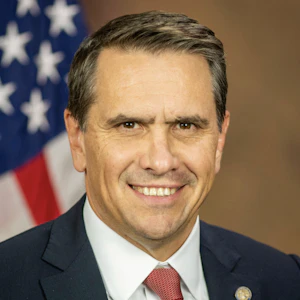
Biography of Deputy Attorney General Todd Blanche
The Honorable Todd Blanche is the 40th Deputy Attorney General of the United States, overseeing the work of the 115,000 dedicated employees who fulfill the Department of Justice’s mission at Main Justice, the FBI, DEA, U.S. Marshals, ATF, and 93 U.S. Attorney’s Offices.
Todd began his career at the Department where he served for over fifteen years in a variety of capacities, including as a contractor, a paralegal in the Criminal Division, and at the United States Attorney’s office for the Southern District of New York where he eventually became an AUSA and later a supervisor.
After leaving the Department, Todd worked as a criminal defense attorney that included representing President Donald Trump in three of the criminal cases brought against him in 2023 and 2024.
Following President Trump’s historic return to the White House, the President appointed Todd to work alongside Attorney General Pam Bondi to make America safe again. At the DOJ, Todd is working tirelessly to implement President Trump’s priorities that include confronting illegal protecting American businesses from fraud.
Todd has been married to his wonderful wife Kristine for nearly thirty years, is a father and grandfather.

Paul Atkins
Paul Atkins
Prior to returning to the SEC, Chairman Atkins was most recently chief executive of Patomak Global Partners, a company he founded in 2009. Chairman Atkins helped lead efforts to develop best practices for the digital asset sector. He served as an independent director and non-executive chairman of the board of BATS Global Markets, Inc. from 2012 to 2015.
Chairman Atkins was appointed by President George W. Bush to serve as a Commissioner of the SEC from 2002 to 2008. During his tenure, he advocated for transparency, consistency, and the use of cost-benefit analysis at the agency. Chairman Atkins also represented the SEC at meetings of the President’s Working Group on Financial Markets and the U.S.-EU Transatlantic Economic Council. From 2009 to 2010, he was appointed a member of the Congressional Oversight Panel for the Troubled Asset Relief Program.
Before serving as an SEC Commissioner, Chairman Atkins was a consultant on securities and investment management industry matters, especially regarding issues of strategy, regulatory compliance, risk management, new product development, and organizational control.
From 1990 to 1994, Chairman Atkins served on the staff of two chairmen of the SEC, Richard C. Breeden and Arthur Levitt, ultimately as chief of staff and counselor, respectively. He received the SEC’s 1992 Law and Policy Award for work regarding corporate governance matters.
Chairman Atkins began his career as a lawyer in New York, focusing on a wide range of corporate transactions for U.S. and foreign clients, including public and private securities offerings and mergers and acquisitions. He was resident for 2½ years in his firm's Paris office and admitted as conseil juridique in France.
A member of the New York and Florida bars, Chairman Atkins received his J.D. from Vanderbilt University School of Law in 1983 and was Senior Student Writing Editor of the Vanderbilt Law Review. He received his A.B., Phi Beta Kappa, from Wofford College in 1980.
Originally from Lillington, North Carolina, Chairman Atkins grew up in Tampa, Florida. He and his wife Sarah have three sons.

Mike Selig
Mike Selig
Chairman Selig brings to the role deep public and private sector experience working with a wide range of stakeholders across agriculture, energy, financial, and digital asset industries, which rely upon and operate in CFTC-regulated markets.
Prior to his leadership at the CFTC, Chairman Selig most recently served as chief counsel of the Securities and Exchange Commission’s Crypto Task Force and senior advisor to SEC Chairman Paul S. Atkins. In this role, Chairman Selig helped to develop a clear regulatory framework for digital asset securities markets, harmonize the SEC and CFTC regulatory regimes, modernize the agency’s rules to reflect new and emerging technologies, and put an end to regulation by enforcement. He also participated in the President’s Working Group on Digital Asset Markets and contributed to its report on “Strengthening American Leadership in Digital Financial Technology.”
Prior to government service, Chairman Selig was a partner at an international law firm, focusing on derivatives and securities regulatory matters. During his years in private practice, he represented a broad range of clients subject to regulation by the CFTC, including commercial end users, futures commission merchants, commodity trading advisors, swap dealers, designated contract markets, derivatives clearing organizations, and digital asset firms. Chairman Selig advised clients on compliance with the Commodity Exchange Act and the CFTC’s rules and regulations thereunder, including in connection with registration applications and obligations, enforcement matters, and complex transactions.
Chairman Selig earned his law degree from The George Washington University Law School and was articles editor of The George Washington Law Review. He received his undergraduate degree from Florida State University.

David Bailey
David Bailey

Eric Trump
Eric Trump
Mr. Trump also serves as Executive Vice President of The Trump Organization, where he oversees the global management and operations of the Trump family’s extensive real estate portfolio. This includes Trump Hotels, Trump Golf, commercial and residential real estate, Trump Estates, and Trump Winery. Known for his hands-on leadership and strong market instincts, he has played a key role in expanding the company’s presence across major U.S. and international markets.
A globally recognized business leader and public figure, Mr. Trump is a prominent advocate for Bitcoin and decentralized finance. He is a co-founder of World Liberty Financial, a decentralized finance (DeFi) platform, and serves on the Board of Advisors of Metaplanet, Japan’s largest corporate holder of Bitcoin.
Beyond his business activities, Mr. Trump has helped raise more than $50 million for St. Jude Children’s Research Hospital in the fight against pediatric cancer, a philanthropic mission he began at age 21.
Mr. Trump earned a degree in Finance and Management from Georgetown University. He currently resides in Florida with his wife, Lara, and their two children. He is also the author of Under Siege, his memoir published in October 2025.

Jack Mallers
Jack Mallers

Cynthia Lummis
Cynthia Lummis
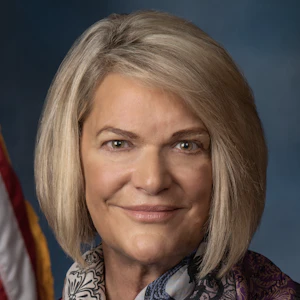
As the first-ever Chair of the Senate Banking Subcommittee on Digital Assets, Senator Lummis is the architect of the legislative framework shaping America's digital asset future. She introduced the landmark Lummis-Gillibrand Responsible Financial Innovation Act, the first comprehensive bipartisan crypto regulatory framework in Senate history. She co-authored the GENIUS Act — the first federal stablecoin law ever enacted — and introduced the BITCOIN Act, which would establish a U.S. strategic Bitcoin reserve of up to one million BTC. She is leading the Clarity Act, which will bring long-overdue regulatory certainty to the digital asset industry. She has also championed digital asset tax reform, including a de minimis exemption for small transactions and equal tax treatment for miners and stakers.
Known as Congress' "Crypto Queen," Senator Lummis represents Wyoming — a state she has helped build into one of the most digital asset-friendly regulatory environments in the nation. Before serving in the Senate, she served 14 years in the Wyoming Legislature, eight years as Wyoming State Treasurer, and eight years in the U.S. House. She is a three-time graduate of the University of Wyoming.
Her work represents a crucial bridge between traditional financial systems and the emerging digital economy, ensuring America leads the world in financial innovation while protecting the individual freedoms that define it.

Adam Back
Adam Back
Amy Oldenburg
Amy Oldenburg

David Marcus
David Marcus

Matt Schultz
Matt Schultz
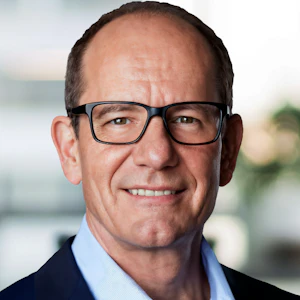
Fred Thiel
Fred Thiel
Throughout his career, Mr. Thiel has consistently driven rapid growth and created substantial shareholder value. Prior to MARA, Mr. Thiel served as the CEO of two other public companies, Local Corporation (NASDAQ: LOCM) and Lantronix, Inc (NASDAQ: LTRX). He has successfully raised billions in equity and debt through private and public offerings, led companies through IPOs, executed high-value exits to strategic and financial acquirers, and implemented effective M&A and roll-up strategies.
Mr. Thiel attended the Stockholm School of Economics and executive classes at Harvard Business School, and is fluent in English, Spanish, Swedish, and French. Mr. Thiel is the Chairman of the Board for Oden Technology, Inc. and is active in Young Presidents’ Organization where he has led initiatives in both the FinTech and Technology Networks.
A recognized voice in the industry, Fred frequently shares his insights on energy and technology with major media outlets like Bloomberg TV, CNBC, and FOX Business, contributing to vital discussions about the future of these sectors.
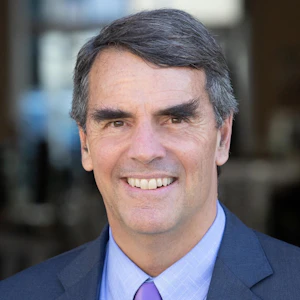
Tim Draper
Tim Draper
He is a supporter and global thought leader for entrepreneurs everywhere, and is a leading spokesperson for Bitcoin and decentralization, having won the Bitcoin US Marshall’s auction in 2014, invested in over 50 crypto companies, and led investments in Coinbase, Ledger, Tezos, and Bancor, among others.

Afroman
Afroman