Code is Free Speech: Ending the War on Bitcoin
Speakers/Moderators

Paul Grewal
Paul Grewal
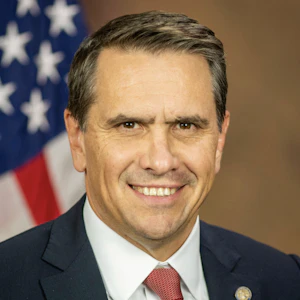
Todd Blanche
Todd Blanche
Biography of Deputy Attorney General Todd Blanche
The Honorable Todd Blanche is the 40th Deputy Attorney General of the United States, overseeing the work of the 115,000 dedicated employees who fulfill the Department of Justice’s mission at Main Justice, the FBI, DEA, U.S. Marshals, ATF, and 93 U.S. Attorney’s Offices.
Todd began his career at the Department where he served for over fifteen years in a variety of capacities, including as a contractor, a paralegal in the Criminal Division, and at the United States Attorney’s office for the Southern District of New York where he eventually became an AUSA and later a supervisor.
After leaving the Department, Todd worked as a criminal defense attorney that included representing President Donald Trump in three of the criminal cases brought against him in 2023 and 2024.
Following President Trump’s historic return to the White House, the President appointed Todd to work alongside Attorney General Pam Bondi to make America safe again. At the DOJ, Todd is working tirelessly to implement President Trump’s priorities that include confronting illegal protecting American businesses from fraud.
Todd has been married to his wonderful wife Kristine for nearly thirty years, is a father and grandfather.
Session
Overview
Paul Grewal of Coinbase hosted a fireside conversation on the principle that code is free speech and how law enforcement should approach Bitcoin developers, open source software, and digital asset platforms. He framed the discussion with a historical comparison to the telegraph and railroads, arguing that governments should target fraud rather than punish the builders of new networks.
Todd Blanche discussed the Department of Justice’s April 2025 guidance, saying the department had moved away from regulation by prosecution. He emphasized that developers and coders should not face criminal liability simply because third parties misuse software, while also stating that money laundering, sanctions violations, narcotics trafficking, and other crimes remain prosecutable based on the facts.
FBI Director Kash Patel focused on the distinction between lawful Bitcoin use and criminal activity involving digital assets. He described FBI efforts against overseas scam centers, pig butchering schemes, ransomware, and cyber fraud, while encouraging the Bitcoin and digital asset community to engage early with law enforcement when theft or fraud occurs.
The conversation centered on rebuilding trust between government agencies and Bitcoin builders. Themes included First Amendment protections, open source development, public-private cooperation, prosecution of bad actors rather than neutral technology providers, and the need for clearer boundaries between innovation and criminal enforcement.
Paul Grewal: Good morning. It's a partisan era. The country is hopelessly divided, and the government, our government, appears incapable of getting anything done.
Meanwhile, technology is racing ahead. It's changing how information and value can move from one individual in one place to any other at any time. But that new technology, and critically, the important people who are building it, find themselves entangled with old laws enforced by many who see these rapid changes not as an opportunity, but as a threat to the established order.
New legislation promises hope, and indeed clarity, but the builders, the ones making this all possible, are skeptical, weary, scared, and frankly angry.
My name is Paul Grewal, and I am the chief legal officer at Coinbase. You might think that the time I'm speaking of is today, in 2026. But I'm actually talking about a time much earlier, 150 years ago or more, in 1870.
The United States is lifting itself up and stitching itself back together after a ruinous civil war. President Ulysses Grant is dealing with a fractured Congress, and the telegraph and railroads have upended the movement of information and value. With that information and value finally capable of moving faster than a horse can run, the builders rushed in to do what they do in every era, at every time. They built.
Unfortunately, so did others with far less noble ambitions and goals. Suddenly, you had people selling get-rich-quick investments and can't-lose opportunities by mail and by wire to strangers they're never going to meet. You had early forms of insider trading over telegraph lines, people front-running stock prices before they could even see the ticker, and exchanges being overrun with graft.
The question at that time for law enforcement was this: what can we do to stop crime that can move at the speed of a signal without squelching the innovation, and critically the innovators, who make that technology possible?
Here's the thing to understand about that time. The national government didn't respond by banning the telegraph or shutting down the postal service. They didn't prosecute the people who laid the wire or the tracks, or who built those networks. They did something much more subtle, thoughtful, and durable. They went after the fraud.
To do that, they passed a new law in 1870 creating a new Department of Justice under the direction of the Attorney General of the United States. I can think of no better person to speak to the challenges for the builders in our time than the acting attorney general for our time, Todd Blanche. And I can think of no one more qualified to speak to the challenges of investigating fraud without punishing the builders than the ninth director of the Federal Bureau of Investigation, Kash Patel.
Gentlemen, I believe you're going to join us virtually. Good morning and welcome.
Todd Blanche: Good morning. Thank you, and I'm sorry we're not there with you guys in person. Both the director and I had our bags packed and were ready to be there in person, but given the events that happened on Saturday night, we were needed here in D.C. We both said that we would take time away from that to still be able to speak with everybody. It's great to be here. Thanks, Paul.
Paul Grewal: It's great to have you. Thank you, General. Director Patel, good morning to you and welcome.
Kash Patel: Good morning, Paul. It's good to see you, my old friend. As the Attorney General stated, we very much wanted to be there. We had planned this for some time, but sometimes events overtake our scheduling calendars and we have to reprioritize. We thank the Bitcoin community for allowing us this opportunity to address you guys at the conference this year.
Paul Grewal: You both mentioned the horrendous events of Saturday night, and before we get to the issues at hand, I do want to express our collective relief that each of you are safe, the president is safe, and all the other attendees at the White House Correspondents' Dinner were not harmed. We are grateful for all of that.
Let me start before we get to some very challenging questions for many in this audience that I know you'll appreciate, with perhaps something a little less challenging, which is your own Bitcoin origin story. I think it will surprise many in this audience to learn that each of you is a Bitcoin enthusiast, and I'd welcome any reflections each of you have on how you first came to engage with this important new innovation.
Todd Blanche: For sure. I'll start, I guess. Like many 51-year-old dads, I started in Bitcoin investments because my son, when he was in college, told me that I was a clown and an idiot for not investing in Bitcoin. I took his advice and counsel and started investing in Bitcoin about 10 years ago, maybe a little more, and was very happy with my investments until about a year and a half ago, when the government ethics office told me that if I wanted to be the Deputy Attorney General, I had to sell every single one of my assets and every single one of my Bitcoin assets.
To this day, that enrages me because I think it shows just what you're talking about, Paul, a fundamental misunderstanding of what Bitcoin is and what the financial challenges are associated with it. I am now Bitcoinless, and it makes me very angry, but I'm getting through it. Anyway, I know just enough about the crypto industry to hopefully have success in this job, but currently I'm not allowed to own any assets in crypto.
Paul Grewal: I think many in this room can feel your pain in all sorts of ways, General. Director Patel, how about you?
Kash Patel: It's great to be with you. A little different story for me. Las Vegas has been my home for the better part of a decade. One of my best friends in Las Vegas, when I left the Trump administration the first time, started telling me about Bitcoin and virtual assets and crypto. I finally started to get smart on it. I was looking toward the future in terms of what the Attorney General was sharing, investing and also establishing a monetary basis and safeguards for my family and our future.
I was convinced through the massive amount of research my buddy told me to wade through, because I did not have a proper understanding of it, as most Americans did not at the time and many still don't. But once I got that understanding, I realized that Bitcoin and virtual assets are assets just like the greenback, and divesting from that based upon old, outdated standards that don't apply to modern society is crippling our economy and also our way to do business and interact on a daily basis.
Look where we are 10 years later. Virtual assets and Bitcoin are how much of the world conducts transactions. I was grateful for that lesson, and I'm glad that the Bitcoin conference is back in Las Vegas. I'm just bummed that I couldn't be there in person.
Paul Grewal: We're going to talk a bit about some very serious questions regarding directives that the Department of Justice issued regarding prosecutions. We're also going to talk a little bit about specifically why developers should take comfort that each of you is in your position, given all the recent events that I think have caused great concern in this community.
But before we get to all that, I'd like to begin with the question of how the April 7, 2025, guidance from the Department of Justice, in your view, General Blanche, changed the rules of the game away from a regulation-by-prosecution approach that we saw with the previous administration.
Todd Blanche: I view that memo as hopefully a pivotal moment in the Department of Justice and the FBI, and in the work that we were doing, which I believe was very misguided, to the work that we're doing today. The distinction is easy. On the one hand, we're no longer going to regulate by prosecuting, which means quite simply that if you are a developer, if you are part of a platform, whether it's in the United States or elsewhere, we are not going to take your liberty away and prosecute you when there's not even a developed regulation that points clearly to a law that you're violating or some maxim that you're violating.
Unfortunately, the last administration did that, and they did that a lot. They had a cryptocurrency enforcement team. Imagine the Department of Justice had an entire enforcement team of prosecutors, and there weren't even regulations around the industry at that point. It was something I thought was fundamentally unfair to the industry, to the coders out there, and to anybody in the crypto stream who was affected by that.
Now, to be clear, and I think this is comforting to everybody in the audience, we are not excusing outright crimes. We are not excusing individuals who are bad actors and who use crypto to further their crimes, whether it's sanctions violations, money laundering, or narcotics trafficking. What we're doing is saying that third-party participants in crypto shouldn't have to sleep with one eye open anymore, worried that the Feds are going to come along and charge them.
Paul Grewal: That's very helpful, General. Thank you. Director Patel, the executive order that President Trump issued made very clear that the Department of Justice as a whole was responsible for promoting the lawful use of digital asset technologies, including Bitcoin. How do you balance that mandate from the president himself with the need to pursue criminal activity where it may exist?
Kash Patel: Like we do anything else on our books. Thanks to President Trump, and I think the Bitcoin and crypto virtual assets community has seen this, I don't think there's been a president who has embraced it quite like he has, been as forward-leaning as he has, and brought industry leaders to sit with us in Washington, D.C., to advise him directly and advise us directly, so that we can craft how we pursue Bitcoin and the virtual asset community.
We're not there to police it in terms of regulation. We're there, as the Attorney General said, to simply find crimes where they exist. Unfortunately, for all the good that Bitcoin and the virtual asset community does, bad actors and adversaries have taken advantage of that space and said, now we have a new way of committing scams and large-scale fraud.
What we've done under President Trump's leadership and under the executive order that you've highlighted is simply the following: if you commit a crime, be it in the Bitcoin space or a bank robbery or a murder, we're going to prosecute you and investigate you based on the law that we have. But we're not going to use an arcane system of investigatory powers and apply it to Bitcoin because people don't have an understanding of it.
The large-scale fraud that we'll talk about is not because of the widespread, popular, good use of Bitcoin. It's because of bad actors, a lot of them overseas, who are overtaking the industry and saying, now that it's being accepted worldwide, we have a new mechanism to unfortunately steal from people and businesses around the world. That's where the FBI comes in, especially in cyberspace. I think it's extremely important.
Paul Grewal: Both in terms of investigating potential criminal activity and prosecuting it where it exists, it's clear that the directive issued by the Department of Justice thinks about each of these issues in terms of the First Amendment as much as any other part of the Constitution.
General, I'll ask you this question. How do you think about First Amendment rights in the context of prosecuting crimes that may happen to involve digital assets as much as any other type of financial instrument?
Todd Blanche: We talk about it in the First Amendment and the rights that we all have as Americans, but behind that is what I think has made the industry so successful, notwithstanding what the last administration, frankly, tried to do to it. We need innovation. We need smart coders. We need open source coding. We need to be able to put together platforms that make the industry better.
The coders, or the folks that are upstream or downstream from the coders, shouldn't feel like they are going to be prosecuted because some third party down the road uses whatever was developed to commit crimes, like the director was just saying. What we should be doing, because it's not a First Amendment issue, is going after that third-party criminal and not the folks that helped develop the software, the coding, or the platform that allows crypto to be effectively used around the world.
What you saw happening was platforms intentionally avoiding the United States because we were so into prosecuting anybody who even did anything that we were either confused about, and a lot of it was just a lack of understanding, unfortunately, by law enforcement and the Department of Justice, or where we were aggressively going after people when we shouldn't have been. We were actually stifling innovation, and we were depriving United States citizens and United States crypto enthusiasts from being able to do what they should be able to do.
It's hard to say it enough because I know that this is a road we're just starting. The memo came out a year ago. So far, I think it's working. I know there are some residual cases from the last administration that still need to be addressed, and I expect that you'll see us continue to do that. But what you've seen from Director Patel's team and from U.S. attorneys over the past year or so is crypto cases where we're going after the third-party criminal, not going after the industry, not going after the platforms, not going after the coders, but the third-party criminals.
Paul Grewal: You touched upon some lingering prosecutions, and I want to get right to what is, I think, an important elephant in this room, and frankly many rooms, where developers are worried. They're scared. They're afraid that their development activity could give rise to criminal liability.
I know you can't speak specifically to the cases that are most on people's minds, Tornado Cash, Roman Storm, Samourai Wallet. But can you at least shed a little bit of light into your thinking at a policy level and at the level of general deterrence? How should developers understand the frameworks that you and the men and women of the Department of Justice are applying to cases like this on a going-forward basis and looking ahead into the future?
Todd Blanche: It's a great question, and we talk about it a lot here at Main Justice, but also with our U.S. attorneys around the country and with the FBI as well. The basic principle is that if you are developing software, if you are a coder, if you are part of that process, and you are not the third-party user, and you are not helping and knowing the third party is using what you developed to commit crimes, you are not going to be investigated and not going to be charged.
Obviously, facts matter, because if you're laundering money or violating sanctions, the mere fact that you happen to be a coder doesn't excuse you from criminal liability. There's a distinction there, and that's why the facts of a particular case are very important.
But I really need coders to understand. I really need the industry to understand that we have fundamentally changed the game when it comes to our investigations. If you're a coder out there and you're listening to me speak, and you are under investigation or you have to hire a lawyer to respond to subpoenas, your lawyer should feel very comfortable communicating with the FBI and communicating with the prosecutor on the case, and making sure that they are not violating my memo. If they are, that can be elevated all the way to me, but certainly elevated within the department, because we are not doing that anymore.
I know there are some lingering cases that are very fact-specific and very procedurally complicated. I'm not saying that as an excuse. It's just a fact, it's the way it is. But those cases are something that we're continuing to deal with.
Let me make myself crystal clear. I want to put my money where my mouth is, and I expect Director Patel does as well. When we say that we're not conducting those types of prosecutions anymore, we mean it. I want to make sure that is felt throughout the industry.
Paul Grewal: I appreciate that, and many of us in this room appreciate that. Director Patel, do you want to add your views on this as well?
Kash Patel: Absolutely. The General was right. What this FBI is focused on is the following, and we can speak to the entirety of 2025 since we took our respective positions.
The FBI stood up the IC3, and in 2025 we had 180,000 complaints from across the private sector, companies and individuals from around the world. That encompassed a fraud value of over $11 billion when you're talking about Bitcoin, virtual assets, and crypto. That number is also representative of half of the entire amount of loss for criminal activity in the cyber range. That's a massive number, so we have to address that.
But as the Attorney General was saying, we're not addressing third-party individuals who are innocent. This FBI has been focused for the last 11 months particularly on the scam center compounds out in Cambodia, Thailand, and Burma. We stood up an engagement directly and quietly with those nations that I can talk about today almost 11 months ago, to disassemble those scam center compounds, because foreign adversaries were utilizing human trafficking and building compounds overseas to fleece Americans of their hard-earned dollars, Bitcoin, crypto, and virtual assets.
We have shuttered numbers of those buildings and properties overseas with our cooperation, with our interagency and overseas partners. That's the FBI's focus, and we're going to continue to focus on that specific mission set, because the pig butchering schemes that have started and originated overseas are the ones that are impacting our senior citizens the most here in the United States of America.
That's my focus. That's the investigatory focus for the FBI when it comes to who we're looking at. We want to make sure that Americans, whether you're 15 or 85 and you've invested in Bitcoin or virtual assets, that your currency is safe and secure from any kind of theft, whether it would be straight-up bank theft or this type of scam center pig butchering theft.
Our large focus has been on that. You'll find me continuing that effort this summer on the ground in Cambodia, Burma, and Thailand, because it is of that magnitude, and it is the only way to address it and split the misunderstanding between the actual crime and fraud in the virtual asset space versus the rightful use of Bitcoin and virtual assets.
Paul Grewal: This is such an important point. In the popular narrative so often, crypto is seen as the perpetrator of crime. I think what you're emphasizing correctly is that more often than not, crypto is the victim of crime. It's people being robbed or defrauded of the digital assets that they've worked hard to earn. I think your focus on that should give a lot of us comfort that things are in good hands.
Our time is rather limited, so I want to close with a question to each of you. General Blanche, I'll start with you. You're talking to thousands and thousands of developers, coders, and builders all around the world right now. I want you to speak directly to them about why this moment is different. What has changed over the course of the last 15 or so months that should, again, give people comfort that things are on the right track?
Todd Blanche: I think it starts at the top. It starts with President Trump and the people he surrounds himself with. This is by far the most pro-crypto industry administration in the world, certainly in United States history. That goes without saying. But even beyond the United States, we want to be the crypto capital of the world, and that's not just lip service. That's part of the president's agenda and has been since January 20.
How that affects the Department of Justice is what we've been talking about for the past several minutes. What I would say to the folks out there who should still be suspicious is, I get it. You should still be wary because of our conduct the past several years. We have cases that, in my view, not only as the acting attorney general or the deputy attorney general, but also as a criminal defense attorney, were just outrageous attacks on the industry by the last administration and by prosecutors. Even if it didn't lead to a criminal indictment, the crippling nature of these investigations was not only ill-advised, but cost the United States jobs and a lot of time.
I would say to you that this is not lip service. When I go to the White House several times a week, I often interact with leaders from the crypto industry. This is not just us standing up in Washington, winking at you and saying, trust us. This comes from the heart.
I hope that over time DOJ earns your trust. Paul, I look at you and I look at Coinbase as partners. I look at us having a very common goal, a very common purpose in combating fraud and enforcing the law. I do not want any platform to look at the Department of Justice or the FBI as somebody who's going to just cause them a lot of problems.
When we adjust that thinking, which we have, and it will take a while to bleed all the way down, I think that's when we're going to really see the United States get to where it needs to be in this space.
Paul Grewal: General, I listen to you, and before I turn to Director Patel for the final word, I can't help but observe that this perspective you're providing, and Director Patel is providing, reflects the fact that you're not just law enforcement. You're not just prosecutors, although obviously you hold current roles of that nature today. You're former defense attorneys yourself. You've been on the other side of overzealous prosecution and government overreach.
Director Patel, the final word goes to you.
Kash Patel: I'll pick up where you left off. We've discussed what we're proactively doing to investigate and distinguish lawful use of Bitcoin and virtual assets versus unlawful use. But a big part of what the FBI has also been doing, and what I want to message to your community there, is prevention on the front end.
Last year, in 2025, the FBI worked with 3,800 victims in this space ahead of time and prevented a quarter billion dollars of losses to those individuals alone, because we established a relationship with Coinbase and with other private sector communities to say, we need you early and often.
The cyber ransomware attacks that we deal with across the enterprise here and around the world, our best wins are not in court. Our best wins are when we engage with the Chainalysises of the world, whose ransomware payments dropped 10%, by the way, and IBM, whose ransomware payments dropped by almost 50%. Every private sector company, I'm asking you to do the same exact thing in the cyberspace as we would if another type of criminal conduct befell you in your industry.
The more that you come forward, the earlier that you come forward, and hopefully the Attorney General and I have instilled some confidence in the Bitcoin community and the digital asset community, we're here to partner with you proactively. We'd rather get in front of it with you and continue to do the historic work that President Trump has done for the Bitcoin and virtual asset community.
Literally, have you ever heard of another president having a Bitcoin or crypto czar? I haven't. That's how much in front of it we want to get. I encourage everybody out there, as the Attorney General said, we're not going to prosecute and investigate you for the lawful use of it. We want you to keep your money. We want you to keep your digital assets. We want you to keep your Bitcoin.
If there are any bad actors attacking you or your company, they're probably doing it to thousands of other people. You coming forward to us in a safe space is going to save your digital assets and money, but also going to instill confidence in Americans that this is the right way forward, and Bitcoin's not going anywhere.
Paul Grewal: I can't think of a more important theme to end on than confidence from this community and with this community. The fact that each of you, on a day like this and at a time like this, with thousands of issues demanding your attention, would make it a priority to join this community in order to instill and inspire that confidence says a lot.
I want to thank each of you for that, and thank the audience for their attention and respect. Thank you, guys.
Similar
Sessions
Code is Free Speech: Ending the War on Bitcoin
Paul Grewal
Paul Grewal
Todd Blanche
Todd Blanche
Biography of Deputy Attorney General Todd Blanche
The Honorable Todd Blanche is the 40th Deputy Attorney General of the United States, overseeing the work of the 115,000 dedicated employees who fulfill the Department of Justice’s mission at Main Justice, the FBI, DEA, U.S. Marshals, ATF, and 93 U.S. Attorney’s Offices.
Todd began his career at the Department where he served for over fifteen years in a variety of capacities, including as a contractor, a paralegal in the Criminal Division, and at the United States Attorney’s office for the Southern District of New York where he eventually became an AUSA and later a supervisor.
After leaving the Department, Todd worked as a criminal defense attorney that included representing President Donald Trump in three of the criminal cases brought against him in 2023 and 2024.
Following President Trump’s historic return to the White House, the President appointed Todd to work alongside Attorney General Pam Bondi to make America safe again. At the DOJ, Todd is working tirelessly to implement President Trump’s priorities that include confronting illegal protecting American businesses from fraud.
Todd has been married to his wonderful wife Kristine for nearly thirty years, is a father and grandfather.
Code is Free Speech: Ending the War on Bitcoin
Speakers/Moderators
Paul Grewal
Paul Grewal
Todd Blanche
Todd Blanche
Biography of Deputy Attorney General Todd Blanche
The Honorable Todd Blanche is the 40th Deputy Attorney General of the United States, overseeing the work of the 115,000 dedicated employees who fulfill the Department of Justice’s mission at Main Justice, the FBI, DEA, U.S. Marshals, ATF, and 93 U.S. Attorney’s Offices.
Todd began his career at the Department where he served for over fifteen years in a variety of capacities, including as a contractor, a paralegal in the Criminal Division, and at the United States Attorney’s office for the Southern District of New York where he eventually became an AUSA and later a supervisor.
After leaving the Department, Todd worked as a criminal defense attorney that included representing President Donald Trump in three of the criminal cases brought against him in 2023 and 2024.
Following President Trump’s historic return to the White House, the President appointed Todd to work alongside Attorney General Pam Bondi to make America safe again. At the DOJ, Todd is working tirelessly to implement President Trump’s priorities that include confronting illegal protecting American businesses from fraud.
Todd has been married to his wonderful wife Kristine for nearly thirty years, is a father and grandfather.
Other
Speakers
Michael Saylor
Michael Saylor
Todd Blanche
Todd Blanche
Biography of Deputy Attorney General Todd Blanche
The Honorable Todd Blanche is the 40th Deputy Attorney General of the United States, overseeing the work of the 115,000 dedicated employees who fulfill the Department of Justice’s mission at Main Justice, the FBI, DEA, U.S. Marshals, ATF, and 93 U.S. Attorney’s Offices.
Todd began his career at the Department where he served for over fifteen years in a variety of capacities, including as a contractor, a paralegal in the Criminal Division, and at the United States Attorney’s office for the Southern District of New York where he eventually became an AUSA and later a supervisor.
After leaving the Department, Todd worked as a criminal defense attorney that included representing President Donald Trump in three of the criminal cases brought against him in 2023 and 2024.
Following President Trump’s historic return to the White House, the President appointed Todd to work alongside Attorney General Pam Bondi to make America safe again. At the DOJ, Todd is working tirelessly to implement President Trump’s priorities that include confronting illegal protecting American businesses from fraud.
Todd has been married to his wonderful wife Kristine for nearly thirty years, is a father and grandfather.
Paul Atkins
Paul Atkins
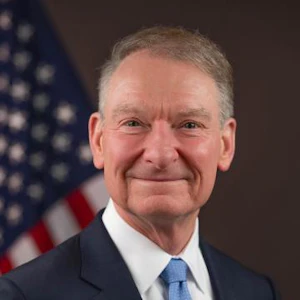
Prior to returning to the SEC, Chairman Atkins was most recently chief executive of Patomak Global Partners, a company he founded in 2009. Chairman Atkins helped lead efforts to develop best practices for the digital asset sector. He served as an independent director and non-executive chairman of the board of BATS Global Markets, Inc. from 2012 to 2015.
Chairman Atkins was appointed by President George W. Bush to serve as a Commissioner of the SEC from 2002 to 2008. During his tenure, he advocated for transparency, consistency, and the use of cost-benefit analysis at the agency. Chairman Atkins also represented the SEC at meetings of the President’s Working Group on Financial Markets and the U.S.-EU Transatlantic Economic Council. From 2009 to 2010, he was appointed a member of the Congressional Oversight Panel for the Troubled Asset Relief Program.
Before serving as an SEC Commissioner, Chairman Atkins was a consultant on securities and investment management industry matters, especially regarding issues of strategy, regulatory compliance, risk management, new product development, and organizational control.
From 1990 to 1994, Chairman Atkins served on the staff of two chairmen of the SEC, Richard C. Breeden and Arthur Levitt, ultimately as chief of staff and counselor, respectively. He received the SEC’s 1992 Law and Policy Award for work regarding corporate governance matters.
Chairman Atkins began his career as a lawyer in New York, focusing on a wide range of corporate transactions for U.S. and foreign clients, including public and private securities offerings and mergers and acquisitions. He was resident for 2½ years in his firm's Paris office and admitted as conseil juridique in France.
A member of the New York and Florida bars, Chairman Atkins received his J.D. from Vanderbilt University School of Law in 1983 and was Senior Student Writing Editor of the Vanderbilt Law Review. He received his A.B., Phi Beta Kappa, from Wofford College in 1980.
Originally from Lillington, North Carolina, Chairman Atkins grew up in Tampa, Florida. He and his wife Sarah have three sons.

Mike Selig
Mike Selig
Chairman Selig brings to the role deep public and private sector experience working with a wide range of stakeholders across agriculture, energy, financial, and digital asset industries, which rely upon and operate in CFTC-regulated markets.
Prior to his leadership at the CFTC, Chairman Selig most recently served as chief counsel of the Securities and Exchange Commission’s Crypto Task Force and senior advisor to SEC Chairman Paul S. Atkins. In this role, Chairman Selig helped to develop a clear regulatory framework for digital asset securities markets, harmonize the SEC and CFTC regulatory regimes, modernize the agency’s rules to reflect new and emerging technologies, and put an end to regulation by enforcement. He also participated in the President’s Working Group on Digital Asset Markets and contributed to its report on “Strengthening American Leadership in Digital Financial Technology.”
Prior to government service, Chairman Selig was a partner at an international law firm, focusing on derivatives and securities regulatory matters. During his years in private practice, he represented a broad range of clients subject to regulation by the CFTC, including commercial end users, futures commission merchants, commodity trading advisors, swap dealers, designated contract markets, derivatives clearing organizations, and digital asset firms. Chairman Selig advised clients on compliance with the Commodity Exchange Act and the CFTC’s rules and regulations thereunder, including in connection with registration applications and obligations, enforcement matters, and complex transactions.
Chairman Selig earned his law degree from The George Washington University Law School and was articles editor of The George Washington Law Review. He received his undergraduate degree from Florida State University.

David Bailey
David Bailey

Eric Trump
Eric Trump
Mr. Trump also serves as Executive Vice President of The Trump Organization, where he oversees the global management and operations of the Trump family’s extensive real estate portfolio. This includes Trump Hotels, Trump Golf, commercial and residential real estate, Trump Estates, and Trump Winery. Known for his hands-on leadership and strong market instincts, he has played a key role in expanding the company’s presence across major U.S. and international markets.
A globally recognized business leader and public figure, Mr. Trump is a prominent advocate for Bitcoin and decentralized finance. He is a co-founder of World Liberty Financial, a decentralized finance (DeFi) platform, and serves on the Board of Advisors of Metaplanet, Japan’s largest corporate holder of Bitcoin.
Beyond his business activities, Mr. Trump has helped raise more than $50 million for St. Jude Children’s Research Hospital in the fight against pediatric cancer, a philanthropic mission he began at age 21.
Mr. Trump earned a degree in Finance and Management from Georgetown University. He currently resides in Florida with his wife, Lara, and their two children. He is also the author of Under Siege, his memoir published in October 2025.

Jack Mallers
Jack Mallers
Cynthia Lummis
Cynthia Lummis
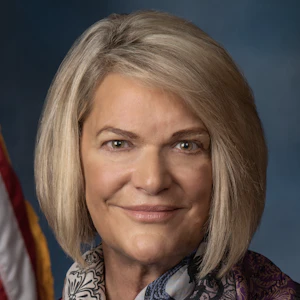
As the first-ever Chair of the Senate Banking Subcommittee on Digital Assets, Senator Lummis is the architect of the legislative framework shaping America's digital asset future. She introduced the landmark Lummis-Gillibrand Responsible Financial Innovation Act, the first comprehensive bipartisan crypto regulatory framework in Senate history. She co-authored the GENIUS Act — the first federal stablecoin law ever enacted — and introduced the BITCOIN Act, which would establish a U.S. strategic Bitcoin reserve of up to one million BTC. She is leading the Clarity Act, which will bring long-overdue regulatory certainty to the digital asset industry. She has also championed digital asset tax reform, including a de minimis exemption for small transactions and equal tax treatment for miners and stakers.
Known as Congress' "Crypto Queen," Senator Lummis represents Wyoming — a state she has helped build into one of the most digital asset-friendly regulatory environments in the nation. Before serving in the Senate, she served 14 years in the Wyoming Legislature, eight years as Wyoming State Treasurer, and eight years in the U.S. House. She is a three-time graduate of the University of Wyoming.
Her work represents a crucial bridge between traditional financial systems and the emerging digital economy, ensuring America leads the world in financial innovation while protecting the individual freedoms that define it.
Adam Back
Adam Back
Amy Oldenburg
Amy Oldenburg
David Marcus
David Marcus

Matt Schultz
Matt Schultz
Fred Thiel
Fred Thiel
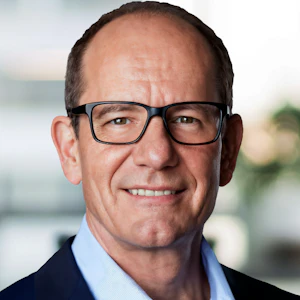
Throughout his career, Mr. Thiel has consistently driven rapid growth and created substantial shareholder value. Prior to MARA, Mr. Thiel served as the CEO of two other public companies, Local Corporation (NASDAQ: LOCM) and Lantronix, Inc (NASDAQ: LTRX). He has successfully raised billions in equity and debt through private and public offerings, led companies through IPOs, executed high-value exits to strategic and financial acquirers, and implemented effective M&A and roll-up strategies.
Mr. Thiel attended the Stockholm School of Economics and executive classes at Harvard Business School, and is fluent in English, Spanish, Swedish, and French. Mr. Thiel is the Chairman of the Board for Oden Technology, Inc. and is active in Young Presidents’ Organization where he has led initiatives in both the FinTech and Technology Networks.
A recognized voice in the industry, Fred frequently shares his insights on energy and technology with major media outlets like Bloomberg TV, CNBC, and FOX Business, contributing to vital discussions about the future of these sectors.
Tim Draper
Tim Draper
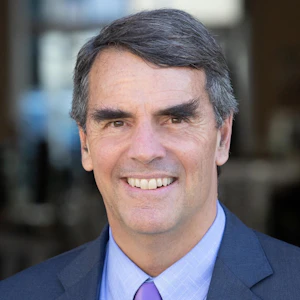
He is a supporter and global thought leader for entrepreneurs everywhere, and is a leading spokesperson for Bitcoin and decentralization, having won the Bitcoin US Marshall’s auction in 2014, invested in over 50 crypto companies, and led investments in Coinbase, Ledger, Tezos, and Bancor, among others.
Afroman
Afroman