Comparing Lottery Mining & Pool Economics for Hashers
Speakers/Moderators
Charlie Spears
Charlie Spears

Jan Warmus
Jan Warmus
Duncan Coombe
Duncan Coombe
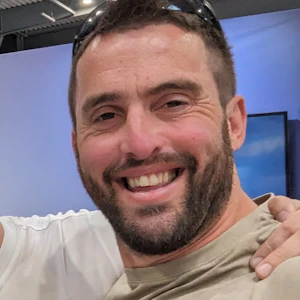
Duncan – aka “I Am GPIO”
Duncan Coombe is a design engineer and the creative force behind The Solo Mining Co' and multiple other Bitcoin-focused ventures. Known online as “I Am GPIO”, Duncan has been active in Bitcoin since 2011, building a reputation at the intersection of hardware design, mining innovation, and community engagement.
With a background in engineering and product design, Duncan specializes in creating bespoke Bitcoin mining hardware that blends performance, aesthetics, and usability for the home. His projects range from near-silent, decor-friendly solo miners to experimental concepts like mining-powered home heating solutions — all united by a focus on making Bitcoin mining more accessible, sustainable, and inspiring.
Through The Solo Mining Co' and collaborations with pioneers such as GekkoScience, OSMU, Altair Tech, ACS, and countless others, Duncan has helped shape the future of creative hardware design and individual sovereignty in mining. While his core drive is building and engineering, he also has a passion for teaching and training, helping others understand, build, and participate in the mining ecosystem.
Whether speaking as Duncan Coombe or under his moniker “I Am GPIO”, he brings together technical depth, entrepreneurial grit, and a commitment to empowering individuals to participate in Bitcoin mining on their own terms.
Session
Overview
Charlie Spears hosted a discussion with Jan Warmus of EMCD and Duncan Coombe of The Solo Mining Co. on the tradeoffs between Bitcoin solo mining, lottery-style mining, and FPPS pool payout models. The panel explained how mining pools smooth revenue by distributing rewards based on contributed hash rate, while solo mining offers a low-probability chance of finding a full block independently.
The conversation contrasted industrial miners, who often prefer FPPS for predictable cash flow, with home miners who are drawn to solo mining for education, non-KYC sats, open source hardware, and the appeal of participating directly in Bitcoin mining. The speakers also discussed Bitaxe, GeckoScience, NerdQaxe-style devices, and the resurgence of small-scale home mining.
Later topics included blended payout strategies, PPLNS-style models, hash rate rental markets, heat reuse as a driver for home mining, possible nation-state mining incentives, and whether mining pool concentration creates centralization concerns. The overall theme was that different mining models serve different users, and both pool mining and solo mining can contribute to Bitcoin's security and culture.
I'm trying to figure out how to tell my mom that I'm competing against Afroman on the main stage. But I like to say we're headlining this stage. Thanks for sticking around.
Okay, so we're supposed to talk about solo mining, lottery mining, and FPPS. I don't assume everybody knows what that is, so I'll invite you guys to explain it. Jan, what the heck is FPPS? Give me the TLDR.
Let's maybe start with one minute about mining pools in general. Most of you probably know, but for those who don't, mining pools serve a critical function in the mining ecosystem. They pool the hash rate, the computing power, of individual miners together in order to increase their chances of mining a block.
Nowadays, it's very difficult to find a block when you're solo mining. So what most miners do is combine that power. They mine together, and when they find a block, they distribute the rewards proportionally to the computing power they contributed.
As we talk about FPPS, there is one additional element to it, and I think this is the key aspect of modern mining, especially at industrial scale. The FPPS model says that we as the pool, for example as EMCD, pay out our miners not based on what was mined, but on the expected value of what was mined.
It doesn't matter if we mine 20 blocks today or 30 blocks. Our miners will receive basically the same payout, calculated in a statistical way. The point is to take volatility out of payouts for miners and provide stable cash flows.
Duncan, what the heck is lottery mining, and why is everybody online angry about it, or hugely in favor of it?
Hello, I'm Duncan. Excuse my raspy voice. I feel like I've eaten a wasp. I've been on a booth for two or three days, and I'll try my best to let my beautiful English-American drivel come out.
Solo mining is the act of having a Bitcoin miner, pointing it to a node, and trying to solo mine that block yourself. One thing I want to say is that without Bitcoin mining, Bitcoin ceases to exist. Pools have an absolute place because they allow people to contribute and get something back based on the size of their mining rig. It's those blocks being solved that move the blockchain on, validate blocks, and allow Bitcoin to do its thing.
In Sin City, it's all about the gamble. It's about doing it yourself. It's feeding that machine. Solo mining is the same thing. When you have a miner like this one, or a Bitaxe, or any other small home miner, you have a choice. You can solo mine or pool mine. You can point your miner to a solo node and try to find that block yourself.
The chances are really slim, but it happens. Ironically, last night we had proof that a NerdQaxe, which is just under five terahash, solo mined a block. There's a one in 750,000 chance that happens, but it happened. That was a decentralized block from open source hardware. That's actual proof. So it has a place.
If we go long enough, we could describe in detail all the disputes and arguments. But I actually think what often goes unsaid whenever we have these types of panels is that these are different models that are attractive to different types of customers. Your profile as a miner often dictates which of these models you point toward.
Jan, who is FPPS for, typically? It's the dominant pool payout model. Why is that?
FPPS today is, I think, the gold standard. If you look at the global hash rate, well over 95% of the global hash rate is currently connected to an FPPS payout model. It resonates especially well with industrial players.
The reason is that, as I mentioned, the whole point is to stabilize cash flow. If you're doing solo mining, even if you're really big, it's very hard to plan your operations at an industrial scale if you don't know whether you're going to mine five, 10, or 15 blocks on a given day. The difference in cash flow is massive, and that volatility makes it extremely hard to plan around.
So FPPS is typically for industrial players, for people who are looking to take volatility out of the equation and focus on predictability.
And yet, we have a resurgence in DIY home mining, pointing to lottery pools. Duncan, this has taken the Bitcoin plebs by storm. Why? The chances are very low, so why would they lottery mine?
It's a two-part answer. I was fortunate enough to discover Bitcoin mining in 2011. At the time when I was playing with Bitcoin, it was accessible at home. GPU rigs then came along, and it was fun. It was so much fun.
Then it became very industrialized very quickly. My wife didn't like the idea of an S9 running in our front room. It was horrendous. But then people like GeckoScience and Scott from the Bitaxe project made these small home Bitcoin miners that allow a point of entry for anybody to start mining again.
The whole Bitcoin ecosystem has beautifully come full circle. It started with the individual at home. It went industrial, because things always do. But then the people stood up and said, no, this is about us. Bitcoin is freedom. It's about us taking control and taking responsibility.
The work that GeckoScience has done, the work that Bitaxe has done, and the work others have done has allowed Bitcoin mining to come full circle at home.
Now, I'm The Solo Mining Co. I push solo mining. I'm a firm believer that if anyone has any love or care for Bitcoin, they should run a node. They should then have their own hardware, whether closed source or open source, and point their hardware to their node. Educate yourself, learn, inspire. I'm all about solo mining.
However, if you have something like this GeckoScience miner or a Bitaxe and you do mine on a pool, yes, you'll get anywhere between 10 and 600 sats a day. We laugh at that: three cents, six cents, what's the point? But when you look at Bitcoin Pizza Day, he spent 10,000 Bitcoin on a pizza. We look back now and laugh. I feel sorry for him. I hope it was a good pizza. At the time he was happy about the pizza. Now we're like, damn, you spent 10,000 Bitcoin on a pizza.
This unit here generates 600 sats a day. All of you here know about the Bitcoin halving. In 19 halvings, which is about 75 years, when we're all long gone, we will have children and grandchildren. In 19 halvings, the block reward will be exactly the same quantity of Bitcoin that this generates today.
So the small amount of Bitcoin that we can generate with a Bitaxe, with a GeckoScience miner, or any other small home mining hardware has a place. In 75 years, I guarantee your grandchildren will say, you could mine 600 sats a day and you didn't? You're crazy. So home mining has a place. It's here to stay, and it's back.
Both of you talk to miners in the world. You talk to people building industrial-scale farms and people plugging in their first GeckoScience or Bitaxe. You have your ear to the ground on what actual operators, big and small, are doing.
It seems to me that a lot of people say you're one or the other. Have you seen folks experimenting with pointing a large industrial-scale farm to a lottery pool? Or do you see a growing trend of pragmatic home miners wanting to lock in not as much, but consistent revenue? Are we seeing curveballs being thrown in today?
Yes. At industrial scale, I think the equivalent is that there are definitely miners who go the FPPS route for stability and predictability, but they do try to expose themselves a little bit to the upside. At industrial scale, that doesn't necessarily mean they are solo mining. It may lean into a PPLNS model, which is sort of a hybrid between solo and FPPS.
But yes, it does happen. A lot of the people I speak to on a day-to-day basis, even if they work at an industrial site, will themselves be running some form of their own miner. Whether it's at home, with a single mining rig, or even something smaller like a Bitaxe, we're here not just for the sats but also for the tech. We enjoy doing that. I actually have one small machine running at home as well.
Duncan, it seems to me like everybody on Twitter is always talking about pointing their Bitaxe to a solo pool, but you just made a case for a blended or more reliable payout model. Do you see that happening more than what I see talked about online?
I think what's happening at the moment is that when people haven't had exposure to mining and they're learning, the Bitaxe, the GeckoScience gear, and all these small home miners are the point of entry. The easiest thing to do without any user intervention, with no KYC, is turn it on, plug your Bitcoin address in, and start solo mining. Because it's easy and accessible, that's why people do it. Then there's the thrill of lottery mining: have I won a block? I need to get another one. Let's expand our hash rate, and so on.
What I'm finding is that I really like to help and teach. My other career path as a teenager was going to be teaching, but I got sidetracked by shiny tech. I love teaching people. When I engage with people about the nuances and benefits of pool mining, I find a lot of these people move their miners over to start stacking small amounts of sats.
But herein lies what's known as the miner's paradox. Let's say my friend Matt buys a single Bitcoin miner. He's got a miner, that's amazing. Should he solo mine? Should he pool mine? He doesn't know where to put it. Then you end up driving yourself crazy, getting up at two in the morning and moving it from A to B and B to A. You end up going mad, so you buy another one. Based on education, you should do both, and so on.
As people learn, they develop their understanding of the Bitcoin ecosystem, how it works, why you should run a node, why you should stack sats, why you should lottery mine. Then they start getting their head down and learning more about Bitcoin.
These are absolutely critical educational tools. They also open up doors for learning and opportunity. I'm certain that if you took the landscape of all these people, 10 years ago 90% of these businesses wouldn't be here. I guarantee the majority of these people learned about Bitcoin because, first, number go up, and second, how do I get involved? Their exposure to GeckoScience gear and Bitaxe gear lit that fuse, which then started companies and started their education.
It's like you never just buy one Bitaxe. It's the start. It's kind of like collecting guns or guitars or tattoos.
You bring up that this thing may only produce 600 sats, but in a long time it's going to be worth a lot. Those can be non-KYC satoshis, which has value. In some ways, the story of pool economics and pool payout models is also the story of the development of Bitcoin mining hardware, from the DIY basement GPU era all the way through the emergence of ASICs. Now we are full circle with this ground-up movement to disrupt the ASIC and chip production market. That also gives wind to the lottery mining movement.
Where do you guys see pool payout models, let's say 10 years from now? Right now, most people are at PPS or FPPS, with indie pools being lottery or solo variants. Do you think this is still going to be the case 10 years from now? What trends do you see?
I wish I knew. But if I had to make a guess, I would say it really depends on how far competition at the industrial level moves from Bitcoin mining to AI. In 10 years, I find it quite probable that overall Bitcoin mining difficulty will be lower than it is today. As that happens, the incentive for solo mining should theoretically increase, because individual chances are getting somewhat better.
FPPS isn't going anywhere, I'm sure. It is here to stay. But depending on the future of Bitcoin mining difficulty and how many people are left in this space, I can completely see solo mining continuing to grow its market share.
What about you? Are you bullish on lottery and solo mining variants?
I have a very particular view on this. With the mining hardware that I design, I'm of the mindset that for home mining to succeed, it needs to be one of two things. It needs to be beautiful or have utility, ideally both.
Beautiful means, as my wife says, wife approved. It needs to look good. My NerdQaxe is very beautiful, thank you very much. I had nothing to do with that. It's a good-looking bit of kit.
The second pillar is utility, and utility means heat recovery. There are a lot of products coming to market now that are heaters. They are hot tub heaters or underfloor heating. I'm working on a wet radiator system in the UK that replaces a radiator with a Bitcoin miner.
When you have people, especially in the UK and European market, running Bitcoin miners to offset their heating bill, these people probably are not going to want to solo mine because they need to pay their bill. So I think there will be a big shift in home miners going back to pool mining to recover revenue that they're spending on electricity for these miners that have utility. But there will always be the gamblers, the solo miners, and so on. That's my opinion on that.
At what point is there a crossover where solo miners cease to become gamblers? Where do you become a certain size? I'm intrigued by the idea of a solo hasher of sufficient size. Look at how Marathon structures its mining. It's all their own proprietary hash rate, so they are effectively like a PPLNS pool but themselves.
I think this is a really interesting thing to imagine. If we game out the nation-state game theory of Bitcoin mining at scale, in 10 years, when whole countries have embedded mining into the fabric of the economy, the economics of pools change. I didn't prep you guys with this question. Do you think nation-state Bitcoin mining changes any of the economics for existing pools or hashers?
It could. Honestly, I probably have to give this more thought. My intuition is that if we ever get to the stage where nations are big players in the mining space, which I'm not fully convinced we're going to see at scale, there could be political incentives and other incentives to focus more on the solo aspect.
Or at least there could be structures similar to Marathon, where a country that has 20 exahash of power could find it absolutely viable to go into a solo mining model and not depend on anybody else. That's my initial take.
It's a curveball topic. I threw it out because it's the end of the day, so why not?
One thing I would like to say about nation-states is that I don't follow American politics as much as I probably should. I have an American passport, but I struggle with Britain anyway. My point is that I learned last night that a bill has been put forward to Congress about mining in America. Have you heard of that?
There's been chatter of it.
As far as I'm aware, and please read it because this is what I've learned through hearsay, by 2030 the mining gear in the USA that the government wants to use and see needs to be manufactured in America. To me, if that's not bullish, I don't know what is. That lights a fuse under manufacturing in the U.S. for Bitcoin mining, whether it's pool or lottery mining, I don't know from a state point of view. But that's huge.
I have another curveball topic. Hash rate rentals are a really interesting dynamic and I feel they are underdiscussed online. In my experience, a large consumer of hash rate rental marketplaces is various types of speculation or grey market activity. Jan, how do you see hash rate rental markets in the context of the broader pool payout system?
It's a very hot topic at the moment, even though it's not being talked about very openly. There is a huge market at the moment for hash rate rental contracts. To say a couple of words on what they are, it's essentially being able to buy hash rate for a limited amount of time, anywhere between a couple of weeks and a few months. You buy it on the spot market, lock it down for a specific period of time, often paying a premium versus the current hash price in the market.
The benefits of that are extremely clear to me. It allows people to gain hash rate exposure, which they can use for whatever purposes they need, without having to deploy machines and without having long run-up and deployment time. It allows people a lot of flexibility to choose the right conditions when they want to enter the market and use their hash rate to mine Bitcoin.
It's a very hot topic. We actually get approached quite a lot as EMCD with requests from people saying they need three exahash of power for three months, or something like that, and asking if we can help them out.
I think it's a really interesting topic because the question is: what do you need this for? Most of the time, this goes a little bit beyond Bitcoin. As far as I know, nobody is going to pay you over hash price if they're just going to be mining Bitcoin. It doesn't make sense. So they need to have an alternate use or some other reason why they need this hash rate and don't want to deploy it.
Actually, a lot of the time this hash rate is used for solo mining, but not Bitcoin. For example, Bitcoin Cash. So it maybe doesn't necessarily impact the payout systems for Bitcoin massively, but there is definitely a reallocation of FPPS hash rate that we receive, or that is out there, moving into short-term opportunities beyond Bitcoin itself. It's a really interesting topic.
Duncan, your sweet spot is the ASICs and home miners. I've been noticing a trend with Bitaxe. They start out small with a single chip, then you have two chips and they're more powerful. Now some of these NerdQaxe models have six chips in them. At what point are we just building a whole air-cooled ASIC? I made an S21.
People are driven by curiosity and pushing stuff to the limit. The Bitaxe project is really unique. They were taking chips off machines, putting them onto a board, open sourcing it, and going. With the open source movement, particularly with Bitaxe, there are so many people developing, contributing, forking, branching, and doing all this on GitHub that you'll get a team of people saying, let's make a two-chip. Let's make a four-chip.
What it's doing is lighting that fuse for people to innovate. Without things like the GeckoScience ecosystem and the Bitaxe ecosystem, this innovation couldn't flourish. The reason we have one-, two-, four-, eight-, and I know there's a 12-chip variant of the Bitaxe coming, is because people like tinkering.
You're right, if we keep going, it's like, yeah, I've got a 168-chip thing and we're back to square one. There are three boards now, and it weighs a lot, and it's 3,500 watts. But it's a beautiful thing because it's allowing people to expand an industry that otherwise is closed source and driven by financial gain. When you have a project that is driven by enthusiasm, it's limitless in terms of growth.
We've managed to go through the whole panel, and I didn't want to start a fight because whenever people talk about solo mining and FPPS, it gets very heated. But now I'll invite you to close this out. Do you guys believe that FPPS or solo mining is core to Bitcoin succeeding? If the ecosystem bends too hard one way or the other, do you think that can create adverse incentives around centralization, gambling, or whatever?
I'm happy to take that. No, I don't. The more people that become exposed to mining, the more hash rate comes online. Yes, you will get big companies and states that throw tons of hash rate in, but that doesn't matter.
Forget the theory of a 51% attack for a minute. It doesn't matter if one person is just mining, mining, mining. That's still validating blocks. It's still moving the blockchain on. It doesn't matter if people are solo mining or pool mining. It's about solving blocks, if that makes sense.
I fully agree. There is a debate, of course, about whether centralization in mining pools leads to centralization and whether it goes against the core principles of Bitcoin mining. I don't think so. It's a natural evolution of any industry where the market cap is growing. It has to become industrialized at some point.
There may be use cases in the future where that centralization is actually critical because we need the hash rate to agree on something, for example, on a fork to a quantum-resistant blockchain. There may be cases where it's even a boon that it's there. So I'm not too worried about it.
There you go. I think we hit a few topics comparing lottery mining and pool economics for hashers. Duncan, Jan, thank you so much for joining me up here, and I hope you all enjoyed your conference. Give it up.
Thanks, guys. We're both on booths over there. I'm on Bitcoin Merch and you are on EMCD. Any questions, I'm more than happy to talk until I'm blue in the face about Bitcoin mining. If you don't know anything, just keep asking.
Same goes for us. We're right next to each other. Thank you for coming to our TED Talk. Bitcoin Energy Stage, let's let them hear it.
Similar
Sessions
Comparing Lottery Mining & Pool Economics for Hashers
Charlie Spears
Charlie Spears
Jan Warmus
Jan Warmus
Duncan Coombe
Duncan Coombe
Duncan – aka “I Am GPIO”
Duncan Coombe is a design engineer and the creative force behind The Solo Mining Co' and multiple other Bitcoin-focused ventures. Known online as “I Am GPIO”, Duncan has been active in Bitcoin since 2011, building a reputation at the intersection of hardware design, mining innovation, and community engagement.
With a background in engineering and product design, Duncan specializes in creating bespoke Bitcoin mining hardware that blends performance, aesthetics, and usability for the home. His projects range from near-silent, decor-friendly solo miners to experimental concepts like mining-powered home heating solutions — all united by a focus on making Bitcoin mining more accessible, sustainable, and inspiring.
Through The Solo Mining Co' and collaborations with pioneers such as GekkoScience, OSMU, Altair Tech, ACS, and countless others, Duncan has helped shape the future of creative hardware design and individual sovereignty in mining. While his core drive is building and engineering, he also has a passion for teaching and training, helping others understand, build, and participate in the mining ecosystem.
Whether speaking as Duncan Coombe or under his moniker “I Am GPIO”, he brings together technical depth, entrepreneurial grit, and a commitment to empowering individuals to participate in Bitcoin mining on their own terms.
Comparing Lottery Mining & Pool Economics for Hashers
Speakers/Moderators
Charlie Spears
Charlie Spears
Jan Warmus
Jan Warmus
Duncan Coombe
Duncan Coombe
Duncan – aka “I Am GPIO”
Duncan Coombe is a design engineer and the creative force behind The Solo Mining Co' and multiple other Bitcoin-focused ventures. Known online as “I Am GPIO”, Duncan has been active in Bitcoin since 2011, building a reputation at the intersection of hardware design, mining innovation, and community engagement.
With a background in engineering and product design, Duncan specializes in creating bespoke Bitcoin mining hardware that blends performance, aesthetics, and usability for the home. His projects range from near-silent, decor-friendly solo miners to experimental concepts like mining-powered home heating solutions — all united by a focus on making Bitcoin mining more accessible, sustainable, and inspiring.
Through The Solo Mining Co' and collaborations with pioneers such as GekkoScience, OSMU, Altair Tech, ACS, and countless others, Duncan has helped shape the future of creative hardware design and individual sovereignty in mining. While his core drive is building and engineering, he also has a passion for teaching and training, helping others understand, build, and participate in the mining ecosystem.
Whether speaking as Duncan Coombe or under his moniker “I Am GPIO”, he brings together technical depth, entrepreneurial grit, and a commitment to empowering individuals to participate in Bitcoin mining on their own terms.
Other
Speakers
Michael Saylor
Michael Saylor
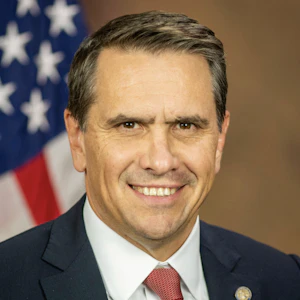
Todd Blanche
Todd Blanche
Biography of Deputy Attorney General Todd Blanche
The Honorable Todd Blanche is the 40th Deputy Attorney General of the United States, overseeing the work of the 115,000 dedicated employees who fulfill the Department of Justice’s mission at Main Justice, the FBI, DEA, U.S. Marshals, ATF, and 93 U.S. Attorney’s Offices.
Todd began his career at the Department where he served for over fifteen years in a variety of capacities, including as a contractor, a paralegal in the Criminal Division, and at the United States Attorney’s office for the Southern District of New York where he eventually became an AUSA and later a supervisor.
After leaving the Department, Todd worked as a criminal defense attorney that included representing President Donald Trump in three of the criminal cases brought against him in 2023 and 2024.
Following President Trump’s historic return to the White House, the President appointed Todd to work alongside Attorney General Pam Bondi to make America safe again. At the DOJ, Todd is working tirelessly to implement President Trump’s priorities that include confronting illegal protecting American businesses from fraud.
Todd has been married to his wonderful wife Kristine for nearly thirty years, is a father and grandfather.

Paul Atkins
Paul Atkins
Prior to returning to the SEC, Chairman Atkins was most recently chief executive of Patomak Global Partners, a company he founded in 2009. Chairman Atkins helped lead efforts to develop best practices for the digital asset sector. He served as an independent director and non-executive chairman of the board of BATS Global Markets, Inc. from 2012 to 2015.
Chairman Atkins was appointed by President George W. Bush to serve as a Commissioner of the SEC from 2002 to 2008. During his tenure, he advocated for transparency, consistency, and the use of cost-benefit analysis at the agency. Chairman Atkins also represented the SEC at meetings of the President’s Working Group on Financial Markets and the U.S.-EU Transatlantic Economic Council. From 2009 to 2010, he was appointed a member of the Congressional Oversight Panel for the Troubled Asset Relief Program.
Before serving as an SEC Commissioner, Chairman Atkins was a consultant on securities and investment management industry matters, especially regarding issues of strategy, regulatory compliance, risk management, new product development, and organizational control.
From 1990 to 1994, Chairman Atkins served on the staff of two chairmen of the SEC, Richard C. Breeden and Arthur Levitt, ultimately as chief of staff and counselor, respectively. He received the SEC’s 1992 Law and Policy Award for work regarding corporate governance matters.
Chairman Atkins began his career as a lawyer in New York, focusing on a wide range of corporate transactions for U.S. and foreign clients, including public and private securities offerings and mergers and acquisitions. He was resident for 2½ years in his firm's Paris office and admitted as conseil juridique in France.
A member of the New York and Florida bars, Chairman Atkins received his J.D. from Vanderbilt University School of Law in 1983 and was Senior Student Writing Editor of the Vanderbilt Law Review. He received his A.B., Phi Beta Kappa, from Wofford College in 1980.
Originally from Lillington, North Carolina, Chairman Atkins grew up in Tampa, Florida. He and his wife Sarah have three sons.

Mike Selig
Mike Selig
Chairman Selig brings to the role deep public and private sector experience working with a wide range of stakeholders across agriculture, energy, financial, and digital asset industries, which rely upon and operate in CFTC-regulated markets.
Prior to his leadership at the CFTC, Chairman Selig most recently served as chief counsel of the Securities and Exchange Commission’s Crypto Task Force and senior advisor to SEC Chairman Paul S. Atkins. In this role, Chairman Selig helped to develop a clear regulatory framework for digital asset securities markets, harmonize the SEC and CFTC regulatory regimes, modernize the agency’s rules to reflect new and emerging technologies, and put an end to regulation by enforcement. He also participated in the President’s Working Group on Digital Asset Markets and contributed to its report on “Strengthening American Leadership in Digital Financial Technology.”
Prior to government service, Chairman Selig was a partner at an international law firm, focusing on derivatives and securities regulatory matters. During his years in private practice, he represented a broad range of clients subject to regulation by the CFTC, including commercial end users, futures commission merchants, commodity trading advisors, swap dealers, designated contract markets, derivatives clearing organizations, and digital asset firms. Chairman Selig advised clients on compliance with the Commodity Exchange Act and the CFTC’s rules and regulations thereunder, including in connection with registration applications and obligations, enforcement matters, and complex transactions.
Chairman Selig earned his law degree from The George Washington University Law School and was articles editor of The George Washington Law Review. He received his undergraduate degree from Florida State University.

David Bailey
David Bailey

Eric Trump
Eric Trump
Mr. Trump also serves as Executive Vice President of The Trump Organization, where he oversees the global management and operations of the Trump family’s extensive real estate portfolio. This includes Trump Hotels, Trump Golf, commercial and residential real estate, Trump Estates, and Trump Winery. Known for his hands-on leadership and strong market instincts, he has played a key role in expanding the company’s presence across major U.S. and international markets.
A globally recognized business leader and public figure, Mr. Trump is a prominent advocate for Bitcoin and decentralized finance. He is a co-founder of World Liberty Financial, a decentralized finance (DeFi) platform, and serves on the Board of Advisors of Metaplanet, Japan’s largest corporate holder of Bitcoin.
Beyond his business activities, Mr. Trump has helped raise more than $50 million for St. Jude Children’s Research Hospital in the fight against pediatric cancer, a philanthropic mission he began at age 21.
Mr. Trump earned a degree in Finance and Management from Georgetown University. He currently resides in Florida with his wife, Lara, and their two children. He is also the author of Under Siege, his memoir published in October 2025.
Jack Mallers
Jack Mallers
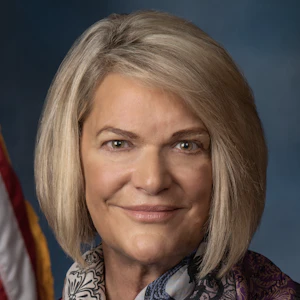
Cynthia Lummis
Cynthia Lummis
As the first-ever Chair of the Senate Banking Subcommittee on Digital Assets, Senator Lummis is the architect of the legislative framework shaping America's digital asset future. She introduced the landmark Lummis-Gillibrand Responsible Financial Innovation Act, the first comprehensive bipartisan crypto regulatory framework in Senate history. She co-authored the GENIUS Act — the first federal stablecoin law ever enacted — and introduced the BITCOIN Act, which would establish a U.S. strategic Bitcoin reserve of up to one million BTC. She is leading the Clarity Act, which will bring long-overdue regulatory certainty to the digital asset industry. She has also championed digital asset tax reform, including a de minimis exemption for small transactions and equal tax treatment for miners and stakers.
Known as Congress' "Crypto Queen," Senator Lummis represents Wyoming — a state she has helped build into one of the most digital asset-friendly regulatory environments in the nation. Before serving in the Senate, she served 14 years in the Wyoming Legislature, eight years as Wyoming State Treasurer, and eight years in the U.S. House. She is a three-time graduate of the University of Wyoming.
Her work represents a crucial bridge between traditional financial systems and the emerging digital economy, ensuring America leads the world in financial innovation while protecting the individual freedoms that define it.

Adam Back
Adam Back
Amy Oldenburg
Amy Oldenburg
David Marcus
David Marcus

Matt Schultz
Matt Schultz
Fred Thiel
Fred Thiel
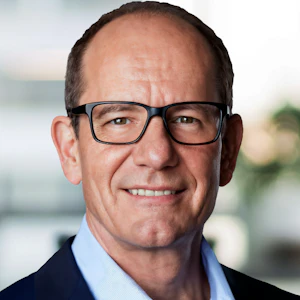
Throughout his career, Mr. Thiel has consistently driven rapid growth and created substantial shareholder value. Prior to MARA, Mr. Thiel served as the CEO of two other public companies, Local Corporation (NASDAQ: LOCM) and Lantronix, Inc (NASDAQ: LTRX). He has successfully raised billions in equity and debt through private and public offerings, led companies through IPOs, executed high-value exits to strategic and financial acquirers, and implemented effective M&A and roll-up strategies.
Mr. Thiel attended the Stockholm School of Economics and executive classes at Harvard Business School, and is fluent in English, Spanish, Swedish, and French. Mr. Thiel is the Chairman of the Board for Oden Technology, Inc. and is active in Young Presidents’ Organization where he has led initiatives in both the FinTech and Technology Networks.
A recognized voice in the industry, Fred frequently shares his insights on energy and technology with major media outlets like Bloomberg TV, CNBC, and FOX Business, contributing to vital discussions about the future of these sectors.
Tim Draper
Tim Draper
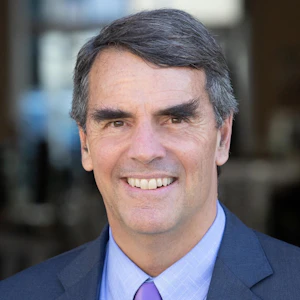
He is a supporter and global thought leader for entrepreneurs everywhere, and is a leading spokesperson for Bitcoin and decentralization, having won the Bitcoin US Marshall’s auction in 2014, invested in over 50 crypto companies, and led investments in Coinbase, Ledger, Tezos, and Bancor, among others.

Afroman
Afroman