Competitive Edge of Control: Action Sports & Bitcoin
Speakers/Moderators
Justin Dorey
Justin Dorey

Danielle Moinet
Danielle Moinet

Cris Cyborg
Cris Cyborg
Today, Cyborg is an investor in Bitcoin mining technologies and a vocal supporter of financial education and decentralization. Leveraging her global platform, she actively promotes Bitcoin awareness and adoption through creative initiatives like her “Cyborg vs Fiat” comic book, helping make complex financial ideas more accessible to a wider audience.
Beyond her achievements in the cage, Cyborg is a dedicated humanitarian, leading outreach efforts across Africa and South America. Her work reflects a deep commitment to empowering underserved communities, where she sees Bitcoin as a powerful tool for financial inclusion and long-term opportunity.
Session
Overview
Competitive Edge of Control: Action Sports & Bitcoin brought together Danielle Moinet, Cris Cyborg, and Kenny Florian for a discussion moderated by Justin Dorey about fear, discipline, preparation, and resilience in high-pressure sports.
The panel connected the mindset of elite athletes to the experience of holding and learning about Bitcoin. Speakers discussed managing volatility, ignoring outside criticism, building conviction through education, and focusing on what is within their control.
A recurring theme was life after competition. The athletes spoke about identity, broadcasting, teaching, family, long-term financial planning, and using Bitcoin as a tool for optionality and freedom.
Their advice to the audience centered on consistency, patience, education, and delayed gratification, especially during bear markets or periods of doubt.
What's up, Las Vegas? I just want to start by saying I am so honored to be sitting on this panel with these legends at the Bitcoin conference. I can't believe it. Can we give a big round of applause to everybody who makes this event happen?
Twelve years ago, I was standing at the top of the halfpipe at the Olympics in Sochi, Russia. I had just won qualifiers and I was feeling like I was about to win the Olympic gold medal. I looked over, got the go-ahead from the starter, clicked into my skis, and dropped in for what I thought was about to be the highlight of my career and, frankly, my life.
The start of the run went well. The first two hits went well, and then I caught an edge. I missed my takeoff, and as I was flying through the air, I realized it was over. Sixty seconds earlier, I was convinced I had the gold medal in the bag. Now I was lying on the ground in the middle of the halfpipe, staring at a silent crowd with a torn meniscus.
That's just part of the game in the high-risk sports that we're all a part of. It's very high risk, high reward. The highs are as high as you can get, and the lows are as low as you can get. What does this have to do with Bitcoin? I actually think it has a lot more to do with Bitcoin than people think. The skill set required to navigate risk and volatility, and frankly, to bet on yourself when the odds are against you, has a lot of overlap. I think we'll have a good conversation about some of those parallels today.
I'd like to start by introducing Danielle Moinet, WWE superstar, also known as Summer Rae, currently the host of Bare Knuckle Boxing League; Cris Cyborg, Brazilian and arguably one of the most successful female combat sports athletes of all time; and Kenny Florian. Kenny has been on a few podcasts that I've been listening to lately. He's very intellectual, and he is a three-time UFC world title contender and broadcaster.
The first question I'd like to ask you is about fear. I think everybody can relate to managing fear, but maybe not on the level that you have. Danielle, do you want to start by letting us know how you deal with fear when you're getting ready to enter the ring or whatever you're encountering?
First of all, I did not know any of that about you. That's insane. Thank you for sharing that. I think when you reach a certain level of professional sports, fear has to drive you. It's something that can't be taught. It's something we all have instilled in us. Fear gets me excited. It means I care.
I remember one time this man called The Undertaker, I don't know if you know him, but we were about to go out and I was so nervous. It was 101,000 people in the new Dallas Stadium for WrestleMania. I was so nervous. He looked at us and said, if you're not nervous, it's time to hang it up, because that means you don't care. I think it's something that drives me, which is a blessing, and I think it's why I've been so successful.
It makes you feel alive a little bit.
Maybe a little addicting, too.
Cris, you've been in more fights than probably most people in the world. How do you approach that? Do you get scared? Do you have fear? How do you manage that?
When you step in, you just don't know what's going to happen. What I do is prepare for something I don't know. When you train and prepare, you don't fear it. You just don't know what's going to happen, but you'll be ready for any situation.
In a fight, the smartest thing is to prepare yourself, learn, and study your opponent. That doesn't make you afraid, it makes you prepared. You still don't know what's going to happen, but you're ready.
So preparation is a good way to mitigate that.
Yes.
How about you, Kenny? Was there a point in your career when you were the most anxious or nervous? What was that like?
I remember it was the first season of The Ultimate Fighter. I had made it to the finals. I was the least experienced guy. I was the smallest guy, and somehow I found myself in the final. Somehow I was able to squeak into the finals.
I remember a bunch of doubt creeping in just before I was about to go out there. I was a victim of fear that night. I remember getting into the cage and circling for maybe 30 seconds. It felt like several hours. I just succumbed to the pressure.
That had a very powerful impact on me because I felt like I beat myself. Maybe that opponent would have beaten me anyway, but I didn't even give myself the chance to go out there and compete because I let all the things that were out of my control overwhelm me.
Experience certainly guides a lot of those things. Over time you realize, okay, this isn't as big of a deal as it feels. Also, there are only certain things you can control. Focus on the things you can control. What are the things that are actually real? The opponent, myself, the referee, and that's it.
If you're thinking, there is so much money on the line, this is for a specific contract, or I'm trying to get this sponsor, those are things that are completely out of your control. Learning to put those things aside and just focus on you, and being as present as possible, is crucial.
I totally agree. In my intro story, I realized I was getting ahead of myself, thinking about the future and the consequence of what I was doing. The key takeaway I had was to be present. Preparation and presence help. If you've done everything you can to prepare, you've done everything in your control. If something happens that's out of your control, you did your best.
I've heard you make a couple of comments about being an outsider in the UFC. As bitcoiners, a lot of us have been outsiders and have been ridiculed, at least back in the day, not so much anymore given the size of this conference. Has that affected you? It doesn't seem to have affected you.
I always tended to pick things that were not the norm. I come from a very conservative family, and telling them I didn't want to go to law school and wanted to become a martial artist, whatever that meant, was quite surprising and shocking to them.
I remember doing Brazilian jiu jitsu when no one knew what the heck it was. Now I do competitive shooting, and people are like, what the heck is that? I tend to choose things that are outside the box. When you choose those things, sometimes you can doubt yourself and think, all these other people are doing this, and I'm out here on my own. All these people are telling me I'm an idiot to invest in Bitcoin.
When I started, it could certainly get you to doubt yourself a little bit. But in some ways, because I'm probably a stubborn person, it made me want to be that much more successful and prove those people wrong. That has driven me a lot in my career.
In regard to Bitcoin, it's about gaining more conviction through educating myself as much as possible, talking to people who are smarter than me, learning from them, and learning as much as I can about that asset and how it can benefit me in a lot of ways. It's very easy to get thrown off by the Elizabeth Warrens of the world, potential regulation, global fear, or, of course, seeing the price go down. Has anything fundamentally changed? You bring yourself back to the present moment and what's real.
Cris, I feel like you've experienced a lot of managing press and potentially personal attacks, and this is related to being an outsider. Does it affect you? Does it fuel you? Does it feel like you have a chip on your shoulder to prove something, or does it motivate you? How do you respond to that?
In the beginning of my career, a lot of people, even my family, didn't believe me. We are talking about 21 years ago, when there were not a lot of girls doing martial arts. I was in mixed martial arts, and people would say girls can't fight like guys. It was new to see a woman beat someone by KO, to finish the fight quickly like the guys were doing.
At the beginning, when you talk about fear, I think when people don't understand the sport, they get afraid. If you get a call saying, Cris, you're going to have a fight, you can feel nervous because you didn't study your opponent. You don't know what she is good at.
It's the same thing when you talk to people about Bitcoin. They don't know much, so they are afraid to put their money there. But if you start studying, put some hours in, meet people like Kenny said, and they teach you step by step, then you are not afraid anymore. You have control, and then you can invest the way you're supposed to.
It's like mixed martial arts training. Every day you have pressure. But if you put your effort into training and work hard, you're going to do your best and you're going to know what you're doing. That is the best thing.
Danielle, you've explored so many different industries and roles throughout your career. What's it like being the new person in a new industry and dealing with people who have been doing it their whole lives? You're essentially starting over in all these new industries. It must be uncomfortable, but it doesn't phase you.
I must have a screw loose or something. I think for professional athletes, I have a lot of friends in Nashville who are big-time country music artists. When you think about the actual percentage of people who have accomplished the greatest goal they've ever thought of, it's probably something like 0.01%. People always want to be in the NBA, and then you're five foot two, and it's not going to happen.
You have to have this delusional optimism where no one can tell you otherwise. I think we all think that's just normal. I had a degree, went to college, and then decided one day that I wanted to quit and go try out for WWE. Like Cris was saying, there were maybe four girls in all of WWE 17 years ago and like 78 guys. We were definitely the minority.
My poor parents were like, what are you doing? Go use your degree. All my friends from back home were graduating college, having babies, and doing what we were taught to do as women. For me, I just saw more for my life.
The same goes with crypto. I remember starting and people fearmongering, saying it's a scam and you don't know about that. I think it's just a lack of education. You see it a lot now even with peptides and sports athletes, with people having misinformation. So I educated myself.
Leaving your sport, I think all of us probably had this identity crisis. I was called a whole different name. I didn't even respond to Danielle after leaving WWE because I had a wrestling name. Figuring out what I wanted to do with my life and now joining bare knuckle boxing, working with about 70 men and two women, I just enjoy the challenge.
I enjoy being in something early and educating myself, like Kenny said, and surrounding myself with people who are smarter than me and who I can learn from. Then one day you turn around and people are asking you questions, and you wonder how you ended up on a stage at the Bitcoin conference.
You mentioned identity crisis, and I think that's something all athletes have to deal with at the end of their careers. It's a lot more challenging than many people understand. When you're the greatest in the world, then you go to what's next.
Sitting on the couch.
Cris, I know you're still fighting, but how have you all navigated that after your athletic careers, and what's next? What are you excited about? What's in the future? Kenny, you're broadcasting BattleBots. Have you been able to meet the same satisfaction as when you were fighting?
I am a pretty competitive person, and I like building skills and doing things that test me physically, mentally, and spiritually. My back hasn't been what it used to be, but it's feeling much better now post-treatment. I got into competitive shooting. It's not something where I'm like, I'm going to make money doing this. I'm grateful and thankful that I have the time to practice and compete.
Bitcoin has certainly allowed me to have the time to do that, spend more time with my family, and pick and choose what jobs I want to do. That has taken more of my time. I still teach and travel around to teach organizations, individuals, or schools jiu jitsu and martial arts. But I haven't been able to practice that the same way, and I miss it. Hopefully my body will be ready to start doing that again.
For me, I need meaning. I think we all need meaning, but I also need something to work toward all the time. It's a lifestyle and something I do daily, whether it's working out or practicing shooting.
Bitcoin is an amazing tool for freeing up some time and resources to pursue that meaning instead of struggling to make ends meet.
Cris, you're still fighting. Do you have any plans for the future after fighting, or are you still in it? You just won a world title in boxing.
One of the things I always talk about with my team is that life as an athlete is short. I am very blessed. I have been doing this sport for 21 years. But you really have to think about when you retire, and you have to live from your savings. You have to be smart with the money you made during your career.
That is one of the reasons I got into Bitcoin, because I believe my money sitting in the bank is losing value. When you receive $1 million in 2006, it is not going to have the same value in 2026. So I am always thinking about the future, long term.
After I stop fighting, I have some dreams. I would like to be a vet. I will continue working in mixed martial arts, teaching kids and sharing a little bit of my story and mixed martial arts. One of the things I believe in, and I teach other fighters, is to think long term, save money, and invest in the right thing. I believe Bitcoin is the right thing to do. I teach them Bitcoin is not crypto.
One of the things we did with my team this year was a project. We did a comic book to teach kids about inflation, fiat, and Bitcoin as a solution. I think we have to teach step by step. From jiu jitsu, you know leg locks can submit people and can be very hard on the legs, but you start by teaching how to fall and stand up.
If we can grow the Bitcoin family, I think if you believe in it and teach step by step, people will learn. Kids can teach their parents, like email. Before, nobody understood email, and now everybody uses it. I just want to use my platform to educate people, teach about mixed martial arts and investments, and open people's eyes so they do not just trust in the system, but have freedom.
Danielle, what's on the go for you over the next couple of years? You're doing bare knuckle boxing.
Not doing bare knuckle boxing.
No, no, I'm sorry.
Lord have mercy. I have found the love of broadcasting, thank God. It has taken eight years. Nothing will ever replace walking out and hearing 50,000, 80,000, or 100,000 people cheer, or in my case, boo you.
For a while, the first two years after I left WWE, I was chasing that, and it was empty. For a lot of WWE people, they turn to drugs and alcohol, and it's something they use to fill a void. I always turned to the gym, which is a nice, healthy habit. But I'm very similar in that I have to have a goal and I have to be working toward something.
Finding broadcasting and working with BKB, bare knuckle boxing, I see these guys in their teens or their 20s coming from a really rough past, or coming out of jail and wanting to turn their lives around. Being a small part of that and helping them, whether it is marketing themselves or understanding what image they want to have, feels nice. It feels nice to be part of someone's journey.
I am in front of the camera, but it's not all about me. That has been something nice that I have enjoyed. Also, diversifying my portfolio. During Covid, I studied blockchain and got involved in it. I was working with a company called Prime Trust, which is now dissolved, but I learned a lot from them.
I don't know about UFC, but with WWE we weren't allowed to do other things. I was very much married to them. Then we got divorced, and I wanted to do everything. So keeping my hands in a bunch of stuff and seeing the vision early on, it's nice. Why not?
I would really like to get the point across that there is a certain archetype of bitcoiner and high-risk sports athlete. We're so similar in both of our backgrounds. I'm always pitching Bitcoin to my buddies, and I'm like, you're built for it. You come from this kind of world.
Moving forward, for the crowd, what would be one piece of advice to navigate a bear market, or friends and family ridiculing them and saying they're crazy for this Bitcoin thing? What is one piece of advice to navigate that fear and everything involved with it?
For me, I believe in being consistent, like going to the gym every day. Believe in what you're doing. Keep studying. Keep learning consistently. Invest in Bitcoin every week. Be smart. Do not just go in all at once. Go every week. Be consistent, like in the gym. Go every day. Share it with friends. I believe it is a great thing to share, and it is freedom.
Thank you for the opportunity. Thank you to all the people who follow me, and I hope we continue doing great things and sharing my career and Bitcoin success.
For me, the most successful people I know survive the ebbs and flows. They are okay with going in the valleys, and they're consistent during that time. If things were easy, if what we did was easy, if having a good body and being athletic was easy, everyone would do it. The same comes with a bear market, learning, holding, and believing that at its core, it really could change the world. Hold on.
In many ways, Bitcoin is kind of like a living organism. Bitcoin is a teenager still. I don't know about you guys, but I was kind of weird and awkward as a teenager. There's a lot of volatility as you are growing up, and I think Bitcoin is experiencing that.
There is still a ton of education that needs to be done. As an athlete, I've experienced the highest highs and the lowest lows. The key is staying on that path, having conviction, having faith, and being patient. Understanding delayed gratification is a true superpower. Stay the course and let it play out.
Amazing. Well, let's give it up for our panelists. Thank you for sharing. That was amazing.
Thank you.
Similar
Sessions
Competitive Edge of Control: Action Sports & Bitcoin
Justin Dorey
Justin Dorey
Danielle Moinet
Danielle Moinet
Cris Cyborg
Cris Cyborg
Today, Cyborg is an investor in Bitcoin mining technologies and a vocal supporter of financial education and decentralization. Leveraging her global platform, she actively promotes Bitcoin awareness and adoption through creative initiatives like her “Cyborg vs Fiat” comic book, helping make complex financial ideas more accessible to a wider audience.
Beyond her achievements in the cage, Cyborg is a dedicated humanitarian, leading outreach efforts across Africa and South America. Her work reflects a deep commitment to empowering underserved communities, where she sees Bitcoin as a powerful tool for financial inclusion and long-term opportunity.
Competitive Edge of Control: Action Sports & Bitcoin
Speakers/Moderators
Justin Dorey
Justin Dorey
Danielle Moinet
Danielle Moinet
Cris Cyborg
Cris Cyborg
Today, Cyborg is an investor in Bitcoin mining technologies and a vocal supporter of financial education and decentralization. Leveraging her global platform, she actively promotes Bitcoin awareness and adoption through creative initiatives like her “Cyborg vs Fiat” comic book, helping make complex financial ideas more accessible to a wider audience.
Beyond her achievements in the cage, Cyborg is a dedicated humanitarian, leading outreach efforts across Africa and South America. Her work reflects a deep commitment to empowering underserved communities, where she sees Bitcoin as a powerful tool for financial inclusion and long-term opportunity.
Other
Speakers
Michael Saylor
Michael Saylor
Todd Blanche
Todd Blanche
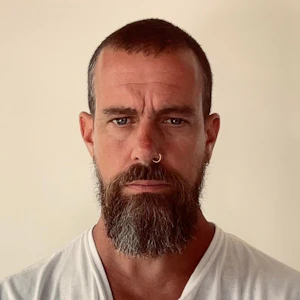
Biography of Deputy Attorney General Todd Blanche
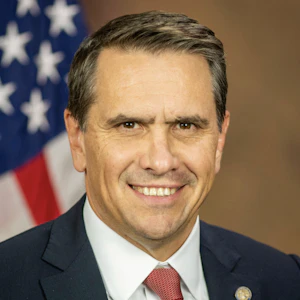
The Honorable Todd Blanche is the 40th Deputy Attorney General of the United States, overseeing the work of the 115,000 dedicated employees who fulfill the Department of Justice’s mission at Main Justice, the FBI, DEA, U.S. Marshals, ATF, and 93 U.S. Attorney’s Offices.
Todd began his career at the Department where he served for over fifteen years in a variety of capacities, including as a contractor, a paralegal in the Criminal Division, and at the United States Attorney’s office for the Southern District of New York where he eventually became an AUSA and later a supervisor.
After leaving the Department, Todd worked as a criminal defense attorney that included representing President Donald Trump in three of the criminal cases brought against him in 2023 and 2024.
Following President Trump’s historic return to the White House, the President appointed Todd to work alongside Attorney General Pam Bondi to make America safe again. At the DOJ, Todd is working tirelessly to implement President Trump’s priorities that include confronting illegal protecting American businesses from fraud.
Todd has been married to his wonderful wife Kristine for nearly thirty years, is a father and grandfather.
Paul Atkins
Paul Atkins
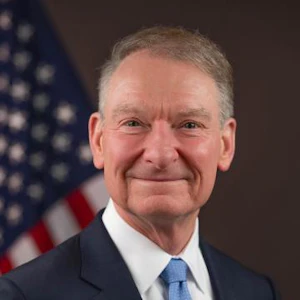
Prior to returning to the SEC, Chairman Atkins was most recently chief executive of Patomak Global Partners, a company he founded in 2009. Chairman Atkins helped lead efforts to develop best practices for the digital asset sector. He served as an independent director and non-executive chairman of the board of BATS Global Markets, Inc. from 2012 to 2015.
Chairman Atkins was appointed by President George W. Bush to serve as a Commissioner of the SEC from 2002 to 2008. During his tenure, he advocated for transparency, consistency, and the use of cost-benefit analysis at the agency. Chairman Atkins also represented the SEC at meetings of the President’s Working Group on Financial Markets and the U.S.-EU Transatlantic Economic Council. From 2009 to 2010, he was appointed a member of the Congressional Oversight Panel for the Troubled Asset Relief Program.
Before serving as an SEC Commissioner, Chairman Atkins was a consultant on securities and investment management industry matters, especially regarding issues of strategy, regulatory compliance, risk management, new product development, and organizational control.
From 1990 to 1994, Chairman Atkins served on the staff of two chairmen of the SEC, Richard C. Breeden and Arthur Levitt, ultimately as chief of staff and counselor, respectively. He received the SEC’s 1992 Law and Policy Award for work regarding corporate governance matters.
Chairman Atkins began his career as a lawyer in New York, focusing on a wide range of corporate transactions for U.S. and foreign clients, including public and private securities offerings and mergers and acquisitions. He was resident for 2½ years in his firm's Paris office and admitted as conseil juridique in France.
A member of the New York and Florida bars, Chairman Atkins received his J.D. from Vanderbilt University School of Law in 1983 and was Senior Student Writing Editor of the Vanderbilt Law Review. He received his A.B., Phi Beta Kappa, from Wofford College in 1980.
Originally from Lillington, North Carolina, Chairman Atkins grew up in Tampa, Florida. He and his wife Sarah have three sons.

Mike Selig
Mike Selig
Chairman Selig brings to the role deep public and private sector experience working with a wide range of stakeholders across agriculture, energy, financial, and digital asset industries, which rely upon and operate in CFTC-regulated markets.
Prior to his leadership at the CFTC, Chairman Selig most recently served as chief counsel of the Securities and Exchange Commission’s Crypto Task Force and senior advisor to SEC Chairman Paul S. Atkins. In this role, Chairman Selig helped to develop a clear regulatory framework for digital asset securities markets, harmonize the SEC and CFTC regulatory regimes, modernize the agency’s rules to reflect new and emerging technologies, and put an end to regulation by enforcement. He also participated in the President’s Working Group on Digital Asset Markets and contributed to its report on “Strengthening American Leadership in Digital Financial Technology.”
Prior to government service, Chairman Selig was a partner at an international law firm, focusing on derivatives and securities regulatory matters. During his years in private practice, he represented a broad range of clients subject to regulation by the CFTC, including commercial end users, futures commission merchants, commodity trading advisors, swap dealers, designated contract markets, derivatives clearing organizations, and digital asset firms. Chairman Selig advised clients on compliance with the Commodity Exchange Act and the CFTC’s rules and regulations thereunder, including in connection with registration applications and obligations, enforcement matters, and complex transactions.
Chairman Selig earned his law degree from The George Washington University Law School and was articles editor of The George Washington Law Review. He received his undergraduate degree from Florida State University.
David Bailey
David Bailey

Eric Trump
Eric Trump
Mr. Trump also serves as Executive Vice President of The Trump Organization, where he oversees the global management and operations of the Trump family’s extensive real estate portfolio. This includes Trump Hotels, Trump Golf, commercial and residential real estate, Trump Estates, and Trump Winery. Known for his hands-on leadership and strong market instincts, he has played a key role in expanding the company’s presence across major U.S. and international markets.
A globally recognized business leader and public figure, Mr. Trump is a prominent advocate for Bitcoin and decentralized finance. He is a co-founder of World Liberty Financial, a decentralized finance (DeFi) platform, and serves on the Board of Advisors of Metaplanet, Japan’s largest corporate holder of Bitcoin.
Beyond his business activities, Mr. Trump has helped raise more than $50 million for St. Jude Children’s Research Hospital in the fight against pediatric cancer, a philanthropic mission he began at age 21.
Mr. Trump earned a degree in Finance and Management from Georgetown University. He currently resides in Florida with his wife, Lara, and their two children. He is also the author of Under Siege, his memoir published in October 2025.
Jack Mallers
Jack Mallers
Cynthia Lummis
Cynthia Lummis
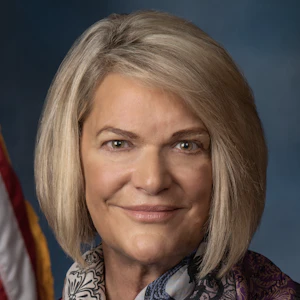
As the first-ever Chair of the Senate Banking Subcommittee on Digital Assets, Senator Lummis is the architect of the legislative framework shaping America's digital asset future. She introduced the landmark Lummis-Gillibrand Responsible Financial Innovation Act, the first comprehensive bipartisan crypto regulatory framework in Senate history. She co-authored the GENIUS Act — the first federal stablecoin law ever enacted — and introduced the BITCOIN Act, which would establish a U.S. strategic Bitcoin reserve of up to one million BTC. She is leading the Clarity Act, which will bring long-overdue regulatory certainty to the digital asset industry. She has also championed digital asset tax reform, including a de minimis exemption for small transactions and equal tax treatment for miners and stakers.
Known as Congress' "Crypto Queen," Senator Lummis represents Wyoming — a state she has helped build into one of the most digital asset-friendly regulatory environments in the nation. Before serving in the Senate, she served 14 years in the Wyoming Legislature, eight years as Wyoming State Treasurer, and eight years in the U.S. House. She is a three-time graduate of the University of Wyoming.
Her work represents a crucial bridge between traditional financial systems and the emerging digital economy, ensuring America leads the world in financial innovation while protecting the individual freedoms that define it.
Adam Back
Adam Back
Amy Oldenburg
Amy Oldenburg
David Marcus
David Marcus

Matt Schultz
Matt Schultz
Fred Thiel
Fred Thiel
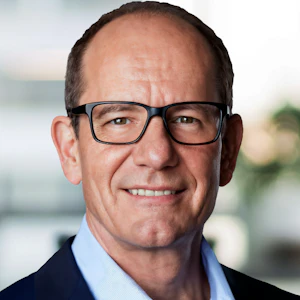
Throughout his career, Mr. Thiel has consistently driven rapid growth and created substantial shareholder value. Prior to MARA, Mr. Thiel served as the CEO of two other public companies, Local Corporation (NASDAQ: LOCM) and Lantronix, Inc (NASDAQ: LTRX). He has successfully raised billions in equity and debt through private and public offerings, led companies through IPOs, executed high-value exits to strategic and financial acquirers, and implemented effective M&A and roll-up strategies.
Mr. Thiel attended the Stockholm School of Economics and executive classes at Harvard Business School, and is fluent in English, Spanish, Swedish, and French. Mr. Thiel is the Chairman of the Board for Oden Technology, Inc. and is active in Young Presidents’ Organization where he has led initiatives in both the FinTech and Technology Networks.
A recognized voice in the industry, Fred frequently shares his insights on energy and technology with major media outlets like Bloomberg TV, CNBC, and FOX Business, contributing to vital discussions about the future of these sectors.
Tim Draper
Tim Draper
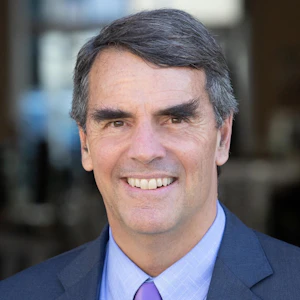
He is a supporter and global thought leader for entrepreneurs everywhere, and is a leading spokesperson for Bitcoin and decentralization, having won the Bitcoin US Marshall’s auction in 2014, invested in over 50 crypto companies, and led investments in Coinbase, Ledger, Tezos, and Bancor, among others.
Afroman
Afroman