Corporate Bitcoin in Europe: Regulation, Challenges & Opportunities
Speakers/Moderators
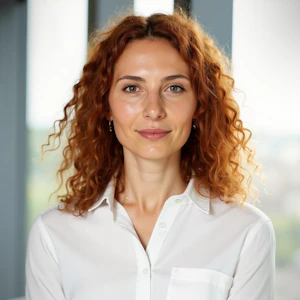
Stefania Barbaglio
Stefania Barbaglio
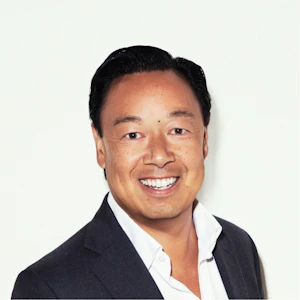
Khing Oei
Khing Oei
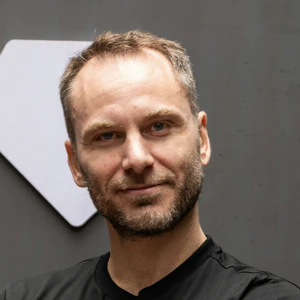
Khing is a seasoned investor with deep expertise across traditional and digital markets. He most recently served as Senior Advisor Crypto at a multi-billion-dollar hedge fund focusing on crypto distressed situations such as FTX and Genesis, where he is a member of the Board of Directors. In this role, he oversaw multi-billion-dollar Bitcoin swaps, acquisitions and distributions.
He began his career at Goldman Sachs in the Fixed Income, Currency & Commodities’ Special Situations Investing Group, before moving into senior investment roles at Fortress and Bardin Hill (formerly Halcyon), where he was CEO of Europe and built the firm’s $2.5B securitized credit business. He later founded and was Chief Investment Officer of Eyck, a $200M event-driven distressed & special situations hedge fund.
Throughout his career, Khing executed complex transactions across equities, credit, special situations, and digital assets. As an entrepreneur, he has also launched ventures such as Maicrotrader, an AI-driven Bitcoin and crypto trading agent platform.
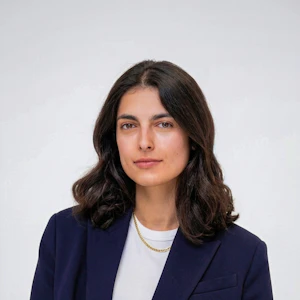
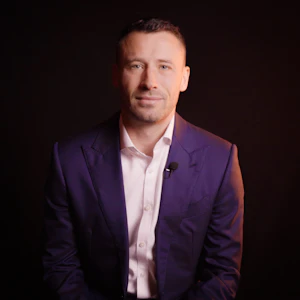
Scott Ellam
Scott Ellam
In 2014, Scott founded XCE's flagship operating business Spencer Riley, an international executive search firm headquartered in Leeds, UK. Generating over 70% of its revenue from international clients and placements across high-growth sectors including professional services, business advisory and consulting, life sciences, logistics, engineering, and environmental services.
In 2021, Scott made the pivotal decision to adopt Bitcoin as the company’s primary balance sheet asset. This positioned XCE as a differentiated Bitcoin Treasury Company (BTCTC), combining profitable recruitment operations with disciplined BTC accumulation to create a compounding flywheel: XCE’s performance-based share attracts revenue generating high performance executive recruiters, driving revenue growth to support the company’s Bitcoin treasury capital markets strategy and long-term shareholder value.
Session
Overview
This panel examines the growth of corporate Bitcoin treasury strategies in Europe and the UK, focusing on how public companies are adapting the model for local capital markets, regulation, and investor demand. Stefania Barbaglio hosts a discussion with Scott Ellam of XCE, Carmen Constenla Baliñas of Vanadi Treasury, and Khing Oei of Treasury.
The speakers compare the European landscape with the U.S., noting that European investors often lack simple brokerage access to Bitcoin products such as spot Bitcoin ETFs. That gap creates room for listed Bitcoin treasury companies, but also requires clearer investor education, stronger governance, and business models that can justify premiums to net asset value.
Key themes include Bitcoin per share growth, the role of operating businesses alongside Bitcoin reserves, credit instruments, risk-managed yield strategies, and the importance of regulatory frameworks such as MiCA. The panel also highlights the need to educate banks, regulators, family offices, and traditional investors as Bitcoin treasury companies become more visible in European markets.
The discussion positions Europe as a developing market for corporate Bitcoin adoption, with opportunities shaped by currency exposure, local regulation, capital access, and differentiated company strategies rather than a simple copy of the U.S. model.
My name is Stefania. I have been in the Bitcoin space for ten years now. I sat on the board of a Bitcoin treasury company listed on the UK market. Joining me today is Scott from XCE, another Bitcoin treasury company in the UK, Carmen from Vanadi, a leading Spanish Bitcoin treasury company, and Khing from Treasury.
I'm very proud to be here talking about Europe and the UK. There are some really interesting stories. Today we are going to go through what Scott, Carmen, and Khing have built, and show some of the opportunities with public listed companies in the UK, Europe, and Bitcoiners. Perhaps we can start with a short introduction. In about a minute each, say what you do and what your company does, so we can set the scene.
Hi, guys. Scott Ellam, CEO and founder of XCE, Connecting Excellence Group. We are a publicly listed operating company with an integrated Bitcoin treasury. In 2021, as a private business, I decided to allocate our cash reserves and ongoing surplus cash to Bitcoin. Over the years, we designed a business around international executive recruitment, which is quite capital-light and very focused on people for revenue. Your headcount drives the growth.
Over that period of time, as a private business accumulating Bitcoin, we engineered the PLC and Bitcoin treasury to be integrated in order to provide growth to the operating business as well. What I mean by that is we can now attract high revenue-generating talent and revenue-generating companies to the group as a result of the strength of our balance sheet and the active Bitcoin treasury. The stronger the operating business is, the more durable the Bitcoin treasury is. The stronger the Bitcoin treasury is, the more attractive the operating business is to recruitment consultants around the world and to privately owned recruitment companies that might consider joining the group in the future.
Hello, everyone. I'm Carmen, director of investor relations at the first and only Bitcoin treasury in Spain. We've been accumulating Bitcoin for not even a year, and we are publicly listed as well. I'm very happy to join you on the stage. Thank you.
Great to be here. I'm Khing Oei, founder and CEO of Treasury. We're in Amsterdam. We did a round last year of $150 million, backed by Nakamoto and the Winklevoss twins, to list in Amsterdam and become the first euro-denominated Bitcoin treasury company on a primary exchange in Amsterdam. We're excited to be here.
Fantastic. So let's go straight to the point, because we are here in Las Vegas, right? I think it's really good to talk about Europe. Usually Europe and the UK are considered very slow and conservative, especially when it comes to technology and Bitcoin. But I think there are some really important opportunities that we should talk about. Khing, what can we learn from the U.S. to make a more durable and still attractive case for Bitcoin treasuries in Europe?
The U.S. obviously has the deepest capital markets, and we've seen innovation with Strategy creating this new concept of a Bitcoin treasury company: a public company that holds Bitcoin and is able to grow and raise capital. That innovation is also very much in line with European capital structures and European infrastructure, and can really work.
When I saw what was happening in the U.S. with Strategy and with Metaplanet in Japan replicating the model, it made total sense for us to do this in Europe in respected capital markets. That means being able to grow and offer easy access to investors, both retail and institutional, initially through equity but also through credit over time.
One thing people in the U.S. often don't realize is that you have access to almost everything here, including Bitcoin ETFs, which we don't have in Europe. As a European citizen or resident, you cannot buy simple Bitcoin exposure in your brokerage account. That is a simple product-market fit to begin with.
That's exactly what we were talking about. We really need to be creative as well. Scott, I want to ask you about Bitcoin. How do you create value as a Bitcoin treasury company? Obviously, mNAV has been compressed and the market has been challenging. Companies that don't have an operating business have been struggling a little bit, but you do have a business. How do you think about the Bitcoin treasury, and how do you align it with the business to create value for shareholders?
I think the business has been modeled around providing a solution to a problem. All Bitcoin businesses, effectively, are providing a solution to a problem. The pure players are providing access. As Khing said, in the UK it is very difficult to access Bitcoin products within your tax wrappers. There is maybe 1.2 to 1.5 trillion pounds worth of pensions and ISAs in the UK with retail investors who struggle to gain exposure to Bitcoin. The initial pure players have solved that problem.
Where we come into it at a later stage, and where we see this adding value, is solving the problem in our industry. Our industry is quite particular and unique in that there are thousands of recruitment company owners with cash-generating and profitable businesses, but competitors do not buy competitors. Private equity does not really come into the marketplace because, ultimately, the people are the business assets. They can either leave or join the business that is buying the business. So it rarely happens.
The solution we wanted to put together, which investors can benefit from, is providing that exit ramp for privately owned recruitment companies that are cash-generating and holding cash reserves. Those owners tend to spend their entire careers in the business, only to self-fund a management buyout.
We're looking to increase Bitcoin per share through acquisitions and through cash generation. We also have XCE Bitcoin bonds, which are Bitcoin-denominated bonds. We just completed an equity raise with Adam Back last week. We believe the challenge is helping Bitcoin treasury investors understand that this is a fully functional Bitcoin treasury with an ATM and bonds and can do all of that, but it is also an operating business whose EBITDA value grows as a result.
In our industry, EBITDA for public companies is usually about six times. We look at the value as what is the EBITDA and what is the Bitcoin treasury mNAV. At the moment, we're trading at a 2.5 mNAV. We're at the start of this journey from last quarter, and I think everybody knows it probably was not the most euphoric environment over the last three months. But we've made some key hires and had some really good operational impetus, and we hope to carry that on.
I think it is always good to come when the market is not in hype, because then you really need to have a strong foundation to make sure your company succeeds. I think it was a good time, honestly.
If I tell a little story, the first time we bought a Bitcoin was October 2021. The price was $51,000. The next time we bought one, I think it was $61,000. The next time it was $30,000, then $20,000, then $16,000. We just bought daily and weekly throughout that period, and our revenues were going up at a 30% compound annual growth rate for four years.
For us, we actually came out of it with more Bitcoin than we would have had if the price had carried on tracking up. That is where I see people-driven and asset-light businesses being able to really see Bitcoin as a solution. They have not quite seen it yet, and we want to educate the market on that.
Carmen, I would really like you to share your story because you have a very important job, which is investor relations. Communicating with investors is not easy. I wanted you to share the challenges, how the process was, and what it actually takes to integrate a Bitcoin treasury strategy.
I want you to picture the board meeting when Bitcoin actually comes in and we have Bitcoin on the agenda. The question starts to be: what is the cost of accumulating euros versus the cost of accumulating Bitcoin? We are talking about a fixed supply with Bitcoin and an unlimited one with the euro. After robust due diligence with our team, we decided to dive in.
Obviously, it is a very different strategy than the one we had before, and especially in a country where we are leading that process. Being the first one is a massive job as well for the people who come behind us. At the end, we are shaping the framework in our country toward what a Bitcoin treasury can really become.
For us, it was a strategy move, looking up to companies like Strategy here in the U.S., Treasury in Amsterdam, Capital B, and Scott in the UK. We see that the business model is already working in Europe. So the question was really: why not start accumulating Bitcoin now?
Did you have to redo the entire shareholder base? Tell us a little bit about your relationships and what you are finding when you talk to investors. There is a strong investor community in Europe, maybe a little bit more traditional, but there is also a new generation of investors, younger people. Are they more interested in these business models?
I feel like there are different kinds of investors. There are the ones who have curiosity, know the asset, and want to dive in. There are others who are more cautious and want to learn more. As you said, there are a lot of new generations coming in who actually bet on Bitcoin and have been in the market for quite long.
When you are trying to draft these new conversations, it is really important to have the hard questions from the board, because they actually drive the stronger framework we are working with now.
I guess there are a lot of young family offices as well. That is one of the things really driving Europe. Khing, talking about Bitcoin yield, because this is a big topic right now. Obviously, there are different ways to define Bitcoin yield, but it becomes a very important point because Bitcoin treasury companies are looking to generate some kind of revenue from Bitcoin. That is one of the things you are working on. How are you thinking about it?
To start with the basics, traditionally yield is known as a return, an actual cash return. If you think about a bond, it yields a cash return. Strategy has redefined Bitcoin yield as Bitcoin per share growth, with Bitcoin per share itself being the main KPI. If, as a treasury company, you do not grow Bitcoin per share, then investors may say, why not buy Bitcoin spot or something else that keeps it the same?
If Bitcoin doubles, that is great, but you still hold one Bitcoin. If you held the shares in a Bitcoin treasury company, you would have more after even a doubling. I think, as you said earlier, the market has changed quite a bit in the last year. Last year was a bit of a hype cycle, where any treasury company was trading at a big multiple to its NAV. In that environment, it is very easy to grow Bitcoin per share because you issue shares at a premium, which means you sell them expensive, and buying Bitcoin is immediately accretive.
In this environment, you need to earn your premium. If you do not, you may trade below NAV. There are plenty of companies that trade below NAV. In that regard, it is important to actually generate some sort of return on your Bitcoin. There are two reasons. One is because it helps you grow your Bitcoin per share and your multiple. The other is that the big next innovation Strategy has done is issuing credit instruments, including instruments with fairly high coupons. In order to pay for that, it is very attractive if you generate an actual return, or yield, on your Bitcoin.
How you do that can vary. One way is lending your Bitcoin. One is potentially staking it. There are different option strategies. We, as Treasury, are also a big proponent of different consolidation strategies to generate a return on that Bitcoin.
There is an element of risk, but within the strategy you try to minimize that, right?
Yes, that is a good point. You never lose your Bitcoin. Your task is safeguarding your Bitcoin. You need to define the right balance. The way we look at it is that there is an extremely high barrier for risk-adjusted returns, and principal protection is the key element. We would much rather make a low single-digit return with extremely low risk of touching that Bitcoin than a double-digit return with high risk.
On Bitcoin per share, we are not yet at the stage where we have accumulated a sizable stack to consider all the bold conversations about the elements Khing was talking about. You have to measure the risk, the return, where the Bitcoin is going, and how it is secured.
We are looking at it in a slightly different way. We are leveraging human capital to provide Bitcoin yield. Every raise we do increases Bitcoin, but we also increase revenue and profit because we become more attractive to the acquisitions we are considering. We also become more attractive to recruiters who say, I can join that business, that business, or XCE. In XCE, I get a similar basic salary, and if I generate half a million a year in billable income, I might make a similar amount of cash that year. But by spending my career in that business and generating half a million a year for the next ten years, I also earn performance-based equity, and I can see that the Bitcoin per share is increasing.
It becomes very accretive to Bitcoin per share from our side, just doing what we would normally do, which is employ more billing consultants. For them, it is a kind of free option in their career as they look out over the next 10 or 20 years. I think that will become more and more attractive. It is about combining human capital with digital capital and creating a Bitcoin yield.
It is very interesting because you have your own unique business model. I think that is what we are really doing in Europe. We are not trying to copy the U.S.; we are trying to come up with something that is unique.
Now I want to ask you about Strategy. Strategy set up this and led the Bitcoin treasury model here in the U.S. They have a specific strategy. Do you think it makes sense for Europe to take their strategy and implement it in Europe? Or, when we think about credit, are there different opportunities that you see that could be unlocked?
Absolutely. I think digital credit has become a very significant product now. Strategy has issued credit instruments, and people have spoken about it as a successful product, almost an iPhone moment. But for that to become a real asset class, which ultimately benefits all of us in this room, it will draw a lot more capital into Bitcoin.
You need more issuers, more maturities, and more currencies so people can really trade the basis. I have been in the credit markets for a long time, and the moment you can actually get depth in that entire ecosystem, with a pension fund in Japan and a credit fund in Spain being able to trade with each other because they have different preferences, that is when it becomes a real market.
All of us in the treasury space can contribute to that and make the system better by also being issuers of credit. I think that is the next phase we are going into. The long-term vision is that once you have that, you almost have Bitcoin-type banks going forward, where the Bitcoin company becomes the bridge between Bitcoin and the financial ecosystem.
Carmen, talking about regulation, do you think the problem is regulation or is it actually education? What are the things that, if we move in the right direction, can really move the needle for our industry?
In Europe, we are already working around the MiCA framework. I feel like regulation also protects the investor a lot, which is a very good thing to look at, while allowing other companies to keep innovating.
It is very important to have financial education, not only about Bitcoin as an asset, but also about the stock markets, being there, and investing beyond what we used to invest in. The world is changing very fast, and so does finance. Bitcoin is a clear example of that.
I feel like there is still a lot to do regarding the framework we work in. If all the treasury companies get together and push it a bit, we can make things happen, like everything that is happening here in the U.S. But of course, we have different tools. Europe is not even one single global thing; each country has different tools financially and investment-wise. We have to be well aware of that and how we can shape that toward all the competitors that are out there.
The community of people coming to Bitcoin is increasing a lot. I remember when I was on the stage in Amsterdam just last year, it was impressive to see the people. It was a big event. There is more and more interest from retail investors, institutional investors, and traditional investors learning about the space. Khing, do you want to share how you are building the community in Europe? I think it is an important point.
There are two ways. As you mentioned, the Bitcoin Amsterdam conference is an important tool, and it really varies from families bringing their kids and showing it to institutional investors. The other thing is that, as a treasury company, you are in a heavily regulated environment with lots of traditional institutions around you. You need a bank to support you and have a bank account, the regulator, different payment institutions, and everything around you.
From those perspectives, education is equally important. It really goes from the young family to those institutions. If those institutions are not educated on digital assets, on the way things work, on Bitcoin, and on the long-term vision, there is often a natural skepticism. On the one hand, we are seeing increasing adoption and younger generations taking over, as you mentioned. On the other hand, there is still a lot of education to be done at all those levels. That is absolutely key for us.
When it comes to education in the UK, the UK is known as a global financial center. But when you speak to investment banks and traditional investors in the UK, there is a challenge around education.
Three years ago, anecdotally, I met the ex-chairman of one of the top five British banks. I spent four days with him because we were on a safari and had to share a cabin, so he got four days’ worth of Bitcoin talk. For two or three years, I had been talking to him about Bitcoin and discussing things that Bitcoiners discuss all the time, but they were just unaware these things were happening. They were unaware of the BlackRock ETF coming through, unaware of the strategic Bitcoin reserve announcement.
It took until we took XCE public for him to say to me, I would like to participate and put something in, because it is in a wrapper they understand. When we speak to investment banks, they see it that way. Last year, I remember being at a London Stock Exchange event talking about Bitcoin treasuries, and they saw it as a bubble.
The reality is that it is not the bubble, it is the pin. We are at an equivalent stage to Bitcoin 2013 adoption, where it will only become apparent in four years' time what advantage businesses that hold Bitcoin on the balance sheet have in the capital markets. Then it will probably drop 20%, and they will say that it has burst again.
There is so much capital, especially in the UK, still watching from the sidelines. At some point, it will get there, but it takes time.
Big time. I think that is why it is so important to have this kind of conference, not only here in Vegas but also in Amsterdam. We will also hold the first institutional conference in Spain in two weeks' time in Madrid, at MAD Bitcoin. That shows how much the whole community is growing. The Bitcoin community is very international, but it is also growing within each country. I feel like that is where we have to start.
If we have to mention one last thing, why should investors and people in the U.S. look at Europe? What are we bringing? I would like each of you to say a few last words before we close the panel. What is it for Europe?
Ultimately, when you go into a treasury company, you are long Bitcoin and short the respective currency. That is good diversification on the euro. Also, here we are all emerging Bitcoin treasury companies, and for smaller companies it should be easier to grow Bitcoin per share. The impact will be much larger. I would say those are two important drivers for U.S. investors to look at Europe.
On my side, I would like to tell U.S. investors that there is a window of opportunity. We are just a new market, and we are showing the trajectory the treasuries have. Speaking specifically about us, we have only been accumulating for one year. At the end, you have a massive window of opportunity just because of the moment we are in now. I feel that should wake up the call to international investors.
For us, we are based in the UK. We are on the OTC recently as well under XCE. As the UK environment became tougher, we started doing more revenue overseas. We do 70% of our revenue in the USA, Europe, and the Middle East. We hold all our reserves in Bitcoin. As Khing said, from a currency debasement trade, I have been a Bitcoiner for ten years, so I am quite short the British pound myself.
If international investors are looking for exposure to an international company, there is no restriction in terms of where we would scale. We work overseas from the UK, but I would like to see us start developing overseas offices, and the U.S. is my favorite.
To wrap it up, people in the U.S. should look at Europe because we are doing things differently. We all have our own take, and there are really big opportunities from an investment perspective and also from a regulatory perspective. Regulators are now taking Bitcoin more seriously, and things are going to be moving in the right direction. So I am very positive.
Same. Absolutely.
So are we.
I am only positive on Britain because of Bitcoin, and driving the adoption throughout Britain.
We are all brothers and sisters, right? Anyway, thank you so much. I don't know if anybody has anything else to add before we close.
No, I think we covered it all. Thanks very much.
Thank you.
Thank you so much.
Similar
Sessions
Government Relations: Banking & Bitcoin Legislation
Stephen Pollock
Stephen Pollock
As Senior Vice President at the Bitcoin Policy Institute, he built and led the organization’s growth architecture – spanning revenue, strategic partnerships, executive relationships, national events, and institutional positioning. He helped take the organization from zero to a nationally recognized institution, strengthening its credibility in Washington and across the broader Bitcoin ecosystem.
That work drew on 15 years in business development, political strategy, and government affairs. He has led multi-state campaigns and national initiatives, including grassroots efforts supporting major federal legislation. Over the course of his career, he has built relationships with political, business, and media leaders across 40+ states – from congressional offices to governors’ teams to the White House.
Today, through Signal Ridge Partners, Stephen advises founders and leadership teams at critical inflection points – aligning growth strategy, capital formation, and government and public affairs architecture. His work spans commercial partnerships, capital positioning, and institutional strategy for Bitcoin and digital asset companies.
Before Bitcoin, his background included state lobbying, multimedia strategy for large-scale national efforts, and work in fintech, angel investing, and SaaS.
Stephen is based in Nashville, where he unwinds by writing country songs, reading Bitcoin research, and working in the garden with his wife and children.

Garry Krugljakow
Garry Krugljakow
Khing Oei
Khing Oei
Khing is a seasoned investor with deep expertise across traditional and digital markets. He most recently served as Senior Advisor Crypto at a multi-billion-dollar hedge fund focusing on crypto distressed situations such as FTX and Genesis, where he is a member of the Board of Directors. In this role, he oversaw multi-billion-dollar Bitcoin swaps, acquisitions and distributions.
He began his career at Goldman Sachs in the Fixed Income, Currency & Commodities’ Special Situations Investing Group, before moving into senior investment roles at Fortress and Bardin Hill (formerly Halcyon), where he was CEO of Europe and built the firm’s $2.5B securitized credit business. He later founded and was Chief Investment Officer of Eyck, a $200M event-driven distressed & special situations hedge fund.
Throughout his career, Khing executed complex transactions across equities, credit, special situations, and digital assets. As an entrepreneur, he has also launched ventures such as Maicrotrader, an AI-driven Bitcoin and crypto trading agent platform.
John Riggins
John Riggins
Prior to Moon Inc, John was a founding partner of UTXO Management’s Bitcoin Ecosystem Fund, the most active early-stage venture capital fund across the Bitcoin landscape and led Asia business for BTC Media, the world’s preeminent Bitcoin focused media group, with brands including Bitcoin Magazine and The Bitcoin Conference
Government Relations: Banking & Bitcoin Legislation
Speakers/Moderators
Stephen Pollock
Stephen Pollock
As Senior Vice President at the Bitcoin Policy Institute, he built and led the organization’s growth architecture – spanning revenue, strategic partnerships, executive relationships, national events, and institutional positioning. He helped take the organization from zero to a nationally recognized institution, strengthening its credibility in Washington and across the broader Bitcoin ecosystem.
That work drew on 15 years in business development, political strategy, and government affairs. He has led multi-state campaigns and national initiatives, including grassroots efforts supporting major federal legislation. Over the course of his career, he has built relationships with political, business, and media leaders across 40+ states – from congressional offices to governors’ teams to the White House.
Today, through Signal Ridge Partners, Stephen advises founders and leadership teams at critical inflection points – aligning growth strategy, capital formation, and government and public affairs architecture. His work spans commercial partnerships, capital positioning, and institutional strategy for Bitcoin and digital asset companies.
Before Bitcoin, his background included state lobbying, multimedia strategy for large-scale national efforts, and work in fintech, angel investing, and SaaS.
Stephen is based in Nashville, where he unwinds by writing country songs, reading Bitcoin research, and working in the garden with his wife and children.
Garry Krugljakow
Garry Krugljakow
Khing Oei
Khing Oei
Khing is a seasoned investor with deep expertise across traditional and digital markets. He most recently served as Senior Advisor Crypto at a multi-billion-dollar hedge fund focusing on crypto distressed situations such as FTX and Genesis, where he is a member of the Board of Directors. In this role, he oversaw multi-billion-dollar Bitcoin swaps, acquisitions and distributions.
He began his career at Goldman Sachs in the Fixed Income, Currency & Commodities’ Special Situations Investing Group, before moving into senior investment roles at Fortress and Bardin Hill (formerly Halcyon), where he was CEO of Europe and built the firm’s $2.5B securitized credit business. He later founded and was Chief Investment Officer of Eyck, a $200M event-driven distressed & special situations hedge fund.
Throughout his career, Khing executed complex transactions across equities, credit, special situations, and digital assets. As an entrepreneur, he has also launched ventures such as Maicrotrader, an AI-driven Bitcoin and crypto trading agent platform.
John Riggins
John Riggins
Prior to Moon Inc, John was a founding partner of UTXO Management’s Bitcoin Ecosystem Fund, the most active early-stage venture capital fund across the Bitcoin landscape and led Asia business for BTC Media, the world’s preeminent Bitcoin focused media group, with brands including Bitcoin Magazine and The Bitcoin Conference
Showcase: XCE
Scott Ellam
Scott Ellam
In 2014, Scott founded XCE's flagship operating business Spencer Riley, an international executive search firm headquartered in Leeds, UK. Generating over 70% of its revenue from international clients and placements across high-growth sectors including professional services, business advisory and consulting, life sciences, logistics, engineering, and environmental services.
In 2021, Scott made the pivotal decision to adopt Bitcoin as the company’s primary balance sheet asset. This positioned XCE as a differentiated Bitcoin Treasury Company (BTCTC), combining profitable recruitment operations with disciplined BTC accumulation to create a compounding flywheel: XCE’s performance-based share attracts revenue generating high performance executive recruiters, driving revenue growth to support the company’s Bitcoin treasury capital markets strategy and long-term shareholder value.
Showcase: XCE
Speakers/Moderators
Scott Ellam
Scott Ellam
In 2014, Scott founded XCE's flagship operating business Spencer Riley, an international executive search firm headquartered in Leeds, UK. Generating over 70% of its revenue from international clients and placements across high-growth sectors including professional services, business advisory and consulting, life sciences, logistics, engineering, and environmental services.
In 2021, Scott made the pivotal decision to adopt Bitcoin as the company’s primary balance sheet asset. This positioned XCE as a differentiated Bitcoin Treasury Company (BTCTC), combining profitable recruitment operations with disciplined BTC accumulation to create a compounding flywheel: XCE’s performance-based share attracts revenue generating high performance executive recruiters, driving revenue growth to support the company’s Bitcoin treasury capital markets strategy and long-term shareholder value.
Corporate Bitcoin in Europe: Regulation, Challenges & Opportunities
Stefania Barbaglio
Stefania Barbaglio
Khing Oei
Khing Oei
Khing is a seasoned investor with deep expertise across traditional and digital markets. He most recently served as Senior Advisor Crypto at a multi-billion-dollar hedge fund focusing on crypto distressed situations such as FTX and Genesis, where he is a member of the Board of Directors. In this role, he oversaw multi-billion-dollar Bitcoin swaps, acquisitions and distributions.
He began his career at Goldman Sachs in the Fixed Income, Currency & Commodities’ Special Situations Investing Group, before moving into senior investment roles at Fortress and Bardin Hill (formerly Halcyon), where he was CEO of Europe and built the firm’s $2.5B securitized credit business. He later founded and was Chief Investment Officer of Eyck, a $200M event-driven distressed & special situations hedge fund.
Throughout his career, Khing executed complex transactions across equities, credit, special situations, and digital assets. As an entrepreneur, he has also launched ventures such as Maicrotrader, an AI-driven Bitcoin and crypto trading agent platform.
Scott Ellam
Scott Ellam
In 2014, Scott founded XCE's flagship operating business Spencer Riley, an international executive search firm headquartered in Leeds, UK. Generating over 70% of its revenue from international clients and placements across high-growth sectors including professional services, business advisory and consulting, life sciences, logistics, engineering, and environmental services.
In 2021, Scott made the pivotal decision to adopt Bitcoin as the company’s primary balance sheet asset. This positioned XCE as a differentiated Bitcoin Treasury Company (BTCTC), combining profitable recruitment operations with disciplined BTC accumulation to create a compounding flywheel: XCE’s performance-based share attracts revenue generating high performance executive recruiters, driving revenue growth to support the company’s Bitcoin treasury capital markets strategy and long-term shareholder value.
Corporate Bitcoin in Europe: Regulation, Challenges & Opportunities
Speakers/Moderators
Stefania Barbaglio
Stefania Barbaglio
Khing Oei
Khing Oei
Khing is a seasoned investor with deep expertise across traditional and digital markets. He most recently served as Senior Advisor Crypto at a multi-billion-dollar hedge fund focusing on crypto distressed situations such as FTX and Genesis, where he is a member of the Board of Directors. In this role, he oversaw multi-billion-dollar Bitcoin swaps, acquisitions and distributions.
He began his career at Goldman Sachs in the Fixed Income, Currency & Commodities’ Special Situations Investing Group, before moving into senior investment roles at Fortress and Bardin Hill (formerly Halcyon), where he was CEO of Europe and built the firm’s $2.5B securitized credit business. He later founded and was Chief Investment Officer of Eyck, a $200M event-driven distressed & special situations hedge fund.
Throughout his career, Khing executed complex transactions across equities, credit, special situations, and digital assets. As an entrepreneur, he has also launched ventures such as Maicrotrader, an AI-driven Bitcoin and crypto trading agent platform.
Scott Ellam
Scott Ellam
In 2014, Scott founded XCE's flagship operating business Spencer Riley, an international executive search firm headquartered in Leeds, UK. Generating over 70% of its revenue from international clients and placements across high-growth sectors including professional services, business advisory and consulting, life sciences, logistics, engineering, and environmental services.
In 2021, Scott made the pivotal decision to adopt Bitcoin as the company’s primary balance sheet asset. This positioned XCE as a differentiated Bitcoin Treasury Company (BTCTC), combining profitable recruitment operations with disciplined BTC accumulation to create a compounding flywheel: XCE’s performance-based share attracts revenue generating high performance executive recruiters, driving revenue growth to support the company’s Bitcoin treasury capital markets strategy and long-term shareholder value.
Other
Speakers
Michael Saylor
Michael Saylor
Todd Blanche
Todd Blanche
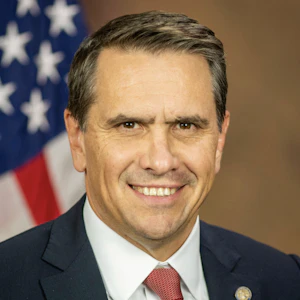
Biography of Deputy Attorney General Todd Blanche
The Honorable Todd Blanche is the 40th Deputy Attorney General of the United States, overseeing the work of the 115,000 dedicated employees who fulfill the Department of Justice’s mission at Main Justice, the FBI, DEA, U.S. Marshals, ATF, and 93 U.S. Attorney’s Offices.
Todd began his career at the Department where he served for over fifteen years in a variety of capacities, including as a contractor, a paralegal in the Criminal Division, and at the United States Attorney’s office for the Southern District of New York where he eventually became an AUSA and later a supervisor.
After leaving the Department, Todd worked as a criminal defense attorney that included representing President Donald Trump in three of the criminal cases brought against him in 2023 and 2024.
Following President Trump’s historic return to the White House, the President appointed Todd to work alongside Attorney General Pam Bondi to make America safe again. At the DOJ, Todd is working tirelessly to implement President Trump’s priorities that include confronting illegal protecting American businesses from fraud.
Todd has been married to his wonderful wife Kristine for nearly thirty years, is a father and grandfather.

Paul Atkins
Paul Atkins
Prior to returning to the SEC, Chairman Atkins was most recently chief executive of Patomak Global Partners, a company he founded in 2009. Chairman Atkins helped lead efforts to develop best practices for the digital asset sector. He served as an independent director and non-executive chairman of the board of BATS Global Markets, Inc. from 2012 to 2015.
Chairman Atkins was appointed by President George W. Bush to serve as a Commissioner of the SEC from 2002 to 2008. During his tenure, he advocated for transparency, consistency, and the use of cost-benefit analysis at the agency. Chairman Atkins also represented the SEC at meetings of the President’s Working Group on Financial Markets and the U.S.-EU Transatlantic Economic Council. From 2009 to 2010, he was appointed a member of the Congressional Oversight Panel for the Troubled Asset Relief Program.
Before serving as an SEC Commissioner, Chairman Atkins was a consultant on securities and investment management industry matters, especially regarding issues of strategy, regulatory compliance, risk management, new product development, and organizational control.
From 1990 to 1994, Chairman Atkins served on the staff of two chairmen of the SEC, Richard C. Breeden and Arthur Levitt, ultimately as chief of staff and counselor, respectively. He received the SEC’s 1992 Law and Policy Award for work regarding corporate governance matters.
Chairman Atkins began his career as a lawyer in New York, focusing on a wide range of corporate transactions for U.S. and foreign clients, including public and private securities offerings and mergers and acquisitions. He was resident for 2½ years in his firm's Paris office and admitted as conseil juridique in France.
A member of the New York and Florida bars, Chairman Atkins received his J.D. from Vanderbilt University School of Law in 1983 and was Senior Student Writing Editor of the Vanderbilt Law Review. He received his A.B., Phi Beta Kappa, from Wofford College in 1980.
Originally from Lillington, North Carolina, Chairman Atkins grew up in Tampa, Florida. He and his wife Sarah have three sons.

Mike Selig
Mike Selig
Chairman Selig brings to the role deep public and private sector experience working with a wide range of stakeholders across agriculture, energy, financial, and digital asset industries, which rely upon and operate in CFTC-regulated markets.
Prior to his leadership at the CFTC, Chairman Selig most recently served as chief counsel of the Securities and Exchange Commission’s Crypto Task Force and senior advisor to SEC Chairman Paul S. Atkins. In this role, Chairman Selig helped to develop a clear regulatory framework for digital asset securities markets, harmonize the SEC and CFTC regulatory regimes, modernize the agency’s rules to reflect new and emerging technologies, and put an end to regulation by enforcement. He also participated in the President’s Working Group on Digital Asset Markets and contributed to its report on “Strengthening American Leadership in Digital Financial Technology.”
Prior to government service, Chairman Selig was a partner at an international law firm, focusing on derivatives and securities regulatory matters. During his years in private practice, he represented a broad range of clients subject to regulation by the CFTC, including commercial end users, futures commission merchants, commodity trading advisors, swap dealers, designated contract markets, derivatives clearing organizations, and digital asset firms. Chairman Selig advised clients on compliance with the Commodity Exchange Act and the CFTC’s rules and regulations thereunder, including in connection with registration applications and obligations, enforcement matters, and complex transactions.
Chairman Selig earned his law degree from The George Washington University Law School and was articles editor of The George Washington Law Review. He received his undergraduate degree from Florida State University.

David Bailey
David Bailey

Eric Trump
Eric Trump
Mr. Trump also serves as Executive Vice President of The Trump Organization, where he oversees the global management and operations of the Trump family’s extensive real estate portfolio. This includes Trump Hotels, Trump Golf, commercial and residential real estate, Trump Estates, and Trump Winery. Known for his hands-on leadership and strong market instincts, he has played a key role in expanding the company’s presence across major U.S. and international markets.
A globally recognized business leader and public figure, Mr. Trump is a prominent advocate for Bitcoin and decentralized finance. He is a co-founder of World Liberty Financial, a decentralized finance (DeFi) platform, and serves on the Board of Advisors of Metaplanet, Japan’s largest corporate holder of Bitcoin.
Beyond his business activities, Mr. Trump has helped raise more than $50 million for St. Jude Children’s Research Hospital in the fight against pediatric cancer, a philanthropic mission he began at age 21.
Mr. Trump earned a degree in Finance and Management from Georgetown University. He currently resides in Florida with his wife, Lara, and their two children. He is also the author of Under Siege, his memoir published in October 2025.

Jack Mallers
Jack Mallers
Cynthia Lummis
Cynthia Lummis
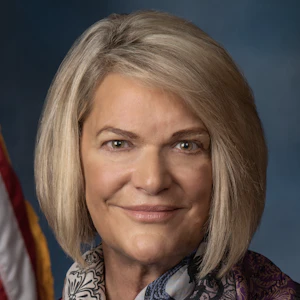
As the first-ever Chair of the Senate Banking Subcommittee on Digital Assets, Senator Lummis is the architect of the legislative framework shaping America's digital asset future. She introduced the landmark Lummis-Gillibrand Responsible Financial Innovation Act, the first comprehensive bipartisan crypto regulatory framework in Senate history. She co-authored the GENIUS Act — the first federal stablecoin law ever enacted — and introduced the BITCOIN Act, which would establish a U.S. strategic Bitcoin reserve of up to one million BTC. She is leading the Clarity Act, which will bring long-overdue regulatory certainty to the digital asset industry. She has also championed digital asset tax reform, including a de minimis exemption for small transactions and equal tax treatment for miners and stakers.
Known as Congress' "Crypto Queen," Senator Lummis represents Wyoming — a state she has helped build into one of the most digital asset-friendly regulatory environments in the nation. Before serving in the Senate, she served 14 years in the Wyoming Legislature, eight years as Wyoming State Treasurer, and eight years in the U.S. House. She is a three-time graduate of the University of Wyoming.
Her work represents a crucial bridge between traditional financial systems and the emerging digital economy, ensuring America leads the world in financial innovation while protecting the individual freedoms that define it.

Adam Back
Adam Back
Amy Oldenburg
Amy Oldenburg
David Marcus
David Marcus

Matt Schultz
Matt Schultz
Fred Thiel
Fred Thiel
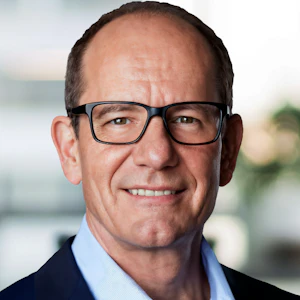
Throughout his career, Mr. Thiel has consistently driven rapid growth and created substantial shareholder value. Prior to MARA, Mr. Thiel served as the CEO of two other public companies, Local Corporation (NASDAQ: LOCM) and Lantronix, Inc (NASDAQ: LTRX). He has successfully raised billions in equity and debt through private and public offerings, led companies through IPOs, executed high-value exits to strategic and financial acquirers, and implemented effective M&A and roll-up strategies.
Mr. Thiel attended the Stockholm School of Economics and executive classes at Harvard Business School, and is fluent in English, Spanish, Swedish, and French. Mr. Thiel is the Chairman of the Board for Oden Technology, Inc. and is active in Young Presidents’ Organization where he has led initiatives in both the FinTech and Technology Networks.
A recognized voice in the industry, Fred frequently shares his insights on energy and technology with major media outlets like Bloomberg TV, CNBC, and FOX Business, contributing to vital discussions about the future of these sectors.
Tim Draper
Tim Draper
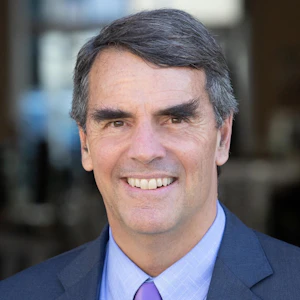
He is a supporter and global thought leader for entrepreneurs everywhere, and is a leading spokesperson for Bitcoin and decentralization, having won the Bitcoin US Marshall’s auction in 2014, invested in over 50 crypto companies, and led investments in Coinbase, Ledger, Tezos, and Bancor, among others.

Afroman
Afroman