Bitcoin Meets Conscious Living in Costa Rica
Speakers/Moderators
Paul Keating
Paul Keating
Working on Primal.
Ben Ashara
Ben Ashara

Sergio Chaverri
Sergio Chaverri
He is CEO of AYA Capital, a family office overseeing a diversified portfolio of high-potential companies and assets, including Bitcoin as a strategic allocation. One of its core companies is Digiplat, an institutional-grade Bitcoin liquidity and settlement firm providing tailored OTC execution to support real-asset acquisitions and capital deployment for high-net-worth individuals.
A central focus of his work is supporting Bitcoin high-net-worth individuals who relocate or spend significant time in Costa Rica and initially require assistance with luxury real estate transactions. Over time, this relationship often evolves into broader investment activity, including alternative investments, second family office structures, and Bitcoin-backed transactions executed within Costa Rica. This activity has grown exponentially as Costa Rica has emerged as an increasingly attractive destination for HNWIs due to its exceptional biodiversity, pristine natural environment, and globally recognized commitment to environmental protection. The country offers long-standing political stability, a strong democratic tradition, no standing army, a reliable legal framework for property ownership, and a high quality of life. It is also recognized as one of the world’s longevity hubs, hosting one of the planet’s five Blue Zones, and has become a natural convergence point for Bitcoin holders, entrepreneurs, and families seeking sustainability, privacy, and long-term capital preservation.
In 2025, he co-launched the podcast Bitcoin and Property Markets alongside the CEO of Coldwell Banker Costa Rica, with the objective of sharing insights on the growing convergence between Bitcoin liquidity and real-asset markets, particularly in Costa Rica and Latin America.
He also leads the IANUA Family Office Community, where he co-founded the Latin American chapter. IANUA is an exclusive global network of family offices and principals focused on alternative investments and cross-border collaboration, providing members with access to curated deal flow and off-market opportunities.
Previously, he co-founded Gosocket Corporation, where he drove international expansion and growth strategy, culminating in a successful acquisition by Pagero Group (NASDAQ: PAGERO).

Lee Salminen
Lee Salminen
Session
Overview
Bitcoin Meets Conscious Living in Costa Rica explored how Costa Rica is developing as a place where Bitcoiners can live with minimal reliance on traditional banking. Paul Keating hosted a conversation with Lee Salminen of Bitcoin Jungle, Sergio Chaverri of AYA Capital, and Ben Ashara of Secret Keys Costa Rica about spending Bitcoin day to day, moving capital into the country, and building a lifestyle around self custody and local resilience.
Lee Salminen described Bitcoin Jungle as a circular economy project inspired by Bitcoin Beach, with a Lightning-enabled wallet and merchant network that helps locals, tourists, and expats transact with Bitcoin. A key theme was the integration with local fiat rails through Bull Bitcoin, allowing users to pay businesses in Bitcoin even when the merchant receives local currency.
Sergio Chaverri discussed Costa Rica’s relatively hands-off regulatory environment, territorial tax model, political stability, and appeal for high-net-worth Bitcoin holders. He also described how large real estate and asset purchases can be structured through Bitcoin-backed liquidity, escrow, and collateralized transactions without necessarily selling Bitcoin.
Ben Ashara focused on the lifestyle side of moving to Costa Rica, including clean food, water, community, surfing, family life, and regenerative food forests. The discussion connected Bitcoin’s financial independence with Costa Rica’s pura vida culture, emphasizing practical circular economy infrastructure alongside health, resilience, and conscious living.
What's up, y'all? Who here has been to Costa Rica? Who here has been to El Salvador? All right. Not the same.
We are about to make the argument that Costa Rica is probably the best place to spend your Bitcoin in the world. I will die on the hill that Costa Rica is worthy of your Bitcoin for the lifestyle that it allows us to live.
We have Lee here, who made it easy to spend Bitcoin. He made the Bitcoin Jungle app down there, and it has spread throughout the whole country. We have Sergio, who will tell us how to get Bitcoin into the country if you're talking about large amounts, whale-sized. And we have Ben, who has something in his portfolio possibly more worthy than Bitcoin, so he is going to explore that later on.
First of all, I live completely on a Bitcoin standard down in Costa Rica. Zero fiat, even to get gas and everything. Lee made that possible. What is unique about Costa Rica and the app that makes it possible?
Thanks, Paul. Hey, guys. My name is Lee. I am one of the co-founders of Bitcoin Jungle, which is a circular economy project in Costa Rica. We initially based it on the idea of Bitcoin Beach in El Salvador. I visited there in 2021. I loved the idea. I went back to my home in Costa Rica and started to think about how we could apply that to my town.
We stood up some open source technology and started the Bitcoin Jungle wallet. It is a Lightning-capable wallet, easy to use, just like the Bitcoin Beach or Blink wallet. We started orange pilling merchants around our town. Initially, it started at our local farmers market and allowed us to buy all of our food with sats day to day.
Over time, we partnered with a company called Bull Bitcoin, which links Bitcoin through Lightning to the local mobile money system of Costa Rica. Essentially, if you have a bank account in Costa Rica, you can send fiat to just a phone number and the money arrives instantly in the other person's account. The issue is that foreigners cannot use that system, and that is really limiting for someone like me who moved to this country and wants to participate in the local economy.
So we partnered with Bull Bitcoin. Now you can use Bitcoin, but it gets delivered to any business in the country as fiat instantly for less than 1% in fees. This allows you to live 100% on the Bitcoin standard. If you go to a business and they do not take Bitcoin yet, you can still pay them in Bitcoin and they get fiat.
What is funny is that before Bull Bitcoin came in with this offramp, Lee used to walk around the farmers market and cash people out. He used to be the one-man bank.
Exactly. For something to be considered sound money, it has to be exchangeable with other forms of money. Costa Rica at that time did not have any exchange that was available to people. I would go around orange pilling anyone who would listen to me, and they would say, cool, can I pay my rent with it? I would say, well, I am working on it. What is your landlord's phone number? We can talk about it. But there had to be a better way.
To put this into practice, this is the tool that makes it possible if you want to live off your Bitcoin. At a gas station, you just put in a phone number and you are getting gas with your Bitcoin. It is a really useful tool.
With that comes the question: what does the government think about all this? Why is Costa Rica Bitcoin-friendly from a government perspective? What do we want more of? What do we want less of? Maybe compare it to El Salvador, Dubai, and places around the world.
It is a pleasure to be here. I am Sergio. I also lead a family office community, so I am always engaged with high-net-worth individuals, with Bitcoin, and with traditional finance.
There are places like El Salvador, Dubai, Switzerland, and Thailand that are doing specific regulation for crypto, grace periods, taxation, and everything. It is super interesting what they are doing. But the interesting thing about Costa Rica is that, in my opinion, they implemented somehow the best regulation model, and the best regulation model is no regulation.
Why? Because the government has not seen a threat or shown much interest in Bitcoin or crypto in general. So we are working with a traditional and long-term model. For example, Costa Rica has a territorial taxation model. Income that is generated outside of the country has no taxes. This is super important because we are not talking about a grace period for Bitcoiners. In this case, you have Bitcoin, you use international or foreign exchanges, and when you bring money in, there is no taxation on Bitcoin, equities, securities, anything like that. That is a really interesting thing.
The second thing regarding the government is the political stability that we have had over decades. Recently, we had a presidential election. It does not matter which candidate you choose, because nothing dramatic happens. That has been the history of Costa Rica.
In the case of El Salvador, for example, I am a super fan of what Bukele is doing, and it is amazing. But people have asked me, hey, it is great, but what happens if, for some reason, he is not there anymore? What happens if the opposition comes back? Hopefully that does not happen, but let us run that scenario. In the case of Costa Rica, it does not matter in the same way.
Another example is Dubai. I have a lot of good friends and clients there. It was probably designed for high-net-worth individuals and Bitcoiners to spend their life with no taxation and everything. But what happens if there is a war, or even bombs nearby? No one would have imagined that six months ago. In Costa Rica, for those of you who do not know, we do not even have an army. This is why, for example, the pura vida lifestyle matters. If there is a war or a global conflict, no one will really look to Costa Rica. We are in a strategic position, and that is amazing.
What we are encouraging is: we have the best regulation, because there is no regulation. Combined with a lot of value-added factors that our country has, it makes Costa Rica one of the best places to live on the internet.
Another question I always get is whether you can buy a house with Bitcoin, buy real estate with Bitcoin, or buy property with Bitcoin. Ben helps guide people through that, and Sergio does as well. Can you talk through that process and what that looks like?
My name is Ben. I run a consulting company, Secret Keys, to help people relocate to Costa Rica, find the right properties, and make informed decisions when they want to make the move.
I have been in Costa Rica for 10 years. I have been through all of the processes of what it takes to be an expat and move there. I have bought property, sold property, built houses, sold houses. I have had kids there and relocated my family there, the whole nine yards. I have been through every step of the way.
I was there before these guys arrived and brought this whole Bitcoin revolution. For me, it was just the icing on the cake. It was like, wow, now I am finally living my best life here in Costa Rica, and I can live 100% on Bitcoin. It is amazing.
What the app cannot do is what Sergio and his company can do, which is make large-scale transactions happen by helping you offramp your Bitcoin, acting as escrow basically, and finishing your property acquisition for you. They can do it on a huge scale, which makes it possible to bypass some of the normal strict escrow-company source-of-funds problems that we have when doing things overseas. Sergio, tell us a little bit more about how that works.
I would like to add something more. I want to quote Michael Saylor's speech from yesterday. If you did not see it, please go and look it up.
You cannot buy bananas with MicroStrategy. Continue.
Long story short, what he is saying is that part of the volatility is because Bitcoin holders need to buy a house, pay college, buy a car, and they need to sell their Bitcoin. They need to break the Bitcoin rule, which is never sell your Bitcoin. In the case of MicroStrategy, what they are doing is giving liquidity so you are able to have liquidity and everything.
I am quoting that because the majority of the transactions we have been doing for the last months are with people respecting the first law of Bitcoin: never sell your Bitcoin. We are helping people use their Bitcoin as collateral and get liquidity against their Bitcoin. With that liquidity, they can buy the asset: the $3 million house, the $5 million house, the yacht, the jet, the portfolio. We have been working with people who want to do a lot of things, but they keep the Bitcoin.
This is super important for two main reasons. First, because there is no taxable event. They are not selling the asset. They are just getting debt against the asset. That is super important.
Second, once Bitcoin starts its appreciation, according to Michael Saylor's presentation yesterday, over the last five years Bitcoin appreciation has been 30% a year. In round numbers, every three years you get 100%. So if you are able to buy a house using Bitcoin as collateral and you plan long term, in dollar terms that house will eventually be almost free, and you still have your Bitcoin.
What we do, basically, is understand the requirement of the client, usually whales who want to live in a blue zone in Costa Rica and think about longevity. One example is Jack Dorsey, who is presenting today. He spends a lot of his time in Santa Teresa. Another person is the CEO of BTC Media, who also lives in Costa Rica and spends a lot of time there.
We are able to review the Bitcoin on the blockchain to make sure the coins are clean. We understand the transaction. We do a Bitcoin-backed loan. If for some reason they do not want to use it as collateral, we are able to offer other options. We use a regulated escrow, bring the funds to Costa Rica, and do the payment locally or internationally. We have done real estate transactions from $200,000 up to $50 million. There are multiple ways to complement the amazing thing that Lee is doing for day-to-day and retail payments.
Let us get back into the day-to-day, boots-on-the-ground work of spreading Bitcoin in countries that were not as fortunate to be born into places like the United States with our financial privilege. What is the pitch? How do you start a circular economy?
Lee is humble, but he is a unique human who was able to do this. He has the technical ability to build an app. He also speaks perfect Spanish, looks like a pure gringo, and had good relationships with people in the town for a while. What is your pitch to a vendor, and how did this thing start?
Our pitch is a little bit different than what started at Bitcoin Beach in El Salvador. El Salvador has the unbanked problem. A large percentage of El Salvador did not have access to a bank account. A tool like Bitcoin would enable people to save their first $500, and that was the basis of the pitch at the beginning of Bitcoin Beach.
Costa Rica is a little bit different. Costa Ricans have access to bank accounts. Actually, almost every bank in the country is a dual-currency bank. They operate in dollars and the colón. So that was not the issue.
The issue in Costa Rica is connecting foreigners, specifically tourists, with businesses. Historically, the only way to do that has been through credit cards. For a multitude of reasons, the barrier to entry for getting access to a credit card terminal for a Costa Rican business is quite high. It can cost $5,000 a year just to get a credit card machine. For a banana seller on the side of the road, or the person we get raw dairy from every week, $5,000 is way too high of a barrier to entry. That leaves them only available to cash. And of course, going to an ATM in Central America is hit or miss. Sometimes there is just no cash.
I have not been to an ATM in years. I am not even kidding. It is amazing.
Exactly. So our pitch to small business owners in Costa Rica is that through Bitcoin, it connects them to a market of tourists and expats who visit and live in Costa Rica. A huge part of the Costa Rican economy is based on tourism, so this is really attractive to them.
We also have our merchant map, so it is free marketing and free publicity for them. It turns out to be a pretty simple conversation. We actually start our conversations with people in Costa Rica about medium of exchange, not store of value. That is the inverse of what is typical in North America. If you want to talk to your family and friends about Bitcoin, you talk fixed supply, number go up, all that great stuff. But what really hits in Costa Rica is medium of exchange. We start from that, and then after they get Bitcoin and have seen it grow over time in their wallet, we start talking store of value and what I believe is the true value proposition of Bitcoin over the long term.
Which is number go up and freedom. To add to that, we also have a little commercial going on in Costa Rica. I also wanted to mention that we have an office now where people can come in and we teach about Bitcoin.
Having a real physical presence in a community is integral to building trust around Bitcoin and around what I do in Costa Rica. We opened an office right in the middle of town. We have a giant Bitcoin Jungle sign. It is open to the public, completely free of charge. We give away free hardware wallets. Thank you, Jack at Bitkey. We train people how to use them. We talk about self custody.
We offer a Bitcoin education course in English and Spanish, based on material pioneered in El Salvador. Between these services, the educational content, and the hardware wallets, we have been able to build a lot of trust in our community. People know where to find me. They can come say hi, ask a question, and we are there.
What really blows their mind is that we do not charge any money for this. People get really nervous when they walk into the office because they think we are lying and that we are going to hit them with a bill at the end. Then when they realize the whole meeting was actually completely free, they are really excited to start using Bitcoin in their life.
That is amazing. Let us shift a little bit to lifestyle. Lee and Sergio, describe pura vida.
Pura vida, for me, if you do not know, is the national motto of Costa Rica, and it is something that is unique to every individual. What I have learned living in Costa Rica for the past six years is that pura vida is taking the good with the bad and just enjoying life for every moment. Even if it is a bad moment, you can usually find a little bit of beauty in it.
For me, it is a way to have a very natural lifestyle while combining it with amazing business. This is a real case: I have been in a blue zone where people are focused on longevity and living more than 100 years, while also meeting with billion-dollar family offices, barefoot, with your feet on the ground, doing amazing business while you listen to the sea and are connected with nature. That is something great, because it does not matter how much money you make if you do not have the time and the health to enjoy it. Your numbers do not matter.
Ben, what is more valuable than Bitcoin?
Everybody is wondering, because you are not supposed to say something like that here at the Bitcoin conference. It is the end all, be all. But the thing that brought me to Costa Rica more than anything was this: I was living in Asia, India, Indonesia, Australia, all over the world, having a pretty adventurous lifestyle. When I started my family and was raising my kids, I was like, this Asia situation is a little bit problematic. There is too much overpopulation and too much pollution. My kids are breathing plastic fires, and I thought, no, this is not going to work out. I have to find somewhere better to be.
I work remote, so I can live anywhere. I literally scoured the planet. I went everywhere you could possibly go, trying to find the best place that had everything you need in balance: not too remote, not too inside the system, still on the fringe of reality but not too far outside. To be honest, I found Costa Rica to be the perfect balance because it has community. You cannot move your wife and kids somewhere where there is nobody. It is not going to work out. You have to have community. You have to have clean water, clean air, and clean food. That was the main thing I was looking for.
The first thing I did when I went to Costa Rica was plant a food forest. Who has a food forest in their portfolio? Anyone? We got one guy. Nice. Let us talk after. Lee has one too. I have one, and my trees are all fruiting now. I have a 20-acre farm with over a thousand fruit trees. I have gravity-fed spring water, so if they turn off the electricity on the planet, I am still going to have water flowing exactly where it needs to go. No need for a pump, no need for support from the grid or supply chains.
Let us talk about these delicate supply chains. As you know, we are in this war zone, and things are going weird in the economy. I tell you, in Costa Rica, it is the last place people are going to starve. We import things, but we do not need them. If we had to live on what we have in Costa Rica, we are still going to be healthy. There are not many places on the planet that can really claim that.
For me, that was a really cool thing. I am not trying to be doom and gloom or say it is the end of the world, but I like to have my ducks in a row. I like to have what I call my ultimate insurance policy, which is this food forest. At the end of the day, if I want to go there, retire, and live on the fruit of the land, I can do it right now.
It is also a really fun way to integrate with my family. I bring them out there. My kids love it. We run around the farm and ask, what fruits are fruiting right now? What is going on? We go with buckets and collect all the food. It is so much fun and so amazing.
Some people might think that sounds really hard to accomplish, like a really big deal or really expensive. Actually, it is not. It is totally scalable from small to large scale. You can get a rural piece of land for really cheap, like barren land that might have been a cattle field. It is a regenerative project. You plant the farm full of fruit trees, and really the only thing you have to do is watch them grow. There is no irrigation required. It rains plenty. The only thing you need to do is chop it back and make sure the jungle does not take it over.
It is a very passive farming system that creates huge abundance. At the same time, the property is going up in value over time, not only at the normal market rate, but because you have trees that have value growing on them as well. It is a win-win-win. You are banking your money somewhere that you are never going to lose it, kind of like leveraging your Bitcoin to buy property. You are not spending your Bitcoin, and you are also not really spending your Bitcoin to have this food forest because it is going to hold its value and always be there for you. You pass it down to your kids, and they always have this safety net.
For me, that is what really turned me on to Costa Rica. That is why I went there in the first place. Being able to live on Bitcoin now at the same time is just the cherry on top. The lifestyle we have there is incredible. Paul and I are surfing at 6 a.m. almost every day. I try to get out there more than I am able to, but I have to bring my kids to school. He is out there. We are loving it.
During Covid, I already had all of this set up. When Covid hit, I was like, I have my food forest. What is everybody going to do right now? I am going to go surfing. It is going to be chill. I am just so grateful to have found this life. It is an honor to share it with you. I want to inspire you all that this is attainable for you. If you work remote, you can live in paradise. There is no reason why you should not, and your nervous system will thank you.
It is beautiful. I see places like this in Central America where it is apt for human thriving. It is warm all year round. There is ripe fruit all year round. It is abundant. It is bound to blow up.
The point of us being here is that we think it is inevitable. I think it is amazing that the Bitcoin piece is already there, because we think that is also inevitable. Sergio and Ben are here to help guide you if you are legitimately thinking about coming down. If you are coming down to visit Bitcoin Jungle, hit me up. You know where to find me.
I made a movie with my buddy, no sponsors, nothing. The trailer is playing in a second. It is called Hummingbird, and it tells the story of Bitcoin Jungle.
We are witnessing this shift where we are basically pulling the rug from below the feet of this class of people that are abusing others.
I have lived with and worked with indigenous cultures all over this planet. Every one of them has a prophecy that we have now arrived at a time of tremendous transformation.
The project started at a local organic farmers market founded by Hannah and her mother.
The prophecy says that back in the midst of history, human society decided to go on two different paths. One was the path of the Eagle, which is the path of the mind. The other is the path of the Condor, the path of the heart.
Points to eliminate the banks entirely.
The prophecy goes on to say that we would arrive at a time when the potential for the two to come together could create a whole new level of consciousness. This time is now.
It is now. Thank you, everybody. Amazing. We will be right back here if you want to come talk to any of us.
Similar
Sessions
Vibe Coding on Bitcoin

Michael Tidwell
Michael Tidwell
TAB Conference, (TABConf). Technical Bitcoin conference started in 2018.
Blocktime podcast, Bitcoin podcast started in 2018.
Started as one of the first employees at ZBD in 2020. Enabled users to earn bitcoin via lightning by playing video games. First company I know of to scale lightning for custodial usecases.
Lee Salminen
Lee Salminen
Derek Ross
Derek Ross
Vibe Coding on Bitcoin
Speakers/Moderators
Michael Tidwell
Michael Tidwell
TAB Conference, (TABConf). Technical Bitcoin conference started in 2018.
Blocktime podcast, Bitcoin podcast started in 2018.
Started as one of the first employees at ZBD in 2020. Enabled users to earn bitcoin via lightning by playing video games. First company I know of to scale lightning for custodial usecases.
Lee Salminen
Lee Salminen
Derek Ross
Derek Ross
Bitcoin: Did It Change You, or Did You Find It at the Right Time?

Carly Benson
Carly Benson
Carly became a Bitcoin-only Bitcoiner in 2017 after living in Las Vegas and interacting with the professional poker and sports betting community. She learned about Bitcoin by seeing use-cases for it as the whales of the gambling world have been betting, settling and transacting in BTC for many years.
Before getting in to the Bitcoin space, Carly ran her own successful marketing consultancy for 18 years and was known as an alcohol-free SME, Course Creator and Yoga Instructor.
She has given talks around the world and her work and courses have helped thousands change their relationship with alcohol. She’s been featured in Women’s Health, SELF magazine, Extra TV, Travel Zoo and other notable outlets.
Chef Pete Evans
Chef Pete Evans
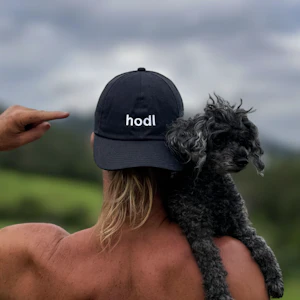
Paleo Way" - a 16 x 30 minute tv cooking series focused on long term regenerative health. Pete hosted PBS A moveable Feast" for 8 seasons, and also hosted Australia's #1 tv series "My Kitchen Rules" for 11 years. Petes'
"Evolve Podcast" features over 500 episodes focusing on long term regenerative health and wealth (only bitcoin is discussed in regards to wealth). Australia's most controversial celebrity for challenging the mainstream agenda on health as well as questioning covid loudly (subsequently cancelled losing over 2 million followers and 15 business. Hit latest offering is The Primal Code, a book featuring over 100 nutritious recipes, which also takes a deep dive into bitcoin and shares the similarities between bitcoin and long term regenerative health.

Richard Byworth
Richard Byworth
Analyze and speak about financial engineering capabilities of Bitcoin treasury companies and advise companies on how to optimize amount of bitcoin on balance sheet. Advisor at UK BTCTC XCE Connecting Excellence, and Chairman at Future (Swiss BTCTC).
For Jan3, act in an advisory capacity for a few sovereign nations, and on energy infrastructure financing structuring options in countries in LATAM and Middle Asia.
Board member at Relai, helping onboard HNWI and FOs to bitcoin.
Bitcoin: Did It Change You, or Did You Find It at the Right Time?
Speakers/Moderators
Carly Benson
Carly Benson
Carly became a Bitcoin-only Bitcoiner in 2017 after living in Las Vegas and interacting with the professional poker and sports betting community. She learned about Bitcoin by seeing use-cases for it as the whales of the gambling world have been betting, settling and transacting in BTC for many years.
Before getting in to the Bitcoin space, Carly ran her own successful marketing consultancy for 18 years and was known as an alcohol-free SME, Course Creator and Yoga Instructor.
She has given talks around the world and her work and courses have helped thousands change their relationship with alcohol. She’s been featured in Women’s Health, SELF magazine, Extra TV, Travel Zoo and other notable outlets.
Chef Pete Evans
Chef Pete Evans
Paleo Way" - a 16 x 30 minute tv cooking series focused on long term regenerative health. Pete hosted PBS A moveable Feast" for 8 seasons, and also hosted Australia's #1 tv series "My Kitchen Rules" for 11 years. Petes'
"Evolve Podcast" features over 500 episodes focusing on long term regenerative health and wealth (only bitcoin is discussed in regards to wealth). Australia's most controversial celebrity for challenging the mainstream agenda on health as well as questioning covid loudly (subsequently cancelled losing over 2 million followers and 15 business. Hit latest offering is The Primal Code, a book featuring over 100 nutritious recipes, which also takes a deep dive into bitcoin and shares the similarities between bitcoin and long term regenerative health.
Richard Byworth
Richard Byworth
Analyze and speak about financial engineering capabilities of Bitcoin treasury companies and advise companies on how to optimize amount of bitcoin on balance sheet. Advisor at UK BTCTC XCE Connecting Excellence, and Chairman at Future (Swiss BTCTC).
For Jan3, act in an advisory capacity for a few sovereign nations, and on energy infrastructure financing structuring options in countries in LATAM and Middle Asia.
Board member at Relai, helping onboard HNWI and FOs to bitcoin.
Bitcoin Meets Conscious Living in Costa Rica
Paul Keating
Paul Keating
Working on Primal.
Ben Ashara
Ben Ashara
Sergio Chaverri
Sergio Chaverri
He is CEO of AYA Capital, a family office overseeing a diversified portfolio of high-potential companies and assets, including Bitcoin as a strategic allocation. One of its core companies is Digiplat, an institutional-grade Bitcoin liquidity and settlement firm providing tailored OTC execution to support real-asset acquisitions and capital deployment for high-net-worth individuals.
A central focus of his work is supporting Bitcoin high-net-worth individuals who relocate or spend significant time in Costa Rica and initially require assistance with luxury real estate transactions. Over time, this relationship often evolves into broader investment activity, including alternative investments, second family office structures, and Bitcoin-backed transactions executed within Costa Rica. This activity has grown exponentially as Costa Rica has emerged as an increasingly attractive destination for HNWIs due to its exceptional biodiversity, pristine natural environment, and globally recognized commitment to environmental protection. The country offers long-standing political stability, a strong democratic tradition, no standing army, a reliable legal framework for property ownership, and a high quality of life. It is also recognized as one of the world’s longevity hubs, hosting one of the planet’s five Blue Zones, and has become a natural convergence point for Bitcoin holders, entrepreneurs, and families seeking sustainability, privacy, and long-term capital preservation.
In 2025, he co-launched the podcast Bitcoin and Property Markets alongside the CEO of Coldwell Banker Costa Rica, with the objective of sharing insights on the growing convergence between Bitcoin liquidity and real-asset markets, particularly in Costa Rica and Latin America.
He also leads the IANUA Family Office Community, where he co-founded the Latin American chapter. IANUA is an exclusive global network of family offices and principals focused on alternative investments and cross-border collaboration, providing members with access to curated deal flow and off-market opportunities.
Previously, he co-founded Gosocket Corporation, where he drove international expansion and growth strategy, culminating in a successful acquisition by Pagero Group (NASDAQ: PAGERO).
Lee Salminen
Lee Salminen
Bitcoin Meets Conscious Living in Costa Rica
Speakers/Moderators
Paul Keating
Paul Keating
Working on Primal.
Ben Ashara
Ben Ashara
Sergio Chaverri
Sergio Chaverri
He is CEO of AYA Capital, a family office overseeing a diversified portfolio of high-potential companies and assets, including Bitcoin as a strategic allocation. One of its core companies is Digiplat, an institutional-grade Bitcoin liquidity and settlement firm providing tailored OTC execution to support real-asset acquisitions and capital deployment for high-net-worth individuals.
A central focus of his work is supporting Bitcoin high-net-worth individuals who relocate or spend significant time in Costa Rica and initially require assistance with luxury real estate transactions. Over time, this relationship often evolves into broader investment activity, including alternative investments, second family office structures, and Bitcoin-backed transactions executed within Costa Rica. This activity has grown exponentially as Costa Rica has emerged as an increasingly attractive destination for HNWIs due to its exceptional biodiversity, pristine natural environment, and globally recognized commitment to environmental protection. The country offers long-standing political stability, a strong democratic tradition, no standing army, a reliable legal framework for property ownership, and a high quality of life. It is also recognized as one of the world’s longevity hubs, hosting one of the planet’s five Blue Zones, and has become a natural convergence point for Bitcoin holders, entrepreneurs, and families seeking sustainability, privacy, and long-term capital preservation.
In 2025, he co-launched the podcast Bitcoin and Property Markets alongside the CEO of Coldwell Banker Costa Rica, with the objective of sharing insights on the growing convergence between Bitcoin liquidity and real-asset markets, particularly in Costa Rica and Latin America.
He also leads the IANUA Family Office Community, where he co-founded the Latin American chapter. IANUA is an exclusive global network of family offices and principals focused on alternative investments and cross-border collaboration, providing members with access to curated deal flow and off-market opportunities.
Previously, he co-founded Gosocket Corporation, where he drove international expansion and growth strategy, culminating in a successful acquisition by Pagero Group (NASDAQ: PAGERO).
Lee Salminen
Lee Salminen
Other
Speakers
Michael Saylor
Michael Saylor
Todd Blanche
Todd Blanche
Biography of Deputy Attorney General Todd Blanche
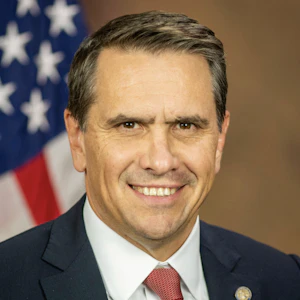
The Honorable Todd Blanche is the 40th Deputy Attorney General of the United States, overseeing the work of the 115,000 dedicated employees who fulfill the Department of Justice’s mission at Main Justice, the FBI, DEA, U.S. Marshals, ATF, and 93 U.S. Attorney’s Offices.
Todd began his career at the Department where he served for over fifteen years in a variety of capacities, including as a contractor, a paralegal in the Criminal Division, and at the United States Attorney’s office for the Southern District of New York where he eventually became an AUSA and later a supervisor.
After leaving the Department, Todd worked as a criminal defense attorney that included representing President Donald Trump in three of the criminal cases brought against him in 2023 and 2024.
Following President Trump’s historic return to the White House, the President appointed Todd to work alongside Attorney General Pam Bondi to make America safe again. At the DOJ, Todd is working tirelessly to implement President Trump’s priorities that include confronting illegal protecting American businesses from fraud.
Todd has been married to his wonderful wife Kristine for nearly thirty years, is a father and grandfather.
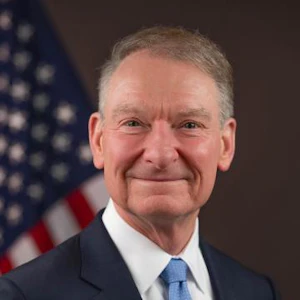
Paul Atkins
Paul Atkins
Prior to returning to the SEC, Chairman Atkins was most recently chief executive of Patomak Global Partners, a company he founded in 2009. Chairman Atkins helped lead efforts to develop best practices for the digital asset sector. He served as an independent director and non-executive chairman of the board of BATS Global Markets, Inc. from 2012 to 2015.
Chairman Atkins was appointed by President George W. Bush to serve as a Commissioner of the SEC from 2002 to 2008. During his tenure, he advocated for transparency, consistency, and the use of cost-benefit analysis at the agency. Chairman Atkins also represented the SEC at meetings of the President’s Working Group on Financial Markets and the U.S.-EU Transatlantic Economic Council. From 2009 to 2010, he was appointed a member of the Congressional Oversight Panel for the Troubled Asset Relief Program.
Before serving as an SEC Commissioner, Chairman Atkins was a consultant on securities and investment management industry matters, especially regarding issues of strategy, regulatory compliance, risk management, new product development, and organizational control.
From 1990 to 1994, Chairman Atkins served on the staff of two chairmen of the SEC, Richard C. Breeden and Arthur Levitt, ultimately as chief of staff and counselor, respectively. He received the SEC’s 1992 Law and Policy Award for work regarding corporate governance matters.
Chairman Atkins began his career as a lawyer in New York, focusing on a wide range of corporate transactions for U.S. and foreign clients, including public and private securities offerings and mergers and acquisitions. He was resident for 2½ years in his firm's Paris office and admitted as conseil juridique in France.
A member of the New York and Florida bars, Chairman Atkins received his J.D. from Vanderbilt University School of Law in 1983 and was Senior Student Writing Editor of the Vanderbilt Law Review. He received his A.B., Phi Beta Kappa, from Wofford College in 1980.
Originally from Lillington, North Carolina, Chairman Atkins grew up in Tampa, Florida. He and his wife Sarah have three sons.

Mike Selig
Mike Selig
Chairman Selig brings to the role deep public and private sector experience working with a wide range of stakeholders across agriculture, energy, financial, and digital asset industries, which rely upon and operate in CFTC-regulated markets.
Prior to his leadership at the CFTC, Chairman Selig most recently served as chief counsel of the Securities and Exchange Commission’s Crypto Task Force and senior advisor to SEC Chairman Paul S. Atkins. In this role, Chairman Selig helped to develop a clear regulatory framework for digital asset securities markets, harmonize the SEC and CFTC regulatory regimes, modernize the agency’s rules to reflect new and emerging technologies, and put an end to regulation by enforcement. He also participated in the President’s Working Group on Digital Asset Markets and contributed to its report on “Strengthening American Leadership in Digital Financial Technology.”
Prior to government service, Chairman Selig was a partner at an international law firm, focusing on derivatives and securities regulatory matters. During his years in private practice, he represented a broad range of clients subject to regulation by the CFTC, including commercial end users, futures commission merchants, commodity trading advisors, swap dealers, designated contract markets, derivatives clearing organizations, and digital asset firms. Chairman Selig advised clients on compliance with the Commodity Exchange Act and the CFTC’s rules and regulations thereunder, including in connection with registration applications and obligations, enforcement matters, and complex transactions.
Chairman Selig earned his law degree from The George Washington University Law School and was articles editor of The George Washington Law Review. He received his undergraduate degree from Florida State University.
David Bailey
David Bailey

Eric Trump
Eric Trump
Mr. Trump also serves as Executive Vice President of The Trump Organization, where he oversees the global management and operations of the Trump family’s extensive real estate portfolio. This includes Trump Hotels, Trump Golf, commercial and residential real estate, Trump Estates, and Trump Winery. Known for his hands-on leadership and strong market instincts, he has played a key role in expanding the company’s presence across major U.S. and international markets.
A globally recognized business leader and public figure, Mr. Trump is a prominent advocate for Bitcoin and decentralized finance. He is a co-founder of World Liberty Financial, a decentralized finance (DeFi) platform, and serves on the Board of Advisors of Metaplanet, Japan’s largest corporate holder of Bitcoin.
Beyond his business activities, Mr. Trump has helped raise more than $50 million for St. Jude Children’s Research Hospital in the fight against pediatric cancer, a philanthropic mission he began at age 21.
Mr. Trump earned a degree in Finance and Management from Georgetown University. He currently resides in Florida with his wife, Lara, and their two children. He is also the author of Under Siege, his memoir published in October 2025.
Jack Mallers
Jack Mallers
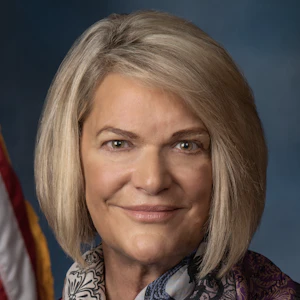
Cynthia Lummis
Cynthia Lummis
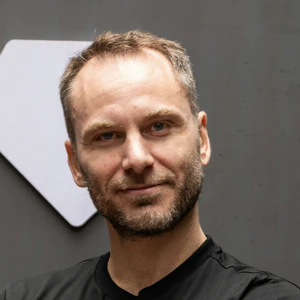
As the first-ever Chair of the Senate Banking Subcommittee on Digital Assets, Senator Lummis is the architect of the legislative framework shaping America's digital asset future. She introduced the landmark Lummis-Gillibrand Responsible Financial Innovation Act, the first comprehensive bipartisan crypto regulatory framework in Senate history. She co-authored the GENIUS Act — the first federal stablecoin law ever enacted — and introduced the BITCOIN Act, which would establish a U.S. strategic Bitcoin reserve of up to one million BTC. She is leading the Clarity Act, which will bring long-overdue regulatory certainty to the digital asset industry. She has also championed digital asset tax reform, including a de minimis exemption for small transactions and equal tax treatment for miners and stakers.
Known as Congress' "Crypto Queen," Senator Lummis represents Wyoming — a state she has helped build into one of the most digital asset-friendly regulatory environments in the nation. Before serving in the Senate, she served 14 years in the Wyoming Legislature, eight years as Wyoming State Treasurer, and eight years in the U.S. House. She is a three-time graduate of the University of Wyoming.
Her work represents a crucial bridge between traditional financial systems and the emerging digital economy, ensuring America leads the world in financial innovation while protecting the individual freedoms that define it.
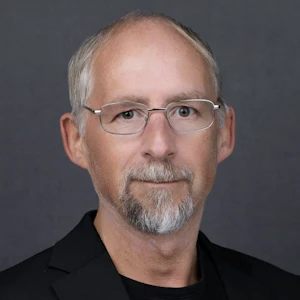
Adam Back
Adam Back
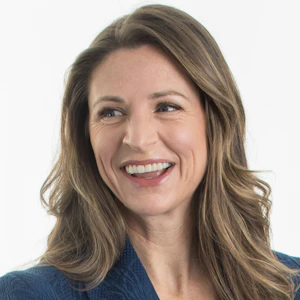
Amy Oldenburg
Amy Oldenburg
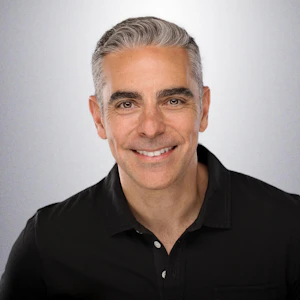
David Marcus
David Marcus

Matt Schultz
Matt Schultz
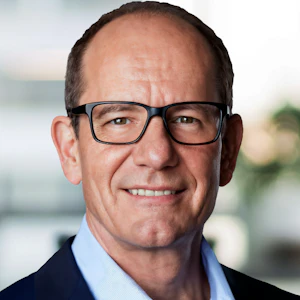
Fred Thiel
Fred Thiel
Throughout his career, Mr. Thiel has consistently driven rapid growth and created substantial shareholder value. Prior to MARA, Mr. Thiel served as the CEO of two other public companies, Local Corporation (NASDAQ: LOCM) and Lantronix, Inc (NASDAQ: LTRX). He has successfully raised billions in equity and debt through private and public offerings, led companies through IPOs, executed high-value exits to strategic and financial acquirers, and implemented effective M&A and roll-up strategies.
Mr. Thiel attended the Stockholm School of Economics and executive classes at Harvard Business School, and is fluent in English, Spanish, Swedish, and French. Mr. Thiel is the Chairman of the Board for Oden Technology, Inc. and is active in Young Presidents’ Organization where he has led initiatives in both the FinTech and Technology Networks.
A recognized voice in the industry, Fred frequently shares his insights on energy and technology with major media outlets like Bloomberg TV, CNBC, and FOX Business, contributing to vital discussions about the future of these sectors.
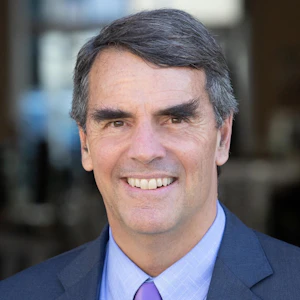
Tim Draper
Tim Draper
He is a supporter and global thought leader for entrepreneurs everywhere, and is a leading spokesperson for Bitcoin and decentralization, having won the Bitcoin US Marshall’s auction in 2014, invested in over 50 crypto companies, and led investments in Coinbase, Ledger, Tezos, and Bancor, among others.

Afroman
Afroman