Covenants are Dead, Quantum is Fake & BIP110 was Vibe-Coded
Speakers/Moderators

Chris Seedor
Chris Seedor



Session
Overview
Chris Seedor hosts a fast-moving and intentionally irreverent Bitcoin Open Source Stage panel with James O'Beirne, Vortex, and Stu. The conversation centers on the major Bitcoin discourse topics circulating online: covenants, quantum computing fears, BIP110, soft forks, ossification, spam debates, and open source governance.
The panelists argue that quantum risk is worth tracking but not worth panic-driven protocol changes, especially proposals that would freeze or confiscate coins. They emphasize Bitcoin’s neutrality, property rights, self custody, and the danger of using fear to rush consensus changes.
Covenants and future soft forks are discussed with both skepticism and optimism. The panel touches on CTV, TXHASH, CSFS, HSM compatibility, and whether Bitcoin’s social layer is too fragmented to coordinate upgrades. While some doubt that meaningful changes can activate soon, others argue that useful, uncontroversial improvements can still gain support over time.
The discussion also highlights open source development as a human system: developers cannot simply be “fired,” but they can be burned out or driven away. The panel closes by contrasting Bitcoin Twitter drama with real technical conversations happening on mailing lists and developer forums, while maintaining that Bitcoin’s upgrade debates remain active and unresolved.
Hello, hello, hello. My name is Chris, and I'm introducing James O'Beirne, Vortex, and Stu.
Who are you on the forum? Is it Luke Dashjr?
No. It's STXO2C. Sometimes I'm a cat, sometimes I'm not a cat. It's a Schrodinger's cat thing.
When we were asked what kind of panel we wanted to do, we all agreed: covenants are dead, quantum is fake, and BIP110 was vibe-coded. I think we shouldn't talk about BIP110, should we?
I haven't heard anything about BIP110 at this conference.
No. I moved on.
Can you quickly explain your hat?
This is my RTDS hat: Reduced Temporary Dust Soft Fork. Yeah, not going to happen.
We can talk about another hard fork that's not going to happen.
ECash?
No, that's happening.
I want at least one eCash t-shirt when this is all over.
They had eCash hats yesterday. I saw Robin Linus wearing one. Their slogan was something like, “more Bitcoin than Bitcoin.” And they're going to redistribute Satoshi's coins.
Right, yeah. Much like the quantum guys. They plan to do a brain drain of Bitcoin Core and all of its horrible community, so we'll see how well they do.
Now that you mentioned quantum, who here saw the Preston Pysh and Jeff Booth quantum podcast?
I only saw one hand. That is good time management on behalf of the audience. I'm pretty sure that's an MKUltra subprogram.
There was a very interesting guy talking about quantum again. His argument against quantum was that Bitcoin consciousness predates Bitcoin blocks, so somehow proof of work makes quantum impossible.
So we on the stage are probably quantum realists.
No, I think he's right. I mean, I don't know what happened. Preston Pysh shortly retired after this podcast, so I don't know if that caused it.
With quantum, let's continue on that. What is your take on the proposal to freeze UTXOs, potentially all coins?
I hate to be the straight man on this panel because there are actually funny people here who can entertain you, so I hesitate to give a real opinion. But if you undermine the property rights in Bitcoin, you pretty much cooked the thing. I don't know why you would ever do that. If you set that precedent, it's a slippery slope.
Vortex?
I think he pretty much hit the nail on the head. Bitcoin's promise is neutrality. Bitcoin's promise is property rights. Bitcoin's promise is that if you pay a fee, your transaction will get sent. If you hold your coin in self custody, nobody will take it from you, nobody will steal it from you, nobody will freeze it. So, yeah, it definitely breaks the social contract in many ways, a lot like BIP110 does.
Off limits. No more 110. The next person who mentions BIP110 is off the stage to the right.
Stu, do you have a final take on quantum?
I think maybe it's easier to fix the problem than it is to actually build a quantum computer. We have some big-brain people in Bitcoin. A lot of people are getting nerd-sniped by this problem, which maybe is a waste of time. But I think we'll figure it out.
To play devil's advocate, there are also big-brain people working on quantum.
Yeah, but cryptography is always on the side of the weaker person, or the weaker side. It is much easier to build a shelter than it is to build a nuke. We are at the stage where we're not even deciding between five different airframes for how to build this thing. We're at the stage where we can't even throw rocks. And we already basically have a gold-lined bunker. It's too expensive and too heavy to have PQ signatures in Bitcoin right now. Eventually the galaxy brains at research labs, Chaincode, or Blockstream will come up with a way to make it cheaper, maybe a lead-lined bunker, and eventually a concrete bunker. So I'm not very worried about quantum. If it ever comes, we will be prepared.
Just to add to that, yes, there are going to be people grifting. Yes, there are going to be people raising money by selling and creating things that are going to take Satoshi's coins. But most of that stuff is fun. Understand that this stuff is not happening in a vacuum. We have people working on this all over the world. There are dozens of different kinds of quantum computers. This stuff is known. It's not some shady person in the back of a room ready to take somebody's Bitcoin. The idea that it could happen overnight just makes no sense in the physical world or in anything we've experienced up to this point. There are smart people working on this, and you will know when we get close. Right now, it is science fiction. To go from science fiction to cracking Bitcoin in two years is insane.
It's really vexing, this allocation of resources, when we have actually predictable challenges coming at us and we're devoting research time and engineering time away from those things to work on fan fiction, basically. Or real cryptographic schemes that have real value, potentially, but in the process of doing that you're underwriting the concern about quantum, which is totally ridiculous if you spend a few hours reading about it.
We should spend the right amount of attention on quantum. We should probably focus more on privacy in Bitcoin, regulatory capture, scaling, and centralization.
There are bigger issues at hand. No one's talking about this, or a few people are, but it's the heat death of the universe. It's coming. I would like to announce Project 13, because Bitcoin Core devs are doing nothing at all to make Bitcoin multi-planetary. The sun is going to explode at some point.
Where can I invest?
The block times are 10 minutes. It's not enough. We need higher block times. The hash rhymes.
I cooked an egg on the hood of my car the other day, so we're basically a 5x away from the heat death of the universe.
The seed round was led by Car Island.
With quantum, I recently saw some research trying to summarize things and bring in actual cryptographers, not just people who LARP. I think it is smart to have something ready. Mike Schmidt said we should have options in the bullpen and refine them, but not set anything in stone. I personally believe secp256k1 is more likely to be broken by advancements in classical computing than by quantum. Eventually we may have to move on from secp256k1, because security is a moving goal. Computers will get better, maybe not in my lifetime. The beautiful thing about Bitcoin is that we do have soft forks.
The soft fork is in the room with us right now.
They might be. It's really important to understand that Bitcoin has been through a lot and will go through a lot more. Quantum is not the final boss, not even close. What happens when Saylor and company want to do a quantum-safe fork, but it also removes the 21 million limit, and anybody who doesn't like their fork gets called a terrorist? Are you going to choose Saylor's pretty fork or the terrorist fork? This is the kind of adversarial thinking around centralization that we have to keep in mind. This kind of grift is easy to do, and it's coming down the line. If you think Saylor is never going to put forward a soft fork, you might want to think again. It will happen one day, and we have to be prepared for it.
Who is going to run the BlackRock-MicroStrategy soft fork? Will it be Luke Dashjr? Is Luke Dashjr for hire after September?
Could be. He might be. He's production ready.
Jimmy Song will do it. He'll take care of it. No problem.
Are the guys from Production Ready in the room? I don't think they have code, GitHub, or a plan. They have a donate button. You can save a child in need by donating to Production Ready.
They had some stickers that were given out. They've done the hard work. They've got a great brand, an untarnished brand. They've done the hard work of creating the nonprofit. Nothing's left, really.
Do they have a hard hat yet? Is it a real project if it doesn't have a hat?
No. We need more hats.
You touched on whether Bitcoin can soft fork, or whether we have achieved ossification.
I think things are too fragmented. My base case at this point is that short of something highly motivated by an obvious threat, or something totally uncontroversial, which seems to be a vanishingly small set of things, I think we're over-fragmented. Things feel too big. I don't see it happening. I hope I'm wrong. I desperately hope I'm wrong, but I don't really see anything happening.
So not bullish on BIP54?
I think it's still early days, and I think Bitcoin is programmable money. We have a lot of features left to put into Bitcoin and lots of scaling things left to put into Bitcoin, particularly covenants. It's going to happen one day, whether it's TXHASH or CTV. It doesn't matter, because year after year it is becoming more uncontroversial and more obvious that it makes pretty much every function on Bitcoin layer 1 more efficient. I think it's coming, but we have to be patient. That's a big lesson with Bitcoin when it comes to all this fear and FUD.
Off the stage.
Just make sure you come from a place of calm. Make your decisions from a place of research and calm, not from fear, because that's what people prey on so they can rush things through quickly.
I think the only chance we had to soft fork was the very first day of the fork chat group, when for one hour we were all having fun. Mechanic was like, “You guys can have CTV, we'll do our thing, it's all great.” Then Shinobi joined the chat and it was over. He ruined our chance.
Speaking of CTV, I see Jeremy Rubin sitting in the front row. There was a very optimistic person in this room who set out to ask the developers building Bitcoin to lend their voice to a notable cause. Essentially, a young Martin Luther writing a letter. I will provide the nails and the hammer, and you can go to Chaincode Labs and have the official CTV and CSFS letter signed by everybody. We have a physical CTV and CSFS letter. It's official, by James O'Beirne. I think Jeremy just signed it. He finally signed the original book. Thank you, Jeremy. Maybe covenants are not dead yet.
That's too sweet. I was baptized Catholic, so the comparison to Martin Luther may not be as flattering as you thought it might be, but this is a wonderful gift.
You have to go activate it now. You have to collect a few more signatures, but we tried to get everybody. Misdemeanor property damage.
You even picked a monospace font. That's high-quality paper as well.
Courier Pro. Stu printed it out on premium paper.
Who chewed on it? That is the question.
That's too sweet, guys.
What do you think is going to happen with that? Maybe the templated hash thing will usurp it in a very unsatisfying way. What do you think will come of it?
The spiritual successor to CTV is Antoine's French CTV.
French CTV, TXHASH.
It's not quantum safe.
No, it's not quantum safe, so it probably won't survive.
While I have the venue, that is kind of unfortunate. Having been in the industry in a few different positions, you see how widely deployed HSMs are and how that creates real impediments to opcode adoption for organizations that would really like to do a better version of presigned transactions. The inclusion in witness v0 was a conscious design. It's a shame to see that go away. I don't really know if there's a good reason for it. I don't think there is. But none of it is happening anyway, because the human system and the power of Bitcoin are sort of fundamentally misguided, so it's all right.
What a doomer.
We are much more uplifting. Will we see another soft fork in the next 30 years? Show of hands. Will we see another soft fork in the next 20 years? Same amount of people. If we go down to two years now?
That's a little low. I'll go for four to eight years, but it's definitely not off the table and it's definitely not impossible, because we can come together and do things. We've done it before. We've created Bitcoin. When something is uncontroversial enough, like the great consensus cleanup and these things, we can come together and get it activated. There are people who care about Bitcoin, who are interested enough to run nodes, who do the research, read the papers, and will help make this happen.
You're talking about Nick Carter?
Nick has all the knowledge. He talks to all the knowledge people.
I think once eCash flips Bitcoin, we're going to have to fork to drivechains.
Do the chains have to drive?
Leave them in neutral.
Paul is one pissed-off guy, for sure. If you go read his frequently asked questions, you will find one upset man. This guy has been told no for so long that he finally snapped. He's ready to burn it all down. We love Paul. Crazy uncle Paul. It wouldn't be Bitcoin without him.
I think Nick Carter refers to him as the Steely Dan of Bitcoin, and I kind of agree. Maybe he's lost that title, but it wouldn't be Bitcoin without Paul.
Well, it's not going to be Bitcoin then, because that dude's leaving.
I can't believe it's not eCash.
Let's move on to another prescient topic in Bitcoin.
I think we're all getting trolled by the main stage right now. We're here on the Open Source Stage debating quantum and saying Lightning is dead, and then over at the other conference, Block is announcing 800,000 merchants are adopting Lightning. You have Lightspark doing partnerships, you have Tether doing stuff, they're getting users, and we're still fighting over this. We're trapped in this little quantum realm, this little bubble, while things are happening.
So you're saying we're putting wins on the board, but we're too depressed and doomed?
Exactly. Things are happening without us.
Maybe people want to fire the devs. Everybody wants to fire the Bitcoin devs. Maybe we've already been fired.
No, you can't fire them. That's the nature of open source. No matter how badly Roger, Luke, and Mechanic want to fire Bitcoin Core, unfortunately that's just not a possibility.
People firing devs in a permissionless open source system is insane. But what can happen is that capable devs become apathetic, or they burn out, or they get criticized, personally attacked, and vilified, and then leave the project. That is an actual attack vector in Bitcoin. Talk to your favorite dev. Give them words of encouragement, fund them, give them feedback. That goes a very long way. One message of appreciation can do a lot for somebody.
Luke Dashjr, I think you're cool. Slide into his DMs.
Just in case Luke comes after me.
Luke has done some stuff. Important stuff, obviously.
What's really important to understand is the concept of Bitcoin derangement syndrome, because this keeps happening and will keep happening. We have to be vigilant and recognize it. It's simple to recognize when someone thinks they can control Bitcoin. When you think you can take over an open source project and single-handedly steer it, that's when you know you've gone off the deep end. That's when you need maybe a hug from a friend. We've seen it happen several times, and it's going to happen again in this space. You don't think Saylor thinks he's important enough to steer the direction of Bitcoin? We don't know, but we're going to find out.
Realistically, he and Larry probably think they are, given the amount of Bitcoin they control. It's definitely not a 0% chance.
I think we have a very Pollyannaish view of how that stuff works. That was a lot of what motivated me about CTV. We may find these phase-change events where it's like, “Wow, I really need to get all of my Bitcoin off an exchange now,” in a thundering herd pattern because one of these guys decides, “We're doing a fork, and we're using our full economic leverage to do it.” There's been a lot less discourse about that relative to pixie fairy dust fan fiction like quantum and brainless, zombified filter stuff. It's very disappointing to see the discourse drift from substance.
It really is disappointing. If we can't handle a little bit of spam drama without dropping a terribly vibe-coded fork three months out, what are we going to do when there's an actual threat pending? Again, it all comes down to communication and doing your research. Nobody is in a vacuum. Bitcoin is not in a vacuum. These spammers aren't in a vacuum. Staying vigilant, paying attention, following the right people, and following your passion is really the only way you're going to stay vigilant in this space. It changes all the time, and there's always somebody with an agenda.
Or log off and don't go online. Just use Bitcoin. Twitter is not a real place, and it's very healthy from time to time to step away.
It is real life. This is the reality we live in. It's called X now.
This is how open source works. Open source software is already messy. When you attach money to it, of course it's going to get even messier. But that doesn't mean it's impossible to follow, impossible to have a conversation, or impossible to eventually soft fork. There are discussions happening all the time on the mailing list and Delving that are completely away from Bitcoin Twitter and that nobody has any idea about, but they are happening. That's where the real discussion is. I assure you, it's not on Bitcoin Twitter, as much as I love it. The real discussion about these important points is happening between developers in places off Twitter.
We didn't talk about AI. Isn't that why we're all here? Everybody pivots to AI, so I'm announcing Project 12.
I want to talk about James' tractor. That's what I want to know.
Kubota LX2610. Got a backhoe on it. Bought it with 72 hours used. Good deal. Pulls stumps out like an MFer. Come by the farm.
We have audience participation. Throw a topic on the stage, or some questions.
Recent news: Luke Jr. stopped drinking Dr Pepper.
Is there going to be a prediction market that he transitions to Celsius?
If there is a prediction market, the person who just yelled will probably be the liquidity provider.
But also, things like BitVM and related ideas can be performance art to troll people into seeing, “Hey, we can do covenants in a very messy way. Let's do it the right way.”
It is crazy how many ways we've discovered that we can create covenants completely inefficiently. It's fascinating. Hash collisions. All you need is a lot of compute. But it is fascinating, and we're finding new discoveries all the time. It's still an exciting space.
Maybe that is the way to build consensus. You get people nerd-sniped into this, then you find Greg Maxwell in some gardening subreddit, and eventually maybe covenants are not dead. Hope dies last, and we are running out of time.
Covenants are not dead.
Thank you, that was the panel. Thank you, guys. James, Vortex, Stu. My name is Chris. Thanks, everybody.
Similar
Sessions
Building on the Char Network
Building on the Char Network
This will be an interactive workshop that includes education about sequencing apps using bitcoin as security.
Speakers/Moderators
Paper Bitcoin Summer or Self-Custody Spring?
Nico Moran
Nico Moran
His mission is to guide people to thrive in an ever-growing future towards individuals claiming back full financial sovereignty through Bitcoin.

Chris Seedor
Chris Seedor
Paper Bitcoin Summer or Self-Custody Spring?
Speakers/Moderators
Nico Moran
Nico Moran
His mission is to guide people to thrive in an ever-growing future towards individuals claiming back full financial sovereignty through Bitcoin.
Chris Seedor
Chris Seedor
The Subtle Art of Buying the Top

Ryan Long
Ryan Long
Ryan has made some of the most viral sketches on the internet involving the crypto world
https://www.youtube.com/watch?v=uag9TSN7qUY
https://www.youtube.com/watch?v=dRuXOtD3CwE&t=7s
https://www.youtube.com/watch?v=g_aacBuhODE
https://www.youtube.com/watch?v=N50lwEB4LJs&t=20s
Based in New York City, Ryan is a regular at The Comedy Cellar, New York Comedy Club, and The Stand, and tours internationally performing his unique brand of sharp, satirical stand-up.
Danny Polishchuk
Danny Polishchuk
Chris Seedor
Chris Seedor
Alex Leishman
Alex Leishman

The Subtle Art of Buying the Top
Speakers/Moderators
Ryan Long
Ryan Long
Ryan has made some of the most viral sketches on the internet involving the crypto world
https://www.youtube.com/watch?v=uag9TSN7qUY
https://www.youtube.com/watch?v=dRuXOtD3CwE&t=7s
https://www.youtube.com/watch?v=g_aacBuhODE
https://www.youtube.com/watch?v=N50lwEB4LJs&t=20s
Based in New York City, Ryan is a regular at The Comedy Cellar, New York Comedy Club, and The Stand, and tours internationally performing his unique brand of sharp, satirical stand-up.
Danny Polishchuk
Danny Polishchuk
Chris Seedor
Chris Seedor
Alex Leishman
Alex Leishman
How Real is the Quantum Threat?

Alex Thorn
Alex Thorn

Alex Pruden
Alex Pruden
Alex is a former U.S. Army Green Beret who transitioned from military service to a career in blockchain and cryptocurrency after witnessing the profound challenges in conflict zones like Iraq, Afghanistan, and Syria. After earning an MBA from Stanford, he began his decade-long career in the industry at GGV Capital, Coinbase, and Andreessen Horowitz before joining Aleo as the first employee and scaling the organization as CEO to pioneer the first permissionless, privacy-preserving smart contract blockchain powered by zero-knowledge proofs.
How Real is the Quantum Threat?
Speakers/Moderators
Alex Thorn
Alex Thorn
Alex Pruden
Alex Pruden
Alex is a former U.S. Army Green Beret who transitioned from military service to a career in blockchain and cryptocurrency after witnessing the profound challenges in conflict zones like Iraq, Afghanistan, and Syria. After earning an MBA from Stanford, he began his decade-long career in the industry at GGV Capital, Coinbase, and Andreessen Horowitz before joining Aleo as the first employee and scaling the organization as CEO to pioneer the first permissionless, privacy-preserving smart contract blockchain powered by zero-knowledge proofs.
Self-Custody Insurance: Protecting Your Bitcoin without Giving It Up
Aaron Daniel
Aaron Daniel
Chris Seedor
Chris Seedor
Kevin Loaec
Kevin Loaec
Rob Hamilton
Rob Hamilton
AnchorWatch designs bespoke Bitcoin custody solutions using multisignature wallets, timelocks, and Miniscript, tailored to the specific security and operational needs of each client. These custody architectures can be deployed independently or paired with insurance coverage, giving individuals and institutions flexibility in how they secure and manage their bitcoin.
Rob’s broader focus is on advancing Bitcoin as a financial system, bridging the gap between self-custody and institutional-grade security through custody solutions, insurance, and improved user experience. He frequently speaks on custody design, Bitcoin Script engineering, and the role of insurance in scaling Bitcoin adoption.
Self-Custody Insurance: Protecting Your Bitcoin without Giving It Up
Speakers/Moderators
Aaron Daniel
Aaron Daniel
Chris Seedor
Chris Seedor
Kevin Loaec
Kevin Loaec
Rob Hamilton
Rob Hamilton
AnchorWatch designs bespoke Bitcoin custody solutions using multisignature wallets, timelocks, and Miniscript, tailored to the specific security and operational needs of each client. These custody architectures can be deployed independently or paired with insurance coverage, giving individuals and institutions flexibility in how they secure and manage their bitcoin.
Rob’s broader focus is on advancing Bitcoin as a financial system, bridging the gap between self-custody and institutional-grade security through custody solutions, insurance, and improved user experience. He frequently speaks on custody design, Bitcoin Script engineering, and the role of insurance in scaling Bitcoin adoption.
Covenants are Dead, Quantum is Fake & BIP110 was Vibe-Coded
Chris Seedor
Chris Seedor
Covenants are Dead, Quantum is Fake & BIP110 was Vibe-Coded
Speakers/Moderators
Chris Seedor
Chris Seedor
Other
Speakers
Michael Saylor
Michael Saylor
Todd Blanche
Todd Blanche
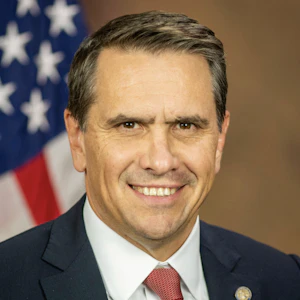
Biography of Deputy Attorney General Todd Blanche
The Honorable Todd Blanche is the 40th Deputy Attorney General of the United States, overseeing the work of the 115,000 dedicated employees who fulfill the Department of Justice’s mission at Main Justice, the FBI, DEA, U.S. Marshals, ATF, and 93 U.S. Attorney’s Offices.
Todd began his career at the Department where he served for over fifteen years in a variety of capacities, including as a contractor, a paralegal in the Criminal Division, and at the United States Attorney’s office for the Southern District of New York where he eventually became an AUSA and later a supervisor.
After leaving the Department, Todd worked as a criminal defense attorney that included representing President Donald Trump in three of the criminal cases brought against him in 2023 and 2024.
Following President Trump’s historic return to the White House, the President appointed Todd to work alongside Attorney General Pam Bondi to make America safe again. At the DOJ, Todd is working tirelessly to implement President Trump’s priorities that include confronting illegal protecting American businesses from fraud.
Todd has been married to his wonderful wife Kristine for nearly thirty years, is a father and grandfather.
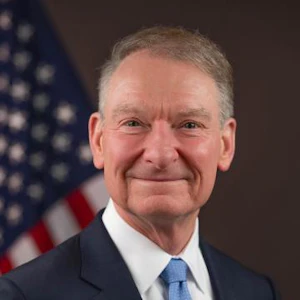
Paul Atkins
Paul Atkins
Prior to returning to the SEC, Chairman Atkins was most recently chief executive of Patomak Global Partners, a company he founded in 2009. Chairman Atkins helped lead efforts to develop best practices for the digital asset sector. He served as an independent director and non-executive chairman of the board of BATS Global Markets, Inc. from 2012 to 2015.
Chairman Atkins was appointed by President George W. Bush to serve as a Commissioner of the SEC from 2002 to 2008. During his tenure, he advocated for transparency, consistency, and the use of cost-benefit analysis at the agency. Chairman Atkins also represented the SEC at meetings of the President’s Working Group on Financial Markets and the U.S.-EU Transatlantic Economic Council. From 2009 to 2010, he was appointed a member of the Congressional Oversight Panel for the Troubled Asset Relief Program.
Before serving as an SEC Commissioner, Chairman Atkins was a consultant on securities and investment management industry matters, especially regarding issues of strategy, regulatory compliance, risk management, new product development, and organizational control.
From 1990 to 1994, Chairman Atkins served on the staff of two chairmen of the SEC, Richard C. Breeden and Arthur Levitt, ultimately as chief of staff and counselor, respectively. He received the SEC’s 1992 Law and Policy Award for work regarding corporate governance matters.
Chairman Atkins began his career as a lawyer in New York, focusing on a wide range of corporate transactions for U.S. and foreign clients, including public and private securities offerings and mergers and acquisitions. He was resident for 2½ years in his firm's Paris office and admitted as conseil juridique in France.
A member of the New York and Florida bars, Chairman Atkins received his J.D. from Vanderbilt University School of Law in 1983 and was Senior Student Writing Editor of the Vanderbilt Law Review. He received his A.B., Phi Beta Kappa, from Wofford College in 1980.
Originally from Lillington, North Carolina, Chairman Atkins grew up in Tampa, Florida. He and his wife Sarah have three sons.

Mike Selig
Mike Selig
Chairman Selig brings to the role deep public and private sector experience working with a wide range of stakeholders across agriculture, energy, financial, and digital asset industries, which rely upon and operate in CFTC-regulated markets.
Prior to his leadership at the CFTC, Chairman Selig most recently served as chief counsel of the Securities and Exchange Commission’s Crypto Task Force and senior advisor to SEC Chairman Paul S. Atkins. In this role, Chairman Selig helped to develop a clear regulatory framework for digital asset securities markets, harmonize the SEC and CFTC regulatory regimes, modernize the agency’s rules to reflect new and emerging technologies, and put an end to regulation by enforcement. He also participated in the President’s Working Group on Digital Asset Markets and contributed to its report on “Strengthening American Leadership in Digital Financial Technology.”
Prior to government service, Chairman Selig was a partner at an international law firm, focusing on derivatives and securities regulatory matters. During his years in private practice, he represented a broad range of clients subject to regulation by the CFTC, including commercial end users, futures commission merchants, commodity trading advisors, swap dealers, designated contract markets, derivatives clearing organizations, and digital asset firms. Chairman Selig advised clients on compliance with the Commodity Exchange Act and the CFTC’s rules and regulations thereunder, including in connection with registration applications and obligations, enforcement matters, and complex transactions.
Chairman Selig earned his law degree from The George Washington University Law School and was articles editor of The George Washington Law Review. He received his undergraduate degree from Florida State University.
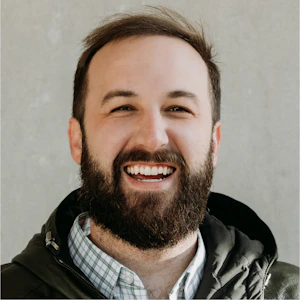
David Bailey
David Bailey

Eric Trump
Eric Trump
Mr. Trump also serves as Executive Vice President of The Trump Organization, where he oversees the global management and operations of the Trump family’s extensive real estate portfolio. This includes Trump Hotels, Trump Golf, commercial and residential real estate, Trump Estates, and Trump Winery. Known for his hands-on leadership and strong market instincts, he has played a key role in expanding the company’s presence across major U.S. and international markets.
A globally recognized business leader and public figure, Mr. Trump is a prominent advocate for Bitcoin and decentralized finance. He is a co-founder of World Liberty Financial, a decentralized finance (DeFi) platform, and serves on the Board of Advisors of Metaplanet, Japan’s largest corporate holder of Bitcoin.
Beyond his business activities, Mr. Trump has helped raise more than $50 million for St. Jude Children’s Research Hospital in the fight against pediatric cancer, a philanthropic mission he began at age 21.
Mr. Trump earned a degree in Finance and Management from Georgetown University. He currently resides in Florida with his wife, Lara, and their two children. He is also the author of Under Siege, his memoir published in October 2025.
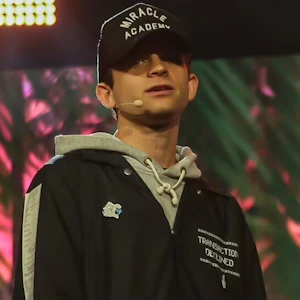
Jack Mallers
Jack Mallers
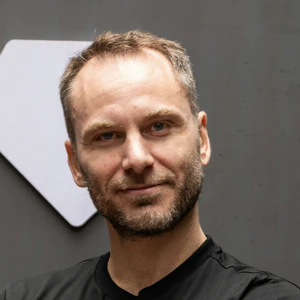
Cynthia Lummis
Cynthia Lummis
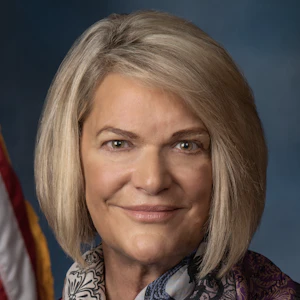
As the first-ever Chair of the Senate Banking Subcommittee on Digital Assets, Senator Lummis is the architect of the legislative framework shaping America's digital asset future. She introduced the landmark Lummis-Gillibrand Responsible Financial Innovation Act, the first comprehensive bipartisan crypto regulatory framework in Senate history. She co-authored the GENIUS Act — the first federal stablecoin law ever enacted — and introduced the BITCOIN Act, which would establish a U.S. strategic Bitcoin reserve of up to one million BTC. She is leading the Clarity Act, which will bring long-overdue regulatory certainty to the digital asset industry. She has also championed digital asset tax reform, including a de minimis exemption for small transactions and equal tax treatment for miners and stakers.
Known as Congress' "Crypto Queen," Senator Lummis represents Wyoming — a state she has helped build into one of the most digital asset-friendly regulatory environments in the nation. Before serving in the Senate, she served 14 years in the Wyoming Legislature, eight years as Wyoming State Treasurer, and eight years in the U.S. House. She is a three-time graduate of the University of Wyoming.
Her work represents a crucial bridge between traditional financial systems and the emerging digital economy, ensuring America leads the world in financial innovation while protecting the individual freedoms that define it.
Adam Back
Adam Back
Amy Oldenburg
Amy Oldenburg
David Marcus
David Marcus

Matt Schultz
Matt Schultz
Fred Thiel
Fred Thiel
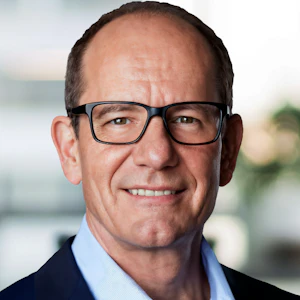
Throughout his career, Mr. Thiel has consistently driven rapid growth and created substantial shareholder value. Prior to MARA, Mr. Thiel served as the CEO of two other public companies, Local Corporation (NASDAQ: LOCM) and Lantronix, Inc (NASDAQ: LTRX). He has successfully raised billions in equity and debt through private and public offerings, led companies through IPOs, executed high-value exits to strategic and financial acquirers, and implemented effective M&A and roll-up strategies.
Mr. Thiel attended the Stockholm School of Economics and executive classes at Harvard Business School, and is fluent in English, Spanish, Swedish, and French. Mr. Thiel is the Chairman of the Board for Oden Technology, Inc. and is active in Young Presidents’ Organization where he has led initiatives in both the FinTech and Technology Networks.
A recognized voice in the industry, Fred frequently shares his insights on energy and technology with major media outlets like Bloomberg TV, CNBC, and FOX Business, contributing to vital discussions about the future of these sectors.
Tim Draper
Tim Draper
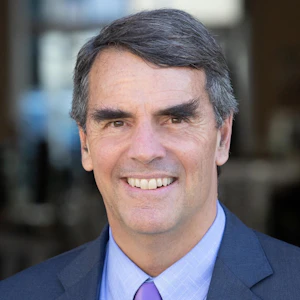
He is a supporter and global thought leader for entrepreneurs everywhere, and is a leading spokesperson for Bitcoin and decentralization, having won the Bitcoin US Marshall’s auction in 2014, invested in over 50 crypto companies, and led investments in Coinbase, Ledger, Tezos, and Bancor, among others.

Afroman
Afroman