Developing Data Centers from the Ground Up
Speakers/Moderators

Jaran Mellerud
Jaran Mellerud

Glenn Miller
Glenn Miller
While at a previous Washington, DC, law firm in the 1990s and early 2000s (Swidler & Berlin, Chartered), Glenn worked at the cutting edge of the competitive local exchange carrier (CLEC) boom, which culminated in the early Internet. Glenn (while then an associate) and his firm were involved with the acquisition of Internet pioneer UNET by MFS (later acquired by WorldCom) in 1996 and Glenn later structured the tax ownership of the early undersea cable systems for Global Crossing, MFS and Google (now Alphabet). Glenn has structured multiple data center land assemblages and has overseen data center or data center land sales to such parties as AWS, QTS, Northwestern Mutual Life Insurance Company and others.
Jay Zapata
Jay Zapata

Adam Wiggins
Adam Wiggins
With over 15 years of experience, Adam has partnered with Fortune 500 organizations including Cardinal Health, AT&T, HCA Healthcare, Tyson Foods, and Nissan to optimize air filtration systems and reduce operational costs. He specializes in Total Cost of Ownership (TCO) modeling, leveraging Camfil’s Life Cycle Cost (LCC) software and ASHRAE data to deliver measurable improvements in energy consumption, airflow, labor efficiency, and asset protection—particularly in high-density data center and crypto mining environments.
Adam is a recognized thought leader in the industry, with recent publications including “The Invisible Threat” in Filtration + Separation (October 2025) and “Hybrid Cooling for Air Filtration in Data Centers” in International Filtration News (January 2026).
He is based in Nashville, Tennessee, where he lives with his wife and son.
Session
Overview
This panel covers the full development path for Bitcoin mining, AI, and HPC data centers, from site selection and power origination to permitting, financing, design, construction, and customer contracts. Moderated by Jaran Mellerud, the discussion features Glenn Miller of Katten, Jay Zapata of Satokie, and Adam Wiggins of Camfil.
The speakers emphasize that power availability, permitting timelines, environmental conditions, financing structure, and customer offtake agreements all need to move in parallel. Bitcoin mining sites with existing land, permits, and energized power may have an advantage, but transitioning toward AI compute brings stricter uptime, redundancy, cooling, filtration, and service-level requirements.
A major theme is risk management. The panel highlights how master services agreements, availability credits, construction delays, and infrastructure failures can affect revenue, especially when facilities must meet four-nines uptime expectations. The discussion also points to community engagement, modular infrastructure, power efficiency, and behind-the-meter power as issues the data center industry will need to address.
Welcome to our panel, everyone. Today we are going to talk about developing data centers from the ground up. We have three experts in their own areas within this whole process, and we are going to walk you through how the process works from site selection until the data center is energized. My name is Jaran from E2C Partners, and I will moderate this panel. Now the panelists will introduce themselves.
Hello, my name is Adam Wiggins. I work for a company called Camfil, which is a large global air filtration manufacturing company, and I manage our data center vertical for Camfil.
My name is Jay Zapata. I am the co-founder and CEO of Satokie. We are a data center developer and operator, primarily developing data centers in Texas and Oklahoma.
I am Glenn Miller. I am a partner at Katten, and I am head of the national data center group. I have been doing this since the early 2000s, so it is exciting to see what is going on.
First, over to Glenn. He is a lawyer. He knows all about contracts and due diligence. What are the main risks and things you look for in the due diligence process when you select land?
There are some key considerations whenever you are trying to do site selection for a potential data center project. First and foremost is land. Permitting can be very different from jurisdiction to jurisdiction. Some jurisdictions are friendly toward data centers. They appreciate the tax benefits that can be generated by data center development. Some jurisdictions are not friendly at all toward data centers.
The second key consideration is power. As you know, data centers are fairly heavy users of power. Depending on the location, some grids are very constrained, like PJM, which is the grid consortium of multiple states on the East Coast, including Virginia and Pennsylvania. It is very tightly constrained. Other jurisdictions have more power, and sometimes you have the ability to tap into natural gas pipelines and do on-site, behind-the-meter power, which is increasingly being encouraged by FERC, the Federal Energy Regulatory Commission, and others.
The final issue I would describe is the type of data center. Certain data centers, like enterprise data centers, tend to congregate around areas where there is large use, like the government or certain agencies. AI data centers can be pretty much anywhere that power is available. There is no need for them to be close to a particular area because they do not have the latency concerns that you see with enterprise data centers.
Jay, as a data center developer, what does a good site look like for you? What are you looking for?
That definitely depends on the business model we are running. On the AI side, for offtake, you have neoclouds and hyperscale customers. You need a larger facility, usually anywhere between 50 and 500 megawatts. We also run Bitcoin mining data centers, and those are more distributed facilities where we can start development anywhere between 5 and 15 megawatts.
When we are looking at site selection, we do a lot of work on power origination in parallel with land origination. We have a whole team that does a great job at doing that. We are trying to match our land option and purchase agreement to getting something back from the utility saying there is access to power here, either through a point of interconnection or through distribution.
That is really the initiation of looking at a site. From there, depending on the power availability, the load, and the location, we can decide if it is applicable for HPC use.
Adam, you are an expert on filtration and how these systems holistically work together in a data center. Does site selection ever account for infrastructure constraints like cooling or filtration, or is that an afterthought dealt with later?
Environment plays quite a lot into site selection. The environment that the data center is going to be around should be evaluated for air quality, any potential for corrosion or breakdown, and environmental concerns around backup generation systems.
If you are building a data center and right down the street or across the field is a chemical plant that might off-gas a certain chemical six or seven times a week, and if the wind catches it right and it is raining that day, now you have acid trying to get into your data center.
Environment plays a really big part when you are looking at the long-term total performance of your cooling system, whether that is air, hybrid, liquid, rear door, or any other type. Environmental concentrations that could cause breakdowns, even potentially long term, should be considered at the very beginning of site selection.
The next step in the development process is permitting, contracts, and raising capital. Glenn, what do permitting and contracts look like at that stage, and where do projects usually get stuck?
The permitting side, when it comes to land, depends on the jurisdiction. Some jurisdictions are heavily regulated, where you need to have the right zoning or rezone property. You need to get a site plan approval and go through certain processes to get the land. That is one element of permitting.
Another key element is lining up power. One of the reasons Bitcoin miners are in a sweet spot right now is that some of these processes have already been completed. They already have sites, they already have the necessary permits, and they are already powered. That is really attractive.
But if you are not in that situation and you want to go get power, you typically have to make an application to the public utility. You have to do an engineering study. You typically have to get into some sort of batch queue where you pay toward substations, and then you have to do substation engineering. It can be a multi-month, sometimes multi-year process to get to the point where you are able to provide the data center.
In this industry and in the current environment, timing is everything. The big hyperscalers and artificial intelligence modelers are all about timing. They slot their compute within timeframes, and then they look into the environment and try to find places that can provide the necessary compute within their timeframe, which constantly changes as these companies grow and accelerate. Those are the key things, but it all comes down to timing.
As you can imagine, it is a very complex process to build these data centers. The technology is ever changing, and there are a lot of chicken-and-egg problems as well. Jay, how do you raise financing in such an environment? What do lenders and investors look at, and how do you manage it with all the permitting and these chicken-and-egg problems everywhere?
It is a lot of parallel processing. You do encounter the chicken-and-egg situation. It is a lot easier to raise equity and debt financing when you already have an offtake agreement. A lot of offtakers do not want to sign an offtake agreement until they see a certain level of commitment on the development side. That includes having land under control, having the power allocated, and having a schedule from the utility that is rather firm. In Texas, for example, it needs to be approved through ERCOT, the compliance organization.
If we are raising specifically for, say, a 20-megawatt gross facility, that could be anywhere between 50 and 100 million dollars, and you are going to need to bring in probably between 15 and 30 percent equity on that. You have to have very good networking with capital partners that are in the space and believe in that site. You typically want to do that through project-level financing rather than raising funds just through your Holdco.
It has become much more friendly, especially in the last 24 months. There are a lot of credit funds out there that are willing to fund these projects. But the critical component is the equity piece. You need to have that sponsor equity committed so that lenders feel comfortable utilizing the equipment as collateral and actually paying for up to 70 to 80 percent of the entire project and infrastructure.
The next step is the construction and infrastructure buildout. Jay, can you walk us through the buildout? How does that work?
It definitely depends on the site. We started a little under four years ago in the Bitcoin mining space, and it was a cowboy-esque development process. You can function as your own general contractor and coordinate with vendors on the MEP side, for mechanical, electrical, and plumbing.
Now that we have shifted our focus to developing HPC sites and AI data centers, we have spent a lot of time talking to different partners that can help us on the design side and engineering side, and get us to a level where we feel comfortable making our own equity investments in these facilities.
From our standpoint, the development process looks like a lot of what Glenn mentioned earlier. We have to get our permitting. We need to make sure our land is under contract and the power is allocated. Then we move into the design phase. We get to 20 percent design, and then we can go to market on that property and sell it to offtakers, as well as raise the capital associated with developing the infrastructure.
Adam, how does the cooling and filtration stack actually work? What components does it involve, and what are the most overlooked components that can be very important in the long term for a data center?
We only have ten minutes left, and that is pretty complex in this environment right now, but I will try to cover a large majority of it. The first thing, maybe in the transition over, is really doing an evaluation of your current infrastructure. Then you have to look at the requirements of what your client is asking you for. How much redundancy and uptime do you need?
When you build your infrastructure, you have to look at it as protecting the assets. The assets are really what is inside that white space or inside the data center. By taking that approach, you have to evaluate how much investment you will have to make to meet those demands. That will vary across multiple data center sites or mining sites.
The mindset really needs to shift, particularly in the mining community, from moving as much airflow as you can through a system, if you are using air, to more of a protection mindset. You are now signing agreements, and you have to hit those commitments. Can your infrastructure support that?
As Jay mentioned, he was his own general contractor. That is not really the way it works in the data center space when you are transitioning over. You are going to work with a general contractor. You are going to work with an MEP design firm. Your end-user client is probably going to do a majority of the designing, in partnership with MEP firms, as well as the provider working with their current infrastructure.
From that step on, you are bringing in different contractors and subcontractors. Mechanical contractors are doing your piping and installation. It is a multi-step process. You have to look at it from a holistic approach. Putting all of those components together on the infrastructure side allows you to be way more profitable from the beginning instead of going back and fixing your problems later, or potentially having penalties where you cannot meet your uptime agreements.
If there is something in your infrastructure that does not allow you to hit that goal, that could potentially be an endgame mistake. Some of that infrastructure on the front end is very, very important.
The afterthought, typically, as we transition to HPC with liquid and rear-door cooling, is the air side. Everybody thinks there is no air in those systems. The air is protecting the building envelope outside and all the components that are actually supporting those liquid modules, the electronics inside, and all of the different components. It is really a holistic approach.
When you are signing these agreements and signing these SLAs, be sure that you have checked, double-checked, and run a lot of simulation modeling so that you can meet the demand of what your client is asking you for.
Glenn, Adam just touched on the penalty aspects and the risks regarding contracts with customers. How do you manage all of that risk?
If anybody in the audience has existing sites and has been running Bitcoin data centers, the opportunity to transition these sites and your power to service artificial intelligence data centers is amazing. It is potentially very lucrative, but it is fraught with peril because it is very different.
The type of data center that you typically see with Bitcoin mining is a tier three or below data center, whereas the sort of data center that the AI companies of the world, the Anthropics and OpenAIs of the world, are looking for is something called a four nines data center. It has to be up 99.99 percent of the time. That means you cannot be down more than 52 minutes a year, essentially.
The contracts that you see with these deals are often something called an MSA, or master services agreement, or for colocation. They have a series of provisions that require you to have availability. They provide for service interruption, what happens if the data center goes down, and they provide a service mechanism for you to respond promptly to various service issues.
The way these MSAs typically work is that they provide that if you do not meet certain availability thresholds, or if you have service interruptions, your customer can hold back your monthly recurring payments through what is called a credit mechanism. They will say you were down for more than a certain number of minutes, and they are able to penalize you 10 percent, or if it is longer, 20 percent, 50 percent, or 100 percent. You can very quickly find yourself not getting any revenue for the month, while you still have power commitments, debt service, and so on.
You have three basic ways to mitigate that issue if you are a Bitcoin data center seeking to go into the AI space. One way is through design. How do you design your data center? Do you have sufficient redundancy? Do you have proper systems? Do you have the necessary mechanisms in place to make sure that the data center you are providing has sufficient redundancies, so that if something breaks, you can fix it?
The other approach is to shift risk to your contractor, to whoever is building the data center, in terms of delivery and other issues. If you are late in delivering a data center, you can have penalties of 80,000 or 100,000 dollars a day, or escalating from there.
The main way you manage this is in your contract and your negotiation of your contract with your counterparty. You will be dealing with somebody who has a big law firm in New York City who will say, this is the way, sign here and sign your life away. You have to know what is market and what is not market. You have to do your best to shift risk and control so that if something goes wrong, you are able to manage it.
The final way is expertise. Having good people who can maintain and operate the system. It is not just design, and it is not just contract. It is also how you execute and how you run the data center. Frankly, that is an area where Bitcoin miners have a lot of great expertise and a lot of great people that are used to these situations. You can harness that and use it to move up to AI data centers.
We have about three minutes left, so we will go through each panelist. Each will have one minute to talk about one thing the industry needs to get right in the next 12 months. Let us start with Adam.
We touched on a lot of the topics, but if you are looking to make the shift to AI and HPC, along with all of the financial obligations, the infrastructure part to meet those demands is key. If you are searching for the lowest power rates out there, environment does play into it.
You need to look at it from the standpoint of a very controlled environment for your infrastructure. Bitcoin mining is not a very controlled environment, while inside the building envelope of a data center is a very precisely controlled environment. A really cheap megawatt in a dirty environment can become a very expensive megawatt later down the road.
Your infrastructure has to be solid before you start signing agreements. You also need to model and simulate beforehand to make sure you can meet the demand, the requirements, the uptime, and the redundancy.
One thing that is not really top of mind when you are developing a data center, but I think will really be top of mind in the next 12 months, is the community engagement aspect. We are seeing a lot of communities get more involved with their city planning departments and voice their concerns and opinions about data center developers coming into their communities.
It is on us as developers to help educate the community and help them view data centers as the necessary infrastructure that they are. Just like we need trains, railroads, and cell phone towers to communicate with each other, we need data centers to communicate as well and to fuel our infrastructure for the future.
That is something I am going to be spending a lot more of my time on, and our team has been spending a lot more time on. It is something where we need to bring in experts to assist us. A lot of good firms have gotten ahead of that as well and already started engaging with communities way before they break ground, and way before they even get permits approved. I think that is critical going forward.
One last component, aside from community development, and something we did not really touch on too much, is time to build and modular infrastructure. It plays into the community aspect as well. Some communities do not really care. Some communities do not want to see a bunch of modular buildings. They are more used to seeing the more aesthetic, commercial-style powered shell buildout.
I am really bullish on Bitcoin mining infrastructure providers that are moving into the HPC space and are going to be able to figure out how to get modular setups deployed effectively and cut down time to build. That is pretty critical as well.
We are over time here, but I will say power, power efficiency, and behind-the-meter power. On community engagement, one of the reasons so many people are out with pitchforks, environmentalists, community activists, and others, is the fear that their power bills are going up. Frankly, one of the reasons power bills are actually going up is because other forms of power plants are being shut down.
It is important for the data center industry to embrace some of the guidelines that have been set forth by FERC, the Federal Energy Regulatory Commission, for data center developers and data center users to bring their own power behind the meter, build their own power plants, and not tap into the grid and strain already overtaxed grids.
Thank you very much to all the panelists, and thank you all for coming and listening.
Similar
Sessions
Developing Data Centers from the Ground Up
Jaran Mellerud
Jaran Mellerud
Glenn Miller
Glenn Miller
While at a previous Washington, DC, law firm in the 1990s and early 2000s (Swidler & Berlin, Chartered), Glenn worked at the cutting edge of the competitive local exchange carrier (CLEC) boom, which culminated in the early Internet. Glenn (while then an associate) and his firm were involved with the acquisition of Internet pioneer UNET by MFS (later acquired by WorldCom) in 1996 and Glenn later structured the tax ownership of the early undersea cable systems for Global Crossing, MFS and Google (now Alphabet). Glenn has structured multiple data center land assemblages and has overseen data center or data center land sales to such parties as AWS, QTS, Northwestern Mutual Life Insurance Company and others.
Jay Zapata
Jay Zapata
Adam Wiggins
Adam Wiggins
With over 15 years of experience, Adam has partnered with Fortune 500 organizations including Cardinal Health, AT&T, HCA Healthcare, Tyson Foods, and Nissan to optimize air filtration systems and reduce operational costs. He specializes in Total Cost of Ownership (TCO) modeling, leveraging Camfil’s Life Cycle Cost (LCC) software and ASHRAE data to deliver measurable improvements in energy consumption, airflow, labor efficiency, and asset protection—particularly in high-density data center and crypto mining environments.
Adam is a recognized thought leader in the industry, with recent publications including “The Invisible Threat” in Filtration + Separation (October 2025) and “Hybrid Cooling for Air Filtration in Data Centers” in International Filtration News (January 2026).
He is based in Nashville, Tennessee, where he lives with his wife and son.
Developing Data Centers from the Ground Up
Speakers/Moderators
Jaran Mellerud
Jaran Mellerud
Glenn Miller
Glenn Miller
While at a previous Washington, DC, law firm in the 1990s and early 2000s (Swidler & Berlin, Chartered), Glenn worked at the cutting edge of the competitive local exchange carrier (CLEC) boom, which culminated in the early Internet. Glenn (while then an associate) and his firm were involved with the acquisition of Internet pioneer UNET by MFS (later acquired by WorldCom) in 1996 and Glenn later structured the tax ownership of the early undersea cable systems for Global Crossing, MFS and Google (now Alphabet). Glenn has structured multiple data center land assemblages and has overseen data center or data center land sales to such parties as AWS, QTS, Northwestern Mutual Life Insurance Company and others.
Jay Zapata
Jay Zapata
Adam Wiggins
Adam Wiggins
With over 15 years of experience, Adam has partnered with Fortune 500 organizations including Cardinal Health, AT&T, HCA Healthcare, Tyson Foods, and Nissan to optimize air filtration systems and reduce operational costs. He specializes in Total Cost of Ownership (TCO) modeling, leveraging Camfil’s Life Cycle Cost (LCC) software and ASHRAE data to deliver measurable improvements in energy consumption, airflow, labor efficiency, and asset protection—particularly in high-density data center and crypto mining environments.
Adam is a recognized thought leader in the industry, with recent publications including “The Invisible Threat” in Filtration + Separation (October 2025) and “Hybrid Cooling for Air Filtration in Data Centers” in International Filtration News (January 2026).
He is based in Nashville, Tennessee, where he lives with his wife and son.
Other
Speakers
Michael Saylor
Michael Saylor
Todd Blanche
Todd Blanche
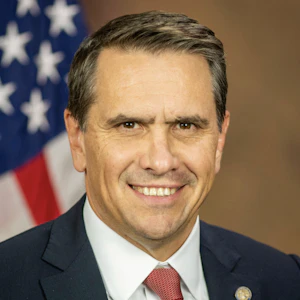
Biography of Deputy Attorney General Todd Blanche
The Honorable Todd Blanche is the 40th Deputy Attorney General of the United States, overseeing the work of the 115,000 dedicated employees who fulfill the Department of Justice’s mission at Main Justice, the FBI, DEA, U.S. Marshals, ATF, and 93 U.S. Attorney’s Offices.
Todd began his career at the Department where he served for over fifteen years in a variety of capacities, including as a contractor, a paralegal in the Criminal Division, and at the United States Attorney’s office for the Southern District of New York where he eventually became an AUSA and later a supervisor.
After leaving the Department, Todd worked as a criminal defense attorney that included representing President Donald Trump in three of the criminal cases brought against him in 2023 and 2024.
Following President Trump’s historic return to the White House, the President appointed Todd to work alongside Attorney General Pam Bondi to make America safe again. At the DOJ, Todd is working tirelessly to implement President Trump’s priorities that include confronting illegal protecting American businesses from fraud.
Todd has been married to his wonderful wife Kristine for nearly thirty years, is a father and grandfather.

Paul Atkins
Paul Atkins
Prior to returning to the SEC, Chairman Atkins was most recently chief executive of Patomak Global Partners, a company he founded in 2009. Chairman Atkins helped lead efforts to develop best practices for the digital asset sector. He served as an independent director and non-executive chairman of the board of BATS Global Markets, Inc. from 2012 to 2015.
Chairman Atkins was appointed by President George W. Bush to serve as a Commissioner of the SEC from 2002 to 2008. During his tenure, he advocated for transparency, consistency, and the use of cost-benefit analysis at the agency. Chairman Atkins also represented the SEC at meetings of the President’s Working Group on Financial Markets and the U.S.-EU Transatlantic Economic Council. From 2009 to 2010, he was appointed a member of the Congressional Oversight Panel for the Troubled Asset Relief Program.
Before serving as an SEC Commissioner, Chairman Atkins was a consultant on securities and investment management industry matters, especially regarding issues of strategy, regulatory compliance, risk management, new product development, and organizational control.
From 1990 to 1994, Chairman Atkins served on the staff of two chairmen of the SEC, Richard C. Breeden and Arthur Levitt, ultimately as chief of staff and counselor, respectively. He received the SEC’s 1992 Law and Policy Award for work regarding corporate governance matters.
Chairman Atkins began his career as a lawyer in New York, focusing on a wide range of corporate transactions for U.S. and foreign clients, including public and private securities offerings and mergers and acquisitions. He was resident for 2½ years in his firm's Paris office and admitted as conseil juridique in France.
A member of the New York and Florida bars, Chairman Atkins received his J.D. from Vanderbilt University School of Law in 1983 and was Senior Student Writing Editor of the Vanderbilt Law Review. He received his A.B., Phi Beta Kappa, from Wofford College in 1980.
Originally from Lillington, North Carolina, Chairman Atkins grew up in Tampa, Florida. He and his wife Sarah have three sons.

Mike Selig
Mike Selig
Chairman Selig brings to the role deep public and private sector experience working with a wide range of stakeholders across agriculture, energy, financial, and digital asset industries, which rely upon and operate in CFTC-regulated markets.
Prior to his leadership at the CFTC, Chairman Selig most recently served as chief counsel of the Securities and Exchange Commission’s Crypto Task Force and senior advisor to SEC Chairman Paul S. Atkins. In this role, Chairman Selig helped to develop a clear regulatory framework for digital asset securities markets, harmonize the SEC and CFTC regulatory regimes, modernize the agency’s rules to reflect new and emerging technologies, and put an end to regulation by enforcement. He also participated in the President’s Working Group on Digital Asset Markets and contributed to its report on “Strengthening American Leadership in Digital Financial Technology.”
Prior to government service, Chairman Selig was a partner at an international law firm, focusing on derivatives and securities regulatory matters. During his years in private practice, he represented a broad range of clients subject to regulation by the CFTC, including commercial end users, futures commission merchants, commodity trading advisors, swap dealers, designated contract markets, derivatives clearing organizations, and digital asset firms. Chairman Selig advised clients on compliance with the Commodity Exchange Act and the CFTC’s rules and regulations thereunder, including in connection with registration applications and obligations, enforcement matters, and complex transactions.
Chairman Selig earned his law degree from The George Washington University Law School and was articles editor of The George Washington Law Review. He received his undergraduate degree from Florida State University.

David Bailey
David Bailey

Eric Trump
Eric Trump
Mr. Trump also serves as Executive Vice President of The Trump Organization, where he oversees the global management and operations of the Trump family’s extensive real estate portfolio. This includes Trump Hotels, Trump Golf, commercial and residential real estate, Trump Estates, and Trump Winery. Known for his hands-on leadership and strong market instincts, he has played a key role in expanding the company’s presence across major U.S. and international markets.
A globally recognized business leader and public figure, Mr. Trump is a prominent advocate for Bitcoin and decentralized finance. He is a co-founder of World Liberty Financial, a decentralized finance (DeFi) platform, and serves on the Board of Advisors of Metaplanet, Japan’s largest corporate holder of Bitcoin.
Beyond his business activities, Mr. Trump has helped raise more than $50 million for St. Jude Children’s Research Hospital in the fight against pediatric cancer, a philanthropic mission he began at age 21.
Mr. Trump earned a degree in Finance and Management from Georgetown University. He currently resides in Florida with his wife, Lara, and their two children. He is also the author of Under Siege, his memoir published in October 2025.
Jack Mallers
Jack Mallers
Cynthia Lummis
Cynthia Lummis
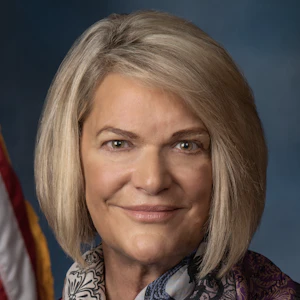
As the first-ever Chair of the Senate Banking Subcommittee on Digital Assets, Senator Lummis is the architect of the legislative framework shaping America's digital asset future. She introduced the landmark Lummis-Gillibrand Responsible Financial Innovation Act, the first comprehensive bipartisan crypto regulatory framework in Senate history. She co-authored the GENIUS Act — the first federal stablecoin law ever enacted — and introduced the BITCOIN Act, which would establish a U.S. strategic Bitcoin reserve of up to one million BTC. She is leading the Clarity Act, which will bring long-overdue regulatory certainty to the digital asset industry. She has also championed digital asset tax reform, including a de minimis exemption for small transactions and equal tax treatment for miners and stakers.
Known as Congress' "Crypto Queen," Senator Lummis represents Wyoming — a state she has helped build into one of the most digital asset-friendly regulatory environments in the nation. Before serving in the Senate, she served 14 years in the Wyoming Legislature, eight years as Wyoming State Treasurer, and eight years in the U.S. House. She is a three-time graduate of the University of Wyoming.
Her work represents a crucial bridge between traditional financial systems and the emerging digital economy, ensuring America leads the world in financial innovation while protecting the individual freedoms that define it.
Adam Back
Adam Back
Amy Oldenburg
Amy Oldenburg
David Marcus
David Marcus

Matt Schultz
Matt Schultz
Fred Thiel
Fred Thiel
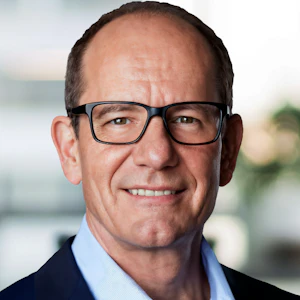
Throughout his career, Mr. Thiel has consistently driven rapid growth and created substantial shareholder value. Prior to MARA, Mr. Thiel served as the CEO of two other public companies, Local Corporation (NASDAQ: LOCM) and Lantronix, Inc (NASDAQ: LTRX). He has successfully raised billions in equity and debt through private and public offerings, led companies through IPOs, executed high-value exits to strategic and financial acquirers, and implemented effective M&A and roll-up strategies.
Mr. Thiel attended the Stockholm School of Economics and executive classes at Harvard Business School, and is fluent in English, Spanish, Swedish, and French. Mr. Thiel is the Chairman of the Board for Oden Technology, Inc. and is active in Young Presidents’ Organization where he has led initiatives in both the FinTech and Technology Networks.
A recognized voice in the industry, Fred frequently shares his insights on energy and technology with major media outlets like Bloomberg TV, CNBC, and FOX Business, contributing to vital discussions about the future of these sectors.
Tim Draper
Tim Draper
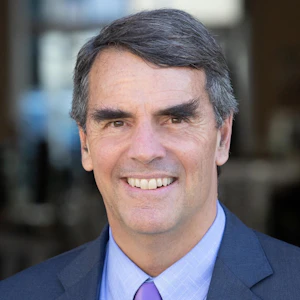
He is a supporter and global thought leader for entrepreneurs everywhere, and is a leading spokesperson for Bitcoin and decentralization, having won the Bitcoin US Marshall’s auction in 2014, invested in over 50 crypto companies, and led investments in Coinbase, Ledger, Tezos, and Bancor, among others.

Afroman
Afroman