Digital Credit
Speakers/Moderators

Natalie Brunell
Natalie Brunell
Her popular show, the Coin Stories Podcast, features interviews with Bitcoin thought leaders and covers headlines related to finance and economic issues facing society. Coin Stories is the top Bitcoin education show in the world, and consistently ranks Top 10 in Business News podcasts.
Previously, Natalie was an award-winning TV journalist and investigative reporter. For more than 10 years she covered in-depth local and national news topics and holds a regional news Emmy for breaking news coverage as well as multiple Emmy nominations for investigative news stories.
Natalie was recently an adjunct professor of advanced communication and visual storytelling at the University of Southern California. She holds a Master’s of Science in Journalism from Northwestern University.

Phong Le
Phong Le

Matt Cole
Matt Cole
Matt leads Strive as a Bitcoin treasury and structured finance company. Under his leadership, Strive has established a significant corporate Bitcoin treasury and has implemented a capital strategy focused on maximizing Bitcoin yield, using Bitcoin as the hurdle rate for all capital deployment decisions. The company’s approach reflects a disciplined focus on balance sheet construction, capital structure optimization, and long-term shareholder alignment.
Matt has positioned Strive at the forefront of innovation within the Bitcoin treasury sector. During his tenure, Strive became the second public company to introduce a publicly traded perpetual preferred equity instrument with the launch of SATA and successfully completed the acquisition of Semler Scientific, making Strive the first Bitcoin treasury company to acquire another publicly traded Bitcoin treasury business. These initiatives support the expansion of Strive’s Bitcoin holdings, the responsible scaling of institutional leverage, and broader market recognition of Bitcoin as a strategic corporate asset.
A long-time Bitcoin investor and advocate, Matt brings extensive institutional investment experience to Strive. Prior to joining the company, he spent approximately 15 years at CalPERS, where he served as a Portfolio Manager in global fixed income and oversaw more than $70 billion in actively managed fixed income assets. Portfolios under his leadership met or exceeded their benchmarks annually. His work at CalPERS included early research on the potential role of Bitcoin within institutional portfolios, based on its long-term return characteristics and its potential to hedge inflation, debt accumulation, technological disruption, and geopolitical risk.
Matt has also been active in advancing a shareholder-focused approach to corporate governance and fiduciary responsibility. His commentary on financial markets and Bitcoin has appeared in major media outlets, and he has participated as a guest on national business television and industry forums.
Matt is a CFA charterholder and holds a Master of Business Administration degree from California State University, Sacramento.

David Bailey
David Bailey
Session
Overview
Digital Credit focused on the emergence of Bitcoin-backed credit products and why companies like Strategy and Strive are building yield-oriented instruments around Bitcoin balance sheets. Natalie Brunell moderated a discussion with Phong Le of Strategy, Matt Cole of Strive, and Tyler Evans of Nakamoto, covering product design, investor demand, credit risk, and the role of Bitcoin collateral.
The panel framed digital credit as a way to package Bitcoin exposure for investors who want yield and lower volatility rather than direct Bitcoin price exposure. Speakers discussed retail demand for Strategy’s Stretch product, Strive’s use of Stretch for balance sheet liquidity, and structured credit products being developed for allocators.
A major theme was credit quality and transparency. The speakers compared Bitcoin-backed credit structures with traditional private credit, arguing that liquid, visible Bitcoin collateral and conservative balance sheet management could make these instruments more resilient during Bitcoin drawdowns.
Looking ahead, the panelists described digital credit as a new asset class that could expand globally as issuers build track records and institutional mandates become able to allocate. They also emphasized that investors still need to understand the structure, collateral, and risks behind each product.
Natalie Brunell: Hello everyone. We are going to do a panel on digital credit, and I think I have a new assignment. I am going to write my next book, Digital Credit Is for Everyone, right?
Phong Le: Yes, and it is going to be amazing.
Natalie Brunell: All right. Here with me today are Strategy CEO Phong Le, Strive CEO Matt Cole, and Nakamoto CIO Tyler Evans. Phong, let’s kick it off with you. Strategy launched this new asset class, digital credit. Why did Bitcoin need a credit market?
Phong Le: When we launch a product, and Mike and I are technology product people, we do not ask, what is the product we want to launch? We ask, what is the product people want? If you ever take a product management class, product management 101, the first thing you have to understand is what the market is and whether people want it, not whether it is a cool product or a cool technology.
When we launched Stretch, we had already launched convertible bonds. We had MSTR, which is digital equity. We asked, what is it that people want based off Bitcoin? They want these amazing return profiles, 30%, 40%, 50%, but they do not want the volatility. So how do we financially engineer a product that provides that? That is why we went into the digital credit world.
I sent a message on X, and Natalie, you and I have talked about this a lot. There is a yield gap where people are not able to get access to yield in the world purely because of the amount of wealth they have, and that is really not how things should work. Everyone should have access to yield. Everyone should have access to income based on the merits.
So we knew there would be a place for something that returned 10% or 11% and had stable principal. That is why we launched the product. Why does Bitcoin need it? Bitcoin needs it because there are 90% of people in the world, 95%, and there are a lot of people in the U.S. who do not know about Bitcoin, but they know they want a good yield. If we can create a product that everybody wants, that people do not realize they need until they see it and then they love it, that is great for Bitcoin. It helps everybody. It is good for Bitcoin, it is good for everyone. Stretch is for everyone.
Natalie Brunell: You explained it really well on our show, by the way. It hit a million views, so if you have not seen it with Phong, that was a great show. Matt, I want to go to you because you just announced your largest Bitcoin buy at Strive. Strive’s SATA yield is currently 13%. You also bought $50 million worth of Stretch. Talk to me a little bit about your strategy. When does it make sense to buy another company’s Bitcoin credit rather than just Bitcoin?
Matt Cole: For our common equity investor, we have a saying that Bitcoin is our hurdle rate. We are trying to outperform Bitcoin over the long run. But why buy Stretch when we are issuing SATA? It actually comes down to corporate balance sheet management 101.
I come from the fixed income world. One of the things we did there was buy a lot of commercial paper. This is short-term paper that an issuer like Apple, Google, or Ford is issuing into the market. What you find in traditional finance corporate balance sheets is that issuers like Apple and Google will issue their own short-term paper, and then they also buy the short-term paper of others. Why do they do that? They do that for balance sheet management, liquidity, and lowering the cost of capital of holding a cash-like instrument on your balance sheet.
Right now we have north of 18 months of reserves to cover the dividend obligations of SATA. That can sit in cash or short-term Treasuries earning 3.5% or 4%, which is not very attractive. We do have quite a bit in those, but some of it could sit in Stretch and earn 11.5%. It is really an emergency fund. If we as a company, for whatever reason, needed liquidity to meet dividend obligations, then we have something set aside where we do not have to dip into the Bitcoin for quite a while.
We are trying to minimize the risk that we ever have to sell Bitcoin. As a company, we have never had to sell a single Bitcoin. We have only bought them, and that is because of balance sheet management like that and buying Stretch.
Natalie Brunell: It is so important to look at the management team when you are considering one of these treasury companies. Tyler, your team just announced a digital credit fund through UTXO. What can you tell us about that?
Tyler Evans: I wear a different hat than these guys, at least today, in terms of being on the investor or allocator side. Phong, you made an important point that this is really about packaging Bitcoin for different types of investors. The stat I shared yesterday is that 97% of institutional capital in the world is allocated to equity and credit markets, and only 3% is allocated to commodities or alternatives, the buckets where Bitcoin fits into the institutional lens or institutional allocators’ risk framework today.
That is the opportunity that Strategy and Strive have both jumped on: how do you package Bitcoin for the 97% of real capital out there? That is core to our mission at UTXO and Nakamoto, making Bitcoin investable.
We announced a new fund yesterday at our investor day that builds on top of the products these folks are issuing. It is a preferred perpetual income product. It is really a structured credit product where we are taking the building blocks of these perpetual securities and then packaging them in different ways with different volatility profiles for different investors.
This is the oldest trick in Wall Street’s playbook, taking things like mortgages, auto loans, or commercial debt and packaging them in ways that pay different yields and have different risk-return profiles. We are taking that same concept and applying it to digital credit, creating the first structured credit product for digital credit.
Natalie Brunell: Can you tell us a little bit about who is actually buying digital credit? I was surprised by one of your tweets that discussed how popular this is with retail.
Phong Le: Who in this room owns digital credit or owns Stretch? That is awesome, by the way.
It is 80% retail. Our common, MSTR, is about 40% retail and 60% institutional on a dollar basis. Stretch has flipped that. It is 80% retail and 20% institutional. I actually recently looked at the distribution of who those folks are, because I had a hypothesis.
When we talk about retail, retail includes family offices and high-net-worth individuals who might have $10 million or $100 million in assets under management buying large chunks of Stretch. My hypothesis was that even within the 80%, it would be highly distributed to those kinds of buyers. But that is actually not the case. It gets very small, very fast in terms of ownership of the 80%. We have folks who own $1,000 or $10,000 of Stretch making up the majority of the ownership structure.
This was interesting to us because we made proposals on modifications to Stretch, so we need to know who is going to show up to vote. Getting a lot of people to show up to vote is harder than getting a small number of people.
I say all this because the ownership of Stretch is largely populated, both in number of shareholders and distribution of dollars, by medium- and small-size retail owners. That is fascinating, and I would say heartwarming too, because from my point of view, Mike just wants it to be big, and I want it to be big too, but I also wanted it to serve people who were yield-starved. It is actually doing that. We are just getting started. We are at $8.5 billion, but the people buying into it are people who otherwise would not have access to this level of yield.
I get all the points around this being preferred equity. This is not a typical credit instrument, so you have to be careful when you are buying into an instrument like this. But it is doing what we hoped for, which is democratizing yield and democratizing Bitcoin. For those here who like Bitcoin, what it is doing is putting a product in the hands of people who are not necessarily Bitcoin native and giving them exposure to all the cool things about Bitcoin. It is a bit of a Trojan horse into Bitcoin, which is very exciting too. I get really excited about seeing a product launch and go into the hands of the millions of people who need it.
Natalie Brunell: This question is for all three of you. We know that Bitcoin’s price is down, and the Bitcoin treasury stocks got hit even harder. In a real credit stress test, which digital credit structures can actually hold up and which ones could break?
Matt Cole: I think the biggest question before this Bitcoin crash, after Stretch launched, was how digital credit would do in a Bitcoin bear market. This is about building a track record, which grows institutional flows over time. Pretty quickly after Stretch launched and then SATA launched, Bitcoin dropped 50%, and digital credit probably held up better than I think almost anyone would have imagined.
What that is showing is the power of these balance sheets. When Stretch has 70 or 80 years of dividend flow and Strive has just under 20 years, even after a massive Bitcoin drop, that shows people these are very creditworthy instruments. You look at the rating agencies, and the reality is that they will not even look at the Bitcoin. So you can go out and tell a story to people: look at this balance sheet of unencumbered Bitcoin. These are really credit-strong instruments. I think you get more comfort from people as they see these not have volatility in Bitcoin down markets.
Tyler Evans: To that point, Matt, I think they have passed the stress test phenomenally so far. What we are seeing is that these digital credit products are becoming a buffer on that volatility. Even from the retail investor standpoint, if you are holding Bitcoin and Bitcoin starts falling and you start to get nervous, you want to go somewhere less risky and less volatile. You want to sit in cash on the sidelines. Well, you could sit in cash, or you could sit in Stretch and earn a yield while you wait for the Bitcoin market to settle down.
We see some of those natural investor flows. For people who do not have diamond hands like Phong and Mike, instead of selling Bitcoin, they can buy digital credit to wait out the bear market and weather the storm. That has driven demand for these digital credit products and helped them keep their par value, and then critically lets Strategy and Strive go out there and keep buying Bitcoin.
Phong Le: When investing in an equity, MSTR or any common equity, everybody walks into it knowing you could make a ton of money or you could lose all your money. There are disclosures, quarterly reports, and annual reports. The same thing is true with credit, especially in the form of a perpetual preferred or preferred, which is an equity instrument.
When you invest in credit, you have to understand what the underlying is. With mortgage-backed securities, people lost sight of what the mortgages were and whether they were subprime or not. With high-yield consumer car loans, you might get a 29% return, but people might not pay back their loans. You have to understand what is behind it.
What I encourage people with Stretch, SATA, or any of these other products is that you have to look at what is behind it. What is behind Stretch is $2.25 billion of cash and 820,000 Bitcoin, and a stack senior to it of about $6 billion of net debt in convertible notes. If you take everything more senior out, we are about 4 to 5 times overcollateralized, which in the digital credit world or the credit world is nonexistent.
People very quickly say, is 11.5% or 12.5% too good to be true? Do the work, do the homework, do the math, and look underneath it. We have been very thoughtful about managing and running a very conservative balance sheet and a very transparent balance sheet. If you have ever looked at Strategy, you get every single KPI in real time out there. Then you look at the management team. That is why Mike and I are out there, because you have to know what you are getting in a digital credit product. It is part of inventing a new category.
We have been very thoughtful and responsible. To answer your question, bear market, bull cycle, whatever, you have to know what you are getting into. This is the part that irks me when people throw shade at Stretch or at other credit products. Private credit is a good example. Running an enterprise software business, which is what I do with the rest of my time, is a tough business right now. There is disruption left and right being created by AI. We internally at the company are replacing all of our SaaS software platform relationships with AI-built software, and we are a pretty big software company.
To compare Stretch and SATA and say they are not credible products when people are out there selling private credit overpopulated with enterprise software companies whose cash flows are going to start to diminish over time, I think that is a concern. Understanding what is behind the product is quite important, and I would encourage you all to do that.
Tyler Evans: Especially when it comes to that private credit market, when you look at the alternatives for allocators, those are loans that are not overcollateralized. They are typically undercollateralized. The collateral comes in the form of real estate and autos that have high transaction costs, that you have to go track down and seize, and that have uncertain liquidity or recovery.
Compare that to Strategy’s balance sheet, where you know exactly how much Bitcoin they have, what the value of that Bitcoin is in real time, and how much Bitcoin is traded 24/7 around the world every single day. You can actually measure the true liquidation value of that collateral.
Natalie Brunell: I would like just a minute from each of you on the fact that digital credit is less than two years old. Let’s think outward. Where are we in five years, and what is your company’s role in helping us get there?
Matt Cole: In five years, I think we are in the hundreds of billions base case, up to the low trillions of market cap. I think this follows the exponential case of growth of new financial products. When you look at ETFs as an example, the first three years of a product really just gives you a sense of how big the idea is, because there are so many large pools of capital that cannot even invest in a product until it has a three-year track record or a five-year track record.
There is an insatiable hunt for yield. I think Phong and Tyler laid out really well why these are mispriced from a credit perspective versus other opportunities. Once they have proven themselves to have a track record and make themselves eligible for the investment policy statement, I think the sky is the limit on how big these could be.
Our role is to be another issuer in the digital credit ecosystem. It is important to recognize that a lot of mandates need diversification. They have issuer limits on how much they can invest. Building out an issuer ecosystem of digital credit is helpful to grow the product space to how big it could be.
Tyler Evans: We are equally bullish. When you have one issuer, it is kind of an outlier. When you have two, it starts to be a trend. When we have three, five, and then ten, it is really going to be a party. We are particularly bullish on digital credit not just in the U.S., but really exporting it to global capital markets.
When you look around the global landscape and still see negative real rates in Europe, or you look at the Japanese market and the opportunity for Metaplanet there with the bond market and the cost of capital, there are places that are even more desperate for yield than we are in the U.S., and a lower cost of capital for digital credit issuers in those markets. I think we are going to see a global explosion of these products, and we will have ten-plus listed all around the world by the end of the year.
Phong Le: Thanks for pointing out the speed, Natalie. A year ago on the Enterprise Stage at this event, the main topic of discussion was Bitcoin treasury companies and how we had 200 of them, and the growth was phenomenal. This year, the main topic on this stage and on the main stage will be digital credit. It is an asset class that has really grown in the last year from zero to $10 billion. Imagine creating a business, a product, a new category that grows from zero to $10 billion in a year. It is pretty satisfying and phenomenal. It has never been done before.
But you asked five years, so let’s dream for a second. $300 trillion is the entire credit universe. If we could take 1% of that, that is $3 trillion. If we could create a digital credit category that in five years is $3 trillion, that would mean we would triple the AUM of Bitcoin just from digital credit, which means we could triple the price of Bitcoin to $210,000 or $230,000 just with digital credit. That is just with this asset class by itself. I think it is very reasonable to say that we could take 1% of the credit market. It is not a lot, 1%. That is all I am asking for in five years.
Natalie Brunell: On that note, is there such a thing as growing too much, too fast? Is that a concern at all?
Phong Le: No.
Natalie Brunell: All right, let’s give some parting words for these folks, because look at this. We have standing room only at a digital credit panel. You are right, Phong, this is a completely new asset class. Are there any plans, by the way, at Strategy for when you hit a million Bitcoin?
Phong Le: We are going to hit a million Bitcoin.
Natalie Brunell: I would assume you are going to hit it pretty soon, right?
Phong Le: I think there is a prediction market for when we are going to hit a million Bitcoin, so I am not going to say anything at the risk of giving any insider information while people are out there trading on the prediction market.
Natalie Brunell: Who thinks Strategy is going to hit a million Bitcoin this year? Well, there you go. They said it. We actually ran out of time on that, but any final thoughts?
Matt Cole: If you are not aware, one of our subsidiaries, True North, has a live tracker of when we think it is going to hit. Because Phong cannot say it, our prediction is somewhere between August and September, but that will be updated in real time. We look forward to the party.
Phong Le: Thanks for all your support.
Natalie Brunell: Thanks, everyone.
Similar
Sessions
Digital Credit
Natalie Brunell
Natalie Brunell
Her popular show, the Coin Stories Podcast, features interviews with Bitcoin thought leaders and covers headlines related to finance and economic issues facing society. Coin Stories is the top Bitcoin education show in the world, and consistently ranks Top 10 in Business News podcasts.
Previously, Natalie was an award-winning TV journalist and investigative reporter. For more than 10 years she covered in-depth local and national news topics and holds a regional news Emmy for breaking news coverage as well as multiple Emmy nominations for investigative news stories.
Natalie was recently an adjunct professor of advanced communication and visual storytelling at the University of Southern California. She holds a Master’s of Science in Journalism from Northwestern University.
Phong Le
Phong Le
Matt Cole
Matt Cole
Matt leads Strive as a Bitcoin treasury and structured finance company. Under his leadership, Strive has established a significant corporate Bitcoin treasury and has implemented a capital strategy focused on maximizing Bitcoin yield, using Bitcoin as the hurdle rate for all capital deployment decisions. The company’s approach reflects a disciplined focus on balance sheet construction, capital structure optimization, and long-term shareholder alignment.
Matt has positioned Strive at the forefront of innovation within the Bitcoin treasury sector. During his tenure, Strive became the second public company to introduce a publicly traded perpetual preferred equity instrument with the launch of SATA and successfully completed the acquisition of Semler Scientific, making Strive the first Bitcoin treasury company to acquire another publicly traded Bitcoin treasury business. These initiatives support the expansion of Strive’s Bitcoin holdings, the responsible scaling of institutional leverage, and broader market recognition of Bitcoin as a strategic corporate asset.
A long-time Bitcoin investor and advocate, Matt brings extensive institutional investment experience to Strive. Prior to joining the company, he spent approximately 15 years at CalPERS, where he served as a Portfolio Manager in global fixed income and oversaw more than $70 billion in actively managed fixed income assets. Portfolios under his leadership met or exceeded their benchmarks annually. His work at CalPERS included early research on the potential role of Bitcoin within institutional portfolios, based on its long-term return characteristics and its potential to hedge inflation, debt accumulation, technological disruption, and geopolitical risk.
Matt has also been active in advancing a shareholder-focused approach to corporate governance and fiduciary responsibility. His commentary on financial markets and Bitcoin has appeared in major media outlets, and he has participated as a guest on national business television and industry forums.
Matt is a CFA charterholder and holds a Master of Business Administration degree from California State University, Sacramento.
David Bailey
David Bailey
Digital Credit
Speakers/Moderators
Natalie Brunell
Natalie Brunell
Her popular show, the Coin Stories Podcast, features interviews with Bitcoin thought leaders and covers headlines related to finance and economic issues facing society. Coin Stories is the top Bitcoin education show in the world, and consistently ranks Top 10 in Business News podcasts.
Previously, Natalie was an award-winning TV journalist and investigative reporter. For more than 10 years she covered in-depth local and national news topics and holds a regional news Emmy for breaking news coverage as well as multiple Emmy nominations for investigative news stories.
Natalie was recently an adjunct professor of advanced communication and visual storytelling at the University of Southern California. She holds a Master’s of Science in Journalism from Northwestern University.
Phong Le
Phong Le
Matt Cole
Matt Cole
Matt leads Strive as a Bitcoin treasury and structured finance company. Under his leadership, Strive has established a significant corporate Bitcoin treasury and has implemented a capital strategy focused on maximizing Bitcoin yield, using Bitcoin as the hurdle rate for all capital deployment decisions. The company’s approach reflects a disciplined focus on balance sheet construction, capital structure optimization, and long-term shareholder alignment.
Matt has positioned Strive at the forefront of innovation within the Bitcoin treasury sector. During his tenure, Strive became the second public company to introduce a publicly traded perpetual preferred equity instrument with the launch of SATA and successfully completed the acquisition of Semler Scientific, making Strive the first Bitcoin treasury company to acquire another publicly traded Bitcoin treasury business. These initiatives support the expansion of Strive’s Bitcoin holdings, the responsible scaling of institutional leverage, and broader market recognition of Bitcoin as a strategic corporate asset.
A long-time Bitcoin investor and advocate, Matt brings extensive institutional investment experience to Strive. Prior to joining the company, he spent approximately 15 years at CalPERS, where he served as a Portfolio Manager in global fixed income and oversaw more than $70 billion in actively managed fixed income assets. Portfolios under his leadership met or exceeded their benchmarks annually. His work at CalPERS included early research on the potential role of Bitcoin within institutional portfolios, based on its long-term return characteristics and its potential to hedge inflation, debt accumulation, technological disruption, and geopolitical risk.
Matt has also been active in advancing a shareholder-focused approach to corporate governance and fiduciary responsibility. His commentary on financial markets and Bitcoin has appeared in major media outlets, and he has participated as a guest on national business television and industry forums.
Matt is a CFA charterholder and holds a Master of Business Administration degree from California State University, Sacramento.
David Bailey
David Bailey
How Bitcoin Companies Are Aligning Globally

George Mekhail
George Mekhail
David Bailey
David Bailey


How Bitcoin Companies Are Aligning Globally
Speakers/Moderators
George Mekhail
George Mekhail
David Bailey
David Bailey
Creating Bitcoin's Technical & Financial Infrastructure For Maximum Adoption
Natalie Brunell
Natalie Brunell
Her popular show, the Coin Stories Podcast, features interviews with Bitcoin thought leaders and covers headlines related to finance and economic issues facing society. Coin Stories is the top Bitcoin education show in the world, and consistently ranks Top 10 in Business News podcasts.
Previously, Natalie was an award-winning TV journalist and investigative reporter. For more than 10 years she covered in-depth local and national news topics and holds a regional news Emmy for breaking news coverage as well as multiple Emmy nominations for investigative news stories.
Natalie was recently an adjunct professor of advanced communication and visual storytelling at the University of Southern California. She holds a Master’s of Science in Journalism from Northwestern University.

Adam Back
Adam Back
Phong Le
Phong Le
Creating Bitcoin's Technical & Financial Infrastructure For Maximum Adoption
Speakers/Moderators
Natalie Brunell
Natalie Brunell
Her popular show, the Coin Stories Podcast, features interviews with Bitcoin thought leaders and covers headlines related to finance and economic issues facing society. Coin Stories is the top Bitcoin education show in the world, and consistently ranks Top 10 in Business News podcasts.
Previously, Natalie was an award-winning TV journalist and investigative reporter. For more than 10 years she covered in-depth local and national news topics and holds a regional news Emmy for breaking news coverage as well as multiple Emmy nominations for investigative news stories.
Natalie was recently an adjunct professor of advanced communication and visual storytelling at the University of Southern California. She holds a Master’s of Science in Journalism from Northwestern University.
Adam Back
Adam Back
Phong Le
Phong Le
Other
Speakers

Michael Saylor
Michael Saylor

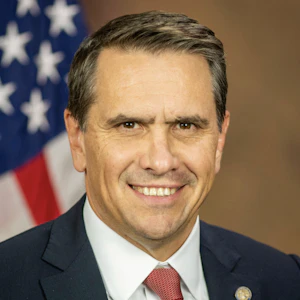
Todd Blanche
Todd Blanche
Biography of Deputy Attorney General Todd Blanche
The Honorable Todd Blanche is the 40th Deputy Attorney General of the United States, overseeing the work of the 115,000 dedicated employees who fulfill the Department of Justice’s mission at Main Justice, the FBI, DEA, U.S. Marshals, ATF, and 93 U.S. Attorney’s Offices.
Todd began his career at the Department where he served for over fifteen years in a variety of capacities, including as a contractor, a paralegal in the Criminal Division, and at the United States Attorney’s office for the Southern District of New York where he eventually became an AUSA and later a supervisor.
After leaving the Department, Todd worked as a criminal defense attorney that included representing President Donald Trump in three of the criminal cases brought against him in 2023 and 2024.
Following President Trump’s historic return to the White House, the President appointed Todd to work alongside Attorney General Pam Bondi to make America safe again. At the DOJ, Todd is working tirelessly to implement President Trump’s priorities that include confronting illegal protecting American businesses from fraud.
Todd has been married to his wonderful wife Kristine for nearly thirty years, is a father and grandfather.

Paul Atkins
Paul Atkins
Prior to returning to the SEC, Chairman Atkins was most recently chief executive of Patomak Global Partners, a company he founded in 2009. Chairman Atkins helped lead efforts to develop best practices for the digital asset sector. He served as an independent director and non-executive chairman of the board of BATS Global Markets, Inc. from 2012 to 2015.
Chairman Atkins was appointed by President George W. Bush to serve as a Commissioner of the SEC from 2002 to 2008. During his tenure, he advocated for transparency, consistency, and the use of cost-benefit analysis at the agency. Chairman Atkins also represented the SEC at meetings of the President’s Working Group on Financial Markets and the U.S.-EU Transatlantic Economic Council. From 2009 to 2010, he was appointed a member of the Congressional Oversight Panel for the Troubled Asset Relief Program.
Before serving as an SEC Commissioner, Chairman Atkins was a consultant on securities and investment management industry matters, especially regarding issues of strategy, regulatory compliance, risk management, new product development, and organizational control.
From 1990 to 1994, Chairman Atkins served on the staff of two chairmen of the SEC, Richard C. Breeden and Arthur Levitt, ultimately as chief of staff and counselor, respectively. He received the SEC’s 1992 Law and Policy Award for work regarding corporate governance matters.
Chairman Atkins began his career as a lawyer in New York, focusing on a wide range of corporate transactions for U.S. and foreign clients, including public and private securities offerings and mergers and acquisitions. He was resident for 2½ years in his firm's Paris office and admitted as conseil juridique in France.
A member of the New York and Florida bars, Chairman Atkins received his J.D. from Vanderbilt University School of Law in 1983 and was Senior Student Writing Editor of the Vanderbilt Law Review. He received his A.B., Phi Beta Kappa, from Wofford College in 1980.
Originally from Lillington, North Carolina, Chairman Atkins grew up in Tampa, Florida. He and his wife Sarah have three sons.

Mike Selig
Mike Selig
Chairman Selig brings to the role deep public and private sector experience working with a wide range of stakeholders across agriculture, energy, financial, and digital asset industries, which rely upon and operate in CFTC-regulated markets.
Prior to his leadership at the CFTC, Chairman Selig most recently served as chief counsel of the Securities and Exchange Commission’s Crypto Task Force and senior advisor to SEC Chairman Paul S. Atkins. In this role, Chairman Selig helped to develop a clear regulatory framework for digital asset securities markets, harmonize the SEC and CFTC regulatory regimes, modernize the agency’s rules to reflect new and emerging technologies, and put an end to regulation by enforcement. He also participated in the President’s Working Group on Digital Asset Markets and contributed to its report on “Strengthening American Leadership in Digital Financial Technology.”
Prior to government service, Chairman Selig was a partner at an international law firm, focusing on derivatives and securities regulatory matters. During his years in private practice, he represented a broad range of clients subject to regulation by the CFTC, including commercial end users, futures commission merchants, commodity trading advisors, swap dealers, designated contract markets, derivatives clearing organizations, and digital asset firms. Chairman Selig advised clients on compliance with the Commodity Exchange Act and the CFTC’s rules and regulations thereunder, including in connection with registration applications and obligations, enforcement matters, and complex transactions.
Chairman Selig earned his law degree from The George Washington University Law School and was articles editor of The George Washington Law Review. He received his undergraduate degree from Florida State University.
David Bailey
David Bailey

Eric Trump
Eric Trump
Mr. Trump also serves as Executive Vice President of The Trump Organization, where he oversees the global management and operations of the Trump family’s extensive real estate portfolio. This includes Trump Hotels, Trump Golf, commercial and residential real estate, Trump Estates, and Trump Winery. Known for his hands-on leadership and strong market instincts, he has played a key role in expanding the company’s presence across major U.S. and international markets.
A globally recognized business leader and public figure, Mr. Trump is a prominent advocate for Bitcoin and decentralized finance. He is a co-founder of World Liberty Financial, a decentralized finance (DeFi) platform, and serves on the Board of Advisors of Metaplanet, Japan’s largest corporate holder of Bitcoin.
Beyond his business activities, Mr. Trump has helped raise more than $50 million for St. Jude Children’s Research Hospital in the fight against pediatric cancer, a philanthropic mission he began at age 21.
Mr. Trump earned a degree in Finance and Management from Georgetown University. He currently resides in Florida with his wife, Lara, and their two children. He is also the author of Under Siege, his memoir published in October 2025.

Jack Mallers
Jack Mallers

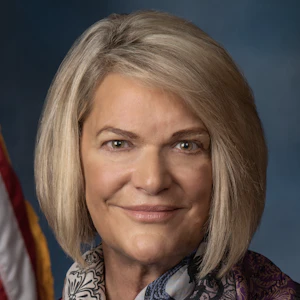
Cynthia Lummis
Cynthia Lummis
As the first-ever Chair of the Senate Banking Subcommittee on Digital Assets, Senator Lummis is the architect of the legislative framework shaping America's digital asset future. She introduced the landmark Lummis-Gillibrand Responsible Financial Innovation Act, the first comprehensive bipartisan crypto regulatory framework in Senate history. She co-authored the GENIUS Act — the first federal stablecoin law ever enacted — and introduced the BITCOIN Act, which would establish a U.S. strategic Bitcoin reserve of up to one million BTC. She is leading the Clarity Act, which will bring long-overdue regulatory certainty to the digital asset industry. She has also championed digital asset tax reform, including a de minimis exemption for small transactions and equal tax treatment for miners and stakers.
Known as Congress' "Crypto Queen," Senator Lummis represents Wyoming — a state she has helped build into one of the most digital asset-friendly regulatory environments in the nation. Before serving in the Senate, she served 14 years in the Wyoming Legislature, eight years as Wyoming State Treasurer, and eight years in the U.S. House. She is a three-time graduate of the University of Wyoming.
Her work represents a crucial bridge between traditional financial systems and the emerging digital economy, ensuring America leads the world in financial innovation while protecting the individual freedoms that define it.
Adam Back
Adam Back

Amy Oldenburg
Amy Oldenburg

David Marcus
David Marcus

Matt Schultz
Matt Schultz

Fred Thiel
Fred Thiel
Throughout his career, Mr. Thiel has consistently driven rapid growth and created substantial shareholder value. Prior to MARA, Mr. Thiel served as the CEO of two other public companies, Local Corporation (NASDAQ: LOCM) and Lantronix, Inc (NASDAQ: LTRX). He has successfully raised billions in equity and debt through private and public offerings, led companies through IPOs, executed high-value exits to strategic and financial acquirers, and implemented effective M&A and roll-up strategies.
Mr. Thiel attended the Stockholm School of Economics and executive classes at Harvard Business School, and is fluent in English, Spanish, Swedish, and French. Mr. Thiel is the Chairman of the Board for Oden Technology, Inc. and is active in Young Presidents’ Organization where he has led initiatives in both the FinTech and Technology Networks.
A recognized voice in the industry, Fred frequently shares his insights on energy and technology with major media outlets like Bloomberg TV, CNBC, and FOX Business, contributing to vital discussions about the future of these sectors.
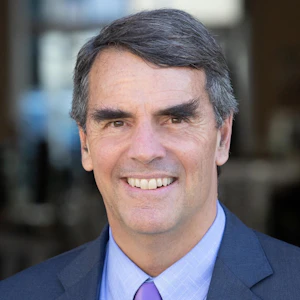
Tim Draper
Tim Draper
He is a supporter and global thought leader for entrepreneurs everywhere, and is a leading spokesperson for Bitcoin and decentralization, having won the Bitcoin US Marshall’s auction in 2014, invested in over 50 crypto companies, and led investments in Coinbase, Ledger, Tezos, and Bancor, among others.

Afroman
Afroman