Outplaying the House: Beating the Banks at Their Own Game
Speakers/Moderators

Anthony Magliacca
Anthony Magliacca

Harsha Goli
Harsha Goli

Alex Leishman
Alex Leishman

Will Reeves
Will Reeves
Since founding Fold in 2019, Will has grown the company into a national Bitcoin platform serving households and enterprise partners, distributing tens of millions in bitcoin rewards and building one of the largest Bitcoin treasuries among public operating companies.
His work focuses on integrating Bitcoin into the core of financial life by designing products, capital structures, and corporate strategies that treat Bitcoin as long term financial infrastructure.
Session
Overview
Anthony Magliacca of Five Bells moderated a discussion with Harsha Goli of Magnolia Financial, Alex Leishman of River, and Will Reeves of Fold on how Bitcoin-native financial products are competing with traditional banking. The panel focused on Bitcoin’s original promise as an exit from financial intermediaries, while acknowledging that many Bitcoin companies are now building bank-like services.
The speakers debated whether self-custody alone is enough, or whether Bitcoin needs broader financial infrastructure such as Lightning, L2s, collateralized lending, rewards, direct deposit, and fiat rails. They discussed how Lightning can act as an interoperability layer, how Bitcoin-backed loans may become more economically attractive, and why stablecoins and digital asset bank charters could reshape capital markets.
A recurring theme was that banks remain powerful because of regulation, distribution, and dollar rails, but Bitcoin companies can compete by returning more value to users and offering an exit option. The conversation also covered practical adoption through businesses, rewards programs, employee Bitcoin bonuses, and dual-money banking apps that let users manage both Bitcoin and dollars.
Hi, everybody. We’re here to talk about the cross between Bitcoin and banking. I’m Anthony Magliacca, co-founder of Five Bells. We’re a programmable escrow tool you can use on Bitcoin to disintermediate banks. Do you guys want to introduce yourselves, and then we’ll get into it?
Absolutely. Hey, everybody, I’m Will Reeves, founder and CEO of Fold.
I’m Alex, the founder and CEO of River, and we do Bitcoin banking.
And I’m Harsha, the founder and CEO of Magnolia.
So it’s 2008, and the white paper is released. It talks about a system that allows two counterparts to exchange value without a financial intermediary. It’s released in the heart of the crisis. It’s a way to become less reliant on banks, to opt out of the system.
It’s 2026. Everybody in Bitcoin wants to become a bank. It feels like we talk a lot about financial engineering in the space these days, a lot about how to become a bank, the cross between Bitcoin and banking, and not a lot about things that are happening on chain that continue to allow you to not become reliant on banks.
So we’re here with the experts at the cross between Bitcoin and banking to talk about whether we are on the right track. We’ll start with you. Do you think we’re on the right track? Are we staying true to first principles using Bitcoin-native things, or are we just building Bitcoin for the existing financial infrastructure?
I think it’s everything all at once. There’s incredible work being done on both sides. How do you bring Bitcoin into traditional banking? How do you bring banking concepts into trustless or trust-minimized protocols like Bitcoin?
Since 2008, I think two things are really important that have happened. You have the release of Bitcoin, which presents an almost diametrically opposed alternative to banking. You can’t exit the banking system. Bitcoin gives you an exit. Bitcoin has 24/7 uptime. You can actually self-custody Bitcoin. All of these concepts are truly foreign in the traditional banking system. You cannot audit a bank the way you can audit proof of reserves of a Bitcoin institution.
So I think Bitcoin provides things that are almost the undoing of banks. But at the same time, since 2008, another thing has happened where banks have essentially been compressed into a suite of APIs that anybody can access and use. MrBeast just launched a bank a couple months ago. Anybody can do it.
What’s happening is banks are getting taken on the flank by Bitcoin companies that are both making use of what makes Bitcoin incredible and special, but also leveraging the fact that what was once gatekept by banks, their services, are now freely available via APIs. Ultimately, I think that is going to give an edge to those that privilege Bitcoin and what it can do, and what banks can never do, while at the same time providing the convenience that banks do give today.
Alex, what do you think about that?
I definitely agree with what Will said. Maybe to take it in a little bit of a different direction, I think it was inevitable that there would be Bitcoin banks. Even Hal Finney predicted such.
What I always say is important is that the vision for Bitcoin, in my opinion, wasn’t that nobody ever trusts institutions. It’s that you don’t have to trust institutions. That’s the power of Bitcoin. As Will said, there’s an exit door now. Having the exit door fundamentally changes how the institutions operate. That’s what we’re seeing happen. That’s what was meant to happen.
So I do think we’re on track. I gave a talk earlier saying I think what we’re seeing is Bitcoin exchanges building up toward banking, and banks building down toward Bitcoin, or whatever you want to call up and down. Overall, I think things are going well.
If we’re going to keep banks honest with Bitcoin the way you describe, to me it means we need to be building things on chain, Bitcoin-native devices that allow you to use the network in creative ways.
I think you already can. All that’s really important is that you can self-custody, that it’s decently easy to self-custody and move your Bitcoin without trusting anyone else. I don’t think we need some really rich on-chain ecosystem of complex financial instruments to realize the benefit of Bitcoin. It’s cool that we can do that, but I don’t think that’s necessary to realize its potential.
I’ll take the other side of this. I don’t think self-custody is all it’s going to take in order to beat banks at their own game, specifically because right now banking is two factions. It’s the regulators, but it’s also institutions that get regulated. When we talk about banking in Bitcoin, what we’re talking about is getting the institutions that are regulated to actually use and hold Bitcoin one way or another, either providing financial services or providing new leverage opportunities for a lot of people to actually use an asset that goes up and down to their benefit.
The problem for so long has been that these regulated institutions have not been open-minded to the cool things you can do with an asset that traditionally goes up over time. They certainly don’t even begin to understand the things you can do with a self-custody asset that goes up over time.
I think right now, especially this year in particular, the tables are going to get flipped on a lot of banks as Bitcoin-native banks come online and challenge them directly in the only place that matters, which is revenue.
I’ve started to think about the Bitcoin network less as the coin and the price, so to speak, and more about the ledger. Because when you hire a bank, what are you doing? You’re asking them to recordkeep for you in one way or another. It’s interesting to think about: if we already have a ledger on the Bitcoin blockchain, why don’t we just use that as a disintermediating service?
Are you using anything today, Bitcoin-native, that’s interesting to you? What are you seeing out there that’s useful that works on chain as opposed to using a bank?
One thing that’s cool, and this is actually hilarious because you said on chain, this is explicitly off chain with Lightning, but something that’s been really cool with Lightning is that we can actually onboard a lot of these other networks like Ark and Spark with Lightning without going through a pretty intense coin-listing process, which is a big compliance hassle.
So we can effectively onboard folks and businesses that are doing business here, there, and everywhere while only having a compliance program set up for just Bitcoin alone. That has been immensely powerful.
For background, I’ve worked on Lightning for seven or eight years. I love the thing. I’m very aware of its flaws, but it’s been excelling at this almost interoperable, ACH-like thing where you don’t have to buy into a direct relationship with Magnolia. You can just buy into Lightning and therefore get a route to us directly. It’s actually pretty interesting.
Alex, where do you want to see Bitcoin usage go? You mentioned self-custody gets us there, but what does that look like for Bitcoin usage five or ten years from now? Where do you want to see that head?
I would love to see Bitcoin continue to grow in its role as a medium of exchange. I think we’re still very early there. We have a long way to go, and it’s a little unclear.
The thought experiment I like to have is, let’s say we had a perfect layer two. It was perfectly censorship resistant, had no transaction fees, and had everything we could ever possibly imagine. Would that unlock people using Bitcoin as a medium of exchange? I think the answer is maybe a little bit more, but not drastically overnight. There’s still more to the story around onboarding people to Bitcoin as money. Maybe it’s a marketing problem. Maybe it’s an economic and volatility problem.
I want to see Bitcoin go there, and I think getting more people holding Bitcoin will get us there eventually. The work that companies like Block and Square are doing will hopefully continue to accelerate Bitcoin as a medium of exchange.
Another area that I actually think is genuinely interesting and solves problems really well for people is collateralized lending on chain. We’re actually seeing that’s where the best economics are. That’s where the best prices are for borrowing against your Bitcoin, maybe it’s like an L2. Coinbase has a lending product powered by their wrapped Bitcoin on Base.
Objectively, the rates are better than any centralized lender. We’re talking about four to 5% instead of 8 to 12%, so literally half the price. There’s much lower friction to deploy capital and lend it out. I think that’s super interesting, and I’m interested to see where that goes.
Will, you’ve been in this space a long time. Same question to you. Where do you want to see Bitcoin usage go five or ten years out?
As I’ve been building Fold over the years, I think there’s a habit in the community, because it is insular and very technical, where we get lost in L2s and on chain or off chain. We built bridges that were failed experiments. We went heavy into Lightning before. Lightning is great on many merits.
But ultimately, where we found success is less about whether I am using an L2, or whether it is on chain or off chain, and more about whether we are bettering someone’s life with Bitcoin. That is the first thing, because there are so many other hurdles after that and before that. If you can nail that, everything opens up.
You have a user now that ideally is either accumulating or self-custodying Bitcoin, or has the ability. They’ve seen the magic that Bitcoin can bring. So we try to look at what is the shortest distance to getting someone to that point.
We have always focused on how to make it easy to accumulate it, hold it, and ultimately self-custody when you’re ready. Our customers range from many who are getting their first little bits of Bitcoin to those that are entirely living on Bitcoin. Personally, I don’t have a bank account besides Fold. I live entirely on Fold, with all the great limitations that are there.
I hope that we don’t get lost in technical discussions that block us from truly finding the shortest distance between making Bitcoin valuable to more people in the world. The Satoshi quote, if you don’t believe it or don’t get it, it might make some sense to get some in case it catches on. We’re still saying that in many ways.
I would like a proliferation of products that meaningfully increase people’s purchasing power, make people more financially stable, happier, and optimistic. That’s the real win.
Do you think L2s like Lightning, protocols that scale Bitcoin, are primarily going to be used through institutions? Or are retail customers that use River, Fold, and the like going to be the ones that ultimately use it directly?
Historically, correct me if I’m wrong, but I think most of the numbers on Lightning versus on-chain Bitcoin show Lightning has always been in the range of five to 10% of on-chain Bitcoin. At the end of the day, that’s where it’s lived since my time at Fold. I don’t know if it has changed, but it’s probably still right there. That sucks, and that’s not good. So it’s clearly not doing its job.
My favorite take on Lightning is from the founder of Muun, Dario. He sees Lightning as this connective protocol for all of the L2 ecosystem popping up, whether that’s Ark or other L2s. It’s an interoperability layer between anything that’s not L1.
I think the jury is still out on whether the average human is going to directly use Lightning and have a self-custody Lightning wallet themselves, or whether they are going to use something else that is plugged into the Lightning Network and just makes all of these separate systems compatible.
You guys mentioned collateral a few times so far. Since the beginning of the year, I’ve noticed the world finally come to us. Institutions have finally come around to the fact that Bitcoin is good collateral. They’re happy to accept it as collateral, which has been a real positive in the space, because I’ve spent the 10 years I’ve been in Bitcoin trying to convince institutions that it’s not scary. It’s actually a lot safer than a lot of the things you’re working with. It’s a lot more transparent.
What do you think will draw institutions closer to Bitcoin? How do you convince them this is not scary, and that you can do more things with this than just park it in an address on an exchange?
I’ve got so many thoughts on this right now because the entire industry is changing quite dramatically when it comes to lending on collateral assets. Number one, the biggest way to get institutions by far is going to be supplying the stablecoin capital, just a massive amount of capital that’s moving in that direction, because stablecoins are incredibly necessary for collateralized lending schemes. They need a lot of lending power.
Right now they’re all getting pretty heavily restricted. Everyone is searching for any source of capital. I’ve been seeing some crazy deals in that direction.
More importantly, this is 2026. This is the year the 1099-DAs are going to get issued. As a result, if I sell my Bitcoin trying to spend it, I get taxed on that, like 30-ish percent or even more. A way around that is taking a loan out against my Bitcoin. That’s a good way to effectively sell the Bitcoin I have and spend it without having that tax burden. I think that is going to really drive collateral use cases in Bitcoin going forward. I’m very excited for that.
For ideas that are outstanding, but you need to draw institutions closer, how do you get folks at large institutions or banks to get comfortable with Bitcoin?
One of the ways we do it is just plain-vanilla insurance. A lot of times that’s just a box that needs to be checked on a due diligence document or some ODD from a third-party ODD provider. Telling them you have insurance, saying that even if you don’t understand this and I’m wrong and this fails, worst comes to worst, there’s insurance that backs it up.
You guys talk to institutions all day long in this space. How else are you getting them comfortable? Are there novel ways you’re using to get them there?
You don’t make them comfortable. You beat them with revenue. Banks that are weak and need more revenue will see what you’re doing, and they’ll change whatever they have to do in order to beat their direct competitors. That’s the only way to beat them.
If you’re trying to de-risk this asset, de-risking is just an exercise to get around the fact that they don’t want it enough. That’s all it is.
Will, what do you think?
We definitely deal with institutions from the financial sector, but a big part of Fold’s work is actually dealing with traditional businesses outside of institutions. I think they’re an interesting group to look at.
We just launched a Bitcoin bonus program with Steak ’n Shake. All 13,000 employees are getting bonused in Bitcoin. Twenty-one cents an hour drops in their account live. This is just to regular employees.
We’re having a lot of discussions with other businesses that want to do this. We do a big rewards program. Often the way we get to the center is not necessarily saying, hey, I need you to believe 100% in Bitcoin, but exposing to them how Bitcoin can materially either de-risk their business or make their business better.
In the Steak ’n Shake example, their recruiting is going up in terms of applicants. They’re getting longer retention. They’re getting excitement from their employees. For an hourly wage business, that is an incredible superpower to have, to stand out from the pack.
We really educate them, getting away from the world of ideas of Bitcoin and more down to: what’s important to you? What’s going to move the needle? Do we want to save some money? Do we want to retain more? Do you want more customers? Do you want a bigger business?
We’ve deployed Bitcoin in all of those ways that helped that. Many times, all it took was not a Bitcoin maximalist at the helm of the company. It was a great operator and someone who is a rational person. I think there are many arguments to be made about Bitcoin that don’t have to get technical, don’t have to get scary, and can simply be made on terms that people understand. That is at least what has made us successful.
Alex, how does River do that? Anything you could share with us?
At River, we focus on serving individuals and small and medium-sized businesses. Frankly, I don’t really care if the big institutions get on board with Bitcoin. I’d rather take their clients and make them mine. That’s more Bitcoin than anything. That’s really getting to the heart of it.
You’re building a better bank in some ways.
Yeah. If the big banks get on board, if they could or not, it doesn’t matter to me. I’d rather their clients leave them and open accounts at River.
Fair enough. To that end, when you think about other things to offer your clients, whether it’s working with a third party, what are you seeing in the space, specifically in Bitcoin, that excites you right now outside of River? What’s one project in the space you get excited about when you think about it?
Honestly, like I mentioned, I think it’s going to be really interesting to watch these Bitcoin L2s as they start to come into production, like Alpen, which is a Bitcoin-native L2 that will have protocols like Morpho, which are, I think, pretty well-constructed DeFi protocols for collateralized lending.
I think it’s going to objectively be the most economically optimal way, assuming you can get past the technical risks of this whole new paradigm. There definitely are new risks here that don’t exist with centralized lending. But I think it is going to be the economically optimal way to borrow against Bitcoin, and I think that will make a bit of a splash.
Plus one for Alpen. What they’re doing is super cool.
Something I like in the space that’s maybe a little more simple is this Tether wallet that’s just been released, and the only assets it covers are USDT and Bitcoin. I like that from the perspective that those are the sorts of things that are going to draw people to Bitcoin, like all the USDT holders in developing countries or around the world. They’ve done a great job with their street teams to propagate actual use of this.
Just having that sit next to something that acts as a Bitcoin wallet as well feels a little bit more direct to consumer. It feels like a good excuse to layer in products that could excite people and incentivize them to get onto Bitcoin.
It’s not actually that hard to beat the banks at their own game right now. Their entire model is very extractive. Almost every single activity you make on a banking platform is in service of the bank’s interests. That’s just a reality that we’ve had. The reason we have that reality is that there’s no way to exit the banking institutions.
They compete on modest terms, but you look at this platform here on this stage. You can go to River and they’re going to pay 3-point-whatever percent on cash holdings. None of the banks are doing that. You can go to Fold, and you can earn rewards on a debit card. None of the banks are doing that. You can on a credit card.
All of this is a competitive advantage to us because we see the value that is locked in and not going back to the user. Oftentimes you can just draw a schematic of all the activities you do at a bank and actually reverse the flow of value back to the customer. That’s a wonderful product to bring to market, and it will be competitive.
I agree with Alex. I would love the institutions to take a lot longer because their customers are increasingly coming to us. But I think it’s inevitable. I think they’re moving very fast, and I don’t think they misunderstand our space. I think they know very well how they can benefit, and they just want to be well positioned. We’re seeing that in real time right now.
Do you think that’s one of the reasons why they’re gumming up the CLARITY Act? Because it’s much easier to compete with them now, in the age of AI and the mobile age, than it was five or ten years ago?
It’s still very difficult to compete from a lawfare or regulatory perspective, and that’s ultimately the moat that they have.
Bitcoin and Bitcoin banks offer a model that is simply more valuable and transparent, and provides this incredible opportunity for exit that does not exist in the normal system. That is a gift that is being increasingly recognized by individuals, families, and businesses of all sizes. There is just clear momentum.
Again, I get back to working with teams over at Simple Mining or Steak ’n Shake, where you have whole executive teams who are realizing the competitive advantage that Bitcoin can bring to them. They, just like us here, are saying, I hope our competition doesn’t learn this and jump on it, because we have a window that is going to be to our benefit. Ultimately, that is forwarding very simple, aligned ideas of a new system. I think that’s a very noble way to do it, and also a great business choice.
Last question for you both. Do you find people using Fold, River, and Magnolia more for dollar banking once they’re on your platform?
It’s all about the dollar still. Even people with Bitcoin. We were talking backstage, and all of our problems are actually directly related to the dollar rails. Bitcoin actually functions quite well every day for our customers. All of the headaches come from building and managing on the dollar rails.
Getting that right is very important, because that’s what allows people to jump into Bitcoin and reap those benefits without sacrificing the conveniences they rely on to buy groceries, pay the mortgage, and make sure they’re living a good life.
Alex?
Historically, most people used River just for Bitcoin, but over the last few years, with the products we’ve launched, like Bitcoin interest on cash, direct deposit, and bill pay, we’re trying to show people what this new dual-money banking app looks like. Increasingly, we’ve seen a lot of growth of people using River for their actual daily fiat banking needs, which haven’t really changed even if they do hold Bitcoin.
Bitcoin works. Dollar rails don’t. But I think in 2026, that’s going to change. Right now, specifically, the OCC is pretty open-minded about digital asset bank charters, and we’re seeing a pretty big rush of digital asset banks come to market. These are going to be direct market challengers.
I think they’re going to be able to do a lot of really interesting things that solve a lot of the big friction points all of us on the stage are very familiar with that don’t really need to exist in the banking system, things like chargeback risk and multiple-day settlement times. Those don’t actually need to exist, and certainly I think a lot of these new banks are going to challenge that.
As far as how people use Magnolia, they move money through and withdraw pretty quickly. It seems like it works out for us.
Awesome. Thanks for having us, guys. That’s our time. Appreciate you being here instead of another stage. Take care.
Similar
Sessions
The OpCo Edge

Tracy Hoyos-Lopez
Tracy Hoyos-Lopez
Paul Tarantino
Paul Tarantino
My Bitcoin journey began with personal investment and client fund management, leading to co-founding the Florida Blockchain Business Association and advocating for Bitcoin education. As President & CEO of Byte Federal, I'm dedicated to democratizing Bitcoin access for individuals and businesses, fostering financial inclusivity through innovative Bitcoin financial services.
I'm committed to advancing Bitcoin education and championing seamless integration across diverse sectors. The convergence of Bitcoin with traditional finance, institutional capital, and transformative technologies like Lightning Network and NOSTR represents an exciting future for decentralized finance.
My vision is ushering in the future of finance through Bitcoin's open protocol, leveraging its transformative potential through the innovative products we develop at Byte Federal.
Will Reeves
Will Reeves
Since founding Fold in 2019, Will has grown the company into a national Bitcoin platform serving households and enterprise partners, distributing tens of millions in bitcoin rewards and building one of the largest Bitcoin treasuries among public operating companies.
His work focuses on integrating Bitcoin into the core of financial life by designing products, capital structures, and corporate strategies that treat Bitcoin as long term financial infrastructure.

Brandon Bailey
Brandon Bailey
The OpCo Edge
Speakers/Moderators
Tracy Hoyos-Lopez
Tracy Hoyos-Lopez
Paul Tarantino
Paul Tarantino
My Bitcoin journey began with personal investment and client fund management, leading to co-founding the Florida Blockchain Business Association and advocating for Bitcoin education. As President & CEO of Byte Federal, I'm dedicated to democratizing Bitcoin access for individuals and businesses, fostering financial inclusivity through innovative Bitcoin financial services.
I'm committed to advancing Bitcoin education and championing seamless integration across diverse sectors. The convergence of Bitcoin with traditional finance, institutional capital, and transformative technologies like Lightning Network and NOSTR represents an exciting future for decentralized finance.
My vision is ushering in the future of finance through Bitcoin's open protocol, leveraging its transformative potential through the innovative products we develop at Byte Federal.
Will Reeves
Will Reeves
Since founding Fold in 2019, Will has grown the company into a national Bitcoin platform serving households and enterprise partners, distributing tens of millions in bitcoin rewards and building one of the largest Bitcoin treasuries among public operating companies.
His work focuses on integrating Bitcoin into the core of financial life by designing products, capital structures, and corporate strategies that treat Bitcoin as long term financial infrastructure.
Brandon Bailey
Brandon Bailey
We're Not Fixing Money to Build More Casinos
Alex Leishman
Alex Leishman
We're Not Fixing Money to Build More Casinos
Speakers/Moderators
Alex Leishman
Alex Leishman
The Subtle Art of Buying the Top

Ryan Long
Ryan Long
Ryan has made some of the most viral sketches on the internet involving the crypto world
https://www.youtube.com/watch?v=uag9TSN7qUY
https://www.youtube.com/watch?v=dRuXOtD3CwE&t=7s
https://www.youtube.com/watch?v=g_aacBuhODE
https://www.youtube.com/watch?v=N50lwEB4LJs&t=20s
Based in New York City, Ryan is a regular at The Comedy Cellar, New York Comedy Club, and The Stand, and tours internationally performing his unique brand of sharp, satirical stand-up.
Danny Polishchuk
Danny Polishchuk

Chris Seedor
Chris Seedor
Alex Leishman
Alex Leishman

The Subtle Art of Buying the Top
Speakers/Moderators
Ryan Long
Ryan Long
Ryan has made some of the most viral sketches on the internet involving the crypto world
https://www.youtube.com/watch?v=uag9TSN7qUY
https://www.youtube.com/watch?v=dRuXOtD3CwE&t=7s
https://www.youtube.com/watch?v=g_aacBuhODE
https://www.youtube.com/watch?v=N50lwEB4LJs&t=20s
Based in New York City, Ryan is a regular at The Comedy Cellar, New York Comedy Club, and The Stand, and tours internationally performing his unique brand of sharp, satirical stand-up.
Danny Polishchuk
Danny Polishchuk
Chris Seedor
Chris Seedor
Alex Leishman
Alex Leishman
Outplaying the House: Beating the Banks at Their Own Game
Anthony Magliacca
Anthony Magliacca
Harsha Goli
Harsha Goli
Alex Leishman
Alex Leishman
Will Reeves
Will Reeves
Since founding Fold in 2019, Will has grown the company into a national Bitcoin platform serving households and enterprise partners, distributing tens of millions in bitcoin rewards and building one of the largest Bitcoin treasuries among public operating companies.
His work focuses on integrating Bitcoin into the core of financial life by designing products, capital structures, and corporate strategies that treat Bitcoin as long term financial infrastructure.
Outplaying the House: Beating the Banks at Their Own Game
Speakers/Moderators
Anthony Magliacca
Anthony Magliacca
Harsha Goli
Harsha Goli
Alex Leishman
Alex Leishman
Will Reeves
Will Reeves
Since founding Fold in 2019, Will has grown the company into a national Bitcoin platform serving households and enterprise partners, distributing tens of millions in bitcoin rewards and building one of the largest Bitcoin treasuries among public operating companies.
His work focuses on integrating Bitcoin into the core of financial life by designing products, capital structures, and corporate strategies that treat Bitcoin as long term financial infrastructure.
Other
Speakers

Michael Saylor
Michael Saylor
Todd Blanche
Todd Blanche
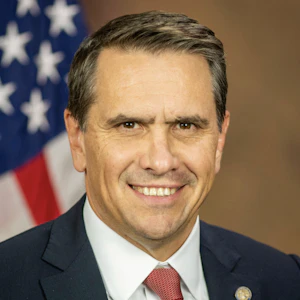
Biography of Deputy Attorney General Todd Blanche
The Honorable Todd Blanche is the 40th Deputy Attorney General of the United States, overseeing the work of the 115,000 dedicated employees who fulfill the Department of Justice’s mission at Main Justice, the FBI, DEA, U.S. Marshals, ATF, and 93 U.S. Attorney’s Offices.
Todd began his career at the Department where he served for over fifteen years in a variety of capacities, including as a contractor, a paralegal in the Criminal Division, and at the United States Attorney’s office for the Southern District of New York where he eventually became an AUSA and later a supervisor.
After leaving the Department, Todd worked as a criminal defense attorney that included representing President Donald Trump in three of the criminal cases brought against him in 2023 and 2024.
Following President Trump’s historic return to the White House, the President appointed Todd to work alongside Attorney General Pam Bondi to make America safe again. At the DOJ, Todd is working tirelessly to implement President Trump’s priorities that include confronting illegal protecting American businesses from fraud.
Todd has been married to his wonderful wife Kristine for nearly thirty years, is a father and grandfather.

Paul Atkins
Paul Atkins
Prior to returning to the SEC, Chairman Atkins was most recently chief executive of Patomak Global Partners, a company he founded in 2009. Chairman Atkins helped lead efforts to develop best practices for the digital asset sector. He served as an independent director and non-executive chairman of the board of BATS Global Markets, Inc. from 2012 to 2015.
Chairman Atkins was appointed by President George W. Bush to serve as a Commissioner of the SEC from 2002 to 2008. During his tenure, he advocated for transparency, consistency, and the use of cost-benefit analysis at the agency. Chairman Atkins also represented the SEC at meetings of the President’s Working Group on Financial Markets and the U.S.-EU Transatlantic Economic Council. From 2009 to 2010, he was appointed a member of the Congressional Oversight Panel for the Troubled Asset Relief Program.
Before serving as an SEC Commissioner, Chairman Atkins was a consultant on securities and investment management industry matters, especially regarding issues of strategy, regulatory compliance, risk management, new product development, and organizational control.
From 1990 to 1994, Chairman Atkins served on the staff of two chairmen of the SEC, Richard C. Breeden and Arthur Levitt, ultimately as chief of staff and counselor, respectively. He received the SEC’s 1992 Law and Policy Award for work regarding corporate governance matters.
Chairman Atkins began his career as a lawyer in New York, focusing on a wide range of corporate transactions for U.S. and foreign clients, including public and private securities offerings and mergers and acquisitions. He was resident for 2½ years in his firm's Paris office and admitted as conseil juridique in France.
A member of the New York and Florida bars, Chairman Atkins received his J.D. from Vanderbilt University School of Law in 1983 and was Senior Student Writing Editor of the Vanderbilt Law Review. He received his A.B., Phi Beta Kappa, from Wofford College in 1980.
Originally from Lillington, North Carolina, Chairman Atkins grew up in Tampa, Florida. He and his wife Sarah have three sons.

Mike Selig
Mike Selig
Chairman Selig brings to the role deep public and private sector experience working with a wide range of stakeholders across agriculture, energy, financial, and digital asset industries, which rely upon and operate in CFTC-regulated markets.
Prior to his leadership at the CFTC, Chairman Selig most recently served as chief counsel of the Securities and Exchange Commission’s Crypto Task Force and senior advisor to SEC Chairman Paul S. Atkins. In this role, Chairman Selig helped to develop a clear regulatory framework for digital asset securities markets, harmonize the SEC and CFTC regulatory regimes, modernize the agency’s rules to reflect new and emerging technologies, and put an end to regulation by enforcement. He also participated in the President’s Working Group on Digital Asset Markets and contributed to its report on “Strengthening American Leadership in Digital Financial Technology.”
Prior to government service, Chairman Selig was a partner at an international law firm, focusing on derivatives and securities regulatory matters. During his years in private practice, he represented a broad range of clients subject to regulation by the CFTC, including commercial end users, futures commission merchants, commodity trading advisors, swap dealers, designated contract markets, derivatives clearing organizations, and digital asset firms. Chairman Selig advised clients on compliance with the Commodity Exchange Act and the CFTC’s rules and regulations thereunder, including in connection with registration applications and obligations, enforcement matters, and complex transactions.
Chairman Selig earned his law degree from The George Washington University Law School and was articles editor of The George Washington Law Review. He received his undergraduate degree from Florida State University.

David Bailey
David Bailey

Eric Trump
Eric Trump
Mr. Trump also serves as Executive Vice President of The Trump Organization, where he oversees the global management and operations of the Trump family’s extensive real estate portfolio. This includes Trump Hotels, Trump Golf, commercial and residential real estate, Trump Estates, and Trump Winery. Known for his hands-on leadership and strong market instincts, he has played a key role in expanding the company’s presence across major U.S. and international markets.
A globally recognized business leader and public figure, Mr. Trump is a prominent advocate for Bitcoin and decentralized finance. He is a co-founder of World Liberty Financial, a decentralized finance (DeFi) platform, and serves on the Board of Advisors of Metaplanet, Japan’s largest corporate holder of Bitcoin.
Beyond his business activities, Mr. Trump has helped raise more than $50 million for St. Jude Children’s Research Hospital in the fight against pediatric cancer, a philanthropic mission he began at age 21.
Mr. Trump earned a degree in Finance and Management from Georgetown University. He currently resides in Florida with his wife, Lara, and their two children. He is also the author of Under Siege, his memoir published in October 2025.

Jack Mallers
Jack Mallers
Cynthia Lummis
Cynthia Lummis
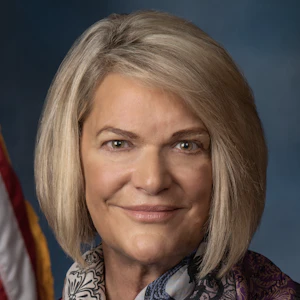
As the first-ever Chair of the Senate Banking Subcommittee on Digital Assets, Senator Lummis is the architect of the legislative framework shaping America's digital asset future. She introduced the landmark Lummis-Gillibrand Responsible Financial Innovation Act, the first comprehensive bipartisan crypto regulatory framework in Senate history. She co-authored the GENIUS Act — the first federal stablecoin law ever enacted — and introduced the BITCOIN Act, which would establish a U.S. strategic Bitcoin reserve of up to one million BTC. She is leading the Clarity Act, which will bring long-overdue regulatory certainty to the digital asset industry. She has also championed digital asset tax reform, including a de minimis exemption for small transactions and equal tax treatment for miners and stakers.
Known as Congress' "Crypto Queen," Senator Lummis represents Wyoming — a state she has helped build into one of the most digital asset-friendly regulatory environments in the nation. Before serving in the Senate, she served 14 years in the Wyoming Legislature, eight years as Wyoming State Treasurer, and eight years in the U.S. House. She is a three-time graduate of the University of Wyoming.
Her work represents a crucial bridge between traditional financial systems and the emerging digital economy, ensuring America leads the world in financial innovation while protecting the individual freedoms that define it.

Adam Back
Adam Back

Amy Oldenburg
Amy Oldenburg
David Marcus
David Marcus

Matt Schultz
Matt Schultz
Fred Thiel
Fred Thiel
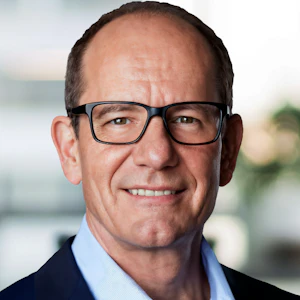
Throughout his career, Mr. Thiel has consistently driven rapid growth and created substantial shareholder value. Prior to MARA, Mr. Thiel served as the CEO of two other public companies, Local Corporation (NASDAQ: LOCM) and Lantronix, Inc (NASDAQ: LTRX). He has successfully raised billions in equity and debt through private and public offerings, led companies through IPOs, executed high-value exits to strategic and financial acquirers, and implemented effective M&A and roll-up strategies.
Mr. Thiel attended the Stockholm School of Economics and executive classes at Harvard Business School, and is fluent in English, Spanish, Swedish, and French. Mr. Thiel is the Chairman of the Board for Oden Technology, Inc. and is active in Young Presidents’ Organization where he has led initiatives in both the FinTech and Technology Networks.
A recognized voice in the industry, Fred frequently shares his insights on energy and technology with major media outlets like Bloomberg TV, CNBC, and FOX Business, contributing to vital discussions about the future of these sectors.
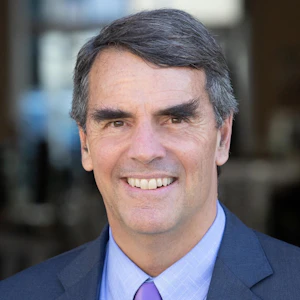
Tim Draper
Tim Draper
He is a supporter and global thought leader for entrepreneurs everywhere, and is a leading spokesperson for Bitcoin and decentralization, having won the Bitcoin US Marshall’s auction in 2014, invested in over 50 crypto companies, and led investments in Coinbase, Ledger, Tezos, and Bancor, among others.

Afroman
Afroman