Documenting the Rise of Bitcoin Through Filmmaking
Speakers/Moderators

Isabella Santos
Isabella Santos
She is the creator of BTC Isla, a real-world experiment proving that Bitcoin adoption must be bottom-up — not top-down. Through merchant onboarding, education programs, a Bitcoin Café, and on-the-ground storytelling, she documents what it actually looks like to build a parallel economy from scratch.
Isabella is also the co-founder of Get Based, a media company producing high-impact Bitcoin content and short-form tutorials for sovereign brands. Her work blends investigative storytelling, street interviews, and narrative-driven documentaries designed to wake people up from the fiat system.
Her focus isn’t price.
It’s sovereignty.
She believes Bitcoin is:
• a tool for saving human time and energy
• a hedge against systemic fragility
• a foundation for parallel systems
• and a bridge to healthier, freer communities
On Isla Mujeres, she has helped onboard dozens of merchants, organized Bitcoin meetups and retreats, and built a local ecosystem where people can earn, save, and spend in sats.
Her mission:
Prove that Bitcoin works — not on paper, but in real life.
Shooter
Shooter
The film features Graham Hancock, Dr. Robert Malone, Tuur Demeester, Alex Gladstein and many more.
Creator of Comeback Country (2022), a 11-minute short film on El Salvador’s rise from civil/gang war to Bitcoin adoption and safety under Bukele (retweeted by @nayibbukele).
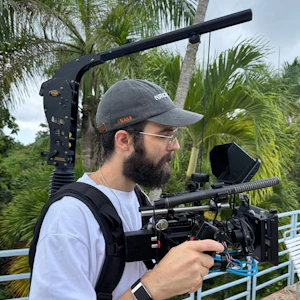
Webworthy
Webworthy
Session
Overview
Filmmakers Shooter of No More Inflation and Webworthy of BTCPay Server and BTC Inc joined Isabella Santos to discuss how Bitcoin’s story is being documented through film. The conversation covered Bitcoin culture, Hollywood portrayals of Bitcoin, and why independent filmmakers see value in capturing stories from inside the community.
The speakers reflected on their own paths into Bitcoin filmmaking, including work around El Salvador, inflation, BTCPay Server, Bitcoin mining in Kenya, and emerging debates inside the Bitcoin ecosystem. They also discussed the challenges of making art in Bitcoin, from funding and creative control to the reality that creators often need another source of income.
A major theme was the importance of telling Bitcoin stories before they are misrepresented by outsiders. The session also offered practical advice for creators: pick a lane, keep producing, learn from the audience, avoid relying on content for immediate income, and make work that the creator can stand behind.
Good afternoon. How are you guys doing today? Wake up, wake up. We are in Vegas. While I set up, can you guys do a little intro about who you are and what you do in the space?
I've been a videographer for 20 years now. I've been a Bitcoiner for 14. I started contributing to open source in 2018 to BTCPay Server, and that changed my life. Open source can lead to incredible places, and it's one of the best places to start in Bitcoin. It has been a wild ride. Shooter, how about yourself?
Yeah, so obviously we're both filmmakers. I spent a year making a 10-minute film about El Salvador and Bitcoin, and two years on a film about inflation. I traveled a bunch of different places. I just did it to try to spread the good word, selfishly, so that the transition is easier for me and my family. I'm just an artist, man.
Give it up for these two.
I don't think people realize the importance of telling and making good stories, because that's what's going to be left in the world. If you watch movies from the 90s, you grasp how the times worked. It's really interesting to see that comparison, because back in the day nobody had phones. Nowadays, so many movies and interpretations of people include their phones and the iPhone face. Have you guys heard of the iPhone face?
Yes, the Gen Z stare. It's become like a physical embodiment of our time.
One hundred percent. Which brings me to Hollywood. Hollywood just greenlit a Bitcoin movie with two A-listers. You've both been documenting history from the inside for years. What's your gut reaction? Be honest, no filter.
I'm so happy that you're asking this question, because I don't think this movie is actually going to see the light of day. Particularly the Casey Affleck movie, I was so excited that it was made and coming out. I think now it's called Bitcoin. Originally it was Killing Satoshi, I think.
If you dig into why it's happening, when it came out, or how they shot it, it was shot entirely on volumetric stages. AI was used in the background. It was also financed by Calvin Ayre, so if they decided to go through with this, they would have to rewrite all of the BSV wars and COPA litigation that they lost.
I have a feeling Casey Affleck, who is a great actor, had a great time shooting with his friends in Hollywood for four months, talking about Bitcoin for the first time, and had no idea how much baggage was behind that production. People shelve movies all the time.
To contrast that, I actually liked the latest HBO Satoshi movie. I think they did a really sweet job, and it ended in a nice place. Even if it isn't the truth, it's a much better truth than we've had thus far. But I'm open to what you think too, because it's a wild time.
I just think everything is good for Bitcoin. No matter what, somehow, some way, it's this beautiful thing that always uses the momentum in whatever direction it's going in to its benefit. It's like judo. Whether the movie sucks or the movie's great, it's going to at least reach more people about Bitcoin. If people really think it sucks, maybe it will increase the desire for something that's actually good.
Most artists make nothing. Most artists spend money to create the art that they make. Few artists make just enough to get by, and just the tiniest bit actually have enough wealth, in my opinion, to have the focus and the time to do something great and not feel super stressed about balancing all these things. Maybe that's what it will lead to. Maybe not, but everything is always good for Bitcoin.
That brings me to the idea that any publicity is good publicity. It doesn't matter if it's good or bad. Now people have actually heard of Bitcoin. I don't know if this happens to you guys, but it's not a foreign concept anymore. I see it on X and everything. Bitcoin culture is sort of dead in a way. I tweeted that out the other day, and somebody was like, "The U.S. dollar doesn't have a culture." So what do you guys think about that? How important is documenting Bitcoin culture? In a couple of years, is Bitcoin culture still going to be a thing, or is it going to be something from the past?
That's a really good way to think about it. My favorite comparison is that we're kind of growing like skateboarding. I say that because making a skateboard back then cost very little money, anyone could do it, and it proliferated around the world in a short amount of time. It became one of the most popular pastimes, even superseding baseball for a certain period of time.
But if you're a skateboarder, you know that when it got really popular, skaters liked being the losers in high school. They loved having that hardcore scene and not being part of a baseball team or a bigger thing. So when skateboarding really blew up, the funding that got into the people the skaters didn't like didn't trickle down to the hardcore skaters who really make it what it is.
I kind of see Bitcoin going the same way. Now we have a president who's saying stuff that we don't even like sometimes, but if he does a strategic reserve, maybe we'll like that a little bit more. To your point, it has grown into different places. To my wife's friends at dinner in New York, I used to be a poor anarchist person, and now I'm a wealthy Republican in their eyes. Just because of the Trump stuff, it changed so quickly.
For me, the culture fundamentally is, I don't give a fuck. To not be in a position where you have to sacrifice your principles. Usually it is money that makes you sacrifice your principles. This money, this fuck-you money, really is that. When you are operating with that mindset, you value your time a whole lot more.
I think the culture will always be, I don't give a fuck, come get it, and family. Ultimately, if you think about what you want in life, you can have all the Lambos, all the jets, and all the nice suits, but at the end of the day, probably the most valuable thing you do is spend time with your family. When Bitcoin gives people that financial stability, the general culture is just going to be family. If I'm working together with you, it's because I like working with you, not because I need you. I don't need your money. You can't give me money that's valuable enough. We have to do something else.
I think that will always be the culture. But there is no gold culture, right? There is no U.S. dollar culture. Eventually, once it is widespread enough, it's just going to be money. Then people will look back on the stuff that you and I create, perhaps, and be like, that was crazy. Those guys were living in a really crazy time.
Who out here creates content, makes videos, or wants to be in social media? All right, we got some out there. To those people who just raised their hands, what advice would you give them? One of the things you guys were talking about was money and the system being broken. As an artist, it is a thing to start little and create the art. Artists have this persona of being a poor anarchist. What is your top tip or advice for people who want to create content and are trying to create something out of it, to make a difference in a way?
This is an amazing time to take one. There are so many stories to follow. If you were to start today, you would really do well if you picked a lane. If you're going to just put up a camera and talk about what's going on on X publicly, that is really cool and should be art and fun to do, but there are a lot of people doing it. You're competing against them, and you're trying to get a sponsor from an exchange or some big wallet company. It's a hard thing to do.
But there are not a lot of people like us who don't put themselves in the story and just film Bitcoiners. There are tons of Bitcoin companies that are interested in getting footage, conferences, all kinds of events, and meetups. There is an amazing early world of video if you are getting into it. But some people get trapped in, "I made a podcast and I started talking about the same things everybody else is talking about," and then you're fighting over the same sponsors as other, more interesting podcasts. That's a hard place to be.
One of the reasons I wanted to make a full-length film is that people like you and Julian and others are doing what you do so well. I wanted to have a slightly different approach.
Don't plan to make any money doing it. Just don't plan on that, because you're going to set improper expectations for yourself and then you're going to be very stressed out. You're not very creative when you're very stressed out. So have another way to make money.
The best way to use Bitcoin is to save it. It's going to free you. It's going to give you time to spend with your family. At the end of the day, I love you, I love you, I love all of you, but I'd rather be with my family.
That's all I would say. That way, actually do it for the love of it. It will probably produce something better and probably lead you to the place where it might actually make you financially stable. Just do it because you love it and remember that's why you're doing it. If money comes, that's a miracle or a blessing. If it doesn't, then remember that you knew that from the beginning.
I'd love to add one piece on that point. If you start working in Bitcoin and you're only paid in Bitcoin, unfortunately all you do is sell Bitcoin. If you want to accumulate Bitcoin, working in Bitcoin sometimes is not the best way. I haven't earned a dollar in two years, so I just keep selling Bitcoin because I'm only paid in Bitcoin. It's done great, but it's a hard life to get used to, just selling Bitcoin to live.
That is very true. Selling your Bitcoin kind of hurts. What's your advice? Because you do it too, and you're really good.
My advice would be just do it and keep doing it. It's all about the reps. Keep doing that video and learn from it. I think many people do not learn from the previous videos, and they get stuck in their ways. If you want to make a movie, make a show, do what you want to do, but also listen to the audience. At the end of the day, when you're creating content, you want to provide value. What value are you providing? That would be my advice. Don't be discouraged.
If we don't tell our stories, others will. What's the one story you're terrified will get told wrong if you don't get to it first?
To add onto that first question, if that Casey Affleck movie comes out and paints Craig Wright as a tragic Australian, a brilliant genius who just didn't get his vision accomplished because he actually is Satoshi, that will really make me sad.
I don't have a good answer. There are so many stories. As part of my film, I went to Kenya and was filming what Gridless is doing out there with Bitcoin mining. I met farmers who had never had electricity. All of a sudden, this guy who was spending three hours a day chopping food for his cattle with a machete could push it through in like 10 minutes. It was so powerful. I was crying in the truck on the way out. I was like, God, that was so powerful.
There are millions of stories. My buddy was out in North Dakota mining off flared gas, and the work ethic required to do that kind of work is incredible. The reason he does it is because he wants to be the last person the government can shut off. He wants to be out in the middle of nowhere, and he takes a tradeoff for that reason. Honestly, if I spent the rest of my Bitcoin career just filming him, it would be well worth it. I'm sure there are a thousand other people just like him. There are so many. I wouldn't regret anything. Everyone should do them all.
Speaking of the films, how did you guys actually end up making Bitcoin films? What made you do it? What was that thought process? Is there any video or experience that you want to share, that pivotal moment?
For me, I had been a Bitcoiner for a long time, but up until COVID, I was also working as a commercial videographer. I had a very expensive camera that was like a really cheap house, and I had a mortgage on it. I would lose sleep over how much debt I was under.
COVID happened, and it was the first pico top I ever sold. I got out of all my camera gear two weeks in, and New York was shut down for the next two years. At the time, I had been contributing to BTCPay Server for two years, making animations and graphics. I was like, I don't really want to go outside anyway. I'll just keep making animations and graphics for them.
Then when I decided to tell their story, which I felt so strongly about, for The Trust Machine Is Broken, I bought a new camera kit that I wanted to fit in a small tote bag and take around the world with them. That was the film I made after that, and that brought me back into Bitcoin. It has been history since.
I've been making films for a while. One of the people who really orange-pilled me was Max Keiser. When I found out about how the system works, I was really upset, and his energy was what I was feeling. I was throwing tables, like, why aren't more people upset like this?
He was live streaming. I dropped a message in the live stream: "Hey, I'm going to your next event. I've got cameras. If you want me to film it, I'll do it for free." I did a couple more with them, and I went with them to El Salvador the first time they went.
The most important part was meeting all of the people from El Salvador and the diaspora at the airport and all these different places, because each one had this horrific story of pain and then a sudden burst of hope. I was so inspired that I went back a few more times and put together a 10-minute film about El Salvador called Comeback Country. It's probably still on YouTube. Nayib Bukele ended up posting it, so a bunch of Bitcoiners were like, you need to make a full-length film. That's what led to me planning and doing this film about inflation for two years.
One thing that came to mind, and I just want to say real quick, is that we've been hanging around each other. I respect this guy's work a lot. I know we inspire each other. He showed me the trailer for The Trust Machine Is Broken, and I told him it was fucking awesome because it is awesome.
One thing I've dealt with is this battle with my ego. I'm a really loving person. I like to collaborate. But when I'm in the editing room, I want to destroy you. I want to be so much better than you that you are embarrassed and you come back with your best. I don't know why I thought of that, but I just wanted to make sure you guys know, in case you ever get it twisted. If you see me posting something with rap music, like, get on my level, it's just me in my own head hoping that I poke some people to wake them up.
I love it. I'm the same way. Bitcoin is literally competition in the money form.
Many people have this stigma that competition is bad. Competition just keeps you on your toes. If you don't have competition, then what are you going to do? How are you going to be better?
Which brings us to creation. Are you guys ever in a creation slump? When you're trying to be motivated and inspired, what do you do to get out of the funk? You're entertaining people at the end of the day. Grasping someone's attention for more than even a minute nowadays is the hardest task, because many people have gotten accustomed to TikToks and 10-second videos. Can you guide me through that creation process? What do you do to inspire yourself to create content that you know is going to provide value to someone for at least five minutes?
When I'm editing something, you have to fall in love with it. If you can make yourself cry and just keep playing it over and over, like, I know this is going to work, that's what we're really looking for. Shout out to Isabella's stuff. She's doing twice the views easily because she loves what she's doing, and it's orange-pilling an entire island.
When you fall in love with something, it gets easier. But there is always a long time. For me, winter in New York is my slump time. I just have to survive that period. Summer will be great, and it comes back.
In winter, come to the island. Much better.
When I think about being creative, I'm problem solving. If I'm smooth sailing, that's great, no problem. But when you get in a slump, it's a problem. When I'm problem solving, I need to be attracted to wanting to fix the problem. I have to want to do the work. If it becomes work where I'm like, I don't really want to do this right now, I just stop. I make sure I get some sun. Usually it's gardening or something with water. I just get some sun.
I think of it as wrestling with problems. Sometimes brute force is not the way to solve the problem. Sometimes you need time, whether it's to stop thinking about it or step away. I used to practice piano when I was younger, and I would realize that after 15 minutes I wouldn't get it at all in the song I was practicing. But if I stepped away for two hours and then came back, I could pick it up and get a little better again. Sometimes you just need time.
On the whole attention span thing, I think it takes around 15 minutes for the average person to get in the zone. One of the worst parts about society is that the percentage of time the general population is in the zone is so low now. I don't even know how anybody gets anything done. If you're working and 10 minutes in your phone goes off, and you look at your phone, you never even got in the zone. How are you getting anything done?
I do this for fun. I make a living another way. I'm blessed in many ways. I do this thing for me. I used to ask people, what do you think about this, what do you think about that? Then I realized after a while, they look to me to see what I think about films, because they see me as a guy who can analyze it better.
So all I have to do is make sure I'm proud of it. If I'm proud of it, I really don't care. I mean, I do care what you think. I want it to help you. That's why I made it. But I made it for me. If I'm happy with it, no one else can convince me otherwise. Maybe I can make it better, and I'm open to that. But I'm inspired by Michelangelo, and I just don't care. If I like it, I like it.
Honestly, in the editing room, you just have to love it yourself. I found myself looking for other approval, and that can go too far. Who knows better than you? You've got your hands in it.
It is nice to know if the stuff is landing, but you can tell from your views when something hits. You know when it feels right too.
What sucks is the ones you want to hit don't. We have to be honest with that. The ones that go viral are the stupid ones where you're like, why aren't you going down the rabbit hole with me? But the best artists were typically the ones that had the most production. Prince was always recording music. They would produce so much that something was bound to stick.
God bless you guys, because I'm not producing anything Bitcoin-related right now. Two years in Bitcoin is like 10 years, I think. I'm out. God bless you guys, because it's a grind. I respect both of you a lot for the consistency, because I know how difficult it is.
You said you're not going to be creating Bitcoin content for a bit now, which brings me to the question: what are you currently working on? What can people expect from you guys?
Yesterday we released the first teaser of my new feature film called This Time Is Different. It's the story of the four-year cycle. No one has ever captured from the beginning to the end of the current cycle. David Bailey is the main character through the most dramatic Bitcoin cycle, maybe not in price, but with the president, David's company going public, all the up, and all of the painful down. We have a year and a half of shooting left. It has been a long year.
It's tough to work in Bitcoin. One year feels like 10. Last year, we were all friends. If anyone is familiar with BIP-119 and also the CTV side, it has been kind of a disaster. People who were having dinner and drinks together in Europe two years ago are now at each other's throats on X. It's a painful road to be on.
How are you even documenting that? That's insane. I feel like there are so many fires in the space that you're like an octopus.
Shout out to her. She's been so incredible with all the Bitcoin++ conferences. I filmed the first debate between Peter Todd, Gigi, Mechanic, and Luke. I walked out of the room and was like, this is going to be so bad in a year. And it has been. That was a year and a half ago. I was kind of hoping there would be some consensus there, that something good would come out of it, and it just blew everything up. But it created different new conferences. If you haven't seen Bitcoin++, go check it out. Amazing things are happening there.
To be honest with you, what I'm working on is my nine-year-old nephew's ability to hit a baseball. The film was great for me because Bitcoin gave me the motivation to dedicate two years to making a film. I can't think of anything else that would be more important. Selfishly, if I can help people understand Bitcoin, it's just going to make the transition easier for my future.
Bitcoin gave me the motivation, and it also introduced me to the people who helped me have the time and resources to dedicate two years as an artist with 100% creative control. I could have done anything I wanted to do, and that's every artist's dream. Now I'm creatively satisfied. I'm content. I make short films for businesses. I do just fine. The rest of the time, I have a big family, and that's all I do now. I just work, I stack sats, and I spend time with my family. That's what I'm working on.
Where can these guys follow you and keep track of everything you're doing?
Check out my X, Webworthy. Bitcoin Magazine has been so supportive in putting out the first teasers for This Time Is Different. Follow us there and keep up with the new stuff. We're hopeful about a three-minute piece coming out in a couple weeks that shows a little bit more of the entire story. Again, it's another year and a half before the full film will actually be out.
I'm on Twitter at BitcoinShooter. Go to nomoreinflation.com. You can watch the full film for free. There are some cool people in there, like Graham Hancock, Robert Malone, Rockstar Dev, Tony, Alex Gladstein, and others.
Please give them a hand.
Similar
Sessions
Bitcoin Adoption: From First Use to Everyday Reality

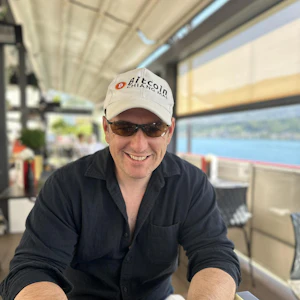

Brianna Honkawa d'Estries
Brianna Honkawa d'Estries
Brianna works with D++ on Bitcoin education through games, bringing hands-on Bitcoin experiences to people around the world. Together they are bringing that mission to Bitcoin Conference with a Mario Kart 64++ activation where players earn Bitcoin instantly to their Lightning wallet just by playing.
Brianna came to Bitcoin through its human rights potential and has stayed committed to that mission - getting more women, marginalized communities, and people from the places where Bitcoin is needed most into the industry as builders.
Isabella Santos
Isabella Santos
She is the creator of BTC Isla, a real-world experiment proving that Bitcoin adoption must be bottom-up — not top-down. Through merchant onboarding, education programs, a Bitcoin Café, and on-the-ground storytelling, she documents what it actually looks like to build a parallel economy from scratch.
Isabella is also the co-founder of Get Based, a media company producing high-impact Bitcoin content and short-form tutorials for sovereign brands. Her work blends investigative storytelling, street interviews, and narrative-driven documentaries designed to wake people up from the fiat system.
Her focus isn’t price.
It’s sovereignty.
She believes Bitcoin is:
• a tool for saving human time and energy
• a hedge against systemic fragility
• a foundation for parallel systems
• and a bridge to healthier, freer communities
On Isla Mujeres, she has helped onboard dozens of merchants, organized Bitcoin meetups and retreats, and built a local ecosystem where people can earn, save, and spend in sats.
Her mission:
Prove that Bitcoin works — not on paper, but in real life.
Bitcoin Adoption: From First Use to Everyday Reality
Speakers/Moderators
Brianna Honkawa d'Estries
Brianna Honkawa d'Estries
Brianna works with D++ on Bitcoin education through games, bringing hands-on Bitcoin experiences to people around the world. Together they are bringing that mission to Bitcoin Conference with a Mario Kart 64++ activation where players earn Bitcoin instantly to their Lightning wallet just by playing.
Brianna came to Bitcoin through its human rights potential and has stayed committed to that mission - getting more women, marginalized communities, and people from the places where Bitcoin is needed most into the industry as builders.
Isabella Santos
Isabella Santos
She is the creator of BTC Isla, a real-world experiment proving that Bitcoin adoption must be bottom-up — not top-down. Through merchant onboarding, education programs, a Bitcoin Café, and on-the-ground storytelling, she documents what it actually looks like to build a parallel economy from scratch.
Isabella is also the co-founder of Get Based, a media company producing high-impact Bitcoin content and short-form tutorials for sovereign brands. Her work blends investigative storytelling, street interviews, and narrative-driven documentaries designed to wake people up from the fiat system.
Her focus isn’t price.
It’s sovereignty.
She believes Bitcoin is:
• a tool for saving human time and energy
• a hedge against systemic fragility
• a foundation for parallel systems
• and a bridge to healthier, freer communities
On Isla Mujeres, she has helped onboard dozens of merchants, organized Bitcoin meetups and retreats, and built a local ecosystem where people can earn, save, and spend in sats.
Her mission:
Prove that Bitcoin works — not on paper, but in real life.
Documenting the Rise of Bitcoin Through Filmmaking
Isabella Santos
Isabella Santos
She is the creator of BTC Isla, a real-world experiment proving that Bitcoin adoption must be bottom-up — not top-down. Through merchant onboarding, education programs, a Bitcoin Café, and on-the-ground storytelling, she documents what it actually looks like to build a parallel economy from scratch.
Isabella is also the co-founder of Get Based, a media company producing high-impact Bitcoin content and short-form tutorials for sovereign brands. Her work blends investigative storytelling, street interviews, and narrative-driven documentaries designed to wake people up from the fiat system.
Her focus isn’t price.
It’s sovereignty.
She believes Bitcoin is:
• a tool for saving human time and energy
• a hedge against systemic fragility
• a foundation for parallel systems
• and a bridge to healthier, freer communities
On Isla Mujeres, she has helped onboard dozens of merchants, organized Bitcoin meetups and retreats, and built a local ecosystem where people can earn, save, and spend in sats.
Her mission:
Prove that Bitcoin works — not on paper, but in real life.
Shooter
Shooter
The film features Graham Hancock, Dr. Robert Malone, Tuur Demeester, Alex Gladstein and many more.
Creator of Comeback Country (2022), a 11-minute short film on El Salvador’s rise from civil/gang war to Bitcoin adoption and safety under Bukele (retweeted by @nayibbukele).
Webworthy
Webworthy
Documenting the Rise of Bitcoin Through Filmmaking
Speakers/Moderators
Isabella Santos
Isabella Santos
She is the creator of BTC Isla, a real-world experiment proving that Bitcoin adoption must be bottom-up — not top-down. Through merchant onboarding, education programs, a Bitcoin Café, and on-the-ground storytelling, she documents what it actually looks like to build a parallel economy from scratch.
Isabella is also the co-founder of Get Based, a media company producing high-impact Bitcoin content and short-form tutorials for sovereign brands. Her work blends investigative storytelling, street interviews, and narrative-driven documentaries designed to wake people up from the fiat system.
Her focus isn’t price.
It’s sovereignty.
She believes Bitcoin is:
• a tool for saving human time and energy
• a hedge against systemic fragility
• a foundation for parallel systems
• and a bridge to healthier, freer communities
On Isla Mujeres, she has helped onboard dozens of merchants, organized Bitcoin meetups and retreats, and built a local ecosystem where people can earn, save, and spend in sats.
Her mission:
Prove that Bitcoin works — not on paper, but in real life.
Shooter
Shooter
The film features Graham Hancock, Dr. Robert Malone, Tuur Demeester, Alex Gladstein and many more.
Creator of Comeback Country (2022), a 11-minute short film on El Salvador’s rise from civil/gang war to Bitcoin adoption and safety under Bukele (retweeted by @nayibbukele).
Webworthy
Webworthy
Other
Speakers
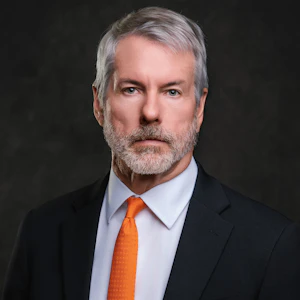
Michael Saylor
Michael Saylor
Todd Blanche
Todd Blanche
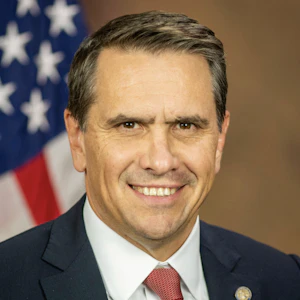
Biography of Deputy Attorney General Todd Blanche
The Honorable Todd Blanche is the 40th Deputy Attorney General of the United States, overseeing the work of the 115,000 dedicated employees who fulfill the Department of Justice’s mission at Main Justice, the FBI, DEA, U.S. Marshals, ATF, and 93 U.S. Attorney’s Offices.
Todd began his career at the Department where he served for over fifteen years in a variety of capacities, including as a contractor, a paralegal in the Criminal Division, and at the United States Attorney’s office for the Southern District of New York where he eventually became an AUSA and later a supervisor.
After leaving the Department, Todd worked as a criminal defense attorney that included representing President Donald Trump in three of the criminal cases brought against him in 2023 and 2024.
Following President Trump’s historic return to the White House, the President appointed Todd to work alongside Attorney General Pam Bondi to make America safe again. At the DOJ, Todd is working tirelessly to implement President Trump’s priorities that include confronting illegal protecting American businesses from fraud.
Todd has been married to his wonderful wife Kristine for nearly thirty years, is a father and grandfather.
Paul Atkins
Paul Atkins
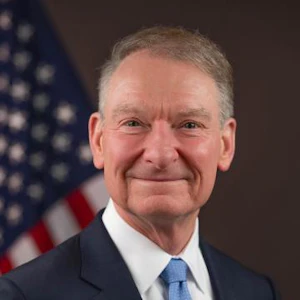
Prior to returning to the SEC, Chairman Atkins was most recently chief executive of Patomak Global Partners, a company he founded in 2009. Chairman Atkins helped lead efforts to develop best practices for the digital asset sector. He served as an independent director and non-executive chairman of the board of BATS Global Markets, Inc. from 2012 to 2015.
Chairman Atkins was appointed by President George W. Bush to serve as a Commissioner of the SEC from 2002 to 2008. During his tenure, he advocated for transparency, consistency, and the use of cost-benefit analysis at the agency. Chairman Atkins also represented the SEC at meetings of the President’s Working Group on Financial Markets and the U.S.-EU Transatlantic Economic Council. From 2009 to 2010, he was appointed a member of the Congressional Oversight Panel for the Troubled Asset Relief Program.
Before serving as an SEC Commissioner, Chairman Atkins was a consultant on securities and investment management industry matters, especially regarding issues of strategy, regulatory compliance, risk management, new product development, and organizational control.
From 1990 to 1994, Chairman Atkins served on the staff of two chairmen of the SEC, Richard C. Breeden and Arthur Levitt, ultimately as chief of staff and counselor, respectively. He received the SEC’s 1992 Law and Policy Award for work regarding corporate governance matters.
Chairman Atkins began his career as a lawyer in New York, focusing on a wide range of corporate transactions for U.S. and foreign clients, including public and private securities offerings and mergers and acquisitions. He was resident for 2½ years in his firm's Paris office and admitted as conseil juridique in France.
A member of the New York and Florida bars, Chairman Atkins received his J.D. from Vanderbilt University School of Law in 1983 and was Senior Student Writing Editor of the Vanderbilt Law Review. He received his A.B., Phi Beta Kappa, from Wofford College in 1980.
Originally from Lillington, North Carolina, Chairman Atkins grew up in Tampa, Florida. He and his wife Sarah have three sons.

Mike Selig
Mike Selig
Chairman Selig brings to the role deep public and private sector experience working with a wide range of stakeholders across agriculture, energy, financial, and digital asset industries, which rely upon and operate in CFTC-regulated markets.
Prior to his leadership at the CFTC, Chairman Selig most recently served as chief counsel of the Securities and Exchange Commission’s Crypto Task Force and senior advisor to SEC Chairman Paul S. Atkins. In this role, Chairman Selig helped to develop a clear regulatory framework for digital asset securities markets, harmonize the SEC and CFTC regulatory regimes, modernize the agency’s rules to reflect new and emerging technologies, and put an end to regulation by enforcement. He also participated in the President’s Working Group on Digital Asset Markets and contributed to its report on “Strengthening American Leadership in Digital Financial Technology.”
Prior to government service, Chairman Selig was a partner at an international law firm, focusing on derivatives and securities regulatory matters. During his years in private practice, he represented a broad range of clients subject to regulation by the CFTC, including commercial end users, futures commission merchants, commodity trading advisors, swap dealers, designated contract markets, derivatives clearing organizations, and digital asset firms. Chairman Selig advised clients on compliance with the Commodity Exchange Act and the CFTC’s rules and regulations thereunder, including in connection with registration applications and obligations, enforcement matters, and complex transactions.
Chairman Selig earned his law degree from The George Washington University Law School and was articles editor of The George Washington Law Review. He received his undergraduate degree from Florida State University.

David Bailey
David Bailey

Eric Trump
Eric Trump
Mr. Trump also serves as Executive Vice President of The Trump Organization, where he oversees the global management and operations of the Trump family’s extensive real estate portfolio. This includes Trump Hotels, Trump Golf, commercial and residential real estate, Trump Estates, and Trump Winery. Known for his hands-on leadership and strong market instincts, he has played a key role in expanding the company’s presence across major U.S. and international markets.
A globally recognized business leader and public figure, Mr. Trump is a prominent advocate for Bitcoin and decentralized finance. He is a co-founder of World Liberty Financial, a decentralized finance (DeFi) platform, and serves on the Board of Advisors of Metaplanet, Japan’s largest corporate holder of Bitcoin.
Beyond his business activities, Mr. Trump has helped raise more than $50 million for St. Jude Children’s Research Hospital in the fight against pediatric cancer, a philanthropic mission he began at age 21.
Mr. Trump earned a degree in Finance and Management from Georgetown University. He currently resides in Florida with his wife, Lara, and their two children. He is also the author of Under Siege, his memoir published in October 2025.
Jack Mallers
Jack Mallers
Cynthia Lummis
Cynthia Lummis
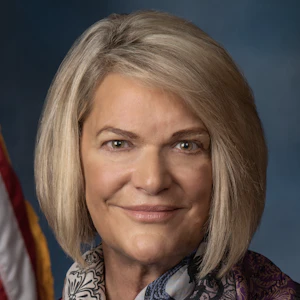
As the first-ever Chair of the Senate Banking Subcommittee on Digital Assets, Senator Lummis is the architect of the legislative framework shaping America's digital asset future. She introduced the landmark Lummis-Gillibrand Responsible Financial Innovation Act, the first comprehensive bipartisan crypto regulatory framework in Senate history. She co-authored the GENIUS Act — the first federal stablecoin law ever enacted — and introduced the BITCOIN Act, which would establish a U.S. strategic Bitcoin reserve of up to one million BTC. She is leading the Clarity Act, which will bring long-overdue regulatory certainty to the digital asset industry. She has also championed digital asset tax reform, including a de minimis exemption for small transactions and equal tax treatment for miners and stakers.
Known as Congress' "Crypto Queen," Senator Lummis represents Wyoming — a state she has helped build into one of the most digital asset-friendly regulatory environments in the nation. Before serving in the Senate, she served 14 years in the Wyoming Legislature, eight years as Wyoming State Treasurer, and eight years in the U.S. House. She is a three-time graduate of the University of Wyoming.
Her work represents a crucial bridge between traditional financial systems and the emerging digital economy, ensuring America leads the world in financial innovation while protecting the individual freedoms that define it.
Adam Back
Adam Back
Amy Oldenburg
Amy Oldenburg
David Marcus
David Marcus

Matt Schultz
Matt Schultz
Fred Thiel
Fred Thiel
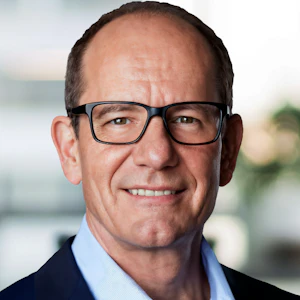
Throughout his career, Mr. Thiel has consistently driven rapid growth and created substantial shareholder value. Prior to MARA, Mr. Thiel served as the CEO of two other public companies, Local Corporation (NASDAQ: LOCM) and Lantronix, Inc (NASDAQ: LTRX). He has successfully raised billions in equity and debt through private and public offerings, led companies through IPOs, executed high-value exits to strategic and financial acquirers, and implemented effective M&A and roll-up strategies.
Mr. Thiel attended the Stockholm School of Economics and executive classes at Harvard Business School, and is fluent in English, Spanish, Swedish, and French. Mr. Thiel is the Chairman of the Board for Oden Technology, Inc. and is active in Young Presidents’ Organization where he has led initiatives in both the FinTech and Technology Networks.
A recognized voice in the industry, Fred frequently shares his insights on energy and technology with major media outlets like Bloomberg TV, CNBC, and FOX Business, contributing to vital discussions about the future of these sectors.
Tim Draper
Tim Draper
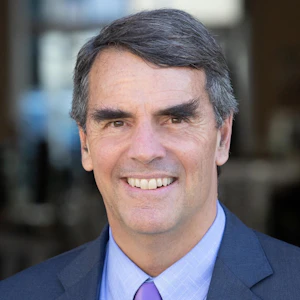
He is a supporter and global thought leader for entrepreneurs everywhere, and is a leading spokesperson for Bitcoin and decentralization, having won the Bitcoin US Marshall’s auction in 2014, invested in over 50 crypto companies, and led investments in Coinbase, Ledger, Tezos, and Bancor, among others.
Afroman
Afroman