Don't Trust, Verify: Sovereignty in the Age of AI
Speakers/Moderators

Avi Burra
Avi Burra
TC
TC
Milan de Reede
Milan de Reede
Charles
Charles
Session
Overview
Don't Trust, Verify: Sovereignty in the Age of AI explored how Bitcoin's verification-first ethos applies to AI systems, agents, and automated decision-making. The panel featured TC of Timechain Calendar, Milan de Reede of NanoGPT and AI.bitcoin.com, Charles of Sats4AI, and moderator Avi Burra of NosFabrica.
The discussion focused on privacy, permissionless access, and the limits of verification with neural networks. Panelists noted that even open weight AI models remain difficult to audit, while closed models introduce additional trust assumptions through system prompts, logging, and platform rules. Bitcoin and Lightning were presented as useful rails for private access to AI services without accounts, credit cards, or KYC.
A major theme was digital sovereignty. The speakers emphasized that users and developers should avoid becoming overly dependent on a single model or company, keep control over key decisions, and remain skeptical of AI outputs. They also discussed local models, Trusted Execution Environments, micropayments, and agent-to-agent payments as possible pieces of a more sovereign Bitcoin AI stack.
All right. Welcome, folks. This panel is Don't Trust, Verify: Sovereignty in the Age of AI. We have a great panel lined up. Maybe we'll start with a round of introductions.
Hi, TC here. I created Timechain Calendar, and there is now a Timechain Calendar mobile app. Some AI was used.
My name is Milan de Reede. I co-founded NanoGPT, and we run AI.bitcoin.com, which is essentially a way that anyone, anywhere can use any AI model privately.
My name is Charles. I'm the founder of Sats4AI, which is essentially a platform with AI tools paid with Lightning. There is no sign-up or anything. It is for humans, but also for agents. We offer services as simple as generating images, videos, and songs, but also more niche products, like having your AI make a phone call or send a text message, or even take an EPUB and turn it into an audiobook.
Great. So, Charles, let's stay with you. Everyone on this panel is building something that involves AI deeply, and you're all Bitcoiners. Where does Bitcoin fit into the AI equation?
I've been working in AI and Bitcoin since 2017. In those days, I was very optimistic about the power of those two technologies to become freedom tech. I got a little worried when ChatGPT came out and I saw the adoption, that everybody kind of threw themselves at this product that was not private, essentially collecting your data, permissioned, and heavily censored. I got a little worried then that this was going to be another one of those big tech monopolies where winner takes all, and that would be the end of it. Considering the capacity of this technology, that is very Orwellian.
But I got hopeful again once I saw the first open weight models come out. This is when I decided that I had to contribute to joining Bitcoin and open source or open weight models. The idea is that both of them contribute to helping you be permissionless, private, and censorship resistant. It is weakest-link logic. If you are using freedom tech AI, but you are paying for it with money that is not private, that is permissioned, that is trackable to you, then there is essentially no point at all. It is like building a fence around your house, but only on the left side. You might as well not do anything. You need the full fence. When you combine the two, this is the only way that you have a tech stack that is actually freedom maximizing.
For us, the reasoning was largely the same. AI is kind of eating the world. I think we all agree nowadays, but not everyone has easy access to it. Part of that is not everyone has credit cards. Some people live in countries where they would not trust their government to collect data on them, so they need a private way to access these models, not just open ones, but realistically also the best models at the moment, like Claude, which are closed source.
We figured, what can we do to make those models accessible to anyone? If everyone needs access to the top models, we should make it so that it is not trackable to them. You do not have to pay with your credit card. You do not register with an account. You can just put in a few dollars of Bitcoin, even less actually, and use any of the top models. We think it is important to keep the top AI models available to everyone, because it is a better world when everyone has access to them. Bitcoin plays a super important role there.
TC, your approach to AI is a little different. Charles and Milan are building a suite of products that has AI deeply embedded in it. You actively use AI for a lot of the things you create. Same question to you, but from your perspective: where does Bitcoin fit into this?
I think there are a lot of people out there with really great ideas about how to communicate Bitcoin and help people with the steep learning curve and the broad depth of knowledge that there is to bring to the surface. There is a lot to build, there is a lot to do, and most of us only have a specific specialty, and potentially only one aspect of things.
In my case, I was a software engineer for years, and I did a specific role in larger software teams. If I want to launch my own product, there is actually quite a lot of different kinds of work to do. I see AI as a powerful piece of the puzzle for overcoming a learning curve and adding new skills to the work that you are doing. Anything with any degree of sophistication that is technology-based, whether you are building a Bitcoin wallet or, in my case, building more of a data dashboard, has so many different things involved in launching a professional project.
I feel like it is a very important tool for people to address education and expand their own skill sets in order to be more productive, more well-rounded, and more multifaceted.
The title of our panel has the phrase don't trust, verify in it, which most people know is a core tenet of the Bitcoin ethos. AI models, even the open source ones like DeepSeek or Gemma, are still neural nets, which are essentially black boxes, even if they are open source. And that is not to mention Claude, ChatGPT, and the rest. Charles, how do you apply don't trust, verify to a neural network?
Technically, they are not even called open source. They are called open weight models. Just like you said, they are black boxes. You do not really know how it gets to that answer based on the problem that you have asked. The other thing is, especially when you look at the closed models behind APIs, you do not even know that there is a system prompt. There is your prompt, there is the system prompt, and then there is the model.
In the system prompt is where all those big labs have the censorship that they want. They say, if anyone asks about that topic, say you cannot answer that, or potentially even keep track of who is asking about that topic. The amount of trust is obviously higher when you are talking about a closed source model. But even open source models are not perfect on that front.
The answer is that you cannot really fully trust what you are going to get out of it. You always have to keep a degree of skepticism toward the answer that you are getting. The one thing that you can trust is the rails that you are using to access it. If you are looking at a stateless server, like you guys offer, and you are paying in Bitcoin, and there is no account, at least you know you cannot be traced. On that front, that is the part you can trust.
To some degree, it is similar to how Bitcoin operates. We do not check every single transaction. We trust the rules, we trust how it operates, and then we hope for the best from that point on. When we have a doubt, we can actually go and look, but we do not look at every single transaction ourselves. It is a similar logic.
I think they are totally right. We cannot actually verify how the models work or how they came to an answer. What we can do, and what we see getting quite popular on our service as well, is Trusted Execution Environments. Essentially, what you can at least do there is verify that the code that is running is what they say they are running. You can verify on the provider side, who is hosting this model, that they do not have any logging in place, and that they are actually running the model they say they are running.
I agree, it is very hard to have the strong don't trust, verify that Bitcoin has with these models. But I think the best we can do is Trusted Execution Environments, because sometimes they could be replacing the model they are using with a slightly dumber, cheaper version. With Trusted Execution Environments, we can verify every step along the way and see that this is exactly the model that is being run. You still might not be able to trust the answer. Do not take the medical advice as gospel, but at least you know what is being run. I think that is the best we can do at this point.
I would say you guys are spot on in some ways. However, the needs of AI are inherently in the opposite direction of Bitcoin's don't trust, verify ethos. The larger companies are making you more dependent on using them. They are developing these models to be able to handle more and more use cases, so that an end customer is reaching for one particular model to do everything.
There is an important aspect for people to consider there. If you want to remain sovereign, you cannot become too dependent on any specific model or any specific company putting those things out. That is very important, especially for people starting out vibe coding apps. You should think about how much you are depending on any one given model. You should think about how much access you give to any one given model. There is a lot of choice there for you.
I think that is another area of education. A lot of people who want to build things are eager to get something done, but they owe it to themselves to educate themselves about how software projects need to be considered. There are a lot of areas you might not even think of. I think there are a lot of areas of contradiction between the trends of AI and that ethos in Bitcoin. It is up to the individual developer to stand their ground by making sure they are not developing those hard dependencies, really scoping the AI to specific areas of work, one section at a time, and owning what they are building. You have to be in charge of it.
Let's stay on that topic of sovereignty. You talked about not putting all your eggs in one basket, one model basket. There are a lot of Bitcoiners who are not just developers of apps, but are using AI for day-to-day tasks, as are people outside of Bitcoin as well. There is a case to be made that these things are called agents because you are giving up your agency to them, and you outsource your thinking to them. What is the mental model a Bitcoiner should go in with when using AI for tasks? How do you still maintain your sovereignty without completely outsourcing your agency to these models?
You have to remain the decider. You have to actually know what it is that you are building. That might seem like an obvious question, but what I am really saying is when you think about something with any level of sophistication to it, there are layers and layers of details that equate directly to layers of choices. If you want to remain sovereign in any way over what you are building, that means you have to be the one making some of the key decisions along the way.
I think the danger is people truly coding and trying to one-shot things, allowing the AI not only to strategize, but to make every implementation decision, including things that affect everything from your software architecture to the end UI that your users will interact with. There are so many decisions there. The number one thing you can do to keep your agency is make sure you are the one making all those decisions. It is kind of counterintuitive when you feel like you have this powerful tool, you can just give it a simple prompt, and voila, magic happens. Get away from the magic.
Question to both Charles and Milan: you are building products, and you are incentivized to have more people use your products. These are AI-enabled products. But there is a risk that people using the products are giving up their agency or outsourcing their thinking. How do you deal with that dichotomy?
I would not really see it as them giving up their agency. It ends up being your own decision. You decide what you want to do and what you want to build. The way that I look at it is that you want it to be permissionless and private. If you are using an agent and that agent needs to ask permission from a frontier lab to execute work on your behalf, or anyone can ask your agent what you did today, that is where you are losing agency.
But if no one can ask that question to your agent, or your agent does not answer that question, and your agent can act on your behalf without asking for permission from anyone, that is the best way you can actually keep your own agency and make sure that your agent is working for you and for no one else.
Right now, it is still possible to verify yourself what the agent is doing and check, does this make sense? But what I am noticing in code is that in some ways it is getting scarily smart and getting better at programming than some very good programmers. That makes it very difficult for you to keep that agency and keep being able to verify what is going on. If the models get even smarter, how are we going to deal with that?
So far, the only way we have really thought of improving on this is that you have many different models with different strengths, and they can be critical of each other. Even if it is something where a model implemented it in one shot, you can ask another agent for a first-pass review. If it is something that you really do not understand yourself, you have someone else looking at it. That is imperfect, but it does feel like the world we are moving into, where these models are becoming very smart in some ways.
For now, I think what TC is saying makes sense. Make sure you are the one in control. You are the one who ends up deciding. But I think we are increasingly moving into a world where you might need another layer in between to simplify it down for you and tell you what you are deciding on, what you are actually saying yes or no to.
I think it was you who mentioned that one way you could maintain sovereignty is by controlling the financial transaction. Both you and Milan have services where you can pay with sats. Can Lightning or sats microtransactions act as a check on giving up agency, or act as a credential or identity when you are working with AI?
The beauty of Lightning is that you do not need identity. On our platform, people come, ask for a service, and pay in Lightning. I have no idea who you are or where you logged in from, or whether this is the first time you have been on the website. When I see transactions come in, that is all I see.
You have to think of it almost like a vending machine. When you go to a vending machine, you press the button for what you want, you pay, and you walk away. No one asks you for your name or to fill out some sort of KYC form. That is the beauty of the protocol around Lightning and offering services this way. You know no one has the ability to track you. You do not even sign up for anything, and there is no identity linked to your payment. That has always been my approach. There is no account, no sign-up, and no way of tracking anything that you do on the website or in the service. That is the beauty: payment, no ID.
I can only agree. On our website, when you land, no account is needed. It is just an anonymous identifier. You pay in Lightning or you pay Bitcoin. That is all we see. There is no need to put in a name.
Because we also have more normie-style people, it is possible to make an account. It is also possible to pay with a credit card, but it is optional. If you want actual privacy, that is not the way you are going to go. All you need is a small deposit and you can start using it. I do think there is a very important path for Bitcoin and for Lightning to make sure everyone can access this without giving up that information.
If anyone has used API access for stuff like GPT, Anthropic, and actually even OpenRouter, which acts as a front end for a lot of these models, there is some hardcore KYC you have to go through. You have to take a photograph of your driver's license front and back, do that selfie thing, and move your head around. TC, you are clearly a man who appreciates his privacy. Have you subjected yourself to that process?
I am happy to say I have not.
So how do you maintain your privacy while using these models, which obviously you have to pay for somehow? The computer is not free.
I have used, to a great part in the past, paid models. I just have not done it through the API as much as through other methods of authentication with them.
We are seeing some early signs of AI agents transacting with each other using Bitcoin payments. Is that a future we are going to see, where models are doing tasks, communicating with each other, and paying each other in Bitcoin? In that scenario, how do you manage reputation? How do you understand the agent you are transacting with? What are your thoughts on reputation systems for agents?
What we are building is exactly this. In the future, agents will call on Sats4AI for tools and things they cannot do themselves. That is the pivot that we did recently. The best way is that, for one-offs, you just want to pay with Lightning. You do not want an agent to need to sign up. You do not need ID. You do not need authentication. The only thing you have to trust is whether the service is going to deliver what you are paying for.
But with fractions of pennies for transactions, the risk is pretty low. There are more registries getting created where services are listed and potentially people are voting. That is one answer that I do not fully have yet as to how this will unfold in the future. I think maybe Nostr is an interesting angle.
Milan, similar question to you. You see agents that exist and do things. Do you see the need for some kind of reputation-based system soon?
I was thinking about this, and I actually do not see as much need for it for a service provider like us, because we do not really care about reputation, just like we do not care about someone's account or name or anything. If you pay, then we will provide the service. I am not sure in what sense that is what matters.
I think what actually matters is having a form of money that we can trust. We know it comes in, and as soon as it comes in, we know it is ours. By doing it that way, you do away with the need for a lot of the more traditional reputation needs that you might have. We do not care about reputation. That might be a much simpler answer: trust the money instead of a person or an agent's reputation.
Any thoughts on agents communicating with each other, transacting with each other, and the need for a reputation system?
I have not done work with that specifically, but I really like what both of them said, especially about micropayments, because it seems to me like that is the only way you are going to be able to actually execute those types of high-volume APIs without the trust. It is a beautiful solution if that can be worked out.
We all know what the fiat AI stack looks like. Anyone who has used Claude or these subscriptions knows it is your email, it is KYC, and so on. What does the Bitcoin AI stack look like?
I think it starts from a different starting point. There is no need to sign up on a website. You just go to a website without an account and you pay your Bitcoin. That is the most important part.
The other side of it is that it is fully permissionless when you start an agent. If I have a Claude agent, it is very hard for it to do stuff for me because it is hard for an agent to be involved in the financial system. If I give my agent access to my Bitcoin wallet with a low limit, hopefully a small Bitcoin wallet, it can actually transact. If it decides it wants to call someone, it will use Sats4AI.
I think it is a more native way of doing things by running it on Bitcoin rails than running it on traditional rails, both in terms of privacy and ease of use, but also in terms of how much power you can give to agents. Bitcoin is just much more internet native than any traditional financial system will ever be. Agents are internet native. They will want to use Bitcoin to do the actual transactions.
One thing I am very bullish on is local models. Very small models that you would run on your own computer or potentially even on your phone. Even today, you can run Gemma on an iPhone and get performance that rivals top frontier models from a year ago.
One thing I hope to see in the future, and that we are potentially working on, is a new product that is essentially an app that would run on your phone, with a local model that makes some decisions. Then when it needs more compute, when it needs a more powerful model, when it needs to do things that the small model on your phone cannot do, that is when it goes and calls for services and pays for them in Lightning, ideally also anonymizing the data before sending it.
If you are asking it to write a cover letter for a job, it would remove your name, your address, and anything that would track you, send that to the bigger model, and the bigger model operates on whatever your request was. It sends you back the top-notch cover letter, and then your local model reinserts your name and identifying information and serves it to you.
I am very bullish on local models. They keep coming out and they keep getting better and better. That is one way I see the Bitcoin AI stack.
We just have one minute left. TC, a question for you. A decade down the line, chances are a person wakes up and before breakfast they have interacted with their AI a hundred times. What does digital sovereignty look like then, and how is it different from now?
I think what you were just talking about, doing local compute on your phone, is going to change the game as far as that kind of daily, daylong interaction with it. By the time this technology is mobile with you and moving with you on the go, that is going to really change the possibilities.
Awesome. We are out of time. Thank you so much for listening. Let's have a round of applause for our panel. My name is Avi. I was the moderator. I am the co-founder of NosFabrica. We are building reputation systems for AI agents on Nostr. Thank you all.
Similar
Sessions
Don't Trust, Verify: Sovereignty in the Age of AI
Avi Burra
Avi Burra
TC
TC
Milan de Reede
Milan de Reede
Charles
Charles
Don't Trust, Verify: Sovereignty in the Age of AI
Speakers/Moderators
Avi Burra
Avi Burra
TC
TC
Milan de Reede
Milan de Reede
Charles
Charles
Other
Speakers
Michael Saylor
Michael Saylor
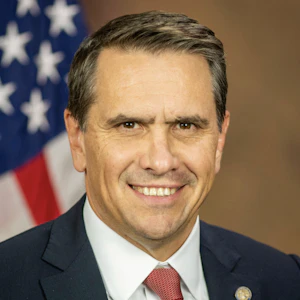
Todd Blanche
Todd Blanche
Biography of Deputy Attorney General Todd Blanche
The Honorable Todd Blanche is the 40th Deputy Attorney General of the United States, overseeing the work of the 115,000 dedicated employees who fulfill the Department of Justice’s mission at Main Justice, the FBI, DEA, U.S. Marshals, ATF, and 93 U.S. Attorney’s Offices.
Todd began his career at the Department where he served for over fifteen years in a variety of capacities, including as a contractor, a paralegal in the Criminal Division, and at the United States Attorney’s office for the Southern District of New York where he eventually became an AUSA and later a supervisor.
After leaving the Department, Todd worked as a criminal defense attorney that included representing President Donald Trump in three of the criminal cases brought against him in 2023 and 2024.
Following President Trump’s historic return to the White House, the President appointed Todd to work alongside Attorney General Pam Bondi to make America safe again. At the DOJ, Todd is working tirelessly to implement President Trump’s priorities that include confronting illegal protecting American businesses from fraud.
Todd has been married to his wonderful wife Kristine for nearly thirty years, is a father and grandfather.

Paul Atkins
Paul Atkins
Prior to returning to the SEC, Chairman Atkins was most recently chief executive of Patomak Global Partners, a company he founded in 2009. Chairman Atkins helped lead efforts to develop best practices for the digital asset sector. He served as an independent director and non-executive chairman of the board of BATS Global Markets, Inc. from 2012 to 2015.
Chairman Atkins was appointed by President George W. Bush to serve as a Commissioner of the SEC from 2002 to 2008. During his tenure, he advocated for transparency, consistency, and the use of cost-benefit analysis at the agency. Chairman Atkins also represented the SEC at meetings of the President’s Working Group on Financial Markets and the U.S.-EU Transatlantic Economic Council. From 2009 to 2010, he was appointed a member of the Congressional Oversight Panel for the Troubled Asset Relief Program.
Before serving as an SEC Commissioner, Chairman Atkins was a consultant on securities and investment management industry matters, especially regarding issues of strategy, regulatory compliance, risk management, new product development, and organizational control.
From 1990 to 1994, Chairman Atkins served on the staff of two chairmen of the SEC, Richard C. Breeden and Arthur Levitt, ultimately as chief of staff and counselor, respectively. He received the SEC’s 1992 Law and Policy Award for work regarding corporate governance matters.
Chairman Atkins began his career as a lawyer in New York, focusing on a wide range of corporate transactions for U.S. and foreign clients, including public and private securities offerings and mergers and acquisitions. He was resident for 2½ years in his firm's Paris office and admitted as conseil juridique in France.
A member of the New York and Florida bars, Chairman Atkins received his J.D. from Vanderbilt University School of Law in 1983 and was Senior Student Writing Editor of the Vanderbilt Law Review. He received his A.B., Phi Beta Kappa, from Wofford College in 1980.
Originally from Lillington, North Carolina, Chairman Atkins grew up in Tampa, Florida. He and his wife Sarah have three sons.

Mike Selig
Mike Selig
Chairman Selig brings to the role deep public and private sector experience working with a wide range of stakeholders across agriculture, energy, financial, and digital asset industries, which rely upon and operate in CFTC-regulated markets.
Prior to his leadership at the CFTC, Chairman Selig most recently served as chief counsel of the Securities and Exchange Commission’s Crypto Task Force and senior advisor to SEC Chairman Paul S. Atkins. In this role, Chairman Selig helped to develop a clear regulatory framework for digital asset securities markets, harmonize the SEC and CFTC regulatory regimes, modernize the agency’s rules to reflect new and emerging technologies, and put an end to regulation by enforcement. He also participated in the President’s Working Group on Digital Asset Markets and contributed to its report on “Strengthening American Leadership in Digital Financial Technology.”
Prior to government service, Chairman Selig was a partner at an international law firm, focusing on derivatives and securities regulatory matters. During his years in private practice, he represented a broad range of clients subject to regulation by the CFTC, including commercial end users, futures commission merchants, commodity trading advisors, swap dealers, designated contract markets, derivatives clearing organizations, and digital asset firms. Chairman Selig advised clients on compliance with the Commodity Exchange Act and the CFTC’s rules and regulations thereunder, including in connection with registration applications and obligations, enforcement matters, and complex transactions.
Chairman Selig earned his law degree from The George Washington University Law School and was articles editor of The George Washington Law Review. He received his undergraduate degree from Florida State University.

David Bailey
David Bailey

Eric Trump
Eric Trump
Mr. Trump also serves as Executive Vice President of The Trump Organization, where he oversees the global management and operations of the Trump family’s extensive real estate portfolio. This includes Trump Hotels, Trump Golf, commercial and residential real estate, Trump Estates, and Trump Winery. Known for his hands-on leadership and strong market instincts, he has played a key role in expanding the company’s presence across major U.S. and international markets.
A globally recognized business leader and public figure, Mr. Trump is a prominent advocate for Bitcoin and decentralized finance. He is a co-founder of World Liberty Financial, a decentralized finance (DeFi) platform, and serves on the Board of Advisors of Metaplanet, Japan’s largest corporate holder of Bitcoin.
Beyond his business activities, Mr. Trump has helped raise more than $50 million for St. Jude Children’s Research Hospital in the fight against pediatric cancer, a philanthropic mission he began at age 21.
Mr. Trump earned a degree in Finance and Management from Georgetown University. He currently resides in Florida with his wife, Lara, and their two children. He is also the author of Under Siege, his memoir published in October 2025.

Jack Mallers
Jack Mallers
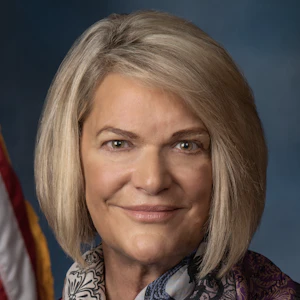
Cynthia Lummis
Cynthia Lummis
As the first-ever Chair of the Senate Banking Subcommittee on Digital Assets, Senator Lummis is the architect of the legislative framework shaping America's digital asset future. She introduced the landmark Lummis-Gillibrand Responsible Financial Innovation Act, the first comprehensive bipartisan crypto regulatory framework in Senate history. She co-authored the GENIUS Act — the first federal stablecoin law ever enacted — and introduced the BITCOIN Act, which would establish a U.S. strategic Bitcoin reserve of up to one million BTC. She is leading the Clarity Act, which will bring long-overdue regulatory certainty to the digital asset industry. She has also championed digital asset tax reform, including a de minimis exemption for small transactions and equal tax treatment for miners and stakers.
Known as Congress' "Crypto Queen," Senator Lummis represents Wyoming — a state she has helped build into one of the most digital asset-friendly regulatory environments in the nation. Before serving in the Senate, she served 14 years in the Wyoming Legislature, eight years as Wyoming State Treasurer, and eight years in the U.S. House. She is a three-time graduate of the University of Wyoming.
Her work represents a crucial bridge between traditional financial systems and the emerging digital economy, ensuring America leads the world in financial innovation while protecting the individual freedoms that define it.

Adam Back
Adam Back
Amy Oldenburg
Amy Oldenburg
David Marcus
David Marcus

Matt Schultz
Matt Schultz
Fred Thiel
Fred Thiel
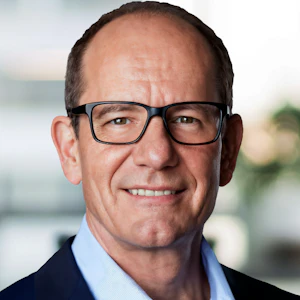
Throughout his career, Mr. Thiel has consistently driven rapid growth and created substantial shareholder value. Prior to MARA, Mr. Thiel served as the CEO of two other public companies, Local Corporation (NASDAQ: LOCM) and Lantronix, Inc (NASDAQ: LTRX). He has successfully raised billions in equity and debt through private and public offerings, led companies through IPOs, executed high-value exits to strategic and financial acquirers, and implemented effective M&A and roll-up strategies.
Mr. Thiel attended the Stockholm School of Economics and executive classes at Harvard Business School, and is fluent in English, Spanish, Swedish, and French. Mr. Thiel is the Chairman of the Board for Oden Technology, Inc. and is active in Young Presidents’ Organization where he has led initiatives in both the FinTech and Technology Networks.
A recognized voice in the industry, Fred frequently shares his insights on energy and technology with major media outlets like Bloomberg TV, CNBC, and FOX Business, contributing to vital discussions about the future of these sectors.
Tim Draper
Tim Draper
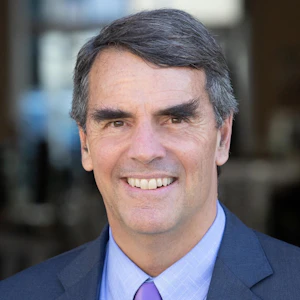
He is a supporter and global thought leader for entrepreneurs everywhere, and is a leading spokesperson for Bitcoin and decentralization, having won the Bitcoin US Marshall’s auction in 2014, invested in over 50 crypto companies, and led investments in Coinbase, Ledger, Tezos, and Bancor, among others.

Afroman
Afroman