Elevating the User Experience of Self-Custody
Speakers/Moderators

Alex Lewin
Alex Lewin

Kevin Loaec
Kevin Loaec

Pedro 🧨
Pedro 🧨

Sindura Saraswathi
Sindura Saraswathi
Session
Overview
This panel focused on improving the user experience of Bitcoin self custody, especially for users who are not deeply technical. Alex Lewin led a discussion with Pedro, Sindura Saraswathi, and Kevin Loaec about the tradeoffs between single-signature wallets, multisig, Miniscript, hardware wallets, and recovery design.
A major theme was balancing security with recoverability. The speakers discussed when single-sig may be sufficient, when multisig becomes useful, and how threshold choices should be based on expected loss from theft and self-lockout rather than habit. Kevin Loaec explained how Liana uses Miniscript and timelocks to create recovery and inheritance paths without giving up self custody.
The conversation also emphasized that better protocol tools are not enough on their own. Wallets still need clearer design, better policy readability on signing devices, simpler descriptor backup and recovery, and flows that make users understand what they are authorizing. The panel framed usability as essential to making self custody practical for more bitcoin holders, families, and organizations.
All right. Welcome to the most exciting panel of the day. We have a star-studded panel of experts from different areas of the self-custody world. To start, let’s do a brief round of introductions and also answer the question: what user are you typically designing for day to day with respect to self custody?
My name is Alex. I work on a project called Fedimint at a company called Fedi. We do a federated multisig system.
My name is Pedro. I work on Set, which is a privacy-focused Bitcoin wallet that touches all aspects of Bitcoin. If you have sats that need to be signed in transactions, all the way from on-chain to Lightning and ecash, that’s the app to use when it launches.
Hi, my name is Sindura Saraswathi. I am a PhD student. My contribution here is focused on balancing security and usability. One of my recent works is about choosing optimal thresholds by minimizing total loss, meaning loss caused by self-lockout and loss caused by attackers stealing your funds.
I’m Kevin Loaec, working on Bitcoin security at Wizardsardine. The main product we have is called Liana, which is a Miniscript wallet with recovery options for inheritance or organizations to make sure they never lose their coins. To answer your question about the typical users we are designing for, we don’t know, which is an issue. We have some hardcore bitcoiners we have to design for, but we also have organizations where the people actually using the wallet don’t know much about Bitcoin. We have to try to fit both sides: having enough features to make the bitcoiner happy while abstracting enough without dropping security for the average person.
Amazing. To start the conversation, can anybody talk about when single-sig security fails? The typical way to store Bitcoin in a self-custody way is through a single-signature wallet. When does that start to break down?
A tough question, I guess. Single-sig for me is just having one key to sign. But this key can be backed up in multiple ways. You could have multiple backups of your key, you could have Shamir backups of your key, and this key could be on a signing device, also called a hardware wallet, which is already pretty decent. There is a pretty low chance you mess up too badly if you have good backups and use a hardware wallet. But if this key is on your computer or your phone and maybe you don’t have a proper backup, that is a very different question. There is a range here. Single-sig is not a bad thing. It is still definitely better, in my opinion, than using a custodian. But it depends on how you secure your key.
I feel single-sig can be optimal too, but the goal has to be that we reduce single points of failure. When that is the goal, I think multisig can come into the picture, which can be better in balancing security and usability. But if you can still prove that your security posture is good enough or your recovery path is rehearsed, then you can go for a single signature, in my opinion.
I love single signature. I think multisignature still has a little way to go in terms of UX. It has a lot of potential, but Bitcoin is already complicated. Like Kevin was saying, for people coming from outside of Bitcoin, Bitcoin can already be very complicated even in single-sig. That being said, projects like Liana and hopefully Set Signer are pushing forward and making it easier to use. Technologically, I think it is already there. It just needs a little bit more push in UX and design, and to make it easier for people to understand what they are doing when they are clicking.
That’s a very bold claim that multisig is not ready. I think all the podcasters telling people to stamp their seed words on seed plates across the country would disagree. What would we need in order to get to the point where multisig is ready?
Ready for whom?
As a general recommendation for a new hodler, for the general user getting into Bitcoin.
I would never recommend multisig. I would always recommend single-sig. It is much, much easier. If you are going to lose any of your setup when you are doing multisig, that is a problem. I already hear a lot of people losing their seed words, so you are just opening yourself up for failure. If you are more experienced, yes, maybe at that point it is ready. I just don’t see people using it that much.
If I can hop in on this one, there are also different ways of looking at multisig. You could have multisig for a single individual where you have multiple keys, maybe for higher security or redundancy. In my case, obviously I use multisig, and it is a geo-distributed multisig. I need to cross a border to be able to sign my coins. That is a very strong security feature. But if you start talking about a family or an organization, just don’t use single-sig. If you have multiple people in a group, have them all have their own key, because otherwise it is a mess if you start sharing keys with people.
Sindura, your research is mainly about trying to select the optimal threshold for multisig. Can you speak to this? How should people be thinking about the proper multisig setup to choose?
My research says that instead of picking thresholds by habit, like defaulting to two-of-three or three-of-five, we should choose thresholds by asking what threshold can actually minimize total loss. When I say total loss, it means self-lockout loss and theft loss. Intuitively, you keep raising your threshold as long as it helps security more than it hurts your own recoverability.
In our research, we come up with a closed-form solution where we can estimate what could be the optimal threshold. For that, we define two parameters, which capture how fast the user’s ability to meet the threshold deteriorates as the threshold goes up, and how fast the attacker’s ability deteriorates as the threshold goes up. The sweet spot is where adding one more signer stops being worth it. The main idea is that you need to balance security and usability and come up with that optimal threshold.
Kevin, with Liana and Wizardsardine, what use case or what situation do you find most users fall into? Are people more likely to lose their coins or to get stolen from?
Typically, our users are coming to us because of the risk of loss more than the risk of theft. For theft, there is a whole range of attacks that we can consider. As soon as you start using multisig, you are covered against many theft attacks, except maybe in-person theft, like the $5 wrench attack. That is very hard to get around. Of course, you can do like me and segregate your keys across borders, but that doesn’t stop the guy from hitting me with the wrench. There are always limits to what we can do.
I believe the main thing for larger holders and large institutions is the risk of loss. That is what they are most afraid of. It is not really loss, it is being unable to access the coins and being blamed for it. This is why they use custodians. It is not to protect themselves from losing the coins; it is to be able to blame someone else. I don’t think most custodians have decent enough security, in my opinion. It is always a very low number of signers. Sure, they could be in HSMs or whatever, but it is still a small number of keys, and you need people having access to these keys. There is a risk that these keys are lost or stolen at some point.
Things like Liana are built for recoverability. You make sure that you have self custody, but even if you mess up and lose your keys, you have different spending conditions that trigger over time. I will take a few seconds to explain how Liana works. It is a Miniscript wallet, which means you can have different spending conditions that activate over time after inactivity of your wallet. Let’s say I lose my key. I can’t spend for three months, but after three months I can have a different set of keys or a different threshold of my multisig to access these coins. It is really cool for recovery, inheritance, or companies having key rotation or employees leaving.
Miniscript has been promised to bitcoiners for years. It has been the hottest thing on the block for a long time. Can you give the audience an understanding of what specific things are now possible that weren’t possible a few years ago because of Miniscript?
That is a great question. Technically, nothing. We could do the exact same scripts on Bitcoin as we can do with Miniscript. Miniscript doesn’t change the way Bitcoin works. Miniscript just changes the way developers build tools for this kind of script on Bitcoin. Miniscript lets us build secure software where, back in the day, we would have had to design the Bitcoin script by hand, and that was extremely risky.
It was somewhat easy to get a script that does what you want it to do, like a two-of-two multisig. But it was extremely hard to prove that the script you made doesn’t have another way to spend from it. You could have bugs or other ways to spend from this hand-built script, and that is how attacks or hacks could happen. That is why nobody was really using timelocks or weird multisig setups that didn’t use two-of-three or three-of-five, because you couldn’t prove, when you built it by hand, that there was no other way to spend.
Miniscript fixes that. Miniscript lets you do whatever kind of timelock combination, multisig, multisig of a multisig, and things like that in a way where you are pretty much guaranteed by the system that it is the only way to spend your coins.
Pedro, have you seen excitement around Miniscript in the work you do?
Yes, a lot. But from my perspective, the bitcoiners I interact with, especially in the context of the conference, tell me how they use Bitcoin, and I don’t see a lot of people using Bitcoin in these ways. Obviously with Liana, Kevin is probably interacting with a whole subset of users that I don’t have contact with.
As we were discussing backstage, I think the challenge right now is how to describe the language, how to improve the UI. The panel is called elevating the UX. All these things need to be extremely easy to use, and that requires a little bit of familiarity from the users to actually use them.
I am still learning what the possibilities of Miniscript bring into the application we are developing. I am more focused on how to make the design completely intuitive so the user knows what is happening. Sometimes I worry that making it too complex is going to make it impossible for us to design a flow that the user can actually use.
What do you think is the current biggest failure of mainstream wallets these days? How are people failing on UX?
I think they either offer too many features or not enough features. I don’t have a clear answer for that. My exploration is testing all the wallets and creating a flow that I understand, while also acknowledging that I have a specific use of Bitcoin. I don’t think there is a specific wallet that is going to work for everybody. This is a pitfall that a lot of projects fall into, trying to accommodate too many users. It is okay to focus on your specific use case and a very niche type of user.
I think one improvement in wallets is that we are moving from ad hoc setup to policy-driven self custody, and we are seeing complex policies make it onto hardware flows. But what is still missing, according to me, is policy readability on devices. Until users know what they are authorizing and what the recovery path is, I think the UX gap in wallets is not fully closed.
Absolutely. I think this is the biggest thing people are afraid of: the signing device, also called the hardware wallet. When you start having policies like Miniscript or multisig on a hardware wallet, people, especially the ones who aren’t hardcore bitcoiners, are just pressing next, next, next. They don’t read what is on screen because it doesn’t really speak to them. They don’t know what a Bitcoin address is, or it is not really readable; it is just characters. This is where it gets scary for them and for us, because if they don’t do anything about verifying on the hardware, everything we are doing is useless. We could use a hot key if they don’t verify anything on the hardware.
This makes me think of one common criticism of more complex, innovative custody setups: the expectation or responsibility of the user usually goes up, not down. Given all these fancy inheritance planning tools, do you think the complicated Miniscript setups will actually hold up when somebody dies and it falls on their non-technical heirs?
Yes, I really think so. One fear or criticism that some people have when we talk to them about Liana is, “It sounds too complicated. My family doesn’t want to do anything with Bitcoin. They will never be able to recover.” That is not what happens in reality. If you die and your family knows there is a bunch of money to recover, they are going to take the ten minutes to learn how it works. Right now, they don’t want to spend those ten minutes because they don’t care. You are still there, they don’t think you are going to die, and they don’t care about your bitcoin.
It is not about them right now. It is about them when they need to recover their money. Will they be able to do that? Yes, absolutely. It is pretty simple to get onboarded with a signing device. You just have to import your descriptor, and then you can recover the coins.
Who drives that in the event that somebody dies? Is it the responsibility of the person setting up the wallet to have the executor of their will aware of the situation?
From what we see, it depends. You have the user who wants to be sovereign. They don’t want anyone to know anything about their setup, not even their family sometimes. So this basically goes into tamper-evident bags. You put all the instructions in a bag. You put the seed in a bag. You put maybe your signing device in a bag, and you just tell them, “Open this bag if something happens to me.” That is perfectly fine because it is timelocked anyway. Even if someone steals the bag, they can’t steal the money.
If it goes through an executor, it depends as well. Do you want a trusted third party, like an external company, that could help your family recover? That happens. There are services for that. It is up to the user to decide.
In my experience, Set is being designed for the people who are building it, and primarily with my wife in mind. This is the user test case. If we make the UI clear enough, with some differentiation and some clear charts, understanding what is happening under the hood becomes much simpler. It is possible, but it is going to be a process. I don’t think it is going to be solved so easily or so soon.
Maybe just to rephrase what I said earlier in a way that might speak to you: when your family says it is going to be too hard, I give you three things. I give you a hardware wallet, I give you a mnemonic, and I give you a descriptor. That is something you need to load into your hardware wallet. I am telling you there is one Bitcoin in there. I think absolutely everyone at the conference would try to get it done and would manage to get it done. If you have the incentive to do it, you will learn. You will go online and figure out how to put a seed on a hardware wallet, how to put your descriptor in, and how to spend the coins. It is just that the incentive is not there when you are not dead yet.
Have you found anybody having issues, or is everybody able to set it up so far?
No issue. One thing we have heard a lot in Bitcoin is from people using multisig from the early days, where a lot of multisig people think all you need is to have enough of your seed phrases. That is not true. You need to have the xpub of every key in your wallet, even the ones that are lost. What you technically need is called a descriptor. You could potentially rebuild it with all the mnemonics, but if you only have, let’s say, two backups, two keys, and you don’t have the third one and you have no way to find out what the xpub was, you will never recover the coins.
That is valid for any multisig. I do believe that right now a lot of multisig users are still not aware of that, and they are probably operating at huge risk. If they lose any one of their keys, they don’t have the correct backup to recover because they never tried it. So maybe try to recover your wallet before it is too late.
We are running a bit short on time, but maybe one last thing we can all speak about is this: if there is one thing you would like to change about the Bitcoin ecosystem, or add to Bitcoin, to make self custody more achievable and better functioning for users to achieve the goal of Bitcoin as self-sovereign money, what would you do?
From my perspective, just more design. I am coming from the other end of the spectrum on this panel. I am coming from the design part and entering into the technology and implementation. We are just using tools that already exist. With those tools, we can improve the UX by making it clear that you need the policy of the multisig and you need the keys. This is really basic, but just making it so easy that with two taps and a scan I can recover funds if they are in the right form, and educating the user that you can save this in a QR code or something. That is where I find the friction is. When people need to tap, people are very lazy. If they need an extra tap on the phone, they are gone. If they need to download a new wallet and coordinate with different devices, they are not interested. So, more design, more experimentation, more different UX paths and flows to see which one will work.
From a multisig perspective, I would say don’t choose thresholds by habit or convention. Choose them from the perspective of minimizing total loss. That is the same for dynamic threshold setup as well, like inheritance-style recovery paths. Wallets can integrate some sort of formal methods when it comes to choosing or advising threshold choices to their users. That makes the user experience much better, in my opinion.
From my perspective, the top UX problems are again hardware wallets: how do we show the user what they are actually doing, and how can we make them not scared? It is always going to be hard because users are lazy.
The other thing that we can fix, and that we are working on, is the problem around multisig and descriptors. We know it is very hard for people to understand how to back up a descriptor. The seed phrase is easy. You can put it on metal or paper, and it is 12 or 24 words. But the descriptor is not something you really write down.
We have a BIP coming up. I don’t know if the number was assigned yet or not, but what we want to achieve is that a user with any single mnemonic that is part of a multisig or a Miniscript descriptor would be able to recover the whole descriptor. To do that, we encrypt the descriptor with every single one of the mnemonics, so with every single one of them you can also recover it. This is a standard we are trying to get to basically all the wallets on Bitcoin, so it will be compatible across wallets.
Is this related to the descriptor encryption project?
Correct.
Incredible. Any final thoughts before we break?
Nope.
Awesome. Thanks so much, everybody.
Thank you.
Similar
Sessions
Lightning + Ecash: An Atomic Match Made in Heaven?

Shinobi
Shinobi


Evan Kaloudis
Evan Kaloudis
With a background in cybersecurity and infrastructure engineering, Evan has spent the past several years focused on advancing self-sovereign finance. He is a vocal advocate for privacy-preserving, self-custodial technology and has been a prominent voice in defending open-source Bitcoin tools amid growing regulatory pressure.
Through ZEUS, Evan is pushing Bitcoin payments forward — making them more accessible while equipping users with tools that preserve their financial sovereignty.
Alex Lewin
Alex Lewin
Lightning + Ecash: An Atomic Match Made in Heaven?
Speakers/Moderators
Shinobi
Shinobi
Evan Kaloudis
Evan Kaloudis
With a background in cybersecurity and infrastructure engineering, Evan has spent the past several years focused on advancing self-sovereign finance. He is a vocal advocate for privacy-preserving, self-custodial technology and has been a prominent voice in defending open-source Bitcoin tools amid growing regulatory pressure.
Through ZEUS, Evan is pushing Bitcoin payments forward — making them more accessible while equipping users with tools that preserve their financial sovereignty.
Alex Lewin
Alex Lewin
Elevating the User Experience of Self-Custody
Alex Lewin
Alex Lewin
Kevin Loaec
Kevin Loaec
Pedro 🧨
Pedro 🧨
Sindura Saraswathi
Sindura Saraswathi
Elevating the User Experience of Self-Custody
Speakers/Moderators
Alex Lewin
Alex Lewin
Kevin Loaec
Kevin Loaec
Pedro 🧨
Pedro 🧨
Sindura Saraswathi
Sindura Saraswathi
Self-Custody Insurance: Protecting Your Bitcoin without Giving It Up

Aaron Daniel
Aaron Daniel

Chris Seedor
Chris Seedor
Kevin Loaec
Kevin Loaec
Rob Hamilton
Rob Hamilton
AnchorWatch designs bespoke Bitcoin custody solutions using multisignature wallets, timelocks, and Miniscript, tailored to the specific security and operational needs of each client. These custody architectures can be deployed independently or paired with insurance coverage, giving individuals and institutions flexibility in how they secure and manage their bitcoin.
Rob’s broader focus is on advancing Bitcoin as a financial system, bridging the gap between self-custody and institutional-grade security through custody solutions, insurance, and improved user experience. He frequently speaks on custody design, Bitcoin Script engineering, and the role of insurance in scaling Bitcoin adoption.
Self-Custody Insurance: Protecting Your Bitcoin without Giving It Up
Speakers/Moderators
Aaron Daniel
Aaron Daniel
Chris Seedor
Chris Seedor
Kevin Loaec
Kevin Loaec
Rob Hamilton
Rob Hamilton
AnchorWatch designs bespoke Bitcoin custody solutions using multisignature wallets, timelocks, and Miniscript, tailored to the specific security and operational needs of each client. These custody architectures can be deployed independently or paired with insurance coverage, giving individuals and institutions flexibility in how they secure and manage their bitcoin.
Rob’s broader focus is on advancing Bitcoin as a financial system, bridging the gap between self-custody and institutional-grade security through custody solutions, insurance, and improved user experience. He frequently speaks on custody design, Bitcoin Script engineering, and the role of insurance in scaling Bitcoin adoption.
Other
Speakers

Michael Saylor
Michael Saylor
Todd Blanche
Todd Blanche
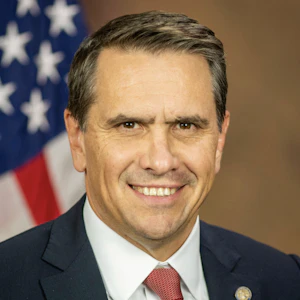
Biography of Deputy Attorney General Todd Blanche
The Honorable Todd Blanche is the 40th Deputy Attorney General of the United States, overseeing the work of the 115,000 dedicated employees who fulfill the Department of Justice’s mission at Main Justice, the FBI, DEA, U.S. Marshals, ATF, and 93 U.S. Attorney’s Offices.
Todd began his career at the Department where he served for over fifteen years in a variety of capacities, including as a contractor, a paralegal in the Criminal Division, and at the United States Attorney’s office for the Southern District of New York where he eventually became an AUSA and later a supervisor.
After leaving the Department, Todd worked as a criminal defense attorney that included representing President Donald Trump in three of the criminal cases brought against him in 2023 and 2024.
Following President Trump’s historic return to the White House, the President appointed Todd to work alongside Attorney General Pam Bondi to make America safe again. At the DOJ, Todd is working tirelessly to implement President Trump’s priorities that include confronting illegal protecting American businesses from fraud.
Todd has been married to his wonderful wife Kristine for nearly thirty years, is a father and grandfather.

Paul Atkins
Paul Atkins
Prior to returning to the SEC, Chairman Atkins was most recently chief executive of Patomak Global Partners, a company he founded in 2009. Chairman Atkins helped lead efforts to develop best practices for the digital asset sector. He served as an independent director and non-executive chairman of the board of BATS Global Markets, Inc. from 2012 to 2015.
Chairman Atkins was appointed by President George W. Bush to serve as a Commissioner of the SEC from 2002 to 2008. During his tenure, he advocated for transparency, consistency, and the use of cost-benefit analysis at the agency. Chairman Atkins also represented the SEC at meetings of the President’s Working Group on Financial Markets and the U.S.-EU Transatlantic Economic Council. From 2009 to 2010, he was appointed a member of the Congressional Oversight Panel for the Troubled Asset Relief Program.
Before serving as an SEC Commissioner, Chairman Atkins was a consultant on securities and investment management industry matters, especially regarding issues of strategy, regulatory compliance, risk management, new product development, and organizational control.
From 1990 to 1994, Chairman Atkins served on the staff of two chairmen of the SEC, Richard C. Breeden and Arthur Levitt, ultimately as chief of staff and counselor, respectively. He received the SEC’s 1992 Law and Policy Award for work regarding corporate governance matters.
Chairman Atkins began his career as a lawyer in New York, focusing on a wide range of corporate transactions for U.S. and foreign clients, including public and private securities offerings and mergers and acquisitions. He was resident for 2½ years in his firm's Paris office and admitted as conseil juridique in France.
A member of the New York and Florida bars, Chairman Atkins received his J.D. from Vanderbilt University School of Law in 1983 and was Senior Student Writing Editor of the Vanderbilt Law Review. He received his A.B., Phi Beta Kappa, from Wofford College in 1980.
Originally from Lillington, North Carolina, Chairman Atkins grew up in Tampa, Florida. He and his wife Sarah have three sons.

Mike Selig
Mike Selig
Chairman Selig brings to the role deep public and private sector experience working with a wide range of stakeholders across agriculture, energy, financial, and digital asset industries, which rely upon and operate in CFTC-regulated markets.
Prior to his leadership at the CFTC, Chairman Selig most recently served as chief counsel of the Securities and Exchange Commission’s Crypto Task Force and senior advisor to SEC Chairman Paul S. Atkins. In this role, Chairman Selig helped to develop a clear regulatory framework for digital asset securities markets, harmonize the SEC and CFTC regulatory regimes, modernize the agency’s rules to reflect new and emerging technologies, and put an end to regulation by enforcement. He also participated in the President’s Working Group on Digital Asset Markets and contributed to its report on “Strengthening American Leadership in Digital Financial Technology.”
Prior to government service, Chairman Selig was a partner at an international law firm, focusing on derivatives and securities regulatory matters. During his years in private practice, he represented a broad range of clients subject to regulation by the CFTC, including commercial end users, futures commission merchants, commodity trading advisors, swap dealers, designated contract markets, derivatives clearing organizations, and digital asset firms. Chairman Selig advised clients on compliance with the Commodity Exchange Act and the CFTC’s rules and regulations thereunder, including in connection with registration applications and obligations, enforcement matters, and complex transactions.
Chairman Selig earned his law degree from The George Washington University Law School and was articles editor of The George Washington Law Review. He received his undergraduate degree from Florida State University.

David Bailey
David Bailey

Eric Trump
Eric Trump
Mr. Trump also serves as Executive Vice President of The Trump Organization, where he oversees the global management and operations of the Trump family’s extensive real estate portfolio. This includes Trump Hotels, Trump Golf, commercial and residential real estate, Trump Estates, and Trump Winery. Known for his hands-on leadership and strong market instincts, he has played a key role in expanding the company’s presence across major U.S. and international markets.
A globally recognized business leader and public figure, Mr. Trump is a prominent advocate for Bitcoin and decentralized finance. He is a co-founder of World Liberty Financial, a decentralized finance (DeFi) platform, and serves on the Board of Advisors of Metaplanet, Japan’s largest corporate holder of Bitcoin.
Beyond his business activities, Mr. Trump has helped raise more than $50 million for St. Jude Children’s Research Hospital in the fight against pediatric cancer, a philanthropic mission he began at age 21.
Mr. Trump earned a degree in Finance and Management from Georgetown University. He currently resides in Florida with his wife, Lara, and their two children. He is also the author of Under Siege, his memoir published in October 2025.

Jack Mallers
Jack Mallers

Cynthia Lummis
Cynthia Lummis
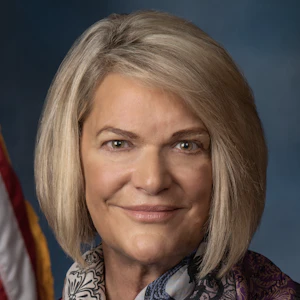
As the first-ever Chair of the Senate Banking Subcommittee on Digital Assets, Senator Lummis is the architect of the legislative framework shaping America's digital asset future. She introduced the landmark Lummis-Gillibrand Responsible Financial Innovation Act, the first comprehensive bipartisan crypto regulatory framework in Senate history. She co-authored the GENIUS Act — the first federal stablecoin law ever enacted — and introduced the BITCOIN Act, which would establish a U.S. strategic Bitcoin reserve of up to one million BTC. She is leading the Clarity Act, which will bring long-overdue regulatory certainty to the digital asset industry. She has also championed digital asset tax reform, including a de minimis exemption for small transactions and equal tax treatment for miners and stakers.
Known as Congress' "Crypto Queen," Senator Lummis represents Wyoming — a state she has helped build into one of the most digital asset-friendly regulatory environments in the nation. Before serving in the Senate, she served 14 years in the Wyoming Legislature, eight years as Wyoming State Treasurer, and eight years in the U.S. House. She is a three-time graduate of the University of Wyoming.
Her work represents a crucial bridge between traditional financial systems and the emerging digital economy, ensuring America leads the world in financial innovation while protecting the individual freedoms that define it.

Adam Back
Adam Back
Amy Oldenburg
Amy Oldenburg
David Marcus
David Marcus

Matt Schultz
Matt Schultz

Fred Thiel
Fred Thiel
Throughout his career, Mr. Thiel has consistently driven rapid growth and created substantial shareholder value. Prior to MARA, Mr. Thiel served as the CEO of two other public companies, Local Corporation (NASDAQ: LOCM) and Lantronix, Inc (NASDAQ: LTRX). He has successfully raised billions in equity and debt through private and public offerings, led companies through IPOs, executed high-value exits to strategic and financial acquirers, and implemented effective M&A and roll-up strategies.
Mr. Thiel attended the Stockholm School of Economics and executive classes at Harvard Business School, and is fluent in English, Spanish, Swedish, and French. Mr. Thiel is the Chairman of the Board for Oden Technology, Inc. and is active in Young Presidents’ Organization where he has led initiatives in both the FinTech and Technology Networks.
A recognized voice in the industry, Fred frequently shares his insights on energy and technology with major media outlets like Bloomberg TV, CNBC, and FOX Business, contributing to vital discussions about the future of these sectors.
Tim Draper
Tim Draper
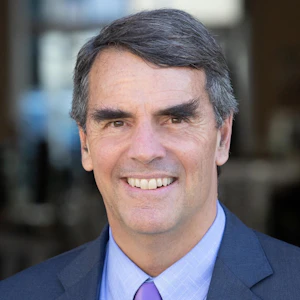
He is a supporter and global thought leader for entrepreneurs everywhere, and is a leading spokesperson for Bitcoin and decentralization, having won the Bitcoin US Marshall’s auction in 2014, invested in over 50 crypto companies, and led investments in Coinbase, Ledger, Tezos, and Bancor, among others.

Afroman
Afroman