How Will Bitcoin Behave with Global Uncertainty?
Speakers/Moderators
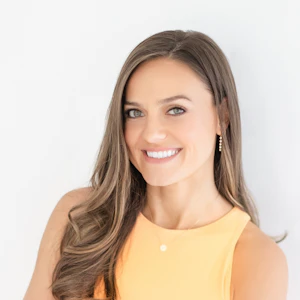
Natalie Brunell
Natalie Brunell
Her popular show, the Coin Stories Podcast, features interviews with Bitcoin thought leaders and covers headlines related to finance and economic issues facing society. Coin Stories is the top Bitcoin education show in the world, and consistently ranks Top 10 in Business News podcasts.
Previously, Natalie was an award-winning TV journalist and investigative reporter. For more than 10 years she covered in-depth local and national news topics and holds a regional news Emmy for breaking news coverage as well as multiple Emmy nominations for investigative news stories.
Natalie was recently an adjunct professor of advanced communication and visual storytelling at the University of Southern California. She holds a Master’s of Science in Journalism from Northwestern University.
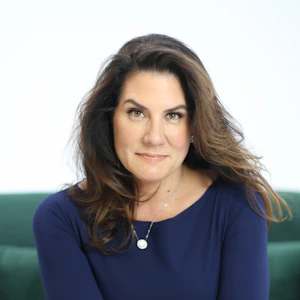
Danielle DiMartino Booth
Danielle DiMartino Booth


Matt Hougan
Matt Hougan
Before joining Bitwise in 2018, Hougan was CEO of ETF .com, where he created the first ETF data, ratings, and classification system, and built the world’s largest ETF conference. A regular guest on CNBC, Bloomberg, and Fox Business, Hougan’s thoughts on investing have been widely profiled in the media. He is a three-time member of the
Barron’s ETF Roundtable and co-author of two publications for the CFA Institute Research Foundation: “A Comprehensive Guide to Exchange-Traded Funds” and “Cryptoassets: The Guide to Bitcoin, Blockchain, and Cryptocurrency for Investment Professionals.”
In addition to his role at Bitwise, Hougan is the co-founder of FutureProof, creator of the world’s largest financial services conference; a board member of QuantumStreet AI, a AI-driven investing company with $7 billion in assets under management; and a strategic advisor to Blockworks, a crypto data and research company. Hougan graduated from Bowdoin College with a B.A. in philosophy.
Session
Overview
Natalie Brunell moderates a discussion with Danielle DiMartino Booth, Joseph Wang, and Matt Hougan on how Bitcoin may behave amid global uncertainty, shifting Federal Reserve policy, inflation risk, and geopolitical conflict. The panel contrasts Bitcoin as a risk-on asset with its potential role as a scarce, apolitical alternative in a changing monetary order.
Key themes include the possibility of renewed inflation from oil and supply chain shocks, stress in private credit, elevated equity valuations, and the limits of Fed intervention. The speakers also discuss China, the yuan, gold accumulation, and whether global liquidity could shift away from U.S. dollar markets and crypto.
The conversation closes with practical views on risk management, leverage, diversification, AI-driven job market disruption, and Bitcoin’s long-term role. While the panelists differ on near-term market risks, they agree that financial instability, political pressure, and monetary uncertainty are central to the case for watching Bitcoin closely.
Hello, everyone.
I would like to start with a little bit of a level set to see where you all stand on Bitcoin. Matt, you run a Bitcoin fund, so you're basically paid to be bullish. Joe, you look at Bitcoin as a risk-on asset that gets hit in a liquidity crunch, which we may see soon. And Danielle, you're skeptical of the Fed and the system, but you're really focused on the economic data and the economy. So in one sentence each, are you a Bitcoin bull, a bear, or agnostic?
I wouldn't say that I'm agnostic about Bitcoin, but it is the one thing that I follow the most closely to gauge risk appetite worldwide.
I agree, actually. It's a very good read on risk-on risk sentiment. Right now, though, I'm pretty cautious for Bitcoin.
I'm bullish. Surprising. I think there are massive secular trends driving Bitcoin higher that will last for the next decade.
All right, so let's get into it. Danielle, I want to start with you, because it seems like Kevin Warsh is going to be confirmed as Fed chair, and we know that he's a Bitcoiner. So what are you expecting in this Fed change?
Well, it's really hard to say, because in theory, a few days ago, when the criminal charges were dropped against Jay Powell, you would have thought that bond yields would have declined in anticipation of a much more dovish incoming Fed chair who was going to break the stalemate and start to bring the short end of the yield curve down, and yet we've seen the opposite.
So I think the jury's out. Mike Tyson once said, you've always got a great plan until you're punched in the mouth. That's exactly what happened to Jay Powell when he was in office. He got punched in the mouth with a liquidity crisis. I don't think what's happening in private credit is going away, and in fact, it's starting to bleed into public credit. Bankruptcies are running at the highest level in 10 years. We're not exactly seeing huge growth in jobs, and yet this oil shock appears that it's going to be longer lasting than anything we've seen in my modern history because of the destruction of the infrastructure. So there are so many crosscurrents right now. I think Kevin Warsh has a tremendous challenge ahead of him.
Joe and Matt, maybe you can expand on that, but also take part in a bit of a debate for me, because Matt, you've argued that policy by the Fed matters less to Bitcoin than it used to. Joe, you've argued a Fed hike into this environment takes everything down, Bitcoin included. So let's fight it out.
Well, I think the biggest risk right now that I see for Bitcoin, and for risk assets in general, is, as Danielle suggested, interest rate policy. Right now, even though we have Kevin Warsh coming into the Fed, and of course, he has made great efforts to try to lower interest rates, we have this really big macro event that's happening in the Middle East.
And you can say, how does that impact us? Well, really through the Fed's reaction function. If you have an extended period of high oil prices, and like Danielle suggested, and I agree, this could be longer than anyone expects. It's not just oil prices. It's petrochemicals, it's fertilizer, it's a whole host of things. So there is a possibility that we could have another wave of inflation, not to 10%, but maybe at 4% or 5%.
And if that happens, no matter who you have at the Fed, they're going to be under a lot of pressure to do something. Maybe it doesn't work, but they have to show that they do something, and that could be a rate hike, or maybe two. When I look at the behavior of asset prices historically, that's usually not very good. Bitcoin behaves very interestingly. Sometimes it's just not that sensitive, but sometimes it is.
What I'm worried about is, let's say we look at what's happening with the tech sector. Everything goes up every single day. Let's say interest rates go up a bit. Maybe that takes a little bit of air out of the tech sector. But who holds tech? A lot of times the people who hold tech probably hold some Bitcoin as well. So you might have some degree of liquidity problems there, as Natalie kind of hinted at. I don't know this is going to happen, but I think it's a risk as we look at what's happened in the Middle East.
I think those are all valid points. The point I was making when saying it was less sensitive now than in the past is that I think investors get trained on the most recent experience. If you think about Bitcoin's experience since it existed with Fed rates, it's had very volatile periods. There was a long period where it was zero interest rates. That's very extraordinary. Then rates jumped straight to 2.5%, and then slammed back down to zero, and then jumped to 5%, the fastest they ever have.
I think the era we're in now may be more like the 1995 to 2000 era Fed, where we're talking about feathering interest rates 25 or 50 basis points. So the core of my point was that Bitcoin's historical experience taught investors that the Fed really matters because we're yanking rates from 0 to 2 to 0 to 5 to 0.
And I think if we're in an environment where we're feathering rates a little bit, 50 or 25 basis points, I think that matters less than Morgan Stanley launching a Bitcoin ETF and putting its $10 trillion of wealth behind it, than Charles Schwab saying 2% to 7% Bitcoin in portfolios. I think that's actually the secular trend that's driving it. The Fed will matter, but on the edges, and less than it has in Bitcoin's history.
Danielle, can you talk a little bit about some of the complacency we've seen in markets? The economic data shows that there's some real weakness. People on the ground are struggling, they're losing jobs, inflation is high, and they can't afford what they once could on fewer incomes. And yet, it seems like we're just hitting one all-time high in the stock market after the next. It's such a disconnect.
The disconnect is unlike anything that we've ever seen in the macro data. People's interpretation of job security, as we see through the University of Michigan going back to 1978, is at some of the highest levels on record, and in fact, higher than during the Great Recession. So the disconnect is really there, but we have to remember that there's been a structural change in how the stock market operates.
Every single two weeks, Americans contribute to their 401(k)s. That dollar into the market is price agnostic. It's going to buy the largest market cap stock, whatever that price might be, call it Nvidia. And on top of that, we've had the advent of, if you add them up, trillions of dollars of multi-manager hedge funds. They run these huge pod shops, and they are really able to take a stand, whether it makes sense with the macroeconomic data or not. But they have enough weight, they can throw enough weight around in the market to move their own narrative in whatever direction they choose.
So we've seen serious structural changes in the stock market that didn't exist in 2001, that didn't exist in 2007. And to Matt's point, that really does make Fed policy, at least at the margins, marginalized.
Joe, let's talk a little bit about the geopolitical changes we're seeing with the dollar system. Iran is already accepting yuan to bypass the dollar. Is China a sleeping threat that nobody's pricing in, not just to the dollar, but also to maybe Bitcoin adoption for now?
First off, one of the interesting things that I've seen over the past few weeks is that Iran is also willing to accept Bitcoin for their tolls, so that's kind of a boost for the Bitcoin community. But it's also willing to accept RMB. One of the things that I think is interesting is that when you think about Bitcoin and fiat, not all fiat is the same. Every country has its own fiat system, and they manage it differently.
When you look at China, for example, it has a tremendous amount of debt, like everyone else, but it also has tremendous manufacturing capacity. So the money that it produces is able to be supported by a tremendous industrial base. Everything we have, this is probably made in China as well. And not to mention many components that go to U.S. missiles and cars and things like that. So that's a very strong system.
And if that system were to continue to grow, if they were to become more of a global player, and you have them building alliances throughout the world, that could suck some liquidity, not just out of dollars, but out of the crypto sphere into the RMB sphere, as they try to build out a capital market system. Right now, China's capital market system is not nearly as sophisticated as the U.S. It's not a very deep stock market. They don't even have open capital flows. But I think they're moving toward that, and that, I think, is a risk to everything else that draws upon global liquidity.
And there's a gold link to the yuan, correct? Can you share a little bit more on that?
One of the things that China has been doing is buying more gold. They have a huge problem in that they have too many dollars. The Chinese trade surplus is about a trillion dollars a year. That means every year, they accumulate about a trillion dollars. So what do you do with this? It's a big problem if you're not best friends with the United States, so they've been desperately trying to diversify. To the best of my knowledge, probably not crypto, but they've been buying more gold.
Matt, you've said that geopolitical risk is actually very good for Bitcoin, so can you please make the case?
Yeah, I think it's absolutely good. Look, we're in Las Vegas, so I'll make an F1 reference. There are more overtakes when it's raining than when it's dry. If you think of Bitcoin, it's established itself as a store of value, and it's yearning to be a currency. In a happy environment where we're all getting along, the probability of that is effectively zero. But when the world is fractious, when people are weaponizing their monetary rails, it makes space for an apolitical alternative to emerge.
I don't think, in a happy world, someone would be talking about tolling in Bitcoin. It's only that Iran is maybe caught between the U.S. and China that it opens up this space. We often describe an investment in Bitcoin as you're buying a store of value with an out-of-the-money call option on it becoming a currency. And what we know about out-of-the-money call options is their value increases when volatility increases, independent of the probability. Just the volatility makes that more valuable.
I think one of the reasons Bitcoin rallied after Iran is it increased the volatility of the global monetary order, and that just incrementally increases the possibility that it gets a seat at the table. So I think any time there's a geopolitical conflict that's between the U.S. and China, you're going to see a Bitcoin benefit.
Well said. I want to hear from all three of you on this. If the geopolitical conflict in the Middle East drags on and supply chains are more and more impacted, we see higher inflation, and we do get some sort of liquidity event, what does that look like? What does it mean for risk-on assets and what does it mean for Bitcoin?
I guess I'll start here. There is a very, very real risk right now that we see goods inflation become entrenched for longer than what we're anticipating. In turn, we're also seeing services disinflation accelerating. We had fresh data out from the Conference Board this morning. Fewer and fewer Americans are planning to take vacations.
Again, if your margins are getting increasingly squeezed by inflation, people forget that in the late 1970s, the aggregate level of employment was increasing. So even though Americans did not like, appreciate, or enjoy higher prices at the gas pump, at least employment was growing. Today, the dynamic is different, and we could actually see a true textbook version of stagflation, which is very, very bad for the markets.
In addition to banks pulling back and tightening lending standards, if we see higher inflation, they're going to tighten them even more if Fed policy is less responsive, because it has to be less responsive because goods inflation is rising. Again, bank lending standards tighten to an even greater extent. We have to remember that the conventional banks are the ones that are lending to the non-banks. So there's a direct conduit, a feedback into the conventional banking system from the non-banking system. Liquidity crises are never good for risk assets.
I think that we're at a place where if what happens in the Middle East continues, it's very dangerous for risk assets. Again, I look at this primary relationship through the lens of interest rates. A couple of things make it particularly fragile at the moment. One is that asset prices are quite elevated. If you look at the stock market, it's not just that U.S. households are massively exposed to U.S. assets. When I look at the fund flow data, there's a tremendous global enthusiasm for U.S. stocks. People all around the world are just rushing into U.S. equities, because that's where the momentum has been and where there's exposure to cool stuff like AI. So you have an investor community that's very highly exposed to U.S. equities.
Secondly, as Danielle suggested, there is real weakness in the real economy, and in particular, you have pockets of the private credit market that are showing some cracks. Private credit is highly levered, and so when you hike interest rates, those companies are going to feel it. So you have some possibility of nonlinear events that could cause severe weakness in the financial sector. I don't think it's going to be like a huge 2008 crisis, but among some investors, that's going to cause a lot of pain. And that, combined with weakness in markets, I think could really create a U.S. recession, if not a global recession.
So I think we're at a precarious time, and I'm very cautious when I look at the stock market going up every day, when you have this very serious macro event that is just brewing in the background.
Yeah, look, I think it's right to be cautious. I'd also be worried about geopolitical stability. We're relatively insulated in the U.S. We're less energy dependent than we used to be. I think fertilizer and those things could ignite real global instability. But the history of the last 15 years is that we've outlawed recessions. So all of this may be true, and I wonder if the political class will just drop-ship money to people and call the inflation transitory and say it will be settled out.
Until that doesn't happen, I think people are going to expect it to happen. That's one of the reasons we keep rallying, is we've been taught again and again that recessions are illegal in this QE era. And I don't know if we're going to rediscover discipline again. I would bet on the new flood of money until it doesn't appear.
Well, I think Danielle's itching to say something, because she left the Fed for this very reason, right? They're always ready to hit the money printer. I'm sure there are folks out there listening to this whole conversation saying, okay, if we have that event, the Fed will print. And what will that be great for? Risk-on assets, at least eventually, right?
At least eventually, right? Maybe. And the reason I say maybe is because millennials and Gen Z make up 52% of U.S. voters. They're very upset right now. The underemployment rate for recent college graduates is 44%. Why did I just spend four years and a lot of my parents' money, or even worse take out student loans, and I'm a barista?
So I think the greater potential danger is that we're going to enter an era, starting with these midterms and potentially snowballing into the 2028 elections, where we see the kind of post-COVID fiscal stimulus that really ignites inflation and truly gets us to start talking about whether or not the U.S. Treasury is going to remain the risk-free asset, whether the dollar is going to retain its reserve currency status. Because I think we are at a really politically difficult point that could have a tremendous effect on inflation ratcheting higher and having higher bond yields for longer than anybody who has been investing can remember.
Isn't that the best advertising for an ultimately scarce, decentralized digital asset?
I think that's right. Until it stops being true, I think it's true. I think it is a difficult situation. I think we're in a real bind. But again, it makes space. That volatility makes space for Bitcoin.
Well, let me offer another perspective. It may not come true, but as we come into this era where inflation could be higher and we have a lot of political change, one of the solutions that we see, and I was just talking with Matt about this, is that states like California are increasing taxes significantly, right?
So you could have a political environment where, as Danielle mentioned, younger people feel like they're left out. The solution maybe is not fiscal stimulus, because that's unpopular, right? Inflation is unpopular. It could be just tax the rich, massively tax the rich like they're doing in California. And that would be an era where financial assets would not do well, but maybe the average person might be able to do better because we are redistributing our income in a way that's a little bit more equitable.
Liberal.
Excuse me, I did not say that. Libertarian. Let me clarify that.
I actually advocate to have a real relook at tax policy in the United States, because the inequality divide, I lived in Caracas, Venezuela. I saw what the outcome can be. When there is such a disconnect between tax policy and what's happening for the average American worker, something has to give. And if it's not going to be socialism, then as Joseph suggested, it might end up being a completely revamped tax policy.
Well, I do think, regardless of your politics, sometimes when you see these stories of folks who have billions and they pay very little in taxes, and then you see really hardworking Americans who are doing everything right, and they pay a pretty good chunk of taxes in April every year, it is kind of frustrating, right? So what is a solution that can be embraced by both political parties and also both the haves and the have-nots?
I think that would require strong political leadership.
Yeah. It seems really unlikely. I agree that it's necessary. It just seems really unlikely. I almost can't imagine. Congress is dysfunctional. Can you imagine them coming together with a grand solution on taxation? It's going to be easier to drop-ship people checks and then say inflation is transitory. I think that's the easy path.
Well, as we start to wrap up, for the folks listening that are thinking, gosh, I'm a little bit worried about some of the data, I'm a little bit worried about the next 12 months, the geopolitical conflict that we see globally, what should I do? What can I do to take care of my family, to take care of my community, so that the next 12 months don't feel so stressful?
Well, I guess I'll jump in. I would say that you have to be extremely comfortable with your exposure to risky assets. And if that requires diversification and having Bitcoin as part of your portfolio and as part of that hedge, yes, I just said that out loud, then so be it. But I think people have to be highly cognizant of the extreme, as Joseph was saying, disconnect between valuations in risky assets, between where we are in the credit cycle and how little we've seen that play out in public debt markets, and the fact that if there is even a small credit event that will flow back into the stock market. So you absolutely have to be hedged appropriately, depending on what your appetite is.
I would actually try to invest more in oneself. One of the things that we haven't talked about, but that is really changing the landscape, not just for the economy but markets as well, is what's happening in the AI space. I think there's going to be a lot of disruption in the employment market. Now, I've been learning how to use Claude, Claude Code, and so forth, and I feel like a total boomer looking at this, but it's really amazing stuff. I think the way that it's diffusing into the public is still pretty slow.
So if you have some time, rather than maybe focus on your portfolio, maybe focus more on trying to learn these skills, building these skills. One of the things about AI is that it really levels the playing field, so that if you wanted to start your own business, you have some of the resources that maybe you would need a big team to have in the past. I would be focusing on that to make myself more resilient going forward.
So we're just going to add something humorous here. I have three young boys who are all studying finance, but I keep telling them that the backup plans are A, HVAC, B, electrician, and C, plumber.
I'll say three things. The last one will be a little sprinkle of optimism to bring some sunshine to the crowd. The first thing is that what blows people up has always been the same in the history of all investing, which is leverage and debt. So if you're entering this uncertain period, think very carefully about leverage and debt. The track record there is almost perfect. That's where the trouble starts.
The second one is, remember that idea specific to Bitcoin, that chaos is a ladder. To the extent that we're entering this chaotic period, Bitcoin is a call option on trying to be a new currency. It's very hard to achieve, but if it does, the payoff is enormous. And as the volatility increases, I think the value of that call option increases, both monetarily and in your portfolio psychologically.
And then the ray of optimism. The exciting thing about the markets right now, from my perspective, having been an investor in the markets for 25 years, is that we're going after the largest addressable markets in history. You just mentioned, we're going after intelligence. Robotics is going after work. Crypto is going after money. Biotech right now is really going after health and life.
If you think to the last era of technology, we were going after social media. Money, intelligence, work, and life are bigger markets. That's one reason I think there is a real bid on these equities, because they're going after TAMs that are measured in maybe the tens of trillions of dollars. That doesn't mean we're going to get there next year. The next year could be very volatile. I think the five- or ten-year outlook for those addressable markets is pretty exciting.
That's a great point, and I appreciate the Game of Thrones reference. All right, last question. In a couple sentences each, five, ten years from now, what role does Bitcoin play in the financial system?
Oh, gracious. I'm the wrong person to ask, Natalie. I really am, because I do see it as being the ultimate arbiter of risk appetite.
What would it take to get you to be a big Bitcoiner?
Well, I think I'd have to see my next door neighbor using it to buy something.
All right, fair enough.
It's going to be the currency of global tolls. Everyone will pay tolls in Bitcoin everywhere in the world.
I'll say what I hope it is. I hope it's a governor on central banks and governments that keeps them in line, because the only reason Bitcoin has a space is because those central banks and governments have been abusing their privilege. If they were acting well and reasonably and rationally and with a long-term outlook, Bitcoin wouldn't have a seat at the table.
So my hope is its existence acts as a governor that gets them to act better. And my worry is that it becomes a really important apolitical currency that is increasingly large in the world because they keep abusing that privilege.
I think it's also going to be a way to restore the American dream, which I know is core to why a lot of you do what you do, and a lot of the people in the audience as well. So many people have lost hope in the future, and they're looking for political solutions. Bitcoin is an apolitical, neutral one that we can all embrace. It's a neutral form of capital. Anyone around the world can accumulate to start saving for the future in a meaningful way that no one can debase, no one can manipulate, and no one can confiscate from you.
So thank you so much, everyone, for listening to this. Everyone give it up for Danielle, Joseph, and Matt.
Similar
Sessions
How Will Bitcoin Behave with Global Uncertainty?
Natalie Brunell
Natalie Brunell
Her popular show, the Coin Stories Podcast, features interviews with Bitcoin thought leaders and covers headlines related to finance and economic issues facing society. Coin Stories is the top Bitcoin education show in the world, and consistently ranks Top 10 in Business News podcasts.
Previously, Natalie was an award-winning TV journalist and investigative reporter. For more than 10 years she covered in-depth local and national news topics and holds a regional news Emmy for breaking news coverage as well as multiple Emmy nominations for investigative news stories.
Natalie was recently an adjunct professor of advanced communication and visual storytelling at the University of Southern California. She holds a Master’s of Science in Journalism from Northwestern University.
Danielle DiMartino Booth
Danielle DiMartino Booth
Matt Hougan
Matt Hougan
Before joining Bitwise in 2018, Hougan was CEO of ETF .com, where he created the first ETF data, ratings, and classification system, and built the world’s largest ETF conference. A regular guest on CNBC, Bloomberg, and Fox Business, Hougan’s thoughts on investing have been widely profiled in the media. He is a three-time member of the
Barron’s ETF Roundtable and co-author of two publications for the CFA Institute Research Foundation: “A Comprehensive Guide to Exchange-Traded Funds” and “Cryptoassets: The Guide to Bitcoin, Blockchain, and Cryptocurrency for Investment Professionals.”
In addition to his role at Bitwise, Hougan is the co-founder of FutureProof, creator of the world’s largest financial services conference; a board member of QuantumStreet AI, a AI-driven investing company with $7 billion in assets under management; and a strategic advisor to Blockworks, a crypto data and research company. Hougan graduated from Bowdoin College with a B.A. in philosophy.
How Will Bitcoin Behave with Global Uncertainty?
Speakers/Moderators
Natalie Brunell
Natalie Brunell
Her popular show, the Coin Stories Podcast, features interviews with Bitcoin thought leaders and covers headlines related to finance and economic issues facing society. Coin Stories is the top Bitcoin education show in the world, and consistently ranks Top 10 in Business News podcasts.
Previously, Natalie was an award-winning TV journalist and investigative reporter. For more than 10 years she covered in-depth local and national news topics and holds a regional news Emmy for breaking news coverage as well as multiple Emmy nominations for investigative news stories.
Natalie was recently an adjunct professor of advanced communication and visual storytelling at the University of Southern California. She holds a Master’s of Science in Journalism from Northwestern University.
Danielle DiMartino Booth
Danielle DiMartino Booth
Matt Hougan
Matt Hougan
Before joining Bitwise in 2018, Hougan was CEO of ETF .com, where he created the first ETF data, ratings, and classification system, and built the world’s largest ETF conference. A regular guest on CNBC, Bloomberg, and Fox Business, Hougan’s thoughts on investing have been widely profiled in the media. He is a three-time member of the
Barron’s ETF Roundtable and co-author of two publications for the CFA Institute Research Foundation: “A Comprehensive Guide to Exchange-Traded Funds” and “Cryptoassets: The Guide to Bitcoin, Blockchain, and Cryptocurrency for Investment Professionals.”
In addition to his role at Bitwise, Hougan is the co-founder of FutureProof, creator of the world’s largest financial services conference; a board member of QuantumStreet AI, a AI-driven investing company with $7 billion in assets under management; and a strategic advisor to Blockworks, a crypto data and research company. Hougan graduated from Bowdoin College with a B.A. in philosophy.
Other
Speakers
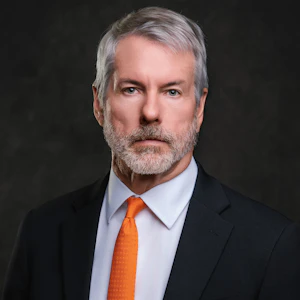
Michael Saylor
Michael Saylor
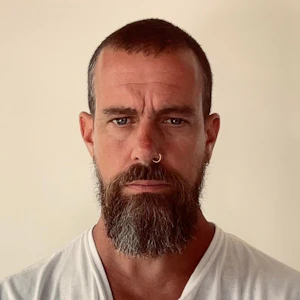
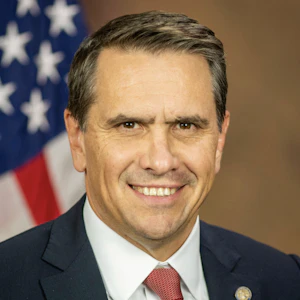
Todd Blanche
Todd Blanche
Biography of Deputy Attorney General Todd Blanche
The Honorable Todd Blanche is the 40th Deputy Attorney General of the United States, overseeing the work of the 115,000 dedicated employees who fulfill the Department of Justice’s mission at Main Justice, the FBI, DEA, U.S. Marshals, ATF, and 93 U.S. Attorney’s Offices.
Todd began his career at the Department where he served for over fifteen years in a variety of capacities, including as a contractor, a paralegal in the Criminal Division, and at the United States Attorney’s office for the Southern District of New York where he eventually became an AUSA and later a supervisor.
After leaving the Department, Todd worked as a criminal defense attorney that included representing President Donald Trump in three of the criminal cases brought against him in 2023 and 2024.
Following President Trump’s historic return to the White House, the President appointed Todd to work alongside Attorney General Pam Bondi to make America safe again. At the DOJ, Todd is working tirelessly to implement President Trump’s priorities that include confronting illegal protecting American businesses from fraud.
Todd has been married to his wonderful wife Kristine for nearly thirty years, is a father and grandfather.
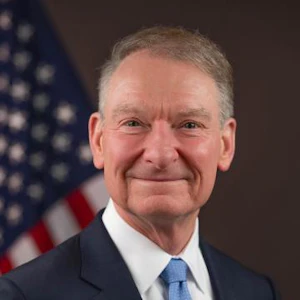
Paul Atkins
Paul Atkins
Prior to returning to the SEC, Chairman Atkins was most recently chief executive of Patomak Global Partners, a company he founded in 2009. Chairman Atkins helped lead efforts to develop best practices for the digital asset sector. He served as an independent director and non-executive chairman of the board of BATS Global Markets, Inc. from 2012 to 2015.
Chairman Atkins was appointed by President George W. Bush to serve as a Commissioner of the SEC from 2002 to 2008. During his tenure, he advocated for transparency, consistency, and the use of cost-benefit analysis at the agency. Chairman Atkins also represented the SEC at meetings of the President’s Working Group on Financial Markets and the U.S.-EU Transatlantic Economic Council. From 2009 to 2010, he was appointed a member of the Congressional Oversight Panel for the Troubled Asset Relief Program.
Before serving as an SEC Commissioner, Chairman Atkins was a consultant on securities and investment management industry matters, especially regarding issues of strategy, regulatory compliance, risk management, new product development, and organizational control.
From 1990 to 1994, Chairman Atkins served on the staff of two chairmen of the SEC, Richard C. Breeden and Arthur Levitt, ultimately as chief of staff and counselor, respectively. He received the SEC’s 1992 Law and Policy Award for work regarding corporate governance matters.
Chairman Atkins began his career as a lawyer in New York, focusing on a wide range of corporate transactions for U.S. and foreign clients, including public and private securities offerings and mergers and acquisitions. He was resident for 2½ years in his firm's Paris office and admitted as conseil juridique in France.
A member of the New York and Florida bars, Chairman Atkins received his J.D. from Vanderbilt University School of Law in 1983 and was Senior Student Writing Editor of the Vanderbilt Law Review. He received his A.B., Phi Beta Kappa, from Wofford College in 1980.
Originally from Lillington, North Carolina, Chairman Atkins grew up in Tampa, Florida. He and his wife Sarah have three sons.

Mike Selig
Mike Selig
Chairman Selig brings to the role deep public and private sector experience working with a wide range of stakeholders across agriculture, energy, financial, and digital asset industries, which rely upon and operate in CFTC-regulated markets.
Prior to his leadership at the CFTC, Chairman Selig most recently served as chief counsel of the Securities and Exchange Commission’s Crypto Task Force and senior advisor to SEC Chairman Paul S. Atkins. In this role, Chairman Selig helped to develop a clear regulatory framework for digital asset securities markets, harmonize the SEC and CFTC regulatory regimes, modernize the agency’s rules to reflect new and emerging technologies, and put an end to regulation by enforcement. He also participated in the President’s Working Group on Digital Asset Markets and contributed to its report on “Strengthening American Leadership in Digital Financial Technology.”
Prior to government service, Chairman Selig was a partner at an international law firm, focusing on derivatives and securities regulatory matters. During his years in private practice, he represented a broad range of clients subject to regulation by the CFTC, including commercial end users, futures commission merchants, commodity trading advisors, swap dealers, designated contract markets, derivatives clearing organizations, and digital asset firms. Chairman Selig advised clients on compliance with the Commodity Exchange Act and the CFTC’s rules and regulations thereunder, including in connection with registration applications and obligations, enforcement matters, and complex transactions.
Chairman Selig earned his law degree from The George Washington University Law School and was articles editor of The George Washington Law Review. He received his undergraduate degree from Florida State University.

David Bailey
David Bailey

Eric Trump
Eric Trump
Mr. Trump also serves as Executive Vice President of The Trump Organization, where he oversees the global management and operations of the Trump family’s extensive real estate portfolio. This includes Trump Hotels, Trump Golf, commercial and residential real estate, Trump Estates, and Trump Winery. Known for his hands-on leadership and strong market instincts, he has played a key role in expanding the company’s presence across major U.S. and international markets.
A globally recognized business leader and public figure, Mr. Trump is a prominent advocate for Bitcoin and decentralized finance. He is a co-founder of World Liberty Financial, a decentralized finance (DeFi) platform, and serves on the Board of Advisors of Metaplanet, Japan’s largest corporate holder of Bitcoin.
Beyond his business activities, Mr. Trump has helped raise more than $50 million for St. Jude Children’s Research Hospital in the fight against pediatric cancer, a philanthropic mission he began at age 21.
Mr. Trump earned a degree in Finance and Management from Georgetown University. He currently resides in Florida with his wife, Lara, and their two children. He is also the author of Under Siege, his memoir published in October 2025.

Jack Mallers
Jack Mallers
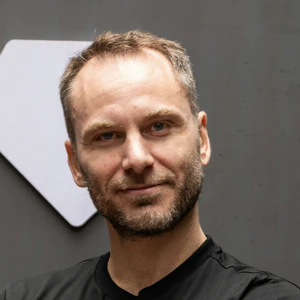
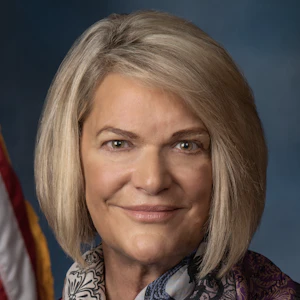
Cynthia Lummis
Cynthia Lummis
As the first-ever Chair of the Senate Banking Subcommittee on Digital Assets, Senator Lummis is the architect of the legislative framework shaping America's digital asset future. She introduced the landmark Lummis-Gillibrand Responsible Financial Innovation Act, the first comprehensive bipartisan crypto regulatory framework in Senate history. She co-authored the GENIUS Act — the first federal stablecoin law ever enacted — and introduced the BITCOIN Act, which would establish a U.S. strategic Bitcoin reserve of up to one million BTC. She is leading the Clarity Act, which will bring long-overdue regulatory certainty to the digital asset industry. She has also championed digital asset tax reform, including a de minimis exemption for small transactions and equal tax treatment for miners and stakers.
Known as Congress' "Crypto Queen," Senator Lummis represents Wyoming — a state she has helped build into one of the most digital asset-friendly regulatory environments in the nation. Before serving in the Senate, she served 14 years in the Wyoming Legislature, eight years as Wyoming State Treasurer, and eight years in the U.S. House. She is a three-time graduate of the University of Wyoming.
Her work represents a crucial bridge between traditional financial systems and the emerging digital economy, ensuring America leads the world in financial innovation while protecting the individual freedoms that define it.

Adam Back
Adam Back
Amy Oldenburg
Amy Oldenburg
David Marcus
David Marcus

Matt Schultz
Matt Schultz
Fred Thiel
Fred Thiel
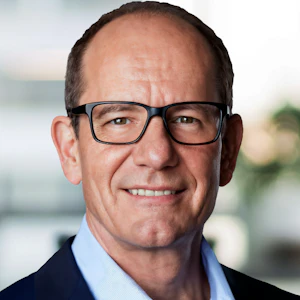
Throughout his career, Mr. Thiel has consistently driven rapid growth and created substantial shareholder value. Prior to MARA, Mr. Thiel served as the CEO of two other public companies, Local Corporation (NASDAQ: LOCM) and Lantronix, Inc (NASDAQ: LTRX). He has successfully raised billions in equity and debt through private and public offerings, led companies through IPOs, executed high-value exits to strategic and financial acquirers, and implemented effective M&A and roll-up strategies.
Mr. Thiel attended the Stockholm School of Economics and executive classes at Harvard Business School, and is fluent in English, Spanish, Swedish, and French. Mr. Thiel is the Chairman of the Board for Oden Technology, Inc. and is active in Young Presidents’ Organization where he has led initiatives in both the FinTech and Technology Networks.
A recognized voice in the industry, Fred frequently shares his insights on energy and technology with major media outlets like Bloomberg TV, CNBC, and FOX Business, contributing to vital discussions about the future of these sectors.
Tim Draper
Tim Draper
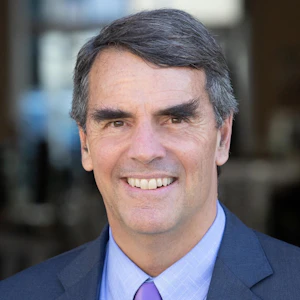
He is a supporter and global thought leader for entrepreneurs everywhere, and is a leading spokesperson for Bitcoin and decentralization, having won the Bitcoin US Marshall’s auction in 2014, invested in over 50 crypto companies, and led investments in Coinbase, Ledger, Tezos, and Bancor, among others.
Afroman
Afroman