Finding Signal in a Noisy World
Speakers/Moderators
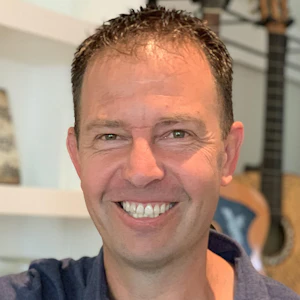
Jeff Booth
Jeff Booth
He is a Co-Founder of www.BuildDirect.com, and NocNoc, has been a Young Presidents Organization member since 2004 and contributes time as a Founding Fellow at the Creative Destruction Lab.
Jeff currently sits on the boards of Core Scientific, Fedi and Breez.
Session
Overview
Jeff Booth explores how perception shapes reality and argues that people themselves are part of the signal in a noisy information environment. He frames Bitcoin not first as an asset or technology product, but as a shift in the mental models used to understand markets, money, and human coordination.
The keynote contrasts a credit-based monetary system, which Booth says requires perpetual growth and produces inflation, inequality, fragility, and division, with a free market measured against Bitcoin’s fixed supply. He describes several ways people observe Bitcoin: as irrelevant to the current financial system, as one crypto technology among many, as digital gold, or as neutral open infrastructure.
Booth’s central argument is that Bitcoin is emerging as a permissionless protocol stack, with layers such as Lightning and privacy-focused applications developing on top of a secure base layer. He emphasizes self custody, running nodes, developer work, education, and circular economies as practical actions that help shape the system’s future.
My hope today, in a world that seems increasingly noisy, is to give you the signal in that noise. More importantly than that, I hope to show you that you are the signal.
There is a problem in quantum physics that has haunted scientists for over 100 years. That problem is that the act of observation changes the outcome of the experiment. It is easy to think about and talk about that only applying to subatomic particles. But what if it applies to us too?
That brings me to a quote I often think about: we don't see things as they are, we see things as we are. So I don't want to start with Bitcoin today. I want to start with us.
Because if the lens that we use to measure the world changes what the world becomes, then the most important question today isn't, what is Bitcoin? The most important question is, who is looking?
So let's try something. I want each of you in the audience to imagine this light as you sitting there, just in this moment. Now I want you to think about all of the people who shaped you: your parents, your friends, the books you've read, the podcasts you've watched, the teacher who changed something in you, the people close to you that you've lost.
Each one of those people is a part of you. You carry them in you. Their words live in your thinking. Their choices shaped you.
Now I want you to go back further. Your four grandparents, their hopes, their dreams, their tragedies, their failures. I want you to think of every person who impacted them. The friend who convinced your grandfather to move to a new city where you live today. How their experiences shaped them.
And further back, your eight great-grandparents. The random stranger whose act of kindness changed your grandmother's life. That one person, you in the center there, and the interconnectedness of everyone who has ever touched you.
Now look around. Look to your right. Look at the person beside you. Their worldview is different than yours, but the result of the same thing, crafted from the stories they tell themselves and the people who impacted them.
We are the combination of trillions of decisions across millions of people, across generations, bringing us right here, right now, in the only moment that matters. Because in this moment, we can change.
For me, one of the things I'm filled with is awe and gratitude, knowing that all of these people in my life, many I can't even think of, shaped me to where I'm sitting here. Potentially their positive impact on me could bring a positive impact to you.
Why is that context so critical before we get started? Because the future is bent into reality by us. We shape tomorrow. But we're trapped in yesterday's thinking, our mental models of how things looked yesterday.
Very often, we don't live in the moment. We're defending our past. We're defending our past because our past is our identity, and changing our identity means something was wrong. So we hang on, and we don't measure our time in that moment with those people.
The past doesn't exist anymore. The only thing you can change is right now, in this moment, which then cascades into the future.
What I wanted to get to first is something I've talked about for years and years, which is true. Both of these statements are true: the natural state of the free market is deflation, and in a credit-based system where credit is money and credit is lent into existence, credit has to grow forever.
We compete with each other to provide more value to each other in a free market. We only use the things that give us more value. If the market was free, prices would have to fall. You're both the producer and the competitor. You have to deliver more value to society to get paid, whether you're working at a company that is delivering more value or not, and then somebody has to choose it.
If the market was free, and technology was driving an acceleration, an exponential curve where AI was driving faster and faster change, you would expect that productivity to drive everything lower and lower in price. Technology would save us time so we could spend it with our families and do more. Each act of us working for each other helps the world, and it keeps moving.
But in a credit-based system where credit is money and credit is lent into existence, it sets up a different scenario, with different winners and losers. The credit can't allow what I just described. The credit has to grow forever.
So we listen to people tell us what the rules of the world look like from a credit-based system that can't allow the free market and can't allow deflation. Then we call it capitalism or socialism, and it's all nonsense. It's all nonsense because these two statements are true, but they're contradictory.
That is such a big break in our brains. You'll want to say, but we can kind of live in this one, we can kind of live in this one. It's kind of a free market. You try to make them go together, and they cannot go together. They're two totally different systems with different winners and losers.
Now, just for a moment, what if the world was backed by 21 million units that couldn't change, wouldn't change, and were resistant to change, but everybody was measuring that from an infinite number of units that would keep growing forever? If those infinite units kept growing forever, it would feel like everything was getting scarce and confusing. Really confusing, versus what should be really natural: we compete to provide each other value, we use the things that provide more value, and prices fall as a result.
So what Bitcoin is doing is imposing the first free market that has ever existed. I specifically said imposing. It doesn't care what you think of it. It doesn't care how you want to measure it. It's imposing it.
But because we've never lived in that system, we don't have a mental model for what that looks like. We've always lived in a zero-sum game, where if you had a bigger army, you could invade and steal somebody else's gold or raw materials, and you could put them under slavery for you. Inside the country that had the biggest army, you could win at their loss. But it was always a zero-sum game.
Then we replaced that system with monetary theft that did the same thing. We didn't have to invade them. We just did it with the currency.
But the free market is an infinite game. Completely infinite. Because you have to choose, and somebody has to deliver you more value, and everybody wins.
If you look at your calculator app on your phone today, where is that in GDP? Do you gain value from it? Should it go up in price because people are making you want to tax the calculator app to make more money to pay for arbitrarily rising prices? The point is that technology allows us to do more with less forever.
This brings us to a number of different observers observing what is happening in real time.
Observer one is in credit money. This observer is the vast part of the population, and this observer believes that the money system is foundationally sound, that the money works, experts manage it, and inflation is normal. They question what rate of inflation, rather than whether inflation is normal.
This would be an easy lie to believe. It is everything they've ever known. Every history book says this over and over. All the experts operate within a system that is in direct opposition to the free market, and fight within that system over which side is right.
The expansion of money that has to keep happening from the credit-based system, because it can't stop or it would all fail, leads to asset inflation, inequality, and cost pressures. This leads to debt dependence and increasing fragility in the system.
But because each person looks from that system to their hero to solve the problem that the system can't resolve, they divide. Naturally, they divide. This person is going to save me. This person is going to save me.
That credit money keeps expanding, leading to more and more division of society, larger interventions, misallocation of capital, fraud, and greater instability. Sound familiar?
There is another observer: crypto and blockchain technology. This observer sees Bitcoin as software version one, waiting to be disrupted by something faster, better, with more features. And it's true: Bitcoin at layer one only does five to seven transactions per second. It can't do smart contracts. It's not private. It's old tech.
So it matches an observation that this observer has. It fits with Facebook replacing Myspace. The iPhone replaces BlackBerry. So for those thinking in technology cycles and watching the past, seeing people get rich in Bitcoin just by holding it, it makes perfect sense to see an opportunity for fast money.
Scams proliferate. Hundreds of thousands of coins get made. Each new blockchain or token goes through the same pump and dump scheme, and investors in a new thing are trying to get out of the old system.
As that happens, the observers from group one look at those people and say, those people are insane. We were right all the time with our credit money. Because they've conflated Bitcoin with blockchain, crypto, and everything else. It looks like one thing to those other observers.
Observer three is a little further down the path. This observer sees Bitcoin as digital gold, the best asset in the world. They've done their work to understand Bitcoin, its decentralization, its security, its properties that make it the best store of value.
But they're missing a higher-level question: why do we have a store of value in the first place? Why do you need it? Maybe because you've never been able to store money in money. So we store it in something else because money has always been broken.
The thing holds that value, and the thing centralizes because we use a different money that centralizes the assets, like gold. Then once the gold is centralized, the rules change. That is why we've never been in this system before.
If you kept extending credit and money on a new asset, you would just have different rulers. Same system, different rulers. Nothing changed. Not the free market.
All of these observers share one thing in common. They are not bad people. This is true for them. It's real for them. But all of their actions reinforce a zero-sum game, a system of extraction, because they're measuring Bitcoin from infinitely growing pieces of paper. I'm going to get rich at the expense of somebody else.
Then there is observer four, and I'm firmly in this camp. This observer sees Bitcoin as decentralized, secure infrastructure: neutral, open, permissionless. This observer knows that protocols don't come around very often. They're rare.
They know that most people measure the internet starting in 1989, but the internet didn't start in 1989. It started in 1969, and it emerged in layers. The same thing happening in the internet is happening in Bitcoin.
That would be really confusing because today most people are talking about the first layer of Bitcoin, and all of the things that bind Bitcoin to physical reality, chasing lower-cost energy all around the world. An entire free market for energy is sprouting out all around the world to take advantage of the lowest-cost energy and find new abundant energy.
Then there are all the different pieces: the cryptography, the consensus rules, the difficulty adjustment, the nodes that you can actively take part in. You can run a node and make sure that it follows your rules, the things that you said. You can order everything every ten minutes, and you can take action. You are part of this. We are part of this.
If you knew it was this, and you knew how protocols developed, you would also know that most people today thinking about the internet, and the same protocol stack powering your phone and everything else you use today, would have a massive misunderstanding of how that came into effect. Most people don't care about all of the grainy details of how the protocol stack gets built.
Because it's a global neutral protocol, there would be entrepreneurs from all over the world, talented, beautiful, incredibly talented, trying to build the next layer on top of it without another coin, just integrated right on top of it.
At first, five years ago, if you asked about Lightning, probably half the transactions failed. I personally know some of the most brilliant developers who have been solving this problem. We've invested in some of these brilliant developers solving this problem and watched them extend this protocol through every fight, through trying all their ideas. Today, Lightning works. It works all the time.
We have portfolio companies in our fund that are doing billions of dollars in transactions per quarter, growing like crazy in something that people don't believe is being used as a currency. And I'm watching.
They would know that if everybody was giving their time to a system based on money that was being destroyed, then those people caught in that system would feed a system of surveillance. So people over here who knew this was a protocol stack, the entrepreneurs would be building privacy tech, and that is being built on top of this. Interactive services and applications would explode.
A bunch of this is already there, whether you use it or not. It's exploding and it's already there, just like what happened in the internet. You didn't know about the internet. Even in 1989, most people missed what the internet was. But a protocol grows like this.
So it leaves me with a question. These four observers bring us back full circle to where we started. Every one of those observers that we talked about, the person trapped on the treadmill, the one chasing features, the one handing their keys to Wall Street, every one of them believes in their reality and is creating their reality. They're bumping into each other in a chaotic world.
There are a whole bunch of those people, way more than would think it's the protocol. So I'm left with this question: if they all believe they're right, how could I know I am? I can't for sure. The truth is, I can't for sure.
But the world I live in now, and what I'm watching happen, is what I would expect to happen. Our models of reality should have predictive strength. Otherwise, our model is probably wrong. If you're confused about what's going on in the world, when you walk up the stairs, your model in your brain means you don't keep tripping. You fix that model in your brain. It should have predictive power.
So what would I expect if this protocol was coming into existence? I would expect it to be pricing the free market. I would expect all prices to fall against Bitcoin. Exactly what I see. I would expect all of the layers to be building on top. Exactly what I see. I would expect anybody operating in the other systems to be more and more chaotic because they were measuring from a piece of paper.
I understand how hard this is because I was once observer one, and I didn't know. That also gives me a whole bunch of hope because the world doesn't just happen to us. We have agency. It emerges from our actions, from what we do.
So I'm in this new system, giving all of my energy to this new system, and I'm watching as people move from this other system to the new system. Every person taking self custody, every person running a node, every developer building on this layer, every educator who helps one more person see it clearly, every person in a Bitcoin circular economy paying in Bitcoin.
We're not just passengers. We are part of an emergent reality that transitions the world from fear, scarcity, and control to a world of truth, hope, and abundance.
I couldn't be more thankful to be on this journey with you. Thank you.
Similar
Sessions
BTC Sessions and Friends

BTC Sessions
BTC Sessions
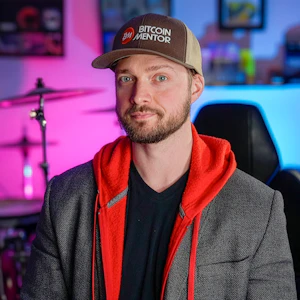
Nathan Fitzsimmons
Nathan Fitzsimmons
Nathan hosts the Mentor Sessions Podcast—which has gained 600,000 views on YouTube in the first year—on the BTC Sessions channel and also co-hosts the BTC Sessions Live Streams.
Jeff Booth
Jeff Booth
He is a Co-Founder of www.BuildDirect.com, and NocNoc, has been a Young Presidents Organization member since 2004 and contributes time as a Founding Fellow at the Creative Destruction Lab.
Jeff currently sits on the boards of Core Scientific, Fedi and Breez.
BTC Sessions and Friends
Speakers/Moderators
BTC Sessions
BTC Sessions
Nathan Fitzsimmons
Nathan Fitzsimmons
Nathan hosts the Mentor Sessions Podcast—which has gained 600,000 views on YouTube in the first year—on the BTC Sessions channel and also co-hosts the BTC Sessions Live Streams.
Jeff Booth
Jeff Booth
He is a Co-Founder of www.BuildDirect.com, and NocNoc, has been a Young Presidents Organization member since 2004 and contributes time as a Founding Fellow at the Creative Destruction Lab.
Jeff currently sits on the boards of Core Scientific, Fedi and Breez.
Finding Signal in a Noisy World
Jeff Booth
Jeff Booth
He is a Co-Founder of www.BuildDirect.com, and NocNoc, has been a Young Presidents Organization member since 2004 and contributes time as a Founding Fellow at the Creative Destruction Lab.
Jeff currently sits on the boards of Core Scientific, Fedi and Breez.
Finding Signal in a Noisy World
Speakers/Moderators
Jeff Booth
Jeff Booth
He is a Co-Founder of www.BuildDirect.com, and NocNoc, has been a Young Presidents Organization member since 2004 and contributes time as a Founding Fellow at the Creative Destruction Lab.
Jeff currently sits on the boards of Core Scientific, Fedi and Breez.
Other
Speakers
Michael Saylor
Michael Saylor
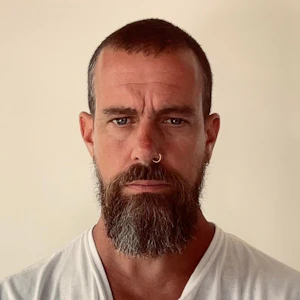
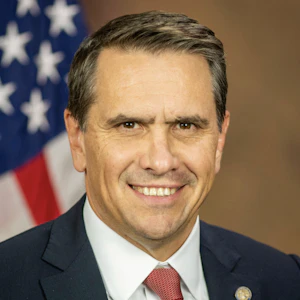
Todd Blanche
Todd Blanche
Biography of Deputy Attorney General Todd Blanche
The Honorable Todd Blanche is the 40th Deputy Attorney General of the United States, overseeing the work of the 115,000 dedicated employees who fulfill the Department of Justice’s mission at Main Justice, the FBI, DEA, U.S. Marshals, ATF, and 93 U.S. Attorney’s Offices.
Todd began his career at the Department where he served for over fifteen years in a variety of capacities, including as a contractor, a paralegal in the Criminal Division, and at the United States Attorney’s office for the Southern District of New York where he eventually became an AUSA and later a supervisor.
After leaving the Department, Todd worked as a criminal defense attorney that included representing President Donald Trump in three of the criminal cases brought against him in 2023 and 2024.
Following President Trump’s historic return to the White House, the President appointed Todd to work alongside Attorney General Pam Bondi to make America safe again. At the DOJ, Todd is working tirelessly to implement President Trump’s priorities that include confronting illegal protecting American businesses from fraud.
Todd has been married to his wonderful wife Kristine for nearly thirty years, is a father and grandfather.
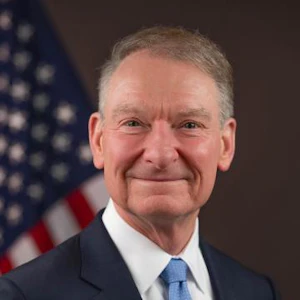
Paul Atkins
Paul Atkins
Prior to returning to the SEC, Chairman Atkins was most recently chief executive of Patomak Global Partners, a company he founded in 2009. Chairman Atkins helped lead efforts to develop best practices for the digital asset sector. He served as an independent director and non-executive chairman of the board of BATS Global Markets, Inc. from 2012 to 2015.
Chairman Atkins was appointed by President George W. Bush to serve as a Commissioner of the SEC from 2002 to 2008. During his tenure, he advocated for transparency, consistency, and the use of cost-benefit analysis at the agency. Chairman Atkins also represented the SEC at meetings of the President’s Working Group on Financial Markets and the U.S.-EU Transatlantic Economic Council. From 2009 to 2010, he was appointed a member of the Congressional Oversight Panel for the Troubled Asset Relief Program.
Before serving as an SEC Commissioner, Chairman Atkins was a consultant on securities and investment management industry matters, especially regarding issues of strategy, regulatory compliance, risk management, new product development, and organizational control.
From 1990 to 1994, Chairman Atkins served on the staff of two chairmen of the SEC, Richard C. Breeden and Arthur Levitt, ultimately as chief of staff and counselor, respectively. He received the SEC’s 1992 Law and Policy Award for work regarding corporate governance matters.
Chairman Atkins began his career as a lawyer in New York, focusing on a wide range of corporate transactions for U.S. and foreign clients, including public and private securities offerings and mergers and acquisitions. He was resident for 2½ years in his firm's Paris office and admitted as conseil juridique in France.
A member of the New York and Florida bars, Chairman Atkins received his J.D. from Vanderbilt University School of Law in 1983 and was Senior Student Writing Editor of the Vanderbilt Law Review. He received his A.B., Phi Beta Kappa, from Wofford College in 1980.
Originally from Lillington, North Carolina, Chairman Atkins grew up in Tampa, Florida. He and his wife Sarah have three sons.

Mike Selig
Mike Selig
Chairman Selig brings to the role deep public and private sector experience working with a wide range of stakeholders across agriculture, energy, financial, and digital asset industries, which rely upon and operate in CFTC-regulated markets.
Prior to his leadership at the CFTC, Chairman Selig most recently served as chief counsel of the Securities and Exchange Commission’s Crypto Task Force and senior advisor to SEC Chairman Paul S. Atkins. In this role, Chairman Selig helped to develop a clear regulatory framework for digital asset securities markets, harmonize the SEC and CFTC regulatory regimes, modernize the agency’s rules to reflect new and emerging technologies, and put an end to regulation by enforcement. He also participated in the President’s Working Group on Digital Asset Markets and contributed to its report on “Strengthening American Leadership in Digital Financial Technology.”
Prior to government service, Chairman Selig was a partner at an international law firm, focusing on derivatives and securities regulatory matters. During his years in private practice, he represented a broad range of clients subject to regulation by the CFTC, including commercial end users, futures commission merchants, commodity trading advisors, swap dealers, designated contract markets, derivatives clearing organizations, and digital asset firms. Chairman Selig advised clients on compliance with the Commodity Exchange Act and the CFTC’s rules and regulations thereunder, including in connection with registration applications and obligations, enforcement matters, and complex transactions.
Chairman Selig earned his law degree from The George Washington University Law School and was articles editor of The George Washington Law Review. He received his undergraduate degree from Florida State University.
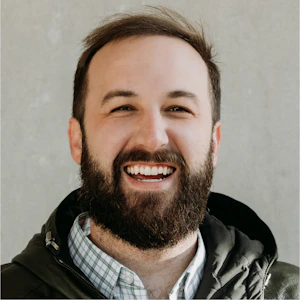
David Bailey
David Bailey

Eric Trump
Eric Trump
Mr. Trump also serves as Executive Vice President of The Trump Organization, where he oversees the global management and operations of the Trump family’s extensive real estate portfolio. This includes Trump Hotels, Trump Golf, commercial and residential real estate, Trump Estates, and Trump Winery. Known for his hands-on leadership and strong market instincts, he has played a key role in expanding the company’s presence across major U.S. and international markets.
A globally recognized business leader and public figure, Mr. Trump is a prominent advocate for Bitcoin and decentralized finance. He is a co-founder of World Liberty Financial, a decentralized finance (DeFi) platform, and serves on the Board of Advisors of Metaplanet, Japan’s largest corporate holder of Bitcoin.
Beyond his business activities, Mr. Trump has helped raise more than $50 million for St. Jude Children’s Research Hospital in the fight against pediatric cancer, a philanthropic mission he began at age 21.
Mr. Trump earned a degree in Finance and Management from Georgetown University. He currently resides in Florida with his wife, Lara, and their two children. He is also the author of Under Siege, his memoir published in October 2025.

Jack Mallers
Jack Mallers
Cynthia Lummis
Cynthia Lummis
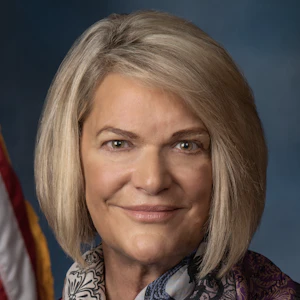
As the first-ever Chair of the Senate Banking Subcommittee on Digital Assets, Senator Lummis is the architect of the legislative framework shaping America's digital asset future. She introduced the landmark Lummis-Gillibrand Responsible Financial Innovation Act, the first comprehensive bipartisan crypto regulatory framework in Senate history. She co-authored the GENIUS Act — the first federal stablecoin law ever enacted — and introduced the BITCOIN Act, which would establish a U.S. strategic Bitcoin reserve of up to one million BTC. She is leading the Clarity Act, which will bring long-overdue regulatory certainty to the digital asset industry. She has also championed digital asset tax reform, including a de minimis exemption for small transactions and equal tax treatment for miners and stakers.
Known as Congress' "Crypto Queen," Senator Lummis represents Wyoming — a state she has helped build into one of the most digital asset-friendly regulatory environments in the nation. Before serving in the Senate, she served 14 years in the Wyoming Legislature, eight years as Wyoming State Treasurer, and eight years in the U.S. House. She is a three-time graduate of the University of Wyoming.
Her work represents a crucial bridge between traditional financial systems and the emerging digital economy, ensuring America leads the world in financial innovation while protecting the individual freedoms that define it.
Adam Back
Adam Back
Amy Oldenburg
Amy Oldenburg
David Marcus
David Marcus

Matt Schultz
Matt Schultz
Fred Thiel
Fred Thiel
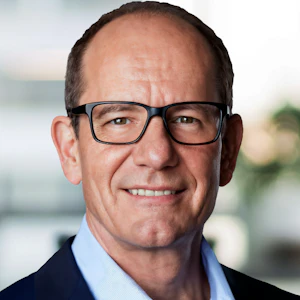
Throughout his career, Mr. Thiel has consistently driven rapid growth and created substantial shareholder value. Prior to MARA, Mr. Thiel served as the CEO of two other public companies, Local Corporation (NASDAQ: LOCM) and Lantronix, Inc (NASDAQ: LTRX). He has successfully raised billions in equity and debt through private and public offerings, led companies through IPOs, executed high-value exits to strategic and financial acquirers, and implemented effective M&A and roll-up strategies.
Mr. Thiel attended the Stockholm School of Economics and executive classes at Harvard Business School, and is fluent in English, Spanish, Swedish, and French. Mr. Thiel is the Chairman of the Board for Oden Technology, Inc. and is active in Young Presidents’ Organization where he has led initiatives in both the FinTech and Technology Networks.
A recognized voice in the industry, Fred frequently shares his insights on energy and technology with major media outlets like Bloomberg TV, CNBC, and FOX Business, contributing to vital discussions about the future of these sectors.
Tim Draper
Tim Draper
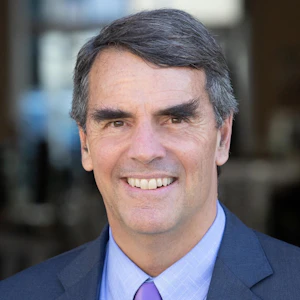
He is a supporter and global thought leader for entrepreneurs everywhere, and is a leading spokesperson for Bitcoin and decentralization, having won the Bitcoin US Marshall’s auction in 2014, invested in over 50 crypto companies, and led investments in Coinbase, Ledger, Tezos, and Bancor, among others.
Afroman
Afroman