Fireside: Kalshi
Speakers/Moderators
Conner Brown
Conner Brown

Session
Overview
John Wang of Kalshi joined Conner Brown of the Bitcoin Policy Institute for a fireside conversation about prediction markets, Bitcoin trading, and Kalshi's role in the broader crypto market. Wang explained that crypto is Kalshi's second-largest category, with Bitcoin making up the majority of its crypto market volume and serving as a major payment rail on the platform.
The discussion covered why traders use prediction markets for Bitcoin exposure, including defined expirations, strike prices, event-based trades, and hedges around tail risks such as Satoshi-era coins moving, quantum computing concerns, regulatory developments, and Bitcoin price milestones.
Wang also discussed Kalshi's regulated approach, its CFTC framework, broker integrations, market surveillance, and stance against insider trading. The conversation highlighted the challenges of defining material nonpublic information in prediction markets and the importance of fair access for maintaining useful information aggregation.
Looking ahead, Wang argued that prediction markets could influence the structure of financial exchanges by combining 24/7 trading and money movement with regulated market infrastructure, potentially extending practices familiar in crypto into traditional finance.
Great to be here, and great to be here in conversation with John, head of crypto at Kalshi. It feels like every single day I open Twitter and there is a new story, or Kalshi is in the news about something. John, what is your background? You are head of crypto at Kalshi, as I understand it. What brought you to Kalshi, and what does head of crypto mean there?
Of course. Thanks for having me, and thanks for taking this at such a last minute. I have grown up in the crypto sphere my entire career. I joined around 2017 trading ICOs, and all I have worked in is this industry. I have really embedded myself in crypto Twitter and the ecosystem, worked in each chain, and Bitcoin particularly was my first entry into crypto.
I joined Kalshi around nine months ago to lead the crypto division. We have grown a lot since, and I think we have also made a lot of inroads into the industry.
That is great. At Kalshi, what does the crypto division consist of? What does crypto at Kalshi involve in terms of the products and what that looks like?
A lot of people think of us as a prediction market. We have a lot of different categories ranging from sports to politics to culture, but crypto is actually our second-largest category, and Bitcoin makes up 90% of our crypto market volume. It is also one of our main payment methods on the platform. Aside from accepting wires into fiat, crypto is one of our main payment rails.
Bitcoin is the largest form of payment for us. It is larger than stablecoins, even in the US.
Oh wow, really?
Yeah, it is really quite meaningful. In fact, we are available in 140 countries, not just the US, and outside of the US the only form of payment we have right now is crypto. So it is a huge part of our business. I think we owe a lot to the Bitcoin and crypto community for that.
Interesting. It sounds like at Kalshi you have Bitcoin wired into both the infrastructure of the company and the product offerings. I am trying to understand why someone would use Kalshi to trade Bitcoin, or trade the price of Bitcoin. Why use Kalshi instead of just buying Bitcoin spot or using some of the other more traditional exchange offerings?
Prediction markets are this interesting new thing where you can apply a question about the future to anything. It was almost unexpected that it had such great product-market fit in crypto, I think. The reason people love trading crypto on Kalshi is because a lot of people find it more accessible to trade Bitcoin on an exchange like ours compared to just trading spot.
There are a lot of people in the crowd who are experts in Bitcoin and have been here for a long time, so it might not apply to you, but there are definitely a lot of newcomers to this space who think having a defined expiry date and defined strike prices over discrete time frames makes it a lot less mental overhead. It makes it easier for people to trade, and it makes it easier for them to form conviction around specific theses.
I think event trading is pretty huge on Kalshi as well, where you can essentially form these discrete bets or trades, or essentially legs of a trade. If something big happens in Bitcoin, you can make a trade around that.
The event trading is interesting. I was looking at the different markets that Kalshi has related to Bitcoin before doing this, and there are some really interesting markets on whether Satoshi's coins will ever move, or markets related to quantum computing's impact on Bitcoin. It got me thinking that it is interesting that you can get financial exposure to these tail-end events. The chance of Satoshi moving his coins is something that traditionally, if you are just looking at options on Bitcoin or something like that, is hard to hedge. Could you tell me a little bit more about how people are using Kalshi to hedge around these tail risk events, or way-out-of-distribution events in Bitcoin, and why people do something like that?
Bitcoin is a really interesting asset because it bundles up a lot of different trades. The value proposition of Bitcoin has also changed over time. Over the arc of its history, it went from initially being a payment method to pay for your pizza, to a store of value asset, to something you could take to get exposure to regulatory or political events or institutional adoption.
Now the most topical thing is the Google quantum paper about quantum risk, breaking Bitcoin encryption, and the upgrade. As you mentioned, the Satoshi market is trading at around 7% right now that he will move his coins before the end of the year, which might be higher than a lot of people expect.
Prediction markets allow you to disaggregate this huge asset class into all the individual drivers and risks, with the quantum one being a particularly strong one. Another one could be the CLARITY Act or other regulatory events, which we have markets on as well, and they have a decent amount of volume.
Even whether you think Bitcoin will go above 100K before the end of the year, I think it is around a 44% chance right now. Those are pretty interesting hedging examples you can have.
Even broadly outside of crypto, we have had people and institutions, and even in sports, athletic departments hedge insurance risk among insurance brokers about paying out an athlete bonus. They would essentially hedge the risk on Kalshi. If the athlete was able to make it to the playoffs or some further game in the season, then they would have to pay this bonus, and they would take that risk and lay it off here.
It is really interesting how integral to the policy process these markets have become. I feel like it really burst onto the stage with the elections, obviously after you got the green light to operate in the US. I worked in the Senate for the past two years before my current role at BPI, and even during the policy-making process, for staffers inside the Hill, we were constantly looking at Kalshi and Polymarket and the different prediction markets to see the odds of legislation passing or something like that. Even for insiders, it is interesting. Now working at BPI, we still use it pretty often just to get a sentiment check and see how the odds are looking.
That brings me to another question. A lot of people will interchangeably use Polymarket and Kalshi to refer generically to prediction markets. How do you see Kalshi positioning itself separately from Polymarket right now and into the future?
The companies are definitely seen similarly, given that prediction markets are kind of a new industry. But even from the very beginning, there were two very different philosophies about building the companies. We take a very strong regulated approach to things. We care mostly about being a pro-market institution and being able to trade on anything.
Our product velocity is quite high. We have shipped a mobile app, we have combos, and we are available in 140 countries. We have a very strong broker strategy. We power prediction market offerings for Robinhood, Coinbase, PrizePicks, and Phantom, and we have also announced an integration with XP, which is the Brazilian broker.
Philosophically, I think we also take a strong stance against insider trading, for example. We have a lot of market surveillance efforts going into that, and I think a lot of this type of stuff matters at scale. The founders spent four years essentially working with regulators to legalize prediction markets in the US, whereas a lot of our competitors took the route of going offshore and not going within the financial system or the regulatory framework. That is an important thing for us, and I think it matters a lot when you are trying to introduce a new asset class to the world.
The insider trading piece is interesting. I feel like that is really top of mind for a lot of people right now. There was the recent story about the soldier betting on the outcome of the Maduro raid, and that has gotten a lot of people asking where we draw the line with insider trading for prediction markets. With a company that is doing SEC disclosures and public filings, it is pretty easy to tell these are our financials, we have not released them yet, and that is clearly material nonpublic information. How do you draw that line with something that is much more generic, like what songs are going to be played at the Super Bowl or something like that?
In that particular case with the Maduro soldier, they are actually blocked from trading on Kalshi. We do have KYC and market surveillance, and I think we have stronger protections for our traders. The question of where you draw the line for insider trading is not unique to prediction markets. It applies to stock markets as well and to all other asset classes, which is: how do you define material nonpublic information?
I think it is a nuanced question that requires nuanced solutions from a regulatory standpoint. The reason we take this stance against insider trading is that I think it is the most pro-market thing you can do. If you can protect your traders, you can grow the asset class into the true scale it has the potential to become. Otherwise, it becomes purely an insider-only game where insiders can extract.
The whole purpose of prediction markets is to offer this information aggregation layer, where traders can go out and seek information that they do not have insider access to, but they are able to do research and calibrate their knowledge and answers to get to a greater expectation of what the market value of this event is.
If you have consistent, not only toxic but insider flow, it really ruins the information aggregation ability of prediction markets in the long term. It is pretty clear that someone who takes actions where they are able to, for example, stand outside of the Super Bowl stadium and look at how many cars are parked, or who comes in and out, that is not insider trading because it is fair access. Anyone could do that. But it is definitely a developing question.
It is difficult. It is almost philosophical in some ways, what is public and nonpublic for these kinds of events that are outside the norm of what people are typically trading. But I do think there is this through line, just like with Bitcoin, this idea of information markets, aggregating information, and using the internet to bring all these people together. It is a really powerful concept. It has been thought about for 20 or 30 years, and it is really cool to see it finally coming to light, especially here in America.
To close it out, how do you see the importance of this technology playing forward for the next five years? This is still relatively new. Kalshi just got the green light to operate really in 2024. How do you see the next five years, and why is it important to have this technology here in America?
With prediction markets, it is not only this new form of trading, but really a new form of building an exchange entirely from the ground up. At Kalshi, we have 24/7 money movement. It is a 24/7 exchange while still being within the CFTC regulatory framework. Compared to other legacy exchanges in traditional finance, that is a huge step-function change.
I know we are used to it in crypto already, but I think we are starting to see this model structure change and take over traditional systems as well. We are going to see a lot more liquid markets outside of traditional trading hours. We are going to see what the crypto industry has been so advanced in spread toward the rest of the traditional financial system.
Finally, we are going to see institutional adoption of prediction markets, where there will be large institutions and hedge funds disaggregating stocks into discrete components and taking trades based on that to hedge specific tail risks or to take a more precise trade on something that otherwise would just be an indirect proxy.
Interesting. It sounds like a very exciting future. Thank you so much for joining us here in Bitcoin Vegas and having this conversation. It has been great.
It was a pleasure. Thank you, guys.
Similar
Sessions
Fireside: Kalshi
Conner Brown
Conner Brown
Fireside: Kalshi
Speakers/Moderators
Conner Brown
Conner Brown
Other
Speakers
Michael Saylor
Michael Saylor
Todd Blanche
Todd Blanche
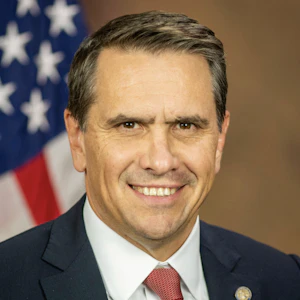
Biography of Deputy Attorney General Todd Blanche
The Honorable Todd Blanche is the 40th Deputy Attorney General of the United States, overseeing the work of the 115,000 dedicated employees who fulfill the Department of Justice’s mission at Main Justice, the FBI, DEA, U.S. Marshals, ATF, and 93 U.S. Attorney’s Offices.
Todd began his career at the Department where he served for over fifteen years in a variety of capacities, including as a contractor, a paralegal in the Criminal Division, and at the United States Attorney’s office for the Southern District of New York where he eventually became an AUSA and later a supervisor.
After leaving the Department, Todd worked as a criminal defense attorney that included representing President Donald Trump in three of the criminal cases brought against him in 2023 and 2024.
Following President Trump’s historic return to the White House, the President appointed Todd to work alongside Attorney General Pam Bondi to make America safe again. At the DOJ, Todd is working tirelessly to implement President Trump’s priorities that include confronting illegal protecting American businesses from fraud.
Todd has been married to his wonderful wife Kristine for nearly thirty years, is a father and grandfather.
Paul Atkins
Paul Atkins
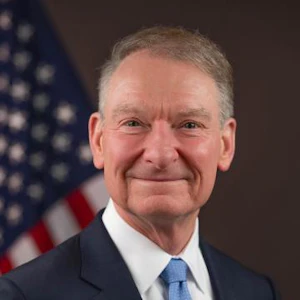
Prior to returning to the SEC, Chairman Atkins was most recently chief executive of Patomak Global Partners, a company he founded in 2009. Chairman Atkins helped lead efforts to develop best practices for the digital asset sector. He served as an independent director and non-executive chairman of the board of BATS Global Markets, Inc. from 2012 to 2015.
Chairman Atkins was appointed by President George W. Bush to serve as a Commissioner of the SEC from 2002 to 2008. During his tenure, he advocated for transparency, consistency, and the use of cost-benefit analysis at the agency. Chairman Atkins also represented the SEC at meetings of the President’s Working Group on Financial Markets and the U.S.-EU Transatlantic Economic Council. From 2009 to 2010, he was appointed a member of the Congressional Oversight Panel for the Troubled Asset Relief Program.
Before serving as an SEC Commissioner, Chairman Atkins was a consultant on securities and investment management industry matters, especially regarding issues of strategy, regulatory compliance, risk management, new product development, and organizational control.
From 1990 to 1994, Chairman Atkins served on the staff of two chairmen of the SEC, Richard C. Breeden and Arthur Levitt, ultimately as chief of staff and counselor, respectively. He received the SEC’s 1992 Law and Policy Award for work regarding corporate governance matters.
Chairman Atkins began his career as a lawyer in New York, focusing on a wide range of corporate transactions for U.S. and foreign clients, including public and private securities offerings and mergers and acquisitions. He was resident for 2½ years in his firm's Paris office and admitted as conseil juridique in France.
A member of the New York and Florida bars, Chairman Atkins received his J.D. from Vanderbilt University School of Law in 1983 and was Senior Student Writing Editor of the Vanderbilt Law Review. He received his A.B., Phi Beta Kappa, from Wofford College in 1980.
Originally from Lillington, North Carolina, Chairman Atkins grew up in Tampa, Florida. He and his wife Sarah have three sons.

Mike Selig
Mike Selig
Chairman Selig brings to the role deep public and private sector experience working with a wide range of stakeholders across agriculture, energy, financial, and digital asset industries, which rely upon and operate in CFTC-regulated markets.
Prior to his leadership at the CFTC, Chairman Selig most recently served as chief counsel of the Securities and Exchange Commission’s Crypto Task Force and senior advisor to SEC Chairman Paul S. Atkins. In this role, Chairman Selig helped to develop a clear regulatory framework for digital asset securities markets, harmonize the SEC and CFTC regulatory regimes, modernize the agency’s rules to reflect new and emerging technologies, and put an end to regulation by enforcement. He also participated in the President’s Working Group on Digital Asset Markets and contributed to its report on “Strengthening American Leadership in Digital Financial Technology.”
Prior to government service, Chairman Selig was a partner at an international law firm, focusing on derivatives and securities regulatory matters. During his years in private practice, he represented a broad range of clients subject to regulation by the CFTC, including commercial end users, futures commission merchants, commodity trading advisors, swap dealers, designated contract markets, derivatives clearing organizations, and digital asset firms. Chairman Selig advised clients on compliance with the Commodity Exchange Act and the CFTC’s rules and regulations thereunder, including in connection with registration applications and obligations, enforcement matters, and complex transactions.
Chairman Selig earned his law degree from The George Washington University Law School and was articles editor of The George Washington Law Review. He received his undergraduate degree from Florida State University.

David Bailey
David Bailey

Eric Trump
Eric Trump
Mr. Trump also serves as Executive Vice President of The Trump Organization, where he oversees the global management and operations of the Trump family’s extensive real estate portfolio. This includes Trump Hotels, Trump Golf, commercial and residential real estate, Trump Estates, and Trump Winery. Known for his hands-on leadership and strong market instincts, he has played a key role in expanding the company’s presence across major U.S. and international markets.
A globally recognized business leader and public figure, Mr. Trump is a prominent advocate for Bitcoin and decentralized finance. He is a co-founder of World Liberty Financial, a decentralized finance (DeFi) platform, and serves on the Board of Advisors of Metaplanet, Japan’s largest corporate holder of Bitcoin.
Beyond his business activities, Mr. Trump has helped raise more than $50 million for St. Jude Children’s Research Hospital in the fight against pediatric cancer, a philanthropic mission he began at age 21.
Mr. Trump earned a degree in Finance and Management from Georgetown University. He currently resides in Florida with his wife, Lara, and their two children. He is also the author of Under Siege, his memoir published in October 2025.

Jack Mallers
Jack Mallers
Cynthia Lummis
Cynthia Lummis
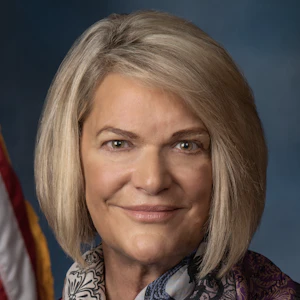
As the first-ever Chair of the Senate Banking Subcommittee on Digital Assets, Senator Lummis is the architect of the legislative framework shaping America's digital asset future. She introduced the landmark Lummis-Gillibrand Responsible Financial Innovation Act, the first comprehensive bipartisan crypto regulatory framework in Senate history. She co-authored the GENIUS Act — the first federal stablecoin law ever enacted — and introduced the BITCOIN Act, which would establish a U.S. strategic Bitcoin reserve of up to one million BTC. She is leading the Clarity Act, which will bring long-overdue regulatory certainty to the digital asset industry. She has also championed digital asset tax reform, including a de minimis exemption for small transactions and equal tax treatment for miners and stakers.
Known as Congress' "Crypto Queen," Senator Lummis represents Wyoming — a state she has helped build into one of the most digital asset-friendly regulatory environments in the nation. Before serving in the Senate, she served 14 years in the Wyoming Legislature, eight years as Wyoming State Treasurer, and eight years in the U.S. House. She is a three-time graduate of the University of Wyoming.
Her work represents a crucial bridge between traditional financial systems and the emerging digital economy, ensuring America leads the world in financial innovation while protecting the individual freedoms that define it.
Adam Back
Adam Back
Amy Oldenburg
Amy Oldenburg
David Marcus
David Marcus

Matt Schultz
Matt Schultz
Fred Thiel
Fred Thiel
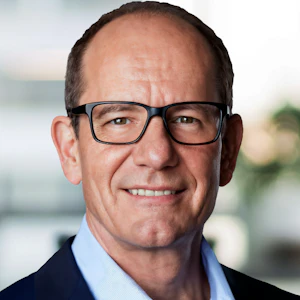
Throughout his career, Mr. Thiel has consistently driven rapid growth and created substantial shareholder value. Prior to MARA, Mr. Thiel served as the CEO of two other public companies, Local Corporation (NASDAQ: LOCM) and Lantronix, Inc (NASDAQ: LTRX). He has successfully raised billions in equity and debt through private and public offerings, led companies through IPOs, executed high-value exits to strategic and financial acquirers, and implemented effective M&A and roll-up strategies.
Mr. Thiel attended the Stockholm School of Economics and executive classes at Harvard Business School, and is fluent in English, Spanish, Swedish, and French. Mr. Thiel is the Chairman of the Board for Oden Technology, Inc. and is active in Young Presidents’ Organization where he has led initiatives in both the FinTech and Technology Networks.
A recognized voice in the industry, Fred frequently shares his insights on energy and technology with major media outlets like Bloomberg TV, CNBC, and FOX Business, contributing to vital discussions about the future of these sectors.
Tim Draper
Tim Draper
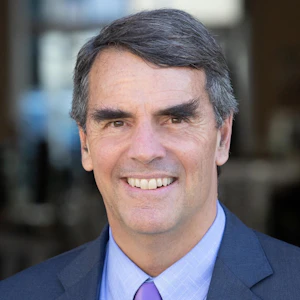
He is a supporter and global thought leader for entrepreneurs everywhere, and is a leading spokesperson for Bitcoin and decentralization, having won the Bitcoin US Marshall’s auction in 2014, invested in over 50 crypto companies, and led investments in Coinbase, Ledger, Tezos, and Bancor, among others.

Afroman
Afroman