Fireside: SEC Chairman Paul Atkins
Speakers/Moderators

Perianne Boring
Perianne Boring
She is the Founder and Chair of The Digital Chamber, the United States’ first and largest trade association for blockchain technology, established in 2014. Under her leadership, The Digital Chamber has helped shape landmark digital asset legislation and advance policies that move blockchain technology and digital assets from the fringe to the financial mainstream.
Perianne is also a General Partner at Off the Chain Capital, a value-focused investment fund specializing in digital assets.
Previously, she served as an economic adviser in the U.S. House of Representatives and as an adjunct professor and fellow at Georgetown University, where she developed the university’s original FinTech and blockchain coursework.
Her work has been recognized by Forbes (“America’s Top 50 Women in Tech”) and CoinDesk (“10 Most Influential People in Blockchain”). She is a frequent commentator on major news networks, providing analysis on digital asset policy, financial regulation, and U.S. competitiveness.
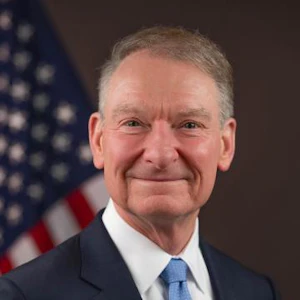
Paul Atkins
Paul Atkins
Prior to returning to the SEC, Chairman Atkins was most recently chief executive of Patomak Global Partners, a company he founded in 2009. Chairman Atkins helped lead efforts to develop best practices for the digital asset sector. He served as an independent director and non-executive chairman of the board of BATS Global Markets, Inc. from 2012 to 2015.
Chairman Atkins was appointed by President George W. Bush to serve as a Commissioner of the SEC from 2002 to 2008. During his tenure, he advocated for transparency, consistency, and the use of cost-benefit analysis at the agency. Chairman Atkins also represented the SEC at meetings of the President’s Working Group on Financial Markets and the U.S.-EU Transatlantic Economic Council. From 2009 to 2010, he was appointed a member of the Congressional Oversight Panel for the Troubled Asset Relief Program.
Before serving as an SEC Commissioner, Chairman Atkins was a consultant on securities and investment management industry matters, especially regarding issues of strategy, regulatory compliance, risk management, new product development, and organizational control.
From 1990 to 1994, Chairman Atkins served on the staff of two chairmen of the SEC, Richard C. Breeden and Arthur Levitt, ultimately as chief of staff and counselor, respectively. He received the SEC’s 1992 Law and Policy Award for work regarding corporate governance matters.
Chairman Atkins began his career as a lawyer in New York, focusing on a wide range of corporate transactions for U.S. and foreign clients, including public and private securities offerings and mergers and acquisitions. He was resident for 2½ years in his firm's Paris office and admitted as conseil juridique in France.
A member of the New York and Florida bars, Chairman Atkins received his J.D. from Vanderbilt University School of Law in 1983 and was Senior Student Writing Editor of the Vanderbilt Law Review. He received his A.B., Phi Beta Kappa, from Wofford College in 1980.
Originally from Lillington, North Carolina, Chairman Atkins grew up in Tampa, Florida. He and his wife Sarah have three sons.
Session
Overview
SEC Chairman Paul Atkins joined Perianne Boring of The Digital Chamber for a discussion on digital asset regulation, the SEC’s changing posture toward Bitcoin and crypto, and the importance of clearer rules for market participants. Atkins described a shift away from regulation by enforcement and toward a framework intended to support innovation in the United States.
The conversation focused on coordination between the SEC and CFTC, the application of the Howey test to digital assets, token taxonomy guidance, and the need for Congress to pass market structure legislation such as the Clarity Act. Atkins emphasized that statutory clarity would provide stronger long-term certainty than agency action alone.
The discussion also covered tokenized securities, stablecoins, on-chain fundraising, and tokenized equities. Atkins highlighted distributed ledger technology and faster settlement as potential ways to reduce risk in financial markets while allowing both incumbent institutions and crypto-native firms to participate.
Chairman Atkins, thank you so much for joining us here in Las Vegas.
My pleasure. It's good to see everybody here.
I think this is the first time we've had the chairman of the SEC speak at the Bitcoin Conference. We're honored to have you.
Thank you very much.
It's been an interesting relationship between the Bitcoin community and the Securities and Exchange Commission. You have filled Gary Gensler's shoes. He was not very open or accepting toward digital assets, and really did everything possible to try to slow this innovation down. You've joined the Commission as part of the Trump administration. This is our first pro-Bitcoin, pro-crypto president, and you're really at the forefront of implementing that at the SEC. Before we get into the details, can you talk a little bit about your guiding philosophy as chairman of the SEC and how you think about digital assets?
The way I like to frame it is that it is a new day at the SEC. If you look at the last decade or so, at first the SEC's approach was like an ostrich with its head in the sand, thinking maybe this will all go away. Then came regulation through enforcement, where I think it was a little disingenuous for the SEC to say, “Come in and talk to us. There's this easy form on our website. It's called an S-1.” That is not an easy form to fill out. It takes lots of lawyers and accountants. It's very much geared for an initial public offering, and really inapposite for something in the digital asset space, especially tokens.
So we're taking a new approach. We're embracing innovation, and we really want to help onshore it. We're answering the president's challenge. He wants digital assets to be done here in the United States, with American technology onshore. We are really working to fulfill that.
You just saw Mike Selig, who is at the Commodity Futures Trading Commission. He's a great guy. He was in my office, and I'm really happy the president appointed him to be chairman of the CFTC. He's doing a great job, and we're working closely. Believe it or not, in Washington, the CFTC and SEC historically have not really collaborated. I liken it to having two fortresses with a no man's land in between, and the crossfire from the fortresses kills all these new products that could have gone ahead even 40 years ago. We're out to change that now, really collaborate with each other, set a new benchmark for the country, and really embrace change.
That's a great point. The collaboration with the CFTC is so important for regulatory clarity, innovation, market structure, and for the U.S. to lead in this industry. The way I saw it, there was really competition between the SEC and the CFTC, clamoring for jurisdiction. One agency would say, “This is in our jurisdiction,” and then the other would say, “Well, it's in ours.” Then the private sector is like, “Who's the regulator? Where do we go?” It created so much uncertainty and risk for businesses that many of them chose to either shut down or leave, for the ones who were lucky enough not to have enforcement come after them.
And that was the strategy, exactly. The real rub is that the definition of a security is a very technical issue, but there also hasn't been a lot of guidance. The real breakthrough that we have tried to push stems from an old case from 1946 called SEC v. Howey.
Mr. Howey had an orange grove down in Florida, and a lot of people wanted to be a part of it and own a little interest there. The securities statutes talk about different things, stocks, bonds, and whatnot, but then they put forth something called an investment contract and didn't bother to define it. In this case, the Supreme Court took a shot at trying to define that.
What we have set out to do in applying it to digital assets is to say that, back in Mr. Howey's case, the investment contract wasn't the orange itself, which is comparable here to the token, the bitcoin, or whatever you have. The investment contract is the whole ecosystem of promises that Mr. Howey made to his investors and what his investors were expecting.
We have now applied that to this whole digital asset space. Partnering with the CFTC, we set out with a joint release where we interpreted what is a tokenized security. That was a big breakthrough. We issued that earlier this year. Now we're going to be moving on to do other exciting things, like actually allowing firms to experiment on chain, build tokenized securities, and trade them on chain here in the United States under an innovation exemption that we plan to issue in the next few weeks. We also want to allow fundraising through the sale of tokens on chain through what we're calling Reg Crypto.
Those things are in the offing. They'll be coming out soon. I know the discussion here just a few minutes ago was about the statute, the bill pending in Congress right now called the Clarity Act. We really need Congress to speak to this area. We're ready, willing, and able to interpret what they say and put that into rules that people can rely on and use to pursue their innovative ideas here in the United States. They don't have to go offshore. That's the vital concept here.
There's a lot to unpack there. It's not just providing regulatory clarity and helping businesses understand where the SEC's jurisdiction begins and ends and where the CFTC's jurisdiction lies. That's been one of the most complicated and challenging questions for all of us. But you're taking that several steps forward, not just to regulatory clarity, but to being able to bring more financial applications on chain.
Maybe starting with the token taxonomy guidance, helping clarify which agency has jurisdiction over different types of tokens, digital securities, digital commodities, digital collectibles, and so on. When it comes to digital commodities, in your token taxonomy guidance that you announced at my conference, the DC Blockchain Summit, just a couple of weeks ago, there is a list of tokens that the SEC clearly stated are digital commodities. Thank you for that. It was a very exciting announcement and something we've been talking about for a long time, having a taxonomy.
What we've seen is that the market has reacted to that, and now those tokens are trading at a premium, particularly in Asian markets. Now that's creating some other questions. What if the token I'm interested in isn't on that list, but we think it still is because it meets all the other qualifications? What comments do you have for market participants about getting additional clarity and addressing the list?
That's a really important question. In setting out this interpretive release, we gave a lot of examples. These are all illustrations. It wasn't meant to be a firm or immutable list. We talk about the principles behind this, going back to the Howey test. It's not about the orange itself; it's about the promises around it.
The important thing about all of this is that things can start out with these promises and in that framework, but the promises can also be fulfilled, go away, or become impossible to perform. That's really the essence of the security analysis that we've done. That's what our approach has been.
What we try to do is exclude these digital commodities, digital tools, digital collectibles, and then, of course, stablecoins. Stablecoins are clearly not securities because Congress adopted and the president signed the GENIUS Act, which was a huge step forward. The United States, for the first time, recognized a whole genre of digital assets and has a framework for them to be able to be traded and so forth.
We're focused on tokenized securities, and we're trying to define them as not being in these other four buckets. The important thing is the principles-based approach. If people have questions, we're inviting them to come in to clarify. We were hoping things would be clear through the release that we did. Obviously, there's always more work to do to improve and explain further.
Let's talk about market structure. Senator Lummis was just here moments ago and gave us an update on the timeline for the passage, hopefully, of the bill. She's expecting movement in May and potentially a vote in the Senate by June, and hopefully it will go to the president's desk shortly after passing the House. A lot of things have to happen. I was a former congressional staffer. I understand the legislative pathway, and a lot of things have to line up for all of that to happen. Of course, we're hoping that happens, but it's not guaranteed.
In the event market structure does not pass, I know many people are concerned, especially people who have been around this block a couple of times. What happens after the Trump administration? What if a new administration comes in like the Biden administration, which was very hostile toward crypto, and we have a new SEC chairman who is like Gary Gensler and wants to shut it down? That's why a lot of people feel that market structure is so important, to future-proof all the work of this administration.
Can you talk about that concern people have in the event market structure does not happen? What are you doing to mitigate against that? What kind of reaction is justified if the bill does not happen?
Great question. You all should realize that elections do have consequences, and they can be huge. Who would have thought ten years ago that we would have this complete pivot, pretty much a 180-degree pivot, by the U.S. government, between us, the CFTC, the bank regulatory agencies, and Congress stepping in? That's wonderful.
The SEC has a pretty large ambit of maneuver under the statutes, and we can be nimble, but we're bound by our existing authority, which is still basically grounded, with some amendments over the years, in a 1930s type of framework. That's why it's so important to have a statute that would future-proof what's going forward. Then we can use new authority and the flexibility that is bound up in this particular bill that's going through.
We can work with the CFTC to coordinate and clarify definitions and build out from what we've already done. But again, nothing future-proofs things like a statute, and then good opinions from courts to chisel what a statute says in stone through the apparatus of the court system. It's all very important.
We are focused on trying to streamline things, make things more efficient, and help innovators innovate so that they can do so with certainty and not get picked off by folks who are jealously guarding their turf or existing ways of doing things. We want to make sure that we are at the forefront of innovation here in the United States.
Speaking of being at the forefront of innovation, an area in our markets that's very ripe to benefit from the power of blockchains is tokenized equities, which you alluded to earlier. The Commission is in a really important position to enable this innovation to take place.
One of the challenges I see is that there are a lot of stakeholders involved in tokenized equities. There are a lot of players and a lot of steps in place between the execution of a trade and the settlement of a trade, with middlemen that collect fees along the way. Can you talk about all the stakeholders in that process? Will we be able to realize the full benefit of blockchain, which is instant settlement, while also navigating all the different players that either have to come along or whose business models are going to change or be remade through this process?
That's a great way to end. Time flies quickly. The blockchain, distributed ledger technology, for me is the most exciting aspect about all this. I hesitate to say that at a Bitcoin Conference, but I'm basically agnostic as to the actual tokens themselves and whatnot. May the markets decide what's best.
The prospect of having T+0, what we say is instantaneous settlement for many instruments, probably won't work for everything. But to have that delivery versus payment, receipt versus payment immediacy on chain, I think, is most exciting to de-risk our financial system. Every second that you have a difference between the transaction time and clearance and settlement is a risk that the investor and both parties bear.
We're out to try to foster that and enable it to happen here in the United States. There are a lot of incumbent players, all the current exchanges and everything else. We want to make this open to them, too. This is a way for them to de-risk their own markets.
There are great ideas out there from all sorts of other people in the crypto-native and blockchain-native community. We want to let all these different flowers bloom. It will strengthen the United States as a marketplace for ideas and financial innovation. That's better for the world, better for consumers, investors, and our economy as a whole. That's what we're out to do.
I think that's a great message to close on. Chairman Atkins, thank you so much. Thank you for joining us.
Great to see you again. Thank you all very much.
Similar
Sessions
Fireside: SEC Chairman Paul Atkins
Perianne Boring
Perianne Boring
She is the Founder and Chair of The Digital Chamber, the United States’ first and largest trade association for blockchain technology, established in 2014. Under her leadership, The Digital Chamber has helped shape landmark digital asset legislation and advance policies that move blockchain technology and digital assets from the fringe to the financial mainstream.
Perianne is also a General Partner at Off the Chain Capital, a value-focused investment fund specializing in digital assets.
Previously, she served as an economic adviser in the U.S. House of Representatives and as an adjunct professor and fellow at Georgetown University, where she developed the university’s original FinTech and blockchain coursework.
Her work has been recognized by Forbes (“America’s Top 50 Women in Tech”) and CoinDesk (“10 Most Influential People in Blockchain”). She is a frequent commentator on major news networks, providing analysis on digital asset policy, financial regulation, and U.S. competitiveness.
Paul Atkins
Paul Atkins
Prior to returning to the SEC, Chairman Atkins was most recently chief executive of Patomak Global Partners, a company he founded in 2009. Chairman Atkins helped lead efforts to develop best practices for the digital asset sector. He served as an independent director and non-executive chairman of the board of BATS Global Markets, Inc. from 2012 to 2015.
Chairman Atkins was appointed by President George W. Bush to serve as a Commissioner of the SEC from 2002 to 2008. During his tenure, he advocated for transparency, consistency, and the use of cost-benefit analysis at the agency. Chairman Atkins also represented the SEC at meetings of the President’s Working Group on Financial Markets and the U.S.-EU Transatlantic Economic Council. From 2009 to 2010, he was appointed a member of the Congressional Oversight Panel for the Troubled Asset Relief Program.
Before serving as an SEC Commissioner, Chairman Atkins was a consultant on securities and investment management industry matters, especially regarding issues of strategy, regulatory compliance, risk management, new product development, and organizational control.
From 1990 to 1994, Chairman Atkins served on the staff of two chairmen of the SEC, Richard C. Breeden and Arthur Levitt, ultimately as chief of staff and counselor, respectively. He received the SEC’s 1992 Law and Policy Award for work regarding corporate governance matters.
Chairman Atkins began his career as a lawyer in New York, focusing on a wide range of corporate transactions for U.S. and foreign clients, including public and private securities offerings and mergers and acquisitions. He was resident for 2½ years in his firm's Paris office and admitted as conseil juridique in France.
A member of the New York and Florida bars, Chairman Atkins received his J.D. from Vanderbilt University School of Law in 1983 and was Senior Student Writing Editor of the Vanderbilt Law Review. He received his A.B., Phi Beta Kappa, from Wofford College in 1980.
Originally from Lillington, North Carolina, Chairman Atkins grew up in Tampa, Florida. He and his wife Sarah have three sons.
Fireside: SEC Chairman Paul Atkins
Speakers/Moderators
Perianne Boring
Perianne Boring
She is the Founder and Chair of The Digital Chamber, the United States’ first and largest trade association for blockchain technology, established in 2014. Under her leadership, The Digital Chamber has helped shape landmark digital asset legislation and advance policies that move blockchain technology and digital assets from the fringe to the financial mainstream.
Perianne is also a General Partner at Off the Chain Capital, a value-focused investment fund specializing in digital assets.
Previously, she served as an economic adviser in the U.S. House of Representatives and as an adjunct professor and fellow at Georgetown University, where she developed the university’s original FinTech and blockchain coursework.
Her work has been recognized by Forbes (“America’s Top 50 Women in Tech”) and CoinDesk (“10 Most Influential People in Blockchain”). She is a frequent commentator on major news networks, providing analysis on digital asset policy, financial regulation, and U.S. competitiveness.
Paul Atkins
Paul Atkins
Prior to returning to the SEC, Chairman Atkins was most recently chief executive of Patomak Global Partners, a company he founded in 2009. Chairman Atkins helped lead efforts to develop best practices for the digital asset sector. He served as an independent director and non-executive chairman of the board of BATS Global Markets, Inc. from 2012 to 2015.
Chairman Atkins was appointed by President George W. Bush to serve as a Commissioner of the SEC from 2002 to 2008. During his tenure, he advocated for transparency, consistency, and the use of cost-benefit analysis at the agency. Chairman Atkins also represented the SEC at meetings of the President’s Working Group on Financial Markets and the U.S.-EU Transatlantic Economic Council. From 2009 to 2010, he was appointed a member of the Congressional Oversight Panel for the Troubled Asset Relief Program.
Before serving as an SEC Commissioner, Chairman Atkins was a consultant on securities and investment management industry matters, especially regarding issues of strategy, regulatory compliance, risk management, new product development, and organizational control.
From 1990 to 1994, Chairman Atkins served on the staff of two chairmen of the SEC, Richard C. Breeden and Arthur Levitt, ultimately as chief of staff and counselor, respectively. He received the SEC’s 1992 Law and Policy Award for work regarding corporate governance matters.
Chairman Atkins began his career as a lawyer in New York, focusing on a wide range of corporate transactions for U.S. and foreign clients, including public and private securities offerings and mergers and acquisitions. He was resident for 2½ years in his firm's Paris office and admitted as conseil juridique in France.
A member of the New York and Florida bars, Chairman Atkins received his J.D. from Vanderbilt University School of Law in 1983 and was Senior Student Writing Editor of the Vanderbilt Law Review. He received his A.B., Phi Beta Kappa, from Wofford College in 1980.
Originally from Lillington, North Carolina, Chairman Atkins grew up in Tampa, Florida. He and his wife Sarah have three sons.
Other
Speakers
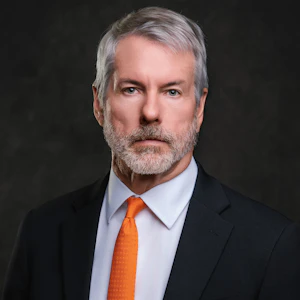
Michael Saylor
Michael Saylor
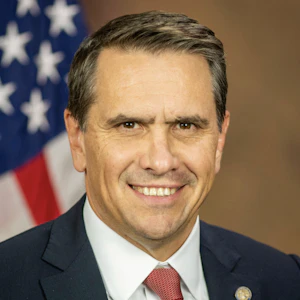
Todd Blanche
Todd Blanche
Biography of Deputy Attorney General Todd Blanche
The Honorable Todd Blanche is the 40th Deputy Attorney General of the United States, overseeing the work of the 115,000 dedicated employees who fulfill the Department of Justice’s mission at Main Justice, the FBI, DEA, U.S. Marshals, ATF, and 93 U.S. Attorney’s Offices.
Todd began his career at the Department where he served for over fifteen years in a variety of capacities, including as a contractor, a paralegal in the Criminal Division, and at the United States Attorney’s office for the Southern District of New York where he eventually became an AUSA and later a supervisor.
After leaving the Department, Todd worked as a criminal defense attorney that included representing President Donald Trump in three of the criminal cases brought against him in 2023 and 2024.
Following President Trump’s historic return to the White House, the President appointed Todd to work alongside Attorney General Pam Bondi to make America safe again. At the DOJ, Todd is working tirelessly to implement President Trump’s priorities that include confronting illegal protecting American businesses from fraud.
Todd has been married to his wonderful wife Kristine for nearly thirty years, is a father and grandfather.
Paul Atkins
Paul Atkins
Prior to returning to the SEC, Chairman Atkins was most recently chief executive of Patomak Global Partners, a company he founded in 2009. Chairman Atkins helped lead efforts to develop best practices for the digital asset sector. He served as an independent director and non-executive chairman of the board of BATS Global Markets, Inc. from 2012 to 2015.
Chairman Atkins was appointed by President George W. Bush to serve as a Commissioner of the SEC from 2002 to 2008. During his tenure, he advocated for transparency, consistency, and the use of cost-benefit analysis at the agency. Chairman Atkins also represented the SEC at meetings of the President’s Working Group on Financial Markets and the U.S.-EU Transatlantic Economic Council. From 2009 to 2010, he was appointed a member of the Congressional Oversight Panel for the Troubled Asset Relief Program.
Before serving as an SEC Commissioner, Chairman Atkins was a consultant on securities and investment management industry matters, especially regarding issues of strategy, regulatory compliance, risk management, new product development, and organizational control.
From 1990 to 1994, Chairman Atkins served on the staff of two chairmen of the SEC, Richard C. Breeden and Arthur Levitt, ultimately as chief of staff and counselor, respectively. He received the SEC’s 1992 Law and Policy Award for work regarding corporate governance matters.
Chairman Atkins began his career as a lawyer in New York, focusing on a wide range of corporate transactions for U.S. and foreign clients, including public and private securities offerings and mergers and acquisitions. He was resident for 2½ years in his firm's Paris office and admitted as conseil juridique in France.
A member of the New York and Florida bars, Chairman Atkins received his J.D. from Vanderbilt University School of Law in 1983 and was Senior Student Writing Editor of the Vanderbilt Law Review. He received his A.B., Phi Beta Kappa, from Wofford College in 1980.
Originally from Lillington, North Carolina, Chairman Atkins grew up in Tampa, Florida. He and his wife Sarah have three sons.

Mike Selig
Mike Selig
Chairman Selig brings to the role deep public and private sector experience working with a wide range of stakeholders across agriculture, energy, financial, and digital asset industries, which rely upon and operate in CFTC-regulated markets.
Prior to his leadership at the CFTC, Chairman Selig most recently served as chief counsel of the Securities and Exchange Commission’s Crypto Task Force and senior advisor to SEC Chairman Paul S. Atkins. In this role, Chairman Selig helped to develop a clear regulatory framework for digital asset securities markets, harmonize the SEC and CFTC regulatory regimes, modernize the agency’s rules to reflect new and emerging technologies, and put an end to regulation by enforcement. He also participated in the President’s Working Group on Digital Asset Markets and contributed to its report on “Strengthening American Leadership in Digital Financial Technology.”
Prior to government service, Chairman Selig was a partner at an international law firm, focusing on derivatives and securities regulatory matters. During his years in private practice, he represented a broad range of clients subject to regulation by the CFTC, including commercial end users, futures commission merchants, commodity trading advisors, swap dealers, designated contract markets, derivatives clearing organizations, and digital asset firms. Chairman Selig advised clients on compliance with the Commodity Exchange Act and the CFTC’s rules and regulations thereunder, including in connection with registration applications and obligations, enforcement matters, and complex transactions.
Chairman Selig earned his law degree from The George Washington University Law School and was articles editor of The George Washington Law Review. He received his undergraduate degree from Florida State University.

David Bailey
David Bailey

Eric Trump
Eric Trump
Mr. Trump also serves as Executive Vice President of The Trump Organization, where he oversees the global management and operations of the Trump family’s extensive real estate portfolio. This includes Trump Hotels, Trump Golf, commercial and residential real estate, Trump Estates, and Trump Winery. Known for his hands-on leadership and strong market instincts, he has played a key role in expanding the company’s presence across major U.S. and international markets.
A globally recognized business leader and public figure, Mr. Trump is a prominent advocate for Bitcoin and decentralized finance. He is a co-founder of World Liberty Financial, a decentralized finance (DeFi) platform, and serves on the Board of Advisors of Metaplanet, Japan’s largest corporate holder of Bitcoin.
Beyond his business activities, Mr. Trump has helped raise more than $50 million for St. Jude Children’s Research Hospital in the fight against pediatric cancer, a philanthropic mission he began at age 21.
Mr. Trump earned a degree in Finance and Management from Georgetown University. He currently resides in Florida with his wife, Lara, and their two children. He is also the author of Under Siege, his memoir published in October 2025.

Jack Mallers
Jack Mallers

Cynthia Lummis
Cynthia Lummis
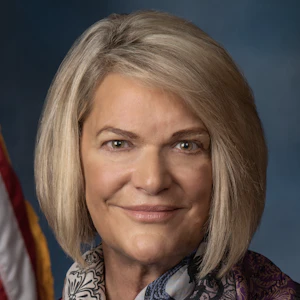
As the first-ever Chair of the Senate Banking Subcommittee on Digital Assets, Senator Lummis is the architect of the legislative framework shaping America's digital asset future. She introduced the landmark Lummis-Gillibrand Responsible Financial Innovation Act, the first comprehensive bipartisan crypto regulatory framework in Senate history. She co-authored the GENIUS Act — the first federal stablecoin law ever enacted — and introduced the BITCOIN Act, which would establish a U.S. strategic Bitcoin reserve of up to one million BTC. She is leading the Clarity Act, which will bring long-overdue regulatory certainty to the digital asset industry. She has also championed digital asset tax reform, including a de minimis exemption for small transactions and equal tax treatment for miners and stakers.
Known as Congress' "Crypto Queen," Senator Lummis represents Wyoming — a state she has helped build into one of the most digital asset-friendly regulatory environments in the nation. Before serving in the Senate, she served 14 years in the Wyoming Legislature, eight years as Wyoming State Treasurer, and eight years in the U.S. House. She is a three-time graduate of the University of Wyoming.
Her work represents a crucial bridge between traditional financial systems and the emerging digital economy, ensuring America leads the world in financial innovation while protecting the individual freedoms that define it.
Adam Back
Adam Back
Amy Oldenburg
Amy Oldenburg
David Marcus
David Marcus

Matt Schultz
Matt Schultz
Fred Thiel
Fred Thiel
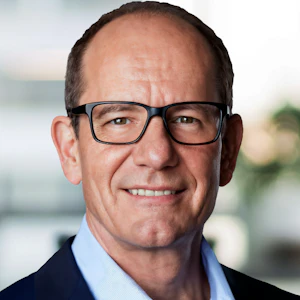
Throughout his career, Mr. Thiel has consistently driven rapid growth and created substantial shareholder value. Prior to MARA, Mr. Thiel served as the CEO of two other public companies, Local Corporation (NASDAQ: LOCM) and Lantronix, Inc (NASDAQ: LTRX). He has successfully raised billions in equity and debt through private and public offerings, led companies through IPOs, executed high-value exits to strategic and financial acquirers, and implemented effective M&A and roll-up strategies.
Mr. Thiel attended the Stockholm School of Economics and executive classes at Harvard Business School, and is fluent in English, Spanish, Swedish, and French. Mr. Thiel is the Chairman of the Board for Oden Technology, Inc. and is active in Young Presidents’ Organization where he has led initiatives in both the FinTech and Technology Networks.
A recognized voice in the industry, Fred frequently shares his insights on energy and technology with major media outlets like Bloomberg TV, CNBC, and FOX Business, contributing to vital discussions about the future of these sectors.
Tim Draper
Tim Draper
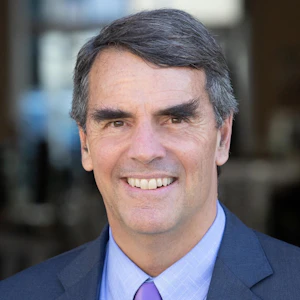
He is a supporter and global thought leader for entrepreneurs everywhere, and is a leading spokesperson for Bitcoin and decentralization, having won the Bitcoin US Marshall’s auction in 2014, invested in over 50 crypto companies, and led investments in Coinbase, Ledger, Tezos, and Bancor, among others.
Afroman
Afroman