Fix the Money, Fix the Food, Fix the World
Speakers/Moderators

Tom Taber
Tom Taber
Eric Thompson
Eric Thompson
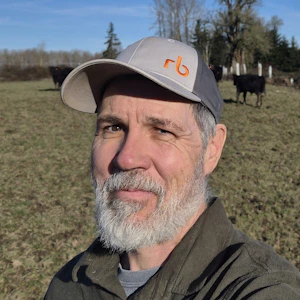
Eric operates Great Malus Beef to raise grass finished beef as a homestead staple food, and he markets the surplus by the quarter for local purchase and delivery. He has accepted Bitcoin payment since 2019, and is active within the Portland BitDevs community.
Eric evangelizes using Bitcoin as local currency. He helps beginners achieve their first transactions, and persuades investors to also move more of their daily financial life into Bitcoin.
Adam Saunders
Adam Saunders
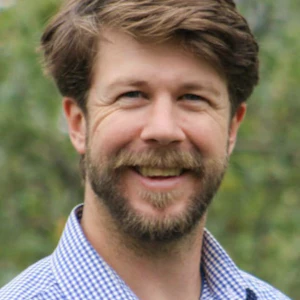
I live in mid-Missouri in the college town of Columbia, MO. I work throughout the region on farms and forests wearing a range of hats in what I call “Green Collar Jobs”. These include those working directly with plants and animals, as well as work done through value added processing. Direct work I am engaged with includes apple orchards, regenerative farming, forest management, and raising livestock. Similarly value added work includes pressing cider, making medically tailored meals, sawmiling logs into lumber, doing meat processing, and construction with simple regional materials; wood, straw, clay, and rock.
Like all “Green Collar Jobs”, these value chains have an inherent seasonal flow and are generally labor intensive. Blending work across multiple sectors can ballast out the highs and lows of the season to help optimize work flow, support labor organizing, and provide a fun blend of real, on the ground jobs that fit the “gig economy”. The current homestead movement is smack in the middle of this space with people craving meaningful work and simplicity to balance out the speed of the modern digital world.
Hands-on education is one of the key underpennings of this vision. In 2008 I co-founded Columbia Center for Urban Agriculture (CCUA), a 501c3 educational non-profit. We’ve since grown to a staff of 30 providing a wide range of programs in our community. These include growing produce for the local food pantry, mentoring low-income families in their home gardens, training farmers/gardeners, and operating a commercial kitchen as part of a regional food hub. My role has evolved over the years from gardener, to fundraiser, to public-private campaign manager, to now, a part time special projects director. My current role allows me to develop strategic partnerships across sectors that bring out the win-win partnerships that people have when working closer to their food supply.
I also farm part-time helping landowners establish estate apple orchards and implement regenerative farming and forestry projects. This model of farming re-sets the traditional risk-bearing dynamics in farming by helping create profitable homesteads, and creating quality jobs for people across a range of experience. The current trends of farmland fragmentation and sophistication of regional food systems supports this innovative business strategy.

Tony Beck
Tony Beck
Session
Overview
Fix the Money, Fix the Food, Fix the World brought together Tom Taber of The Beef Initiative with Eric Thompson of Great Malus Beef, Adam Saunders of the Columbia Center for Urban Agriculture, and Tony Beck of Beck & Bulow for a conversation about Bitcoin, food sovereignty, local agriculture, and healthier supply chains.
The panel focused on the parallels between sound money and resilient food systems. Speakers discussed grass-finished beef, regenerative agriculture, urban farming, home gardening, direct relationships with farmers, and the importance of knowing where food comes from. They also explored how Bitcoin can support local food networks, nonprofits, farmers, and communities seeking greater independence from industrialized systems.
A recurring theme was sovereignty in practical terms: stacking food as well as Bitcoin, building relationships with local producers, learning food production skills, and improving personal health through quality meat and produce. The discussion framed food security as a local and community-level issue, with examples ranging from Missouri urban agriculture to Santa Fe meat distribution and Beef Initiative work in El Salvador.
Thanks everybody for being here. This is the Fix the Money, Fix the Food, Fix the World panel. We appreciate you being here. It is close to the end of the last day, so we appreciate you learning more about food. My name is Tom Taber. I’m part of the Beef Initiative, and I’ll be the moderator today. We have a panel of amazing experts who work in the food industry, so I’ll let you introduce yourselves.
I’m Eric Thompson. I’m a homestead farmer up in the Portland, Oregon area. We do beef sales, but really we’re more than just a beef business. We’re a homestead farm that engages in a lot of practices like planting trees, composting, and raising a lot of animals. Beef just happens to be one of our big surpluses, and we’re glad to sell it in the Bitcoin community.
My name is Adam Saunders. I’m one of the co-founders of the Columbia Center for Urban Agriculture. It’s a nonprofit in Columbia, Missouri. We started in 2008, right with the financial crisis and the first food crisis of the world, and realized that food is not a fad. It’s not going to go out anytime soon. We focus on finding strategies to help folks grow their own food and get young kids out in the garden, experiencing the wonder that is in the garden.
Fast forward to today, we’ve got 35 full-time staff doing a wide range of strategies to help train new farmers and work with veterans. We do a home garden mentoring program with low-income folks for three years at their house to help them climb the learning curve to garden. I think that’s really one of the most distributed food systems we could imagine, home gardening. Whether it’s there, on homesteads, or on small and medium-sized farms, there’s a lot of potential for growth in our food system. I think there’s a lot of alignment with the Bitcoin community.
I’m Tony Beck from Santa Fe, New Mexico. Happy to be here. Thank you. I own and operate Beck & Bulow, which is a three-pronged business. We have an online sales portal where we sell meat. We do bison tongue to tail, lamb, all grass-fed, grass-finished or regenerative agriculture. We also have a brick-and-mortar spot in Santa Fe, and we sell and distribute to over 1,000 hotels, restaurants, and casinos, and to anyone who wants high-quality meat that’s good for the earth, good for you, and tastes amazing.
Excellent. Thanks, everybody, for introducing yourselves. Let’s get into some of the nitty gritty of your businesses as well. Eric, you mentioned your farm in Oregon and the kind of cattle you raise. What do you raise, how do you treat them, and how is it different from what’s normal in the beef industry?
First of all, I don’t preface anything by saying my way is the right way. But one of the important things that we do is really try to be visible and transparent about all of our practices and what we do. I answer a lot of questions about why we do it this way. Whether it’s what the customer wants or not, I try to get it out there.
All of ours are grass-finished beef, which creates a really lean beef. They are Angus and Wagyu cross, so that Kobe-type cattle gives better marbling in the steak, but grass-fed is still much different from, say, your restaurant special steak that has a lot of fat on it.
What we normally try to do is raise the beef on the farm. They’re birthed and raised all on the farm, and then basically butchered and sold by the quarter to individual people, straight to the customer. It’s a product that is pretty lean, but we try to keep the cows as healthy as possible during their lifetime. We really believe that the healthiest animals make the healthiest food for us.
Another thing about your farm is it’s kind of an orchard. They are actually apple-fed as well as grass-fed.
Yeah, that’s really the concept of the farm and the farm name, Great Malus, which is the Latin name for apples. I had a vision that someday we would have a big apple drop, and the grass-fed beef could also feed from the apples that are dropping. We’re just getting started with that, but it’s a pretty interesting system and I’m really happy with it.
Excellent. Thank you. Adam, tell us more about this incredible center you have in your town and your vision of how it got started, some of the challenges, and some of the major successes you’ve had over the years.
Like I said, we started in 2008 to really try to get to some of the root causes of food security and food sovereignty. We wanted to help make those skills more abundant, to help people grow their own food and recruit folks into the farming community. Those skills take time to develop.
If we think forward and want more farmers in the country, a lot of folks have to be recruited out of the city. Eighty percent of our country lives in cities, so urban agriculture is really that stepping stone to get folks back on the farm.
How we interface with Bitcoin is that we had a donor donate Bitcoin to us, if not all, then partial, and we sold it and moved on like a lot of nonprofits will do. Then he said, “Why did you sell that? You’ve got to hold onto that.” I said, “Well, tell me more.” That began my journey of learning about Bitcoin and trying to understand how the ecosystem interfaces with the nonprofit and regenerative agriculture space.
I’ve been workshopping a concept at this conference around a Bitcoin endowment for regenerative agriculture: to use Bitcoin and hold it in a way where you can borrow against it, leverage it, and use various strategies to support farmers as they diversify their farms and use regenerative agriculture practices, like what Eric is talking about. Or to do programming in cities that helps home gardening become more prevalent and helps recruit those farmers.
I think there’s a lot of synergy. The Bitcoin community is very open to a paradigm shift in finance, and I think our agriculture system needs a similar paradigm shift toward regenerative agriculture, healthy food, and building community around food.
America imports $32 billion worth of fruits and vegetables a year. To try to shift away from importing from around the world to growing at home, using small urban farms, community agriculture, and the relationships that come from that, there is a huge upside potential. I feel like it’s a win-win across these different communities and has a ton of potential.
What that’s doing is decentralizing the food supply and keeping it local, which is keeping more freedom there.
That’s right. In my county, there are about 200,000 people in Boone County, and they estimate about $700 million is spent on food every year. If we were to figure out what percent of that is local-to-local, it’s maybe 1%, maybe 2%. But if we could change that by 1%, that would be $7 million worth of produce or meat that would stay in the community. That is a lot of food. It would be a big number for the food system, but it’s a small number in the grand picture.
Tony, let’s go down to you. Tell us more about this business that you started in Santa Fe. How did it start? How did it grow? What happened exactly?
It’s kind of a long, winding story, but it started in South Dakota. I was spending a lot of time with the Lakota and practicing some of their spiritual practices, the Sundance and sweat lodges, and I fell in love with the people. Central to that is the bison, which they call the tatanka. Their name for God is Wakan Tanka, so buffalo is in their name for God.
It sort of fell in my lap. After years and years of practicing and trying to find good bison, I met my business partner JP. He was in the specialty foods business. I think he was selling tomatoes, olives, possibly some calamari. I said, “John Paul, can you just find some good bison? I go to Costco, I go to Smith’s, I go to Kroger, and it just looks like beef. It tastes like beef. They add beef fat.”
He said, “Yeah, Tony, I’m going to look. There’s a local guy around here.” A couple of years later, JP and I were hanging out. I had just moved to Santa Fe from Albuquerque, the best decision I’ve ever made in my entire life. John Paul said, “This rancher keeps calling me, and he keeps saying he wants to meet up and he’s got a business idea.” John Paul was asking me again and again, and finally I said, “Why don’t I just come with you? You don’t know anything about business and you don’t have any money. Let’s go.”
At the end of the day, we signed a check and bought about $20,000 worth of bison that had already been cut and packaged, and we started selling at the farmers market. At that time, I thought I had ruined my life. There was no possible conceivable way that it turned out good for me in the end, or that we made it with the bison. But I did believe in the buffalo.
Santa Fe has a very nice farmers market, and we learned what people want. People want great-tasting meat at a great price that is very flavorful and very healthy. But the health comes later.
Over the years, Covid was a big boon for us. Everyone was like, “Oh God, it’s scary.” It was very scary, but I was also acutely aware that there was an opposite and equal opportunity there. There was no other time when the government was going to be passing out checks left and right. We took advantage. At that time, we were starting to do some wholesale, not really, and the farmers markets were too much work, so we were done with the farmers markets. We pivoted into retail, primarily because people were worried about their food safety.
During Covid, they were saying, “You can only get two pieces of meat,” or limiting how much red meat people could buy. Then we had people showing up to our warehouse and we were selling the freezers out of meat. People were just packing their freezers, and that was the birth of Beck & Bulow’s online business.
Since then, we’ve created a community of food. People like good food. They want to be around people who are not boring. We offer very fine food that’s approachable. We sell caviar, but it’s caviar. Wagyu or Kobe, it’s just food. It comes in one way, but it all comes out the same way. So we’re very approachable about the food and definitely believe in it, tongue to tail, from the tongue to the tail. That’s how Beck & Bulow started.
Thank you so much. That was a huge boon for the community there as well, creating food security and high-quality food at a time when it was most needed. As we look at the global macro events happening in the world, there might be food shortages in the future. There might be supply chain issues, and we need solutions. These men up here are great examples of how we can have greater food security.
I mentioned I’m working for the Beef Initiative, and we’re working in El Salvador. They’ve been through 40 years of hell, actually, until President Bukele came along and set his country straight in terms of making it a safe place. Now it’s becoming an abundant place. The Beef Initiative is working to help rebuild the genetics and the cattle industry in that country. We’re on the cusp of flying some amazing cattle from Texas down there to help improve the genetics of their cows next month. It’s an exciting project to start from ground zero with a country that is very open and willing to work on behalf of their people to create food security for the entire country.
We talk about homesteads. I consider El Salvador to be its own homestead of food security. We’re working very hard to make that a reality.
As we talk about this, we’re here at the Bitcoin conference. We’ve said a few things about Bitcoin and food security. What about the sovereignty aspects of what you do? As bitcoiners, you can have Bitcoin, and it’s perfect and beautiful money, but you can’t eat your Bitcoin. If we have disturbances in our food supply, having something close, local, and accessible, learning, educating, and growing your own food are ways to actually do something to make yourself sovereign, to make your community sovereign, and to use Bitcoin to help educate people on how to become more sovereign individuals. Any words on that?
I’ve been in the Bitcoin community for seven years, and more so recently because of a lot of what we do and how it works. If we talk about sovereign food, bitcoiners are completely into sovereign currency, and they understand right away the importance of sovereign food.
What does that really mean? Ideally, sovereign food would be that I control my own food supply chain. I make my food in my backyard, I grow what I eat, and I control the entire production, distribution, and everything around it. Not everybody can do that. The next best thing is that at least I’m one step removed from that chain, but I can see what’s going on. Just like Bitcoin, I understand what’s behind the scenes. I don’t want somebody in some other place doing something to my food supply that I can’t understand, I can’t control, and that is going to come back to bite me later.
Being able to look at what you want from your food supply and organize that way is a lot of power. Bitcoiners can do that. Bitcoiners going to their local farmers, somebody like me, or a CSA for local vegetables, or someone with products you like at the farmers market, all of those are good resources. Local resources are very transparent, so starting to buy products from those places goes a long way.
By building the relationship, you can get into, “You sell these things. What else do you sell?” That gets you into an area where you can actually stack food like you stack Bitcoin. Even if you’re not growing yourself, you can build these relationships and get carrots at the farmers market, but also get to know that farmer and say, “I want to put away 30 pounds of frozen carrots this year. Can you make me a deal on things you have?” Those relationships go a long way toward everything being economical and a win-win.
The last part is that when you build a relationship with those farmers, a lot of them already have the currency mindset of “cash is king” and “I don’t really take credit cards.” Those people are one step removed from being introduced and orange-pilled to Bitcoin. If you can get a little bit of that in there and say, “We’ve been doing transactions. Have you thought about Bitcoin? I can introduce you to some of these things. This would be your first Bitcoin wallet, and I can guide you through the first steps so you don’t get scammed,” that’s a good introduction to building a financial connection that works the same as your food connection. You’re working both ways at that point. I really encourage bitcoiners to get close to their local food supply chain.
Building on that, there’s also the food is medicine movement. How do we live long, healthy lives? We need to eat well. What we eat really affects our health outcomes. Getting close to knowing your farm, growing your own food, and helping your kids and your neighbors has a huge outcome in our health, and really in our cost of living and cost of health care.
There are a lot of strategies out there right now moving in that direction to incentivize those things. Take advantage of those. Climb that learning curve of how to eat healthy, how to get processed food, sodas, and sugars out of your diet, and replace them with healthy food, good meat, and good vegetables. That’s going to help you live a longer, healthier life. That’s where the local food system interfaces with the health care system and the monetary system. They’re all synergistic in that space.
I woke up one day thinking about the saying, fix the money, fix the food, fix the world. I was talking to my daughter. She’s 10, and she said, “Dad, it should be called fix the money, fix the food, fix the future.” I said, “Well, that’s interesting.” Half the time I wake up in the morning, look in the mirror, and have a hard enough time fixing myself. But what I do know is that I probably could fix my money, which I’ve been doing by investing in Bitcoin. We also moved our company 401(k) into Bitcoin, which has provided amazing results. That takes care of our staff. That takes care of us. We care about them, we love them, and that’s an ecosystem in itself.
On fixing the food, I’m in New Mexico. I’ve never seen an olive tree or a coconut tree in New Mexico. I started to wonder, what did people cook their food with? I think they cooked it with beef tallow. They cooked it with tallow. We use tallow quite a bit. I was telling my daughters, who are really interested in their looks and makeup and get the targeted YouTube ads, which I’m not too happy about, “Girls, that tallow is the number one medicine for your skin.” It’s at home in the kitchen and the bathroom for a lot of different uses.
The thing about growing your own food is that it’s a lifestyle. It tastes good. If I want to fix the world, I’ll tell you what I can do: turn off my phone, go outside, plant some vegetables, and cook a steak. There’s nothing more satisfying than that, and I absolutely love it. At the end of the day, the sun is going to rise in the morning and set at night. The world has been spinning a long time. People have been eating meat and quality foods for as long as we’ve been here. It seems like it’s only been in the last 100 years or so that we’ve had this industrialized food system, the same as the banking system.
I think it is very important, as these gentlemen are saying, to buy local if you can, go to farmers markets, and know the people who provide your food. You can see the difference if you look at a pack of our meat compared to the meat you might buy in a big box grocery store. They look notably different. One is purple and has amazing vibrancy of the fat, and one just looks, for lack of a better word, like slop. I don’t want to put that into my body. Just like I don’t want to buy shitcoins either. I want to own Bitcoin and I want to eat good meat.
Bitcoiners come from all walks of life. There’s kind of a bias toward tech-savvy bitcoiners because a lot of folks come from that world. Were you always farmers? Were you always doing this, or did you have something before that? Is it possible for somebody from whatever walk of life to become a food producer?
I think everybody becomes a food producer at some point. At our farm, we try to lead somebody in as gradually or as much as they’re able to take on. Even if somebody only has an apartment patio, we try to get them producing their own garlic or something like that on their patio.
But more specifically, you worked your whole career as a farmer, is that right?
No. I used to have a day job. I’m semi-retired for the last seven or eight years.
But you chose this path?
Absolutely. I grew up on the farm, so this was just a natural mindset. I basically started running my grandparents’ estate farm part-time while I was working the day job. When I retired from the day job, that was something I could go into full-time.
Adam, have you been a farming guy your whole life?
No, but a green thumb is very much a learned skill. It’s something to try, and try again, and try again. Look for a mentor to help you. But after you’re up that learning curve, I think you have a responsibility to share that with others: your family, your neighbors, and others. You give someone skills, and no one can take that away. That is our responsibility as citizens, to help each other. If you want to help people get more toward food sovereignty, that education is really key, both in the kitchen and the garden, and in so many parts of life.
I dropped out of college and took an internship on an organic farm because I was failing out of college, probably doing a little too much extracurriculars. That was my introduction into farming. I didn’t want anything to do with selling meat at all. It’s not like I chose it. I felt like it kind of chose me. I was a real estate and crypto guy beforehand, and I never in a million years, in any conceivable reality or timeline, could have seen how it would work out. But I just trusted and kind of went with it, and it’s been absolutely amazing.
I feel the same way about Bitcoin. Sometimes it seems like, how the hell is this ever going to work out? I feel the exact same way. That’s why I’m here today, very happy to be here. Things are going to work out, and they’re going to work out just fine.
I think it’s funny in the name of this talk, Fix the Money, Fix the Food, that the middle part is doing something useful with Bitcoin to help fix the world. I think fixing the food is a big part of that. We have a couple more minutes. I want to give last thoughts. Is there anything you haven’t said that you want to get up there?
Following up on what we were just talking about, a lot of bitcoiners are very conscious of their health, and they put a lot of work into their own personal health. I really encourage people to understand that the health of the animals and the plants in your food supply affects your health a great amount as well. Just like you take care of your personal health, you should be making sure that your animals are raised to thrive. Most of our industrial animals are not. A lot of our plants and crops can’t survive without pesticides and those kinds of things to get them by. You should really try to eat the most vigorous and natural plants that you can find. I really believe, and I’ve seen, that that’s the way to better personal health.
The urban agriculture movement is in every city around the world. Get in touch with folks in your area, the community gardens or urban farms. You can go to our website. We’ve got a lot of resources and descriptions of our programs and information. If we can be helpful in sharing some of the information we’ve developed in this little innovation hotspot in the middle of Missouri, we want to help share what we’ve learned with others. If we can be helpful, reach out. We’d be happy to help.
I would like to say meat is amazing. I own a butcher shop, and after years and years, I got onto the carnivore diet and still had something in my head that too much red meat is bad. That’s been banished. I’ve never felt better in my entire life, mind, body, and spirit. I’m energetic and powerful. I wake up with zero brain fog, and that is from eating meat. Hunt, go to the farmers market, or find a good-quality meat purveyor. You can find us at Beck & Bulow. We’ll send and buy everything. Any questions you have, we have a lot of good information about the meat and a lot of hacks in the meat industry. Thank you very much for coming.
Thank you, everybody. That’s our time. Appreciate you all being here. Have a wonderful rest of the conference.
Similar
Sessions
Getting Employee Buy-in With Bitcoin

Scott Dedels
Scott Dedels
Tony Beck
Tony Beck
Getting Employee Buy-in With Bitcoin
Speakers/Moderators
Scott Dedels
Scott Dedels
Tony Beck
Tony Beck
Fix the Money, Fix the Food, Fix the World
Tom Taber
Tom Taber
Eric Thompson
Eric Thompson
Eric operates Great Malus Beef to raise grass finished beef as a homestead staple food, and he markets the surplus by the quarter for local purchase and delivery. He has accepted Bitcoin payment since 2019, and is active within the Portland BitDevs community.
Eric evangelizes using Bitcoin as local currency. He helps beginners achieve their first transactions, and persuades investors to also move more of their daily financial life into Bitcoin.
Adam Saunders
Adam Saunders
I live in mid-Missouri in the college town of Columbia, MO. I work throughout the region on farms and forests wearing a range of hats in what I call “Green Collar Jobs”. These include those working directly with plants and animals, as well as work done through value added processing. Direct work I am engaged with includes apple orchards, regenerative farming, forest management, and raising livestock. Similarly value added work includes pressing cider, making medically tailored meals, sawmiling logs into lumber, doing meat processing, and construction with simple regional materials; wood, straw, clay, and rock.
Like all “Green Collar Jobs”, these value chains have an inherent seasonal flow and are generally labor intensive. Blending work across multiple sectors can ballast out the highs and lows of the season to help optimize work flow, support labor organizing, and provide a fun blend of real, on the ground jobs that fit the “gig economy”. The current homestead movement is smack in the middle of this space with people craving meaningful work and simplicity to balance out the speed of the modern digital world.
Hands-on education is one of the key underpennings of this vision. In 2008 I co-founded Columbia Center for Urban Agriculture (CCUA), a 501c3 educational non-profit. We’ve since grown to a staff of 30 providing a wide range of programs in our community. These include growing produce for the local food pantry, mentoring low-income families in their home gardens, training farmers/gardeners, and operating a commercial kitchen as part of a regional food hub. My role has evolved over the years from gardener, to fundraiser, to public-private campaign manager, to now, a part time special projects director. My current role allows me to develop strategic partnerships across sectors that bring out the win-win partnerships that people have when working closer to their food supply.
I also farm part-time helping landowners establish estate apple orchards and implement regenerative farming and forestry projects. This model of farming re-sets the traditional risk-bearing dynamics in farming by helping create profitable homesteads, and creating quality jobs for people across a range of experience. The current trends of farmland fragmentation and sophistication of regional food systems supports this innovative business strategy.
Tony Beck
Tony Beck
Fix the Money, Fix the Food, Fix the World
Speakers/Moderators
Tom Taber
Tom Taber
Eric Thompson
Eric Thompson
Eric operates Great Malus Beef to raise grass finished beef as a homestead staple food, and he markets the surplus by the quarter for local purchase and delivery. He has accepted Bitcoin payment since 2019, and is active within the Portland BitDevs community.
Eric evangelizes using Bitcoin as local currency. He helps beginners achieve their first transactions, and persuades investors to also move more of their daily financial life into Bitcoin.
Adam Saunders
Adam Saunders
I live in mid-Missouri in the college town of Columbia, MO. I work throughout the region on farms and forests wearing a range of hats in what I call “Green Collar Jobs”. These include those working directly with plants and animals, as well as work done through value added processing. Direct work I am engaged with includes apple orchards, regenerative farming, forest management, and raising livestock. Similarly value added work includes pressing cider, making medically tailored meals, sawmiling logs into lumber, doing meat processing, and construction with simple regional materials; wood, straw, clay, and rock.
Like all “Green Collar Jobs”, these value chains have an inherent seasonal flow and are generally labor intensive. Blending work across multiple sectors can ballast out the highs and lows of the season to help optimize work flow, support labor organizing, and provide a fun blend of real, on the ground jobs that fit the “gig economy”. The current homestead movement is smack in the middle of this space with people craving meaningful work and simplicity to balance out the speed of the modern digital world.
Hands-on education is one of the key underpennings of this vision. In 2008 I co-founded Columbia Center for Urban Agriculture (CCUA), a 501c3 educational non-profit. We’ve since grown to a staff of 30 providing a wide range of programs in our community. These include growing produce for the local food pantry, mentoring low-income families in their home gardens, training farmers/gardeners, and operating a commercial kitchen as part of a regional food hub. My role has evolved over the years from gardener, to fundraiser, to public-private campaign manager, to now, a part time special projects director. My current role allows me to develop strategic partnerships across sectors that bring out the win-win partnerships that people have when working closer to their food supply.
I also farm part-time helping landowners establish estate apple orchards and implement regenerative farming and forestry projects. This model of farming re-sets the traditional risk-bearing dynamics in farming by helping create profitable homesteads, and creating quality jobs for people across a range of experience. The current trends of farmland fragmentation and sophistication of regional food systems supports this innovative business strategy.
Tony Beck
Tony Beck
Other
Speakers
Michael Saylor
Michael Saylor
Todd Blanche
Todd Blanche
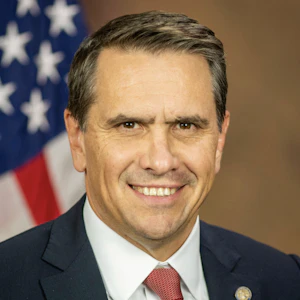
Biography of Deputy Attorney General Todd Blanche
The Honorable Todd Blanche is the 40th Deputy Attorney General of the United States, overseeing the work of the 115,000 dedicated employees who fulfill the Department of Justice’s mission at Main Justice, the FBI, DEA, U.S. Marshals, ATF, and 93 U.S. Attorney’s Offices.
Todd began his career at the Department where he served for over fifteen years in a variety of capacities, including as a contractor, a paralegal in the Criminal Division, and at the United States Attorney’s office for the Southern District of New York where he eventually became an AUSA and later a supervisor.
After leaving the Department, Todd worked as a criminal defense attorney that included representing President Donald Trump in three of the criminal cases brought against him in 2023 and 2024.
Following President Trump’s historic return to the White House, the President appointed Todd to work alongside Attorney General Pam Bondi to make America safe again. At the DOJ, Todd is working tirelessly to implement President Trump’s priorities that include confronting illegal protecting American businesses from fraud.
Todd has been married to his wonderful wife Kristine for nearly thirty years, is a father and grandfather.
Paul Atkins
Paul Atkins
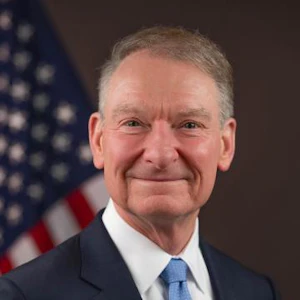
Prior to returning to the SEC, Chairman Atkins was most recently chief executive of Patomak Global Partners, a company he founded in 2009. Chairman Atkins helped lead efforts to develop best practices for the digital asset sector. He served as an independent director and non-executive chairman of the board of BATS Global Markets, Inc. from 2012 to 2015.
Chairman Atkins was appointed by President George W. Bush to serve as a Commissioner of the SEC from 2002 to 2008. During his tenure, he advocated for transparency, consistency, and the use of cost-benefit analysis at the agency. Chairman Atkins also represented the SEC at meetings of the President’s Working Group on Financial Markets and the U.S.-EU Transatlantic Economic Council. From 2009 to 2010, he was appointed a member of the Congressional Oversight Panel for the Troubled Asset Relief Program.
Before serving as an SEC Commissioner, Chairman Atkins was a consultant on securities and investment management industry matters, especially regarding issues of strategy, regulatory compliance, risk management, new product development, and organizational control.
From 1990 to 1994, Chairman Atkins served on the staff of two chairmen of the SEC, Richard C. Breeden and Arthur Levitt, ultimately as chief of staff and counselor, respectively. He received the SEC’s 1992 Law and Policy Award for work regarding corporate governance matters.
Chairman Atkins began his career as a lawyer in New York, focusing on a wide range of corporate transactions for U.S. and foreign clients, including public and private securities offerings and mergers and acquisitions. He was resident for 2½ years in his firm's Paris office and admitted as conseil juridique in France.
A member of the New York and Florida bars, Chairman Atkins received his J.D. from Vanderbilt University School of Law in 1983 and was Senior Student Writing Editor of the Vanderbilt Law Review. He received his A.B., Phi Beta Kappa, from Wofford College in 1980.
Originally from Lillington, North Carolina, Chairman Atkins grew up in Tampa, Florida. He and his wife Sarah have three sons.

Mike Selig
Mike Selig
Chairman Selig brings to the role deep public and private sector experience working with a wide range of stakeholders across agriculture, energy, financial, and digital asset industries, which rely upon and operate in CFTC-regulated markets.
Prior to his leadership at the CFTC, Chairman Selig most recently served as chief counsel of the Securities and Exchange Commission’s Crypto Task Force and senior advisor to SEC Chairman Paul S. Atkins. In this role, Chairman Selig helped to develop a clear regulatory framework for digital asset securities markets, harmonize the SEC and CFTC regulatory regimes, modernize the agency’s rules to reflect new and emerging technologies, and put an end to regulation by enforcement. He also participated in the President’s Working Group on Digital Asset Markets and contributed to its report on “Strengthening American Leadership in Digital Financial Technology.”
Prior to government service, Chairman Selig was a partner at an international law firm, focusing on derivatives and securities regulatory matters. During his years in private practice, he represented a broad range of clients subject to regulation by the CFTC, including commercial end users, futures commission merchants, commodity trading advisors, swap dealers, designated contract markets, derivatives clearing organizations, and digital asset firms. Chairman Selig advised clients on compliance with the Commodity Exchange Act and the CFTC’s rules and regulations thereunder, including in connection with registration applications and obligations, enforcement matters, and complex transactions.
Chairman Selig earned his law degree from The George Washington University Law School and was articles editor of The George Washington Law Review. He received his undergraduate degree from Florida State University.
David Bailey
David Bailey

Eric Trump
Eric Trump
Mr. Trump also serves as Executive Vice President of The Trump Organization, where he oversees the global management and operations of the Trump family’s extensive real estate portfolio. This includes Trump Hotels, Trump Golf, commercial and residential real estate, Trump Estates, and Trump Winery. Known for his hands-on leadership and strong market instincts, he has played a key role in expanding the company’s presence across major U.S. and international markets.
A globally recognized business leader and public figure, Mr. Trump is a prominent advocate for Bitcoin and decentralized finance. He is a co-founder of World Liberty Financial, a decentralized finance (DeFi) platform, and serves on the Board of Advisors of Metaplanet, Japan’s largest corporate holder of Bitcoin.
Beyond his business activities, Mr. Trump has helped raise more than $50 million for St. Jude Children’s Research Hospital in the fight against pediatric cancer, a philanthropic mission he began at age 21.
Mr. Trump earned a degree in Finance and Management from Georgetown University. He currently resides in Florida with his wife, Lara, and their two children. He is also the author of Under Siege, his memoir published in October 2025.
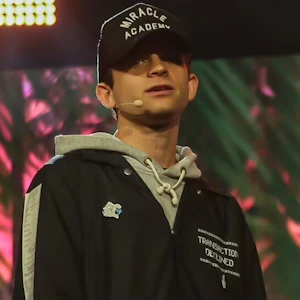
Jack Mallers
Jack Mallers
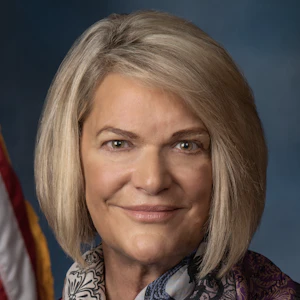
Cynthia Lummis
Cynthia Lummis
As the first-ever Chair of the Senate Banking Subcommittee on Digital Assets, Senator Lummis is the architect of the legislative framework shaping America's digital asset future. She introduced the landmark Lummis-Gillibrand Responsible Financial Innovation Act, the first comprehensive bipartisan crypto regulatory framework in Senate history. She co-authored the GENIUS Act — the first federal stablecoin law ever enacted — and introduced the BITCOIN Act, which would establish a U.S. strategic Bitcoin reserve of up to one million BTC. She is leading the Clarity Act, which will bring long-overdue regulatory certainty to the digital asset industry. She has also championed digital asset tax reform, including a de minimis exemption for small transactions and equal tax treatment for miners and stakers.
Known as Congress' "Crypto Queen," Senator Lummis represents Wyoming — a state she has helped build into one of the most digital asset-friendly regulatory environments in the nation. Before serving in the Senate, she served 14 years in the Wyoming Legislature, eight years as Wyoming State Treasurer, and eight years in the U.S. House. She is a three-time graduate of the University of Wyoming.
Her work represents a crucial bridge between traditional financial systems and the emerging digital economy, ensuring America leads the world in financial innovation while protecting the individual freedoms that define it.
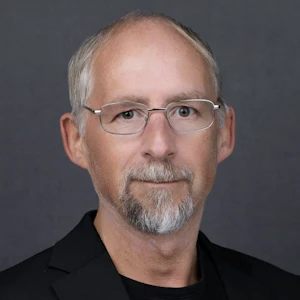
Adam Back
Adam Back
Amy Oldenburg
Amy Oldenburg
David Marcus
David Marcus

Matt Schultz
Matt Schultz
Fred Thiel
Fred Thiel
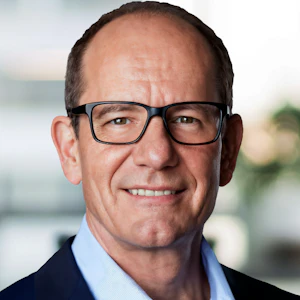
Throughout his career, Mr. Thiel has consistently driven rapid growth and created substantial shareholder value. Prior to MARA, Mr. Thiel served as the CEO of two other public companies, Local Corporation (NASDAQ: LOCM) and Lantronix, Inc (NASDAQ: LTRX). He has successfully raised billions in equity and debt through private and public offerings, led companies through IPOs, executed high-value exits to strategic and financial acquirers, and implemented effective M&A and roll-up strategies.
Mr. Thiel attended the Stockholm School of Economics and executive classes at Harvard Business School, and is fluent in English, Spanish, Swedish, and French. Mr. Thiel is the Chairman of the Board for Oden Technology, Inc. and is active in Young Presidents’ Organization where he has led initiatives in both the FinTech and Technology Networks.
A recognized voice in the industry, Fred frequently shares his insights on energy and technology with major media outlets like Bloomberg TV, CNBC, and FOX Business, contributing to vital discussions about the future of these sectors.
Tim Draper
Tim Draper
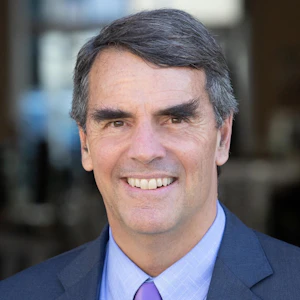
He is a supporter and global thought leader for entrepreneurs everywhere, and is a leading spokesperson for Bitcoin and decentralization, having won the Bitcoin US Marshall’s auction in 2014, invested in over 50 crypto companies, and led investments in Coinbase, Ledger, Tezos, and Bancor, among others.
Afroman
Afroman