Fixing the Policies Holding Bitcoin Back
Speakers/Moderators

Cody Carbone
Cody Carbone
With over 250 members spanning the entire digital economy, The Chamber plays a central role in shaping the future of Web3 policy. As the premier voice globally, The Chamber leads all education and advocacy efforts, crafting legislation, informing regulatory frameworks, and building bipartisan coalitions to ensure the United States remains a global hub for digital innovation.
Prior to joining The Digital Chamber, Cody spent six years at Ernst & Young’s (EY) Office of Public Policy, where he led federal advocacy on financial services and emerging technologies. He also brings significant legislative experience, having served as policy staff in both the U.S. House of Representatives and U.S. Senate.
Cody holds a Juris Doctor (JD) and a Master of Public Administration (MPA) from Syracuse University and is admitted to the New York State Bar. He resides in Alexandria, Virginia, where he continues to champion smart, innovation-forward policies for the digital future.

Kara Calvert
Kara Calvert
Kara began her career in Washington working for U.S. Senator Mike Enzi (R-WY). Most recently, she was a partner at the Franklin Square team, where she represented the world’s most innovative and impactful technology companies for 13 years. Prior to her time at the Franklin Square Group, Kara worked for the Information Technology Industry Council.

Jayson Browder
Jayson Browder
Senior Vice President of Government Affairs and Corporate Responsibility
Jayson is the Senior Vice President of Government Affairs at MARA, a global leader in digital asset compute and largest publicly traded bitcoin miner. He is a committed public servant, bringing close to two decades of experience in governmental and non-governmental work. A trained United States Air Force engineer, he has spent the last 13 years post-military service managing projects and developing policy covering Asia, Africa, the Middle East, Eurasia, Central America, and Mexico. Jayson has served in the White House, U.S. State Department, USAID, and on Capitol Hill. He is an Iraq veteran and a U.S. Fulbright Scholar to Turkey. Jayson holds a Global Executive M.P.A. from New York University and University College London. He was awarded 40 Under 40 at the Middle East Policy Council and 40 Under 40 Latinos in Foreign Policy at New America, Diversity in National Security Network, and Huffington Post.

Janessa Lopez
Janessa Lopez
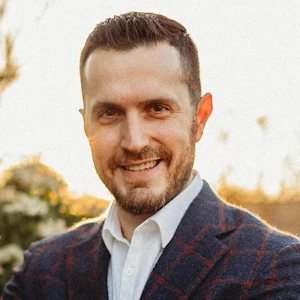
Dennis Porter
Dennis Porter
Session
Overview
Fixing the Policies Holding Bitcoin Back brought together Kara Calvert of Coinbase, Jayson Browder of MARA, Janessa Lopez of Block, Dennis Porter of Satoshi Action, and host Cody Carbone of The Digital Chamber for a policy-focused conversation on Bitcoin’s regulatory future.
The discussion centered on market structure legislation, including the CLARITY Act, and why clear rules matter for self custody, developers, Bitcoin companies, and users. Speakers argued that regulatory certainty is needed to avoid a return to regulation by enforcement, debanking, and the migration of Bitcoin development outside the United States.
Tax policy emerged as a major next priority, especially a de minimis exemption for Bitcoin payments. The panel emphasized that treating small Bitcoin payments as taxable events creates friction for everyday use, while unclear reporting rules create burdens for consumers, companies, institutions, and the IRS.
The conversation also covered strategic Bitcoin reserves at the state and federal levels, grassroots advocacy, policymaker education, developer protections, Bitcoin payments through Lightning, and potential national security applications involving Bitcoin mining and proof of work.
All right. Good afternoon, Las Vegas. It is an honor to be here at the Code and Country event. When we're talking policy, we truly have the leading advocates in Washington, in the halls where the policies are being shaped, with me today.
We only have about 20 minutes and a very big panel, so we're going to get right into it. Kara, I want to start with you. The number one big legislative effort we've been talking about for a while now is market structure legislation, the CLARITY Act for everyone out there. Coinbase has been one of the leading voices trying to get this done over the finish line, and I know you have been instrumental in getting us to where we are today.
At a high level, what does the market structure bill, whether it's the CLARITY Act or RFIA, whatever you want to call it, mean for Bitcoin?
Absolutely. Well, it's a pleasure to be here today. I've been with Coinbase for about a decade now, and I got into crypto and working for Coinbase because of Bitcoin, because of the promise of Bitcoin and the ability to promote economic freedom through the use of Bitcoin. I think the key to that is being able to hold your own asset. The freedom to use your asset, hold your asset, buy, sell, pay, whatever it is.
Ultimately, that is core to market structure. It's the ability to self custody, making sure we protect that in the bill. It's creating certainty, because at the end of the day, we want to ensure that the rules out there allow builders, developers, and all of the other companies who want to use Bitcoin, whether it's for payments or just for new types of products and services, to have certainty.
Last but not least, we need to make sure that regulation by enforcement never happens again, and we don't have Bitcoiners or Bitcoin companies being debanked because of a hostile regulatory environment. Those three things are what I really look to for Bitcoin and how I think this will promote the future of Bitcoin.
The durability of getting law enacted is so important. What happens if we get this wrong?
Great question. Ultimately, if we get this wrong, development will move overseas. We saw that when everybody started to move overseas, and now people are coming back to the United States. But that is not a foregone conclusion. We have to get it right, and the time is now to get it done, pass it into law, and get it to the president's desk.
Jayson, you've been leading at MARA on Bitcoin policies in Washington for a long time now. We're going to talk about a bunch of different issues today: market structure, tax, state, federal. When you look at what's important from a legislative or regulatory aspect in Washington for Bitcoin, what stands out to you? What's the number one thing you would like to get done in Washington?
I agree with Kara on several points, including self custody. Also, de minimis is something that Bitcoiners have pushed for a long time on Capitol Hill, and hopefully we'll see that in market structure.
From the executive branch side, two things. I think we'll talk about tax in a little bit, but the strategic Bitcoin reserve. There was talk around budget-neutral ways to get more Bitcoin on the balance sheet, and there was a lot of energy around that. I'm hoping that once market structure is passed, we'll reengage with the Trump administration to advocate for policies around the SBR.
Dennis, I'll go to you and talk about SBR. You've been leading at getting some of the strategic Bitcoin reserves at the state level. How are you feeling about the federal government and the pace of action on SBR or other policy issues as it relates to the states as well?
We've been really fortunate to see the first strategic Bitcoin reserve policy ever passed into law in the state of New Hampshire, and then, of course, Texas and Arizona followed suit. We're also fortunately seeing one move in California now. It just passed on consent in judiciary and unanimously out of the banking and finance committee.
At the federal level, it's been slow. I think, as everyone here will agree, we need to get market structure passed in order for us to move on to this next generation of policy. That's something that Satoshi Action is very interested in. We want to skate to where the puck is going, not to where it's been. We need to get market structure done, and thanks to many of the people up on this panel, hopefully, fingers crossed, it will get done, and then we can move on to that next era of policy.
We're excited about strategic Bitcoin reserves at the federal level. We also recently saw in the MINE America Act that there was a strategic Bitcoin reserve put into that bill, and also a budget-neutral way for them to be able to buy Bitcoin for the reserve.
If you're in the audience right now or you're watching on the livestream, you have heard about market structure for a long time. The question I get most often, and I'm sure all of you get, is: what's next? Jayson, you brought up de minimis. Tax policy is what I perceive as what's next. It's so critically important to get clean tax policy done.
Janessa, at Block, you guys have been leading on this. I've seen a very cool car go around Capitol Hill advocating for clear tax policy for Bitcoin. Where are we on tax policy right now? When the conversation has been so consumed with market structure, what's been going on in Washington on digital asset tax?
As you said, crypto tax is next after market structure. For us, our priority at Block has been the de minimis tax exemption for Bitcoin payments, and making sure that any time somebody uses Bitcoin as a form of money, it's treated as such under the tax code. Simple as that.
Where things stand, there are a few bills people should be aware of. In the Senate, Senator Lummis introduced her crypto tax package last summer, which includes things like wash sales, making sure mining and staking rewards are taxed at sale and not creation, and of course de minimis for all digital assets.
In the House, recently there was a bipartisan bill introduced that touched on all of those provisions, but it had a problematic de minimis proposal that only applies de minimis to stablecoins under $200 and does not capture Bitcoin or all other digital assets. That's a real argument that's growing in policymaker conversations, where they think that might be an acceptable compromise.
We're pushing really hard on the policy front to make sure that is not an acceptable approach that will be adopted. The reason is stablecoins are pegged to the U.S. dollar. There is no fluctuation, so they shouldn't even have capital gains tax to begin with. We're advocating for stablecoins to be treated like cash equivalents.
The second reason this is concerning is because if Congress applies de minimis just to stablecoins and not all other digital assets, then they're essentially picking winners and losers. They're no longer taking a tech-neutral approach to policymaking, which is what we like to see. We're advocating for de minimis to apply to all digital assets, including Bitcoin. Otherwise, it's a nonstarter for us.
It's critically important. We always have the conversation about, can I use my Bitcoin to buy a cup of coffee? I think it's so critical for the audience out here to understand why that de minimis is so important.
How are your conversations going with lawmakers? You mentioned some of the legislative efforts, Senator Lummis and the bipartisan bill that came out of the House recently, or discussion draft that came out of the House. How are the conversations going in trying to build a broad coalition?
I think they're going really well, and it's important that all of us are boots on the ground educating members about why this is important.
For us, as you probably know, we launched a product at the end of last year, the Square Bitcoin payments product, where Square sellers are able to accept Bitcoin at the point of sale through any Lightning-enabled wallet with zero fees. Explaining that we actually have the technology there now has been a home run with policymakers. They're like, okay, we're not talking about a hypothetical future anymore. We're actually talking about a real-world use case that needs tax reforms now.
Our conversations have been effective. I think we are still in this uphill battle where there is a lot of education still to be done. A lot of policymakers are very early in their understanding of crypto tax and de minimis entirely. So there is a lot of work to be done, but I think we're doing what we should be doing.
Can I just pick up on that thread real quick? You raise a great point that the technology is there as a payment mechanism. That is how Bitcoin operates. Right now, I think some things are getting lost in translation. We have leaned so heavily on the fact that Bitcoin is digital gold, and people then think about that as property, rather than the fact that it can be used for payments and is being used for payments, and that transfer of value has been critical.
We have to bridge that gap in the understanding of what the technology can do. Real-world examples are exactly how we're going to get to a de minimis that makes sense for Bitcoin and doesn't leave it behind and pretend like it's not a payment mechanism.
Exactly. I think real-world utility is super important here. It's not only Bitcoin payments that we're advocating for. It's also gas fees. These microtransactions need to be eliminated in the reporting. AI agentic payments are huge for the future, and they largely prefer blockchain-based payments like Bitcoin over fiat. When we look at the future, this need is going to grow exponentially, not to mention the burden this imposes on the IRS. That's completely unmanageable and unworkable. So there are a lot of reasons that I think are gaining steam and arguments that are hitting home with people.
If I could just add real quick, from our conversations around these issues, there seems to be a gap between the legislative branch and, not even the political branch, but the civil servant side. There needs to be better communication between the legislators, the policymakers, and the actual people who are supposed to be implementing this stuff. That seems to be a gap, and hopefully we can engage with those people on the implementation side and the executive branch too, to get them up to speed on what's happening on the Hill.
What can folks, and Janessa, maybe I'll start with you, but it's for everyone. What can folks who are watching right now, who are in the audience, who have probably been consumed as well and follow the market structure debate because it has been the number one legislative effort, who are now starting to understand maybe from this panel for the first time why tax policy is so critical, do themselves as real users and consumers to try to get some of these legislative efforts or regulatory efforts moving, or at least make their lawmaker aware of what's going on?
I think that's really important. We ran a campaign at the end of last year in D.C. raising awareness about the de minimis tax issue, and as part of that we created a website that I encourage everyone to go to. It's called BTCisMoney.xyz. On it, you can type in your ZIP code and it will populate your representative and your senators. You can contact them with a pre-drafted email that you can copy and paste and send, advocating for de minimis for Bitcoin payments and helping make Bitcoin everyday money.
We have that resource as a tool for people. I'd also encourage people to go to their local Square sellers and pay with Bitcoin, and get them onboarded and informed about it if they don't already know they have this capability. Both of those are things that people can do now to help.
Dennis, pull back the curtain for everyone out there on what it's like to go into a meeting with, whether it's a state lawmaker, a member of Congress, or a member of the administration, who maybe has never heard of Bitcoin. We've all had one of those meetings. I see all of you in Washington all the time. What is that meeting like? How do we begin the education journey? The education gap is still wide for a lot of members of Congress. It's closing quickly because of a lot of the efforts of all of you on stage. What is that meeting like?
I think it's critically important when you're talking to someone who hasn't ever been educated on the issue that you start at the basics and the fundamentals in a way they can easily digest. That can be very difficult because crypto and this entire Bitcoin space can be very complex. Breaking those issues down in a way that's easy to understand, whether you're doing it through analogy or by comparing it to things that exist in the real world, is very important.
A lot of times lawmakers and staff are inundated with new concepts and new policies all the time. They're exhausted. Many people here have worked on Capitol Hill. They know what it's like to take these meetings back to back, and then have to turn around and do notes and then turn around and do it all over again the next day.
Breaking it down in the simplest and easiest way to digest as humanly possible is the key to getting there. If you start using industry lingo like blockchain and proof of work, oftentimes even those types of terms make them realize that they don't understand what is being discussed. Eliminating jargon and industry talking points is really helpful when you're trying to educate a lawmaker or anybody, really, even just the general public, on Bitcoin.
Dennis had a good point. I remember when we used to go in and talk about Bitcoin mining, and members of Congress would be like, with shovels, hard hats? On your face. Yeah.
Kara, I've always been so impressed with the way Coinbase highlights the real-world use cases. Has that been one of the most effective policy advocacy tools for you as you go in and talk to offices?
Absolutely. What I think has really changed the game, though, for Coinbase is the users, the community, and the advocates. Brian Armstrong had a vision a few years ago, saying there are advocates out there in the crypto community who will stand up and make their voices heard. They'll come to Washington and talk about how, whether it's Bitcoin or stablecoins or any other type of digital asset, that is changing their lives.
We were skeptical a little bit as Washington insiders. A lot of times, we grow really desensitized to what people want at the grassroots level. He was absolutely right. Now over 3 million people have signed up for Stand with Crypto, and they are coming to Washington. Over 600,000 emails went in about one issue related to rewards and being able to earn rewards on stablecoins.
People are really engaged, and that effort is what has changed the game in terms of market structure, because it has such broad application and broad influence. I think on tax, that is the second most important thing we've ever had. When we had the broker reporting rules, that was the first time they turned the switch on for the advocates. Hundreds of thousands of emails went into the IRS on the broker reporting rules.
That is an incredible feat, and it's because of all of you who care about this. I would give one shameless plug. Midterms are coming up in November. We don't have an existential issue right now for crypto in America, but again, that can flip with a switch. We need to make sure that we keep Congress and folks accountable, whether it's in the state houses where Dennis spends a ton of time. We have to make sure lawmakers are thinking about crypto policy and understanding that you all are out there and you will vote on it.
Janessa, from a consumer perspective and getting retail users engaged, we always talk about one of the benefits of Bitcoin as expanding access to financial services. Are you seeing any regulation out there or law that is holding back Bitcoin from reaching its potential and providing access, democratizing finance, access to Bitcoin?
This question is super important because it's aligned with our entire mission at Block, which is economic empowerment. I think about it in terms of how we build our Bitcoin products at the company to enable that access more greatly for the average user, the average American.
For example, on Cash App, you can buy, sell, store, and spend your Bitcoin through the Lightning Network instantly. A Square merchant can now accept that payment instantly and for free, also through Lightning. Neither the consumer nor the seller has to understand how the Lightning Network works on the back end. They have to know zero about that. All they know is they receive a payment instantly.
That has been a major barrier to adoption of Bitcoin in the past: how clunky it was to use, how much you had to learn about it in order to actually be onboarded. That's now seamless due to our products and technology. Same with Bitkey. People can self-custody their Bitcoin without even having to remember their seed phrase. With Proto, we're decentralizing mining.
All of these products have that goal in mind, and that's the approach we take to policy as well. We want to support policies that make it so users don't have to think about the regulatory and tax implications of wanting to use Bitcoin as money, for instance. De minimis is a huge unlock. That's one of our top priorities, for sure.
Second, I would also mention developer protections included in the market structure bill, which are a major priority to get passed this year as well. If a software developer is creating something that can be perceived as unlicensed money transmission, then they have the real risk of being prosecuted and potentially thrown in jail for writing code. That puts self custody wallet providers at risk, miners, validators, and node operators, and a lot of industry participants that protect the infrastructure. That bill is called the Blockchain Regulatory Certainty Act, and that's our other main priority.
This panel is going alarmingly fast. We have two minutes left. We've talked market structure, tax, state policy, and access. The description for the panel that the Bitcoin conference gave us asked us to explore where current policies are falling short. I want to ask each of you, and Dennis, maybe we'll start with you and go down the line.
I would hate to miss the opportunity to bring up the Admiral Paparo hearing that happened in Armed Services, where he was explaining Bitcoin and proof of work as a national security interest. Because of Jason Lowery and his thesis that he wrote three years ago, who deserves a ton of credit, really all the credit, for the outcome that we saw in this hearing, the military is now exploring the usage of Bitcoin for national defense. In fact, they're even running a Bitcoin node right now and exploring different types of use cases.
There's going to be more coming from this. It's not as much on the policy side. Obviously, this is sort of internal to the military, but there are things we can do on the policy side to make it easier for the military to truly study Bitcoin and Bitcoin mining for the purposes of national defense.
Janessa.
I would say in the immediate term, it's passing market structure, getting clear licensing frameworks in the United States, and including the Blockchain Regulatory Certainty Act, like I mentioned.
I agree with both Janessa and Dennis, but something Dennis mentioned on strategic Bitcoin reserve and the national security aspects of it, in regard to budget-neutral ways that the U.S. government can acquire more Bitcoin: partnerships with Bitcoin miners and the Department of Defense and the government, whether that's mining on methane or landfills or underutilized energy assets the United States has. It's dual. It's for the economy and it's for national security, and that's something that doesn't need the legislative process to get done.
Great. I think if answering just specifically, what are we getting wrong right now? We're doing a lot of things right. Congress is doing a lot of really amazing work on the CLARITY Act, and I am bullish that that will get done. Where I think we're getting it wrong right now is our tax policy.
We just released a study from Coinbase on how many 1099-DA forms we had to file for our customers. It's absolutely astronomical. Having just done my own taxes, I had to get an extension because I didn't know how to do it. These are the crazy things that everyday Americans have to figure out.
We can't have a tax policy that disincentivizes the ownership and use of digital assets, whether it's Bitcoin or stablecoins. We have to make sure we have a tax policy that works and allows retail investors to understand how to do it and unlocks it for institutional. One of the biggest complaints we hear from institutional clients is they don't know how the tax policy applies. Even if we get market structure right, if we don't fix the tax system, that is going to be a barrier in and of itself to adoption.
Ladies and gentlemen, these are the advocates who are fixing the policies holding Bitcoin back. Kara, Jayson, Janessa, Dennis, thank you so much. Appreciate it. Thank you.
Similar
Sessions
Fixing the Policies Holding Bitcoin Back
Cody Carbone
Cody Carbone
With over 250 members spanning the entire digital economy, The Chamber plays a central role in shaping the future of Web3 policy. As the premier voice globally, The Chamber leads all education and advocacy efforts, crafting legislation, informing regulatory frameworks, and building bipartisan coalitions to ensure the United States remains a global hub for digital innovation.
Prior to joining The Digital Chamber, Cody spent six years at Ernst & Young’s (EY) Office of Public Policy, where he led federal advocacy on financial services and emerging technologies. He also brings significant legislative experience, having served as policy staff in both the U.S. House of Representatives and U.S. Senate.
Cody holds a Juris Doctor (JD) and a Master of Public Administration (MPA) from Syracuse University and is admitted to the New York State Bar. He resides in Alexandria, Virginia, where he continues to champion smart, innovation-forward policies for the digital future.
Kara Calvert
Kara Calvert
Kara began her career in Washington working for U.S. Senator Mike Enzi (R-WY). Most recently, she was a partner at the Franklin Square team, where she represented the world’s most innovative and impactful technology companies for 13 years. Prior to her time at the Franklin Square Group, Kara worked for the Information Technology Industry Council.
Jayson Browder
Jayson Browder
Senior Vice President of Government Affairs and Corporate Responsibility
Jayson is the Senior Vice President of Government Affairs at MARA, a global leader in digital asset compute and largest publicly traded bitcoin miner. He is a committed public servant, bringing close to two decades of experience in governmental and non-governmental work. A trained United States Air Force engineer, he has spent the last 13 years post-military service managing projects and developing policy covering Asia, Africa, the Middle East, Eurasia, Central America, and Mexico. Jayson has served in the White House, U.S. State Department, USAID, and on Capitol Hill. He is an Iraq veteran and a U.S. Fulbright Scholar to Turkey. Jayson holds a Global Executive M.P.A. from New York University and University College London. He was awarded 40 Under 40 at the Middle East Policy Council and 40 Under 40 Latinos in Foreign Policy at New America, Diversity in National Security Network, and Huffington Post.
Janessa Lopez
Janessa Lopez
Dennis Porter
Dennis Porter
Fixing the Policies Holding Bitcoin Back
Speakers/Moderators
Cody Carbone
Cody Carbone
With over 250 members spanning the entire digital economy, The Chamber plays a central role in shaping the future of Web3 policy. As the premier voice globally, The Chamber leads all education and advocacy efforts, crafting legislation, informing regulatory frameworks, and building bipartisan coalitions to ensure the United States remains a global hub for digital innovation.
Prior to joining The Digital Chamber, Cody spent six years at Ernst & Young’s (EY) Office of Public Policy, where he led federal advocacy on financial services and emerging technologies. He also brings significant legislative experience, having served as policy staff in both the U.S. House of Representatives and U.S. Senate.
Cody holds a Juris Doctor (JD) and a Master of Public Administration (MPA) from Syracuse University and is admitted to the New York State Bar. He resides in Alexandria, Virginia, where he continues to champion smart, innovation-forward policies for the digital future.
Kara Calvert
Kara Calvert
Kara began her career in Washington working for U.S. Senator Mike Enzi (R-WY). Most recently, she was a partner at the Franklin Square team, where she represented the world’s most innovative and impactful technology companies for 13 years. Prior to her time at the Franklin Square Group, Kara worked for the Information Technology Industry Council.
Jayson Browder
Jayson Browder
Senior Vice President of Government Affairs and Corporate Responsibility
Jayson is the Senior Vice President of Government Affairs at MARA, a global leader in digital asset compute and largest publicly traded bitcoin miner. He is a committed public servant, bringing close to two decades of experience in governmental and non-governmental work. A trained United States Air Force engineer, he has spent the last 13 years post-military service managing projects and developing policy covering Asia, Africa, the Middle East, Eurasia, Central America, and Mexico. Jayson has served in the White House, U.S. State Department, USAID, and on Capitol Hill. He is an Iraq veteran and a U.S. Fulbright Scholar to Turkey. Jayson holds a Global Executive M.P.A. from New York University and University College London. He was awarded 40 Under 40 at the Middle East Policy Council and 40 Under 40 Latinos in Foreign Policy at New America, Diversity in National Security Network, and Huffington Post.
Janessa Lopez
Janessa Lopez
Dennis Porter
Dennis Porter
Other
Speakers

Michael Saylor
Michael Saylor
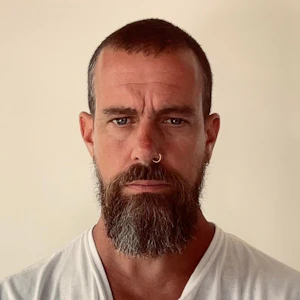
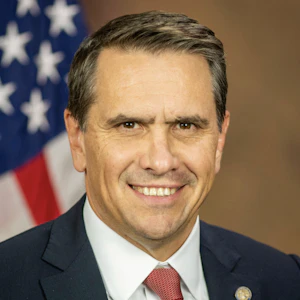
Todd Blanche
Todd Blanche
Biography of Deputy Attorney General Todd Blanche
The Honorable Todd Blanche is the 40th Deputy Attorney General of the United States, overseeing the work of the 115,000 dedicated employees who fulfill the Department of Justice’s mission at Main Justice, the FBI, DEA, U.S. Marshals, ATF, and 93 U.S. Attorney’s Offices.
Todd began his career at the Department where he served for over fifteen years in a variety of capacities, including as a contractor, a paralegal in the Criminal Division, and at the United States Attorney’s office for the Southern District of New York where he eventually became an AUSA and later a supervisor.
After leaving the Department, Todd worked as a criminal defense attorney that included representing President Donald Trump in three of the criminal cases brought against him in 2023 and 2024.
Following President Trump’s historic return to the White House, the President appointed Todd to work alongside Attorney General Pam Bondi to make America safe again. At the DOJ, Todd is working tirelessly to implement President Trump’s priorities that include confronting illegal protecting American businesses from fraud.
Todd has been married to his wonderful wife Kristine for nearly thirty years, is a father and grandfather.
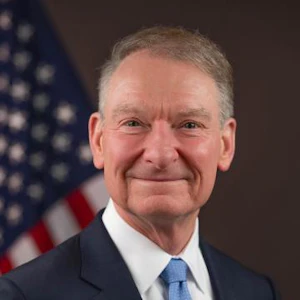
Paul Atkins
Paul Atkins
Prior to returning to the SEC, Chairman Atkins was most recently chief executive of Patomak Global Partners, a company he founded in 2009. Chairman Atkins helped lead efforts to develop best practices for the digital asset sector. He served as an independent director and non-executive chairman of the board of BATS Global Markets, Inc. from 2012 to 2015.
Chairman Atkins was appointed by President George W. Bush to serve as a Commissioner of the SEC from 2002 to 2008. During his tenure, he advocated for transparency, consistency, and the use of cost-benefit analysis at the agency. Chairman Atkins also represented the SEC at meetings of the President’s Working Group on Financial Markets and the U.S.-EU Transatlantic Economic Council. From 2009 to 2010, he was appointed a member of the Congressional Oversight Panel for the Troubled Asset Relief Program.
Before serving as an SEC Commissioner, Chairman Atkins was a consultant on securities and investment management industry matters, especially regarding issues of strategy, regulatory compliance, risk management, new product development, and organizational control.
From 1990 to 1994, Chairman Atkins served on the staff of two chairmen of the SEC, Richard C. Breeden and Arthur Levitt, ultimately as chief of staff and counselor, respectively. He received the SEC’s 1992 Law and Policy Award for work regarding corporate governance matters.
Chairman Atkins began his career as a lawyer in New York, focusing on a wide range of corporate transactions for U.S. and foreign clients, including public and private securities offerings and mergers and acquisitions. He was resident for 2½ years in his firm's Paris office and admitted as conseil juridique in France.
A member of the New York and Florida bars, Chairman Atkins received his J.D. from Vanderbilt University School of Law in 1983 and was Senior Student Writing Editor of the Vanderbilt Law Review. He received his A.B., Phi Beta Kappa, from Wofford College in 1980.
Originally from Lillington, North Carolina, Chairman Atkins grew up in Tampa, Florida. He and his wife Sarah have three sons.

Mike Selig
Mike Selig
Chairman Selig brings to the role deep public and private sector experience working with a wide range of stakeholders across agriculture, energy, financial, and digital asset industries, which rely upon and operate in CFTC-regulated markets.
Prior to his leadership at the CFTC, Chairman Selig most recently served as chief counsel of the Securities and Exchange Commission’s Crypto Task Force and senior advisor to SEC Chairman Paul S. Atkins. In this role, Chairman Selig helped to develop a clear regulatory framework for digital asset securities markets, harmonize the SEC and CFTC regulatory regimes, modernize the agency’s rules to reflect new and emerging technologies, and put an end to regulation by enforcement. He also participated in the President’s Working Group on Digital Asset Markets and contributed to its report on “Strengthening American Leadership in Digital Financial Technology.”
Prior to government service, Chairman Selig was a partner at an international law firm, focusing on derivatives and securities regulatory matters. During his years in private practice, he represented a broad range of clients subject to regulation by the CFTC, including commercial end users, futures commission merchants, commodity trading advisors, swap dealers, designated contract markets, derivatives clearing organizations, and digital asset firms. Chairman Selig advised clients on compliance with the Commodity Exchange Act and the CFTC’s rules and regulations thereunder, including in connection with registration applications and obligations, enforcement matters, and complex transactions.
Chairman Selig earned his law degree from The George Washington University Law School and was articles editor of The George Washington Law Review. He received his undergraduate degree from Florida State University.

David Bailey
David Bailey

Eric Trump
Eric Trump
Mr. Trump also serves as Executive Vice President of The Trump Organization, where he oversees the global management and operations of the Trump family’s extensive real estate portfolio. This includes Trump Hotels, Trump Golf, commercial and residential real estate, Trump Estates, and Trump Winery. Known for his hands-on leadership and strong market instincts, he has played a key role in expanding the company’s presence across major U.S. and international markets.
A globally recognized business leader and public figure, Mr. Trump is a prominent advocate for Bitcoin and decentralized finance. He is a co-founder of World Liberty Financial, a decentralized finance (DeFi) platform, and serves on the Board of Advisors of Metaplanet, Japan’s largest corporate holder of Bitcoin.
Beyond his business activities, Mr. Trump has helped raise more than $50 million for St. Jude Children’s Research Hospital in the fight against pediatric cancer, a philanthropic mission he began at age 21.
Mr. Trump earned a degree in Finance and Management from Georgetown University. He currently resides in Florida with his wife, Lara, and their two children. He is also the author of Under Siege, his memoir published in October 2025.

Jack Mallers
Jack Mallers

Cynthia Lummis
Cynthia Lummis
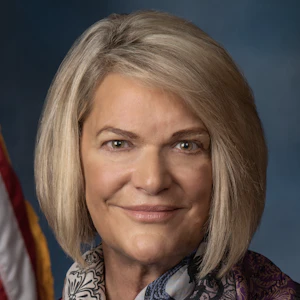
As the first-ever Chair of the Senate Banking Subcommittee on Digital Assets, Senator Lummis is the architect of the legislative framework shaping America's digital asset future. She introduced the landmark Lummis-Gillibrand Responsible Financial Innovation Act, the first comprehensive bipartisan crypto regulatory framework in Senate history. She co-authored the GENIUS Act — the first federal stablecoin law ever enacted — and introduced the BITCOIN Act, which would establish a U.S. strategic Bitcoin reserve of up to one million BTC. She is leading the Clarity Act, which will bring long-overdue regulatory certainty to the digital asset industry. She has also championed digital asset tax reform, including a de minimis exemption for small transactions and equal tax treatment for miners and stakers.
Known as Congress' "Crypto Queen," Senator Lummis represents Wyoming — a state she has helped build into one of the most digital asset-friendly regulatory environments in the nation. Before serving in the Senate, she served 14 years in the Wyoming Legislature, eight years as Wyoming State Treasurer, and eight years in the U.S. House. She is a three-time graduate of the University of Wyoming.
Her work represents a crucial bridge between traditional financial systems and the emerging digital economy, ensuring America leads the world in financial innovation while protecting the individual freedoms that define it.

Adam Back
Adam Back

Amy Oldenburg
Amy Oldenburg
David Marcus
David Marcus

Matt Schultz
Matt Schultz
Fred Thiel
Fred Thiel
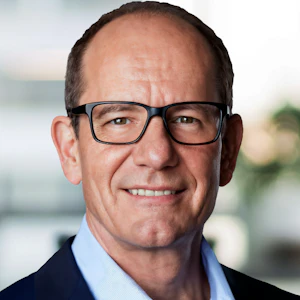
Throughout his career, Mr. Thiel has consistently driven rapid growth and created substantial shareholder value. Prior to MARA, Mr. Thiel served as the CEO of two other public companies, Local Corporation (NASDAQ: LOCM) and Lantronix, Inc (NASDAQ: LTRX). He has successfully raised billions in equity and debt through private and public offerings, led companies through IPOs, executed high-value exits to strategic and financial acquirers, and implemented effective M&A and roll-up strategies.
Mr. Thiel attended the Stockholm School of Economics and executive classes at Harvard Business School, and is fluent in English, Spanish, Swedish, and French. Mr. Thiel is the Chairman of the Board for Oden Technology, Inc. and is active in Young Presidents’ Organization where he has led initiatives in both the FinTech and Technology Networks.
A recognized voice in the industry, Fred frequently shares his insights on energy and technology with major media outlets like Bloomberg TV, CNBC, and FOX Business, contributing to vital discussions about the future of these sectors.
Tim Draper
Tim Draper
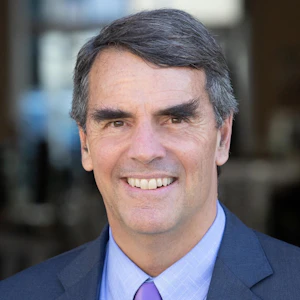
He is a supporter and global thought leader for entrepreneurs everywhere, and is a leading spokesperson for Bitcoin and decentralization, having won the Bitcoin US Marshall’s auction in 2014, invested in over 50 crypto companies, and led investments in Coinbase, Ledger, Tezos, and Bancor, among others.

Afroman
Afroman