From American Hashrate to Wall Street: How Bitcoin Benefits The U.S.
Speakers/Moderators

Eric Balchunas
Eric Balchunas

Eric Trump
Eric Trump
Mr. Trump also serves as Executive Vice President of The Trump Organization, where he oversees the global management and operations of the Trump family’s extensive real estate portfolio. This includes Trump Hotels, Trump Golf, commercial and residential real estate, Trump Estates, and Trump Winery. Known for his hands-on leadership and strong market instincts, he has played a key role in expanding the company’s presence across major U.S. and international markets.
A globally recognized business leader and public figure, Mr. Trump is a prominent advocate for Bitcoin and decentralized finance. He is a co-founder of World Liberty Financial, a decentralized finance (DeFi) platform, and serves on the Board of Advisors of Metaplanet, Japan’s largest corporate holder of Bitcoin.
Beyond his business activities, Mr. Trump has helped raise more than $50 million for St. Jude Children’s Research Hospital in the fight against pediatric cancer, a philanthropic mission he began at age 21.
Mr. Trump earned a degree in Finance and Management from Georgetown University. He currently resides in Florida with his wife, Lara, and their two children. He is also the author of Under Siege, his memoir published in October 2025.
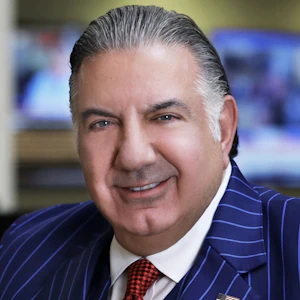
John Koudounis
John Koudounis
With over 37 years of experience in the financial services sector, he previously held the position of President and CEO at Mizuho Securities in the Americas, where he significantly expanded the firm's capital markets teams and enhanced profitability, client base, and product diversity, elevating Mizuho to a top-tier global investment bank.
In addition to his corporate responsibilities, Koudounis is recognized for his thought leadership, frequently speaking at global conferences and platforms such as CNBC, Fox Business, and Bloomberg TV. Koudounis is committed to philanthropy and is involved with several organizations including the Concordia Leadership Council, the SEAL Future Foundation, The Hellenic Initiative, and the Ecumenical Bartholomew Foundation.
He holds a degree in International Diplomacy & Foreign Affairs and Economics from Brown University.
Session
Overview
Eric Balchunas of Bloomberg moderates a discussion with Eric Trump of American Bitcoin and John Koudounis of Calamos Investments on how Bitcoin is moving into the American financial system through ETFs, institutional adoption, mining, treasury strategies, and traditional finance access points.
The conversation centers on Bitcoin ETFs as a bridge for mainstream and older investors, with discussion of advisor platforms, bank adoption, sovereign wealth interest, and the role of products such as buffer ETFs for investors who want Bitcoin exposure with downside protection. The speakers also discuss the importance of making Bitcoin and crypto user experiences simpler for everyday users.
A major theme is Bitcoin as a censorship-resistant and debasement-resistant asset. Eric Trump describes debanking as a reason for his involvement in digital assets, while John Koudounis points to Greek capital controls as an example of why financial access can matter beyond politics. The panel also covers U.S. mining, Bitcoin treasuries, stablecoins, strategic reserves, government debt, and long-term Bitcoin price expectations.
All right. This is going to be very informative for all of you. I've looked at the panel discussions all day. There are a lot of very technical people in Bitcoin. You know your world better than anybody. What we're going to talk about is the bridge to the TradFi world and all the boomer money. We're at a real crossroads here. Bitcoin is spreading to the masses. We have two great panelists here to talk about that, so let me dive into the first question.
ETFs have taken in about $60 billion of cash in about two and a half years. I'm an ETF analyst. That breaks every record imaginable. They were a huge hit. Morgan Stanley just came in, the first bank ever. Obviously, these things are going mainstream. Boomers love ETFs and the assets are growing. From where both of you sit, what does that demand tell you about where we are in Bitcoin's integration into the American financial system, and how big of a pool of capital is in play? Let's start with you, John.
Thank you, Eric. I appreciate it. You said $60 billion with the ETFs in Bitcoin. We are very, very much at the beginning innings, I would say the first inning, in the growth of Bitcoin. That number, although it may sound large, is minuscule compared to the pool that's out there.
If you look at just the advised money, the advisors, the Morgan Stanleys, the Merrill Lynches that are out there, that's $146 trillion. And you know what? They're not advising yet to put your money into Bitcoin because of the volatility. Only 0.008 of them can advise, because they've got compliance issues around Bitcoin having 80% drawdowns. Once that becomes more mainstream, think about the amount of money there.
Another thing that is really important, that people don't understand, is how much money is going to be transferred generationally from the baby boomers to Gen X and millennials. That's another $124 trillion. Baby boomers hold less than 5%, and that's older people like myself. Gen X holds 20 to 25%. Millennials hold 25 to 35% in Bitcoin. The younger people understand it, know it, love it.
What happens in the next 20 years when the transfer of wealth, $124 trillion, goes down to people who have already adopted it? It's going to blow your mind. So when you're saying $60 billion, it's nothing.
Let me hop in here, guys. The compression of Bitcoin is unbelievable. I think I was the first guy on a stage like this wearing a suit, maybe in this industry, and that was about three years ago, advocating for this industry. Now every single day you see what they're doing. You see what Charles Schwab is doing. You see what J.P. Morgan is doing.
You literally had Jamie Dimon two years ago laughing at Bitcoin and not believing in the asset. Now all of a sudden, using J.P. Morgan Chase, you can go out and borrow against your Bitcoin holdings to get home mortgages. You have Charles Schwab, and you've seen all the announcements they've made, but they're about to custody Bitcoin for the first time. This is the low-cost provider of wealth management in the country, with 30 million bank accounts, and they're going all in.
You see what they've done at BlackRock. You see what they're doing with all the ETFs that you just mentioned, the most successful ETFs in history. Every single one that launches has become an incredible success. Now all of a sudden, they're adding on top of that. They're adding yield strategies on top of that.
Then you look at what Michael Saylor is doing, and he's a dear friend and doing a phenomenal job. You look at what Simon and Metaplanet are doing, a phenomenal job. You look at what 21 Capital is doing. Guys, they are buying and they are not selling.
You look at what I'm doing in American Bitcoin, mining. We are mining and we are not selling. We believe in the asset. You look at all the companies, how they're growing their Bitcoin treasuries. You look at private companies like the Trump Organization, how we're treasuring Bitcoin because we believe in it as an asset class.
We are compressing Bitcoin. There is a limited supply, and that limited supply, as much as we like to throw around 21 million, it's not 21 million. People have lost it. But beyond that, people are not selling it. People are holding it. Bitcoin is becoming sticky.
It's no longer just the DeFi crowd, who are incredible, the young kids who really believed in digital assets and were buying Bitcoin when it was $10 and $50 and $100. Now you have the biggest institutional accounts. You have governments. You have the United States government that holds 300,000 Bitcoin and will not sell it.
You have the Middle East using energy from cities that they don't need to cool in the middle of winter, but they do have to cool in the middle of summer because it's hot as hell. Guess what they're using all that extra capacity for? To mine Bitcoin.
Guys, it is compressing, and it is compressing hard. Honestly, I was saying this backstage. We were talking a little bit. I'm more confident in Bitcoin today at the number it's at today than I was in Bitcoin when it was $125,000, because what Bitcoin has done in the last six months relative to what Bitcoin has done in the previous three years is transformational. This rush is only getting going, and we are in the greatest period, I think, in the history of crypto. Just hold on, guys. Hold on. It's coming.
If I could just add to that, first of all, you've got to love Eric's passion. It's awesome. I talked a little bit about the retail space, but the institutional space that's going to get adopted, people like Larry Fink, the conversations I have with the largest sovereign wealth funds in the world, it's not, are you buying Bitcoin? It's, what percent of your portfolio are you allocating to Bitcoin? It's a big difference. It's happened just in the last year. Once institutions really, really get involved, it's game over.
Yeah, no doubt. Isn't it an interesting asset? Most assets in the history of America start institutional, and then the banks and asset managers democratize them to retail investors. This one kind of went the opposite direction. It's very interesting to watch, and to watch all of these suits and older people understand it.
This brings me to another question. I operate in a big company, and I also have relatives and family. When I got into Bitcoin ETF coverage, I remember my mom was like, it sounds like funny money in space. That was her reaction to Bitcoin. Some other friends were like, isn't that just gambling? These are regular people who have a good amount of money. I think the people who went into the ETFs were kind of ready. They were like early adopters. But there are a lot of people like my mom out there. I want to ask both of you: how do you sell her on this asset, maybe elevator pitch style? Start with you, Eric.
One of my closest friends in the world works for one of the biggest banks in the country. He runs private wealth management in Greenwich, Connecticut. About two years ago, he comes up to me and goes, E, I can't believe you like this Bitcoin crap. I view it as funny money. I started laughing at him and I go, what would you invest in? I won't give his name away because he'll probably be fired tomorrow. He goes, I really believe in fixed income. I literally started laughing.
Sure enough, Bitcoin keeps going up and up and up. I asked him one day, how's your fixed income account doing? How's your portfolio looking right now? About six months later, he comes to me and goes, Eric, how do I buy Bitcoin? What do I do? Where do I buy it? I have to start. You took somebody who literally just didn't believe in the product, and you instantly converted him.
What's really amazing about America is we've got the best economy by far in the world. We've got the best system of government by far in the world. We're probably the country that needs Bitcoin the least, and we need it here.
You look at every other model. Name a currency, guys, that you'd want to own anywhere around the world, because there's not a single one that I would want to own personally outside the United States dollar. And you can make a lot of arguments even about the U.S. But name another currency you would want to own.
If you lived in Iran right now, would you want their currency? Of course you wouldn't. Guess what you would want? You would want Bitcoin. You'd want something that has massive volumes going through it, that can be traded 24 hours a day, seven days a week, that you could put on a device or a YubiKey or whatever you use. You could transfer it anywhere around the world 24/7, and it doesn't go to hell. It doesn't go to hell because of wars. It doesn't go to hell because of bad governments. It doesn't go to hell because of corruption or fraud or bad currencies or illiquidity in a currency.
It's an asset that you can move anywhere on Earth 24 hours a day, that you can transact hundreds of billions of dollars with virtually no fees, that you can transfer to any wallet around the world at any time. If you lived in Iran, isn't that what you would want?
If you lived in Europe, an unbelievably developed part of the world that's growing at half of the GDP growth over the last 15 years of the United States of America, would you rather have the euro, or would you rather have Bitcoin, an asset that's grown at 70% a year on average, year over year, for the last decade? It's not even close.
All the time I hear from people, well, Bitcoin has high volatility. Okay, fine. Then do yourself a favor. Go invest in fixed income at 4%. I'll invest in Bitcoin, I'll ride out the volatility, and we'll see who wins that equation in a 10-year period of time.
That's what I would tell your mother. It's a better gold. It's gold that has an ecosystem on it, that's actually fungible, that you can actually carry, that you can actually transport, that's been an unbelievable store of value worldwide. Every country in this world needs it, needs it substantially more than all of us Americans need it. And I still think for an American, it's one of the greatest asset classes you could possibly have.
Okay, applause. This is the home crowd here. Let's say she's sold on this. She's like, okay. Now, she probably would buy the ETF because it's so easy. ETFs are McDonald's easy. I use fantasy football, the Dunkin' Donuts app, and Amazon, like most people.
As somebody who just went through a large research project for this book, I said, okay, let me get my own Bitcoin on chain and do it regularly, because some of the OGs worry that the ETFs are keeping people from actually using Bitcoin. I want to talk about the user interface. It was clunky. It took me a couple hours to get from my bank into the Bitcoin, then the wallet. It cost me 1.4% to transfer the money. Coming from the ETF world, that's like highway robbery for me. I'm used to one basis point.
So how do you get the user interface to be much more like Dunkin' Donuts or fantasy football, so that my mom's not completely like, the hell with this?
Maybe because I come out of a hospitality background, I yell at the crypto community all the time, and I'm the biggest part of the crypto community. I truly love everybody in this room. There's no one who's been a bigger champion for this industry than me. But I come out of hospitality. I built a building that's about 1,000 yards behind us. I built most of our hotels. You walk into one of our hotels, you'll never touch a bag, you'll never touch an elevator button. You'll be brought up to your room. You do everything humanly possible to make somebody's experience nice.
Then you look at crypto, especially going back a couple years. Look at DeFi, where you're trying to go into Aave, or you're trying to go into MetaMask, and you're trying to put U.S. dollars or some token or Ethereum in there as gas fees, and you have some pop-up extension on your browser, and that's blocking your ability to do something. It was an absolute disaster. You had to graduate from MIT with a computer science degree in order to make it usable.
That technology, when it's not usable, when it's not user friendly, will never work. Honestly, I think crypto is starting to understand that. I think they've done everything humanly possible to simplify technology and make it user friendly.
But when you talk about the interface between TradFi and DeFi and even CeFi, this is where the big banks are going to come in and do a great job. Charles Schwab has spent 30 years working on stock trades. So have all the other banks. They know how to make it easy. If they didn't make it easy, they were going to lose customers.
You have to make this industry approachable. You have to do it for your mom. You have to do it for the general consumer. The faster this industry can get its act together in terms of user experience, the faster we're going to grow. So for all the companies out there, for all the people who are heavily invested, focus on user experience. Focus on making it simple and easy and not torturous, and that's going to accelerate our growth by magnitudes that you can't even possibly believe.
Right. John, let's talk about this. My mom, again, is a boomer. We have a phrase on the team, boomer candy. There's a certain kind of ETF that is specifically aimed at older investors. They have a ton of money but not a lot of time, and so they're a little more risk averse.
There are ETFs where you use call options to give up some upside to protect your downside. John, you have some called buffer ETFs. There's also equity premium income, which is similar but less buffered. Collectively, in the equity space, they have about $200 billion. In the Bitcoin space, they have about $1 billion, so there's a lot of growth potential here. Nate Geraci called it Bitcoin with training wheels. Talk about this as a front door, potentially, for the very nervous boomer.
Thanks, Eric. We started looking into Bitcoin, and we're a traditional asset manager, a 50-year-old company. I was a former CEO of one of the largest banks in the world. People could say, you're a suit, and I purposely wore a tie today to display that. Yeah, that was my background.
But I also really bought into Bitcoin early, and we could talk about that later. We also wanted to use what we were really great at, and we're phenomenal risk managers. Calamos is the largest buyer of convertible bonds in the country. We know how to manage risks. We know how to manage your downside.
We thought that Bitcoin, even though it was the best performing asset in the last 12 years, needed a way to get more people involved who couldn't take the volatility. Maybe grandma or mom doesn't want the potential of an 80% drop. We launched, a year ago, the first 100% protected Bitcoin ETF. Then we launched 90% and 80%, and we didn't just pick those numbers because they sounded good.
We picked them with the idea that in a traditional portfolio, whether the old-fashioned 60/40, the way our product works, if you get 100% protected, it's approximately like a money market or Treasury or cash. If you get to 90%, it's that gold commodity. The volatilities are similar. If you get to 80%, it's very similar to equity.
What does that mean? You have a volatility stream that's very similar in those three classes in a traditional portfolio, but the upside in each and every one of those is so much higher than the traditional product. What have equities returned in the last 30 years? The S&P, what, just under 10%? What's Bitcoin done?
Now, you're buffered at the top, but even at the buffer area, the cap rate is much larger. If you buy 80% protected stuff right now, you get to keep anywhere between 35% to 45% of the upside, depending on where options are trading during that day. That's a lot more than equities.
So in my mind, you can now, in your portfolio, get Bitcoin exposure, and we're not talking 1% or 2%. We're advocating for 10% to 15% in your portfolio with our products because they act exactly, or very similarly, to what I just mentioned, but you have the upside of Bitcoin. That will cause massive adoption in America. We feel that's training wheels until Bitcoin gets to the point where it is a million dollars a coin, where the volatility has shrunk, and then that will all convert to just straight Bitcoin.
Okay, give it up. These are very important. ETFs are the Silicon Valley of the investing world. You're hearing about the latest gadgets that they're making. It's very important stuff here. So that is what's called a buffer ETF, just FYI.
You mentioned suits. We're all kind of in suits. I get called a suit all the time on Twitter or X. I get called a boomer too, even though I'm Gen X. You get the idea. There's this term called suit coiners, and they're coming in very quickly.
I find it interesting about both of you that when you look at Bitcoin, it's got debasement hedge properties like gold, but it's also got censorship resistance. It's truly decentralized. It's a really interesting currency that way. Most of the people in emerging markets can really identify with needing a censorship-resistant currency. But both of you actually have acute experiences, despite how much money you have and how many suits you own, with needing a censorship-resistant asset, which I find fascinating and ironic. Eric, let's start with you, just so we can get a little bit into why you're involved.
Listen, if you would have gone back five or six years and told me that I would have been part of one of the fastest-growing Bitcoin companies anywhere in the world, American Bitcoin, I would have laughed. What we've built is unbelievable, guys. We're mining Bitcoin here in the United States. We're doing it better than anybody. We're doing it cheaper than just about anybody. We're effectively mining at about a 50% discount to spot price. We're doing it in West Texas using some of the best American energy, and we're really leading the way. We're doing amazing. You've probably seen what we've done in terms of building our treasury. It's been an amazing project.
But if you would have told me five or six years ago that I was going to go from building buildings like the one behind me to having this kind of passion for digital assets, I would have laughed at you. A little thing called politics came into the equation. Most of you have probably heard the story, but we became the most canceled people, arguably, in the history of the world. They came after us like we were dogs.
I remember getting the calls from the big banks, Capital One and J.P. Morgan Chase. Congratulations, Eric, all of your bank accounts are shut down. In terms of J.P. Morgan, it was about 55 bank accounts. In terms of Capital One, it was over 300 bank accounts. These are for golf courses. These are for residential buildings, commercial buildings, homeowners associations, the biggest hotels in the country and around the world, restaurants, office tenants. I can't tell you how many accounts we had.
They were turned off in the middle of the night for doing not a damn thing wrong, simply because they didn't like the fact that there was a person in my family who wore a red hat that said Make America Great Again. They were hellbent on doing anything they could to take us out politically, financially, to come after the company that I love and that I've built and that I run every single day.
You know what's funny? Those same people were going after so many people in this room. Raise your hands if you were debanked. Raise your hands if they went after you. They went after you guys. They went after me. Honestly, it created a love fest between the people in this industry and my family, which frankly would have never gotten into digital assets had we not lived that experience.
I met some of the smartest people I've ever met in my entire life, people who wanted to change the system, people who thought the SWIFT system was an absolute joke, which it is. If you don't get your wire transfer in by five o'clock on a Friday afternoon, the biggest banks in the world get to keep your money and effectively earn interest on your money for a 72-hour period until midday on the following Monday.
You had a financial system that was fundamentally broken, and it drove us crazy. It was all because of politics. Had this not happened to us politically, had they not tried to shut off one of the biggest real estate companies in the country, one of the largest brands around the world, some could say one of the most powerful brands and families around the world, they did this to us. You know what they can do to the everyday person? They don't stand a chance.
By the way, this is the United States of America, let alone what they do to people around the world in second- and third-world countries. They don't stand a chance. That's what made me a believer in digital assets. That's what got me to find American Bitcoin, which is a company. That's why I come to every single one of these seminars. That's why I advocate like hell for an industry that I believe in. Because guess what? No one will ever cancel us again. We won't allow them to ever cancel us again.
Those big banks have preyed on so many people and destroyed so much financial freedom, not just here in America but around the world. They're paying out 10 basis points on money market accounts to grandma while they're borrowing at 4.5%. Give me a break. Is that real finance? Is that a first-world market? To me, it's not.
You give one of the big banks your money. You give them $100,000. You know how much they have to legally keep in the bank? 10%. Which would you rather have? By the way, you go to that bank and ask to withdraw $10,000, you know what they do? They turn you over to the IRS and tell you to come back in three weeks to get your money because they don't have enough at the bank. This isn't real finance.
You're a person with an 800 FICO score and you want to go get a mortgage. You and your wife or you and your husband want to go get a mortgage. It takes you 100 or 120 days to go through a process with a bank that you've banked at for the last 20 years, having never missed a payment, never done anything wrong. Is that proper finance? It's not.
So I became hellbent on fixing the system. I became hellbent on taking on these banks and fixing the system, because it's the only way you could put them back in their place. That's my story. I never thought in the wildest world that we would have been canceled as a family and thrown away like dogs. Honestly, in retrospect, the world works on inverse consequences. It's the greatest thing, looking back, that's ever happened, because it truly opened my eyes to a whole new horizon and caused me to meet some of the greatest people you'll ever know. Many of them are in this room right now.
One thing that I ought to say is, you don't have to be the Trumps. Unfortunately, it was very political. Unfortunately, it's one of the most powerful families in the world, and they were targeted. But it could happen to everybody. If you don't think it can, you're wrong. I don't have to sell to this crowd because I understand you get that, but I'll just tell a quick story.
I was in Greece with my family in late June of 2015, and the economy was not great. If you remember, they were calling them the PIIGS back then. Capital controls came in. What does that mean? That meant that I don't care if you had millions of euros in the bank, you could only take 60 euros a day out of your bank account. The cash machines weren't giving money out. If you were in Cyprus, they were even taking your money. It's like, is this capitalism? It's unbelievable.
These capital controls were for the entire country, not singled out to the most powerful family. It was for everybody. It could happen to you. It could happen to me. It could happen to all of us. That's when I said, whoa. Also knowing that it wasn't just a day or a week. It lasted for close to five years. Now, they let up a little bit by a little bit, but it was terrible.
Having run a major bank, the antiquated systems that most of the entire banking system has, as Eric mentioned, SWIFT, this and that, all the banks were silent. A year ago, they were all talking bad about Bitcoin. But we know they got the clue. They're not stupid. They had to say that because they were behind the eight ball. What did they do? Behind the scenes, they were working 24/7 to catch up and to come along.
And guess what? What did Morgan Stanley do last week? What's J.P. Morgan doing? What's everybody doing that said they would never touch it, that it was for criminals, whatever? They're all in it. So kudos to this crowd for being the believers. You guys won.
Fantastic. All right, we're going to do somewhat of a lightning round here, but I really want to get to the train. Lyn Alden, who wrote a great book called Broken Money, has a phrase: nothing stops this train. It's like a political comment, but it's totally apolitical, because no matter who's in office, the debt goes up. They both agree on that, I guess. The money supply, as you all know, went from about $11 trillion to $22 trillion. This is a silent tax. It's inflation.
You guys all understand this. I want to ask you, though, what happens? First of all, could the train stop or could it slow down? Are we just headed for debt city? Will the strategic reserve actually help hedge that? Or could somebody actually balance the budget one of these decades? Eric?
How much time do you have? This train's not slowing down. In fact, this train's only getting faster and faster. First of all, great legislation has been put in that's been incredibly pro-crypto. Second, you have an entire government in this country that's behind cryptocurrency. Third, you have every country around the world watching the United States of America, watching exactly what they're doing, and frankly copying the legislation that's happening over here. Fourth, guys, we've become too big, too powerful, and too vocal.
They are not stopping us. They are not putting this cat back in the bag. It's not happening. It will never happen. I don't care who you put in there. They will not put this cat back in the bag. We've won this. We have won this, and we are only accelerating this great race.
You better believe it is dangerous. You better believe government spending is dangerous. I don't want this to be political. I want to try and stay as far away from this as humanly possible. But go up to Minnesota. Look at the fraud that they were able to find up there, and yet they try to eliminate $18 billion worth of fraud, and guess what happened? They put up every obstacle to not eliminate fraud in the country.
This is the United States of America. We have the best system by far in the world, hands down. It's not even close. If it's hard for us to do, if it's a strain for us to do in a government that wants to get rid of fraud, in a government that invented DOGE, in a government that wants to cut the hell out of the budget and be as efficient as humanly possible, no other country around the world stands a chance. I think that is your case in point for Bitcoin and for digital assets.
All right. That's obviously a crucial selling point for being a debasement hedge, and it's fascinating. The strategic reserve, obviously, John, is that something that ironically could be used by governments to hedge their own out-of-control spending?
Look, if you look traditionally, what is in the strategic reserves? I'll talk about the United States. Treasuries, mortgages, great safe products, right? Liquid mortgages. But what are the returns? If you start putting Bitcoin in there, and we ride this from $80,000 to a million plus, don't you think that's going to help put a dent in the deficit? It definitely will.
Stablecoins are another phenomenal thing, all backed by treasuries and dollars. Some people may not want to buy treasuries as much as they used to. Well, guess what? We have stablecoin companies that are the sixth-largest buyers of U.S. Treasuries in the world right now. These companies are eliminating former countries that were supporting the treasuries. This ecosystem of Bitcoin and crypto is definitely helping the United States and the whole world.
All right, last question, really single-word answer. People like price targets. I'm not allowed to give them, but I like when other people do. The year is 2030. Right now, the price is $76,000, $77,000, something like that. What is the price of Bitcoin in 2030? Best guess, Eric and John?
A long time ago I said that Bitcoin was going to hit a million dollars, and I have absolute conviction in my mind that Bitcoin is going to hit a million dollars. I don't know if it's 2030. I don't know if it's 2031. But I absolutely believe it gets there. I believe we are in the infancy. I think our best days are ahead of us, guys. The compression is happening right now in ways that so many people can't even comprehend. I've never been more bullish on this asset class in my life.
All right. John, can you give me a number? Are you going to go to the million too?
Listen, I was asked the same question in Abu Dhabi at this conference a few months ago, and my answer was a million dollars. It has not changed. If anything, I think it's at least that.
All right. Bullish up here. I want to give a nice round of applause for our two great panelists. Thank you very much, guys.
Thanks, Eric.
Similar
Sessions
Designing the Modern Day Bitcoin Portfolio With Protection & Income in Mind

Kevin Kelly
Kevin Kelly
He is the Portfolio Manager of Amplify's Bitcoin Option Income ETFs (https://amplifyetfs.com/bitcoin-income) where he seeks to monetize Bitcoin's volatility. Kelly Intelligence is the sub-advisor to the Amplify ETFs.
Kevin Kelly has been advocating for Bitcoin since 2017, appearing in several major media outlets including Bloomberg, Fox Business, and Fox News. Most notably, in a 2017 discussion on Fox Business with former U.S. Commodity Futures Trading Commissioner Bart Chilton, he refuted assertions about Bitcoin made by former Federal Reserve Chairman Alan Greenspan.
He has an extensive background investment management, with a specific focus on options and ETFs. At Kelly Intelligence, he is responsible for investment strategy, ETF product design, index development, and portfolio implementation.
In September 2014, Nasdaq named Kevin an ‘ETF Insider’ for creating the QYLD ETF and as a recognized leader in the ETF space for design, distribution and growth with his extensive track record of launching multi-billion dollar ETFs. Kevin’s thought leadership on markets, derivatives, e-commerce, and technology can be found weekly in top media outlets.
John Koudounis
John Koudounis
With over 37 years of experience in the financial services sector, he previously held the position of President and CEO at Mizuho Securities in the Americas, where he significantly expanded the firm's capital markets teams and enhanced profitability, client base, and product diversity, elevating Mizuho to a top-tier global investment bank.
In addition to his corporate responsibilities, Koudounis is recognized for his thought leadership, frequently speaking at global conferences and platforms such as CNBC, Fox Business, and Bloomberg TV. Koudounis is committed to philanthropy and is involved with several organizations including the Concordia Leadership Council, the SEAL Future Foundation, The Hellenic Initiative, and the Ecumenical Bartholomew Foundation.
He holds a degree in International Diplomacy & Foreign Affairs and Economics from Brown University.
Designing the Modern Day Bitcoin Portfolio With Protection & Income in Mind
Speakers/Moderators
Kevin Kelly
Kevin Kelly
He is the Portfolio Manager of Amplify's Bitcoin Option Income ETFs (https://amplifyetfs.com/bitcoin-income) where he seeks to monetize Bitcoin's volatility. Kelly Intelligence is the sub-advisor to the Amplify ETFs.
Kevin Kelly has been advocating for Bitcoin since 2017, appearing in several major media outlets including Bloomberg, Fox Business, and Fox News. Most notably, in a 2017 discussion on Fox Business with former U.S. Commodity Futures Trading Commissioner Bart Chilton, he refuted assertions about Bitcoin made by former Federal Reserve Chairman Alan Greenspan.
He has an extensive background investment management, with a specific focus on options and ETFs. At Kelly Intelligence, he is responsible for investment strategy, ETF product design, index development, and portfolio implementation.
In September 2014, Nasdaq named Kevin an ‘ETF Insider’ for creating the QYLD ETF and as a recognized leader in the ETF space for design, distribution and growth with his extensive track record of launching multi-billion dollar ETFs. Kevin’s thought leadership on markets, derivatives, e-commerce, and technology can be found weekly in top media outlets.
John Koudounis
John Koudounis
With over 37 years of experience in the financial services sector, he previously held the position of President and CEO at Mizuho Securities in the Americas, where he significantly expanded the firm's capital markets teams and enhanced profitability, client base, and product diversity, elevating Mizuho to a top-tier global investment bank.
In addition to his corporate responsibilities, Koudounis is recognized for his thought leadership, frequently speaking at global conferences and platforms such as CNBC, Fox Business, and Bloomberg TV. Koudounis is committed to philanthropy and is involved with several organizations including the Concordia Leadership Council, the SEAL Future Foundation, The Hellenic Initiative, and the Ecumenical Bartholomew Foundation.
He holds a degree in International Diplomacy & Foreign Affairs and Economics from Brown University.
From American Hashrate to Wall Street: How Bitcoin Benefits The U.S.
Eric Balchunas
Eric Balchunas
Eric Trump
Eric Trump
Mr. Trump also serves as Executive Vice President of The Trump Organization, where he oversees the global management and operations of the Trump family’s extensive real estate portfolio. This includes Trump Hotels, Trump Golf, commercial and residential real estate, Trump Estates, and Trump Winery. Known for his hands-on leadership and strong market instincts, he has played a key role in expanding the company’s presence across major U.S. and international markets.
A globally recognized business leader and public figure, Mr. Trump is a prominent advocate for Bitcoin and decentralized finance. He is a co-founder of World Liberty Financial, a decentralized finance (DeFi) platform, and serves on the Board of Advisors of Metaplanet, Japan’s largest corporate holder of Bitcoin.
Beyond his business activities, Mr. Trump has helped raise more than $50 million for St. Jude Children’s Research Hospital in the fight against pediatric cancer, a philanthropic mission he began at age 21.
Mr. Trump earned a degree in Finance and Management from Georgetown University. He currently resides in Florida with his wife, Lara, and their two children. He is also the author of Under Siege, his memoir published in October 2025.
John Koudounis
John Koudounis
With over 37 years of experience in the financial services sector, he previously held the position of President and CEO at Mizuho Securities in the Americas, where he significantly expanded the firm's capital markets teams and enhanced profitability, client base, and product diversity, elevating Mizuho to a top-tier global investment bank.
In addition to his corporate responsibilities, Koudounis is recognized for his thought leadership, frequently speaking at global conferences and platforms such as CNBC, Fox Business, and Bloomberg TV. Koudounis is committed to philanthropy and is involved with several organizations including the Concordia Leadership Council, the SEAL Future Foundation, The Hellenic Initiative, and the Ecumenical Bartholomew Foundation.
He holds a degree in International Diplomacy & Foreign Affairs and Economics from Brown University.
From American Hashrate to Wall Street: How Bitcoin Benefits The U.S.
Speakers/Moderators
Eric Balchunas
Eric Balchunas
Eric Trump
Eric Trump
Mr. Trump also serves as Executive Vice President of The Trump Organization, where he oversees the global management and operations of the Trump family’s extensive real estate portfolio. This includes Trump Hotels, Trump Golf, commercial and residential real estate, Trump Estates, and Trump Winery. Known for his hands-on leadership and strong market instincts, he has played a key role in expanding the company’s presence across major U.S. and international markets.
A globally recognized business leader and public figure, Mr. Trump is a prominent advocate for Bitcoin and decentralized finance. He is a co-founder of World Liberty Financial, a decentralized finance (DeFi) platform, and serves on the Board of Advisors of Metaplanet, Japan’s largest corporate holder of Bitcoin.
Beyond his business activities, Mr. Trump has helped raise more than $50 million for St. Jude Children’s Research Hospital in the fight against pediatric cancer, a philanthropic mission he began at age 21.
Mr. Trump earned a degree in Finance and Management from Georgetown University. He currently resides in Florida with his wife, Lara, and their two children. He is also the author of Under Siege, his memoir published in October 2025.
John Koudounis
John Koudounis
With over 37 years of experience in the financial services sector, he previously held the position of President and CEO at Mizuho Securities in the Americas, where he significantly expanded the firm's capital markets teams and enhanced profitability, client base, and product diversity, elevating Mizuho to a top-tier global investment bank.
In addition to his corporate responsibilities, Koudounis is recognized for his thought leadership, frequently speaking at global conferences and platforms such as CNBC, Fox Business, and Bloomberg TV. Koudounis is committed to philanthropy and is involved with several organizations including the Concordia Leadership Council, the SEAL Future Foundation, The Hellenic Initiative, and the Ecumenical Bartholomew Foundation.
He holds a degree in International Diplomacy & Foreign Affairs and Economics from Brown University.
Stack Champs: East Meets West
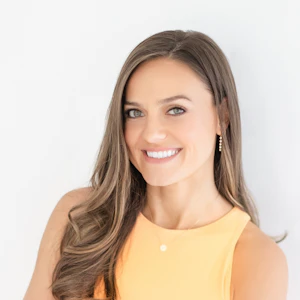
Natalie Brunell
Natalie Brunell
Her popular show, the Coin Stories Podcast, features interviews with Bitcoin thought leaders and covers headlines related to finance and economic issues facing society. Coin Stories is the top Bitcoin education show in the world, and consistently ranks Top 10 in Business News podcasts.
Previously, Natalie was an award-winning TV journalist and investigative reporter. For more than 10 years she covered in-depth local and national news topics and holds a regional news Emmy for breaking news coverage as well as multiple Emmy nominations for investigative news stories.
Natalie was recently an adjunct professor of advanced communication and visual storytelling at the University of Southern California. She holds a Master’s of Science in Journalism from Northwestern University.
Eric Trump
Eric Trump
Mr. Trump also serves as Executive Vice President of The Trump Organization, where he oversees the global management and operations of the Trump family’s extensive real estate portfolio. This includes Trump Hotels, Trump Golf, commercial and residential real estate, Trump Estates, and Trump Winery. Known for his hands-on leadership and strong market instincts, he has played a key role in expanding the company’s presence across major U.S. and international markets.
A globally recognized business leader and public figure, Mr. Trump is a prominent advocate for Bitcoin and decentralized finance. He is a co-founder of World Liberty Financial, a decentralized finance (DeFi) platform, and serves on the Board of Advisors of Metaplanet, Japan’s largest corporate holder of Bitcoin.
Beyond his business activities, Mr. Trump has helped raise more than $50 million for St. Jude Children’s Research Hospital in the fight against pediatric cancer, a philanthropic mission he began at age 21.
Mr. Trump earned a degree in Finance and Management from Georgetown University. He currently resides in Florida with his wife, Lara, and their two children. He is also the author of Under Siege, his memoir published in October 2025.
Stack Champs: East Meets West
Speakers/Moderators
Natalie Brunell
Natalie Brunell
Her popular show, the Coin Stories Podcast, features interviews with Bitcoin thought leaders and covers headlines related to finance and economic issues facing society. Coin Stories is the top Bitcoin education show in the world, and consistently ranks Top 10 in Business News podcasts.
Previously, Natalie was an award-winning TV journalist and investigative reporter. For more than 10 years she covered in-depth local and national news topics and holds a regional news Emmy for breaking news coverage as well as multiple Emmy nominations for investigative news stories.
Natalie was recently an adjunct professor of advanced communication and visual storytelling at the University of Southern California. She holds a Master’s of Science in Journalism from Northwestern University.
Eric Trump
Eric Trump
Mr. Trump also serves as Executive Vice President of The Trump Organization, where he oversees the global management and operations of the Trump family’s extensive real estate portfolio. This includes Trump Hotels, Trump Golf, commercial and residential real estate, Trump Estates, and Trump Winery. Known for his hands-on leadership and strong market instincts, he has played a key role in expanding the company’s presence across major U.S. and international markets.
A globally recognized business leader and public figure, Mr. Trump is a prominent advocate for Bitcoin and decentralized finance. He is a co-founder of World Liberty Financial, a decentralized finance (DeFi) platform, and serves on the Board of Advisors of Metaplanet, Japan’s largest corporate holder of Bitcoin.
Beyond his business activities, Mr. Trump has helped raise more than $50 million for St. Jude Children’s Research Hospital in the fight against pediatric cancer, a philanthropic mission he began at age 21.
Mr. Trump earned a degree in Finance and Management from Georgetown University. He currently resides in Florida with his wife, Lara, and their two children. He is also the author of Under Siege, his memoir published in October 2025.
Other
Speakers
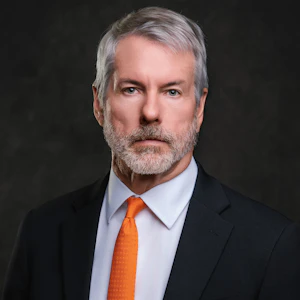
Michael Saylor
Michael Saylor
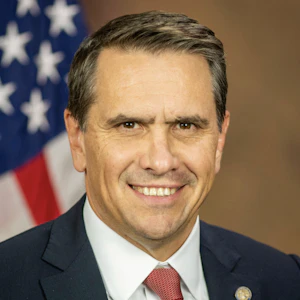
Todd Blanche
Todd Blanche
Biography of Deputy Attorney General Todd Blanche
The Honorable Todd Blanche is the 40th Deputy Attorney General of the United States, overseeing the work of the 115,000 dedicated employees who fulfill the Department of Justice’s mission at Main Justice, the FBI, DEA, U.S. Marshals, ATF, and 93 U.S. Attorney’s Offices.
Todd began his career at the Department where he served for over fifteen years in a variety of capacities, including as a contractor, a paralegal in the Criminal Division, and at the United States Attorney’s office for the Southern District of New York where he eventually became an AUSA and later a supervisor.
After leaving the Department, Todd worked as a criminal defense attorney that included representing President Donald Trump in three of the criminal cases brought against him in 2023 and 2024.
Following President Trump’s historic return to the White House, the President appointed Todd to work alongside Attorney General Pam Bondi to make America safe again. At the DOJ, Todd is working tirelessly to implement President Trump’s priorities that include confronting illegal protecting American businesses from fraud.
Todd has been married to his wonderful wife Kristine for nearly thirty years, is a father and grandfather.
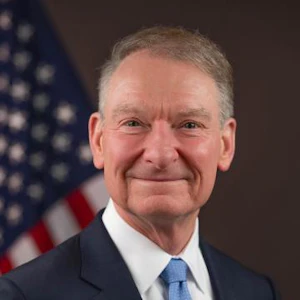
Paul Atkins
Paul Atkins
Prior to returning to the SEC, Chairman Atkins was most recently chief executive of Patomak Global Partners, a company he founded in 2009. Chairman Atkins helped lead efforts to develop best practices for the digital asset sector. He served as an independent director and non-executive chairman of the board of BATS Global Markets, Inc. from 2012 to 2015.
Chairman Atkins was appointed by President George W. Bush to serve as a Commissioner of the SEC from 2002 to 2008. During his tenure, he advocated for transparency, consistency, and the use of cost-benefit analysis at the agency. Chairman Atkins also represented the SEC at meetings of the President’s Working Group on Financial Markets and the U.S.-EU Transatlantic Economic Council. From 2009 to 2010, he was appointed a member of the Congressional Oversight Panel for the Troubled Asset Relief Program.
Before serving as an SEC Commissioner, Chairman Atkins was a consultant on securities and investment management industry matters, especially regarding issues of strategy, regulatory compliance, risk management, new product development, and organizational control.
From 1990 to 1994, Chairman Atkins served on the staff of two chairmen of the SEC, Richard C. Breeden and Arthur Levitt, ultimately as chief of staff and counselor, respectively. He received the SEC’s 1992 Law and Policy Award for work regarding corporate governance matters.
Chairman Atkins began his career as a lawyer in New York, focusing on a wide range of corporate transactions for U.S. and foreign clients, including public and private securities offerings and mergers and acquisitions. He was resident for 2½ years in his firm's Paris office and admitted as conseil juridique in France.
A member of the New York and Florida bars, Chairman Atkins received his J.D. from Vanderbilt University School of Law in 1983 and was Senior Student Writing Editor of the Vanderbilt Law Review. He received his A.B., Phi Beta Kappa, from Wofford College in 1980.
Originally from Lillington, North Carolina, Chairman Atkins grew up in Tampa, Florida. He and his wife Sarah have three sons.

Mike Selig
Mike Selig
Chairman Selig brings to the role deep public and private sector experience working with a wide range of stakeholders across agriculture, energy, financial, and digital asset industries, which rely upon and operate in CFTC-regulated markets.
Prior to his leadership at the CFTC, Chairman Selig most recently served as chief counsel of the Securities and Exchange Commission’s Crypto Task Force and senior advisor to SEC Chairman Paul S. Atkins. In this role, Chairman Selig helped to develop a clear regulatory framework for digital asset securities markets, harmonize the SEC and CFTC regulatory regimes, modernize the agency’s rules to reflect new and emerging technologies, and put an end to regulation by enforcement. He also participated in the President’s Working Group on Digital Asset Markets and contributed to its report on “Strengthening American Leadership in Digital Financial Technology.”
Prior to government service, Chairman Selig was a partner at an international law firm, focusing on derivatives and securities regulatory matters. During his years in private practice, he represented a broad range of clients subject to regulation by the CFTC, including commercial end users, futures commission merchants, commodity trading advisors, swap dealers, designated contract markets, derivatives clearing organizations, and digital asset firms. Chairman Selig advised clients on compliance with the Commodity Exchange Act and the CFTC’s rules and regulations thereunder, including in connection with registration applications and obligations, enforcement matters, and complex transactions.
Chairman Selig earned his law degree from The George Washington University Law School and was articles editor of The George Washington Law Review. He received his undergraduate degree from Florida State University.

David Bailey
David Bailey
Eric Trump
Eric Trump
Mr. Trump also serves as Executive Vice President of The Trump Organization, where he oversees the global management and operations of the Trump family’s extensive real estate portfolio. This includes Trump Hotels, Trump Golf, commercial and residential real estate, Trump Estates, and Trump Winery. Known for his hands-on leadership and strong market instincts, he has played a key role in expanding the company’s presence across major U.S. and international markets.
A globally recognized business leader and public figure, Mr. Trump is a prominent advocate for Bitcoin and decentralized finance. He is a co-founder of World Liberty Financial, a decentralized finance (DeFi) platform, and serves on the Board of Advisors of Metaplanet, Japan’s largest corporate holder of Bitcoin.
Beyond his business activities, Mr. Trump has helped raise more than $50 million for St. Jude Children’s Research Hospital in the fight against pediatric cancer, a philanthropic mission he began at age 21.
Mr. Trump earned a degree in Finance and Management from Georgetown University. He currently resides in Florida with his wife, Lara, and their two children. He is also the author of Under Siege, his memoir published in October 2025.

Jack Mallers
Jack Mallers
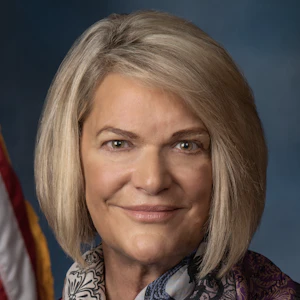
Cynthia Lummis
Cynthia Lummis
As the first-ever Chair of the Senate Banking Subcommittee on Digital Assets, Senator Lummis is the architect of the legislative framework shaping America's digital asset future. She introduced the landmark Lummis-Gillibrand Responsible Financial Innovation Act, the first comprehensive bipartisan crypto regulatory framework in Senate history. She co-authored the GENIUS Act — the first federal stablecoin law ever enacted — and introduced the BITCOIN Act, which would establish a U.S. strategic Bitcoin reserve of up to one million BTC. She is leading the Clarity Act, which will bring long-overdue regulatory certainty to the digital asset industry. She has also championed digital asset tax reform, including a de minimis exemption for small transactions and equal tax treatment for miners and stakers.
Known as Congress' "Crypto Queen," Senator Lummis represents Wyoming — a state she has helped build into one of the most digital asset-friendly regulatory environments in the nation. Before serving in the Senate, she served 14 years in the Wyoming Legislature, eight years as Wyoming State Treasurer, and eight years in the U.S. House. She is a three-time graduate of the University of Wyoming.
Her work represents a crucial bridge between traditional financial systems and the emerging digital economy, ensuring America leads the world in financial innovation while protecting the individual freedoms that define it.
Adam Back
Adam Back
Amy Oldenburg
Amy Oldenburg
David Marcus
David Marcus

Matt Schultz
Matt Schultz
Fred Thiel
Fred Thiel
Throughout his career, Mr. Thiel has consistently driven rapid growth and created substantial shareholder value. Prior to MARA, Mr. Thiel served as the CEO of two other public companies, Local Corporation (NASDAQ: LOCM) and Lantronix, Inc (NASDAQ: LTRX). He has successfully raised billions in equity and debt through private and public offerings, led companies through IPOs, executed high-value exits to strategic and financial acquirers, and implemented effective M&A and roll-up strategies.
Mr. Thiel attended the Stockholm School of Economics and executive classes at Harvard Business School, and is fluent in English, Spanish, Swedish, and French. Mr. Thiel is the Chairman of the Board for Oden Technology, Inc. and is active in Young Presidents’ Organization where he has led initiatives in both the FinTech and Technology Networks.
A recognized voice in the industry, Fred frequently shares his insights on energy and technology with major media outlets like Bloomberg TV, CNBC, and FOX Business, contributing to vital discussions about the future of these sectors.
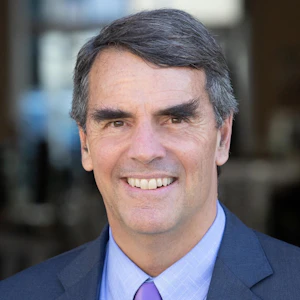
Tim Draper
Tim Draper
He is a supporter and global thought leader for entrepreneurs everywhere, and is a leading spokesperson for Bitcoin and decentralization, having won the Bitcoin US Marshall’s auction in 2014, invested in over 50 crypto companies, and led investments in Coinbase, Ledger, Tezos, and Bancor, among others.

Afroman
Afroman