From Hashrate to Hill: Why Miners Should Engage in Public Policy
Speakers/Moderators
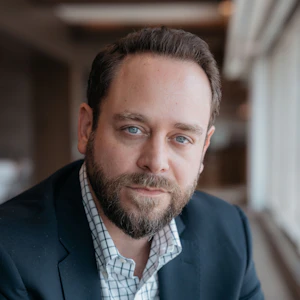
Kyle Schneps
Kyle Schneps
The majority of Kyle’s career was spent as a U.S. Intelligence Officer. He also served in a diplomatic post at the U.S. Department of State advising the Special Envoy for Guantanamo Bay and in the New York State Governor’s Office overseeing state operations. He is a former White House Fellow focused on national security and federal budgeting.
Kyle is co-author and editor of National Security in the Digital Age. He holds two master’s degrees from Columbia University.

Filip Primec
Filip Primec

John Paul Baric
John Paul Baric
A recognized expert in large power loads and grid strategy, John Paul consults for major enterprises and has served as an expert witness on the siting of large data center loads. He has deep experience in the MISO and SPP power markets, including bilateral settlement agreements for electricity, and has helped utilities design market-based rates and Demand Response programs that align data centers with grid reliability and economics.
An entrepreneur since age 15, when he launched a robotics camp, John Paul has gone on to build three businesses, including Aurum, originally founded in 2016 as MiningStore. He has been involved in Bitcoin mining since the asset traded near $70 per coin and now advises Fortune 1000 companies entering the mining and digital infrastructure space. Combining energy-market fluency with hands-on development experience, John Paul is helping define the next generation of modular, energy-efficient data centers in the United States.
Session
Overview
Kyle Schneps of DCG moderated a discussion with John Paul Baric and Filip Primec on why Bitcoin miners should engage in public policy. The conversation focused on discriminatory rules and informal barriers that can affect proof-of-work mining, including moratoriums, environmental studies, taxation, utility policies, and grid access.
The panel discussed how local governments, utilities, and regulators can effectively block mining even when there is no outright ban. Baric described examples involving rural utilities, load studies, USDA-linked nondiscrimination obligations, and the difficulty miners face when utility policies treat Bitcoin mining differently from AI or other data centers.
The speakers also compared Bitcoin mining with AI and high-performance computing loads. A key theme was that Bitcoin mining can be more flexible for the grid because miners can curtail load, while AI data centers often require continuous power. The discussion emphasized that miners need to explain these differences clearly to policymakers, utilities, and local communities.
The session closed with a focus on practical engagement: supporting miners, improving transparency, encouraging constructive utility conversations, and showing how mining and AI infrastructure can coexist while supporting grid stability and rural economic development.
All right. Great to see everybody. Appreciate you checking out this panel. I think it's going to be interesting. We've got a lot of experience on this stage, so I want to kick it off with a few introductions. First, thanks to Lucas. As you said, I'm Kyle Schneps. I'm director of policy at DCG, or Digital Currency Group.
We're one of the earliest and largest investors in the Bitcoin and crypto ecosystem. We have a number of investment companies and wholly owned companies that are very integrated into the Bitcoin ecosystem, like Grayscale, Foundry, and Fortitude. I've been director of public policy there for five years under that umbrella, and I'm very happy to be here today to talk a little bit about what that experience has been like and to introduce you to these guys and their insights.
John Paul, thanks for sticking around for this panel.
I'm John Paul Baric. I'm the founder and CEO of our mining company. We're an Iowa-based miner, and we have 60 megawatts in Iowa. We participate in both the MISO energy market and SPP energy markets, and we help people get mining.
My name is Filip. I'm a director at NiceHash. We are a hash rate marketplace, and we've been around for the better part of the last ten years. So we went through the regulatory wild west all the way until today. I'm looking forward to talking a little bit about it.
I just want to set the stage for what we're going to talk about: how we combat, as a proof-of-work industry and the crypto industry in general, discriminatory policies that rely on energy or different avenues of attack against this industry, and which approaches have been proven successful or not successful. When do we intervene? That sort of thing.
I entered this industry in 2020, 2021. There weren't so many policy people back then. It's grown tremendously, and there's been a lot of success. But back in those days, it wasn't until this thing called the federal infrastructure bill and the mining moratorium in New York in 2021 that we started to coalesce and have an actual strategy as an industry and as a community.
I wanted to start there. One of the things that came out of New York is this blueprint for how to attack legislatively. First, create a moratorium, which is to pause work. Then study with a foregone conclusion, some sort of environmental study where it is predetermined what it's going to say. Then at the end, create some sort of excise tax. We've seen New York do this over the past five years.
I'll start with John Paul. Have you seen that pattern in your experience, or something like it? Where do we intervene? At what stage is best to intervene, if you've seen it?
We've seen that at the county level in Iowa, where counties will hear about a Bitcoin mine maybe coming in, even if it's a very small mine, and then begin to put a moratorium on mining.
Also, when I applied for a load study in Grant County, Washington, back in the 2017 bull run, the problem the utilities were facing was that miners from all over the world were requesting power studies, and they were asking for hundreds of megawatts at a time. Grant County, Washington, specifically, had abundant hydropower, and energy prices were in the low two-and-a-half cents.
What happened was they had this huge queue, they put a moratorium in place, and what they were hoping for, from my perspective, was that Bitcoin was going to go away. They did not actually want to serve the load.
That moratorium is still in place today. Those issues affect miners simply because of the perceived volatility that Bitcoin has and the utilities not knowing how to deal with so many load requests, especially back in 2017 when thousands of megawatts was unheard of. But with the price of Bitcoin increasing rapidly, mining profitability goes up, and then you have all these new players run into that area.
What I've seen is that these are basically all outright bans. Where that becomes an issue is that most of these utilities are receiving USDA funding, so they all have nondiscrimination clauses that they're supposed to live by and serve members. These are clearly discriminatory actions, but they're being taken from a sense of grid safety.
Instead of engaging with miners on how we upgrade the grid and how we add flexible load, like we just talked about in the previous panel, it is stonewalling and hoping that the miners are no longer going to be there. Sadly, that means rural America is losing jobs and losing energy infrastructure investment.
As we know, the location agnosticism of Bitcoin mining and proof of work is one of the key features. You can go to these remote areas that have lost jobs and lost industry over the years. That's an important fact.
Filip, this process of pause, study, tax is, at least from the outside, when I think of the EU, almost like their mantra. What have you seen in EU policy on that model or anything like it?
Full disclosure, of course, we are a little bit upstream from electricity, but we are dependent on miners. We work very closely with a lot of them, and of course we try to help solve a lot of regulatory issues.
For a lot of people from Europe, the European Union is a maze with a lot of bureaucracy. As part of preparation for this panel, I tried to update my knowledge on EU legislation, electricity grids, et cetera, and it's a mess. It's really, really hard to get through all the red tape and the volumes of legislation that have been put out through the years.
The problem, of course, is that to say it is hateful toward miners would maybe be misplaced, but the end effect is exactly that. Access to grid for larger operations in Europe is almost impossible. Building permits, environmental studies, et cetera, create a very high entry barrier.
Then you have special legislation governing data centers in general. As soon as it's something a little bit bigger, it adds a lot of strain and a lot of additional costs, because you need to do studies, you need to provide feedback to the authorities, and you need to report how you handle excess heat, et cetera. So again, it creates a very high entry barrier.
The other thing, of course, is taxation. You don't have a general model throughout the European Union. Individual states deal with taxation differently. Here I can be, at this stage, positive that it's discriminatory against Bitcoin mining.
What we are seeing right now is that a lot of miners are looking for models where, instead of mining Bitcoin, they're just selling hash rate. They're becoming hash rate producers much more than Bitcoin miners. I think that's a global trend right now.
This framework, this intentional pattern of pause, study, tax, is a policy tool. It is very intentional. It's not something we're putting a narrative to after the fact. It is a time-tested way of creating barriers to entry.
That is a legislative tool. However, legislation is not the only thing that can provide those barriers or create discriminatory policies. I want to switch over to utilities.
John Paul, I know you've been active with utilities, Basin Electric and others. I'm curious about your experience. Can a utility pick winners and losers in this field of data centers?
Yes. I've actively engaged with Basin Electric. Basin Electric provides about 9% of electricity to the United States. They are the main G&T, which stands for generation and transmission company, for many of the electrical utilities that were created from the USDA's rural electrification efforts in the 1940s.
These utilities were supposed to be independent. Their goal was to bring energy to rural farmers, and now almost all of them buy power through a series of middlemen from Basin Electric.
The reason why this is anti-competitive is that these contracts are 100 years. When a rural utility is signing a 100-year contract with Basin, that creates and allows them to set the playing field.
Some examples of how Basin has tried to approach the mining problem, or viewing miners as a problem and trying to serve their loads, is that they have capped all of their members at 25 megawatts. Now a rural community that could bring maybe 10 or 15 jobs to one area is capped at only one mining site for that utility.
That 25-megawatt cap is not just one utility. That could be five to seven utilities that come up to one mid-level G&T at the state level, and that G&T then goes to Basin Electric.
Basin had a market-based energy rate that they were putting into contracts and filing at FERC. Basin's goal, from my perspective, was to work with large miners only. They really wanted that 75-megawatt player. The problem with that is most rural electric cooperatives' substations can only support 5- to 10-megawatt mining loads.
So you're centralizing mining and making sure they can only work with Basin. During that negotiation and discussion at FERC, we found that they were double counting some of their fees. Unless there is discourse and conversation about how to serve the miner, those issues are not being caught.
As mentioned, Basin serves around 9% of all electrical customers in the United States. They are no longer FERC-regulated, which means the federal government no longer regulates them, because they were able to get a USDA loan. There's a clause in FERC regulation that says if you have money and you borrow from the USDA, you're no longer regulated by FERC.
So now we get into the conversation with these local utilities where the state boards don't regulate them, the federal government doesn't regulate them, and they can effectively create their own path for miners or their own studies.
For example, if I want to build a Bitcoin mining load in one of these rural utilities, they make me sign an affidavit saying that I will not be Bitcoin mining, that this is AI only. If I want to Bitcoin mine, their cost is $4,000 a kilowatt. One Bitcoin miner, an S19 XP, costs $300. That's three kilowatts. They want me to pay $12,000 simply to plug in that miner. But that's not discrimination. That's internal policy with no state or federal regulators.
That's why we're pushing for more transparency and regulations that are business friendly and want to bring flexible loads to the grid.
That's like how every Bitcoiner out here has had a problem with a bank at a certain time. The pattern is really similar. What the policymaker is not allowed to do on a general policy level, because you have constraints from the Constitution and legal frameworks that are put in place to protect consumers, you and me, and even questions of human rights at the end of the day and financial freedom, they approach in a very similar model.
No one said anything about banning people access to banks if they're dealing with Bitcoin. But they left it to the banks and told them, yeah, that's really something you should keep an eye on, et cetera. That led to the decision of banks to not work with anyone engaged in the Bitcoin space.
All of a sudden, as you said, it wasn't discrimination anymore. It wasn't a violation of anything. It was a business decision from someone in the private sector who is allowed to take such business decisions. Similar approaches and tactics.
It's not illegal. It's just impossible to do economically.
Some of the insights you guys brought up make now a perfect time to pivot over to this AI conversation, which over the past two years has, of course, been dominant in a lot of ways, with a lot of the public miners pivoting over to HPC for various reasons.
It's interesting because, in the policy world, for many years since 2020 and 2021, we were making this argument that we want equal treatment with data centers. For much of the history here, it's been exactly what you're describing, which is that AI has this tailwind. It is sort of acceptable, and therefore people are more open to it. Proof-of-work mining has this headwind. It has some stigma attached. People don't understand it.
Things are starting to change a little bit. I think the prices are still outrageous because HPC bumps up expectations, but there is a little bit of a change in the policy world where, after this brutal winter we've had, a lot of folks are looking and saying, wait, these AI data centers are using a lot of energy. They're using water. What does that mean for irrigation?
The question now remains: what does this mean for the proof-of-work mining industry in terms of who we want our allies to be? What risks are there? What opportunities do we want to separate ourselves with? Some of the arguments we've heard on this stage in terms of location agnosticism, supporting the grid, and intermittent loads, do we want to position ourselves more on the other side? Is it a hybrid?
John Paul, it's hard.
It's hard to say. I think as you begin to dig into the Bitcoin mining load versus an AI load, they are very, very different, even from a utility's perspective. From the community's perspective, they're the same, but from the utility's perspective and how they actually interact with the grid, they're different.
We talked earlier about curtailment and the benefits of Bitcoin mining and curtailment, where AI loads do not have as much of an economic incentive to curtail. So when you're applying for capacity on the grid, the number one issue is generation capacity. It is less about whether you have space for this load or whether there is transmission open for it. It's whether you can find someone to generate energy 24/7 when your load needs it.
As a Bitcoin miner, we're getting placed now in the same types of queues and long delays. We have a load study in Texas in SPP. It's been delayed for two years now, simply because they don't know how to manage the difference between a type of compute that needs energy 24/7 and one that can curtail 99% of its load.
That disincentivizes Bitcoin miners to build in the United States and also keeps energy prices increasing.
The incentives for utilities are also not to have grid-enhancing technologies. Their incentive as a utility is to grow their asset base. How do you grow your asset base? You just continue to say every year, we need new substations and more transmission lines, rather than more economic solutions that are going to squeeze more juice out of the existing infrastructure we have.
They are simply not incentivized to provide those types of solutions to miners, which is sadly putting us in with the AI groups and not allowing us to proceed and build facilities as fast as we would like to, because the competition is now insane. Most of these utilities are getting calls every day asking for 100 megawatts, and a rural utility simply can't provide that, as I stated earlier.
Filip, I know you've put a lot of thought into the worlds of Bitcoin mining, crypto mining, and AI. I'm curious what opinions you have on this mix. How do they interact in the future?
Right now, what we see, and the reality I see right now, is similar to what I heard on the panel before. Someone said there is a lot of know-how in Bitcoin mining that is now being transitioned, passed on, or used.
I think at the end of the day, when the dust settles, the market will speak for itself. I'm not a big tech guy, but as far as I can see, and as far as my understanding goes, both industries will coexist, and each one of them will play their respective part in whatever the future will be.
Bitcoin mining definitely has the advantage that it's very, very flexible. It needs less infrastructure, and it incentivizes building infrastructure. It has been so since the beginning, for 15 years.
Of course there are problems, and there will be even more, I guess, because the competition for a scarce commodity like electricity will always be there. But let's not forget that Bitcoin mining is a very attractive technology to stack together with green energies that have their problems with fluctuations. This is simply something where AI cannot just go in and use such sources.
So I am positive about a good outcome and about companies basically doing things in parallel.
I'll mention that Bitcoin miners were the leaders in power density. Compared to your traditional compute CPUs that were hosting websites and web servers, the move to containers was led by Bitcoin miners. Now the AI data centers are also moving to containerized compute.
It's changing how we develop compute, the modularity of it, and the speed of compute that's being developed. That is the most important thing to an AI data center. It's not the cost, it's the speed.
Miners are some of the scrappy groups, as we've seen by public companies transitioning now and being able to develop AI very quickly. The regulators and the laws that currently exist for incentivizing data centers and tax credits for data centers will need to be upgraded across the United States to take into account the modular data centers that are being deployed, which look very similar to hydro-cooled Bitcoin miners today.
If you want to bootstrap a data center for whatever purposes long term, the best way is proof-of-work Bitcoin mining. I think that's evident.
We've got one minute left. Thirty seconds each. In the next 12 to 24 months, what is biggest on your radar in terms of what you want to focus on policy-wise or regulatory-wise? Start with you, Filip, and then go to John Paul to close it out.
We will do everything that's in our power to support miners, to give them a layer around their hash rate production, and to make things as easy as possible and, of course, as profitable as possible. That's pretty much how I could sum it up.
That sounds good to me.
For us, it's engaging in constructive conversation with the utilities, showing them the benefits of a dual model, a Bitcoin mine and an AI facility, and how that can accelerate grid interdependencies, grid stability, and also local jobs in rural America.
Well said. Thank you both for your insights. We are all done. Thanks to the Bitcoin Conference for having this conversation, and see you afterward.
Similar
Sessions
From Hashrate to Hill: Why Miners Should Engage in Public Policy
Kyle Schneps
Kyle Schneps
The majority of Kyle’s career was spent as a U.S. Intelligence Officer. He also served in a diplomatic post at the U.S. Department of State advising the Special Envoy for Guantanamo Bay and in the New York State Governor’s Office overseeing state operations. He is a former White House Fellow focused on national security and federal budgeting.
Kyle is co-author and editor of National Security in the Digital Age. He holds two master’s degrees from Columbia University.
Filip Primec
Filip Primec
John Paul Baric
John Paul Baric
A recognized expert in large power loads and grid strategy, John Paul consults for major enterprises and has served as an expert witness on the siting of large data center loads. He has deep experience in the MISO and SPP power markets, including bilateral settlement agreements for electricity, and has helped utilities design market-based rates and Demand Response programs that align data centers with grid reliability and economics.
An entrepreneur since age 15, when he launched a robotics camp, John Paul has gone on to build three businesses, including Aurum, originally founded in 2016 as MiningStore. He has been involved in Bitcoin mining since the asset traded near $70 per coin and now advises Fortune 1000 companies entering the mining and digital infrastructure space. Combining energy-market fluency with hands-on development experience, John Paul is helping define the next generation of modular, energy-efficient data centers in the United States.
From Hashrate to Hill: Why Miners Should Engage in Public Policy
Speakers/Moderators
Kyle Schneps
Kyle Schneps
The majority of Kyle’s career was spent as a U.S. Intelligence Officer. He also served in a diplomatic post at the U.S. Department of State advising the Special Envoy for Guantanamo Bay and in the New York State Governor’s Office overseeing state operations. He is a former White House Fellow focused on national security and federal budgeting.
Kyle is co-author and editor of National Security in the Digital Age. He holds two master’s degrees from Columbia University.
Filip Primec
Filip Primec
John Paul Baric
John Paul Baric
A recognized expert in large power loads and grid strategy, John Paul consults for major enterprises and has served as an expert witness on the siting of large data center loads. He has deep experience in the MISO and SPP power markets, including bilateral settlement agreements for electricity, and has helped utilities design market-based rates and Demand Response programs that align data centers with grid reliability and economics.
An entrepreneur since age 15, when he launched a robotics camp, John Paul has gone on to build three businesses, including Aurum, originally founded in 2016 as MiningStore. He has been involved in Bitcoin mining since the asset traded near $70 per coin and now advises Fortune 1000 companies entering the mining and digital infrastructure space. Combining energy-market fluency with hands-on development experience, John Paul is helping define the next generation of modular, energy-efficient data centers in the United States.
The Hashrate Arms Race: Conflict in a Softwar World
Ken Egan
Ken Egan
Ben Kincaid
Ben Kincaid
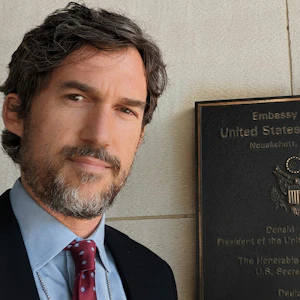
Served on the editorial team and contributed a chapter to 'National Security in the Digital Age: Bitcoin as a Tool for Modern Statecraft,' a first-of-its-kind volume to inform policymakers and elected officials on how digital assets can serve American interests in a rapidly evolving geopolitical landscape.
Co-founder of Bridger Solutions, an Africa-focused Bitcoin Mining Company
Former diplomat/national security practitioner, past speaker/panelist at BPI.

Jacob Langenkamp
Jacob Langenkamp
Kyle Schneps
Kyle Schneps
The majority of Kyle’s career was spent as a U.S. Intelligence Officer. He also served in a diplomatic post at the U.S. Department of State advising the Special Envoy for Guantanamo Bay and in the New York State Governor’s Office overseeing state operations. He is a former White House Fellow focused on national security and federal budgeting.
Kyle is co-author and editor of National Security in the Digital Age. He holds two master’s degrees from Columbia University.
The Hashrate Arms Race: Conflict in a Softwar World
Speakers/Moderators
Ken Egan
Ken Egan
Ben Kincaid
Ben Kincaid
Served on the editorial team and contributed a chapter to 'National Security in the Digital Age: Bitcoin as a Tool for Modern Statecraft,' a first-of-its-kind volume to inform policymakers and elected officials on how digital assets can serve American interests in a rapidly evolving geopolitical landscape.
Co-founder of Bridger Solutions, an Africa-focused Bitcoin Mining Company
Former diplomat/national security practitioner, past speaker/panelist at BPI.
Jacob Langenkamp
Jacob Langenkamp
Kyle Schneps
Kyle Schneps
The majority of Kyle’s career was spent as a U.S. Intelligence Officer. He also served in a diplomatic post at the U.S. Department of State advising the Special Envoy for Guantanamo Bay and in the New York State Governor’s Office overseeing state operations. He is a former White House Fellow focused on national security and federal budgeting.
Kyle is co-author and editor of National Security in the Digital Age. He holds two master’s degrees from Columbia University.
Other
Speakers
Michael Saylor
Michael Saylor
Todd Blanche
Todd Blanche
Biography of Deputy Attorney General Todd Blanche
The Honorable Todd Blanche is the 40th Deputy Attorney General of the United States, overseeing the work of the 115,000 dedicated employees who fulfill the Department of Justice’s mission at Main Justice, the FBI, DEA, U.S. Marshals, ATF, and 93 U.S. Attorney’s Offices.
Todd began his career at the Department where he served for over fifteen years in a variety of capacities, including as a contractor, a paralegal in the Criminal Division, and at the United States Attorney’s office for the Southern District of New York where he eventually became an AUSA and later a supervisor.
After leaving the Department, Todd worked as a criminal defense attorney that included representing President Donald Trump in three of the criminal cases brought against him in 2023 and 2024.
Following President Trump’s historic return to the White House, the President appointed Todd to work alongside Attorney General Pam Bondi to make America safe again. At the DOJ, Todd is working tirelessly to implement President Trump’s priorities that include confronting illegal protecting American businesses from fraud.
Todd has been married to his wonderful wife Kristine for nearly thirty years, is a father and grandfather.
Paul Atkins
Paul Atkins
Prior to returning to the SEC, Chairman Atkins was most recently chief executive of Patomak Global Partners, a company he founded in 2009. Chairman Atkins helped lead efforts to develop best practices for the digital asset sector. He served as an independent director and non-executive chairman of the board of BATS Global Markets, Inc. from 2012 to 2015.
Chairman Atkins was appointed by President George W. Bush to serve as a Commissioner of the SEC from 2002 to 2008. During his tenure, he advocated for transparency, consistency, and the use of cost-benefit analysis at the agency. Chairman Atkins also represented the SEC at meetings of the President’s Working Group on Financial Markets and the U.S.-EU Transatlantic Economic Council. From 2009 to 2010, he was appointed a member of the Congressional Oversight Panel for the Troubled Asset Relief Program.
Before serving as an SEC Commissioner, Chairman Atkins was a consultant on securities and investment management industry matters, especially regarding issues of strategy, regulatory compliance, risk management, new product development, and organizational control.
From 1990 to 1994, Chairman Atkins served on the staff of two chairmen of the SEC, Richard C. Breeden and Arthur Levitt, ultimately as chief of staff and counselor, respectively. He received the SEC’s 1992 Law and Policy Award for work regarding corporate governance matters.
Chairman Atkins began his career as a lawyer in New York, focusing on a wide range of corporate transactions for U.S. and foreign clients, including public and private securities offerings and mergers and acquisitions. He was resident for 2½ years in his firm's Paris office and admitted as conseil juridique in France.
A member of the New York and Florida bars, Chairman Atkins received his J.D. from Vanderbilt University School of Law in 1983 and was Senior Student Writing Editor of the Vanderbilt Law Review. He received his A.B., Phi Beta Kappa, from Wofford College in 1980.
Originally from Lillington, North Carolina, Chairman Atkins grew up in Tampa, Florida. He and his wife Sarah have three sons.

Mike Selig
Mike Selig
Chairman Selig brings to the role deep public and private sector experience working with a wide range of stakeholders across agriculture, energy, financial, and digital asset industries, which rely upon and operate in CFTC-regulated markets.
Prior to his leadership at the CFTC, Chairman Selig most recently served as chief counsel of the Securities and Exchange Commission’s Crypto Task Force and senior advisor to SEC Chairman Paul S. Atkins. In this role, Chairman Selig helped to develop a clear regulatory framework for digital asset securities markets, harmonize the SEC and CFTC regulatory regimes, modernize the agency’s rules to reflect new and emerging technologies, and put an end to regulation by enforcement. He also participated in the President’s Working Group on Digital Asset Markets and contributed to its report on “Strengthening American Leadership in Digital Financial Technology.”
Prior to government service, Chairman Selig was a partner at an international law firm, focusing on derivatives and securities regulatory matters. During his years in private practice, he represented a broad range of clients subject to regulation by the CFTC, including commercial end users, futures commission merchants, commodity trading advisors, swap dealers, designated contract markets, derivatives clearing organizations, and digital asset firms. Chairman Selig advised clients on compliance with the Commodity Exchange Act and the CFTC’s rules and regulations thereunder, including in connection with registration applications and obligations, enforcement matters, and complex transactions.
Chairman Selig earned his law degree from The George Washington University Law School and was articles editor of The George Washington Law Review. He received his undergraduate degree from Florida State University.

David Bailey
David Bailey

Eric Trump
Eric Trump
Mr. Trump also serves as Executive Vice President of The Trump Organization, where he oversees the global management and operations of the Trump family’s extensive real estate portfolio. This includes Trump Hotels, Trump Golf, commercial and residential real estate, Trump Estates, and Trump Winery. Known for his hands-on leadership and strong market instincts, he has played a key role in expanding the company’s presence across major U.S. and international markets.
A globally recognized business leader and public figure, Mr. Trump is a prominent advocate for Bitcoin and decentralized finance. He is a co-founder of World Liberty Financial, a decentralized finance (DeFi) platform, and serves on the Board of Advisors of Metaplanet, Japan’s largest corporate holder of Bitcoin.
Beyond his business activities, Mr. Trump has helped raise more than $50 million for St. Jude Children’s Research Hospital in the fight against pediatric cancer, a philanthropic mission he began at age 21.
Mr. Trump earned a degree in Finance and Management from Georgetown University. He currently resides in Florida with his wife, Lara, and their two children. He is also the author of Under Siege, his memoir published in October 2025.

Jack Mallers
Jack Mallers
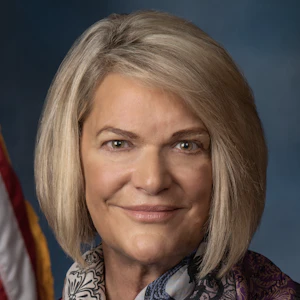
Cynthia Lummis
Cynthia Lummis
As the first-ever Chair of the Senate Banking Subcommittee on Digital Assets, Senator Lummis is the architect of the legislative framework shaping America's digital asset future. She introduced the landmark Lummis-Gillibrand Responsible Financial Innovation Act, the first comprehensive bipartisan crypto regulatory framework in Senate history. She co-authored the GENIUS Act — the first federal stablecoin law ever enacted — and introduced the BITCOIN Act, which would establish a U.S. strategic Bitcoin reserve of up to one million BTC. She is leading the Clarity Act, which will bring long-overdue regulatory certainty to the digital asset industry. She has also championed digital asset tax reform, including a de minimis exemption for small transactions and equal tax treatment for miners and stakers.
Known as Congress' "Crypto Queen," Senator Lummis represents Wyoming — a state she has helped build into one of the most digital asset-friendly regulatory environments in the nation. Before serving in the Senate, she served 14 years in the Wyoming Legislature, eight years as Wyoming State Treasurer, and eight years in the U.S. House. She is a three-time graduate of the University of Wyoming.
Her work represents a crucial bridge between traditional financial systems and the emerging digital economy, ensuring America leads the world in financial innovation while protecting the individual freedoms that define it.

Adam Back
Adam Back
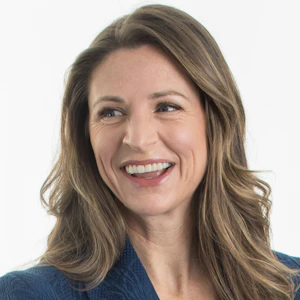
Amy Oldenburg
Amy Oldenburg
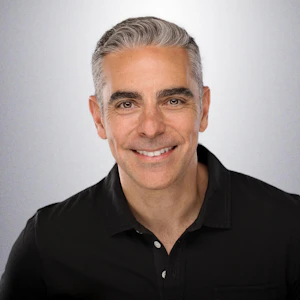
David Marcus
David Marcus

Matt Schultz
Matt Schultz
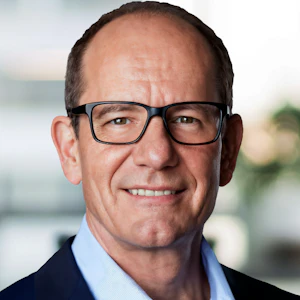
Fred Thiel
Fred Thiel
Throughout his career, Mr. Thiel has consistently driven rapid growth and created substantial shareholder value. Prior to MARA, Mr. Thiel served as the CEO of two other public companies, Local Corporation (NASDAQ: LOCM) and Lantronix, Inc (NASDAQ: LTRX). He has successfully raised billions in equity and debt through private and public offerings, led companies through IPOs, executed high-value exits to strategic and financial acquirers, and implemented effective M&A and roll-up strategies.
Mr. Thiel attended the Stockholm School of Economics and executive classes at Harvard Business School, and is fluent in English, Spanish, Swedish, and French. Mr. Thiel is the Chairman of the Board for Oden Technology, Inc. and is active in Young Presidents’ Organization where he has led initiatives in both the FinTech and Technology Networks.
A recognized voice in the industry, Fred frequently shares his insights on energy and technology with major media outlets like Bloomberg TV, CNBC, and FOX Business, contributing to vital discussions about the future of these sectors.
Tim Draper
Tim Draper
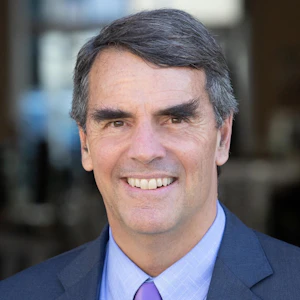
He is a supporter and global thought leader for entrepreneurs everywhere, and is a leading spokesperson for Bitcoin and decentralization, having won the Bitcoin US Marshall’s auction in 2014, invested in over 50 crypto companies, and led investments in Coinbase, Ledger, Tezos, and Bancor, among others.

Afroman
Afroman