Getting Employee Buy-in With Bitcoin
Speakers/Moderators

Scott Dedels
Scott Dedels

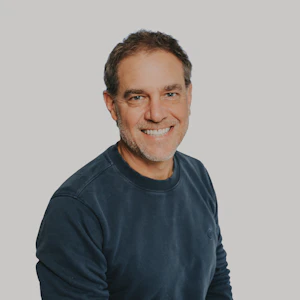
Tony Beck
Tony Beck
Session
Overview
Mike Coffey of BlueCotton and Tony Beck of Beck & Bulow discuss how their companies used Bitcoin to strengthen employee engagement, retention, and long-term financial thinking. Coffey shares how BlueCotton began investing in Bitcoin mining in 2022 with the goal of giving Bitcoin to employees who stayed with the company, then paired the benefit with financial education and personal development programs.
Beck explains how Beck & Bulow incorporated Bitcoin into its business through a self-directed 401(k), Bitcoin payments, and a Bitcoin balance sheet strategy. He also describes how increased stability helped the company invest in employee housing through a ranch property near Santa Fe.
The conversation focuses on Bitcoin as a tool for building employee buy-in, not just as a treasury asset. Themes include financial literacy, retention, company culture, employee benefits, long-term incentives, and the role of Bitcoin in creating a stronger sense of community inside a business.
All right. Good afternoon. I think we have the unique distinction of being the only panel that lost its moderator. Our moderator had a personal emergency, so Tony and I are going to moderate our own session. This is Tony Beck with Beck & Bulow out of Santa Fe, New Mexico.
I'm Mike Coffey with BlueCotton.com in Bowling Green, Kentucky. We are a custom screen printing and embroidery business. We make custom T-shirts and hats for events like this, small businesses, clubs, groups, and organizations. We've been doing that for 30 years in Bowling Green, Kentucky. You might be wondering what that company has to do with Bitcoin.
We're on the stage today to talk about how you can use Bitcoin in your business, and specifically how it can impact your employees. In 2022, we decided to invest in Bitcoin mining equipment for the sole purpose of giving Bitcoin to our employees. It was pretty unique at the time, and it is still pretty unique. I think maybe we were one of the first.
We started mining Bitcoin in 2022. We told our people we were going to invest $40,000 a year into mining and Bitcoin, and they looked at me like I had three heads. In 2022, Bitcoin was not even as well known as it is now, but we wanted to do something really unique.
I'll jump to the punchline. That's what we did, and it totally transformed our business.
In 2020, during the pandemic, our business stayed open. During the summer, our people had been coming to work for two or three months, and we wanted to do something to say thank you. We had gotten some money, so we went down on the floor one day. We have a lot of production workers. We have about 130 people who work for us in Bowling Green, Kentucky. We said, hey, we're going to give away $30,000 as a way to say thank you.
Everybody cheered and applauded. We handed out money to full-time people and part-time people, and it was a huge hit. Two years later, our business had recovered. We did not do great during Covid because our product depends on people getting together, but two years later we were doing great. I told my business partner, let's do that again, but this time let's do $40,000.
I went to one of my most financially responsible employees and said, do you remember when we gave that money away a couple of years ago? He said, oh yeah, I remember. I asked, how much did you get? He said, I don't remember how much I got.
As a business owner, that just kind of hit me. We gave away $30,000. I did not even make $30,000 for many years, and we gave it away in a day, but it did not have any lasting impact. I thought, what can I do to empower them in a way they will never forget?
By that time, I was pretty far down the Bitcoin rabbit hole. I thought, what if there is a way to give them Bitcoin? So we came up with this idea. We called everybody together and said, we are going to invest $120,000 over the next three years, $40,000 a year, into Bitcoin on your behalf.
My people looked at me like I was completely crazy. They were thinking, why can't we just get the money? But we did it, and it has been such a success for our business that we have continued it into years four and five. We make our first payout at the end of next year, so we have a lot of people who are very eager and excited about that.
What we learned is that even if we gave them a great gift of Bitcoin, if they did not know what to do with it when they got it, we might not really be helping them. We might not be giving them an advantage. So I started doing financial education classes. I thought, if we are going to give them a lot of Bitcoin and it is valuable, they need to know what to do with it.
We started with finance. A lot of people are not that financially literate. A lot of our people are hourly workers. Many are high school graduates. We had a real transient workforce. They might come work for us for three months and then go somewhere else. So we started doing financial literacy, and that led into other topics like health, nutrition, leadership, and positive thinking.
Four years down the road, this is why I am here: to let business owners know what happened. Our whole business changed. We had a gigantic turnover problem. Our turnover was 108% in 2022. We had 130 people, and in 2022 we hired 142 people. We did not grow that year; we just hired 142 people for 130 positions.
Half of those positions were not really leaving. It was the other half that were turning over. So we were really hiring 142 people to fill about 65 spots. You can imagine how expensive that is, but nobody has to write a check for turnover. You just do it and think that is the way it is.
Last year, three years in, our turnover was 14%. Last year we hired 17 people total. You can imagine what that did to our bottom line, to go from hiring 142 people a year, year after year, to hiring 17 people.
Now we have employees who are bought in. They are engaged. Our culture is completely different. We have people in the building with experience. When we send out custom products, shirts, and hats, our customers are getting products from people who are engaged, bought in, and have a financial future. They have hope and purpose.
Our customers get a better product, and the culture in the business is way better. It really started by dropping Bitcoin into our recipe and following that up with a lot of education.
That is what I want people to know. You can use this incredible technology to impact real people. My people are not going home on the weekends studying monetary policy or debasement or worrying about the Fed. They are just trying to live. So we ask, what can we do to give them some equity, some agency, and some hope? We have done that, and it changed everything.
Tony, your story is a little different but similar. Why don't you tell us about what you do at Beck & Bulow?
Our story is a lot different. It sounds like you had a problem during Covid. We started about eight years ago. We're in the premium meat business: meat that is good for the earth, good for the animals, and great for you.
We started selling at the farmers market, or in other words, slinging steaks at the farmers market. We became very proficient at selling meats: tenderloins, rib eyes, and all bison is how we started. It pretty rapidly grew. We started expanding into wholesale. They started asking, do you have anything besides bison? Do you have premium North American elk? Yes. Then Wagyu, the best Wagyu in the United States.
Covid was very interesting for us because we were a wholesale company, and I was watching the news. California was shutting down. The East Coast was shutting down. I thought, we have a problem here. We are two weeks away from all of our restaurants shutting down.
So we pivoted right away. We had a warehouse, and we started emailing people. At that time, grocery stores were trying to limit the amount of meat you could buy. It was very scary.
We were an essential business, so we were able to be out the entire time. People started coming into our warehouse and buying. They would even buy the freezers and pack the freezers. It created local demand in the community.
Our business had been built with a very strong sales culture. I can't tell you how many doors we knocked on. We were not leaving the kitchen until there was a sale. I said, God willing, someday someone is going to start coming to us. Covid was the start of that.
I was very aware that the United States government was sending out checks. I thought there must be some equal and opposite opportunity. So we got into brick-and-mortar retail and online.
Before that, it was just bootstrapping every dollar available. You basically went from a wholesale company selling to restaurants, to a brick-and-mortar location in Santa Fe, New Mexico, and then e-commerce, where you are shipping all over the country.
Yes. I was just a poor, humble meat salesman who started in the garage. Then you have executives coming over asking if they can sell your meat at their locations in California.
At that time, we started a podcast and we had a Bitcoin enthusiast come on. He said, you guys should do a sovereign reserve. I thought, really? I thought that was just for Michael Saylor. We are just a little guy.
So I started learning about it. My accountant said, Tony, with the amount of revenue you are creating, you had better start spending some money, because that is a problem.
You have these three facets of your business. On the e-commerce side, people eventually started paying you in Bitcoin, and you kept some of that on your balance sheet. But you also did something really unusual for your people. The purpose of this panel is thinking about innovative ways to help our people. You created something fascinating.
Everybody knows what a 401(k) is. Tony created a self-directed 401(k) for his company, and you filled it with Bitcoin. What did that mean to your employees?
It has been phenomenal. When we started, there was not really a rule book. People would look at you like you were crazy. We figured it out. It is not too difficult, but it is a little cumbersome with the paperwork. The accountants for the staff that were buying into Bitcoin were saying, oh my God, I have never seen returns like this off a 401(k).
You have about 20 people who work with you, and they were pretty excited, I would assume.
Yes. At the same time, we started accepting Bitcoin payments online through the Lightning Network and the Bitcoin network, and also at the brick-and-mortar side through the point-of-sale system. That has been incredible because the staff have exposure to Bitcoin. Then they start saying, hey Tony, you are going to the Bitcoin conference. Can I come? I want to learn more about Bitcoin.
So you orange-pilled them through your self-directed 401(k). They got in, they saw returns, and that was great. They are contributing out of their paycheck, and you are matching a certain percentage. You are also taking Bitcoin as payment through e-commerce, and letting that build up your balance sheet. That gave you strength in your business.
One of the other really cool things we talked about is that because Bitcoin gave you so much strength and stability, you were able to do some other things for your employees that are really unique. Tell us about the ranch that you bought and how you are using that to impact your people.
Because of the Bitcoin we have on the balance sheet, we have stability. It is like a foundation. You are not going out of business tomorrow, or next week, or next month. You have longevity, and the future looks very bright.
We are based out of Santa Fe, New Mexico, and Santa Fe might be like a lot of places around the country where the cost of living has gotten very high for our staff. Real estate prices are high. Workers in Bowling Green face the same kind of problem.
You can't touch a house you would be comfortable living in for under $1 million in Santa Fe, and wages are not anywhere equivalent to that. But we have people working for us who cannot afford those kinds of homes.
What we did as a company is we bought a large tract of land 20 minutes from Santa Fe in the most picturesque valley. It is absolutely gorgeous and stunning. There were houses on the property because it was an old girls ranch. It has a commercial kitchen, a barn, and about eight houses.
We bought that property first with the intention of moving our warehouse there. But when we got it, I thought, oh my God, it is so nice. I can't stand to see semis driving up and down the roads. So then we moved our managers onto the property.
These are people who were pre-approved for loans, but they just could not touch the market in Santa Fe. Now they have a four-season indoor pool, their own mountain, and hiking trails. I actually moved out there first. I thought it might be strange because we work together and we already have a pretty tight culture, but it has been awesome. To me, that exemplifies taking care of our employees, which it sounds like you are doing too.
That is really the reason I am here. I want to promote this message, especially to business owners and people who manage lots of people. Even if you do not own the business, how do you really invest in your people?
I spent too much of my career treating employees like transactions. I thought, why can't they just come to work, do their job, I pay them a check, and we go our separate ways? But that is not the way we were created. We were created to be relational.
When we made the decision to invest in our people, we did not do it for a business reason. We just did it to be nice. But it came back to us in ways I never could have imagined. So what I want to tell business owners is, treat your people well for the sake of treating them well. Once you do that, they will engage with you in a way you could have never imagined or expected.
We have seen that in our business. It has been a cascade effect. We did the Bitcoin, then we did the financial education, and this year we added something called a dream manager. People have dreams, and we want our people to identify their dreams and reach them.
We started this dream manager program. We already have 21 people committed and signed up. They are identifying dreams and getting a roadmap to reach them. We have already had people complete their first two or three dreams, and they are getting momentum.
I think it is interesting that all of this happened because of Bitcoin. My business partner told me we can employ people, or we can impact people. Bitcoin is so impactful, and that is what we are doing. Clearly, that is some of what you are doing too. We feel good about it because we know we are making a difference.
From talking to you, what you are doing is investing $40,000 every year. Any employees who stick around for five years get to bear the fruit of those seeds you planted, and they get it for free.
Yes. Like you, we have other benefits. We have a 401(k), health care, and all those things. This is just an additional benefit. All they have to do is stay five years, and they get it for free. There is no risk to them whatsoever.
I think it is pretty interesting because if you give someone $10,000 or $20,000, and maybe they have never seen that before, if you give it to them right away, they might go to Vegas and go crazy. But if they have five years to think about it, maybe they say, we should put that as a down payment on a house.
Exactly. I think what we wanted to teach was that they need to think into the future. During these five years, they have seen it. We did this in 2022, so immediately the price went down to $16,000. It immediately dropped. But then they watched it go from $16,000 to $126,000, and they saw the value in it.
I am trying to teach them that if they take a five-year outlook, then when they actually get custody of it themselves, maybe they will spend their dollars but hold on to their Bitcoin. That is what we are hoping they will do. It has made a big difference in terms of what they think they can accomplish going forward. That has been one of the most impactful things.
The other very impactful thing is that there is something about Bitcoin that seems to create community. In this modern day and age, it seems like we are so disconnected. Everyone has an individualized life, their own houses and cars. But for the vast majority of human existence, we have always lived in community. What you are doing seems to create a community.
We are not special. We are not famous. We are just two business owners. He is a business owner in New Mexico, and I am a business owner in Kentucky. We have found a way to use this incredible technology to impact regular people.
This morning I had a neat experience. I was eating breakfast and saw Jeff Booth sitting at a table. I really wanted to meet him, so I walked up and talked to him about what we were doing. He said all these people who are here this week, it is not about number go up. It is not just about getting rich. It is about how we use this technology to impact people, to change people's lives, to give them hope, to give them certainty, and to give them something that cannot be taken away.
Everybody here is working toward that, or at least we want them to work toward that. You are working toward that every day. You are making a difference for 20 people, but that also makes a difference in your community. Those 20 people have kids. Those kids go to school. They coach ball teams. It is making people better, building the community up, furthering adoption, and furthering the network. I am proud to be doing that, and I know you probably are too.
What is one thing you want to leave everybody with as we wrap up?
I do think we have a responsibility to take care of our staff and our extended family. Also, come to New Mexico and visit the ranch. It is beautiful. I am very excited about implementing some other changes, like your $40,000 program. What I would like to leave people with is that it is not so much what we take. I feel better when I give.
If you want to support these businesses, your website is BeckAndBulow.com. You can order meat and have it shipped in two days. We are BlueCotton.com, and we are happy to sell custom T-shirts. Thanks a lot for being here today, Tony.
Thank you.
Similar
Sessions
Getting Employee Buy-in With Bitcoin
Scott Dedels
Scott Dedels
Tony Beck
Tony Beck
Getting Employee Buy-in With Bitcoin
Speakers/Moderators
Scott Dedels
Scott Dedels
Tony Beck
Tony Beck
Fix the Money, Fix the Food, Fix the World

Tom Taber
Tom Taber
Eric Thompson
Eric Thompson
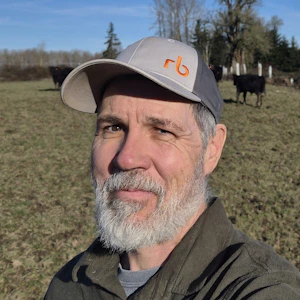
Eric operates Great Malus Beef to raise grass finished beef as a homestead staple food, and he markets the surplus by the quarter for local purchase and delivery. He has accepted Bitcoin payment since 2019, and is active within the Portland BitDevs community.
Eric evangelizes using Bitcoin as local currency. He helps beginners achieve their first transactions, and persuades investors to also move more of their daily financial life into Bitcoin.
Adam Saunders
Adam Saunders
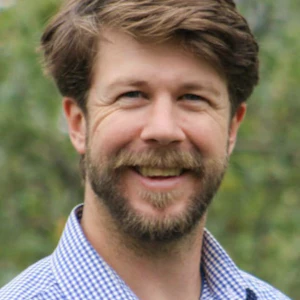
I live in mid-Missouri in the college town of Columbia, MO. I work throughout the region on farms and forests wearing a range of hats in what I call “Green Collar Jobs”. These include those working directly with plants and animals, as well as work done through value added processing. Direct work I am engaged with includes apple orchards, regenerative farming, forest management, and raising livestock. Similarly value added work includes pressing cider, making medically tailored meals, sawmiling logs into lumber, doing meat processing, and construction with simple regional materials; wood, straw, clay, and rock.
Like all “Green Collar Jobs”, these value chains have an inherent seasonal flow and are generally labor intensive. Blending work across multiple sectors can ballast out the highs and lows of the season to help optimize work flow, support labor organizing, and provide a fun blend of real, on the ground jobs that fit the “gig economy”. The current homestead movement is smack in the middle of this space with people craving meaningful work and simplicity to balance out the speed of the modern digital world.
Hands-on education is one of the key underpennings of this vision. In 2008 I co-founded Columbia Center for Urban Agriculture (CCUA), a 501c3 educational non-profit. We’ve since grown to a staff of 30 providing a wide range of programs in our community. These include growing produce for the local food pantry, mentoring low-income families in their home gardens, training farmers/gardeners, and operating a commercial kitchen as part of a regional food hub. My role has evolved over the years from gardener, to fundraiser, to public-private campaign manager, to now, a part time special projects director. My current role allows me to develop strategic partnerships across sectors that bring out the win-win partnerships that people have when working closer to their food supply.
I also farm part-time helping landowners establish estate apple orchards and implement regenerative farming and forestry projects. This model of farming re-sets the traditional risk-bearing dynamics in farming by helping create profitable homesteads, and creating quality jobs for people across a range of experience. The current trends of farmland fragmentation and sophistication of regional food systems supports this innovative business strategy.
Tony Beck
Tony Beck
Fix the Money, Fix the Food, Fix the World
Speakers/Moderators
Tom Taber
Tom Taber
Eric Thompson
Eric Thompson
Eric operates Great Malus Beef to raise grass finished beef as a homestead staple food, and he markets the surplus by the quarter for local purchase and delivery. He has accepted Bitcoin payment since 2019, and is active within the Portland BitDevs community.
Eric evangelizes using Bitcoin as local currency. He helps beginners achieve their first transactions, and persuades investors to also move more of their daily financial life into Bitcoin.
Adam Saunders
Adam Saunders
I live in mid-Missouri in the college town of Columbia, MO. I work throughout the region on farms and forests wearing a range of hats in what I call “Green Collar Jobs”. These include those working directly with plants and animals, as well as work done through value added processing. Direct work I am engaged with includes apple orchards, regenerative farming, forest management, and raising livestock. Similarly value added work includes pressing cider, making medically tailored meals, sawmiling logs into lumber, doing meat processing, and construction with simple regional materials; wood, straw, clay, and rock.
Like all “Green Collar Jobs”, these value chains have an inherent seasonal flow and are generally labor intensive. Blending work across multiple sectors can ballast out the highs and lows of the season to help optimize work flow, support labor organizing, and provide a fun blend of real, on the ground jobs that fit the “gig economy”. The current homestead movement is smack in the middle of this space with people craving meaningful work and simplicity to balance out the speed of the modern digital world.
Hands-on education is one of the key underpennings of this vision. In 2008 I co-founded Columbia Center for Urban Agriculture (CCUA), a 501c3 educational non-profit. We’ve since grown to a staff of 30 providing a wide range of programs in our community. These include growing produce for the local food pantry, mentoring low-income families in their home gardens, training farmers/gardeners, and operating a commercial kitchen as part of a regional food hub. My role has evolved over the years from gardener, to fundraiser, to public-private campaign manager, to now, a part time special projects director. My current role allows me to develop strategic partnerships across sectors that bring out the win-win partnerships that people have when working closer to their food supply.
I also farm part-time helping landowners establish estate apple orchards and implement regenerative farming and forestry projects. This model of farming re-sets the traditional risk-bearing dynamics in farming by helping create profitable homesteads, and creating quality jobs for people across a range of experience. The current trends of farmland fragmentation and sophistication of regional food systems supports this innovative business strategy.
Tony Beck
Tony Beck
Other
Speakers
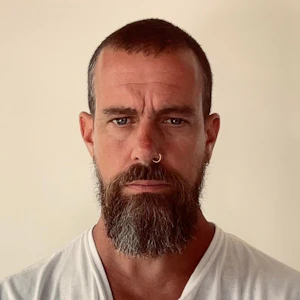
Michael Saylor
Michael Saylor
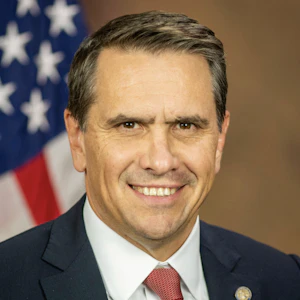
Todd Blanche
Todd Blanche
Biography of Deputy Attorney General Todd Blanche
The Honorable Todd Blanche is the 40th Deputy Attorney General of the United States, overseeing the work of the 115,000 dedicated employees who fulfill the Department of Justice’s mission at Main Justice, the FBI, DEA, U.S. Marshals, ATF, and 93 U.S. Attorney’s Offices.
Todd began his career at the Department where he served for over fifteen years in a variety of capacities, including as a contractor, a paralegal in the Criminal Division, and at the United States Attorney’s office for the Southern District of New York where he eventually became an AUSA and later a supervisor.
After leaving the Department, Todd worked as a criminal defense attorney that included representing President Donald Trump in three of the criminal cases brought against him in 2023 and 2024.
Following President Trump’s historic return to the White House, the President appointed Todd to work alongside Attorney General Pam Bondi to make America safe again. At the DOJ, Todd is working tirelessly to implement President Trump’s priorities that include confronting illegal protecting American businesses from fraud.
Todd has been married to his wonderful wife Kristine for nearly thirty years, is a father and grandfather.
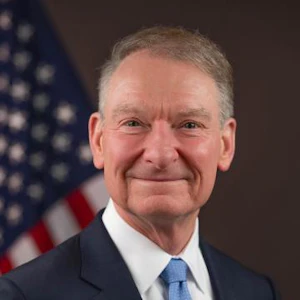
Paul Atkins
Paul Atkins
Prior to returning to the SEC, Chairman Atkins was most recently chief executive of Patomak Global Partners, a company he founded in 2009. Chairman Atkins helped lead efforts to develop best practices for the digital asset sector. He served as an independent director and non-executive chairman of the board of BATS Global Markets, Inc. from 2012 to 2015.
Chairman Atkins was appointed by President George W. Bush to serve as a Commissioner of the SEC from 2002 to 2008. During his tenure, he advocated for transparency, consistency, and the use of cost-benefit analysis at the agency. Chairman Atkins also represented the SEC at meetings of the President’s Working Group on Financial Markets and the U.S.-EU Transatlantic Economic Council. From 2009 to 2010, he was appointed a member of the Congressional Oversight Panel for the Troubled Asset Relief Program.
Before serving as an SEC Commissioner, Chairman Atkins was a consultant on securities and investment management industry matters, especially regarding issues of strategy, regulatory compliance, risk management, new product development, and organizational control.
From 1990 to 1994, Chairman Atkins served on the staff of two chairmen of the SEC, Richard C. Breeden and Arthur Levitt, ultimately as chief of staff and counselor, respectively. He received the SEC’s 1992 Law and Policy Award for work regarding corporate governance matters.
Chairman Atkins began his career as a lawyer in New York, focusing on a wide range of corporate transactions for U.S. and foreign clients, including public and private securities offerings and mergers and acquisitions. He was resident for 2½ years in his firm's Paris office and admitted as conseil juridique in France.
A member of the New York and Florida bars, Chairman Atkins received his J.D. from Vanderbilt University School of Law in 1983 and was Senior Student Writing Editor of the Vanderbilt Law Review. He received his A.B., Phi Beta Kappa, from Wofford College in 1980.
Originally from Lillington, North Carolina, Chairman Atkins grew up in Tampa, Florida. He and his wife Sarah have three sons.

Mike Selig
Mike Selig
Chairman Selig brings to the role deep public and private sector experience working with a wide range of stakeholders across agriculture, energy, financial, and digital asset industries, which rely upon and operate in CFTC-regulated markets.
Prior to his leadership at the CFTC, Chairman Selig most recently served as chief counsel of the Securities and Exchange Commission’s Crypto Task Force and senior advisor to SEC Chairman Paul S. Atkins. In this role, Chairman Selig helped to develop a clear regulatory framework for digital asset securities markets, harmonize the SEC and CFTC regulatory regimes, modernize the agency’s rules to reflect new and emerging technologies, and put an end to regulation by enforcement. He also participated in the President’s Working Group on Digital Asset Markets and contributed to its report on “Strengthening American Leadership in Digital Financial Technology.”
Prior to government service, Chairman Selig was a partner at an international law firm, focusing on derivatives and securities regulatory matters. During his years in private practice, he represented a broad range of clients subject to regulation by the CFTC, including commercial end users, futures commission merchants, commodity trading advisors, swap dealers, designated contract markets, derivatives clearing organizations, and digital asset firms. Chairman Selig advised clients on compliance with the Commodity Exchange Act and the CFTC’s rules and regulations thereunder, including in connection with registration applications and obligations, enforcement matters, and complex transactions.
Chairman Selig earned his law degree from The George Washington University Law School and was articles editor of The George Washington Law Review. He received his undergraduate degree from Florida State University.
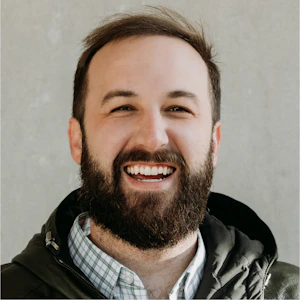
David Bailey
David Bailey

Eric Trump
Eric Trump
Mr. Trump also serves as Executive Vice President of The Trump Organization, where he oversees the global management and operations of the Trump family’s extensive real estate portfolio. This includes Trump Hotels, Trump Golf, commercial and residential real estate, Trump Estates, and Trump Winery. Known for his hands-on leadership and strong market instincts, he has played a key role in expanding the company’s presence across major U.S. and international markets.
A globally recognized business leader and public figure, Mr. Trump is a prominent advocate for Bitcoin and decentralized finance. He is a co-founder of World Liberty Financial, a decentralized finance (DeFi) platform, and serves on the Board of Advisors of Metaplanet, Japan’s largest corporate holder of Bitcoin.
Beyond his business activities, Mr. Trump has helped raise more than $50 million for St. Jude Children’s Research Hospital in the fight against pediatric cancer, a philanthropic mission he began at age 21.
Mr. Trump earned a degree in Finance and Management from Georgetown University. He currently resides in Florida with his wife, Lara, and their two children. He is also the author of Under Siege, his memoir published in October 2025.
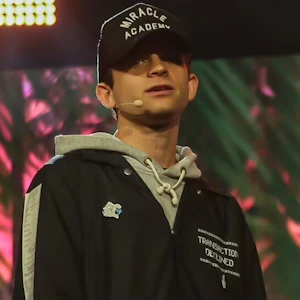
Jack Mallers
Jack Mallers
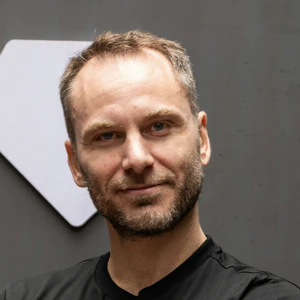
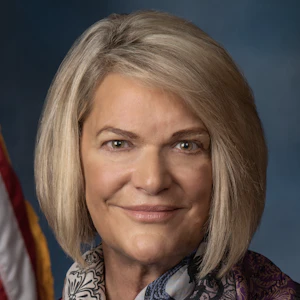
Cynthia Lummis
Cynthia Lummis
As the first-ever Chair of the Senate Banking Subcommittee on Digital Assets, Senator Lummis is the architect of the legislative framework shaping America's digital asset future. She introduced the landmark Lummis-Gillibrand Responsible Financial Innovation Act, the first comprehensive bipartisan crypto regulatory framework in Senate history. She co-authored the GENIUS Act — the first federal stablecoin law ever enacted — and introduced the BITCOIN Act, which would establish a U.S. strategic Bitcoin reserve of up to one million BTC. She is leading the Clarity Act, which will bring long-overdue regulatory certainty to the digital asset industry. She has also championed digital asset tax reform, including a de minimis exemption for small transactions and equal tax treatment for miners and stakers.
Known as Congress' "Crypto Queen," Senator Lummis represents Wyoming — a state she has helped build into one of the most digital asset-friendly regulatory environments in the nation. Before serving in the Senate, she served 14 years in the Wyoming Legislature, eight years as Wyoming State Treasurer, and eight years in the U.S. House. She is a three-time graduate of the University of Wyoming.
Her work represents a crucial bridge between traditional financial systems and the emerging digital economy, ensuring America leads the world in financial innovation while protecting the individual freedoms that define it.
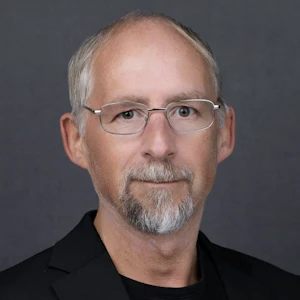
Adam Back
Adam Back
Amy Oldenburg
Amy Oldenburg
David Marcus
David Marcus

Matt Schultz
Matt Schultz
Fred Thiel
Fred Thiel
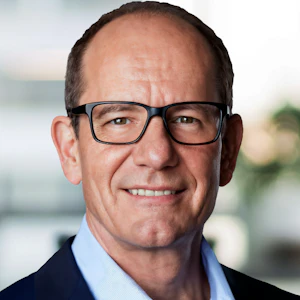
Throughout his career, Mr. Thiel has consistently driven rapid growth and created substantial shareholder value. Prior to MARA, Mr. Thiel served as the CEO of two other public companies, Local Corporation (NASDAQ: LOCM) and Lantronix, Inc (NASDAQ: LTRX). He has successfully raised billions in equity and debt through private and public offerings, led companies through IPOs, executed high-value exits to strategic and financial acquirers, and implemented effective M&A and roll-up strategies.
Mr. Thiel attended the Stockholm School of Economics and executive classes at Harvard Business School, and is fluent in English, Spanish, Swedish, and French. Mr. Thiel is the Chairman of the Board for Oden Technology, Inc. and is active in Young Presidents’ Organization where he has led initiatives in both the FinTech and Technology Networks.
A recognized voice in the industry, Fred frequently shares his insights on energy and technology with major media outlets like Bloomberg TV, CNBC, and FOX Business, contributing to vital discussions about the future of these sectors.
Tim Draper
Tim Draper
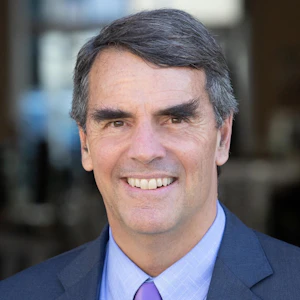
He is a supporter and global thought leader for entrepreneurs everywhere, and is a leading spokesperson for Bitcoin and decentralization, having won the Bitcoin US Marshall’s auction in 2014, invested in over 50 crypto companies, and led investments in Coinbase, Ledger, Tezos, and Bancor, among others.
Afroman
Afroman