Guide to Institutional Maturity: Tax, Insurance, and Corporate Governance
Speakers/Moderators

Vijay Selvam
Vijay Selvam

Rob Massey
Rob Massey
Rob’s blockchain expertise spans the comprehensive tax considerations of blockchain enabled transactions and the analysis of the tax impacts of tokenization and digital asset transactions across business models, industries, and geographies. He also has a growing expertise in tax controversy matters involving digital assets and blockchain based business models.
Rob (and co-Author Conor O’Brien) worked with 50 other tax specialists in Deloitte to produce Bloomberg BNA’s Tax Management Portfolio, Taxation of Cryptocurrency and Other Digital Assets, No. 190-2nd. This 400-page tax treatise examines U.S. federal and state income taxation of digital assets, including cryptocurrencies, providing a detailed analysis of the classification of digital assets for tax purposes. It offers an inclusive overview of the digital asset ecosystem, tax guidance to date, tax classification, and accounting treatment. The portfolio further delves into the tax implications of using, dealing, trading, and investing in digital assets, and addresses novel tax questions raised by digital asset transactions.

Becca Rubenfeld
Becca Rubenfeld

Allison Handy
Allison Handy
Session
Overview
This panel covered the institutional maturity required for broader corporate Bitcoin adoption, focusing on tax, insurance, and corporate governance. Vijay Selvam moderated a discussion with Rob Massey of Deloitte Tax LLP, Becca Rubenfeld of AnchorWatch, and Allison Handy of Perkins Coie LLP.
The tax discussion focused on Bitcoin as a cross-border payment rail, proposed lending safe harbors, collateral use, basis tracking, and the limits of potential de minimis tax rules. The insurance discussion addressed custody insurance, aggregation risk, Bitcoin-backed loans, and the importance of Bitcoin potentially becoming an admitted asset for insurance companies.
The governance portion emphasized that public companies and Bitcoin treasury companies need experienced finance, legal, audit, and board oversight as they adopt Bitcoin. The speakers discussed custody risk, proof of reserves, audit procedures, disclosure expectations, and the evolving posture of regulators.
A central theme was that institutional Bitcoin adoption depends on mature controls, clear reporting, custody design, insurance capacity, and leadership willing to evaluate Bitcoin as both a treasury asset and a payment infrastructure tool.
So, very privileged to be on stage with a distinguished panel. Tax, insurance, and corporate governance: we're here to make those the most interesting topics of the Bitcoin conference. Should we do quick intros? I'm Vijay Selvam. I'm chief legal officer at Elektron Energy, and I'm also author of the book Principles of Bitcoin, published by Columbia Business School.
I'm Allison Handy. I'm a partner at Perkins Coie. I do corporate and securities work, in addition to working with a few companies in the digital asset area. We also write a public company handbook, so I have a lot of experience getting companies, directors, and executives ready to work on public companies.
Hello, I'm Becca Rubenfeld. I'm co-founder and chief operating officer of AnchorWatch. AnchorWatch is a custody provider as well as a Lloyd's of London insurance coverholder, and we do Bitcoin-related insurance policies.
Rob Massey. I'm a tax partner at Deloitte. I started the crypto practice back in 2012. I have only done crypto transactions for the last few years. I don't touch fiat anymore. There are about 2,000 of us at Deloitte that have some level of attachment to crypto and specifically Bitcoin, and that crosses tax, audit, advisory, regulatory, and we build stuff too. It's really nice to be here with this group.
Great. So we have tremendous expertise on tax, insurance, and corporate governance. Rob, let me start with you. In your space, tax specifically, what do you think is the biggest, most critical topic right now?
There is a lot happening right now with the market maturing, and tax tends to be front and center. A couple of topics: one, just watching Bitcoin as it matures become a very thoughtful mechanism for a payment rail crossing jurisdictions and borders. Looking at the treasury functions of large companies, they are really looking at this seriously and how it can change the dynamics of cross-border transactions.
From a legislative front, there are a lot of thoughtful proposals looking at maturing the tax rules to bring Bitcoin and other crypto into the mainstream, allowing people to lend their Bitcoin with a little more safety. We don't have safe harbors for Bitcoin like we do for securities lending. At the same time, many of you in the room are thinking about using Bitcoin as collateral or lending it out for other things.
You may not be protected from a realization event there. We get deep into the terms of those agreements and how they are structured to make sure you don't have a realization event. That's very well known, and it causes some anxiety when it comes to keeping the market stable. So you'll see some legislative proposals asking whether we should have something like lending safe harbors for Bitcoin.
You'll see that come through the space a lot right now, as well as clarity in other areas and other financial products. I know we've spoken a lot about the de minimis rule, which is out there. Even if you have an exclusion from realizing gain when you use Bitcoin for the anecdotal cup of coffee, that doesn't mean you don't still have to track your basis.
Most of us in the room have Bitcoin in different tranches, with different bases out there. Even if you were to have an exception for a certain amount of gain, you still need to track your underlying basis. Which Bitcoin did you use? It's nice that we have Treasury regulations that were crafted two years ago, which bring a lot of clarity to basis tracking and how to use specific identification. But remember, when we're all enamored with this concept of this rule, it doesn't really get you out of the reporting. It's very important.
Becca, you've been at the cutting edge of various insurance products over the years. How have you seen this space evolve over the last two to three years? And what do you think is one of the biggest topics right now in your space?
The space is evolving inasmuch as people are certainly more aware of the availability of insurance and more aware of the need for insurance on their product. Historically, there just were not too many insurance products available, and if they were, they were not commercially viable in terms of their rates. That's a very different situation today.
Today, I think what we see is a few primary issues. One would be aggregation risk on the custody insurance side. Just like there might be concentration risk at certain custodians in terms of the Bitcoin technology and where the Bitcoin sits, that same thing follows with insurance. The way an insurance carrier looks at risk is: if there's a loss, if there's an event, how broad and how large is the event going to get?
There is a challenge right now in the marketplace of custodians and others who are holding Bitcoin getting access to more and more insurance capacity. AnchorWatch has tackled it through key distribution. Others go about it in other ways. I would say that's one large issue.
The second one is new types of insurance. What AnchorWatch has been known for is primarily custody insurance, but the application of custody insurance can go much broader. You could think of that same insurance product underpinning Bitcoin-backed loans. If we're trying to draw fiat liquidity to provide the liquidity for Bitcoin-backed loans, what's better to encourage liquidity providers to trust this product? We overcollateralize loans, but let's also insure the collateral.
The last large issue is the idea of Bitcoin being what's called an admitted asset. Currently, according to regulators, Bitcoin is not an admitted asset, which means it's very challenging for companies to choose to put Bitcoin into their insurance risk towers and use insurance as a productive, yield-generating asset. One of our goals is to continue advocating to regulators to change that consideration and make Bitcoin an admitted asset, which we think is better for the insurance carriers as well, and certainly better for the Bitcoin industry.
It's been an interesting evolution to watch Bitcoin in the insurance sector because there's a heavy regulatory lens on this. There's an accounting piece. And then the tax treatment of insurance companies in general is unique from other companies, because in short, you can largely deduct your reserves, but that's only if you qualify. To your point, this concept of admitted asset is critical to making that work.
One of the things that I'm most interested to learn more about is the idea of insurance companies doing that activity, but maybe kind of jumping ahead of when Bitcoin is an admitted asset because of the ETFs that are out. You had given me a few ideas of why this is possible now. Can you share that in terms of what specifically about Bitcoin ETFs?
Without going over my skis, the question is really about admitted assets. Historically, lots of different investment types, but largely securities, are deemed to be normalish. If you put Bitcoin into an ETP, similar to an ETF, this is a security. But you're deemed largely to be holding Bitcoin in a grantor trust. So there's a question: when you put the securities wrapper around it, how does that work with the insurance company rules? Open question, but a really interesting one now that we have a proliferation in Bitcoin.
I think it's going to be a big conversation over the next 12 months. Maybe when we come back next year, there will be interesting things happening. It's super interesting because if insurance companies determine that is a viable path, it really does do amazing things for balancing their balance sheet.
It's a really big question and top of mind for a lot of people. I love that you're on top of it.
I want to come back to the custody point that you touched on as part of the insurance discussion. But before that, what's going on in corporate governance, and what's the biggest thing in your space?
I would break it down into two categories as I think about corporate governance and what's going on in Bitcoin and how this industry has expanded and is maturing. Two big categories: normal public company stuff, and then what goes along with an industry that's grown and matured very recently.
On the normal public company side, this is what I do. I help companies get ready to be public, and it's not something that happens overnight. If you've been an executive at a startup company and you've been deep in the industry, you may not have the experience of having to do quarterly reporting, having to live with disclosure rules, having to know what you can disclose, what not to disclose, and when to do it. Getting a true public company CFO and a public company general counsel on board at the company, whether it's because of a PIPE transaction, a company that's adopted a treasury strategy and maybe has some new executives coming in, or an emerging company getting ready to go public, is absolutely critical. Getting the CFO on board and having someone like Deloitte in your pocket to help with the reporting is table stakes.
Because of how quickly things have matured, especially in the last year, I'm not sure that everyone who jumped in was fully ready. That's a big part of it: making sure you've got the team and being generally public-company ready, in particular for public companies, whether as an executive or a director coming into this space and being new to being part of a public company.
For the Bitcoin industry, in particular, there's a lot of risk and a lot of enterprise risk, different things to think about. Perhaps you've got a CFO who's a good executive, with lots of public company experience, but they might not know all the questions to ask specific to this industry. I think we're going to get back to the custody point here in a moment, and that's exactly the kind of thing. For example, there are lots of DATs out there. I'm sure for some of them, a legacy CEO was there and found out months later, how does this custody thing work? There are a lot of questions, and people have been moving very quickly.
So there are both the basics of being a public company and also figuring out how to manage the specific risks and really think through the governance. Having directors on board who are familiar with the industry, as well as familiar with regular audit things and normal corporate governance, is all coming together.
If I can just chime in, I think the broad range of risks is really important here. It's different than other risks that most public companies have grown up with. What we find most impactful is to take a thoughtful, comprehensive mapping, like a risk and control framework, and go deep and broad. Make sure you have all of your departments in line, best driven by the CFO if they have the appetite for it, and make sure you bring it to the board early. Give them time for questions so they can come back and beat you up on the stuff they're not comfortable with, because it's a very different risk environment.
Safeguarding crypto, again to custody, is very different from safeguarding other assets out there. Then there are the payment flows, and then you have humans with access. Let's not forget to protect the humans as well. There are a lot of moving parts. It's important here.
How does Deloitte, for example, come in and provide guidance on custody risk, which is incredibly technical? Bitcoin Script and Bitcoin tech is its own beast. How has Deloitte built that expertise to be able to advise companies?
There are many variables out there, but starting with how you are going to custody. Are you going to use a custodian? Which one are you going to use? How many are you going to use? Usually it's more than one. Is there a self-custody element? Then the next level would be, what are the transaction flows involved? Are you only holding? Are you using it as collateral in transactions? Are you using it to pay employees? What about cross-border transactions?
It's a mapping of transaction flows to custody, then going to the pressure points and potential risks and failures that may happen, with either Bitcoin being absconded with or keys lost or whatever it is. There are a lot of variables, but we have now had this asset for a while. Let's use all the best practices we have and look at the failures that have occurred, with fraud or other actions, and do a deep dive.
Conscious of time here, one specific topic which I think a lot of people here would be quite interested in: proof of reserves. Good, bad, ambivalent?
Proof of reserves in general, I think, is very good. The bigger question here is: are you going to segregate your client accounts, or are you going to keep your clients' Bitcoin in an omnibus account? And I don't mean accounts on a ledger; I mean a vault on the Bitcoin blockchain. If each customer has their own wallets, effectively, with their own on-chain address, then proof of reserves are not needed because each address can actually see the Bitcoin there.
Sorry, what I mean is in the context of a Bitcoin treasury company.
Understood. I'm just explaining. If all the Bitcoin is held in an omnibus account, that's when proof of reserves comes in, because people don't know. I might know I put 10 Bitcoin into the address, but if it's co-mingled with everybody else's Bitcoin, I can't look myself and feel confident that my Bitcoin is there because I don't know the entirety. The idea of proof of reserves is that it's coming in and verifying all the assets, and then it is also looking to verify the liability. If you are doing an omnibus account, I think it's vitally important to do proof of reserves.
The auditing of Bitcoin in general, whatever you're proving, is different. You don't want to necessarily have test transactions, because that could jeopardize a security element. Being thoughtful about the audit procedures is important. Whoever is providing any attestations, which could be a myriad of people, including your financial statement auditors, needs to have an approach that aligns with your management and your board to protect from a risk perspective, but also have suitable attestations in the manner they want.
Audit procedures today are very different for Bitcoin than they are for other traditional asset classes in the past, and not every approach is the same. It's a tailored approach.
Ultimately, it's getting down to how you are auditing and how you are verifying, and what is more important to you. Remember the downside of everybody having their own account that you can see on-chain is lack of privacy, because anybody who is able to find out that that is your address knows exactly how much Bitcoin a particular company has. Not every company wants that level of transparency. I don't particularly want somebody to know what's in my bank account at any given moment. There are pros and cons. I don't think it's 100% proof of reserves good, not proof of reserves bad. It's more: what kind of custody are you doing, and why?
With the time we have left, as we look into the future of ubiquitous corporate adoption of Bitcoin in each of your spaces, what would you say is the most important thing that you'd like to see in the two-to-five-year horizon? What would you like to see happen in order to really progress in the right path in a manner that's good for Bitcoin and broadly for the corporate ecosystem?
For me, it's about admitted assets. It's about the ability for companies, whether they're Bitcoin treasury companies or traditional insurance companies, to be able to take their fiat and underwrite Bitcoin-related risk, and really pull fiat into the Bitcoin industry and market cap. That's what I'd like to see progressing.
For me, I think we're starting to see this already, but for companies that maybe aren't Bitcoin native or crypto native, starting to develop and exercise this muscle and understand how they might be using Bitcoin, what the risks are, and what the disclosures are that go along with having it.
Last summer and fall, with the explosion of DATs, the SEC started commenting on disclosures by these companies. I think we're seeing evolve what risk factors public companies need to disclose when they have this as a treasury asset. What do they need to say about their custody, their agreements, and things like that? We're getting there, and I think we're getting to the place where it's going to become more accessible for companies that are not necessarily Bitcoin native, because they can see what others are saying about it and they can start to really understand the risks.
I love that. Today my conversations are with the treasury departments of most large multinational companies. I think it's fair to say that virtually all of the Fortune 50 have this as a conversation. Yes, it's about a treasury asset that you can borrow against, but it's more about the broader use case of payment rails.
The conversation is frequently, we want to use a stable and Bitcoin. The infrastructure, controls, and processes you build are largely the same. The shock to the system in a company when you adopt crypto is largely the same. There is a reason to have both stables and Bitcoin in the use of corporate treasury, whether it's cross-border or using it for employees. There are vendors in parts of the world that would rather have Bitcoin. This is a real conversation.
What I'm excited about is that there are more tenured leaders in these companies who are putting a positive tone on the conversation. Oh, that's interesting, versus oh, that's interesting. It completely changes the game for the level of engagement of these departments, because there are Bitcoiners throughout all of the treasury groups. They're in the room, but you're hesitant to raise your hand unless somebody in tenured management says, yes, this is a good idea. That's when the creativity starts, and you're watching it happen rapidly, with the right leadership that opens the door to have the conversation. To me, it's the payment rails that are coming that are super fascinating.
Very quickly, we have 40 seconds left. Allison, you speak to the SEC all the time. Have you noticed any shift in attitude that you've sensed over the last three to five years?
I would just talk to the last year, really. There is openness and interest in talking to companies that are in this space. There are industry-specific reviewers at the SEC who want to talk and are open to ideas. I think that is just such a huge shift. Very welcome.
Great. Perfectly on the dot. Thanks, everyone.
Similar
Sessions
Guide to Institutional Maturity: Tax, Insurance, and Corporate Governance
Vijay Selvam
Vijay Selvam
Rob Massey
Rob Massey
Rob’s blockchain expertise spans the comprehensive tax considerations of blockchain enabled transactions and the analysis of the tax impacts of tokenization and digital asset transactions across business models, industries, and geographies. He also has a growing expertise in tax controversy matters involving digital assets and blockchain based business models.
Rob (and co-Author Conor O’Brien) worked with 50 other tax specialists in Deloitte to produce Bloomberg BNA’s Tax Management Portfolio, Taxation of Cryptocurrency and Other Digital Assets, No. 190-2nd. This 400-page tax treatise examines U.S. federal and state income taxation of digital assets, including cryptocurrencies, providing a detailed analysis of the classification of digital assets for tax purposes. It offers an inclusive overview of the digital asset ecosystem, tax guidance to date, tax classification, and accounting treatment. The portfolio further delves into the tax implications of using, dealing, trading, and investing in digital assets, and addresses novel tax questions raised by digital asset transactions.
Becca Rubenfeld
Becca Rubenfeld
Allison Handy
Allison Handy
Guide to Institutional Maturity: Tax, Insurance, and Corporate Governance
Speakers/Moderators
Vijay Selvam
Vijay Selvam
Rob Massey
Rob Massey
Rob’s blockchain expertise spans the comprehensive tax considerations of blockchain enabled transactions and the analysis of the tax impacts of tokenization and digital asset transactions across business models, industries, and geographies. He also has a growing expertise in tax controversy matters involving digital assets and blockchain based business models.
Rob (and co-Author Conor O’Brien) worked with 50 other tax specialists in Deloitte to produce Bloomberg BNA’s Tax Management Portfolio, Taxation of Cryptocurrency and Other Digital Assets, No. 190-2nd. This 400-page tax treatise examines U.S. federal and state income taxation of digital assets, including cryptocurrencies, providing a detailed analysis of the classification of digital assets for tax purposes. It offers an inclusive overview of the digital asset ecosystem, tax guidance to date, tax classification, and accounting treatment. The portfolio further delves into the tax implications of using, dealing, trading, and investing in digital assets, and addresses novel tax questions raised by digital asset transactions.
Becca Rubenfeld
Becca Rubenfeld
Allison Handy
Allison Handy
The Corporate Bitcoin Journey: Lessons from Early Allocators

Allen Helm
Allen Helm

Rob Massey
Rob Massey
Rob’s blockchain expertise spans the comprehensive tax considerations of blockchain enabled transactions and the analysis of the tax impacts of tokenization and digital asset transactions across business models, industries, and geographies. He also has a growing expertise in tax controversy matters involving digital assets and blockchain based business models.
Rob (and co-Author Conor O’Brien) worked with 50 other tax specialists in Deloitte to produce Bloomberg BNA’s Tax Management Portfolio, Taxation of Cryptocurrency and Other Digital Assets, No. 190-2nd. This 400-page tax treatise examines U.S. federal and state income taxation of digital assets, including cryptocurrencies, providing a detailed analysis of the classification of digital assets for tax purposes. It offers an inclusive overview of the digital asset ecosystem, tax guidance to date, tax classification, and accounting treatment. The portfolio further delves into the tax implications of using, dealing, trading, and investing in digital assets, and addresses novel tax questions raised by digital asset transactions.

Urban Lavrenčič
Urban Lavrenčič
Today, he bridges the gap between legacy finance and the Bitcoin ecosystem, overseeing Operations, Financial Infrastructure, AML, and Marketing at the group level. A specialist in navigating the intersection of the Bitcoin economy and traditional finance within an evolving regulatory landscape, Urban is a leading voice on how Bitcoin enterprises can integrate with traditional financial systems while ensuring institutional-grade compliance without compromising the ethos of Bitcoin.
The Corporate Bitcoin Journey: Lessons from Early Allocators
Speakers/Moderators
Allen Helm
Allen Helm
Rob Massey
Rob Massey
Rob’s blockchain expertise spans the comprehensive tax considerations of blockchain enabled transactions and the analysis of the tax impacts of tokenization and digital asset transactions across business models, industries, and geographies. He also has a growing expertise in tax controversy matters involving digital assets and blockchain based business models.
Rob (and co-Author Conor O’Brien) worked with 50 other tax specialists in Deloitte to produce Bloomberg BNA’s Tax Management Portfolio, Taxation of Cryptocurrency and Other Digital Assets, No. 190-2nd. This 400-page tax treatise examines U.S. federal and state income taxation of digital assets, including cryptocurrencies, providing a detailed analysis of the classification of digital assets for tax purposes. It offers an inclusive overview of the digital asset ecosystem, tax guidance to date, tax classification, and accounting treatment. The portfolio further delves into the tax implications of using, dealing, trading, and investing in digital assets, and addresses novel tax questions raised by digital asset transactions.
Urban Lavrenčič
Urban Lavrenčič
Today, he bridges the gap between legacy finance and the Bitcoin ecosystem, overseeing Operations, Financial Infrastructure, AML, and Marketing at the group level. A specialist in navigating the intersection of the Bitcoin economy and traditional finance within an evolving regulatory landscape, Urban is a leading voice on how Bitcoin enterprises can integrate with traditional financial systems while ensuring institutional-grade compliance without compromising the ethos of Bitcoin.
The Orange Umbrella / Principles of Bitcoin

Vijay Selvam
Vijay Selvam
The Orange Umbrella / Principles of Bitcoin
Speakers/Moderators
Vijay Selvam
Vijay Selvam
Have Public Markets Been a Net Positive for Bitcoin?

Brian Dixon
Brian Dixon
Vijay Selvam
Vijay Selvam

Ryan Gentry
Ryan Gentry

Have Public Markets Been a Net Positive for Bitcoin?
Speakers/Moderators
Brian Dixon
Brian Dixon
Vijay Selvam
Vijay Selvam
Ryan Gentry
Ryan Gentry
Other
Speakers

Michael Saylor
Michael Saylor

Todd Blanche
Todd Blanche
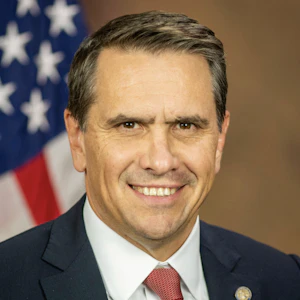
Biography of Deputy Attorney General Todd Blanche
The Honorable Todd Blanche is the 40th Deputy Attorney General of the United States, overseeing the work of the 115,000 dedicated employees who fulfill the Department of Justice’s mission at Main Justice, the FBI, DEA, U.S. Marshals, ATF, and 93 U.S. Attorney’s Offices.
Todd began his career at the Department where he served for over fifteen years in a variety of capacities, including as a contractor, a paralegal in the Criminal Division, and at the United States Attorney’s office for the Southern District of New York where he eventually became an AUSA and later a supervisor.
After leaving the Department, Todd worked as a criminal defense attorney that included representing President Donald Trump in three of the criminal cases brought against him in 2023 and 2024.
Following President Trump’s historic return to the White House, the President appointed Todd to work alongside Attorney General Pam Bondi to make America safe again. At the DOJ, Todd is working tirelessly to implement President Trump’s priorities that include confronting illegal protecting American businesses from fraud.
Todd has been married to his wonderful wife Kristine for nearly thirty years, is a father and grandfather.

Paul Atkins
Paul Atkins
Prior to returning to the SEC, Chairman Atkins was most recently chief executive of Patomak Global Partners, a company he founded in 2009. Chairman Atkins helped lead efforts to develop best practices for the digital asset sector. He served as an independent director and non-executive chairman of the board of BATS Global Markets, Inc. from 2012 to 2015.
Chairman Atkins was appointed by President George W. Bush to serve as a Commissioner of the SEC from 2002 to 2008. During his tenure, he advocated for transparency, consistency, and the use of cost-benefit analysis at the agency. Chairman Atkins also represented the SEC at meetings of the President’s Working Group on Financial Markets and the U.S.-EU Transatlantic Economic Council. From 2009 to 2010, he was appointed a member of the Congressional Oversight Panel for the Troubled Asset Relief Program.
Before serving as an SEC Commissioner, Chairman Atkins was a consultant on securities and investment management industry matters, especially regarding issues of strategy, regulatory compliance, risk management, new product development, and organizational control.
From 1990 to 1994, Chairman Atkins served on the staff of two chairmen of the SEC, Richard C. Breeden and Arthur Levitt, ultimately as chief of staff and counselor, respectively. He received the SEC’s 1992 Law and Policy Award for work regarding corporate governance matters.
Chairman Atkins began his career as a lawyer in New York, focusing on a wide range of corporate transactions for U.S. and foreign clients, including public and private securities offerings and mergers and acquisitions. He was resident for 2½ years in his firm's Paris office and admitted as conseil juridique in France.
A member of the New York and Florida bars, Chairman Atkins received his J.D. from Vanderbilt University School of Law in 1983 and was Senior Student Writing Editor of the Vanderbilt Law Review. He received his A.B., Phi Beta Kappa, from Wofford College in 1980.
Originally from Lillington, North Carolina, Chairman Atkins grew up in Tampa, Florida. He and his wife Sarah have three sons.

Mike Selig
Mike Selig
Chairman Selig brings to the role deep public and private sector experience working with a wide range of stakeholders across agriculture, energy, financial, and digital asset industries, which rely upon and operate in CFTC-regulated markets.
Prior to his leadership at the CFTC, Chairman Selig most recently served as chief counsel of the Securities and Exchange Commission’s Crypto Task Force and senior advisor to SEC Chairman Paul S. Atkins. In this role, Chairman Selig helped to develop a clear regulatory framework for digital asset securities markets, harmonize the SEC and CFTC regulatory regimes, modernize the agency’s rules to reflect new and emerging technologies, and put an end to regulation by enforcement. He also participated in the President’s Working Group on Digital Asset Markets and contributed to its report on “Strengthening American Leadership in Digital Financial Technology.”
Prior to government service, Chairman Selig was a partner at an international law firm, focusing on derivatives and securities regulatory matters. During his years in private practice, he represented a broad range of clients subject to regulation by the CFTC, including commercial end users, futures commission merchants, commodity trading advisors, swap dealers, designated contract markets, derivatives clearing organizations, and digital asset firms. Chairman Selig advised clients on compliance with the Commodity Exchange Act and the CFTC’s rules and regulations thereunder, including in connection with registration applications and obligations, enforcement matters, and complex transactions.
Chairman Selig earned his law degree from The George Washington University Law School and was articles editor of The George Washington Law Review. He received his undergraduate degree from Florida State University.

David Bailey
David Bailey

Eric Trump
Eric Trump
Mr. Trump also serves as Executive Vice President of The Trump Organization, where he oversees the global management and operations of the Trump family’s extensive real estate portfolio. This includes Trump Hotels, Trump Golf, commercial and residential real estate, Trump Estates, and Trump Winery. Known for his hands-on leadership and strong market instincts, he has played a key role in expanding the company’s presence across major U.S. and international markets.
A globally recognized business leader and public figure, Mr. Trump is a prominent advocate for Bitcoin and decentralized finance. He is a co-founder of World Liberty Financial, a decentralized finance (DeFi) platform, and serves on the Board of Advisors of Metaplanet, Japan’s largest corporate holder of Bitcoin.
Beyond his business activities, Mr. Trump has helped raise more than $50 million for St. Jude Children’s Research Hospital in the fight against pediatric cancer, a philanthropic mission he began at age 21.
Mr. Trump earned a degree in Finance and Management from Georgetown University. He currently resides in Florida with his wife, Lara, and their two children. He is also the author of Under Siege, his memoir published in October 2025.

Jack Mallers
Jack Mallers

Cynthia Lummis
Cynthia Lummis
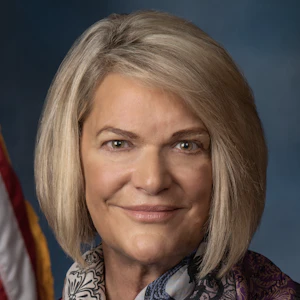
As the first-ever Chair of the Senate Banking Subcommittee on Digital Assets, Senator Lummis is the architect of the legislative framework shaping America's digital asset future. She introduced the landmark Lummis-Gillibrand Responsible Financial Innovation Act, the first comprehensive bipartisan crypto regulatory framework in Senate history. She co-authored the GENIUS Act — the first federal stablecoin law ever enacted — and introduced the BITCOIN Act, which would establish a U.S. strategic Bitcoin reserve of up to one million BTC. She is leading the Clarity Act, which will bring long-overdue regulatory certainty to the digital asset industry. She has also championed digital asset tax reform, including a de minimis exemption for small transactions and equal tax treatment for miners and stakers.
Known as Congress' "Crypto Queen," Senator Lummis represents Wyoming — a state she has helped build into one of the most digital asset-friendly regulatory environments in the nation. Before serving in the Senate, she served 14 years in the Wyoming Legislature, eight years as Wyoming State Treasurer, and eight years in the U.S. House. She is a three-time graduate of the University of Wyoming.
Her work represents a crucial bridge between traditional financial systems and the emerging digital economy, ensuring America leads the world in financial innovation while protecting the individual freedoms that define it.

Adam Back
Adam Back
Amy Oldenburg
Amy Oldenburg

David Marcus
David Marcus

Matt Schultz
Matt Schultz

Fred Thiel
Fred Thiel
Throughout his career, Mr. Thiel has consistently driven rapid growth and created substantial shareholder value. Prior to MARA, Mr. Thiel served as the CEO of two other public companies, Local Corporation (NASDAQ: LOCM) and Lantronix, Inc (NASDAQ: LTRX). He has successfully raised billions in equity and debt through private and public offerings, led companies through IPOs, executed high-value exits to strategic and financial acquirers, and implemented effective M&A and roll-up strategies.
Mr. Thiel attended the Stockholm School of Economics and executive classes at Harvard Business School, and is fluent in English, Spanish, Swedish, and French. Mr. Thiel is the Chairman of the Board for Oden Technology, Inc. and is active in Young Presidents’ Organization where he has led initiatives in both the FinTech and Technology Networks.
A recognized voice in the industry, Fred frequently shares his insights on energy and technology with major media outlets like Bloomberg TV, CNBC, and FOX Business, contributing to vital discussions about the future of these sectors.
Tim Draper
Tim Draper
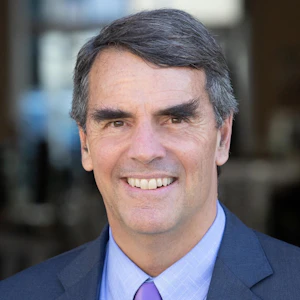
He is a supporter and global thought leader for entrepreneurs everywhere, and is a leading spokesperson for Bitcoin and decentralization, having won the Bitcoin US Marshall’s auction in 2014, invested in over 50 crypto companies, and led investments in Coinbase, Ledger, Tezos, and Bancor, among others.

Afroman
Afroman