Hashrate is Dropping, Is Hosted Mining Picking Up the Slack?
Speakers/Moderators

Anthony Power
Anthony Power

Charley Brady
Charley Brady
Charley began his career in sell-side equity research, spending over 15 years as a senior analyst covering diversified industrial companies at Credit Suisse, BMO Capital Markets, and SunTrust Robinson Humphrey. In these roles, he conducted in-depth company and sector analysis, published investment research, and advised institutional investors and corporate clients.
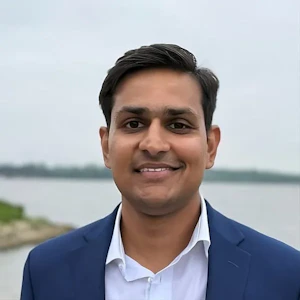
Shreyash Milak
Shreyash Milak

Michal Beno
Michal Beno
During the early phase of the industry, developed custom cryptocurrency mining software, along with performance optimization tools and firmware tweaks for ASIC overclocking and miner efficiency improvements, gaining deep hands-on experience in mining infrastructure, hardware optimization, and operational management. Developed MinerBoxes that reduce miner noise level by 50 db.
Later founded OneMiners, fastest growing bitcoin mining company in the world - now offering the best ROI for bitcoin mining on the market with hosting as low as 4.55 c per KW in USA.
Always holding bitcoin in Bitcoin native SegWit (bc1) address :).
Session
Overview
This panel examined why Bitcoin’s global hash rate has declined and whether hosted mining can absorb some of the capacity being lost as self-mining becomes less profitable. Anthony Power moderated a discussion with Charley Brady of BitFuFu, Michal Beno of OneMiners, and Yash Milak of ValueHash.
The speakers pointed to several pressures on miners, including the drop in Bitcoin price, rising electricity costs, older ASIC fleets coming offline, government restrictions in some jurisdictions, and growing competition from HPC and AI data center demand. Power availability and pricing were central themes, with panelists emphasizing that control over energy assets is becoming a major advantage.
The discussion highlighted hosted and cloud mining models as ways to reduce risk and improve access to professional infrastructure. Examples included fixed-rate hosting contracts, shared revenue models, and cloud hash rate leasing for institutional and retail customers. The panel also explored how the next Bitcoin halving, off-grid mining, smaller sites, and global jurisdictional differences could shape the future of Bitcoin mining.
Good morning, everyone. Hope you're enjoying the conference so far. My name is Anthony Power. I'm the CEO and co-founder of Power Analysis. My co-founder, Bryce McNally, is sitting in the front row. We run a media platform focused on Bitcoin mining and Bitcoin miners transitioning into the HPC and AI space. We've been doing this for over two and a half years. We've interviewed close to 200 CEOs or senior team members on the channel. If you want to look at any of your favorite mining CEO interviews, come along to Power Analysis. We've got them all there.
I'd like the panel to introduce themselves. Charley, if you could start first and tell us who you're with.
Thanks. Charley Brady, VP of Investor Relations for BitFuFu.
I'm Michal from OneMiners, and we operate 10 sites worldwide for hosting.
My name is Yash. I'm CEO and founder of ValueHash. We operate hosting sites in New York, Nebraska, and Kansas.
That's excellent. To start the ball rolling, looking at the title of the conversation, “Hashrate is Dropping, Is Hosted Mining Picking Up the Slack?” If you go back three years ago to the start of 2023, when the Bitcoin price was around $16,000, the global hash rate at that time was 253 exahash. Then we saw that gradual increase all the way through to October 2025. Bitcoin reached its all-time high of $126,000, and the global hash rate was nearly 1,300 exahash.
Since October, we've seen a pullback in both the Bitcoin price and the global hash rate. It actually dropped to about 700 exahash. That's a significant drop, even more significant than when China went offline back in 2021. Charley, I'll start with you first. Do you have any understanding of why the hash rate has dropped so significantly over that last six-month period?
I think there are a few reasons that drive that. Number one, obviously, is the drop in the price of Bitcoin. From a profitability standpoint, there are a lot of individual self-miners that weren't being profitable. Even some of the larger miners had older machines and were taking those offline, so that's going to drop it. And obviously, the pivoting that we've seen from some of the larger public company miners into HPC and AI, using that power for something other than Bitcoin mining, means some of that capacity is coming offline too. Those are some of the bigger reasons, I think.
You are definitely right that AI is taking the first lead, especially in well-developed countries like the U.S. But I see, luckily, a great future in Bitcoin mining for other countries and other locations where political stability is not as solid as in the United States. There, it may go the other way around.
From your position, Yash, who is actually leaving at the moment? Are you hearing anything in the industry about who is leaving the space?
I think whoever is being forced by the government. Russia and China are bigger players outside of the United States that have been forcing miners in those jurisdictions to shut down. Russia just enacted an autumn and winter ban for mining in a lot of their jurisdictions, and they extended that on April 1. Between the United States, Russia, and China, you have 69% of mining.
As far as the United States is concerned, a lot of utilities are increasing tariffs on miners. With the Bitcoin price dropping, they are forced to shut down. This winter was particularly hard for a lot of miners because the price of power was so high and everybody was forced to scale back.
In terms of the mining industry, we've seen a lot of self-miners start that pivot toward high-performance compute. We've even had some prominent CEOs, Ben Gagnon, who is one of the OGs in the Bitcoin mining space, come out 12 months ago, and Sam Tabar came out even before that, basically saying that the metrics for Bitcoin mining were making it really challenging for mining companies to make a real margin and cover all their overheads.
With the Bitcoin price dropping as it has from that all-time high back in October, the margins at the moment are proving to be a challenge for self-mining. Michal, from a hosting perspective, it's a different model. Tell us how you are managing to still make the business model work during this cycle.
We had to innovate and choose a little bit of a new model, and offer something nobody else is offering here. Basically, we found a way to give all people the opportunity to mine at lower rates by fixing their electricity rates for seven years. We really give them several years of fixed rates. We also give them seven years of warranty and we have them prepay.
It sounds very bizarre, like nobody would want it, but actually there is huge demand for that. They are prepaying electricity for seven years, so we are sure of the contract for seven years. We give them the assurance, and it lowers the price for hosting to somewhere around 4.5 cents, even in the United States, which makes Bitcoin still as profitable as it was one year ago. So that's our adaptation at this moment for the U.S. market.
Yash, from your perspective, how has your model been able to operate in these challenging conditions at the moment?
I think we are energy-first now. We are not just thinking about Bitcoin mining. We have been proposing shared revenue models where you are splitting profit at base rates around $0.04 or $0.045, which caps your downside and gives you the upside. It helps you survive the bear market. It helps you pull in the capital with your hosts as well as your clients, and it really gives you a win-win situation where you have the upside but you have the downside covered.
Charley, I've been fortunate to see you give many presentations. I was in New York at the Wainwright conference when you gave a presentation on the company, and Bryce and I were really enamored with it. We learned a lot from that presentation and did a lot more research.
Can you tell the audience, from a hosting perspective, how your self-mining is a small part of the business, but you've managed to grow this cloud hash rate business? How is that model beneficial during these environmental changes at the moment?
Absolutely. Our cloud mining platform is essentially leasing our hash rate out to customers, primarily institutional customers but also retail customers. That's about 70% to 75% of our revenue right now.
We have the ability to dynamically move our hash rate, sliding it back between mining and cloud mining depending on a variety of different economics and where we are in the cycle. Given the market cycle over the past year or year and a half, cloud mining has really been dominant for us.
What that allows us to do is flex out our cost structure and flex out the revenue model. It helps us stay profitable through a market down cycle and through a market up cycle. From an adjusted EBITDA basis, the company has been profitable every year it's been in existence. I think that's a big differentiator for us. As a public company, obviously that's important to us, to maintain that profitability and cash flow.
That's a real challenge. I'm a chartered accountant by qualification, and I go through literally all the balance sheets from every one of the public miners. These are the big public miners out there, and most of them are in the audience and here at the conference. If you look at their business over that period, the balance sheet clearly states if the company has been profitable since existence, and it proves to be a challenging environment. That's why you see many of them looking to move into alternative areas.
Before we talk about alternative areas, Yash, from your perspective, with this downturn in self-mining, are you seeing that as an opportunity to grow the hosted model?
Yes, absolutely, because we do control all of our infrastructure. As far as the United States is concerned, we have a huge energy bottleneck in this industry right now. It's not the same as four years ago, where you could go to any place, set up shop, and get lower rates. That's not the case anymore.
To even get the grid study in right now, where you would have been paying just $20,000 for a grid study or load, you are paying upwards of half a million dollars in grids like SPP, where they are really discouraging any kind of speculative loads. If you are sitting on that energy asset as a host or even as a self-miner, you are at a much bigger advantage than in past years, where you could really just set up shop anywhere and get similar rates. That's not the case anymore. We are definitely starting to see a lot more consolidation, and that's coming toward the hosted model now.
Michal, you mentioned the seven-year fixed cost there. I think that's pretty amazing. That's fixed mortgage territory. In terms of lots of mining companies moving from the space, does that equally give you an opportunity to maybe get machines at attractive pricing? If everyone's trying to leave, then supply is increased and demand might not be there, so you would expect the price maybe to come down. What are you seeing from a price perspective in the secondary market?
Unfortunately, the prices of the miners, especially those which are more efficient, have not changed. I know who is in charge of prices, and it is certainly nobody from the States. Basically, it is the Chinese market. They set the prices, and sometimes they are a little bit behind the Bitcoin price. Maybe it can lead to a fall in prices by 20% or 30% if Bitcoin stays like this, but for now we haven't noticed a huge fall in prices at all. I would have expected that, but we haven't found this.
What about the secondhand market? In terms of these big companies moving away from the space, they're going to start looking to offload miners. I've only been here three hours this morning and I've had two conversations with two individuals who are saying they're already buying machines from some established miners out there. I won't name the miners, but they are established mining companies. From their perspective, it seems that they're getting some deals.
About 90% of all the machines that we deploy in our data centers are new machines. We have some incentives from the producers to put in only new machines and operate only with new machines. They are trying to get customers only with new machines. So we have different rates for people with old machines and external miners, and for people who are coming and buying new machines and keeping these wheels churning over production. Unfortunately, that's not our business.
Charley, from your perspective, looking at your enormous retail customer base, what are you seeing from their perspective? Are they looking to get the most efficient mining machines, or is there a price point that they're prepared to invest in? How does that work for the metrics for retail investors?
A lot of it is going to go to what their energy cost is going to be, obviously. If you're behind a grid and you've got sub-$0.03 or sub-$0.04 per kilowatt-hour power, you don't necessarily need the most efficient miner. You maybe buy something on the cheap. But I would say that's probably the minority.
I think the majority are probably looking for higher-efficiency machines that they can get at a good price. It will be interesting to see when the next generation of miners starts really hitting the market in a bigger way. As the S23 starts coming out and replaces the S21, what does that do to S21 pricing?
We're running today almost entirely 100% S21s. We've pretty much gotten rid of all the S19s in the market. We're going to be adding more machines, but do we add S21s, or do we add S23s? It's really going to be an economic return on invested capital decision for us.
I will say we are fortunate that Bitmain is a strategic partner in the company. We've got very good financing terms with them, and maybe it gives us a bit of an advantage from a return on capital standpoint. But I think it really depends on the investor base and what your energy is. It all comes down to electricity costs and what your energy cost is going to be, and how you want to position yourself for that.
Just for the audience's perspective, there are some other suppliers out there, like Bitdeer and MicroBT, as well as Bitmain. Make sure all those companies are there.
Going through the panel in terms of power as the limiting factor or the bottleneck, do you see the AI space basically trying to grab as much power as possible out there? Is that potentially going to impact your business, or is it a case of you maybe stepping into that space because it is the bottleneck for HPC?
Absolutely. You can look at the power forwards. They are supposed to go up because the demand is so huge. This is not speculative demand. It's very real demand that's coming through. We have our data centers, and we have the hyperscalers moving in pretty close to us, trying to set up 1,000-megawatt or 2,000-megawatt data centers. Of course, they're not going to get approved overnight or without really big conditions.
They are definitely trying. A year ago, we were seeing the hyperscalers or the bigger guys saying, “Well, 300 megawatts, or we really are not interested.” But right now the demand is so vast that even at 20 megawatts, they're very interested. They're fine with a three- or four-year ramp-up. If you have 20 megawatts, that's a big asset.
As far as their appetite goes, their profitability is at least 10 to 15 times more than our most efficient machines. They really don't care about the power price right now. They just want to be plugged in anywhere and everywhere they can be.
Power price from an HPC standpoint is not as sensitive as it is to Bitcoin mining. Any slight change in power price to the mining business is really very challenging. We hear prices like 4.5 cents or $0.04. Charley mentioned if you're behind the meter, maybe wind power, you can get closer to $0.03 per kilowatt-hour. At those prices, Bitcoin mining can make a margin if you've got an efficient fleet.
But if we look at the average efficiency across the mining industry, it's probably closer to 30 joules per terahash. Some of the top-tier miners have got their fleets down to sub-15 now, and that's really good going. But to go along with that, you've got to have the energy price as low as $0.045 or $0.04 to make that model work as well. That's the real challenge.
Michal, in terms of your seven-year fixed contracts, I'm assuming your business model at the moment is just focused on growing the hosting business and not really looking to move power toward compute like many of your peer companies out there.
Basically, I personally think we have the best position because, yes, in the United States we are losing some sites due to AI. We know why. They have more money. The huge financial deposits that are in AI are immense. You cannot beat it with crypto mining. No way.
But we are global. I'm from Europe and we have 10 sites in the world, and there is a different situation in every country and every region. In Europe, we are also building AI data centers for other companies. We have that. But mining is going to go a little bit down in the U.S.
In less politically stable countries, like Nigeria and even Kazakhstan, we are building sites. You would not believe it, but even in Ukraine, mining is there. You cannot put any AI systems there. It's very unstable. Those machines are expensive. Investors are not going to give you money for that. But this gives opportunity for these countries to do very cheap mining and Bitcoin, and I believe they will push it forward.
Basically, AI is taking opportunities from us in the States. We are losing sites also in Norway. But in Europe, the majority of AI sites will be built not by the market or by freedom, but unfortunately by incentives, and I would say by public funds, because that's basically how it is.
Interestingly, you mentioned Kazakhstan. It's a country I spent over three years in, in the oil and gas industry. My wife's from Kazakhstan, so I know a little bit about the country and a little bit about the power infrastructure. It's not great in Kazakhstan.
Remember when China banned Bitcoin mining back in 2021. Where did those miners try to get to first? Kazakhstan, because it borders China. To put it in context, Kazakhstan is about the size of Europe in area, but it's got the population of Greater London, which is a city in the UK. They don't have the power infrastructure to deal with anything more than domestic supply, really, to a certain extent. That's why the legislation in Kazakhstan has been put in place to stop people trying to take power away from the domestic supply, because that's what was happening for quite a long time before the government got involved.
Charley, coming to you in terms of your model at the moment, you're obviously a public mining company, so access to levers is probably a little easier for a public company going forward. Where do you see HPC and AI from a BitFuFu standpoint, as you're currently focused on self-mining and hosted or cloud hash rate?
We're certainly evaluating it. I don't think you can ignore it. But the company was founded on an asset-light model. The majority of our hash rate, we still lease the capacity. We do own a site in Ethiopia, a site in Oklahoma, and we've got a couple sites in Arkansas, but the majority of our capacity is still leased. So we're continuing to look and build out the owned footprint. You obviously have to have an owned footprint to transfer over to HPC and AI.
But we also look at the return on invested capital. The capital cost of building out an AI or HPC data center is exponentially higher: $8 million, $10 million, $12 million a megawatt, as opposed to $400,000 or $450,000 a megawatt.
The other point I would make is that not every Bitcoin mining site is ideal for AI or HPC. Maybe the fiber is not there, maybe the infrastructure is not there, maybe the distance isn't right, or the location. I get incoming inquiries from folks who have a Bitcoin mining data center and are looking to either partner up, sell it outright, or work some arrangement, and those sites don't necessarily work for AI.
I agree that AI has definitely created more competition, particularly in larger sites, but that does not mean there is no place for Bitcoin mining sites that could work quite well. Again, it all depends on what the energy cost is going to be for me and how that is set up.
We're still evaluating that, and I think at some point, if we get a greater footprint, we might move into that. But from an AI standpoint, the payback is interesting. Some of these sites, it will be interesting to see what the payback is going to be in three to five years from now. I'm personally not convinced that it's going to be as great as some folks are talking about.
That's actually quite a good segue. We've looked at the halving every four years. Every four years, revenues from Bitcoin mining drop by 50%. The amount of Bitcoin mined per day drops by 50%. At the moment, we're mining 450 Bitcoin per day, which Michael Saylor seems to be buying most of for his company, Strategy. In April 2028, that reduces to 225 Bitcoin.
Yash, in terms of mining, whether it be self-mining or hosted mining, where do you see the metrics in three years from here?
Well, we would hope the Bitcoin price would be much higher than what it is today. But we certainly see mining getting a lot more decentralized. Smaller sites are a bit easier to set up and manage and get a favorable power rate.
I do see off-grid mining becoming a bigger player as on-grid becomes an issue in all the bigger countries like the U.S., China, and Russia, and even Ethiopia to some extent now. They are really not very welcoming of miners. They're pulling back some of the permits. So I see off-grid, more decentralization, and smaller sites.
In terms of the metrics, what are we seeing in three years? Do you see an increase in hosted mining versus self-mining over the next three years as we approach that halving? Many miners start to think that for them, it's the endgame. That halving is a fixed line now that they don't really want to go past.
I would like to see progression of self-hosting and small miners because I believe it helps decentralization of Bitcoin, and also it helps to spread positive values and positive thinking about Bitcoin. Once small communities and people are earning money on Bitcoin, they share it. They share it in the pub, they tell people, they show off in the correct way. It's not so much, but it's enough to bring positive moods.
I would like to see that. But that is usually decided not by us, but by very small things like energy prices and politicians deciding how possible that is for people. In the U.S., I definitely believe it will institutionalize a little bit, and hosting sites will lead the market. But the more you go east and the more you go to less developed countries, the growth is not institutions, but individuals who have mining sites of half a megawatt, one megawatt, or two megawatts.
They are even able with this size to bypass very strict regulations, because basically in Europe, you are not allowed to use the electricity you produce. If you have a power station, you are not allowed to use your electricity. You first need to put it into the grid and then buy it back with all the taxes on top of it, which makes it 50% more expensive. But if you do it on a small scale, with certain exceptions, you can do it.
All these small miners are able to do it in Europe. They are also able to do it in less free countries. There will be the growth of individual mining, I hope.
Final few, Charley, before I pass it to all of you to wrap up. In terms of people understanding metrics out there, people probably understand Bitcoin price because it's now on all the financial screens, like CNBC, Fox, and Bloomberg. What other metrics are important to BitFuFu from a daily perspective?
Obviously, we're looking at what the difficulty rate is going to do. That's a big one. Hash price is the other big one that people will look at in terms of what the profitability is going to be as far as Bitcoin mining goes. Those are the two big demand factors for us other than the price of Bitcoin. Beyond that, it just becomes more macroeconomic data.
Thanks very much. Coming up to the last two minutes, I'll give you all a chance to let the audience know where they can contact the company, your website, and things like that. Yash, if you start.
We have a booth here, 861. Please stop by. We'd love to talk shop about Bitcoin, energy, hardware procurement, anything. You can reach me at Yash at ValueHash.com or through our website.
Guys, we are at the end with the booth. We have amazing offers announced at the conference: those rates of 4.5 cents and even below $0.04 in Nigeria, where we also have a company inside one of the biggest sites in Nigeria. We mastered that. We give you seven years of warranty, service centers, and everything. We are also open to investors, and we found a way to do it so that even your banks would give you loans for investing in mining.
We've got a booth here as well, over at 863, kind of in that direction. My email is Charley B at BitFuFu. It's on the website, pretty easy to find, and it's on LinkedIn. We've got some other folks from our dev team here as well. If you go to the booth, we do have a new hosting setup that we've introduced at the conference today, so check that out as well.
Thanks very much. I'm Anthony Power from Power Analysis. If you want to contact us, we've got a website, a regular newsletter out every Friday, and a podcast daily during the week. Please come have a look and subscribe if you can. Thanks very much to the panel today.
Similar
Sessions
Hashrate is Dropping, Is Hosted Mining Picking Up the Slack?
Anthony Power
Anthony Power
Charley Brady
Charley Brady
Charley began his career in sell-side equity research, spending over 15 years as a senior analyst covering diversified industrial companies at Credit Suisse, BMO Capital Markets, and SunTrust Robinson Humphrey. In these roles, he conducted in-depth company and sector analysis, published investment research, and advised institutional investors and corporate clients.
Shreyash Milak
Shreyash Milak
Michal Beno
Michal Beno
During the early phase of the industry, developed custom cryptocurrency mining software, along with performance optimization tools and firmware tweaks for ASIC overclocking and miner efficiency improvements, gaining deep hands-on experience in mining infrastructure, hardware optimization, and operational management. Developed MinerBoxes that reduce miner noise level by 50 db.
Later founded OneMiners, fastest growing bitcoin mining company in the world - now offering the best ROI for bitcoin mining on the market with hosting as low as 4.55 c per KW in USA.
Always holding bitcoin in Bitcoin native SegWit (bc1) address :).
Hashrate is Dropping, Is Hosted Mining Picking Up the Slack?
Speakers/Moderators
Anthony Power
Anthony Power
Charley Brady
Charley Brady
Charley began his career in sell-side equity research, spending over 15 years as a senior analyst covering diversified industrial companies at Credit Suisse, BMO Capital Markets, and SunTrust Robinson Humphrey. In these roles, he conducted in-depth company and sector analysis, published investment research, and advised institutional investors and corporate clients.
Shreyash Milak
Shreyash Milak
Michal Beno
Michal Beno
During the early phase of the industry, developed custom cryptocurrency mining software, along with performance optimization tools and firmware tweaks for ASIC overclocking and miner efficiency improvements, gaining deep hands-on experience in mining infrastructure, hardware optimization, and operational management. Developed MinerBoxes that reduce miner noise level by 50 db.
Later founded OneMiners, fastest growing bitcoin mining company in the world - now offering the best ROI for bitcoin mining on the market with hosting as low as 4.55 c per KW in USA.
Always holding bitcoin in Bitcoin native SegWit (bc1) address :).
Other
Speakers
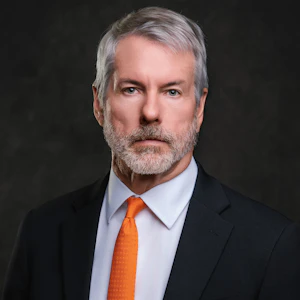
Michael Saylor
Michael Saylor
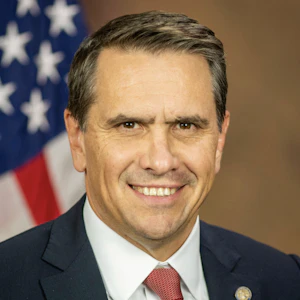
Todd Blanche
Todd Blanche
Biography of Deputy Attorney General Todd Blanche
The Honorable Todd Blanche is the 40th Deputy Attorney General of the United States, overseeing the work of the 115,000 dedicated employees who fulfill the Department of Justice’s mission at Main Justice, the FBI, DEA, U.S. Marshals, ATF, and 93 U.S. Attorney’s Offices.
Todd began his career at the Department where he served for over fifteen years in a variety of capacities, including as a contractor, a paralegal in the Criminal Division, and at the United States Attorney’s office for the Southern District of New York where he eventually became an AUSA and later a supervisor.
After leaving the Department, Todd worked as a criminal defense attorney that included representing President Donald Trump in three of the criminal cases brought against him in 2023 and 2024.
Following President Trump’s historic return to the White House, the President appointed Todd to work alongside Attorney General Pam Bondi to make America safe again. At the DOJ, Todd is working tirelessly to implement President Trump’s priorities that include confronting illegal protecting American businesses from fraud.
Todd has been married to his wonderful wife Kristine for nearly thirty years, is a father and grandfather.
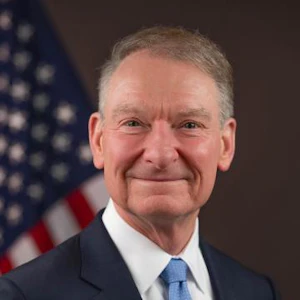
Paul Atkins
Paul Atkins
Prior to returning to the SEC, Chairman Atkins was most recently chief executive of Patomak Global Partners, a company he founded in 2009. Chairman Atkins helped lead efforts to develop best practices for the digital asset sector. He served as an independent director and non-executive chairman of the board of BATS Global Markets, Inc. from 2012 to 2015.
Chairman Atkins was appointed by President George W. Bush to serve as a Commissioner of the SEC from 2002 to 2008. During his tenure, he advocated for transparency, consistency, and the use of cost-benefit analysis at the agency. Chairman Atkins also represented the SEC at meetings of the President’s Working Group on Financial Markets and the U.S.-EU Transatlantic Economic Council. From 2009 to 2010, he was appointed a member of the Congressional Oversight Panel for the Troubled Asset Relief Program.
Before serving as an SEC Commissioner, Chairman Atkins was a consultant on securities and investment management industry matters, especially regarding issues of strategy, regulatory compliance, risk management, new product development, and organizational control.
From 1990 to 1994, Chairman Atkins served on the staff of two chairmen of the SEC, Richard C. Breeden and Arthur Levitt, ultimately as chief of staff and counselor, respectively. He received the SEC’s 1992 Law and Policy Award for work regarding corporate governance matters.
Chairman Atkins began his career as a lawyer in New York, focusing on a wide range of corporate transactions for U.S. and foreign clients, including public and private securities offerings and mergers and acquisitions. He was resident for 2½ years in his firm's Paris office and admitted as conseil juridique in France.
A member of the New York and Florida bars, Chairman Atkins received his J.D. from Vanderbilt University School of Law in 1983 and was Senior Student Writing Editor of the Vanderbilt Law Review. He received his A.B., Phi Beta Kappa, from Wofford College in 1980.
Originally from Lillington, North Carolina, Chairman Atkins grew up in Tampa, Florida. He and his wife Sarah have three sons.

Mike Selig
Mike Selig
Chairman Selig brings to the role deep public and private sector experience working with a wide range of stakeholders across agriculture, energy, financial, and digital asset industries, which rely upon and operate in CFTC-regulated markets.
Prior to his leadership at the CFTC, Chairman Selig most recently served as chief counsel of the Securities and Exchange Commission’s Crypto Task Force and senior advisor to SEC Chairman Paul S. Atkins. In this role, Chairman Selig helped to develop a clear regulatory framework for digital asset securities markets, harmonize the SEC and CFTC regulatory regimes, modernize the agency’s rules to reflect new and emerging technologies, and put an end to regulation by enforcement. He also participated in the President’s Working Group on Digital Asset Markets and contributed to its report on “Strengthening American Leadership in Digital Financial Technology.”
Prior to government service, Chairman Selig was a partner at an international law firm, focusing on derivatives and securities regulatory matters. During his years in private practice, he represented a broad range of clients subject to regulation by the CFTC, including commercial end users, futures commission merchants, commodity trading advisors, swap dealers, designated contract markets, derivatives clearing organizations, and digital asset firms. Chairman Selig advised clients on compliance with the Commodity Exchange Act and the CFTC’s rules and regulations thereunder, including in connection with registration applications and obligations, enforcement matters, and complex transactions.
Chairman Selig earned his law degree from The George Washington University Law School and was articles editor of The George Washington Law Review. He received his undergraduate degree from Florida State University.

David Bailey
David Bailey

Eric Trump
Eric Trump
Mr. Trump also serves as Executive Vice President of The Trump Organization, where he oversees the global management and operations of the Trump family’s extensive real estate portfolio. This includes Trump Hotels, Trump Golf, commercial and residential real estate, Trump Estates, and Trump Winery. Known for his hands-on leadership and strong market instincts, he has played a key role in expanding the company’s presence across major U.S. and international markets.
A globally recognized business leader and public figure, Mr. Trump is a prominent advocate for Bitcoin and decentralized finance. He is a co-founder of World Liberty Financial, a decentralized finance (DeFi) platform, and serves on the Board of Advisors of Metaplanet, Japan’s largest corporate holder of Bitcoin.
Beyond his business activities, Mr. Trump has helped raise more than $50 million for St. Jude Children’s Research Hospital in the fight against pediatric cancer, a philanthropic mission he began at age 21.
Mr. Trump earned a degree in Finance and Management from Georgetown University. He currently resides in Florida with his wife, Lara, and their two children. He is also the author of Under Siege, his memoir published in October 2025.
Jack Mallers
Jack Mallers
Cynthia Lummis
Cynthia Lummis
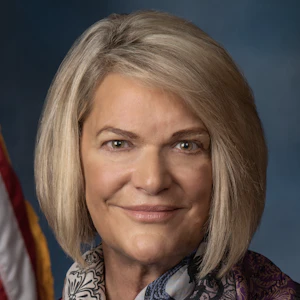
As the first-ever Chair of the Senate Banking Subcommittee on Digital Assets, Senator Lummis is the architect of the legislative framework shaping America's digital asset future. She introduced the landmark Lummis-Gillibrand Responsible Financial Innovation Act, the first comprehensive bipartisan crypto regulatory framework in Senate history. She co-authored the GENIUS Act — the first federal stablecoin law ever enacted — and introduced the BITCOIN Act, which would establish a U.S. strategic Bitcoin reserve of up to one million BTC. She is leading the Clarity Act, which will bring long-overdue regulatory certainty to the digital asset industry. She has also championed digital asset tax reform, including a de minimis exemption for small transactions and equal tax treatment for miners and stakers.
Known as Congress' "Crypto Queen," Senator Lummis represents Wyoming — a state she has helped build into one of the most digital asset-friendly regulatory environments in the nation. Before serving in the Senate, she served 14 years in the Wyoming Legislature, eight years as Wyoming State Treasurer, and eight years in the U.S. House. She is a three-time graduate of the University of Wyoming.
Her work represents a crucial bridge between traditional financial systems and the emerging digital economy, ensuring America leads the world in financial innovation while protecting the individual freedoms that define it.
Adam Back
Adam Back
Amy Oldenburg
Amy Oldenburg
David Marcus
David Marcus

Matt Schultz
Matt Schultz
Fred Thiel
Fred Thiel
Throughout his career, Mr. Thiel has consistently driven rapid growth and created substantial shareholder value. Prior to MARA, Mr. Thiel served as the CEO of two other public companies, Local Corporation (NASDAQ: LOCM) and Lantronix, Inc (NASDAQ: LTRX). He has successfully raised billions in equity and debt through private and public offerings, led companies through IPOs, executed high-value exits to strategic and financial acquirers, and implemented effective M&A and roll-up strategies.
Mr. Thiel attended the Stockholm School of Economics and executive classes at Harvard Business School, and is fluent in English, Spanish, Swedish, and French. Mr. Thiel is the Chairman of the Board for Oden Technology, Inc. and is active in Young Presidents’ Organization where he has led initiatives in both the FinTech and Technology Networks.
A recognized voice in the industry, Fred frequently shares his insights on energy and technology with major media outlets like Bloomberg TV, CNBC, and FOX Business, contributing to vital discussions about the future of these sectors.
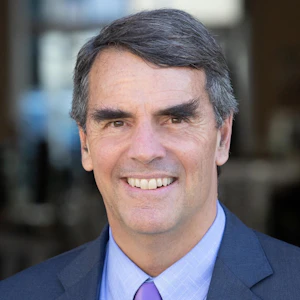
Tim Draper
Tim Draper
He is a supporter and global thought leader for entrepreneurs everywhere, and is a leading spokesperson for Bitcoin and decentralization, having won the Bitcoin US Marshall’s auction in 2014, invested in over 50 crypto companies, and led investments in Coinbase, Ledger, Tezos, and Bancor, among others.

Afroman
Afroman