Have Public Markets Been a Net Positive for Bitcoin?
Speakers/Moderators

Brian Dixon
Brian Dixon

Vijay Selvam
Vijay Selvam

Ryan Gentry
Ryan Gentry

Session
Overview
Brian Dixon of Off the Chain Capital moderated a discussion with Andy Edstrom, Ryan Gentry of Bitcoin Infrastructure Acquisition Corp., and Vijay Selvam of Elektron Energy on whether public markets have been a net positive for Bitcoin. The panel examined ETFs, derivatives, publicly traded miners, SPACs, and Bitcoin treasury companies as new ways for investors and institutions to gain Bitcoin exposure.
The conversation distinguished between Bitcoin the asset and Bitcoin the network. Panelists generally saw greater liquidity, ETF access, and corporate adoption as helpful for awareness and capital flows, while also raising concerns about off-chain trading, paper Bitcoin, custodial concentration, and reduced on-chain fee activity for miners.
A major theme was the trade-off between institutional access and Bitcoin’s self-custody ethos. The panel discussed whether derivatives suppress price discovery, how Bitcoin treasury companies may need real cash-flowing businesses, and why the continued ability to move from ETFs or corporate wrappers into self-custodied Bitcoin remains central to Bitcoin’s long-term resilience.
All right. Good afternoon, everybody. Welcome back from lunch. My name is Brian Dixon. I'm the CEO of Off the Chain Capital. We run a Warren Buffett, Benjamin Graham, Dodd-style deep discount value investment strategy, and we've always been very Bitcoin-heavy with our investment thesis. First, I'd like to go down the line and have everybody introduce themselves with a quick background on what they do.
Andy. I came from Wall Street: Goldman Sachs, banking, private equity, hedge funds, then got into wealth management. I was the first wealth manager investor to publish a book on Bitcoin called Why Buy Bitcoin. I built some products for a couple different Bitcoin companies, and currently I'm on the beach in terms of doing stuff in Bitcoin other than talking at conferences.
Hey all. Ryan Gentry, CEO of Bitcoin Infrastructure Acquisition Corp., a publicly traded SPAC looking to target a Bitcoin infrastructure company and take it public in the next couple of years. I'm an engineer by training. I spent 2020 to 2025 as head of business development for Lightning Labs, and I'm excited to chat with you all today about public markets and Bitcoin.
Hi guys. Vijay Selvam, Chief Legal Officer at Elektron Energy, which is the largest privately held Bitcoin mining business. I'm also the author of the book Principles of Bitcoin, published by Columbia Business School. I spent most of my career at Goldman Sachs, about 11 years there, so very much a TradFi guy who moved into Bitcoin.
The topic we're going to discuss today is: have the public markets been a net positive for Bitcoin? What we have in the markets today are new opportunities to get exposure to Bitcoin through different vehicles. We have ETFs, derivatives, publicly traded operators, and Bitcoin treasury companies. There are a variety of new ways to get exposure. I'd love to get your perspective on whether these new entrants, these different types of vehicles and ways to invest, have been a net positive or not.
I'll focus on price. Did number go up as much as we thought? We don't have a counterfactual, so it's impossible to know. The next best thing might be a historical analysis. In 2019, I published Why Buy Bitcoin. When I started writing it, the price was between $3,000 and $4,000, and when it went to press, the price was between $8,000 and $9,000.
The book had a valuation analysis and a 10-year price target. At that time, I think it was the first published piece of analysis to suggest that Bitcoin would take market share from not just fiat and gold, but other assets like real estate, equities, and fixed income. I had a parts chart in there with an $8 trillion network value. Figure 20 million coins conservatively, and you get to $400,000 per coin on a 10-year view. Remember, this was back in 2019.
The question I ask myself is: are we ahead of schedule or behind schedule? Have we met expectations, and what are the facts and circumstances? Certainly, I did not predict, and nobody could have predicted, Saylor showing up. That should have been a net positive to demand. I also don't think too many of us predicted AI agents showing up. Maybe there will be incremental demand for BTC.
And yet, if the thought was that from $8,000 to $400,000, we were going to go roughly 50x in a decade, we've made maybe 8x or 9x, and we have another roughly 5x to go to hit that target. I don't know that I could say we're going faster than I thought we would. There was no anticipation that Saylor would show up, that there would be ETFs, or that there would be this incremental demand and financialization. So I guess I'll be the resident bearer and say I don't see evidence that this has been extra demand driving price faster than I expected or hoped.
I think that's a fair perspective. If you focus instead of on price on the liquidity of the asset generally, one stat I've been liking to throw out this week is that IBIT options are now one of the most liquid options markets on the planet, which is incredible.
If you think about Bitcoin as a commodity and its maturation and financialization as an asset, first we had really liquid spot markets. That took a long time to build and become durable. Then we started having really liquid futures markets with perps, generally on offshore exchanges, then finally brought onshore with CME. Now we finally have options markets that are really liquid and allow people to sell volatility and do different things with Bitcoin.
From a global liquidity perspective and from a financialization-of-the-asset perspective, the more liquid Bitcoin gets, the less volatile it gets. The less volatile it gets, in theory, the more likely people are to hold it, and the more likely larger entities are to hold it. From that perspective, I do think it's been a net positive. In general, price is a liar or a laggard, and we should see the impacts of this increased liquidity globally in the financial system impact the price over time.
One caveat I will add is that all of this new liquidity generally has been generated within the existing traditional financial system, which has all sorts of tricks and scares about paper Bitcoin. If we could build all of this same liquidity infrastructure natively on Bitcoin, where those kinds of tricks can't take place, that would obviously be better. But we've got some work to do before that's really possible or scalable.
The way I look at it is any publicity is good publicity. The biggest risk to long-term Bitcoin adoption is that people just stop talking about it and it gets ignored. I would say that IBIT and other Bitcoin ETFs have onboarded hundreds of thousands of people into the Bitcoin space who probably would not have touched Bitcoin without the ease of access via an ETF.
Maybe they bought IBIT when Bitcoin was $30,000 or $40,000 and rode it up to $120,000. Their account went green, and they said, what is this asset? Let me read more about it. Then they read about it and understood censorship resistance, confiscation resistance, permissionlessness, and all those core properties of Bitcoin. Who's to say they didn't sell their IBIT and buy cold storage Bitcoin?
That's how I see it. There is the realist view here, and there is the idealist view. The idealist would say, you're losing the core properties of Bitcoin. But the realist view is, corporations are a given. They're not going away. In a hyperbitcoinized world, corporations will exist. Corporations have proven themselves to be extremely efficient ways to coordinate human resources and capital. If hyperbitcoinization is the end state, a stepping stone is corporate adoption. So it makes me happy to see that we are actually passing these stepping stones along the way.
There's a very important distinction when you think about what is good for Bitcoin the asset versus what is good for Bitcoin the network. Do you think public markets have been good or bad for both the asset and the network, and how do you think about that?
I'll take the first shot. Think about the extremes. If everybody has, not to pick on Coinbase, a Coinbase account, and all the coins are at Coinbase, and they're just matching buys and sells on platform, and nothing ever hits the chain, then there are no transaction fees. The miners don't make any money. That's not great for Bitcoin.
At the margin, are we moving transaction volume off the chain with all this financialization? It seems to me like we are. Is that going to make the network stronger or weaker? It seems like less economics to the base chain and the miners, and more economics to the matching engines or matching systems on top of the network.
There's a possible end state here where a lot of the volume gets moved off the base chain, and the security becomes more at risk, which I don't like. You can't really quantify that. You have to assume there's always going to be some of that. Lightning has some of the same issues associated with it. Somebody has to transact at the base level.
I'm not too worried. We're nowhere near that end state where everything is up on layer two or above. But it's something that I think about, and I keep my eye on. Ideally, I'd like to track the trend.
I fully agree with that. One thing we used to see often was that whenever there were big price movements one way or the other, they would always correlate with a ton of on-chain activity. The chain would get really congested. People would try to top up margin on different exchanges, rebalance between venues, and there was a ton of activity.
We have not seen that in the last couple big price flushes. That drop down to $59,000, the chain was dead quiet. That's not good. That's not a good sign. It's a sign that a lot of the trading activity is taking place within custodians, within paper Bitcoin transactions, and not in the same previous healthy architecture where there was a decentralized ecosystem of exchanges all around the world, with global arbitrage making sure the price was even across all of them, all using the Bitcoin blockchain for settlement.
The only counterpoint I have is that Square launching automatic Lightning acceptance for 28% of U.S. merchants as a public company is demonstrably positive for the network. That's definitely the biggest one-shot merchant adoption of Lightning as a protocol that we've had. Again, it would be better for the network if everybody was running their own Lightning node instead of just using Square's node, so there's still work to do there.
On net, public market adoption has not been very positive for the network, just because public market institutions don't want to hold their own keys and make their own transactions. They want a trusted custodial entity to do that for them, and that's not really what Bitcoin is all about.
I think that's a very key distinction, the difference between the asset and the network. Just to explain that a little bit, I think it was Peter Van Valkenburgh of Coin Center who described it publicly at a Senate hearing. He said Bitcoin is public payments infrastructure, like the internet is public information infrastructure. Bitcoin is public payment infrastructure. It doesn't belong to anyone. It's this pathway you can use for payments, and that's incredibly powerful.
You want to send dollars or pound sterling from London to Singapore. You can do that on the Bitcoin network, and neither party actually touches Bitcoin or is exposed to the Bitcoin price. That's super powerful in terms of what it does for the asset. It just makes Bitcoin more ubiquitous.
Many people are not so well-versed in Hayek and Mises to understand all the principles of money. But if you talk to them about a use case, that you're able to send dollars across the planet at a tiny fraction of what it costs in the traditional financial system, that's a use case. That helps adoption.
With the Lightning Network, the more channels you have, that's more Bitcoin that is not going to move. That's an additional source of demand. Overall, I think they're complementary.
You noted before that the IBIT options product is one of the most liquid products that exists today. The derivatives market completely dwarfs the spot market. The more Bitcoin products traded in public markets, the more synthetic adjacent products come out as a result. Do you think these synthetic products naturally suppress Bitcoin's price discovery?
It's tricky. I think Saylor is right in his articulation that you're extracting the volatility out of the underlying asset. It is measurable that over time, as Bitcoin has gotten more liquid and as these products have gotten bigger, the volatility of the asset has gone down.
I do think that's generally what's happening. How that directly impacts price is a little non-linear. In the moment, yes, if you have an entity selling covered calls, that pressure is going to put some downward pressure on the spot price naturally, because in order to hedge yourself, you're going to want to have a short position on the future.
But over time, as you generate more of this options volume, you are generating more activity and more demand for the underlying asset. So it's kind of short-term bearish, long-term bullish. It's really unclear when the short term ends and the long term begins, or if it's cyclical, where the long-term bullish happens and then the shorts get control again and suppress the price in the short term, but then we go up again.
I totally agree. This whole narrative about derivatives and paper Bitcoin, what they effectively do is they don't remove demand. They delay and concentrate demand.
A typical product that is one of the supposed culprits is a covered call. Let's say you bought Bitcoin at $70,000. You sell a call option at $80,000 and earn the premium from the sale of the call option. That's your income. You've bought $70,000 Bitcoin and sold $80,000 Bitcoin. The net result is that Bitcoin tends to fluctuate in that band over a period of time.
But that ignores the fact that you most likely will take that premium and buy Bitcoin with it. That's a new source of demand for Bitcoin. The guy who bought the call option at $80,000 is obviously bullish Bitcoin. If the price goes up, he's going to exercise his call, and he's probably going to hodl his Bitcoin. Then you also have a short squeeze. If there's a groundswell of spot demand that pushes the price over $80,000, you're going to have this massive short squeeze.
All it does is delay the price action. You can't paper over the long-term adoption story: people learning about it, understanding it, and adopting it. That groundswell of demand can only be delayed. You're not going to remove it.
It's time for audience participation. Raise your hand if you recognize the following three letters: FTX. Anybody remember FTX?
Don't quote me on the numbers, but at the time it blew up, or right before it blew up, or at some point during the auditing process, they were supposed to have had something like 60,000 BTC. When the numbers came in, surprise, surprise, the coins were not all there.
What literally happened? We don't know the details and the order of operations, but at some point some buyer of Bitcoin hit buy on the FTX exchange, and FTX on the screen said, congratulations, you have a Bitcoin. Except they didn't actually go on-chain and get the UTXO. They didn't get the actual coins.
In that run-up into the peak of the prior bull market, some demand that should have been flowing into actual UTXOs on the network did not get there. Or maybe it got there first and then got sucked out. We don't know. But the point is, as long as there are exchanges representing that they're selling actual Bitcoin to buyers, but they aren't buying all the coins, and maybe they aren't well audited, that still exists today. There is a possibility and a risk that demand that should be manifesting is not actually making it into UTXOs on-chain.
One more closing thought on that, because I thought you made a really good point. By this volatility suppression of the derivatives markets, one entity that is probably not as interested in Bitcoin now, that used to be really interested, is the moon boys who want to see 100x gains in four years. I say that kind of derisively, but also that's been a really important part of the Bitcoin hodler base for its entire history.
I do think we're seeing a lot of that retail get-rich-quick demand instead speculating on AI stocks, Robinhood, and different things like that. That demand is not coming to Bitcoin anymore because we just don't see the same upward price action, those 10% weeks like we used to. I don't think that's the most important area for Bitcoin's long-term growth, success, and price action, but in the short term, it is one casualty of the growing derivatives market.
I want to dial in specifically on Bitcoin treasury companies. When these initially launched, the play was to be a pure play, like what Strategy accomplished, then Metaplanet in Japan, then Smarter Web Company in London and some of these other ones. Now that the market has changed over the last year, we're seeing Bitcoin treasury companies pivot and acquire businesses or merge existing revenue-generating businesses under their operating model, then use Bitcoin as a treasury strategy.
What's your opinion on the new model for Bitcoin treasury companies? Will pure plays continue to work in the future outside of the few, like Strategy, that really caught on and were able to stack a tremendous amount of Bitcoin early? Do you see the future of these businesses with operating businesses beneath them?
Maybe I'm the wrong guy to answer this question. I have the cynical view generally of strategy pivots among publicly traded companies. On the one hand, I think every strategy will be tried, and we'll see which ones succeed and which ones fail.
On the other hand, I think of this conference a year ago and how completely bananas all the treasury company stuff was. Now when I think of pivots, I think of Allbirds recently pivoting to AI, which reminds me of Long Island Blockchain. Granted, I'm overstating the case here and exaggerating, but I guess the point is I'm wary and cautious about major pivots. Equally, whatever people are willing to put money into and pump and sell will get tried. We're going to try all the things and see what happens.
When I raised my SPAC, in every fundraising meeting I started off by saying, this is Bitcoin Infrastructure Acquisition Corp. We are not pursuing a treasury strategy. That is not the goal explicitly. Please do not bucket me in with that crowd.
The thing that makes the most sense to me is having real products and services, generating real cash flow, and maybe organically building a Bitcoin treasury over time from real cash flows, as normal companies build a dollar-denominated treasury today.
I don't know how long there is going to be room for Bitcoin treasury companies that purely create income based on financial engineering. Today, there are only really two that can do that, debatably, in the U.S. We'll see how long MicroStrategy and Strive can keep this up before they need to acquire new cash-flowing lines of business to help support the dividend obligations.
At the minimum, it is necessary that the company can pay its bills. It should be able to pay salaries and rent, because otherwise the narrative is going to be that they sold some of the Bitcoin to pay salaries. You need to be able to avoid that.
Otherwise, it's such a small fraction of companies around the world that are doing this. We live in this little bubble where everyone is talking about the new Bitcoin treasury company, but in the grand scheme of things, it's a tiny fraction of companies that have realized this is hard money and are going to adopt it. I think this has a long way to go.
At the very least, you need to be able to pay your salaries. Beyond that, if you're sufficiently sophisticated to deploy traditional finance financial engineering tools effectively and efficiently, like what Metaplanet is doing by selling put options, then I think that can be a business model. They raise fiat, and between raising the fiat and buying the Bitcoin, they sell put options, and that's a revenue stream. It's obviously very risky. You need to know what you're doing and model it. But if you can do that, I think that's a business model.
One of the things we're seeing more of is the corporatization of Bitcoin through ETFs and other institutional wrappers. One counterargument is that this takes away a lot of the foundational principles of Bitcoin: the ability to self-custody it, the censorship resistance, and the ability to move the asset how you want to move it.
What do you think the trade-offs are of having corporate wrappers versus being able to hold Bitcoin yourself with self custody? Do you think we have a risk of regulatory or institutional capture by having all of this Bitcoin at Coinbase, for example, which is the predominant custody provider for the Bitcoin ETFs?
There is definitely a risk with the amount of Bitcoin that Strategy and Coinbase have. In the instance of a hard fork, for example, whatever side of the fork the exchange lists as BTC is going to have a huge advantage. In fact, it is going to win. They have a tremendous amount of control there.
At the end of the day, it's economic nodes that determine which fork succeeds. It's not that you have 20,000 nodes and most of them matter equally. It's the economic nodes. It's who can sell one chain and buy the other chain. Those are the guys that actually determine the winner in a fork. So it is definitely very risky.
But the beauty of Bitcoin is that it gives you the option to always swap your shares or your ETF for Bitcoin, assuming it's not FTX. It gives you the option to sell your corporate shares and buy Bitcoin. That's not available with gold. That's not available with any other asset in history. The fact that you can do it in maybe 15 minutes or less, that you can sell your IBIT and buy Bitcoin, is tremendously powerful. It doesn't worry me that much.
The concentration of Bitcoin in just a couple corporations is definitely unfortunate. But it's not mutually exclusive, where you have corporations holding Bitcoin versus individuals holding Bitcoin. Both are happening. I know some of the custody companies are seeing great growth among their user base and their Bitcoin-under-custody type products.
To the earlier point about corporate adoption being inevitable, corporations are people too. It would be better if these corporations were holding their own keys, just like it would be better if every individual holder of Bitcoin was holding their own keys. But the most important thing is that everybody has the option to do that, and that on the protocol level and service provider level, we keep making the barrier to entry to holding your own keys as low as possible. I do think we're doing the right things, and a couple entities amassing a ton of Bitcoin is just part of the game.
I'll keep it quick because I think we're out of time. From my perspective as a wealth manager, my clients own the ETFs. To be honest with you, most of them will probably not buy actual coins and cold store them. That's just a reality. There is some demand there that probably won't ever transfer into on-chain coins.
On the other hand, the positive view is that one of the genius elements of Satoshi and the design of Bitcoin was that the issuance schedule of coins put enough in the hands of early adopters who knew exactly what they were doing. Many of those coins are lost, but many are cold stored. A lot of those coins, I think, are in very strong hands. I suspect there are enough of those holders out there, enough of those whales still swimming around in these waters, that they're going to be a pretty strong defensive bulwark for the network, even in the long run, as paper Bitcoin continues to grow on top of it.
That's wonderful. I want to thank Andy, Ryan, and Vijay, and thank you all for joining us today. We really appreciate it.
Similar
Sessions
AI and the Future of Bitcoin


Jesse Posner
Jesse Posner

Derek Ross
Derek Ross

Ryan Gentry
Ryan Gentry
AI and the Future of Bitcoin
Speakers/Moderators
Jesse Posner
Jesse Posner
Derek Ross
Derek Ross
Ryan Gentry
Ryan Gentry
The Orange Umbrella / Principles of Bitcoin

Vijay Selvam
Vijay Selvam
The Orange Umbrella / Principles of Bitcoin
Speakers/Moderators
Vijay Selvam
Vijay Selvam
Have Public Markets Been a Net Positive for Bitcoin?
Brian Dixon
Brian Dixon
Vijay Selvam
Vijay Selvam
Ryan Gentry
Ryan Gentry
Have Public Markets Been a Net Positive for Bitcoin?
Speakers/Moderators
Brian Dixon
Brian Dixon
Vijay Selvam
Vijay Selvam
Ryan Gentry
Ryan Gentry
Other
Speakers

Michael Saylor
Michael Saylor

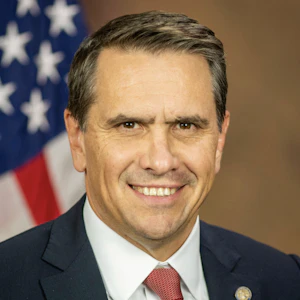
Todd Blanche
Todd Blanche
Biography of Deputy Attorney General Todd Blanche
The Honorable Todd Blanche is the 40th Deputy Attorney General of the United States, overseeing the work of the 115,000 dedicated employees who fulfill the Department of Justice’s mission at Main Justice, the FBI, DEA, U.S. Marshals, ATF, and 93 U.S. Attorney’s Offices.
Todd began his career at the Department where he served for over fifteen years in a variety of capacities, including as a contractor, a paralegal in the Criminal Division, and at the United States Attorney’s office for the Southern District of New York where he eventually became an AUSA and later a supervisor.
After leaving the Department, Todd worked as a criminal defense attorney that included representing President Donald Trump in three of the criminal cases brought against him in 2023 and 2024.
Following President Trump’s historic return to the White House, the President appointed Todd to work alongside Attorney General Pam Bondi to make America safe again. At the DOJ, Todd is working tirelessly to implement President Trump’s priorities that include confronting illegal protecting American businesses from fraud.
Todd has been married to his wonderful wife Kristine for nearly thirty years, is a father and grandfather.

Paul Atkins
Paul Atkins
Prior to returning to the SEC, Chairman Atkins was most recently chief executive of Patomak Global Partners, a company he founded in 2009. Chairman Atkins helped lead efforts to develop best practices for the digital asset sector. He served as an independent director and non-executive chairman of the board of BATS Global Markets, Inc. from 2012 to 2015.
Chairman Atkins was appointed by President George W. Bush to serve as a Commissioner of the SEC from 2002 to 2008. During his tenure, he advocated for transparency, consistency, and the use of cost-benefit analysis at the agency. Chairman Atkins also represented the SEC at meetings of the President’s Working Group on Financial Markets and the U.S.-EU Transatlantic Economic Council. From 2009 to 2010, he was appointed a member of the Congressional Oversight Panel for the Troubled Asset Relief Program.
Before serving as an SEC Commissioner, Chairman Atkins was a consultant on securities and investment management industry matters, especially regarding issues of strategy, regulatory compliance, risk management, new product development, and organizational control.
From 1990 to 1994, Chairman Atkins served on the staff of two chairmen of the SEC, Richard C. Breeden and Arthur Levitt, ultimately as chief of staff and counselor, respectively. He received the SEC’s 1992 Law and Policy Award for work regarding corporate governance matters.
Chairman Atkins began his career as a lawyer in New York, focusing on a wide range of corporate transactions for U.S. and foreign clients, including public and private securities offerings and mergers and acquisitions. He was resident for 2½ years in his firm's Paris office and admitted as conseil juridique in France.
A member of the New York and Florida bars, Chairman Atkins received his J.D. from Vanderbilt University School of Law in 1983 and was Senior Student Writing Editor of the Vanderbilt Law Review. He received his A.B., Phi Beta Kappa, from Wofford College in 1980.
Originally from Lillington, North Carolina, Chairman Atkins grew up in Tampa, Florida. He and his wife Sarah have three sons.

Mike Selig
Mike Selig
Chairman Selig brings to the role deep public and private sector experience working with a wide range of stakeholders across agriculture, energy, financial, and digital asset industries, which rely upon and operate in CFTC-regulated markets.
Prior to his leadership at the CFTC, Chairman Selig most recently served as chief counsel of the Securities and Exchange Commission’s Crypto Task Force and senior advisor to SEC Chairman Paul S. Atkins. In this role, Chairman Selig helped to develop a clear regulatory framework for digital asset securities markets, harmonize the SEC and CFTC regulatory regimes, modernize the agency’s rules to reflect new and emerging technologies, and put an end to regulation by enforcement. He also participated in the President’s Working Group on Digital Asset Markets and contributed to its report on “Strengthening American Leadership in Digital Financial Technology.”
Prior to government service, Chairman Selig was a partner at an international law firm, focusing on derivatives and securities regulatory matters. During his years in private practice, he represented a broad range of clients subject to regulation by the CFTC, including commercial end users, futures commission merchants, commodity trading advisors, swap dealers, designated contract markets, derivatives clearing organizations, and digital asset firms. Chairman Selig advised clients on compliance with the Commodity Exchange Act and the CFTC’s rules and regulations thereunder, including in connection with registration applications and obligations, enforcement matters, and complex transactions.
Chairman Selig earned his law degree from The George Washington University Law School and was articles editor of The George Washington Law Review. He received his undergraduate degree from Florida State University.

David Bailey
David Bailey

Eric Trump
Eric Trump
Mr. Trump also serves as Executive Vice President of The Trump Organization, where he oversees the global management and operations of the Trump family’s extensive real estate portfolio. This includes Trump Hotels, Trump Golf, commercial and residential real estate, Trump Estates, and Trump Winery. Known for his hands-on leadership and strong market instincts, he has played a key role in expanding the company’s presence across major U.S. and international markets.
A globally recognized business leader and public figure, Mr. Trump is a prominent advocate for Bitcoin and decentralized finance. He is a co-founder of World Liberty Financial, a decentralized finance (DeFi) platform, and serves on the Board of Advisors of Metaplanet, Japan’s largest corporate holder of Bitcoin.
Beyond his business activities, Mr. Trump has helped raise more than $50 million for St. Jude Children’s Research Hospital in the fight against pediatric cancer, a philanthropic mission he began at age 21.
Mr. Trump earned a degree in Finance and Management from Georgetown University. He currently resides in Florida with his wife, Lara, and their two children. He is also the author of Under Siege, his memoir published in October 2025.

Jack Mallers
Jack Mallers

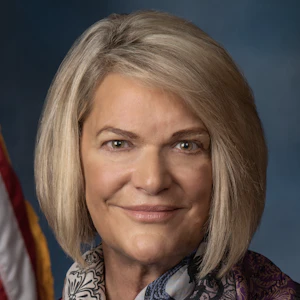
Cynthia Lummis
Cynthia Lummis
As the first-ever Chair of the Senate Banking Subcommittee on Digital Assets, Senator Lummis is the architect of the legislative framework shaping America's digital asset future. She introduced the landmark Lummis-Gillibrand Responsible Financial Innovation Act, the first comprehensive bipartisan crypto regulatory framework in Senate history. She co-authored the GENIUS Act — the first federal stablecoin law ever enacted — and introduced the BITCOIN Act, which would establish a U.S. strategic Bitcoin reserve of up to one million BTC. She is leading the Clarity Act, which will bring long-overdue regulatory certainty to the digital asset industry. She has also championed digital asset tax reform, including a de minimis exemption for small transactions and equal tax treatment for miners and stakers.
Known as Congress' "Crypto Queen," Senator Lummis represents Wyoming — a state she has helped build into one of the most digital asset-friendly regulatory environments in the nation. Before serving in the Senate, she served 14 years in the Wyoming Legislature, eight years as Wyoming State Treasurer, and eight years in the U.S. House. She is a three-time graduate of the University of Wyoming.
Her work represents a crucial bridge between traditional financial systems and the emerging digital economy, ensuring America leads the world in financial innovation while protecting the individual freedoms that define it.

Adam Back
Adam Back

Amy Oldenburg
Amy Oldenburg
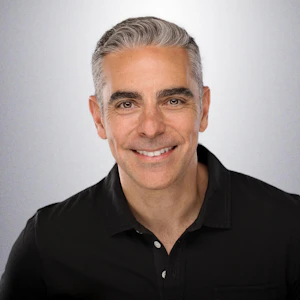
David Marcus
David Marcus

Matt Schultz
Matt Schultz
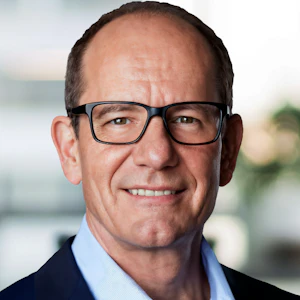
Fred Thiel
Fred Thiel
Throughout his career, Mr. Thiel has consistently driven rapid growth and created substantial shareholder value. Prior to MARA, Mr. Thiel served as the CEO of two other public companies, Local Corporation (NASDAQ: LOCM) and Lantronix, Inc (NASDAQ: LTRX). He has successfully raised billions in equity and debt through private and public offerings, led companies through IPOs, executed high-value exits to strategic and financial acquirers, and implemented effective M&A and roll-up strategies.
Mr. Thiel attended the Stockholm School of Economics and executive classes at Harvard Business School, and is fluent in English, Spanish, Swedish, and French. Mr. Thiel is the Chairman of the Board for Oden Technology, Inc. and is active in Young Presidents’ Organization where he has led initiatives in both the FinTech and Technology Networks.
A recognized voice in the industry, Fred frequently shares his insights on energy and technology with major media outlets like Bloomberg TV, CNBC, and FOX Business, contributing to vital discussions about the future of these sectors.
Tim Draper
Tim Draper
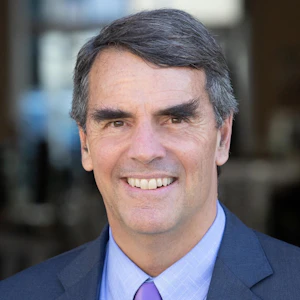
He is a supporter and global thought leader for entrepreneurs everywhere, and is a leading spokesperson for Bitcoin and decentralization, having won the Bitcoin US Marshall’s auction in 2014, invested in over 50 crypto companies, and led investments in Coinbase, Ledger, Tezos, and Bancor, among others.

Afroman
Afroman