Why Bitcoin Miners Have a Head Start in the Race for AI Compute
Speakers/Moderators

Mags Gronowska
Mags Gronowska


Jeffrey Thomas
Jeffrey Thomas

Frank Holmes
Frank Holmes
Session
Overview
This Energy Stage discussion examined why Bitcoin miners may have an advantage as artificial intelligence drives demand for compute infrastructure. The panel focused on the core asset miners already control: large-scale access to power, land, grid connections, and operational experience building data centers quickly.
Drew Armstrong, Jeffrey Thomas, and Frank Holmes discussed how Bitcoin mining infrastructure differs from AI and HPC data centers, including much higher CapEx, more complex cooling, longer equipment lead times, GPU financing, redundancy requirements, and the challenge of curtailment. They also explored whether mining and AI can operate together, with mining potentially acting as a flexible load that helps balance energy use.
The conversation highlighted a tension between long-term hyperscaler leases, which can provide more predictable revenue and lower financing costs, and a dual-engine model that keeps Bitcoin mining exposure alongside AI compute. The speakers also connected AI data centers to broader themes around energy markets, critical infrastructure, and national security.
I have to kick it off with the obvious headline title story: why do miners have this head start in the race for AI compute? Miners are known for building out data center infrastructure fast, and for building energy systems fast to power those. So what gave them that head start?
I think the short answer is power. As the demand for data center capacity for AI and high performance compute really accelerated over the last three or four years, the only reason many miners had the opportunity to talk with hyperscalers about turnkey data center leases, or engage in HPC directly themselves, was because they were sitting on the scarce resource: power that was readily available.
As we look into the future, with increased regulatory uncertainty in certain grids or power markets around the country, and with increased lead times for getting front-of-the-meter power built out, the fact that Bitcoin miners have power available, and in many cases are using that power for Bitcoin mining today, is the key differentiator. It opened the door for conversations about HPC leases that, candidly, five years ago would have been very unlikely. Hyperscalers probably would not have said they would even consider working with a Bitcoin miner to develop a data center for their applications.
There are other benefits that Bitcoin miners bring to the table, but ultimately it comes down to power and the fact that Bitcoin miners were sitting on available power at a very important time in the history of data centers.
What gave them the ability to build out fast and scale? Power is the critical resource, but what gave them that?
If we think back to the previous bear market, when Bitcoin miners were going through the roof and every day there was a new Bitcoin mining public company, part of the recipe for success was that folks were always thinking about growth and how they could continue to grow.
Before the last couple of years, it was very cheap for miners to announce growth on the power side relative to growth with hash rate. If you announced you were growing your hash rate, you needed to come up with cash for a futures order or to buy new ASICs. To grow a power pipeline, many times it was a matter of purchasing options to buy land and submitting whatever studies or paperwork were required to get grid power in various power markets, whether that was ERCOT, PJM, or in some cases more regulated markets.
A lot of miners saw growing their power pipeline as a way to give themselves the ability to grow if Bitcoin mining economics improved again. Thinking about the 2022 and 2023 bear market, a lot of miners saw power as a way to preserve optionality for growth in the future without having to dilute shareholders at the bottom and buy new ASICs. Many folks were continuing to grow hash rate during that time as well, but there were incentives for Bitcoin miners to continue growing their power portfolio. That has really paid dividends in the post-ChatGPT era, where demand for compute has accelerated.
That leads to the next question. We had gigawatt-size Bitcoin miners, and a lot of the public companies have converted to HPC. Why? Can you talk about that? Is it the revenue numbers? If it is, can you give the audience an idea of the size of revenue and cost?
The economics are fundamentally different, probably especially on the CapEx side. It is roughly a 20x increase in CapEx. But to offset that, there is a completely different set of economics from the offtaker point of view. The offtakers are offering long-term contracts, annual escalators, and a style of agreement that is very compatible with the capital markets. That is attracting a lot of capital to the AI industry, and there is huge demand. Demand outstrips supply many times over.
It is a very attractive proposition in the face of mining, which has challenges. Perhaps what led to the fantastic surge in mining over the last 10 years is now changing. The hunt for power is fundamental and one of the major attributes of miners. Add to that the economics and the ability to innovate and be agile. That is what got mining to where it is today, and that is what AI needs.
Just to put it in context, my understanding is it costs about half a million to $1 million per megawatt for a Bitcoin miner, and $10 million to $12 million per megawatt for AI. Is that correct?
That is absolutely right.
Construction varies depending on where you are located. Cambridge University came out with a study last year that said it is about $1 million per megawatt for Bitcoin mining with the chips. When you transition over to a Tier 3 AI factory, it is about $33 million, so 33 times greater. The reason is there is much more air conditioning.
When you talk about a gigawatt of electricity, it will consume 50,000 tons of copper. Copper prices are making new highs too. It is the sheer magnitude.
The question earlier was about Bitcoin miners. My experience as a money manager and with the creation of HIVE is that when I went to these conferences, there were scrappy entrepreneurs. My first hearing of Bitcoin came from a philosophical approach toward limited scarcity and supply, so there was this fusion that took place. I think a lot of Bitcoin miners were lucky because they went out and quickly got the land and the power. They knew about density. They knew those preliminary parts.
Before ChatGPT came out, there was no rush for HPC. At HIVE we have a flywheel. We noticed we were in northern Sweden, and asked whether we could balance the grid. We were the first to balance the grid because we had this flywheel concept, which Jim Collins has written about. We also saw ourselves wanting to be green only. That is part of the flywheel for us.
During that journey, you would go to Mining Disrupt, and the people there were really scrappy. They just wanted to make a buck. They went up to Calgary to learn how to take flare gas. Then Crusoe goes out to Abilene, and they have flare gas, solar and wind, and they found stranded electricity. I think the creation of what we have is a bunch of real early, scrappy entrepreneurs.
You talk about copper as a resource and prices going up. Obviously energy is a big factor, and everyone wants energy. What do you think are the largest bottlenecks right now, whether for mining or HPC? Are they the same? In the past, for example, miners were waiting 12 or 13 months for a transformer. What are the biggest bottlenecks to scaling fast right now?
From our experience right now, it is deliverables. We are waiting 40 or 50 weeks. It is HVAC, chillers, and all of that infrastructure.
For those who do not really understand the machinery of this, a Tier 1 data center is very different from Tier 3. GPUs started out, for us, with the largest suite of GPUs mining Ethereum. We had 130,000 AMD chips. They are more sensitive. When you look at an ASIC chip, you have to think of it as being a Jeep or a Bronco. When you start looking at GPU chips, in the first part of this process they were like Porsches. Today they are like Bugattis or McLarens.
You are talking about $3.5 million. Last week our team was with Michael Dell, and he received a gift from Jensen. I know the world of gold, and I know the size of a box. This was 450 pounds, worth $5 million, as a cluster of GPU chips. One GPU chip with all the wiring for the H200s is costing us around $70,000.
With an ASIC chip, you unwrap it, plug it in, and in six hours you have cash flow. Nvidia chips arrive, and six weeks later you still do not have cash flow. The wiring and the creation of the brain is much more complex. You are building a brain at this level. That complexity is so different from a Tier 1 data center. That is my experience.
Can you very quickly tell the audience the difference between Tier 1, Tier 2 and Tier 3?
I will turn it over to Jeffrey. You are the engineer here. I am a financial engineer, not an electrical or civil engineer.
There are many different classifications for data centers, depending on which system you are looking at. Some are upside down. A Tier 1 data center in telecom is top of the stack. A Tier 4 data center in the Uptime Institute is top of the stack. Essentially, it is about the resilience and redundancy you are building in, and the number of parallel circuits you have for energy management, whether that is electrical or cooling. That results in an uptime. Are you five nines, four and a half nines, three nines? How many seconds a year, or minutes a year?
You cannot balance the grid, can you?
That is a different issue, and a massive issue, in terms of the volatility of the load, harmonics, and the way the grid behaves in relation to the appliance. The data center is just an appliance. You have many appliances plugged into the electrical circuit. A data center happens to be a very large appliance with certain characteristics that need to be understood.
What we are doing at CleanSpark is really understanding and managing that energy cycle from the sourcing, to the use, and then the reuse of energy to optimize. How do we optimize power intelligently in this era of intelligence that we are moving into? Our currency turns away from bitcoins and turns into tokens, and those tokens are consumed at a massive rate. Trillions of tokens are required every minute.
As we move forward into the world of physical AI, robotics, robotic surgery, autonomous vehicles, and robots at home, more and more tokens are going to be required. It is our ability to turn electrons into tokens efficiently and rigorously, and in line with the expectations of our customers.
One major difference in the world of AI is that we have customers. We are not producing tokens for our own consumption. We are producing them for somebody else's consumption. If that is a surgeon doing a remote robotic operation, you do not want to run out of tokens at the wrong time. The idea of having a Tier 1 or Tier 4, whichever system you use, is really important. It is about rigor, planning and execution over 20 years. This is not something we can pick up and put down. It is a long-term commitment to our customers.
To complement what you are saying, you need to have three different sources of the internet, and you are going to have to have backup batteries. Are you going to use lithium batteries? What batteries are you going to use? There is new research and evolution, including new Samsung batteries. We do not know yet, but we do know we have to get a lot of battery backup.
We have to have a lot of storage of energy, whether that is conventional lithium batteries, hydrogen cells, or some other form of storing energy. Energy might be heat or it might be electricity. We need to be able to source the energy appropriately, use it, and then reuse it.
Getting that stuff in right now is difficult.
There are some long lead-time items around that space. But if you have a smart supply chain and you plan this properly, we should be able to deliver data centers in a 12-month period. At the moment, it is 18 to 24 months because we are seeing old practices brought into this new world.
In Abilene, we are seeing 6,500 people coming to one construction site every day. Something is bound to be inefficient around that. The idea of modularization, taking a lesson from Bitcoin mining and building all the infrastructure in a factory under factory-controlled conditions, building quality in, and building fast-to-market solutions that can then be assembled on site, is important. There is a major difference: we assemble these data centers; we do not build them, because they are not static. Every two or three years, the chips are going to change, and the data center has to change to respond to that.
You mentioned the importance of redundancy, which leads me to thinking about curtailment. Miners are the ideal curtailers, whereas with AI, you do not want to shut down that operation. Can you talk about the synergy or flexibility of running both, maybe co-location, or the impact when you move predominantly toward AI? Is it curtailed, or are certain parts curtailed?
Current architectures in AI are not curtailed. But I think this is something CleanSpark is leading the pack in. We are not pivoting away from mining. We are accelerating our mining and our entrance into AI, and we are balancing those around the microgrid. We are able to use mining as a load balancer to the grid and as a conditioner for the harmonics and the interface with the grid.
We are now seeking ways to change the fundamental architecture of AI. Perhaps the AI data center does not have to be up all the time. There are studies out there. Duke Energy came out with a study that says if all data centers curtailed for 1% of the year, or three days of planned maintenance, the grid would find another 96 gigawatts. If you think of a factory, factories close down. If this is an AI token factory, we should be able to close a production line down and move that production to another line while we do annual maintenance. If we do that for 1% of the time, 96 gigawatts would be available for consumption.
Economically, that has not been a driver previously. But now, in the search for energy, where we need this token manufacturing, it is absolutely imperative that we change and challenge the architecture.
Looking at it from a financial point of view, I think you are making roughly $0.14 an hour from your ASIC chip. For our H200s, it is more like $3. We have been in it a little longer. When we first started, it was called bare metal. It is interesting how we built it up to 10,000 customers in 80 countries. Basically, they were able to rent, and they did not want to have a long-term agreement with AWS. They wanted that machine.
We ended up finding that we had to have a suite. Our A40s are $0.50, the H100s are $1.20, and the H200s are higher. You can see the spectrum change. What is really profound for us is that an ASIC chip halving happens every four years. We depreciate them over four years. They are basically worth nothing unless you get cheaper energy. The only way you can have that chip be sustainable is if you can go from $0.05 electricity to $0.02. If you cannot do that, that chip is worth zero.
Not so with our GPUs. We bought $70 million of these A40s and 6,000 series chips in 2021 and started mining Ethereum. Ethereum disappears. We pivot over to building up our infrastructure for AI. To me, it is interesting to see how it has evolved. A year ago within Nvidia, bare metal was a bad word. Today it is a good word.
Those GPU chips, we got our money back mining Ethereum. We depreciated them down, and they went back up. We sold them for 80% of our value and rolled them into H100s. You cannot do that with Bitcoin miners.
Something else has really happened. The GPU has become an asset class. Only this year, GPUs are much more valuable and sustainable than they used to be. They used to say you had to get a customer first, then build the data center, and then get funding for the GPU chips. The banks did not want to lend you money if you were a Bitcoin miner. All that stuff is gone, because the ecosystem in the financial sector now has all these credit funds that are not lending on the data centers, but they look at GPUs as an asset that lasts longer than four years, and is looking more like seven years.
The value of these chips went down and then came back up. I am blown away that BlackRock and others have these credit funds, and they want to lend against your GPUs. This will accelerate. You can get your GPUs and get them funded, but you cannot get the backup storage and all the other necessary equipment. That is two to three years away. If you are starting fresh today with permitting and all the anti-HPC drama, it could take four or five years. Bitcoin miners are in the sweet spot, and it is all by luck. We never thought this until ChatGPT opened up and the world changed. Everyone wants to be in AI, and it is exciting.
We have danced around some of the qualitative differences, especially with respect to curtailment. Bitcoin mining and HPC are qualitatively different. Bitcoin mining is effectively a power arbitrage play. Most miners are only mining Bitcoin insofar as they can earn a return by doing so. At $0.14 per kilowatt hour, there is not a ton of arb. If you are plugging into the grid anywhere in the U.S., the average retail electricity price might be around $0.14 to $0.17. In a way, that arbitrage has been competed out a little bit over the years.
Compared with HPC, you are actually building a product for a customer. Importantly, the value of compute varies depending on who that customer is. There are many classifications and levels of HPC markets, and I will not get into a full taxonomy here, but compute is probably more valuable for a frontier lab than it is for me trying to make AI slop to send to my group chat.
Even though we talk about HPC and AI data centers, there is a massive diversity within that ecosystem. Bitcoin miners are mining Bitcoin because they are trying to make money, and they are producing this commodity as a result. Bitcoin miners are much easier to curtail, and it is much more natural.
I do not think you will start to see curtailment on the HPC side until the end customers of that compute are price sensitive enough that they are willing to make that tradeoff. It is theoretically possible to use software to manage workloads in a way that you might be able to curtail as Jeff described. But that is not really where we are right now.
Eventually we will get to a point where some end customers of compute are price sensitive enough to make those tradeoffs. Right now, especially for some of the large tech companies serving frontier labs, or for the frontier labs themselves, it is not worth the hindrance in the productivity of their compute to worry about curtailing during certain peak events. I am sure Duke Energy would love for some of these data center loads to do that, but I do not think we are fully there yet. It feels inevitable that we will get there. Bitcoin mining, once again as a pioneer species, has proved a lot of these strategies are viable in various power markets around the world. But we are not quite there yet with HPC, though it feels inevitable that we will be.
Putting my money manager hat on, GPUs are all new. It has happened so rapidly. Bitcoin miners are going through a sort of bifurcation. Are you going to take your Bitcoin mining data center and contract with a hyperscaler? The hyperscaler is basically going to give you $0.14, but they are going to give you a 15-year contract. Analysts want that long-term contract. It drops into their model, and they give you a bigger valuation.
If you look at CleanSpark's valuation and HIVE's valuation on revenue multiples, some analysts are saying we are just Bitcoin miners going through the transition. They are looking only for a hyperscaler. I think that is a big airball as an analyst. If you take a 40-megawatt Bitcoin mining data center, that becomes about 30 megawatts for HPC because so much is air conditioning. You are going to make much more money and margin off that. All of a sudden you have that duality where you are a CoreWeave component, while at the same time you offer investors tremendous optionality on your Bitcoin mining operations.
If Bitcoin soars through $100,000 and $120,000, you will go through a big rerating. For us, having a dual engine of both HPC, building out those Tier 1 data centers and preparing them so they could become Tier 3 down the road, is a very smart move. If you are just selling to U.S. hyperscalers short term, I think you will get this rerating. But what happens if you do not deliver? What happens if you cannot get the equipment, which we are hearing now?
There are lots of risks out there that are outside the control of the Bitcoin miner. The proof will be in the pudding. There are a lot of contracts that have been let to hyperscalers that are not performing and will not perform, and that will lead to a dip in the early adopters' profiles. Their valuations will suffer.
I concur with you. Like HIVE, CleanSpark has this dual approach to the market, where we are able to balance, from an energy point of view, mining and AI or HPC. We can benefit from the duopoly, if you like, of the way the market looks at these valuations. Valuations on long-term contracts with an annuity style are a lot higher. We are looking at 20 to 22 times earnings, whereas on the mining side it might be five or six times earnings.
We are hedging financially. We are able to get to market very quickly with mining. We can be in service inside two months. We do not have to wait 18 months or 24 months for ready-for-service, and after that for the chips to be delivered and the systems to be brought online. We get much earlier revenues from mining, and we can use that as a hedge against our AI longer-term annuity-style income. I think it is a perfect storm, and miners are very well set to take advantage of this.
To play devil's advocate, coming from a company that maybe is not taking this approach of hedging and having two different business models, perhaps even if they are both volatile you can make the case that it is safer to have both. If Bitcoin is ripping but HPC is in the doldrums, I understand the points you are making. But if we are talking about building data centers and leasing them to hyperscalers for 10 or 15 years as triple-net leases, I would make the case that it is a superior business model to Bitcoin mining.
I am as bullish on Bitcoin as you are, Frank. I think Bitcoin is going much higher than the $120,000 you mentioned. I have not sold any of my Bitcoin since joining Cipher. That said, I do think it is a fundamentally superior business model because of the certainty on the revenues, which unlocks a lower cost of capital for financing those data centers.
For context, at Cipher we have raised two bonds to date to finance two 300-megawatt data centers that we are working to build, one for Fluidstack with involvement from Google and the other with AWS. The first of those was priced at 7.125% interest. The second was priced at 6%.
But that model is to be a REIT.
Not necessarily. Even if you forget about the top-company structuring, I think it is a superior business model because of the certainty of the revenue, the improved cost of capital, and the better returns. I also think it is fundamentally a higher value per megawatt hour across Bitcoin mining versus using an HPC lease structure like this. It is a superior business model that deserves the higher enterprise value multiple you are alluding to.
I hear your point. It is great if you can build a Bitcoin mining data center in two months. That is fantastic, especially in some places like TVA, where fantastic returns could be made. And Frank, I hear you that with 30 megawatts of critical IT and GPUs, you could earn a fantastic return. H100s are still going strong after years in the market.
But from my standpoint, building large-scale data center campuses for some of the best credits in the world to secure 10- or 15-year contracts with revenue certainty is a superior business model that deserves a higher enterprise value multiple versus some of these other business models.
I do not think I would argue with your logic and the economic profile that you put forward. I do think you are missing a trick in terms of energy utilization. Data centers, whether they are cloud, AI or HPC, really run at 50% to 55% of capacity. They can burst through, but there is a lot of energy that is contracted and not being used. A lot of infrastructure has been built and is not being used. The idea of bringing alternative uses and reuses of energy into one model is where the future is.
I totally hear you. I spent the last two Bitcoin conferences sitting on a stage like this talking about mullet data centers, with AI in the front and Bitcoin mining in the back so no energy goes to waste. I still think that is a very nice idea.
But I do think the real value creation comes from working with some of the world's leading technology companies. I would love for that to be the case in five or 10 years, where you can have some Bitcoin mining, or maybe your washing machine can be mining Bitcoin in the background with excess energy. But I do not think we are there yet. The carrot of that contract, which really has the key enterprise value for a company, is much more important than the ability to let no joule go to waste. I love that idea, and I have waxed poetic about it many times, but I think the former is so much more important that some waste becomes acceptable in the short term.
Speaking of no energy being wasted, Bitcoin mining revenues are a lot lower, given price and hash rate. One application was heat offtake. Bitcoin miners have been trying to figure out where they can maximize profit and whether they can sell their heat. Looking at where AI is going, and thinking about that energy cycle and reuse, is the same thing happening with HPC data centers, or is it still too early?
It is still too early. The value of compute, especially if you think about some of these frontier models and what a 2x improvement in frontier model performance could do, is so much more important that reusing heat or finding other ways to find pennies in the couch cushions pales in comparison to the opportunity and growth that could come from real innovation from these frontier models.
I agree that today it is too early to look at the monetization of that waste energy in a sustainable way. But as we move forward and the average density in an AI data center moves from 150 kilowatts a rack, to 400 kilowatts a rack, to a megawatt per rack, now we are talking about a different order of engineering, a higher code, and a much different environment for us and the technology.
You will see a lot of innovation and new technologies coming along where energy reuse is going to be vital and germane to the final solution. If you have eyes to the future, we should be looking at this whole model as an energy model with a bit of data on the side. We have to get very good at managing energy.
In the AI space, people who are negative on the industry seem to get more attention. To grasp how big it is, just look at the year-over-year and quarter-over-quarter growth in Anthropic, ChatGPT and Grok. It is unbelievable how big that revenue is growing. The race is on to get the equipment. If you look at the picks and shovels stocks for this industry, they are on a 45-degree angle because they have pent-up demand. We have given orders to buy this equipment to get into our facilities, and I do not see that going away.
One thing people do not look at is the military spend. With Trump coming into power, he went out to NATO and told Europe and Canada they had to start coming up with their fair share and spending 2% of GDP on military. This is public and transparent, so you can do the math on the GDP of the NATO countries. Then they have to make public disclosure of how much they are spending on data centers. The military does not want to own the data centers. They want Tier 4, and they want to contract that out.
That NATO number is $2.5 trillion, and the spend for data centers just for the military, forgetting Anthropic, Perplexity and all the news, just for national sovereignty and security, is epic. I think in the U.S., close to $300 billion is committed to these special Tier 4 AI facilities.
When you talk to military people, they will share examples. In 1989, the U.S. government went in and got Noriega in Panama, but lost 23 soldiers. This time, going into Venezuela to get Maduro, they had to overcome Chinese and Russian AI, surveillance and radar, and not one American died. What is the value of that data center connected to the aircraft carrier, the satellite, the F-15, the pilot in the helicopter, and all the Delta Force equipment? This is a game changer for security.
We all know about the two pilots who had to eject, and they found them with AI. They could put a little clip on them and find their heartbeat 40 miles away. The value of what we are on is now a national security issue.
Putting my money manager hat on again, Donald Trump this year at the World Economic Forum reversed what happened in the 1990s. In the 1990s, it was the World Trade Organization, China came in, and trade was everything. It lifted the world out of poverty and did a phenomenal job with capitalism. Now that is reversed. It was first trade, then national security. Now it is national security first, and then trade.
The common theme is that this is critical national infrastructure, whether it is for military deployment, where the budgets and capabilities are astonishing, or for the economy. If we do not match up to our adversaries, it is game over, so we have to invest at that scale.
From a critical national infrastructure point of view, for the economy to compete globally, estimates range from 150 to 250 gigawatts in the next six to seven years. So far we have deployed less than two gigawatts. We are seeing a hundredfold increase in demand, and we cannot meet the demand today. That proves this is not a bubble.
It is not a bubble. Putting my Bitcoin hat on, governments are not going to raise trillions of dollars of debt for welfare programs. It is going to be for national security. In that element of national security, they are going to need our data centers and Nvidia chips. You are seeing a very big wave.
By far, the U.S. is moving so fast. We have data centers in Sweden and Paraguay, but the government of America is so much further ahead. Canada creates a minister for AI, but the other ministries are not aligned. There is a learning curve for this. America truly has that element.
In San Antonio, where I live, it is a military city. They now have 20 data centers in San Antonio. They have the number one university for cybersecurity. Cybersecurity started 25 years ago with 100 students and now has 10,000 students a year. The second-largest government agency for the NSA is in San Antonio because they have that intellectual capital.
There is a lot of that conversation now. We have people called Dark Hive. What is Dark Hive? They are making a Frisbee-like weapon that goes around corners for soldiers, so if it gets shot, they do not get shot, and they can see everything happening with sensors. There is this boom, and they will all need these data centers. From an investment point of view, this is an incredible cycle.
Mags, if you do not mind, I want to bring this back to the topic at hand. Frank and Jeff did an amazing job of painting the high-level macro context for why this is so important. To bring it home, the reason Bitcoin miners have a head start in the race for AI compute is about power. We were sitting on that scarce resource at the right time.
Along the way, we all had to learn very hard lessons about how to build things very quickly, very cheaply and very effectively. That is a huge differentiator for us. Jeff talked about eventually trying to reduce build times to 12 months for some of these data centers. At Cipher, we are targeting 12-month build times with the first two leases we have signed.
It is very important for anyone in Bitcoin mining who is trying to get into HPC to understand that an ASIC and a GPU are very different. HPC requires a higher degree of sophistication, but ultimately it is a customer business. If you do a good job of delivering for your customers, that will be very good for you. We have an opportunity in front of us that no one would have thought we would have three or four years ago. We will figure out who is able to take advantage.
All this debt is going to go to our business. That is why this whole conference started with Bitcoin: the amount of money, debt and paper versus the scarcity of Bitcoin. We are in a beautiful situation where Bitcoin will go up because of the amount of money printing, and the money printing is not going directly to Bitcoin mining; it is going into our data centers. I think we are in a sweet spot.
If it were not for the agility, the ability to find power, the ability to innovate, and the ability to deliver mining at the economic price point we have today, we would not have that head start. I absolutely believe mining leads the way, and AI will benefit from all those hard yards and lessons we have learned from mining.
I am glad you brought it back to the national security conversation. If you look at Canada, there are a lot of bans and moratoriums, which meant we did not have those large-scale miners that could then be converted. I do feel like Canada shot itself in the foot a little bit.
To finish, one of the questions I was going to ask was where miners are thriving. I think they have gone to the edges: places in developing countries, Africa, landfills. That is maybe another conversation. But miners are still thriving somewhere.
And that is good for Bitcoin.
Thank you so much, everybody.
Similar
Sessions
Why Bitcoin Miners Have a Head Start in the Race for AI Compute
Mags Gronowska
Mags Gronowska
Jeffrey Thomas
Jeffrey Thomas
Frank Holmes
Frank Holmes
Why Bitcoin Miners Have a Head Start in the Race for AI Compute
Speakers/Moderators
Mags Gronowska
Mags Gronowska
Jeffrey Thomas
Jeffrey Thomas
Frank Holmes
Frank Holmes
Other
Speakers

Michael Saylor
Michael Saylor
Todd Blanche
Todd Blanche
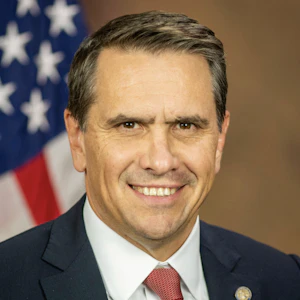
Biography of Deputy Attorney General Todd Blanche
The Honorable Todd Blanche is the 40th Deputy Attorney General of the United States, overseeing the work of the 115,000 dedicated employees who fulfill the Department of Justice’s mission at Main Justice, the FBI, DEA, U.S. Marshals, ATF, and 93 U.S. Attorney’s Offices.
Todd began his career at the Department where he served for over fifteen years in a variety of capacities, including as a contractor, a paralegal in the Criminal Division, and at the United States Attorney’s office for the Southern District of New York where he eventually became an AUSA and later a supervisor.
After leaving the Department, Todd worked as a criminal defense attorney that included representing President Donald Trump in three of the criminal cases brought against him in 2023 and 2024.
Following President Trump’s historic return to the White House, the President appointed Todd to work alongside Attorney General Pam Bondi to make America safe again. At the DOJ, Todd is working tirelessly to implement President Trump’s priorities that include confronting illegal protecting American businesses from fraud.
Todd has been married to his wonderful wife Kristine for nearly thirty years, is a father and grandfather.

Paul Atkins
Paul Atkins
Prior to returning to the SEC, Chairman Atkins was most recently chief executive of Patomak Global Partners, a company he founded in 2009. Chairman Atkins helped lead efforts to develop best practices for the digital asset sector. He served as an independent director and non-executive chairman of the board of BATS Global Markets, Inc. from 2012 to 2015.
Chairman Atkins was appointed by President George W. Bush to serve as a Commissioner of the SEC from 2002 to 2008. During his tenure, he advocated for transparency, consistency, and the use of cost-benefit analysis at the agency. Chairman Atkins also represented the SEC at meetings of the President’s Working Group on Financial Markets and the U.S.-EU Transatlantic Economic Council. From 2009 to 2010, he was appointed a member of the Congressional Oversight Panel for the Troubled Asset Relief Program.
Before serving as an SEC Commissioner, Chairman Atkins was a consultant on securities and investment management industry matters, especially regarding issues of strategy, regulatory compliance, risk management, new product development, and organizational control.
From 1990 to 1994, Chairman Atkins served on the staff of two chairmen of the SEC, Richard C. Breeden and Arthur Levitt, ultimately as chief of staff and counselor, respectively. He received the SEC’s 1992 Law and Policy Award for work regarding corporate governance matters.
Chairman Atkins began his career as a lawyer in New York, focusing on a wide range of corporate transactions for U.S. and foreign clients, including public and private securities offerings and mergers and acquisitions. He was resident for 2½ years in his firm's Paris office and admitted as conseil juridique in France.
A member of the New York and Florida bars, Chairman Atkins received his J.D. from Vanderbilt University School of Law in 1983 and was Senior Student Writing Editor of the Vanderbilt Law Review. He received his A.B., Phi Beta Kappa, from Wofford College in 1980.
Originally from Lillington, North Carolina, Chairman Atkins grew up in Tampa, Florida. He and his wife Sarah have three sons.

Mike Selig
Mike Selig
Chairman Selig brings to the role deep public and private sector experience working with a wide range of stakeholders across agriculture, energy, financial, and digital asset industries, which rely upon and operate in CFTC-regulated markets.
Prior to his leadership at the CFTC, Chairman Selig most recently served as chief counsel of the Securities and Exchange Commission’s Crypto Task Force and senior advisor to SEC Chairman Paul S. Atkins. In this role, Chairman Selig helped to develop a clear regulatory framework for digital asset securities markets, harmonize the SEC and CFTC regulatory regimes, modernize the agency’s rules to reflect new and emerging technologies, and put an end to regulation by enforcement. He also participated in the President’s Working Group on Digital Asset Markets and contributed to its report on “Strengthening American Leadership in Digital Financial Technology.”
Prior to government service, Chairman Selig was a partner at an international law firm, focusing on derivatives and securities regulatory matters. During his years in private practice, he represented a broad range of clients subject to regulation by the CFTC, including commercial end users, futures commission merchants, commodity trading advisors, swap dealers, designated contract markets, derivatives clearing organizations, and digital asset firms. Chairman Selig advised clients on compliance with the Commodity Exchange Act and the CFTC’s rules and regulations thereunder, including in connection with registration applications and obligations, enforcement matters, and complex transactions.
Chairman Selig earned his law degree from The George Washington University Law School and was articles editor of The George Washington Law Review. He received his undergraduate degree from Florida State University.

David Bailey
David Bailey

Eric Trump
Eric Trump
Mr. Trump also serves as Executive Vice President of The Trump Organization, where he oversees the global management and operations of the Trump family’s extensive real estate portfolio. This includes Trump Hotels, Trump Golf, commercial and residential real estate, Trump Estates, and Trump Winery. Known for his hands-on leadership and strong market instincts, he has played a key role in expanding the company’s presence across major U.S. and international markets.
A globally recognized business leader and public figure, Mr. Trump is a prominent advocate for Bitcoin and decentralized finance. He is a co-founder of World Liberty Financial, a decentralized finance (DeFi) platform, and serves on the Board of Advisors of Metaplanet, Japan’s largest corporate holder of Bitcoin.
Beyond his business activities, Mr. Trump has helped raise more than $50 million for St. Jude Children’s Research Hospital in the fight against pediatric cancer, a philanthropic mission he began at age 21.
Mr. Trump earned a degree in Finance and Management from Georgetown University. He currently resides in Florida with his wife, Lara, and their two children. He is also the author of Under Siege, his memoir published in October 2025.

Jack Mallers
Jack Mallers


Cynthia Lummis
Cynthia Lummis
As the first-ever Chair of the Senate Banking Subcommittee on Digital Assets, Senator Lummis is the architect of the legislative framework shaping America's digital asset future. She introduced the landmark Lummis-Gillibrand Responsible Financial Innovation Act, the first comprehensive bipartisan crypto regulatory framework in Senate history. She co-authored the GENIUS Act — the first federal stablecoin law ever enacted — and introduced the BITCOIN Act, which would establish a U.S. strategic Bitcoin reserve of up to one million BTC. She is leading the Clarity Act, which will bring long-overdue regulatory certainty to the digital asset industry. She has also championed digital asset tax reform, including a de minimis exemption for small transactions and equal tax treatment for miners and stakers.
Known as Congress' "Crypto Queen," Senator Lummis represents Wyoming — a state she has helped build into one of the most digital asset-friendly regulatory environments in the nation. Before serving in the Senate, she served 14 years in the Wyoming Legislature, eight years as Wyoming State Treasurer, and eight years in the U.S. House. She is a three-time graduate of the University of Wyoming.
Her work represents a crucial bridge between traditional financial systems and the emerging digital economy, ensuring America leads the world in financial innovation while protecting the individual freedoms that define it.

Adam Back
Adam Back

Amy Oldenburg
Amy Oldenburg

David Marcus
David Marcus

Matt Schultz
Matt Schultz

Fred Thiel
Fred Thiel
Throughout his career, Mr. Thiel has consistently driven rapid growth and created substantial shareholder value. Prior to MARA, Mr. Thiel served as the CEO of two other public companies, Local Corporation (NASDAQ: LOCM) and Lantronix, Inc (NASDAQ: LTRX). He has successfully raised billions in equity and debt through private and public offerings, led companies through IPOs, executed high-value exits to strategic and financial acquirers, and implemented effective M&A and roll-up strategies.
Mr. Thiel attended the Stockholm School of Economics and executive classes at Harvard Business School, and is fluent in English, Spanish, Swedish, and French. Mr. Thiel is the Chairman of the Board for Oden Technology, Inc. and is active in Young Presidents’ Organization where he has led initiatives in both the FinTech and Technology Networks.
A recognized voice in the industry, Fred frequently shares his insights on energy and technology with major media outlets like Bloomberg TV, CNBC, and FOX Business, contributing to vital discussions about the future of these sectors.
Tim Draper
Tim Draper
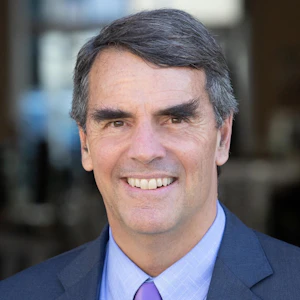
He is a supporter and global thought leader for entrepreneurs everywhere, and is a leading spokesperson for Bitcoin and decentralization, having won the Bitcoin US Marshall’s auction in 2014, invested in over 50 crypto companies, and led investments in Coinbase, Ledger, Tezos, and Bancor, among others.

Afroman
Afroman