How Institutions are Approaching Bitcoin Exposure By Diversifying Within The Ecosystem
Speakers/Moderators

Kevin Kelly
Kevin Kelly
He is the Portfolio Manager of Amplify's Bitcoin Option Income ETFs (https://amplifyetfs.com/bitcoin-income) where he seeks to monetize Bitcoin's volatility. Kelly Intelligence is the sub-advisor to the Amplify ETFs.
Kevin Kelly has been advocating for Bitcoin since 2017, appearing in several major media outlets including Bloomberg, Fox Business, and Fox News. Most notably, in a 2017 discussion on Fox Business with former U.S. Commodity Futures Trading Commissioner Bart Chilton, he refuted assertions about Bitcoin made by former Federal Reserve Chairman Alan Greenspan.
He has an extensive background investment management, with a specific focus on options and ETFs. At Kelly Intelligence, he is responsible for investment strategy, ETF product design, index development, and portfolio implementation.
In September 2014, Nasdaq named Kevin an ‘ETF Insider’ for creating the QYLD ETF and as a recognized leader in the ETF space for design, distribution and growth with his extensive track record of launching multi-billion dollar ETFs. Kevin’s thought leadership on markets, derivatives, e-commerce, and technology can be found weekly in top media outlets.

Matthew Sigel
Matthew Sigel

Dave Ripley
Dave Ripley
Prior to joining Kraken, Mr. Ripley was the Co-Founder and Chief Executive Officer of Glidera, a non-custodial wallet and funding service provider that was acquired by Kraken in 2016.
Mr. Ripley previously held roles in consulting at The Boston Consulting Group, where he advised clients across multiple industries, including technology and financial services. Earlier in his career, he also held management positions in software engineering and product management at Syclo, a mobile enterprise software company. Mr. Ripley holds a B.S. in Electrical Engineering from the University of Illinois at Urbana-Champaign and an M.B.A. from the Kellogg School of Management at Northwestern University.

Jeff Park
Jeff Park
Before joining ProCap Financial, Mr. Park was the Head of Alpha Strategies and Portfolio Manager at Bitwise Asset Management, one of the world’s largest crypto-specialist asset managers. Prior to Bitwise, he was a Partner at Corbin Capital Partners, a multi-billion alternative asset management firm that specializes in multi-strategy hedge fund and opportunistic credit investing, where he led the firm’s digital asset investing efforts.
He is a graduate of Stanford University with a B.A. in Economics and International Relations.
Session
Overview
Kevin Kelly moderated a discussion with Matthew Sigel of VanEck, Dave Ripley of Kraken, and Jeff Park on how institutional Bitcoin exposure is becoming more varied across ETFs, options, tokenized assets, treasury vehicles, miners, exchanges, and broader ecosystem equities.
The panel emphasized that regulatory clarity has helped institutions access Bitcoin through familiar market structures, but also noted that Bitcoin itself has continued to operate without depending on regulation. Speakers discussed yield, liquidity, volatility, and governance as key themes shaping institutional demand.
Notable predictions included a potential Bitcoin all-time high within a year, growing importance for IBIT options and Bitcoin volatility markets, increased tokenization of public equities and other traditional assets, higher Bitcoin dominance, and prediction markets taking attention from altcoins.
The conversation also returned to Bitcoin’s underlying ethos: openness, permissionless access, and a community-driven network. The panel framed institutional adoption as an expanding layer on top of those foundations rather than a replacement for them.
All right, Bitcoin 2026. We've seen an amazing year, especially with institutional adoption and diversifying through the ecosystem. I'm Kevin Kelly, and we're a perfect example because we have options-based Bitcoin ETFs where we're trying to pay out monthly income. That's just scratching the surface. We have a long runway for where we're about to go.
That's why I'm so excited about this panel. At the end, we're going to have some bold predictions on how you can gain access to different Bitcoin-type strategies and how it's going to happen. But I want to start with our panelists introducing themselves and how they fit into that role.
VanEck is now well established in the space as the first traditional fund manager to file for a Bitcoin ETF. We now have three actively managed products that are performing very well in the market, and I look forward to chatting with you today.
This is Matthew. He likes to go by Matthew, not Matt. That's true, just so you guys know.
I'm Dave, co-CEO of Kraken. Hopefully most of you know about Kraken. We're one of the earliest crypto and Bitcoin companies out there, founded way back in 2011. I got into crypto myself in 2013, so I'm a longtime hodler. Kraken has a full portfolio of products and services across different parts of the crypto ecosystem, Bitcoin, and even now other asset classes that are looking to take advantage of crypto and Bitcoin tech as rails. We're in equities, tokenized equities, derivatives, and more. We offer products to all different customer segments, from individuals all the way through big institutions, which we'll hit on today.
Hi everybody, I'm Jeff Park. Delighted to be here with this crew and this audience. Until most recently, I was the CIO of ProCap Financial, which was a Bitcoin treasury company that went online last year that you might have seen. Before that, I was at Bitwise, where I built the alpha franchise as head of Alpha Strategies, and I continue to be an advisor there.
This past year has been unbelievable when you think about institutional adoption, and we're starting to scratch the surface. One of the seismic things that has happened is on the regulatory side, and I think it's underappreciated because we now have clarity for compliance and legal departments. Now the possibilities are endless for institutional adoption and different ways to access Bitcoin and play it. I wanted to get your takes on what we can expect next.
I want to diagnose why Bitcoin is down and why we have conviction it will recover. I think there are three main reasons, and all of them are reversible.
The first is the four-year cycle. I want to remind everyone what it felt like four years ago this month. We were on the verge of the Terra Luna detonation, which took down the entire unregulated shadow banking industry with it. This cycle is so different. That Wild West leverage has been purged, and it's been replaced by regulated architecture that is transparent, audited, overseen, and built to last. We traded chaos for regulated plumbing.
The second is OG selling. That was definitely a thing in Q4 and the first half of Q1, where old holders and miners who have been pivoting to AI were selling their coins. The data we're looking at shows the second derivative has peaked, and we think that will come to an end within the next six months.
The third is the quantum boogeyman. I would like to say that this is a software problem with a software solution. Bitcoin has a 17-year track record of winning every security arms race it has ever faced, and this will be just another firmware update.
While the market has been focused on those three negative headwinds, the megatrend tailwind of sovereign adoption is accelerating. Two central banks are now buying Bitcoin for their reserves. It's a permanent structural shift in global liquidity. Our conviction is anchored in the HODL ETF, which is still fee-free, and we are the largest shareholder in that ETF.
That conviction has one simple rule you need to remember. When you combine a high-volatility asset like Bitcoin with leverage, it's toxic. I remember sitting here a year ago and I told the CEO, don't do it. Don't do the DAT thing. He did it, and his stock is now down 90%.
The DAT strategy, largely speaking, was a train wreck because it treated Bitcoin like a casino instead of like infrastructure. So we built the fund that I manage, the Onchain Economy ETF, ticker NODE, as the responsible alternative. We have the mandate to buy crypto or equities, but we have two simple rules. We avoid leverage and we focus on good governance.
When you focus on good governance, you get a virtuous cycle because we are steering capital to the companies that are better managed. That lowers their cost of funding and allows them to compete even more effectively in the market. As we celebrate our one-year anniversary of NODE in the next couple of weeks, I'm happy to say we're up 50% and Bitcoin is down 30%. This rotation is coming to an end. Sovereign adoption is here and coming, and I believe we will see an all-time high for Bitcoin within one year.
This is great because I get to call dibs on my Halloween costume as the quantum boogeyman. You heard it here first. Dave, you can give us even more unique insights into institutional adoption and where it's being deployed. There's a backlog of different ways the ecosystem can be built, because Bitcoin is one of the best digital asset networks out there. It is the best digital asset network out there. What are you seeing on the institutional side building out that ecosystem?
I've been in this space for a long time, over a decade. There have probably been at least five times, if not more, where we've had this big theme for the year: this is the year of the institution, they're coming. There has been a trajectory, and each part of Bitcoin's history has seen a different set of institutions come in.
If we think about the term broadly, the first group that came in were venture capitalists way back in 2012, 2013, 2014, 2015, and so forth. They're still in it today. The next group were high-frequency trading firms. That was in the 2016 and 2017 run-up, where the volume actually got to a place where it made sense for them to come on board.
Then in the next cycle, in 2021, we started to see a little bit more diversity, including hedge funds. If you remember, this is when the Paul Tudor Jones comments were out there, and some of these big hedge fund managers. It wasn't really clear if these guys were actually buying. The reality is, without disclosing names, yes, there were significant funds and individuals.
They were quiet.
Yes. They had positive comments, but they weren't disclosing in a meaningful form. It was still a very small part of the portfolio and a very small percent of the total.
Then after that, we ran into the failures and the regulatory pressure. It wasn't just a challenging regulatory environment. It was, hey, are they going to try to shut down our companies, and are we going to go to jail? It was pretty awful.
Then, levering off this conference a couple of years ago when President Trump joined the conference in Nashville, that was the springboard to a change in administration. We saw a really positive environment. Globally, at that time, many regulators had taken a positive approach toward Bitcoin and crypto, and still do. But we saw that flip in the U.S.
This time is the one where we can say it is the most significant positive adoption for institutions that we've seen more broadly. Now we're seeing a number of different asset managers. The big thing is we're also seeing the sell side come in, all the big banks, brokers, and so forth.
While regulation is meaningful, I would take a slightly different perspective. I hear you on the Luna failure. There were also a bunch of centralized failures at that time: FTX, Voyager, you name it. There have also been a bunch of centralized failures in history: Lehman, Bear Stearns, you name it, and all heavily regulated institutions.
What we haven't seen is Bitcoin fail. Bitcoin doesn't actually need regulation. Of course, institutions need regulation to adopt Bitcoin. I do think regulation is meaningful to get those institutions access. It depends on the groups. Bitcoin was growing, will grow, and will continue to grow irrespective of that. But yes, the entrance of this particular group is meaningful for institutions. That's where I think regulation is most meaningful, because these guys are already regulated. They have no choice but to follow the regulatory path.
They're trying to find access. Jeff, I'd love to get your take on this, given your unique history with institutional adoption, access, and where we're going product-wise.
Every institutional adoption cycle in crypto happens with different demographics of players that have different kinds of interests. What you're seeing with this particular cycle of institutional adoption is that they are finally approaching Bitcoin with a segmentation of risk that was not historically possible before.
For example, venture capitalists would come into Bitcoin because they're interested in crypto, and it is an all-or-nothing kind of bet. Then you have market makers coming in because they're trying to take advantage of liquidity and arbitrage in a nascent market structure to find alpha.
This version of institutional adoption of Bitcoin is the first time we're really seeing the primary asset of Bitcoin, which is its volatility, being converted into some kind of yield engine. There is starvation from many institutional investors that just want yield.
On top of yield, the other thing that has gotten a giant premium over the last cycle is demand for liquidity. Even stepping away from Bitcoin and crypto for a second, it's very clear when you look at public markets that a lot of the financial wrappers now permissioned by the SEC and CFTC are pushing investors toward form factors that allow public market liquidity.
Because yield and liquidity have become so paramount, Bitcoin has evolved into a version of adoption by institutions that are able to deliver on those metrics. First and foremost, the story of adoption here, which is probably paramount to its success for Bitcoin to date, is STRK, the preferred equity instrument that Strategy has launched.
Whether you believe that is a good or bad thing for Bitcoin, taking that aside, it is very clear it has found product-market fit because of the incredible, insatiable demand in the billions from people wanting Bitcoin risk, but also wanting higher yield, wanting to prioritize capital preservation, and above all wanting daily liquidity that can actually be converted into dollars any second, for large sizes, any day.
That goes back to structure. It was built for liquidity. It has four letters in the symbol. It's on the exchange. When you compare it to other preferreds, the access and liquidity matter. I think that's what institutions are doing today. They're building products for liquidity and access. We're scratching the surface and leading not only on the DeFi perspective, but the trade perspective.
One of the most exciting things I wanted to ask you guys, because you have such unique insights, is for a bold prediction for Bitcoin, institutional access, whatever it is. Jeff, I'll start with you.
There is clearly an ideological undercurrent that is changing with Bitcoin through the lens of institutional adoption, where we are seeing more traditional market participants from Wall Street coming to crypto, maybe more than the other way around. Because of that, there are some interesting trends happening.
One of the things I've always said ten years ago, five years ago, I'll say today, and I'll say ten years from now, is that the reason people are interested in Bitcoin is because they understand the call option of that asset, plus the volatility that it exhibits over a period of time. That volatility is being priced now in a really radical way.
I believe this is the week where we have finally seen IBIT options open interest overtake Deribit open interest for the first time in a meaningful way. That's important because for a long time people would look at Deribit's DVOL to calculate implied volatility, but DVOL is flawed. DVOL only uses Deribit options. The reality is there is a lot of abstraction, and now there are IBIT options. We need more intelligent ways to quantify and parameterize implied volatility.
The most interesting thing I've noticed recently is that if you look at IBIT implied volatility versus offshore exchange aggregate implied volatility, that spread is about five points, meaning IBIT vol is five points higher than Deribit and other offshore exchanges. Where is that five-point spread coming from? My guess is that there is a lot of retail demand for upside participation in a longer tenor than what is usually promised on Deribit, because IBIT options go out two years plus.
My bold prediction is that we're going to see a big Bitcoin move up. It might be within this year, as Matthew said. My prediction is that it is going to be led by IBIT options and the reflexive nature in which the gamma that is possibly created within something like Bitcoin, due to its scarcity, can really lead the next leg up in a meaningful way. For me, watching IBIT take market share over Deribit is a lot of excitement, and I am sure we're heading in the right direction.
For the audience, five points is a lot. That is a very significant amount to be trading above, especially when you're diving in as an institution on volatility. Dave, I'd love to get your bold prediction. One thing we haven't talked about is tokenization. I don't mean to steer you toward that, but maybe you've got a bold prediction on institutions and what's evolving in the ecosystem.
I appreciate the steer. I'm going to go with two because one's a little more institution-heavy and tokenization-focused, and one is a little more Bitcoin-heavy.
The Bitcoin-heavy one is that I think we are probably a matter of years from seeing a country go full Bitcoin and stablecoins, where the domestic currency just disappears. This is frankly part of the plan. Part of the U.S. government's plan for stablecoins is to provide global access to the U.S. dollar, and on top of that Bitcoin comes along with it. I think the two become extremely meaningful. You see this happening, obviously, with adoption at the government level in El Salvador, but I think there is a country out there where it will happen.
When it comes to institutions, you're right, tokenization is actually where the story is. This is where the conversation largely sits with institutions today. They want to know where this is going. They see that stablecoins have been incredibly successful. Tokenization of other assets starts there. Stablecoins are the first tokenized asset. This is basically taking the most widely held and used asset, the U.S. dollar, and tokenizing it. We've seen incredible adoption across different use cases all across the globe.
You have a partnership with a major exchange here in the United States.
We do. Institutions are thinking, okay, what's the next asset class where we're going to see tokenization? A significant number of them are leaning into this substantially. We have a product, xStocks, which is tokenized public equities. I think that is probably next because if you look at why the U.S. dollar worked, it's the most widely held, most liquid, and there is strong interest by individuals and institutions. U.S. public equity is probably the next asset class that lines up there.
We already see over $20 billion in trading volume since we launched the product in the middle part of last year, and that's significant. There are partnerships with Nasdaq, Deutsche Börse, and a number of these other large exchanges and companies. All the big banks are thinking about their path to tokenization.
It's a different thing. Historically, it has been, hey, we want institutions and companies to add Bitcoin and crypto to their offering. Then, by the way, crypto-native companies are going to offer TradFi assets. Kraken is one of them. But I think the most meaningful thing is to take a bunch of that TradFi stuff and take advantage of crypto and Bitcoin rails and tech. That's tokenization, that's stablecoins, that's many other things. I think that's going to be the most interesting story over the next 12 to 24 months.
Aside from you guys potentially going public.
Matthew, there is so much we could go on about for days, but I think you can give us a unique insight from your perch, especially with the NODE ETF, on how we can think about it and get a good bold prediction from you.
We've been very long the Bitcoin AI miners for two and a half years now. Twelve months ago at this conference, my bold prediction was that those names would continue to outperform. I'm actually going to take the other side. I think the performance between the exchanges, the DATs, and the Bitcoin miners will be more balanced this year, although I think that's more about mean reversion than a structural trend.
I'll also predict that Bitcoin dominance will be higher in 12 months, not lower. And I'm going to predict that prediction markets will continue to take mindshare from altcoins.
That's a great point because prediction markets have really established a new mindshare around institutional adoption, how we trade, how stablecoins with Bitcoin and everything kind of play into it. I'm glad you brought up prediction markets.
My bold prediction, just so everybody knows, is that it's kind of like the weather. You make these bold predictions and everybody's wrong. No one's ever right. But my bold prediction is that all three of these gentlemen are going to be absolutely right. Let's see if I bat a thousand and go three for three on your bold predictions.
Lastly, I just want to get some final thoughts. We have about a minute for each of you. What can we expect for next year when we're sitting on stage? We'll probably be in a different venue, but what do you think we're going to be saying next year?
My thesis in this space is that you don't have to be Stanley Druckenmiller and make one or two super high-conviction bets. There is real value in diversification when you have a megatrend, which I believe we have with Bitcoin adoption. My focus is on picking the right securities so we can offer an investment product that hopefully outperforms Bitcoin at comparable volatility.
I read an amazing statistic from Howard Marks last week. There was a fund manager who, for 14 years, was never in the top quartile or the bottom quartile on quarterly performance. After 14 years, that put him in the fourth percentile. I've internalized that message for decades, but it was interesting to read it. That's my North Star.
What I hope we're talking about at the conference next year, and this year, and I know we've been talking about at this conference for many years, is the ethos of Bitcoin and crypto around freedom, openness, permissionless systems, and open access. This conference, more than any other, has held true to that dynamic for Bitcoin and crypto.
Frankly, that's part of what built these networks. A lot of people didn't just believe this could happen, or might happen, or that the tech could work. They simply wanted it to happen because of the potential benefits for the world and individuals. Now we're at a place where we have so much adoption and liquidity, and the tech is so mature. That's not the thing carrying it today any longer. It's all these other benefits of better, faster, cheaper, and so forth.
But I do think all of the benefits that come from openness and open access are still drivers, and they should still be part of the conversation at this conference particularly, because this is really the bedrock. I've known David Bailey for over a decade and how he created this thing. I hope we're talking about that next year, the year after, and from then on.
I love that because the key word you said is people. Bitcoin success has always been the people behind Bitcoin and the community.
Bitcoin in a lot of ways is like a mirror of the people behind the community. Every time you see something, it is a reflection of your good parts and your bad parts, and every group brings its own energy to it.
With this particular version of the case for institutional adoption, clearly in the political arena of regulatory adoption, we have a very supportive administration. What I would hope for next year is that even if there is a change in administration, we're able to bridge between the left and the right, and that we see Bitcoin for what it is, which is actually completely apolitical. Going through this test right now, seeing potentially the worst versions of what it could be in public discourse, is part of its journey.
Anyone who is discouraged by Bitcoin and crypto because of their particular views on this stage of its adoption phase, I'm hopeful that next time, even if there is a change in administration from a political party, that actually it will be a big tailwind for Bitcoin in the long run.
Awesome. I really appreciate it, guys. Thank you so much. Thank you, Bitcoin 2026.
Similar
Sessions
How Institutions are Approaching Bitcoin Exposure By Diversifying Within The Ecosystem
Kevin Kelly
Kevin Kelly
He is the Portfolio Manager of Amplify's Bitcoin Option Income ETFs (https://amplifyetfs.com/bitcoin-income) where he seeks to monetize Bitcoin's volatility. Kelly Intelligence is the sub-advisor to the Amplify ETFs.
Kevin Kelly has been advocating for Bitcoin since 2017, appearing in several major media outlets including Bloomberg, Fox Business, and Fox News. Most notably, in a 2017 discussion on Fox Business with former U.S. Commodity Futures Trading Commissioner Bart Chilton, he refuted assertions about Bitcoin made by former Federal Reserve Chairman Alan Greenspan.
He has an extensive background investment management, with a specific focus on options and ETFs. At Kelly Intelligence, he is responsible for investment strategy, ETF product design, index development, and portfolio implementation.
In September 2014, Nasdaq named Kevin an ‘ETF Insider’ for creating the QYLD ETF and as a recognized leader in the ETF space for design, distribution and growth with his extensive track record of launching multi-billion dollar ETFs. Kevin’s thought leadership on markets, derivatives, e-commerce, and technology can be found weekly in top media outlets.
Matthew Sigel
Matthew Sigel
Dave Ripley
Dave Ripley
Prior to joining Kraken, Mr. Ripley was the Co-Founder and Chief Executive Officer of Glidera, a non-custodial wallet and funding service provider that was acquired by Kraken in 2016.
Mr. Ripley previously held roles in consulting at The Boston Consulting Group, where he advised clients across multiple industries, including technology and financial services. Earlier in his career, he also held management positions in software engineering and product management at Syclo, a mobile enterprise software company. Mr. Ripley holds a B.S. in Electrical Engineering from the University of Illinois at Urbana-Champaign and an M.B.A. from the Kellogg School of Management at Northwestern University.
Jeff Park
Jeff Park
Before joining ProCap Financial, Mr. Park was the Head of Alpha Strategies and Portfolio Manager at Bitwise Asset Management, one of the world’s largest crypto-specialist asset managers. Prior to Bitwise, he was a Partner at Corbin Capital Partners, a multi-billion alternative asset management firm that specializes in multi-strategy hedge fund and opportunistic credit investing, where he led the firm’s digital asset investing efforts.
He is a graduate of Stanford University with a B.A. in Economics and International Relations.
How Institutions are Approaching Bitcoin Exposure By Diversifying Within The Ecosystem
Speakers/Moderators
Kevin Kelly
Kevin Kelly
He is the Portfolio Manager of Amplify's Bitcoin Option Income ETFs (https://amplifyetfs.com/bitcoin-income) where he seeks to monetize Bitcoin's volatility. Kelly Intelligence is the sub-advisor to the Amplify ETFs.
Kevin Kelly has been advocating for Bitcoin since 2017, appearing in several major media outlets including Bloomberg, Fox Business, and Fox News. Most notably, in a 2017 discussion on Fox Business with former U.S. Commodity Futures Trading Commissioner Bart Chilton, he refuted assertions about Bitcoin made by former Federal Reserve Chairman Alan Greenspan.
He has an extensive background investment management, with a specific focus on options and ETFs. At Kelly Intelligence, he is responsible for investment strategy, ETF product design, index development, and portfolio implementation.
In September 2014, Nasdaq named Kevin an ‘ETF Insider’ for creating the QYLD ETF and as a recognized leader in the ETF space for design, distribution and growth with his extensive track record of launching multi-billion dollar ETFs. Kevin’s thought leadership on markets, derivatives, e-commerce, and technology can be found weekly in top media outlets.
Matthew Sigel
Matthew Sigel
Dave Ripley
Dave Ripley
Prior to joining Kraken, Mr. Ripley was the Co-Founder and Chief Executive Officer of Glidera, a non-custodial wallet and funding service provider that was acquired by Kraken in 2016.
Mr. Ripley previously held roles in consulting at The Boston Consulting Group, where he advised clients across multiple industries, including technology and financial services. Earlier in his career, he also held management positions in software engineering and product management at Syclo, a mobile enterprise software company. Mr. Ripley holds a B.S. in Electrical Engineering from the University of Illinois at Urbana-Champaign and an M.B.A. from the Kellogg School of Management at Northwestern University.
Jeff Park
Jeff Park
Before joining ProCap Financial, Mr. Park was the Head of Alpha Strategies and Portfolio Manager at Bitwise Asset Management, one of the world’s largest crypto-specialist asset managers. Prior to Bitwise, he was a Partner at Corbin Capital Partners, a multi-billion alternative asset management firm that specializes in multi-strategy hedge fund and opportunistic credit investing, where he led the firm’s digital asset investing efforts.
He is a graduate of Stanford University with a B.A. in Economics and International Relations.
Incentive Alignment: Theory vs. Practice

Ryan Gentry
Ryan Gentry
Jeff Park
Jeff Park
Before joining ProCap Financial, Mr. Park was the Head of Alpha Strategies and Portfolio Manager at Bitwise Asset Management, one of the world’s largest crypto-specialist asset managers. Prior to Bitwise, he was a Partner at Corbin Capital Partners, a multi-billion alternative asset management firm that specializes in multi-strategy hedge fund and opportunistic credit investing, where he led the firm’s digital asset investing efforts.
He is a graduate of Stanford University with a B.A. in Economics and International Relations.

Incentive Alignment: Theory vs. Practice
Speakers/Moderators
Ryan Gentry
Ryan Gentry
Jeff Park
Jeff Park
Before joining ProCap Financial, Mr. Park was the Head of Alpha Strategies and Portfolio Manager at Bitwise Asset Management, one of the world’s largest crypto-specialist asset managers. Prior to Bitwise, he was a Partner at Corbin Capital Partners, a multi-billion alternative asset management firm that specializes in multi-strategy hedge fund and opportunistic credit investing, where he led the firm’s digital asset investing efforts.
He is a graduate of Stanford University with a B.A. in Economics and International Relations.
Other
Speakers

Michael Saylor
Michael Saylor
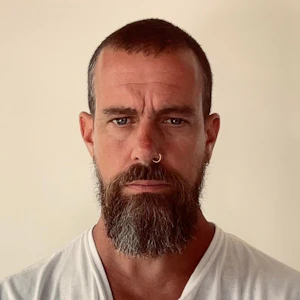
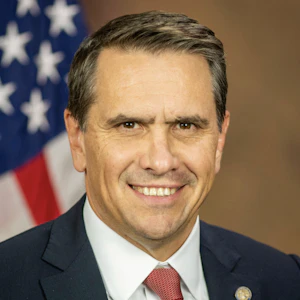
Todd Blanche
Todd Blanche
Biography of Deputy Attorney General Todd Blanche
The Honorable Todd Blanche is the 40th Deputy Attorney General of the United States, overseeing the work of the 115,000 dedicated employees who fulfill the Department of Justice’s mission at Main Justice, the FBI, DEA, U.S. Marshals, ATF, and 93 U.S. Attorney’s Offices.
Todd began his career at the Department where he served for over fifteen years in a variety of capacities, including as a contractor, a paralegal in the Criminal Division, and at the United States Attorney’s office for the Southern District of New York where he eventually became an AUSA and later a supervisor.
After leaving the Department, Todd worked as a criminal defense attorney that included representing President Donald Trump in three of the criminal cases brought against him in 2023 and 2024.
Following President Trump’s historic return to the White House, the President appointed Todd to work alongside Attorney General Pam Bondi to make America safe again. At the DOJ, Todd is working tirelessly to implement President Trump’s priorities that include confronting illegal protecting American businesses from fraud.
Todd has been married to his wonderful wife Kristine for nearly thirty years, is a father and grandfather.

Paul Atkins
Paul Atkins
Prior to returning to the SEC, Chairman Atkins was most recently chief executive of Patomak Global Partners, a company he founded in 2009. Chairman Atkins helped lead efforts to develop best practices for the digital asset sector. He served as an independent director and non-executive chairman of the board of BATS Global Markets, Inc. from 2012 to 2015.
Chairman Atkins was appointed by President George W. Bush to serve as a Commissioner of the SEC from 2002 to 2008. During his tenure, he advocated for transparency, consistency, and the use of cost-benefit analysis at the agency. Chairman Atkins also represented the SEC at meetings of the President’s Working Group on Financial Markets and the U.S.-EU Transatlantic Economic Council. From 2009 to 2010, he was appointed a member of the Congressional Oversight Panel for the Troubled Asset Relief Program.
Before serving as an SEC Commissioner, Chairman Atkins was a consultant on securities and investment management industry matters, especially regarding issues of strategy, regulatory compliance, risk management, new product development, and organizational control.
From 1990 to 1994, Chairman Atkins served on the staff of two chairmen of the SEC, Richard C. Breeden and Arthur Levitt, ultimately as chief of staff and counselor, respectively. He received the SEC’s 1992 Law and Policy Award for work regarding corporate governance matters.
Chairman Atkins began his career as a lawyer in New York, focusing on a wide range of corporate transactions for U.S. and foreign clients, including public and private securities offerings and mergers and acquisitions. He was resident for 2½ years in his firm's Paris office and admitted as conseil juridique in France.
A member of the New York and Florida bars, Chairman Atkins received his J.D. from Vanderbilt University School of Law in 1983 and was Senior Student Writing Editor of the Vanderbilt Law Review. He received his A.B., Phi Beta Kappa, from Wofford College in 1980.
Originally from Lillington, North Carolina, Chairman Atkins grew up in Tampa, Florida. He and his wife Sarah have three sons.

Mike Selig
Mike Selig
Chairman Selig brings to the role deep public and private sector experience working with a wide range of stakeholders across agriculture, energy, financial, and digital asset industries, which rely upon and operate in CFTC-regulated markets.
Prior to his leadership at the CFTC, Chairman Selig most recently served as chief counsel of the Securities and Exchange Commission’s Crypto Task Force and senior advisor to SEC Chairman Paul S. Atkins. In this role, Chairman Selig helped to develop a clear regulatory framework for digital asset securities markets, harmonize the SEC and CFTC regulatory regimes, modernize the agency’s rules to reflect new and emerging technologies, and put an end to regulation by enforcement. He also participated in the President’s Working Group on Digital Asset Markets and contributed to its report on “Strengthening American Leadership in Digital Financial Technology.”
Prior to government service, Chairman Selig was a partner at an international law firm, focusing on derivatives and securities regulatory matters. During his years in private practice, he represented a broad range of clients subject to regulation by the CFTC, including commercial end users, futures commission merchants, commodity trading advisors, swap dealers, designated contract markets, derivatives clearing organizations, and digital asset firms. Chairman Selig advised clients on compliance with the Commodity Exchange Act and the CFTC’s rules and regulations thereunder, including in connection with registration applications and obligations, enforcement matters, and complex transactions.
Chairman Selig earned his law degree from The George Washington University Law School and was articles editor of The George Washington Law Review. He received his undergraduate degree from Florida State University.

David Bailey
David Bailey

Eric Trump
Eric Trump
Mr. Trump also serves as Executive Vice President of The Trump Organization, where he oversees the global management and operations of the Trump family’s extensive real estate portfolio. This includes Trump Hotels, Trump Golf, commercial and residential real estate, Trump Estates, and Trump Winery. Known for his hands-on leadership and strong market instincts, he has played a key role in expanding the company’s presence across major U.S. and international markets.
A globally recognized business leader and public figure, Mr. Trump is a prominent advocate for Bitcoin and decentralized finance. He is a co-founder of World Liberty Financial, a decentralized finance (DeFi) platform, and serves on the Board of Advisors of Metaplanet, Japan’s largest corporate holder of Bitcoin.
Beyond his business activities, Mr. Trump has helped raise more than $50 million for St. Jude Children’s Research Hospital in the fight against pediatric cancer, a philanthropic mission he began at age 21.
Mr. Trump earned a degree in Finance and Management from Georgetown University. He currently resides in Florida with his wife, Lara, and their two children. He is also the author of Under Siege, his memoir published in October 2025.

Jack Mallers
Jack Mallers

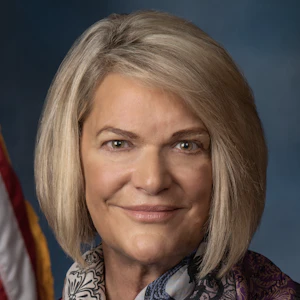
Cynthia Lummis
Cynthia Lummis
As the first-ever Chair of the Senate Banking Subcommittee on Digital Assets, Senator Lummis is the architect of the legislative framework shaping America's digital asset future. She introduced the landmark Lummis-Gillibrand Responsible Financial Innovation Act, the first comprehensive bipartisan crypto regulatory framework in Senate history. She co-authored the GENIUS Act — the first federal stablecoin law ever enacted — and introduced the BITCOIN Act, which would establish a U.S. strategic Bitcoin reserve of up to one million BTC. She is leading the Clarity Act, which will bring long-overdue regulatory certainty to the digital asset industry. She has also championed digital asset tax reform, including a de minimis exemption for small transactions and equal tax treatment for miners and stakers.
Known as Congress' "Crypto Queen," Senator Lummis represents Wyoming — a state she has helped build into one of the most digital asset-friendly regulatory environments in the nation. Before serving in the Senate, she served 14 years in the Wyoming Legislature, eight years as Wyoming State Treasurer, and eight years in the U.S. House. She is a three-time graduate of the University of Wyoming.
Her work represents a crucial bridge between traditional financial systems and the emerging digital economy, ensuring America leads the world in financial innovation while protecting the individual freedoms that define it.

Adam Back
Adam Back

Amy Oldenburg
Amy Oldenburg
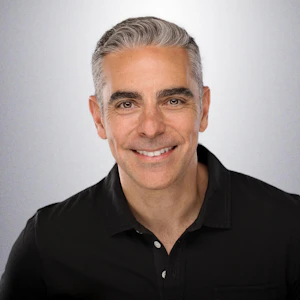
David Marcus
David Marcus

Matt Schultz
Matt Schultz
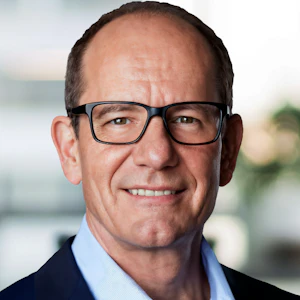
Fred Thiel
Fred Thiel
Throughout his career, Mr. Thiel has consistently driven rapid growth and created substantial shareholder value. Prior to MARA, Mr. Thiel served as the CEO of two other public companies, Local Corporation (NASDAQ: LOCM) and Lantronix, Inc (NASDAQ: LTRX). He has successfully raised billions in equity and debt through private and public offerings, led companies through IPOs, executed high-value exits to strategic and financial acquirers, and implemented effective M&A and roll-up strategies.
Mr. Thiel attended the Stockholm School of Economics and executive classes at Harvard Business School, and is fluent in English, Spanish, Swedish, and French. Mr. Thiel is the Chairman of the Board for Oden Technology, Inc. and is active in Young Presidents’ Organization where he has led initiatives in both the FinTech and Technology Networks.
A recognized voice in the industry, Fred frequently shares his insights on energy and technology with major media outlets like Bloomberg TV, CNBC, and FOX Business, contributing to vital discussions about the future of these sectors.
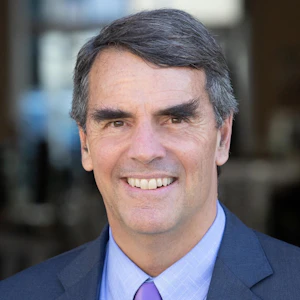
Tim Draper
Tim Draper
He is a supporter and global thought leader for entrepreneurs everywhere, and is a leading spokesperson for Bitcoin and decentralization, having won the Bitcoin US Marshall’s auction in 2014, invested in over 50 crypto companies, and led investments in Coinbase, Ledger, Tezos, and Bancor, among others.

Afroman
Afroman