How Much Bitcoin Do You Really Need to Retire?
Speakers/Moderators

Brandon Keys
Brandon Keys
He's become a recognized voice in the Bitcoin community, serving as MC for major events including the Adopting Bitcoin Conference, Bitcoin Atlantis, and the Canadian Bitcoin Conference. Brandon has also moderated panels at Bitcoin Conference 2024 in Nashville and PlebLab's Start Up Day in Austin. Beyond media, he's advised Bitcoin mining startups on heat distribution solutions.

Mitchell Askew
Mitchell Askew

Trey Sellers
Trey Sellers

Shawn Owen
Shawn Owen
Session
Overview
Host Brandon Keys led a discussion with Mitchell Askew of Blockware, Trey Sellers of Unchained, and Shawn Owen of SALT Lending on how Bitcoin changes retirement planning and financial independence. The panel pushed back on the idea that there is one universal amount of Bitcoin needed to retire, emphasizing that the answer depends on age, expenses, time horizon, risk tolerance, and lifestyle goals.
The conversation connected Bitcoin to the FIRE movement, where long-term saving and low time preference are central. Panelists discussed frameworks like the traditional 4% rule, possible Bitcoin-adjusted withdrawal assumptions, and the importance of thinking in terms of purchasing power rather than only dollar-denominated balances.
Speakers also covered practical behavior around accumulation, including dollar cost averaging, mining, aggressive saving periods, and building income capacity. A recurring theme was optionality: Bitcoin may help people reach a point where they can choose more meaningful work, fund new projects, or adjust their lifestyle without relying on the traditional 40-year career path.
The panel also addressed volatility and liquidity, noting that retirement plans need flexibility. Strategies discussed included maintaining adaptable expenses, avoiding short-term trading psychology, holding Bitcoin securely, and considering lending products carefully when liquidity is needed without immediately selling Bitcoin.
All right. What is going on, everybody? We've got a firecracker of a panel here and a very popular question on YouTube, which I know and love. I'm Brandon from Green Candle. For those of you who don't know me, the title for the panel is, how much Bitcoin do you need to retire? So I think we'll start with that question right off the bat and go down the line. We'll start with Sean. Introduce yourself and tell us, what do you think? How much Bitcoin do you need to retire?
Hey everybody, Sean Owen with a company called SALT Lending. We do lending. Our belief is that you want to hold Bitcoin forever, and the best way to do that is to hold it forever. Anything you need along the way typically comes in the form of some type of banking product. We believe lending is a big piece of that.
If you're going to retire on Bitcoin, along the way you're probably going to be faced with either needing to sell the Bitcoin or hold on and suffer through the liquidity and find some other way. We open up the ability for you to borrow cash against it like a bridge. As far as the right amount, I don't know that that question has one number. It's different for everybody.
The way I usually like to talk about it is either you're taking your extra savings and buying Bitcoin, and then you're planning to put it away forever in storage, which is one strategy, or you're more of an aggressive hardcore Bitcoiner where all your income comes in Bitcoin and then you borrow what you need to pay your bills on the other side. It really depends on the person. I'm looking forward to the conversation. I think the wrong number is zero. Nobody should have zero, and the right number we'll figure out on this panel.
Trey does a lot on the FIRE movement, so you can break all that down for us. But I'll ask you the same question. How much Bitcoin do you think we need to retire?
6.15 BTC. That's what you need. No, we can get into the nuance there. I don't know if anybody's been around long enough to understand that meme. I'm Trey Sellers. I am VP of Sales at Unchained. For anybody who is not familiar, Unchained helps our clients hold Bitcoin securely with succession planning in mind. We've got a suite of financial services. You can buy and sell Bitcoin with us. We have commercial Bitcoin-backed loans and different account types, IRAs being one of the most relevant account types for this question of retirement and long-term savings. If you're interested in that, we've got a booth out there. You can go check it out.
I also run a newsletter called FIRE BTC, in which I am delving into the synergies between the FIRE movement, which is financial independence, retire early, and Bitcoin. Bitcoin is a perfect asset for low time preference, long-term saving, which is exactly what the financial independence, retire early movement is focused on. They typically use stocks or index funds as their vehicle of choice for savings. Bitcoin is so much better. That's what I dive into in that newsletter, helping people understand how they can think through what they need to retire, what that plan should look like, and all the other interesting nuance to that really fascinating question that everybody is looking for a simple answer for.
Everybody wants a number. We've got 6.15 there. Now Mitchell, I would love to hear what you've got down there at the end.
Thanks, Brandon. It's not 0.003 or whatever you see on YouTube, where 57 sats will be generational wealth. Certainly, it's a nuanced conversation, and the number is going to differ for everyone. I tend to think of it in terms of age. Each age generation should probably be targeting a certain amount of Bitcoin. I think for my generation, Generation Z, one Bitcoin will probably do the trick. That being said, continue to aggressively accumulate beyond that. I'm excited to unpack the nuance of this conversation today.
I know you're saying that low number to needle me over here, because I make a bunch of videos about 0.1 Bitcoin or 0.01 Bitcoin being what you need to retire. I think the reason I always hit that low number is because, despite what these other assets have had in appreciation, we haven't had an asset like Bitcoin with the true finite scarcity of Bitcoin. I want you guys to go down the line and talk about what you think saving in a true, verifiable, finite asset could do to accelerate things, and why you think maybe that can help lower the amount that you need to retire because of the potential price action of Bitcoin, the true scarcity, and everything like that. We'll start with Mitchell. He's chomping at the bit.
I appreciate all your content, Brandon, and I poke fun at the titles and thumbnails, but there is a lot of truth in that. If you look at Bitcoin from a lens of total addressable market, there's about $1 quadrillion worth of stuff in the world that we store value in: real estate, gold, stocks, currency, commodities, all of that. Bitcoin's current market cap is about $1.5 trillion, so not even 1% of its total addressable market.
It's the only thing we can't make more of, other than human time. You can build more houses, make more companies, dig up more gold, farm more wheat and other commodities. Bitcoin is uniquely, verifiably scarce. I think a realistic long-term market share for Bitcoin could be between 20% and 50% of all of the world's value. I think 50% would be a very aggressive forecast. I think it's realistically probably more around 25%. But even then, that's $250 trillion worth of market cap. You divide that by 21 million Bitcoin, and it's about $10 million per Bitcoin.
From there, you can do some napkin math. If one Bitcoin is $10 million, how much do I spend per year? How much Bitcoin do I need to retire, assuming Bitcoin grows at 5% to 10% per year over the long term?
I'd like to dig into this from the traditional FIRE movement perspective. Has anybody heard of the 4% rule? What this means, for anybody who's not aware, is built on something called the Trinity Study back in the 1990s. Some researchers looked at historical stock and bond portfolios across the previous 100 years. Essentially, the conclusion was that with a 60/40 portfolio, you have a number of 25 times your annual expenses where you can draw 4% off of that and that portfolio will last for 30 years or more.
In a lot of cases, it lasted much more and you ended up with a lot more money than you started with. The traditional financial independence, retire early movement uses this as the target for what they are looking to save. If my annual expenses are $100,000 a year, I need $2.5 million in a savings portfolio in order to have enough to draw down on that to cover my annual expenses over a 30-year or longer time frame.
If Bitcoin is the most scarce asset and the highest-performing asset like we all expect it to be, then that 4% is probably a little bit too conservative. The way that I like to think about this is more like a 25% appreciation rate for Bitcoin over at least the next 20 to 30 years on average. Of course, there are going to be ups and downs. If you go even more conservative from that, what that implies relative to the 4% rule is more like an 8% rule, more like an 8% withdrawal rate.
I know it sounds a little bit crazy that you're going to sell down 8% of your Bitcoin in order to fund your retirement or your expenses, but the math is the math. It works that way because of the asymmetric upside that Bitcoin offers, the way that its scarcity aspects are working, and the fact that we're in this period of adoption that is so new and still so nascent.
Most people don't own just Bitcoin. They own a sleeve of stocks and other liquid assets, and then they also own Bitcoin. You can think of this as applying the 4% rule to your stocks and applying an 8% rule to Bitcoin. You can come up with a blended target for what you need to save in order to fund your retirement.
I think the first thing with Bitcoin that you have to really work hard for is to think about it in terms of Bitcoin, not in terms of the currency. It is very difficult until you really start paying attention to just how much we think in terms of whatever it is we spend and pay taxes in. I think that's what Bitcoin can do for you that changes more importantly than a number.
Once you start to put Bitcoin aside and you know you have some set number of Bitcoin, not in dollars, you do yourself a favor because you get out of this thinking of, I should be trading, or I should time the market, or I should do X, Y, Z. Really, the mentality of retirement, in my opinion, is one where you get to choose what you do, not what you have to do. Most people don't want to stop doing things. You just want to do them with a higher quality of choice and with a better ability for you to be the one driving it.
The more you think in terms of Bitcoin, the more I think you become able to see hope sooner on instead of waiting forever, instead of thinking about dollars, and instead of thinking about how to time this quantity or percentage. I don't disagree that there are some percentages that make sense once you get there. But in all this time, 15 years now, it's been very difficult not to fall into the trap of thinking in the system that we've been living in, when really Bitcoin is a different system altogether.
The sooner you can start to enjoy the ability to have hope in the future, which is the idea of retirement and what Bitcoin brings, the more you start to think about the finite nature of just how profound this is. It's a totally different human experience that nobody before us has had the opportunity or luxury to have, to even get a shot at thinking of something that wasn't always produced, scammed, or faked.
Retiring is a great question. How much is the right number? But I think it warrants thinking that whatever you can put away is better than whatever you didn't put away. Whatever you hold on to that you didn't sell was better than what you sold. It's going to be a heck of a lot harder to ever get back what you did sell again. You're going to look back on time and wish that you had applied that gift better.
Hopefully you can start to think in those terms sooner. What happens as a byproduct of that is you start to become a better saver. It changes the way you think and changes the perspective on how you spend. It forces you to be more conservative in a way that's actually positive, where you benefit and prioritize quality over just volume. Because of that, I think you retire faster.
I totally agree. It's about optionality. You want to get to a point where you've reached financial independence, and then you can choose to retire and go play golf or hang out on the beach for the rest of your life. Or you could choose to retire, put on some new treads, go off in a different direction, and fund a business, spend more time with your kids, travel the world, or work on a passion project.
I also agree that it's not just about the numbers, but the fact of the matter is that when we talk about the 4% rule, the 8% rule, or what this target might mean, we are still talking about purchasing power. Bitcoin is money. It's a tool for helping to secure the goods and services you need to make your life worth living and provide for your family. Whether you're denominating that in fiat, in dollars, or you're denominating it in Bitcoin, it is all about purchasing power. We're just talking about a difference in translation there.
I do think these guideposts are very much worth thinking about. They should not be hard and fast rules. You shouldn't think of them as some type of gospel, like, okay, I've got 4% now, I'm good to go. It's meant to give you guidance. It's meant to put together a framework so that you can start thinking more long term and building toward something that can give you that optionality that Sean is talking about.
At Bitcoin, we always talk about time preference. We've been talking about it a little bit here, and we were talking backstage. The traditional retirement path is you get a job in your early 20s, you work 40 years, and then you retire. I think the unique thing with Bitcoin is that it could potentially speed that up. We were talking about how much it's time in the market, as opposed to timing the market. I want to hear your opinions about that, and what you think about actually just holding Bitcoin for a while and how that could potentially accelerate that timeline.
I love this question, and I like to think about it from a business side by side, even though you could do the exact same scenario with an individual. Let's say the first person comes out and gets their first job. Every one of us came out on borrowed credit. We had to learn how to work for a living, work hard, and save.
I like to use the analogy of two coffee shops. If you had a coffee shop that just started converting all of its cash flow into Bitcoin and holding on to whatever it can, it's going to be selling a lot of it or borrowing against it. But if you look side by side, time in the market over four to five years, especially if you double that to less than a decade, in Bitcoin terms it is profound.
The difference from thinking in terms of one currency versus another is that one will always be on the treadmill. That coffee shop would be putting cash away, floating it, and paying the bills. The other is going to be building this wedge of value. This is provable in math. You can spreadsheet it out. It always ends up being more, even if you really mess it up, than if you didn't do it.
I think that's true for somebody coming out of high school, or even if you're just hearing this for the first time today. There is this bright potential that in four to ten years, or four to eight years, you can right-size your life in any situation, which is pretty amazing because you can start at zero and still end up better off.
I can't say that for somebody later in life who starts from scratch and is just going to do it in dollars. Now you're back on the yield curve. Now you're gambling. You're thinking, how do I invest in stocks? How do I play the market? What am I going to do? With Bitcoin, there is this ability to reprioritize savings again versus investing or speculating, which you really see when you look over the time horizon and the difference between somebody working for a living who saves in Bitcoin and somebody who does not.
One thing that I really appreciate about Bitcoin is that it has allowed me to shift my mentality. When I first got into Bitcoin, I was 20 years old, and this was the exact question I wanted to know: how much Bitcoin can I get so I can just twiddle my thumbs and never have to work or do anything ever again? That was the mindset I approached Bitcoin with. It was 2020, and you had stock-to-flow and everyone saying it was going to $500,000 next year. I was like, I have to get in.
Bitcoin shifted my mentality over the past five or six years to where I don't ever want to be in a position where I'm just twiddling my thumbs doing nothing. I want to be creating, to provide value. You're talking about saving. How can you save? By producing more value than you consume. When I think about this question, it's the mindset that I never actually want to be a net consumer. I want to have that independence where I can work on things I really enjoy and have passion projects, but always be active and be a value contributor to society. I think that's one of the things Bitcoin is all about.
Personally, I worked a fiat job like many people did out of college, and I stacked aggressively for four years. It allowed me to pursue what I'm doing right now. Like you're saying, Mitchell, it gives you that optionality where you can really pursue maybe a passion project and gives you more leeway to figure it out. I know you talk a lot about this, so let's hear what you have to say about your stacking sprint.
I think I want to answer your question in two parts. The first is, when you think about the power of compounding, people talk about this in general terms in traditional finance and in Bitcoin. Whether you're talking about an 8% to 10% compounded return in the stock market versus a 20%, 25%, or 30% compounded return with Bitcoin, or the power law and however that shakes out, there are two important ways to think about this.
First is that the more you do now, today, the sooner that compounding mechanism starts to work for you. You mentioned a concept that I've called the stacking sprint. The way I think about this and write about this is to commit to a four-year period of hyperfocus on intentional saving, blasting out your savings rate to the extent that you possibly can. Do that for four years.
Four years aligns with a Bitcoin halving cycle. At that point, if you've gone all out and put as much away as you possibly can, you will likely be in a position where that compounding mechanism is working for you to the extent that you don't really need to save nearly as much anymore going forward. You've front-loaded all the work. You've sacrificed a little bit upfront, this low time preference view of things that Bitcoiners like to focus on. Now you can get into a place where you're coasting. You're taking your foot off the accelerator and letting your balance sheet do the work that your income used to do.
This stacking sprint is really powerful. You commit for a very short period of time. Four years is not all that long. After that point, you can slow down your saving. You can start to spend more in the knowledge that compounding is going to work for you and get you to your goal without you having to do a whole lot more.
I love that you brought that up. That's the exact mental model I use. It's interesting because it allows you to take profits without selling your Bitcoin. During that period where you're saving well over half your income in Bitcoin, once you've done that for four years, you can save 25%, and all of a sudden you free up some cash flow to take your wife on a vacation or go on a boys' trip or do whatever, and actually start to enjoy the fruits of your labor. But you're not actually selling the Bitcoin. You're just tapping into some of that other income.
One thing about this all-out period, because I did this, I graduated college, moved back in with my parents, sold everything, and bought as much as possible. One thing that really helped me out, if there are any young people, I recommend this: don't focus only on limiting your expenses. Also focus on making yourself a force multiplier, increasing your capacity to earn income, and reinvesting in yourself during that. I think that goes hand in hand. Lower your expenses, sell the chairs, eat noodles and rice, whatever, but also make yourself more valuable so you can earn more income to stack Bitcoin.
I don't advocate for living on rice and beans and living in a cardboard box during this period. The idea is to be very intentional and make sure that the money you are spending is actually adding value to your life, and that you're not just frivolously wasting it on stupid stuff, subscriptions you don't need, or driving way too much car that isn't actually giving you the value that you need. Those types of things let you expand your savings rate so that you can accelerate the ability to put that money into Bitcoin and take advantage of the compounding nature of this highly valuable asset for savings.
These are great points. To parlay onto that, we've been talking about time in the market. Obviously Bitcoin is very volatile. While you're saving for retirement, you can see that $100 this week bought you more Bitcoin than it did the next week, and then maybe it flip-flops back and forth. How are you guys looking at that as a strategy, building and compounding that over time, and maybe making the purchases almost price agnostic, ignoring the Bitcoin-to-dollar exchange rate while you're stacking?
One way I do that is I mine Bitcoin. The company I work for, Blockware, offers Bitcoin mining as a service. When I have a Bitcoin miner running on my behalf at one of our data centers, I don't have to consciously decide if I'm going to buy Bitcoin today or tomorrow. I'm just stacking Bitcoin every single day.
Additionally, you can deduct 100% of the cost of the miner in year one. For most people, your biggest expense, the thing that eats into your income more than anything else, is taxes. I can save immediately on taxes by deducting the entire cost of the miner, and it's automatically stacking Bitcoin for me. I don't have to sit here and question whether now is a good time to buy, because we know you should just be stacking sats every day for at least four years and let the compounding do its tricks. Mining is the way I enable that for myself.
Trey, are there any tactics that you're using during this time period, whether it's holding for a certain number of years or holding in a certain vehicle? Is there anything that you're using to make it more price agnostic?
I definitely think you should automate your savings as much as possible. Set up a DCA that is buying Bitcoin on a regular time period so you're not thinking about it. Then make some intentional choices about any excess cash flow that you're coming into, as to what portion of that is going to go to buying Bitcoin.
But I want to hit on something else that you were alluding to in your question. I think one of the biggest fears that everybody has when they're starting to think about retirement is, what happens if I build up to 25 times my annual expenses and then 2008 happens, or 2022 in Bitcoin happens and all of a sudden the market gets cut in half? Now the value of what I've saved has also been cut in half. Am I going to be able to survive that?
It's a very real concern. It's something that is much easier to talk about in conceptual terms than when you're actually living through it, and it's something that shouldn't be taken lightly. But you have to make a commitment to this view of retirement and the process you're pursuing, and then trust that it's going to work out because of the long-term averages of how that compounding works.
One other tip I would give people is to maintain a mentality of flexibility. Nobody says that if you retire tomorrow and the Bitcoin price gets cut in half, you have to just continue on as if nothing happened. If you maintain flexibility, you can figure out how to take up some consulting work. You can find some part-time work to cover the gap a little bit. You can cut your expenses or do some geo-arbitrage and live in a cheaper part of the world. Use that as an opportunity to take your family somewhere else and get some new experiences.
There are a lot of different ways that you can react. I think people get hung up on, oh no, I'm going to retire, the market is going to crash, and then I'm dead. There's no way to recover from that. That's just not how humans operate, so you have to keep that in mind.
I'm going to double down on dollar cost averaging. Set it and forget it. Find a way to not care about the price, so you're not timing the market. The important part is that you start to set the mentality and the other system that is accumulating Bitcoin of some sort, wherever you can. There's an extreme version where it's everything, and there's the extra amount, but either way, dollar cost averaging is far wiser than trying to time the market because the psychology is different. It doesn't train you to suddenly think about being a trader and getting in and out.
The other thing is that it's very deceptive. The fact that Bitcoin has so much money trading every 24 hours and is highly liquid and global is a great thing. That is a protective measure. Whenever you have a stock that's illiquid, it's a bad thing. When you have a stock that's highly liquid, it's a good thing because the market is there, and that's the best opportunity for having optionality. It's important to recognize that just because you can see the price does not mean you need to sell into the price. It's a positive benefit.
The other thing that's extremely powerful is that if you're accumulating and you're not caring about price, nobody does that with real estate. You don't look at your house every day and say, I have to sell it today because the price is down. Everybody would be freaking out if we did that. Liquidity in the market is a good thing, so don't confuse liquidity with the ability for optionality, which is actually security.
For people in the business like we are, where we offer lending against Bitcoin, that comes with risk. But the safest way to think about that is like a rainy day. If you've been putting aside Bitcoin forever and you need to tap into it, what that does is it allows you not to have to sell. You've been responsible, you've saved a lot of money, and now you're betting on a life event where you need a little bit of cash. In a 2022 kind of situation or 2008, you can borrow against a little bit and then pay it back. You don't have to sell. That's the more responsible way to think about that.
These pointers all come back to this: you have to start by thinking in terms of Bitcoin and the unit of account as best you can. Put it somewhere, even if you need somebody's help, in a place where it's not easily on the market where you can trigger a sale. Have the tools ready to go so that you have a plan, and then it functions much more like an IRA or something designed for that. It's a long process. Nobody's going to get it right first, but you have to start somewhere.
There is a lot of nuance to this question, and I think these guys did an outstanding job answering it. Thank you so much for your time.
Similar
Sessions
How Much Bitcoin Do You Really Need to Retire?
Brandon Keys
Brandon Keys
He's become a recognized voice in the Bitcoin community, serving as MC for major events including the Adopting Bitcoin Conference, Bitcoin Atlantis, and the Canadian Bitcoin Conference. Brandon has also moderated panels at Bitcoin Conference 2024 in Nashville and PlebLab's Start Up Day in Austin. Beyond media, he's advised Bitcoin mining startups on heat distribution solutions.
Mitchell Askew
Mitchell Askew
Trey Sellers
Trey Sellers
Shawn Owen
Shawn Owen
How Much Bitcoin Do You Really Need to Retire?
Speakers/Moderators
Brandon Keys
Brandon Keys
He's become a recognized voice in the Bitcoin community, serving as MC for major events including the Adopting Bitcoin Conference, Bitcoin Atlantis, and the Canadian Bitcoin Conference. Brandon has also moderated panels at Bitcoin Conference 2024 in Nashville and PlebLab's Start Up Day in Austin. Beyond media, he's advised Bitcoin mining startups on heat distribution solutions.
Mitchell Askew
Mitchell Askew
Trey Sellers
Trey Sellers
Shawn Owen
Shawn Owen
Other
Speakers
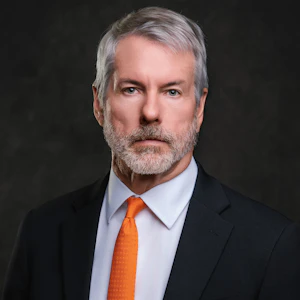
Michael Saylor
Michael Saylor
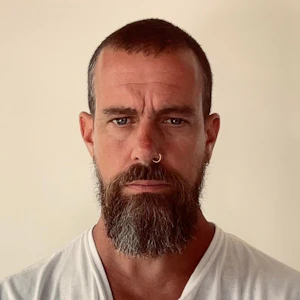
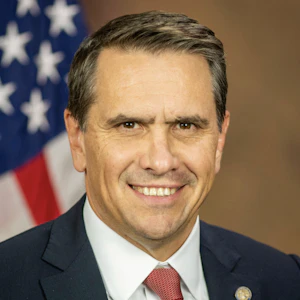
Todd Blanche
Todd Blanche
Biography of Deputy Attorney General Todd Blanche
The Honorable Todd Blanche is the 40th Deputy Attorney General of the United States, overseeing the work of the 115,000 dedicated employees who fulfill the Department of Justice’s mission at Main Justice, the FBI, DEA, U.S. Marshals, ATF, and 93 U.S. Attorney’s Offices.
Todd began his career at the Department where he served for over fifteen years in a variety of capacities, including as a contractor, a paralegal in the Criminal Division, and at the United States Attorney’s office for the Southern District of New York where he eventually became an AUSA and later a supervisor.
After leaving the Department, Todd worked as a criminal defense attorney that included representing President Donald Trump in three of the criminal cases brought against him in 2023 and 2024.
Following President Trump’s historic return to the White House, the President appointed Todd to work alongside Attorney General Pam Bondi to make America safe again. At the DOJ, Todd is working tirelessly to implement President Trump’s priorities that include confronting illegal protecting American businesses from fraud.
Todd has been married to his wonderful wife Kristine for nearly thirty years, is a father and grandfather.

Paul Atkins
Paul Atkins
Prior to returning to the SEC, Chairman Atkins was most recently chief executive of Patomak Global Partners, a company he founded in 2009. Chairman Atkins helped lead efforts to develop best practices for the digital asset sector. He served as an independent director and non-executive chairman of the board of BATS Global Markets, Inc. from 2012 to 2015.
Chairman Atkins was appointed by President George W. Bush to serve as a Commissioner of the SEC from 2002 to 2008. During his tenure, he advocated for transparency, consistency, and the use of cost-benefit analysis at the agency. Chairman Atkins also represented the SEC at meetings of the President’s Working Group on Financial Markets and the U.S.-EU Transatlantic Economic Council. From 2009 to 2010, he was appointed a member of the Congressional Oversight Panel for the Troubled Asset Relief Program.
Before serving as an SEC Commissioner, Chairman Atkins was a consultant on securities and investment management industry matters, especially regarding issues of strategy, regulatory compliance, risk management, new product development, and organizational control.
From 1990 to 1994, Chairman Atkins served on the staff of two chairmen of the SEC, Richard C. Breeden and Arthur Levitt, ultimately as chief of staff and counselor, respectively. He received the SEC’s 1992 Law and Policy Award for work regarding corporate governance matters.
Chairman Atkins began his career as a lawyer in New York, focusing on a wide range of corporate transactions for U.S. and foreign clients, including public and private securities offerings and mergers and acquisitions. He was resident for 2½ years in his firm's Paris office and admitted as conseil juridique in France.
A member of the New York and Florida bars, Chairman Atkins received his J.D. from Vanderbilt University School of Law in 1983 and was Senior Student Writing Editor of the Vanderbilt Law Review. He received his A.B., Phi Beta Kappa, from Wofford College in 1980.
Originally from Lillington, North Carolina, Chairman Atkins grew up in Tampa, Florida. He and his wife Sarah have three sons.

Mike Selig
Mike Selig
Chairman Selig brings to the role deep public and private sector experience working with a wide range of stakeholders across agriculture, energy, financial, and digital asset industries, which rely upon and operate in CFTC-regulated markets.
Prior to his leadership at the CFTC, Chairman Selig most recently served as chief counsel of the Securities and Exchange Commission’s Crypto Task Force and senior advisor to SEC Chairman Paul S. Atkins. In this role, Chairman Selig helped to develop a clear regulatory framework for digital asset securities markets, harmonize the SEC and CFTC regulatory regimes, modernize the agency’s rules to reflect new and emerging technologies, and put an end to regulation by enforcement. He also participated in the President’s Working Group on Digital Asset Markets and contributed to its report on “Strengthening American Leadership in Digital Financial Technology.”
Prior to government service, Chairman Selig was a partner at an international law firm, focusing on derivatives and securities regulatory matters. During his years in private practice, he represented a broad range of clients subject to regulation by the CFTC, including commercial end users, futures commission merchants, commodity trading advisors, swap dealers, designated contract markets, derivatives clearing organizations, and digital asset firms. Chairman Selig advised clients on compliance with the Commodity Exchange Act and the CFTC’s rules and regulations thereunder, including in connection with registration applications and obligations, enforcement matters, and complex transactions.
Chairman Selig earned his law degree from The George Washington University Law School and was articles editor of The George Washington Law Review. He received his undergraduate degree from Florida State University.

David Bailey
David Bailey

Eric Trump
Eric Trump
Mr. Trump also serves as Executive Vice President of The Trump Organization, where he oversees the global management and operations of the Trump family’s extensive real estate portfolio. This includes Trump Hotels, Trump Golf, commercial and residential real estate, Trump Estates, and Trump Winery. Known for his hands-on leadership and strong market instincts, he has played a key role in expanding the company’s presence across major U.S. and international markets.
A globally recognized business leader and public figure, Mr. Trump is a prominent advocate for Bitcoin and decentralized finance. He is a co-founder of World Liberty Financial, a decentralized finance (DeFi) platform, and serves on the Board of Advisors of Metaplanet, Japan’s largest corporate holder of Bitcoin.
Beyond his business activities, Mr. Trump has helped raise more than $50 million for St. Jude Children’s Research Hospital in the fight against pediatric cancer, a philanthropic mission he began at age 21.
Mr. Trump earned a degree in Finance and Management from Georgetown University. He currently resides in Florida with his wife, Lara, and their two children. He is also the author of Under Siege, his memoir published in October 2025.

Jack Mallers
Jack Mallers
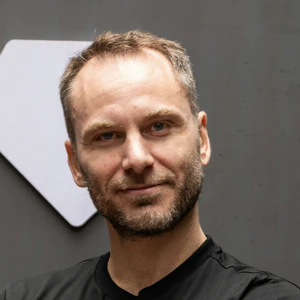
Cynthia Lummis
Cynthia Lummis
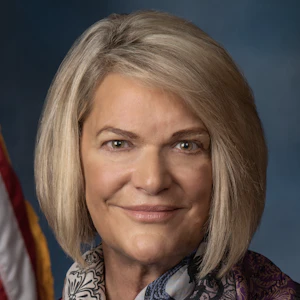
As the first-ever Chair of the Senate Banking Subcommittee on Digital Assets, Senator Lummis is the architect of the legislative framework shaping America's digital asset future. She introduced the landmark Lummis-Gillibrand Responsible Financial Innovation Act, the first comprehensive bipartisan crypto regulatory framework in Senate history. She co-authored the GENIUS Act — the first federal stablecoin law ever enacted — and introduced the BITCOIN Act, which would establish a U.S. strategic Bitcoin reserve of up to one million BTC. She is leading the Clarity Act, which will bring long-overdue regulatory certainty to the digital asset industry. She has also championed digital asset tax reform, including a de minimis exemption for small transactions and equal tax treatment for miners and stakers.
Known as Congress' "Crypto Queen," Senator Lummis represents Wyoming — a state she has helped build into one of the most digital asset-friendly regulatory environments in the nation. Before serving in the Senate, she served 14 years in the Wyoming Legislature, eight years as Wyoming State Treasurer, and eight years in the U.S. House. She is a three-time graduate of the University of Wyoming.
Her work represents a crucial bridge between traditional financial systems and the emerging digital economy, ensuring America leads the world in financial innovation while protecting the individual freedoms that define it.

Adam Back
Adam Back
Amy Oldenburg
Amy Oldenburg
David Marcus
David Marcus

Matt Schultz
Matt Schultz
Fred Thiel
Fred Thiel
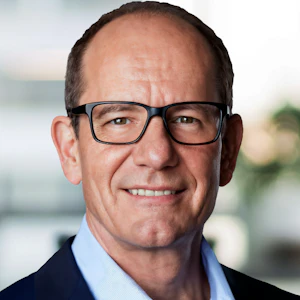
Throughout his career, Mr. Thiel has consistently driven rapid growth and created substantial shareholder value. Prior to MARA, Mr. Thiel served as the CEO of two other public companies, Local Corporation (NASDAQ: LOCM) and Lantronix, Inc (NASDAQ: LTRX). He has successfully raised billions in equity and debt through private and public offerings, led companies through IPOs, executed high-value exits to strategic and financial acquirers, and implemented effective M&A and roll-up strategies.
Mr. Thiel attended the Stockholm School of Economics and executive classes at Harvard Business School, and is fluent in English, Spanish, Swedish, and French. Mr. Thiel is the Chairman of the Board for Oden Technology, Inc. and is active in Young Presidents’ Organization where he has led initiatives in both the FinTech and Technology Networks.
A recognized voice in the industry, Fred frequently shares his insights on energy and technology with major media outlets like Bloomberg TV, CNBC, and FOX Business, contributing to vital discussions about the future of these sectors.
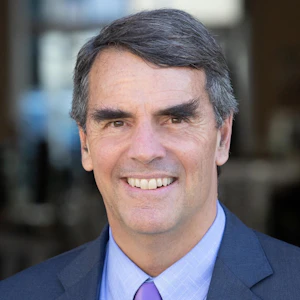
Tim Draper
Tim Draper
He is a supporter and global thought leader for entrepreneurs everywhere, and is a leading spokesperson for Bitcoin and decentralization, having won the Bitcoin US Marshall’s auction in 2014, invested in over 50 crypto companies, and led investments in Coinbase, Ledger, Tezos, and Bancor, among others.

Afroman
Afroman