How STRC Was Born: A Conversation with Michael Saylor and Barclays MD, Lee Counselman
Speakers/Moderators
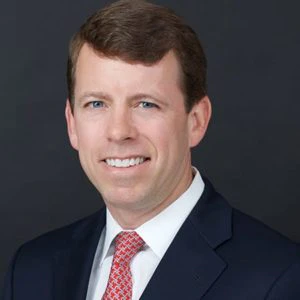
Lee Counselman
Lee Counselman
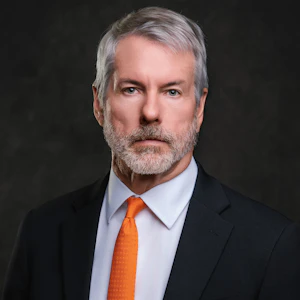
Michael Saylor
Michael Saylor
Session
Overview
Michael Saylor joined Lee Counselman of Barclays for a discussion on how STRC emerged from Strategy's broader capital markets strategy. The conversation focused on the evolution from debt and over-the-counter credit instruments toward publicly listed, perpetual preferred stock designed to be accessible, liquid, and Bitcoin-backed.
Saylor described STRC as part of a broader digital credit framework built on Bitcoin as digital capital. He explained how Strategy uses credit issuance, common equity ATMs, and Bitcoin appreciation to create amplification, generate tax-deferred dividend streams, and support continued Bitcoin accumulation.
The discussion also covered potential integrations for STRC and similar digital credit instruments across ETFs, crypto exchanges, stablecoins, savings coins, bank accounts, and DeFi protocols. Saylor argued that digital credit could become a yield layer for stablecoins and other financial products, while also increasing demand for Bitcoin.
Regulation, global adoption, and future market structure were key themes. Saylor identified the US and UAE as leading jurisdictions, pointed to growing bank and asset manager interest, and suggested that digital credit could connect Bitcoin, stablecoins, DeFi, and traditional finance through new yield products.
Please welcome to the stage the managing director of Barclays, Lee Counselman, who will be hosting a conversation with the chairman of Strategy, Michael Saylor.
Great. Thanks, everyone, for the applause. Michael needs no introduction. We at Barclays have been extremely fortunate to work with Michael and his world-class team over the past two years. It has been an iPhone moment, I would say, creating securities that investors did not know they needed, quite frankly. Without any further ado, we have about 20 minutes. I would like to start, Michael, with the evolution of the capital markets activity and the products leading up to what we have today, which is STRC.
STRC is an amalgam of all the good things that we discovered on our way to the revolution, and our attempt to run away from all the bad things. What worked really well were four-letter tickers that are available from broker-dealers on Nasdaq. At-the-market shelf registrations worked well. We thought that was a magic tool. Amplification via something other than just straight equity was good.
What we did not like was over-the-counter Rule 144A issues, because the entire retail market and public investors were locked out. That was bad. We did not like debt that came due on a certain date because it created a huge amount of credit risk and uncertainty. That was bad. We did not like the fact that we were trapped in a small set of niche corporate bond markets without a lot of flow of capital. That was bad.
Eventually we discovered preferred stock, so we could sell a security to the general public everywhere in the world that was perpetual. You could attach a shelf registration to it that anybody could buy. STRC represented a walk down that stack to preferred. Then, in the preferred world, it represented the shortest duration, least delta, most stable, least volatile security.
I would say it represents the highest amount of financial engineering we have done, but the result of that was the simplest product we had ever created. It is like when the iPhone did not have a keyboard. Fewer moving parts. By the time the dust settles, STRC becomes a Bitcoin-backed high-yield bank account that pays you double digits.
The last part, which was serendipitous, was that we found if you sell a credit instrument and then you make a capital investment forever, then you hold the capital forever. The dividends that we pay on the credit instrument become a return of capital. So we created the most tax-efficient perpetual instrument because of the total simplicity of the idea, which is make a capital investment forever, strip the risk off it, and convert the capital gain into a defined dividend stream that is tax deferred. I guess we had to do everything else to get there.
Can we dig a little more into amplification and how you are using your common ATM, paired with the ATM on STRC, to manage amplification and leverage your balance sheet?
The goal is just to acquire as much Bitcoin as possible. Just try to make as much money as possible. It is not a complicated goal. Bitcoin is money. We want to acquire the Bitcoin. We expect Bitcoin to go up forever.
It turns out that if you want to pay a tax-deferred dividend, then you need to monetize an unrealized capital gain. If we sell $1 million of STRC and we buy $1 million of Bitcoin, and Bitcoin appreciates 30% a year, then we have a big capital gain in the Bitcoin. You want to monetize that in a tax-efficient way.
There are two ways to do it that are pretty obvious. One way would be to sell the Bitcoin as long as the tax basis is higher than the sale price. If you can sell high-basis Bitcoin, then you can actually generate a cash stream to pay the dividend just with the Bitcoin itself. The easier way is to sell a derivative of the Bitcoin, a derivative of the capital asset.
It happens that we have a derivative, and the derivative is MSTR, the common equity. When we are selling the common equity, we are selling a derivative to generate tax-deferred income that we can pay back to the credit investors. When we are selling the equity at a premium to the underlying NAV, then it turns out to be accretive to the common stock and a benefit to the credit investor.
What we generally do is use the equity ATM in order to generate the cash stream to pay the credit investors. Most of the amplification for the equity comes from the credit. If you sell $1 million of credit, then you have $1 million of Bitcoin and you did not actually dilute the shares at all. Over the course of the next year, you will issue 10% or 11%. But what you are really doing is generating massive upfront amplification.
Another way to amplify is to just sell equity at a premium to NAV. If you sell $1 million of equity at a NAV of two, then you have created $500,000 of BTC gains. That is also amplification. We have done that, and in the future we may do more of that. We do it occasionally. We did it last week. We sold $255 million worth of equity at a premium. We generated a Bitcoin gain and some amplification on that, and we expanded our capital base to support the credit issuance.
For the most part, if we sell $10 billion of STRC, we will generate a $10 billion gain on that up front. Most of the BTC gain and the yield comes from the credit, not from the equity right now.
In addition to the success of the instrument itself, it is now effectively proven. We have seen resiliency through a lot of volatility, the Iran conflict, and the product is performing. Now we move into the integration phase of STRC. Can you explain some of your goals in terms of working with banks, asset managers, and other providers in integrating STRC into their corporate priorities?
What we realized is the three-layer stack is going to be digital capital, like a 30 to 40 return, 30 to 40 vol commodity; digital credit, about a two-vol, 10% or 11% yielding instrument; and the third layer is digital money or digital yield. Digital money would be a zero-vol, pure money market type instrument that pays something better than normal money markets. Maybe zero-vol, 8% or in that range.
One compelling thing you can do with credit is create digital money. You can create digital money in the form of an ETF or an ETP, or you can create it as a token, or you can create it as an account. Important integrations include integrating STRC into public ETFs in order to create that sort of instrument.
I think integrating it into crypto exchanges is another path. At some point, some crypto exchange will offer you a digital yield account or digital money account that pays 8%. You just put your money on the exchange, and they pay you 8% for your money on deposit.
The third is the emerging class of savings coins. There is a $350 billion stablecoin market. A lot of them want to generate yield on the stablecoin. The way that works is you buy the stablecoin, you stake the stablecoin, and you get back a savings coin or a yield-bearing coin. STRC powers the yield on savings coins.
Everybody is looking for how to generate yield on Bitcoin or how to generate yield on stablecoins. STRC, or digital credit, is an ideal way to generate that yield on either of those. You can do it on-chain. You can do it via a DeFi protocol. People are working on it with DeFi protocols in the Bitcoin world and the stablecoin world. Or you can do it on a centralized exchange. Or you could do it with a bank.
Right now, I see about a dozen projects going on in this area, maybe 12 to 24. It is exploding. All of those are different approaches. There is an explosion of entrepreneurial activity right now.
What we are also seeing is that adoption has improved and the regulatory framework has improved so much. We are all here because we are believers. We all want to get to yes. But what constraints on adoption still exist today for digital credit as a concept through TradFi, and how do we as a group try to influence change and further adoption?
Digital credit is based on digital capital, and all of that law is settled. There is global consensus on Bitcoin as digital capital.
The digital credit instrument, like STRC, is based upon publicly listed, SEC-compliant preferred stocks. All of that law is settled. The securities law is 100 years old. The tax law is 100 years old. All of that law is settled as well. I do not think there is any question digital credit is going to work.
There is $3.5 trillion in private credit right now, and that $3.5 trillion is getting 8.5% or 9% yields and is totally illiquid. If even 1% or 2% of it flows into digital credit, this will be an explosion. I do not know why you would not have 10% of it, $370 billion, just coming out of private credit and flowing into digital credit. It is all illiquid, opaque, undercollateralized, unrated stuff. If digital credit got even 1% or 2% of the junk bond market, the private credit market, or other sorts of exotic credit, it would be exploding.
If you look right now, STRC is among the largest preferred equities in the world, and it is one of the most liquid preferred equities in the world and one of the fastest-growing financial products in the world, all in the first eight months, and that is without any of this happening. I think the digital credit train has left the station. STRC is working even today. You can see that asset class is working, and those instruments are working right now.
All of the uncertainty is really just opportunity. If you can generate two-vol, 10% yields, then you have the universal most desirable active ingredient in every financial instrument in the world. There is $300 trillion of credit and $100 trillion of equity, so you have something better than $400 trillion worth of stuff. If you do not like 10%, you can just loop it two or three times and get 25%. With two or three vol, it would be 10 times better than the S&P index.
The interesting question is which ETF funds will come out with the most compelling digital yield or digital money instruments. I know Bitwise is working on a fund. Strive is working on a fund. Which token issuers are going to win the DeFi world? One project has gone from not much to $200 million in a matter of weeks, so you have hypergrowth companies going from zero to $100 million in days. When you see one of those DeFi stablecoin protocols go to $1 billion, that will be a big deal.
Then, which bank will be the first bank to offer you a digital money account or digital yield account that pays 8% on your dollars? There is not one bank in the world doing it, but it only takes one bank to decide, why do we not just give people 8%? Every bank in the world is literally one regulatory approval away. They just have to go to their banking regulator and get the sign-off to offer a digital yield account. If you are the bank that offers 8% instead of 3%, I do not know why you would not bring in $10 billion, $20 billion, or $50 billion. The same is true with crypto exchanges.
I think there is an entrepreneurial battle to see who is going to win the digital money race. Then there is digital yield. If the cost of capital is 400 basis points, then why would you not borrow at 400 basis points, lend at 1,050 basis points, and loop it three, four, or five times? You are going to see a lot of people in the DeFi ecosystem loop these 8% coins five times to get to a 30% yield or a 40% yield. That will be interesting.
You can also do it if you are any kind of hedge fund in the US. I can borrow money at SOFR plus 50 basis points, so that is 425 basis points right now. I think there is a lot of carry trade that will be coming.
This entire exercise is going to be about a question of whether you create a private fund, a private fund that is illiquid or has one month or three months of liquidity, and go for yield. Do you create a public fund and take it public? Do you take it public in Europe or in the US? Do you create a crypto account? Do you create a bank account, or do you create a token? If so, with what redemption? Then there will be a bit of a battle about whether you are going to do this on Ethereum or Solana, on the exchange, on Base, and how many different DeFi protocols you link it to.
I have not even mentioned the last thing, which is you can also just take STRC and do a currency transform. You can generate 8% yields in Swiss francs or Japanese yen. What happens if you decide to start generating 8% or 6% yields in yen, francs, euros, or pounds? Those are all interesting opportunities.
All of this is an exercise in one part financial engineering. How do you construct the volatility reserves, and how do you manage the operation? One part is design. Are you going to offer daily liquidity, daily dividends, zero vol? Are you going to offer monthly liquidity, five vol? Are there senior and junior tranches? Part of it is distribution. Can you get distribution from the Commonwealth Bank of Australia? Can you get distribution from Deutsche Bank? Can you get distribution from Binance? Then part of it is regulatory approval. Is the container a bank account, an ETF, an ETP, a crypto token, and so on?
That is a lot of work. I do not even know the right answer, except I think we are shipping kerosene or gasoline. There is a world of motor vehicles and service stations and trains and planes and automobiles and things to be built. We need all of the digital yield and digital money partners to build all of those things. If you are a conservative investor in Switzerland, you do not want the same product as a Japanese retiree or a hedge fund in London. There will be different products for different investors. But the addressable market, if it is 10% of the credit market, is $30 trillion.
The lion's share of the innovation is happening here in the US with US regulators and US banks at the moment. You touched upon regulation. There are a ton of foreign issuers here, foreign corporates, that would like to experiment with this. But there is a big regulatory differential jurisdiction by jurisdiction. What is your experience in traveling the world and talking to these regulators in terms of their willingness to be thoughtful and innovate against this by major jurisdiction?
I think the race for leadership is between the USA and the UAE, and those are the two most progressive jurisdictions. Everywhere else is a different story. There are some things that are easier to do in certain places, but this is a global phenomenon. The money is in Japan, Brazil, Switzerland, Germany, the UAE, the Kingdom of Saudi Arabia, the US, and Canada.
There are going to be products in every one of those places, I think, that are going to be built on digital credit and ultimately on digital capital. I think the entire industry is going to accelerate starting now. There is going to be a Cambrian explosion. Just in the past 12 weeks, I have seen more innovation in this space than in the previous five years.
To talk about kerosene and gas, the next up cycle is only going to accelerate. Having seen the resilience of Bitcoin through this part of the cycle and the advancements we have been able to make, I am curious about your thoughts on what is next. What should we be excited about closing out this year of 2026?
I think Bitcoin is going to rally. I think there is a lot of capital flowing into Bitcoin right now. At the rate that digital credit is forming, and at the rate you saw this morning, we bought the entire supply last week. Then Strive announced a massive buy. There is massive bank credit coming online. All the big banks, JP Morgan, Citi, Schwab, Morgan Stanley, Barclays, are all coming online.
I think you are talking about between $20 billion and $100 billion worth of credit formation in the next 12 months, and there is only $10 billion of Bitcoin naturally available for sale. We are setting up a massive supply shock. There ought to be a rally in BTC. I think that will catalyze a rally in all the Bitcoin treasury companies. It will cause a rally in demand for digital credit. I think there will be a rally in bank credit.
I think the Clarity Act will go through, and there will be a lot of very constructive guidance from the CFTC, Treasury, and the SEC. That will accelerate digital assets innovation. I actually think there is going to be a coming together of the altcoin or stablecoin industry, the crypto industry, and the Bitcoin community, because digital credit is going to power all of the stablecoins.
That $350 billion stablecoin industry is going to gradually begin to adopt digital credit, and they are going to realize that a much better idea is a Bitcoin-backed stablecoin that pays 8%. The Bitcoin community has not had a lot in common with the crypto community for the past few years, but now the interests are crossing. Tokenizing stablecoins and staking them to generate yield using digital credit drives demand for Bitcoin.
That means the Solana ecosystem, the Ethereum ecosystem, the DeFi ecosystem, every protocol, every digital token idea, every perpetual source of leverage, and all of the DeFi exchanges are going to be engines driving demand for Bitcoin, which we have not really had. It used to be that they were competing for capital with Bitcoin. Now they are going to align and drive capital into Bitcoin, which will drive growth into their ecosystems. I think we are entering into a virtuous cycle. It is going to be good for everybody in the digital assets industry.
Let us end on that note. Thank you. I just want to thank Michael for your vision and your unwavering leadership.
Thank you. Thanks to all of you.
Similar
Sessions
How STRC Was Born: A Conversation with Michael Saylor and Barclays MD, Lee Counselman
Lee Counselman
Lee Counselman
Michael Saylor
Michael Saylor
How STRC Was Born: A Conversation with Michael Saylor and Barclays MD, Lee Counselman
Speakers/Moderators
Lee Counselman
Lee Counselman
Michael Saylor
Michael Saylor
Keynote: Michael Saylor
Michael Saylor
Michael Saylor
Keynote: Michael Saylor
Speakers/Moderators
Michael Saylor
Michael Saylor
Michael Saylor Q&A

Carly Benson
Carly Benson
Carly became a Bitcoin-only Bitcoiner in 2017 after living in Las Vegas and interacting with the professional poker and sports betting community. She learned about Bitcoin by seeing use-cases for it as the whales of the gambling world have been betting, settling and transacting in BTC for many years.
Before getting in to the Bitcoin space, Carly ran her own successful marketing consultancy for 18 years and was known as an alcohol-free SME, Course Creator and Yoga Instructor.
She has given talks around the world and her work and courses have helped thousands change their relationship with alcohol. She’s been featured in Women’s Health, SELF magazine, Extra TV, Travel Zoo and other notable outlets.
Michael Saylor
Michael Saylor
Michael Saylor Q&A
Speakers/Moderators
Carly Benson
Carly Benson
Carly became a Bitcoin-only Bitcoiner in 2017 after living in Las Vegas and interacting with the professional poker and sports betting community. She learned about Bitcoin by seeing use-cases for it as the whales of the gambling world have been betting, settling and transacting in BTC for many years.
Before getting in to the Bitcoin space, Carly ran her own successful marketing consultancy for 18 years and was known as an alcohol-free SME, Course Creator and Yoga Instructor.
She has given talks around the world and her work and courses have helped thousands change their relationship with alcohol. She’s been featured in Women’s Health, SELF magazine, Extra TV, Travel Zoo and other notable outlets.
Michael Saylor
Michael Saylor
Other
Speakers
Michael Saylor
Michael Saylor
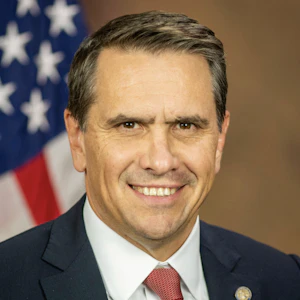
Todd Blanche
Todd Blanche
Biography of Deputy Attorney General Todd Blanche
The Honorable Todd Blanche is the 40th Deputy Attorney General of the United States, overseeing the work of the 115,000 dedicated employees who fulfill the Department of Justice’s mission at Main Justice, the FBI, DEA, U.S. Marshals, ATF, and 93 U.S. Attorney’s Offices.
Todd began his career at the Department where he served for over fifteen years in a variety of capacities, including as a contractor, a paralegal in the Criminal Division, and at the United States Attorney’s office for the Southern District of New York where he eventually became an AUSA and later a supervisor.
After leaving the Department, Todd worked as a criminal defense attorney that included representing President Donald Trump in three of the criminal cases brought against him in 2023 and 2024.
Following President Trump’s historic return to the White House, the President appointed Todd to work alongside Attorney General Pam Bondi to make America safe again. At the DOJ, Todd is working tirelessly to implement President Trump’s priorities that include confronting illegal protecting American businesses from fraud.
Todd has been married to his wonderful wife Kristine for nearly thirty years, is a father and grandfather.

Paul Atkins
Paul Atkins
Prior to returning to the SEC, Chairman Atkins was most recently chief executive of Patomak Global Partners, a company he founded in 2009. Chairman Atkins helped lead efforts to develop best practices for the digital asset sector. He served as an independent director and non-executive chairman of the board of BATS Global Markets, Inc. from 2012 to 2015.
Chairman Atkins was appointed by President George W. Bush to serve as a Commissioner of the SEC from 2002 to 2008. During his tenure, he advocated for transparency, consistency, and the use of cost-benefit analysis at the agency. Chairman Atkins also represented the SEC at meetings of the President’s Working Group on Financial Markets and the U.S.-EU Transatlantic Economic Council. From 2009 to 2010, he was appointed a member of the Congressional Oversight Panel for the Troubled Asset Relief Program.
Before serving as an SEC Commissioner, Chairman Atkins was a consultant on securities and investment management industry matters, especially regarding issues of strategy, regulatory compliance, risk management, new product development, and organizational control.
From 1990 to 1994, Chairman Atkins served on the staff of two chairmen of the SEC, Richard C. Breeden and Arthur Levitt, ultimately as chief of staff and counselor, respectively. He received the SEC’s 1992 Law and Policy Award for work regarding corporate governance matters.
Chairman Atkins began his career as a lawyer in New York, focusing on a wide range of corporate transactions for U.S. and foreign clients, including public and private securities offerings and mergers and acquisitions. He was resident for 2½ years in his firm's Paris office and admitted as conseil juridique in France.
A member of the New York and Florida bars, Chairman Atkins received his J.D. from Vanderbilt University School of Law in 1983 and was Senior Student Writing Editor of the Vanderbilt Law Review. He received his A.B., Phi Beta Kappa, from Wofford College in 1980.
Originally from Lillington, North Carolina, Chairman Atkins grew up in Tampa, Florida. He and his wife Sarah have three sons.

Mike Selig
Mike Selig
Chairman Selig brings to the role deep public and private sector experience working with a wide range of stakeholders across agriculture, energy, financial, and digital asset industries, which rely upon and operate in CFTC-regulated markets.
Prior to his leadership at the CFTC, Chairman Selig most recently served as chief counsel of the Securities and Exchange Commission’s Crypto Task Force and senior advisor to SEC Chairman Paul S. Atkins. In this role, Chairman Selig helped to develop a clear regulatory framework for digital asset securities markets, harmonize the SEC and CFTC regulatory regimes, modernize the agency’s rules to reflect new and emerging technologies, and put an end to regulation by enforcement. He also participated in the President’s Working Group on Digital Asset Markets and contributed to its report on “Strengthening American Leadership in Digital Financial Technology.”
Prior to government service, Chairman Selig was a partner at an international law firm, focusing on derivatives and securities regulatory matters. During his years in private practice, he represented a broad range of clients subject to regulation by the CFTC, including commercial end users, futures commission merchants, commodity trading advisors, swap dealers, designated contract markets, derivatives clearing organizations, and digital asset firms. Chairman Selig advised clients on compliance with the Commodity Exchange Act and the CFTC’s rules and regulations thereunder, including in connection with registration applications and obligations, enforcement matters, and complex transactions.
Chairman Selig earned his law degree from The George Washington University Law School and was articles editor of The George Washington Law Review. He received his undergraduate degree from Florida State University.

David Bailey
David Bailey

Eric Trump
Eric Trump
Mr. Trump also serves as Executive Vice President of The Trump Organization, where he oversees the global management and operations of the Trump family’s extensive real estate portfolio. This includes Trump Hotels, Trump Golf, commercial and residential real estate, Trump Estates, and Trump Winery. Known for his hands-on leadership and strong market instincts, he has played a key role in expanding the company’s presence across major U.S. and international markets.
A globally recognized business leader and public figure, Mr. Trump is a prominent advocate for Bitcoin and decentralized finance. He is a co-founder of World Liberty Financial, a decentralized finance (DeFi) platform, and serves on the Board of Advisors of Metaplanet, Japan’s largest corporate holder of Bitcoin.
Beyond his business activities, Mr. Trump has helped raise more than $50 million for St. Jude Children’s Research Hospital in the fight against pediatric cancer, a philanthropic mission he began at age 21.
Mr. Trump earned a degree in Finance and Management from Georgetown University. He currently resides in Florida with his wife, Lara, and their two children. He is also the author of Under Siege, his memoir published in October 2025.

Jack Mallers
Jack Mallers
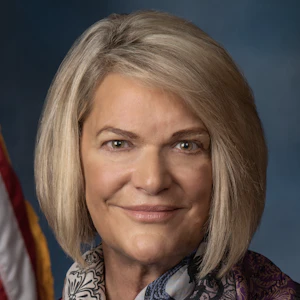
Cynthia Lummis
Cynthia Lummis
As the first-ever Chair of the Senate Banking Subcommittee on Digital Assets, Senator Lummis is the architect of the legislative framework shaping America's digital asset future. She introduced the landmark Lummis-Gillibrand Responsible Financial Innovation Act, the first comprehensive bipartisan crypto regulatory framework in Senate history. She co-authored the GENIUS Act — the first federal stablecoin law ever enacted — and introduced the BITCOIN Act, which would establish a U.S. strategic Bitcoin reserve of up to one million BTC. She is leading the Clarity Act, which will bring long-overdue regulatory certainty to the digital asset industry. She has also championed digital asset tax reform, including a de minimis exemption for small transactions and equal tax treatment for miners and stakers.
Known as Congress' "Crypto Queen," Senator Lummis represents Wyoming — a state she has helped build into one of the most digital asset-friendly regulatory environments in the nation. Before serving in the Senate, she served 14 years in the Wyoming Legislature, eight years as Wyoming State Treasurer, and eight years in the U.S. House. She is a three-time graduate of the University of Wyoming.
Her work represents a crucial bridge between traditional financial systems and the emerging digital economy, ensuring America leads the world in financial innovation while protecting the individual freedoms that define it.

Adam Back
Adam Back

Amy Oldenburg
Amy Oldenburg
David Marcus
David Marcus

Matt Schultz
Matt Schultz
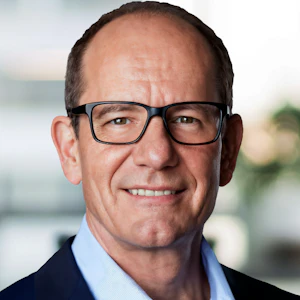
Fred Thiel
Fred Thiel
Throughout his career, Mr. Thiel has consistently driven rapid growth and created substantial shareholder value. Prior to MARA, Mr. Thiel served as the CEO of two other public companies, Local Corporation (NASDAQ: LOCM) and Lantronix, Inc (NASDAQ: LTRX). He has successfully raised billions in equity and debt through private and public offerings, led companies through IPOs, executed high-value exits to strategic and financial acquirers, and implemented effective M&A and roll-up strategies.
Mr. Thiel attended the Stockholm School of Economics and executive classes at Harvard Business School, and is fluent in English, Spanish, Swedish, and French. Mr. Thiel is the Chairman of the Board for Oden Technology, Inc. and is active in Young Presidents’ Organization where he has led initiatives in both the FinTech and Technology Networks.
A recognized voice in the industry, Fred frequently shares his insights on energy and technology with major media outlets like Bloomberg TV, CNBC, and FOX Business, contributing to vital discussions about the future of these sectors.
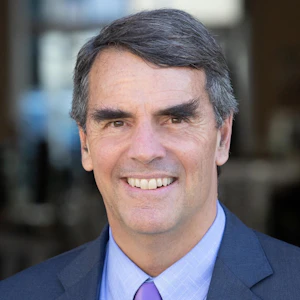
Tim Draper
Tim Draper
He is a supporter and global thought leader for entrepreneurs everywhere, and is a leading spokesperson for Bitcoin and decentralization, having won the Bitcoin US Marshall’s auction in 2014, invested in over 50 crypto companies, and led investments in Coinbase, Ledger, Tezos, and Bancor, among others.

Afroman
Afroman