Incentives & Illusions in Prediction Markets
Speakers/Moderators

Matt Crosby
Matt Crosby
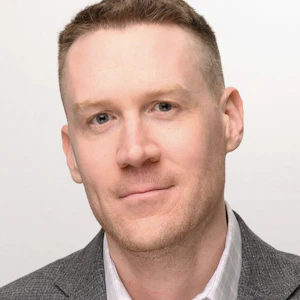
Paul Sztorc
Paul Sztorc


Derek Orr
Derek Orr
When his co-founder Sanjay Shah, came calling with an opportunity to step in as CEO and CFO of Predyx — one of the world's first and only Bitcoin-only prediction markets — he didn't hesitate. Built natively on the Lightning Network, Predyx lets users trade real-world outcomes across markets, sports, elections, and AI events with instant sat-denominated payouts, zero fiat on-ramps, and micro-market scalability that only Lightning makes possible.
Derek brings to Predyx the same conviction he brings to Bitcoin itself: that sovereign, permissionless financial rails aren't just an ideology — they're a product feature.
Session
Overview
This discussion explores prediction markets as more than election betting or sports gambling, framing them as information systems that convert dispersed knowledge into public probabilities. Paul Sztorc of LayerTwo Labs and Micah Warren of the University of Oregon discuss how markets differ from polls, why financial incentives can improve forecasting, and where those incentives can also distort behavior.
The conversation covers the limits of recent prediction market success, including the 2024 presidential election, and examines whether insider information is a flaw or a core feature. The speakers also debate manipulation, bluffing, Goodhart's law, and conditional decision markets that ask not just whether something will happen, but what would happen if a specific action were taken.
Bitcoin-specific examples include markets around soft forks, Bitcoin price reactions, and the potential quantum computing threat to Bitcoin cryptography. The session closes with a cautious outlook: prediction markets may become a major new medium for decision-making and forecasting, but their long-term usefulness could be constrained if they are dominated by gambling use cases, poor low-probability pricing, or regulatory backlash.
Hello. How are we doing? All good? All right, good. Hi, everyone. Thanks for joining our talk. Today we'll be discussing incentives and illusions in prediction markets. I'm very lucky to be joined by two of the leading experts in the space. To my right is Micah from the University of Oregon, and Paul from LayerTwo Labs. Unfortunately, Derek couldn't be with us today, but I'm sure he's with us in spirit.
First and foremost, Paul, can you give us a little bit of an introduction for those who may not be aware? What is a prediction market?
My name is Paul Sztorc, and I've been an advocate for prediction markets on Bitcoin since around 2013. Prediction markets are an incredibly important technology that not a lot of people have realized is important. It's really like a new form of media, if you think about it. It would be in the same category as radio, the printing press, or smoke signals. A prediction market is special because it lets a large number of people disagree, and it produces one outcome without favoring any person arbitrarily.
To keep it short, a prediction market is basically a contract on an event. You have events like, will the Republican Party win the next election? It pays out a dollar if that happens, and pays nothing if it doesn't happen. That contract trades on the market and has a varying price. The price varies with the likelihood of the event actually happening.
Micah, why do we need prediction markets as opposed to just doing opinion polls or forecasts? How do these differ from what we traditionally had?
With polls, you kind of have to get a phone call from someone who asks you a question, and you might not be the expert. Prediction markets are great because they incentivize people who at least believe they know something about the topic to engage and add to the market, and add to the diversity of bets being placed.
Polls are just a data point. They don't give you a probability of the event, and you have to handicap those. There are some ways you might want to handicap prediction markets, but I think you're going to get better information in general that is actionable. You're going to get a number, which is a probability.
Is that because there's this monetary incentive, this skin in the game, whereas with polls and stuff, you can say what you maybe want the answer to be, but because you don't have that fiscal involvement, maybe it's not as accurate as prediction markets?
Yeah, that's exactly right. The prediction market treats error, especially since this is the current price, and then it says anyone who disagrees can make money. You can buy the cheaper leg of the event. If something is selling for 70 cents, there's a joke on some prediction market sites where they say they're selling dollars for 70 cents, because they think this is certain to happen.
There was a colorful example on Polymarket: will Jesus Christ return? That was trading at 5 cents. But if you flip it and bet on no, that's 95 cents on no. So they're selling dollars for 95 cents. You can make money by correcting the price toward zero, which seems a little more likely to me.
I think the first thing everyone thinks when they think prediction market is, is this just new gambling? What really differentiates prediction markets from gambling?
With gambling, the prices are fixed. In prediction markets, the prices vary and they produce socially useful information. It's very useful for us to know, for example, how likely a certain thing is to happen.
Prediction markets also have other features that have yet to be explored, where you can bet on if we did this, would that happen? So the prediction market will let us know what's likely to happen and what's likely to happen if something else happens. All of that is useful.
If you go to a roulette wheel, the odds are just going to pay 35 to 1, and your odds are whatever they are. It depends on how many green squares, but it will be like 38 to 1 on hitting the number. It doesn't actually produce anything useful.
I think there's another key part of gambling, which is that gambling is always negative expected value. That's how the casino makes its money. In theory, the prediction market should be something like zero expected value if a completely uninformed person just threw a dart. If someone had extra information, that should be more value. They should be able to make money by putting their information into the market and changing the price, thus informing the rest of us. Those are some differences.
Micah, would you agree that it's a little bit more than gambling, or at the minute is that kind of where the market is?
Unfortunately, I think that's the most salient thing going on right now, because everybody's betting on sports and elections. People who have looked at these for a while know there are a lot of good use cases, where you can add to the epistemic environment and let people try to think about things and understand them.
When you bet money on an outcome, it doesn't mean you're going to think correctly. I don't think skin in the game fixes everything. It means you're going to think about it, and you're not going to make the really stupid mistakes. Hopefully you'll have people saying less stupid things.
I wish we had these during Covid. We had people out there saying Covid was going to be over in April 2020. I wish that person would have bet all their wealth on that, and we could have collected the Dunning-Kruger tax.
There are a number of issues where people don't really think about something until you put a little money on it. Then you have to ask yourself, the experts were probably right, but here's where they might be a little bit wrong. I think that's useful. That's why I want to see them. It won't fix all the epistemic issues, but it could maybe work in that direction.
Paul, if it's not gambling, then if we're at a Bitcoin conference, would there be any reason to trade prediction markets on what the Bitcoin price may be? How can that be different from buying an options contract or just spot Bitcoin?
I think that is correct. Unfortunately, most of the actual application of prediction markets in practice today is gambling on sports and things like that. I think that's a mistake, and it's misleading in the way that when the printing press was invented, it was used to copy the Bible over and over again. That was a big breakthrough for technology, but if you described the printing press as a religious technology, or as a way to make more Bibles, you would be missing the bigger picture.
Similarly, with respect to having a prediction market on the spot price of Bitcoin, we kind of already have a market for the spot price of Bitcoin, and that's the spot price today. That kind of is a prediction of what the future price will be.
These are unfortunate examples of people trying to take a stab at how to use this. This is like a Gutenberg Bible kind of situation, where they're fitting it into the old model and they're not doing the really cool new stuff. In particular, what Professor Robin Hanson called decision markets, or what I call multidimensional markets.
We have if this, then that, and you can do that an unlimited number of times. You could say, if we nominated this candidate to run, would they win? Or one we could do would be: if we activated this soft fork in Bitcoin, would the price go up? Or if we rejected it, what would happen? Those would be much more interesting applications.
For myself, and probably for a lot of people, their first exposure to prediction markets was when they blew up in popularity in the 2024 presidential election. Polymarket came out and said they were unbelievably accurate, far beating the polls. Micah, I know you have a little bit of pushback on this. Maybe they're not quite as accurate as the social consensus has led many to believe.
Yeah, they actually did pretty poorly. They gave Donald Trump a 27% chance of winning the popular vote, and he won the popular vote. Giving him a 27% chance is not evidence that they knew something we don't all know.
I think a lot of people got one shot when they were watching it at the end of the day. You see the New York Times needle going like this, but this is after all the results are coming in. The people who have their models are plugging them in and driving the markets quickly toward 98%, while the New York Times was still slow. But there was only a very small window of time where the New York Times knew less than the markets.
Polymarket, for example, gave Trump a 57% chance of winning the day of the election. Nate Silver called it basically a toss-up. In statistical terms, this is almost indistinguishable. You'd have to do many, many trials to determine if this is a really significant edge that the markets have.
Paul, a lot of people look to prediction markets and say it's basically just a way for insider trading to be facilitated. That's the only real edge. People have knowledge that isn't yet publicly available, and they're exploiting that time gap. Is that the case? And if so, is that a bug or a feature?
This topic has dominated the conversation about prediction markets over the last two months, and I think it's an interesting situation. What the prediction market really does is say: if you disagree with the price and think you have better information than what the market is reflecting, you can trade and make money.
Again, that's like if you knew Jesus wasn't coming back and you could buy the no for 95 cents, and it would pay off a dollar. People kind of want to have it both ways. I prefer the way where the prediction market is eating all the information of the world, gobbling up all the information of the world, including all the insider information. In doing so, it gives that information to the rest of us.
I think it's actually good that it has the ability to absorb information from everyone, including insiders. I think this is a feature. There's a criticism of this that says, why would anyone trade if all the insiders are in there? But there are ways around that criticism, for example by subsidizing the market.
I think we want the world where the market is getting the right answer as quickly as possible. In the casino world, it's very fair. When you sit at the roulette wheel, everyone gets the same odds and everyone has the same information, because it's not really about anything. But with prediction markets, it's actually about things. That's the whole point.
The original prediction market website was called Intrade. I don't know, but I think that was kind of a little joke, like insider trading. But the fact that the markets absorb information is the key point. Insider trading is a scary phrase, and people hear it and think it means bad. I understand why it hits people emotionally, but I don't think it's the right way to think about what's happening.
Insider trading, in the early days when we were talking about prediction markets, was sort of the point. There are a lot of use cases, like predicting what CEO is going to go down for embezzlement or sexual harassment. That might be hard to do if you just went to HR, but you could start a prediction market. There are whistleblowing use cases, where you can get information into the public. It's a new channel for that if you just have that information.
I think people are going to bet. I don't think you need to subsidize the market, because people do bet, which is great. That's very convenient for people who like prediction markets. Then you have all these people adding liquidity and essentially subsidizing the informed traders.
There was a paper I saw a couple of weeks ago. It said that 3% of traders basically make all the money. I didn't fully understand the methodology of how they described these people as accurate, because it's kind of like saying the team with the most points at the end of the game has a pretty good chance of winning.
What happens is these 3% of traders move quicker and move the market toward the resolution, and they make the most money. It sounds like everybody makes their bets and you get this general idea, which is actually pretty good. People on average are really good at predicting things. We have this wisdom of the crowds, like Galton's ox phenomenon, where Francis Galton asked a whole bunch of people to guess the weight of an ox, and he took the average and they basically nailed it.
He made people pay, I think it was six pennies, to discourage joke answers. There was a tiny bit of a prediction market dimension to that, even though it wasn't quite the same. He made people pay extra money to submit, and he gave a prize to whoever was closest.
But there was no invisible hand guiding the market to the truth. It was just that people are pretty good at guessing. It seems like what is happening is that once the actual answer comes into focus, you have traders who can move in and get that little bit of alpha. This is what happened on election night. People who had really good models and knew how to take the results coming out of precincts and plug them into their models got to 98% before everyone else did.
I would add one thing about the insider trading phrase being a negative emotional phrase, which is: which two people in the world have ever had exactly the same information? That's never happened. Again, in other contexts like a roulette wheel, everyone has the information because there is no information, or if you bet on flipping a coin.
In the real world, if you're actually betting on who's going to win the election, I don't know if you could even find two people who have exactly the same information. Which one is an insider and which one is an outsider? How do you know before the fact?
The next point from there brings some game theory into things. Now that there's a financial incentive to potentially change public opinion, maybe you could just try to play a deception card to make the masses think one thing so you can profit off another. I'm sure people have heard stories of rigging how results are verified by changing weather markets, like holding a hairdryer next to sensors. Is this incentivizing more deception, rather than trying to gain more accuracy in finding the truth?
There is always Goodhart's law and Campbell's law. If you use anything as actionable, that number is going to have value, and it's going to have value to move it. People can put more money on an outcome if that's going to pay off for them, especially if it's conditional. If this happens, then this happens. If you can bluff, you can say that's never going to happen, and then maybe the outcome won't happen because you've bet against it.
My view is that decision markets are much, much harder to bluff. If you only had something like, will Hillary Clinton win the next election, she could put a lot of money on yes, make it look like a foregone conclusion, make it look like she should win the nomination, then maybe make it look like she should win the election, get the people who would vote against her demoralized, and maybe they stay home.
But with decision markets, once you do that, it gets much harder. It says something like, if we nominated Hillary Clinton, would we go on to win? Or another way would be, if the Democratic Party won the election, what would happen to GDP? Now you have to bet on two things at once. You only get paid if both of them happen. You may make it look like the person would be elected, but if they ultimately fail to hit the GDP target, you lose all of your money. You're losing an exponentially large amount of money at this. I think it becomes more difficult, but it's very hard to explain without slides, a big grid of numbers, and charts.
To tie this back into Bitcoin, the example we've got here is looking at the quantum threat to Bitcoin. If we see Satoshi's coins move, maybe we can assume someone has finally cracked a sufficiently powerful quantum computer to start breaking Bitcoin's cryptography. Could prediction markets also be a way to hedge your bets? Maybe you hold spot Bitcoin, but just in case, you bet yes on Satoshi's Bitcoin moving. If the outcome happens, you can mitigate your losses to some extent.
There are a lot of areas for cloak-and-dagger stuff. If China has started moving Satoshi's coins, maybe they're not going to tell anybody. They're going to move as many as they can. Maybe if they think it's leaking, they could wait until January 1, 2027, or whatever. There are lots of things you can do. If I suspected somebody else was moving Satoshi's coins in secret, I could go put a large bet on that and try to scare them into firing one of their employees or figuring out who is leaking information.
There are lots of examples where you could mess with people's minds.
We should absolutely do a prediction market that asks whether a quantum computer that breaks Bitcoin's cryptography will be built by such and such date, because everyone is weighing in on whether or not this will happen. How do we know which people to believe? Probably a lot of them are just bullshitting.
It would be nice to have this prediction market. You could see, will it be by December 31, 2026? Will it be by December 31, 2027, or 2028? You can look at all these prices and see whether it's zero, zero, zero, and then 99, 99. You could tell it's probably somewhere that year, because the people actually building the quantum computer, maybe there are 20 people somewhere, they really know whether it's around the corner or still a hundred years away. Everyone else is just a layperson compared to those people.
This is exactly what the prediction market does and why it's so special. It converts what is known by the top people in the world into information that everyone in the world has.
On to the potential future of prediction markets. Paul, you said earlier that at the minute we're not utilizing them to the full potential. Maybe we could use prediction markets to gain insights into the popularity of new Bitcoin proposals or maybe hard forks. Is there anything you see within prediction markets that we haven't tapped into yet?
The multidimensional markets are really important, and I already mentioned those. With the few minutes we have left, I just want to say that not only do I think this is really important, I built Bitcoin prediction markets back in 2014 and 2015. Now the company I started, LayerTwo Labs, refreshed that and built more of them recently.
If this topic is interesting to you, it's with fake money, fake Signet coins, but if you go to LayerTwoLabs.com you can check out what we're working on. The key thing is multidimensional markets, where you say it's not just, will X happen? It's, if we did A, would X happen? Or if we did B, would X happen?
It could be everything. If we change Fed policy, or if we fired Jerome Powell, what would happen to the price of Bitcoin? What would happen to CPI? What would happen to GDP? If we fired the CEO, what would happen to the stock price? If we fired the president or the ruling party, what would happen? That's the really big payoff.
I still think there's a little bit of a bluffing game there. Suppose we put a decision on whether we should do a billionaires tax. Will the economy contract by 15% in the first year after we enact this billionaires tax?
But remember, the economy has to actually contract.
But not if you don't do the tax. Not if you convince everybody not to do the tax in the first place.
There is a way to do these conditional markets where, instead of betting on one square, you basically make people buy the other three. You kind of short, or do one and a half shorts. It's hard to explain without a grid of numbers and charts, but I have other slides where I've explained it in the past.
What you say is, I'm going to make a small amount of money unless we do the thing and I'm totally wrong. In that way, people being paid off works out better. It's hard to communicate here with only one microphone.
Of course people will try to spend money to influence public opinion, and that may include trying to move the market. All I'm offering is that if they do this, you will be able to counter-trade it. You can say, okay, they're making it seem like such and such will happen if we do this, but you'll be able to extract money from them either if we don't do the tax, or if we do the tax and the disaster does not happen. You'll keep winning that over and over again.
Is there a limitation in that a lot of the insights that might be really useful are about what could happen in five or ten years? Locking up a large amount of capital in these predictions for five or ten years could be seen as a waste of capital. You could be putting your money to work in Bitcoin or other avenues, but you're having to tie it up. Does that play into the long-term accuracy of these?
It does. I think it quickly decays after a year or two years, and especially after five years. People propose unusual things, like could you take Dow Jones Industrial Average shares and bet in those or something? People have offered things, but I do think locking up the capital is too expensive.
Low-probability events are a much larger problem. You could make a market like, will two United airplanes crash in the sky today, or within the next two years? The natural price of that would be many orders of magnitude larger than the real probability of that happening. It would be kind of garbage as far as useful information.
To close out, where do you guys see prediction markets in ten years? We can see they're growing very rapidly in popularity. Kalshi and Polymarket seem to be making partnerships with every big company in the world. Do you foresee this continuing, or are we going to hit a roadblock?
I first read about them when Hal Finney used to post on Robin Hanson's blog back in 2004. I knew from 2004 that they would be really big. Now we've had Kalshi and Polymarket. I always knew they'd be big, and I think they will get bigger. The problem is if they get sucked into this gambling distraction, that would be a setback. But I think they will get much bigger. It's like radio.
I think there's a parallel with crypto. Ten years ago, I had some hope that crypto would be used for a lot more interesting things than it ended up being used for. We could be in the same position. Prediction markets could end up in the same bag, as far as the same type of marketing to the audience: go gamble.
That could be under a lot of hostility in the next few years, depending on who is in charge of the government. The blowback makes sense if you're just gambling.
I'm actually very worried about gambling addiction derailing the project too early, so I hope that doesn't happen.
Fingers crossed. Well, that's time for us. Thank you all very much for attending. Thanks to Micah and Paul for presenting with me today. If you'd like all the information, socials, and everything, you can scan the QR code on the screen. Thanks, guys.
Similar
Sessions
The Post-Subsidy World: Should We Be Concerned About The Security Budget?

Colin Harper
Colin Harper


Mike Casey
Mike Casey
Volunteer Lifeguard, MaraPool
Product Owner, Slipstream
Author: Speculative Bitcoin Adoption/Price Theory (https://medium.com/@mcasey0827/speculative-bitcoin-adoption-price-theory-2eed48ecf7da) as referenced in "The Bullish Case for Bitcoin" by Vijay Boyapati.
Bitcoin Class of 2012
Paul Sztorc
Paul Sztorc
The Post-Subsidy World: Should We Be Concerned About The Security Budget?
Speakers/Moderators
Colin Harper
Colin Harper
Mike Casey
Mike Casey
Volunteer Lifeguard, MaraPool
Product Owner, Slipstream
Author: Speculative Bitcoin Adoption/Price Theory (https://medium.com/@mcasey0827/speculative-bitcoin-adoption-price-theory-2eed48ecf7da) as referenced in "The Bullish Case for Bitcoin" by Vijay Boyapati.
Bitcoin Class of 2012
Paul Sztorc
Paul Sztorc
The Game Theory Behind Miner Centralization
The Game Theory Behind Miner Centralization
Speakers/Moderators
Incentives & Illusions in Prediction Markets
Matt Crosby
Matt Crosby
Paul Sztorc
Paul Sztorc
Derek Orr
Derek Orr
When his co-founder Sanjay Shah, came calling with an opportunity to step in as CEO and CFO of Predyx — one of the world's first and only Bitcoin-only prediction markets — he didn't hesitate. Built natively on the Lightning Network, Predyx lets users trade real-world outcomes across markets, sports, elections, and AI events with instant sat-denominated payouts, zero fiat on-ramps, and micro-market scalability that only Lightning makes possible.
Derek brings to Predyx the same conviction he brings to Bitcoin itself: that sovereign, permissionless financial rails aren't just an ideology — they're a product feature.
Incentives & Illusions in Prediction Markets
Speakers/Moderators
Matt Crosby
Matt Crosby
Paul Sztorc
Paul Sztorc
Derek Orr
Derek Orr
When his co-founder Sanjay Shah, came calling with an opportunity to step in as CEO and CFO of Predyx — one of the world's first and only Bitcoin-only prediction markets — he didn't hesitate. Built natively on the Lightning Network, Predyx lets users trade real-world outcomes across markets, sports, elections, and AI events with instant sat-denominated payouts, zero fiat on-ramps, and micro-market scalability that only Lightning makes possible.
Derek brings to Predyx the same conviction he brings to Bitcoin itself: that sovereign, permissionless financial rails aren't just an ideology — they're a product feature.
Is This the Bitcoin Supercycle or Is the Four-Year Pattern Still Intact?

Michael Terpin
Michael Terpin
Matt Crosby
Matt Crosby

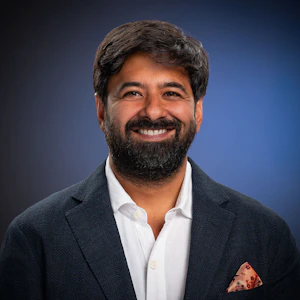
Is This the Bitcoin Supercycle or Is the Four-Year Pattern Still Intact?
Speakers/Moderators
Michael Terpin
Michael Terpin
Matt Crosby
Matt Crosby
Other
Speakers

Michael Saylor
Michael Saylor

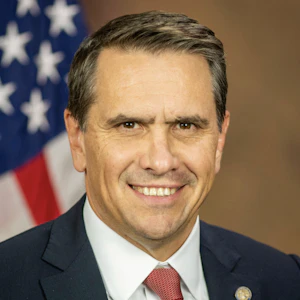
Todd Blanche
Todd Blanche
Biography of Deputy Attorney General Todd Blanche
The Honorable Todd Blanche is the 40th Deputy Attorney General of the United States, overseeing the work of the 115,000 dedicated employees who fulfill the Department of Justice’s mission at Main Justice, the FBI, DEA, U.S. Marshals, ATF, and 93 U.S. Attorney’s Offices.
Todd began his career at the Department where he served for over fifteen years in a variety of capacities, including as a contractor, a paralegal in the Criminal Division, and at the United States Attorney’s office for the Southern District of New York where he eventually became an AUSA and later a supervisor.
After leaving the Department, Todd worked as a criminal defense attorney that included representing President Donald Trump in three of the criminal cases brought against him in 2023 and 2024.
Following President Trump’s historic return to the White House, the President appointed Todd to work alongside Attorney General Pam Bondi to make America safe again. At the DOJ, Todd is working tirelessly to implement President Trump’s priorities that include confronting illegal protecting American businesses from fraud.
Todd has been married to his wonderful wife Kristine for nearly thirty years, is a father and grandfather.

Paul Atkins
Paul Atkins
Prior to returning to the SEC, Chairman Atkins was most recently chief executive of Patomak Global Partners, a company he founded in 2009. Chairman Atkins helped lead efforts to develop best practices for the digital asset sector. He served as an independent director and non-executive chairman of the board of BATS Global Markets, Inc. from 2012 to 2015.
Chairman Atkins was appointed by President George W. Bush to serve as a Commissioner of the SEC from 2002 to 2008. During his tenure, he advocated for transparency, consistency, and the use of cost-benefit analysis at the agency. Chairman Atkins also represented the SEC at meetings of the President’s Working Group on Financial Markets and the U.S.-EU Transatlantic Economic Council. From 2009 to 2010, he was appointed a member of the Congressional Oversight Panel for the Troubled Asset Relief Program.
Before serving as an SEC Commissioner, Chairman Atkins was a consultant on securities and investment management industry matters, especially regarding issues of strategy, regulatory compliance, risk management, new product development, and organizational control.
From 1990 to 1994, Chairman Atkins served on the staff of two chairmen of the SEC, Richard C. Breeden and Arthur Levitt, ultimately as chief of staff and counselor, respectively. He received the SEC’s 1992 Law and Policy Award for work regarding corporate governance matters.
Chairman Atkins began his career as a lawyer in New York, focusing on a wide range of corporate transactions for U.S. and foreign clients, including public and private securities offerings and mergers and acquisitions. He was resident for 2½ years in his firm's Paris office and admitted as conseil juridique in France.
A member of the New York and Florida bars, Chairman Atkins received his J.D. from Vanderbilt University School of Law in 1983 and was Senior Student Writing Editor of the Vanderbilt Law Review. He received his A.B., Phi Beta Kappa, from Wofford College in 1980.
Originally from Lillington, North Carolina, Chairman Atkins grew up in Tampa, Florida. He and his wife Sarah have three sons.

Mike Selig
Mike Selig
Chairman Selig brings to the role deep public and private sector experience working with a wide range of stakeholders across agriculture, energy, financial, and digital asset industries, which rely upon and operate in CFTC-regulated markets.
Prior to his leadership at the CFTC, Chairman Selig most recently served as chief counsel of the Securities and Exchange Commission’s Crypto Task Force and senior advisor to SEC Chairman Paul S. Atkins. In this role, Chairman Selig helped to develop a clear regulatory framework for digital asset securities markets, harmonize the SEC and CFTC regulatory regimes, modernize the agency’s rules to reflect new and emerging technologies, and put an end to regulation by enforcement. He also participated in the President’s Working Group on Digital Asset Markets and contributed to its report on “Strengthening American Leadership in Digital Financial Technology.”
Prior to government service, Chairman Selig was a partner at an international law firm, focusing on derivatives and securities regulatory matters. During his years in private practice, he represented a broad range of clients subject to regulation by the CFTC, including commercial end users, futures commission merchants, commodity trading advisors, swap dealers, designated contract markets, derivatives clearing organizations, and digital asset firms. Chairman Selig advised clients on compliance with the Commodity Exchange Act and the CFTC’s rules and regulations thereunder, including in connection with registration applications and obligations, enforcement matters, and complex transactions.
Chairman Selig earned his law degree from The George Washington University Law School and was articles editor of The George Washington Law Review. He received his undergraduate degree from Florida State University.

David Bailey
David Bailey

Eric Trump
Eric Trump
Mr. Trump also serves as Executive Vice President of The Trump Organization, where he oversees the global management and operations of the Trump family’s extensive real estate portfolio. This includes Trump Hotels, Trump Golf, commercial and residential real estate, Trump Estates, and Trump Winery. Known for his hands-on leadership and strong market instincts, he has played a key role in expanding the company’s presence across major U.S. and international markets.
A globally recognized business leader and public figure, Mr. Trump is a prominent advocate for Bitcoin and decentralized finance. He is a co-founder of World Liberty Financial, a decentralized finance (DeFi) platform, and serves on the Board of Advisors of Metaplanet, Japan’s largest corporate holder of Bitcoin.
Beyond his business activities, Mr. Trump has helped raise more than $50 million for St. Jude Children’s Research Hospital in the fight against pediatric cancer, a philanthropic mission he began at age 21.
Mr. Trump earned a degree in Finance and Management from Georgetown University. He currently resides in Florida with his wife, Lara, and their two children. He is also the author of Under Siege, his memoir published in October 2025.

Jack Mallers
Jack Mallers
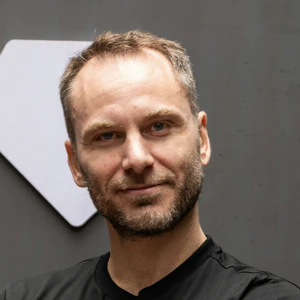
Cynthia Lummis
Cynthia Lummis
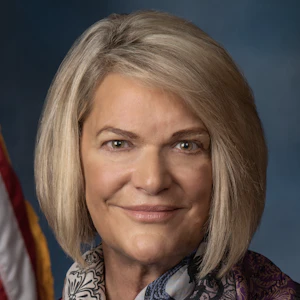
As the first-ever Chair of the Senate Banking Subcommittee on Digital Assets, Senator Lummis is the architect of the legislative framework shaping America's digital asset future. She introduced the landmark Lummis-Gillibrand Responsible Financial Innovation Act, the first comprehensive bipartisan crypto regulatory framework in Senate history. She co-authored the GENIUS Act — the first federal stablecoin law ever enacted — and introduced the BITCOIN Act, which would establish a U.S. strategic Bitcoin reserve of up to one million BTC. She is leading the Clarity Act, which will bring long-overdue regulatory certainty to the digital asset industry. She has also championed digital asset tax reform, including a de minimis exemption for small transactions and equal tax treatment for miners and stakers.
Known as Congress' "Crypto Queen," Senator Lummis represents Wyoming — a state she has helped build into one of the most digital asset-friendly regulatory environments in the nation. Before serving in the Senate, she served 14 years in the Wyoming Legislature, eight years as Wyoming State Treasurer, and eight years in the U.S. House. She is a three-time graduate of the University of Wyoming.
Her work represents a crucial bridge between traditional financial systems and the emerging digital economy, ensuring America leads the world in financial innovation while protecting the individual freedoms that define it.

Adam Back
Adam Back
Amy Oldenburg
Amy Oldenburg
David Marcus
David Marcus

Matt Schultz
Matt Schultz
Fred Thiel
Fred Thiel
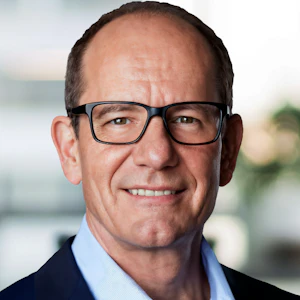
Throughout his career, Mr. Thiel has consistently driven rapid growth and created substantial shareholder value. Prior to MARA, Mr. Thiel served as the CEO of two other public companies, Local Corporation (NASDAQ: LOCM) and Lantronix, Inc (NASDAQ: LTRX). He has successfully raised billions in equity and debt through private and public offerings, led companies through IPOs, executed high-value exits to strategic and financial acquirers, and implemented effective M&A and roll-up strategies.
Mr. Thiel attended the Stockholm School of Economics and executive classes at Harvard Business School, and is fluent in English, Spanish, Swedish, and French. Mr. Thiel is the Chairman of the Board for Oden Technology, Inc. and is active in Young Presidents’ Organization where he has led initiatives in both the FinTech and Technology Networks.
A recognized voice in the industry, Fred frequently shares his insights on energy and technology with major media outlets like Bloomberg TV, CNBC, and FOX Business, contributing to vital discussions about the future of these sectors.
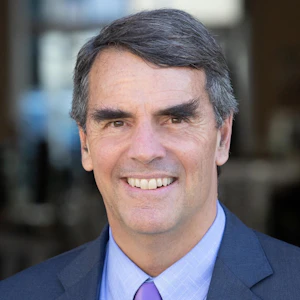
Tim Draper
Tim Draper
He is a supporter and global thought leader for entrepreneurs everywhere, and is a leading spokesperson for Bitcoin and decentralization, having won the Bitcoin US Marshall’s auction in 2014, invested in over 50 crypto companies, and led investments in Coinbase, Ledger, Tezos, and Bancor, among others.

Afroman
Afroman